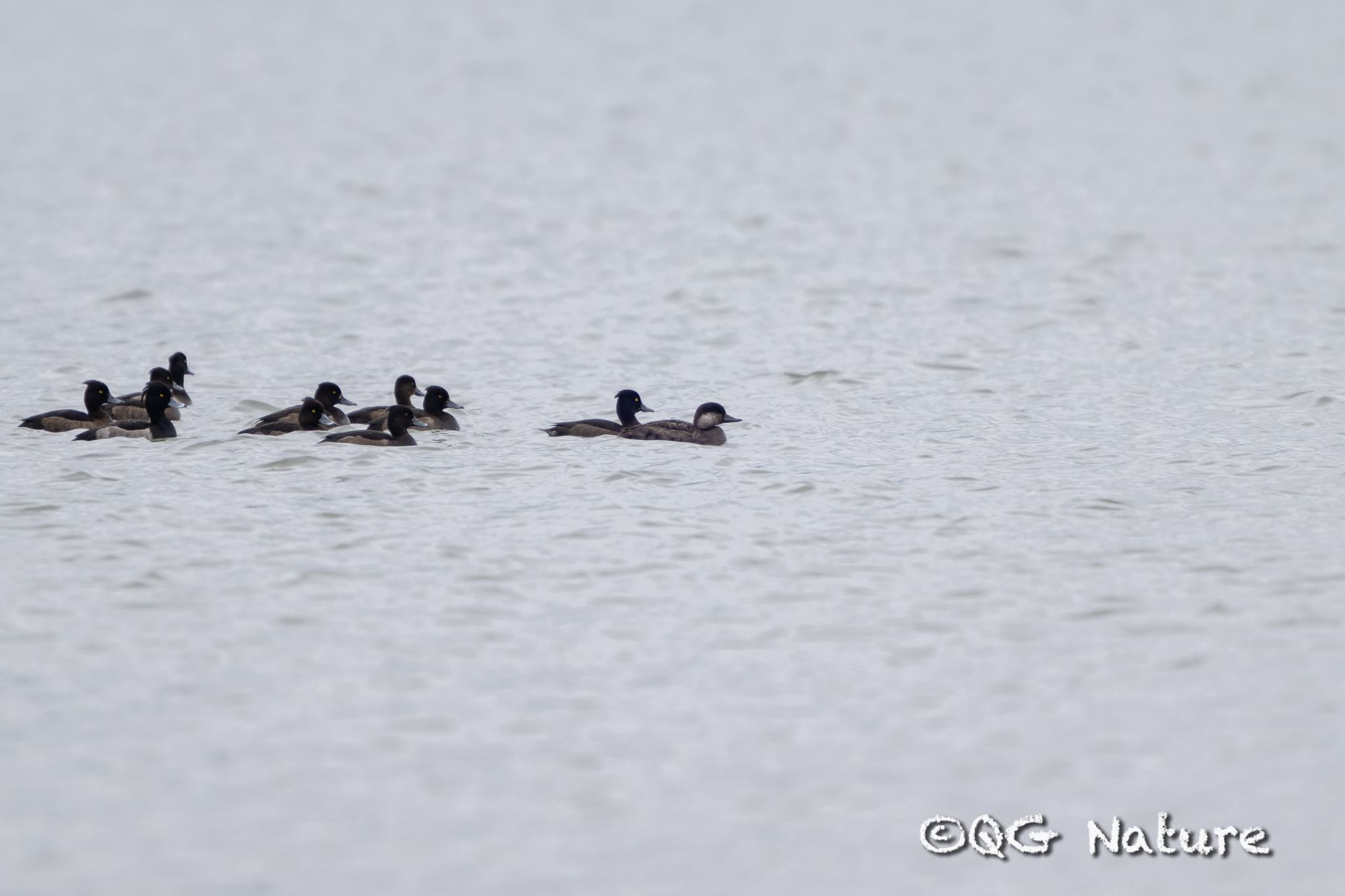
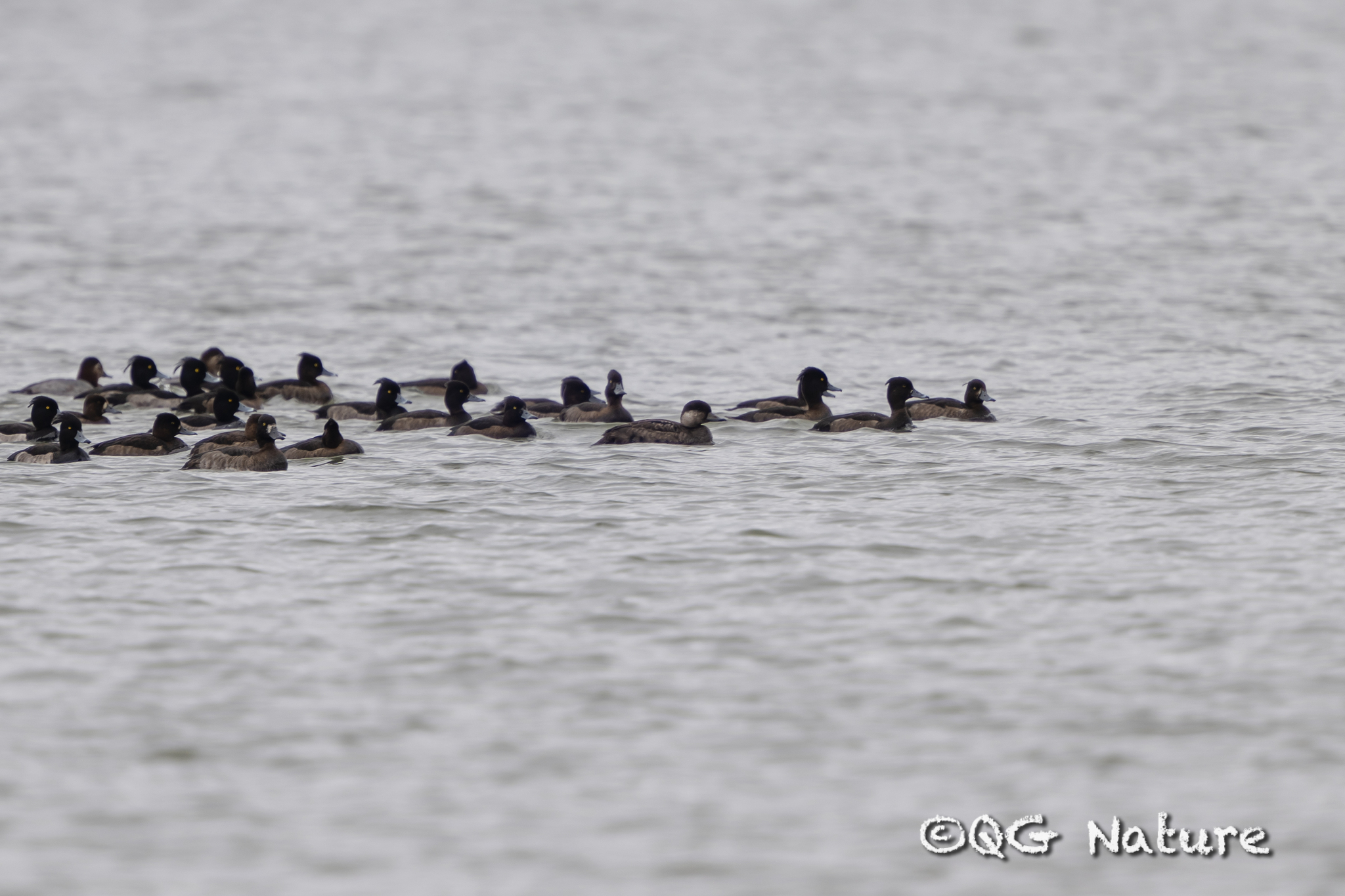
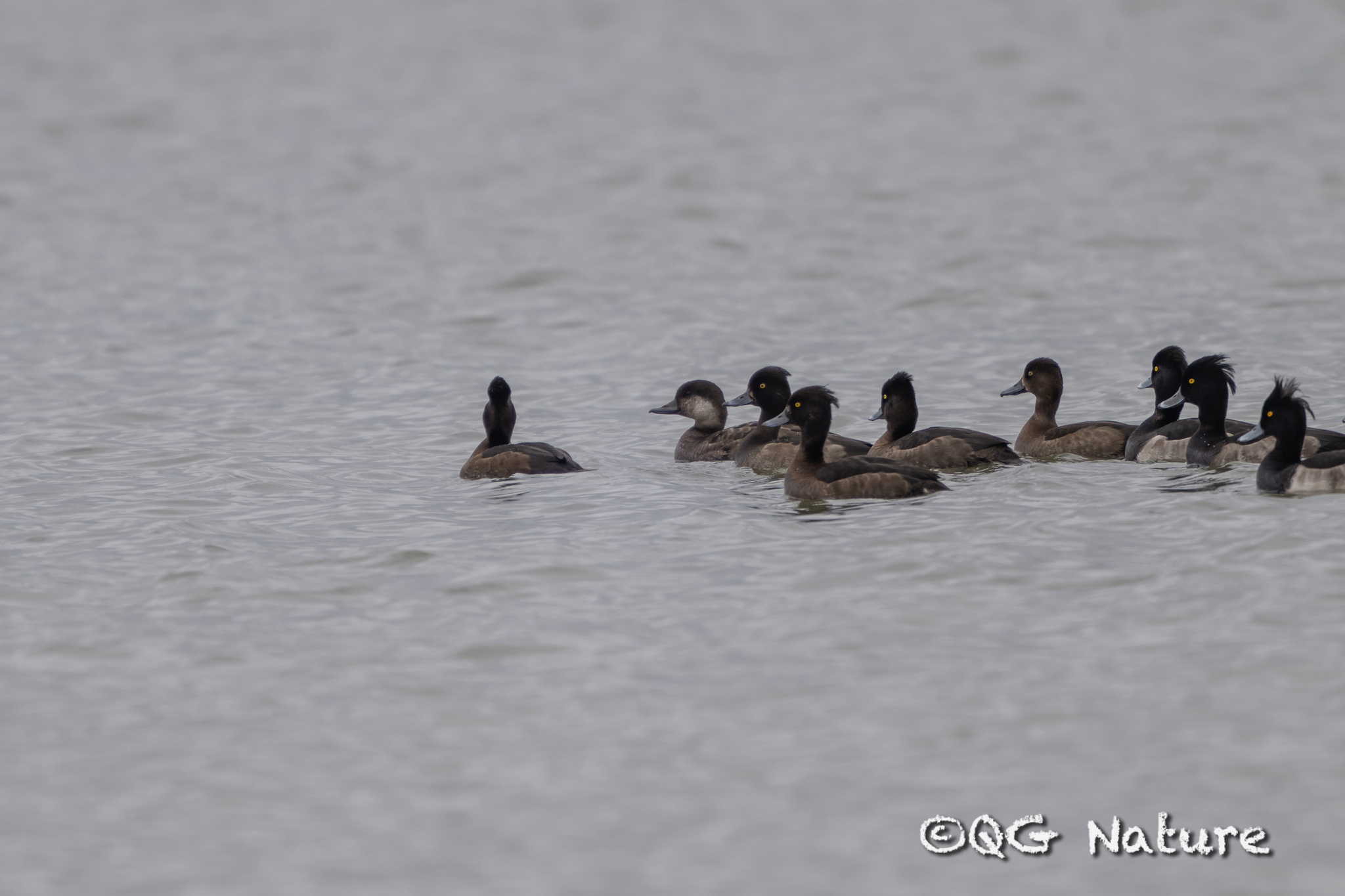
Black Scoter
Melanitta americana
黑海番鸭
Introduction
This large sea duck breeds in the remote far north of North America and Siberia. During winter, it forms large flocks numbering in the thousands along temperate coastal waters. Pairs form in late winter or spring, with nesting occurring later than in other North American duck species. Males have black plumage with a bulbous yellow bill, while females are brown with pale cheek patches.
Description
This bulky sea duck measures 43 to 49 centimeters in length with a substantial wingspan to match its robust build. The adult male is entirely black with an exceptionally bulbous bill that appears swollen and is mostly yellow in color, creating a striking profile against its dark plumage. The female presents a brown overall appearance with pale cheeks that contrast with her darker cap and upperparts. Females average approximately 980 grams and 45 centimeters in length, while males are slightly larger at 1,100 grams and 49 centimeters. The species' most distinguishing physical feature is its large, distinctive bill shape, which sets it apart from other sea ducks even at considerable distance.
Identification
The complete absence of white plumage on the adult male distinguishes this species from all other scoters, as similar species typically display some white markings. The female can be challenging to distinguish from the female common scoter, though she shows more extensive pale areas on the cheeks and face. In western Europe, where the species is a very rare vagrant, only adult males can be identified with certainty at range; females are likely overlooked or confused with common scoter females. The male's diagnostic downward head movement when stretching his wings serves as a behavioral identification clue for observers familiar with the species.
Distribution & Habitat
The breeding range encompasses the far northern regions of North America, including Labrador, Newfoundland, and areas northwest of Hudson Bay, extending across the Bering Straits to the Siberian side east of the Yana River. Winter distribution includes coastal areas of the northern United States and Canada, the Pacific coast south to the San Francisco Bay region, and both Atlantic and Gulf of Mexico coasts. Asian populations winter as far south as China. Some individuals overwinter on the Great Lakes. The species is a very rare vagrant to western Europe. During breeding, it occupies woodland and tundra habitats near seas, lakes, and rivers, while wintering birds prefer sheltered coastal embayments with mixed depth waters.
Behavior & Ecology
Feeding habits shift seasonally: coastal migrants and wintering birds dive for crustaceans and mollusks, while breeding birds consume insects, caddisfly larvae, fish eggs, and occasional vegetation including duckweed. The species forms enormous, densely packed flocks on suitable coastal waters during winter, with birds typically taking off in unison when disturbed. Breeding season behavior is less social. Pairs form in late winter or spring, with nesting beginning later than most North American ducks. The ground nest is lined and situated close to water in woodland or tundra terrain. Clutches contain 5 to 7 eggs weighing 60 to 74 grams each, representing about 8% of the female's body weight. Incubation lasts 27 to 31 days, followed by approximately 3 weeks of intensive brooding before flightless young must fend for themselves. The species has diagnosably distinct vocalizations compared to the common scoter.
Conservation
The species holds a Near Threatened assessment from the IUCN, indicating concerns about its population status and potential future declines. While specific population trends are not detailed in available sources, the Near Threatened designation suggests declining numbers or restricted range that warrant monitoring and conservation attention.
Culture
The French name used in parts of its Canadian range is macreuse noire, directly translating to black scoter. No additional folklore or cultural significance is documented in available sources.
Source: Wikipedia · CC BY-SA 3.0
Taxonomy
- Order
- Anseriformes
- Family
- Anatidae
- Genus
- Melanitta
- eBird Code
- blksco2
Distribution
breeds Yana River to Kamchatka (eastern Siberia), Alaska eastward to northwestern Yukon; eastern Northwest Territories and southwestern Nunavut to Newfoundland (central to eastern Canada); winters to central Japan (western North Pacific coast); Aleutian Islands, eastern North Pacific coast to central California; western North Atlantic coast from Newfoundland to northern Florida
Vocalizations
Data Sources
Species description from Wikipedia, licensed under CC BY-SA 3.0.
Bird images and sounds sourced from GBIF, contributed by citizen scientists worldwide under Creative Commons licenses.
Taxonomy data from AviList 2025.