Little Cuckoo-Dove
Macropygia ruficeps
小鹃鸠
Introduction
A species of bird in the family Columbidae. It inhabits evergreen hill forests, forest peripheries, drier forests, second-growth forests, and cultivated areas across Brunei, China, Indonesia, Laos, Malaysia, Myanmar, Thailand, and Vietnam. It is characterized by its reddish-brown plumage and travels in loose flocks. The long tail distinguishes it from sympatric pigeon species. Rated as Least Concern on the IUCN Red List since 1998 due to its large range exceeding 20,000 km² and stable population trend.
Description
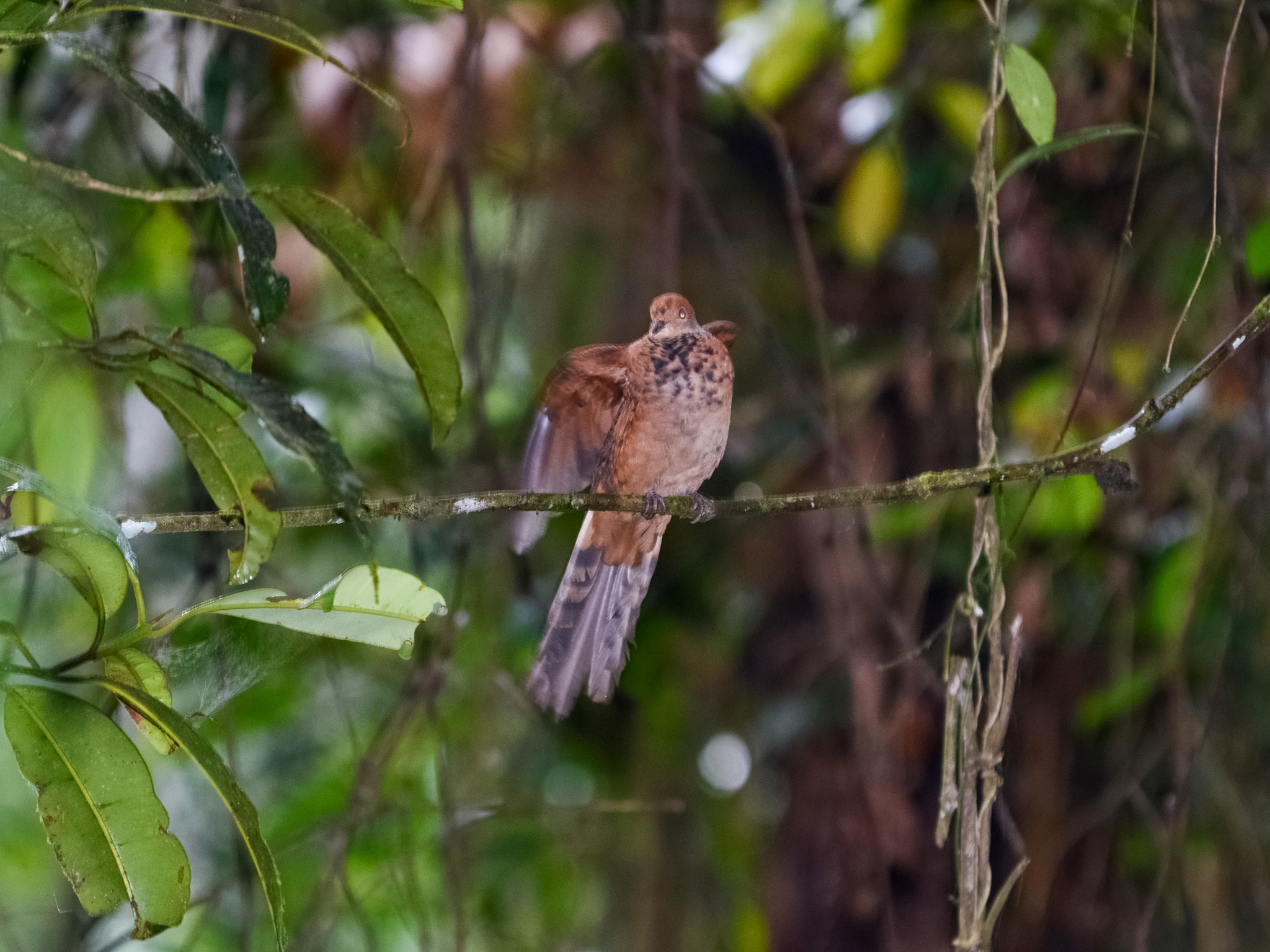
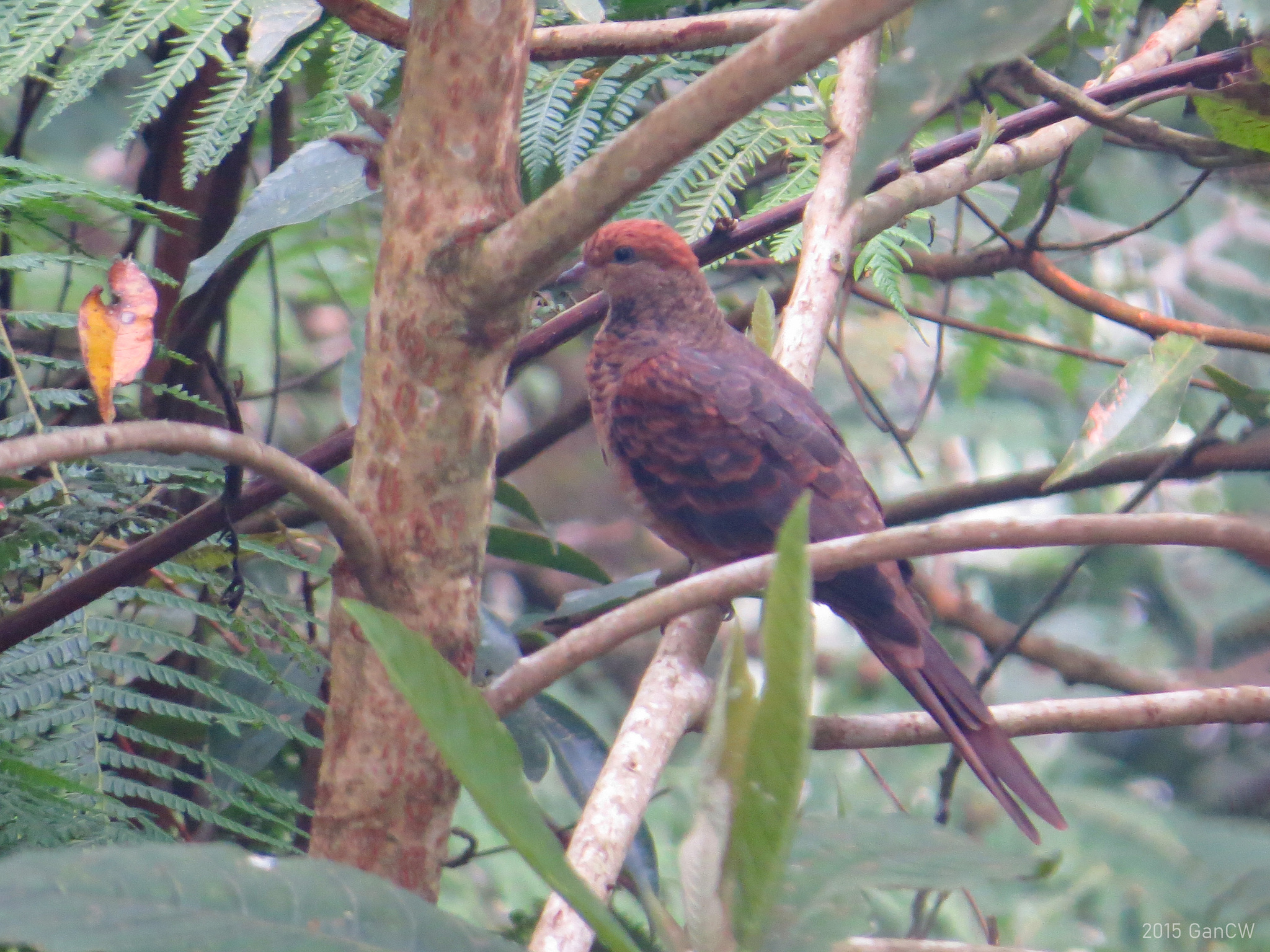
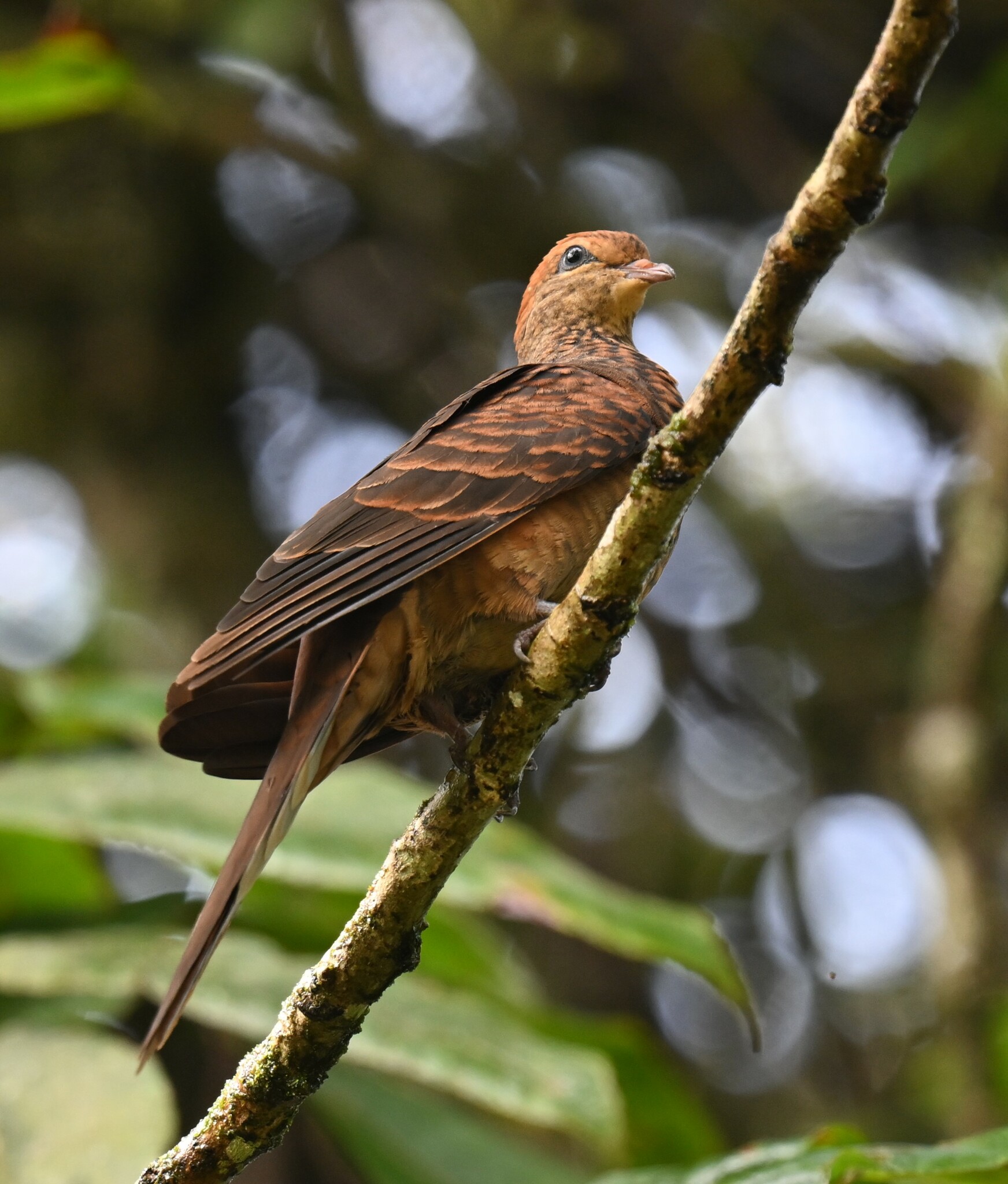
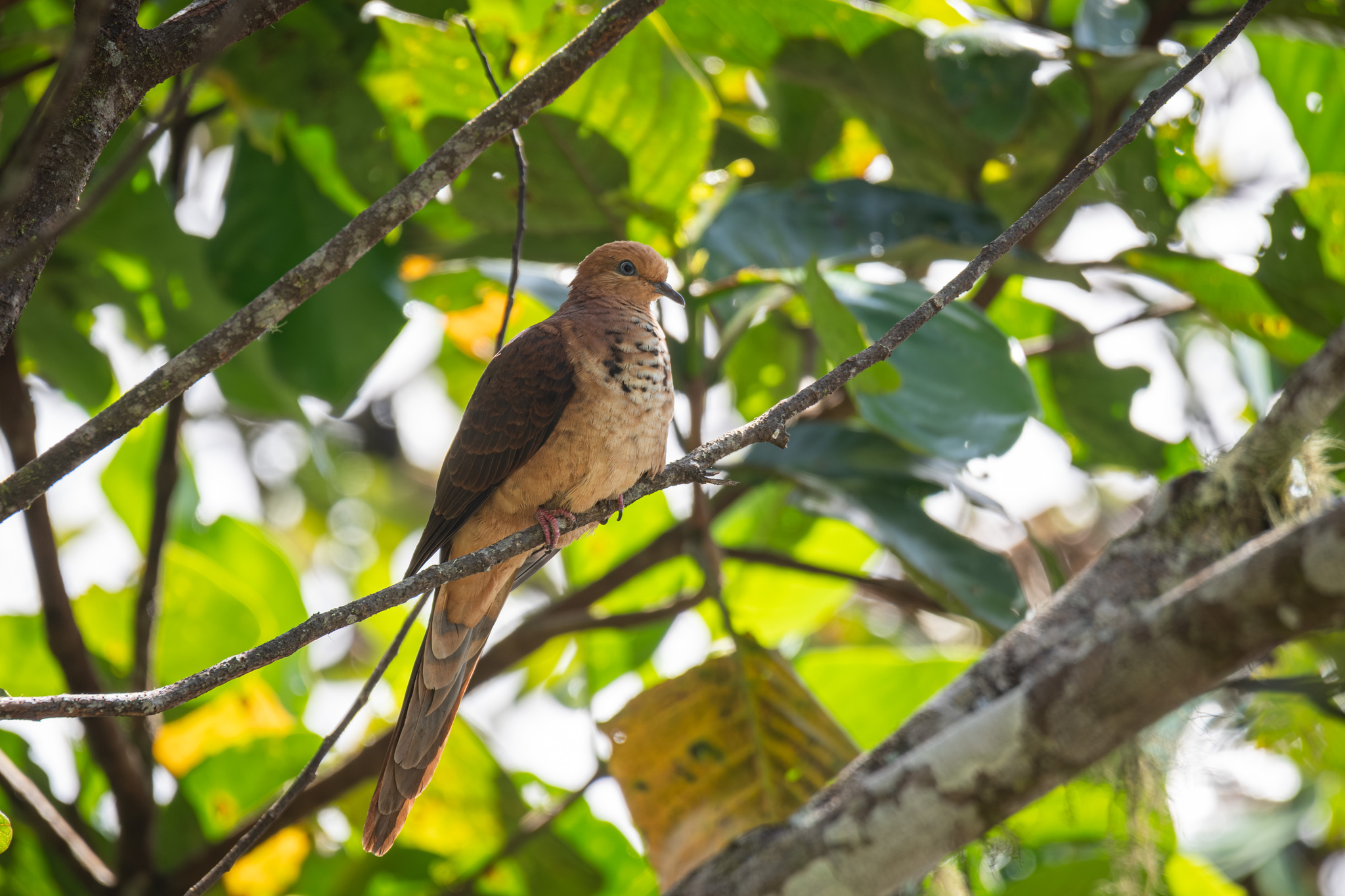
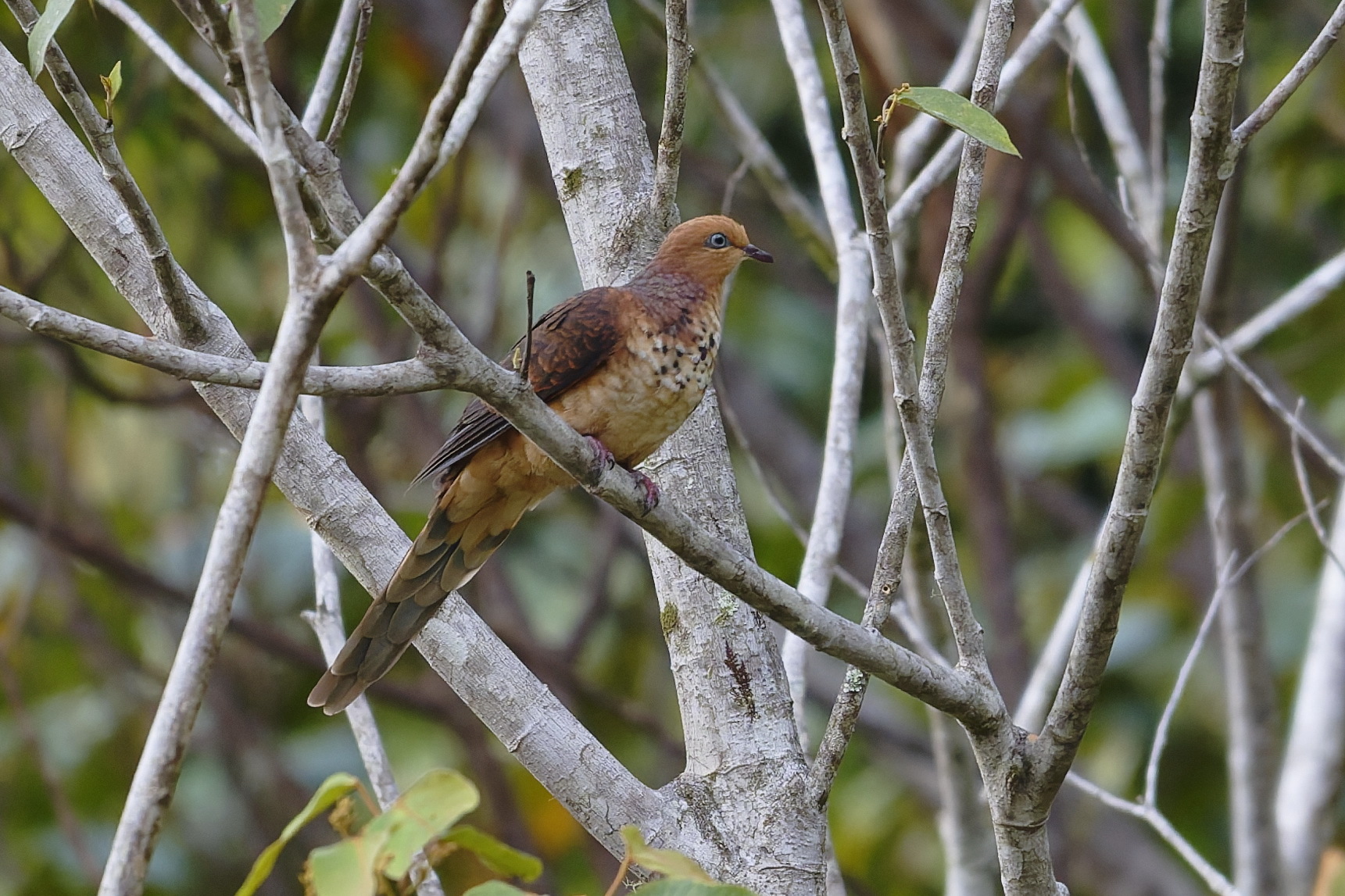
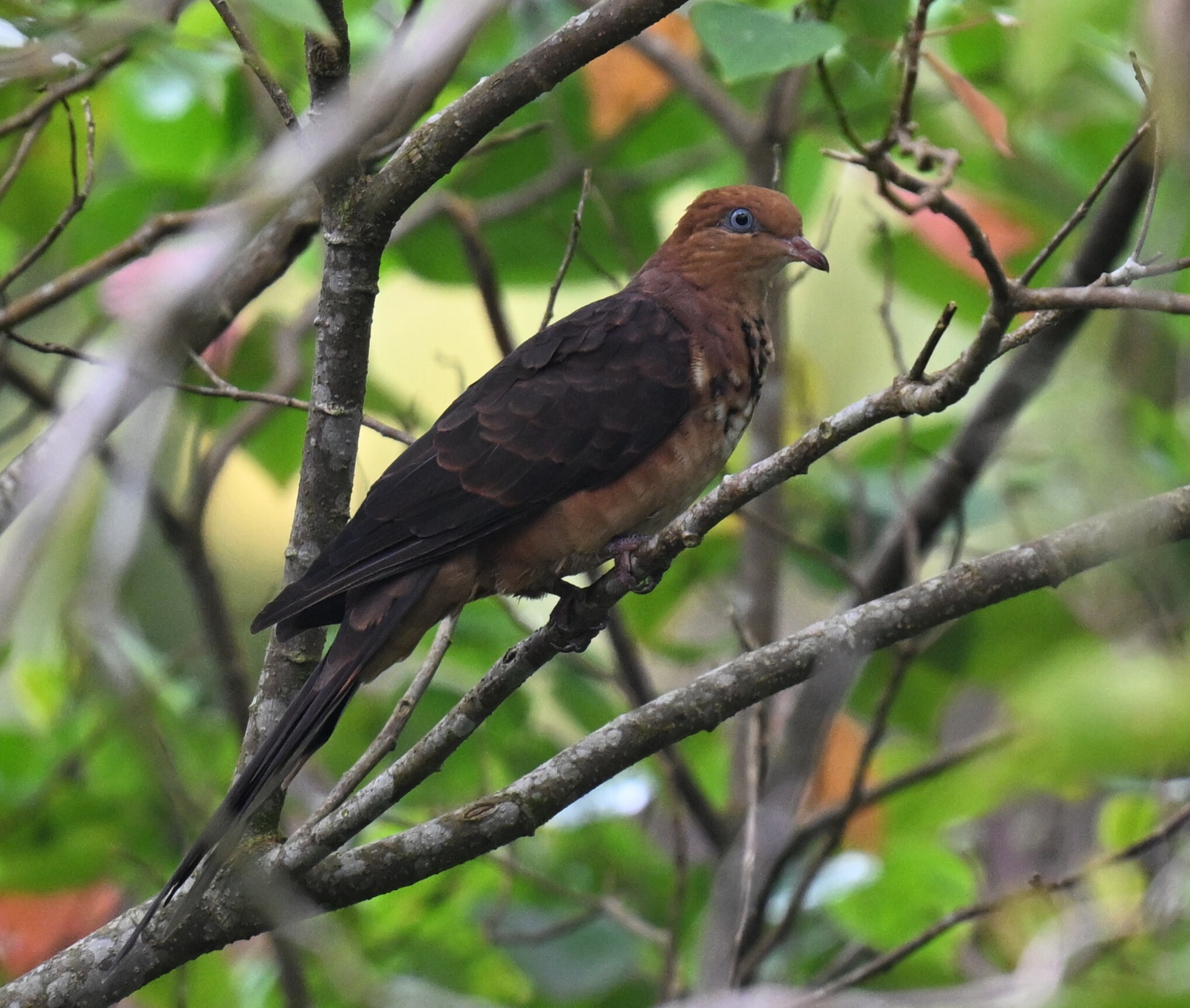
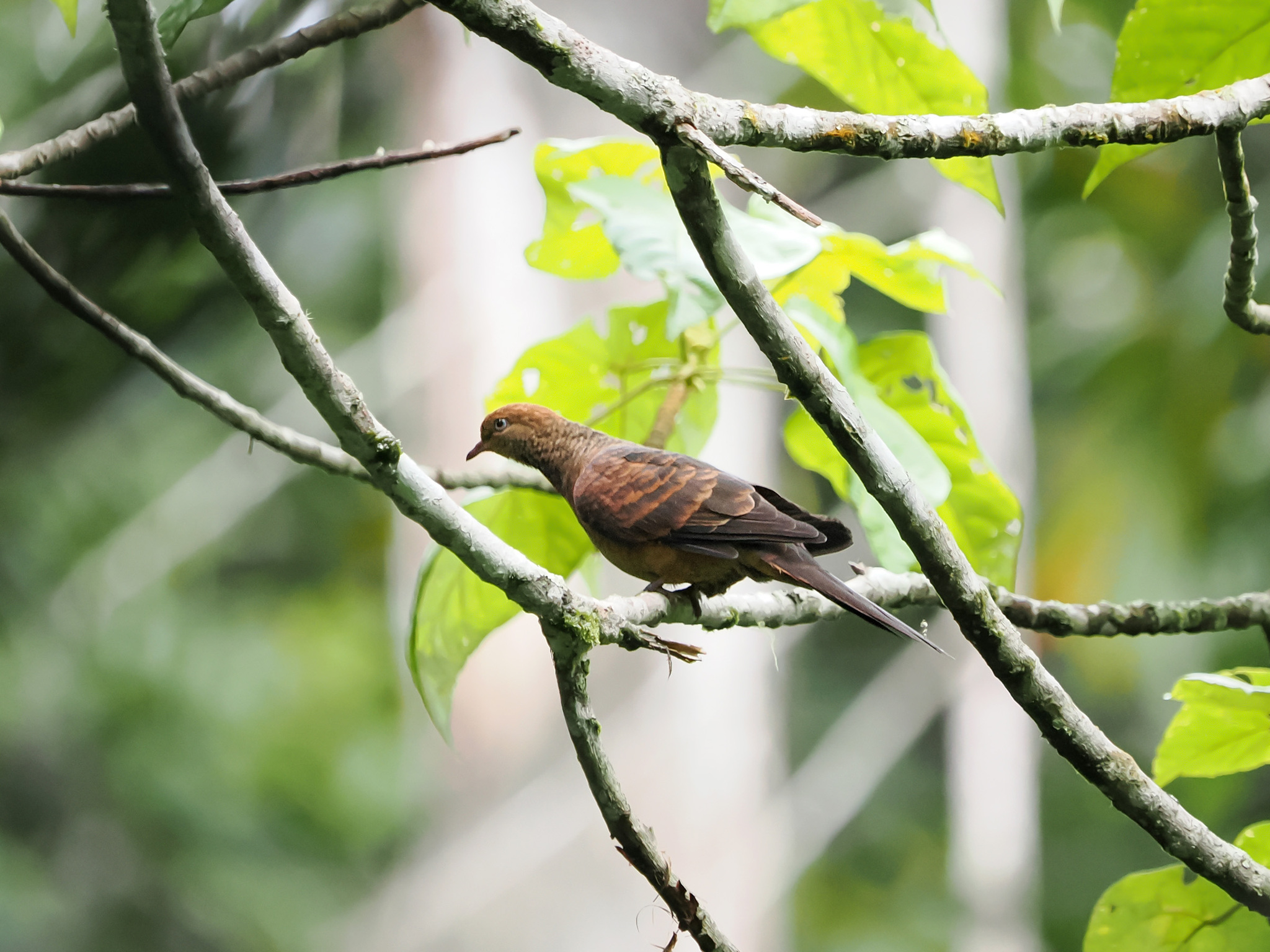
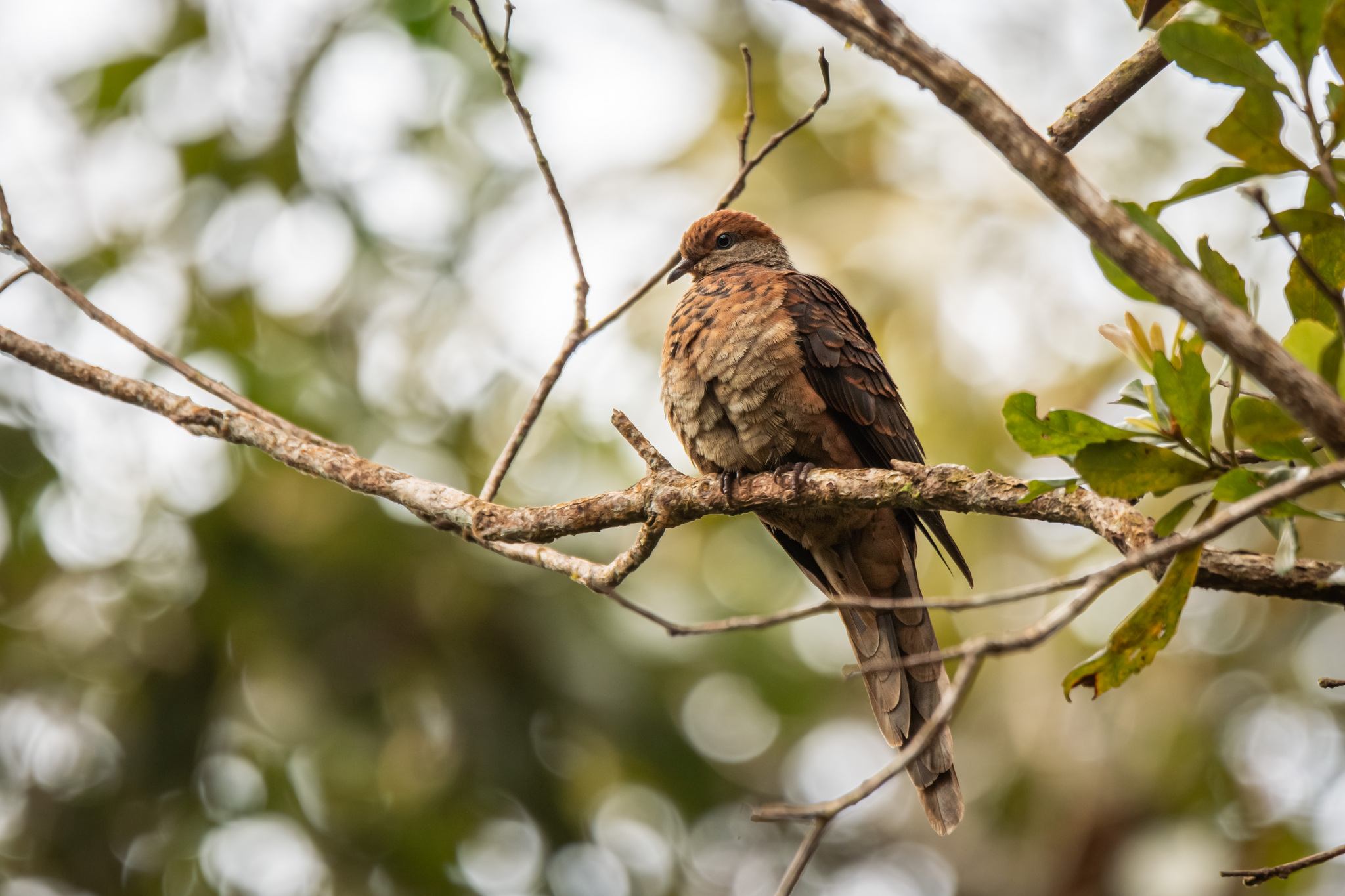
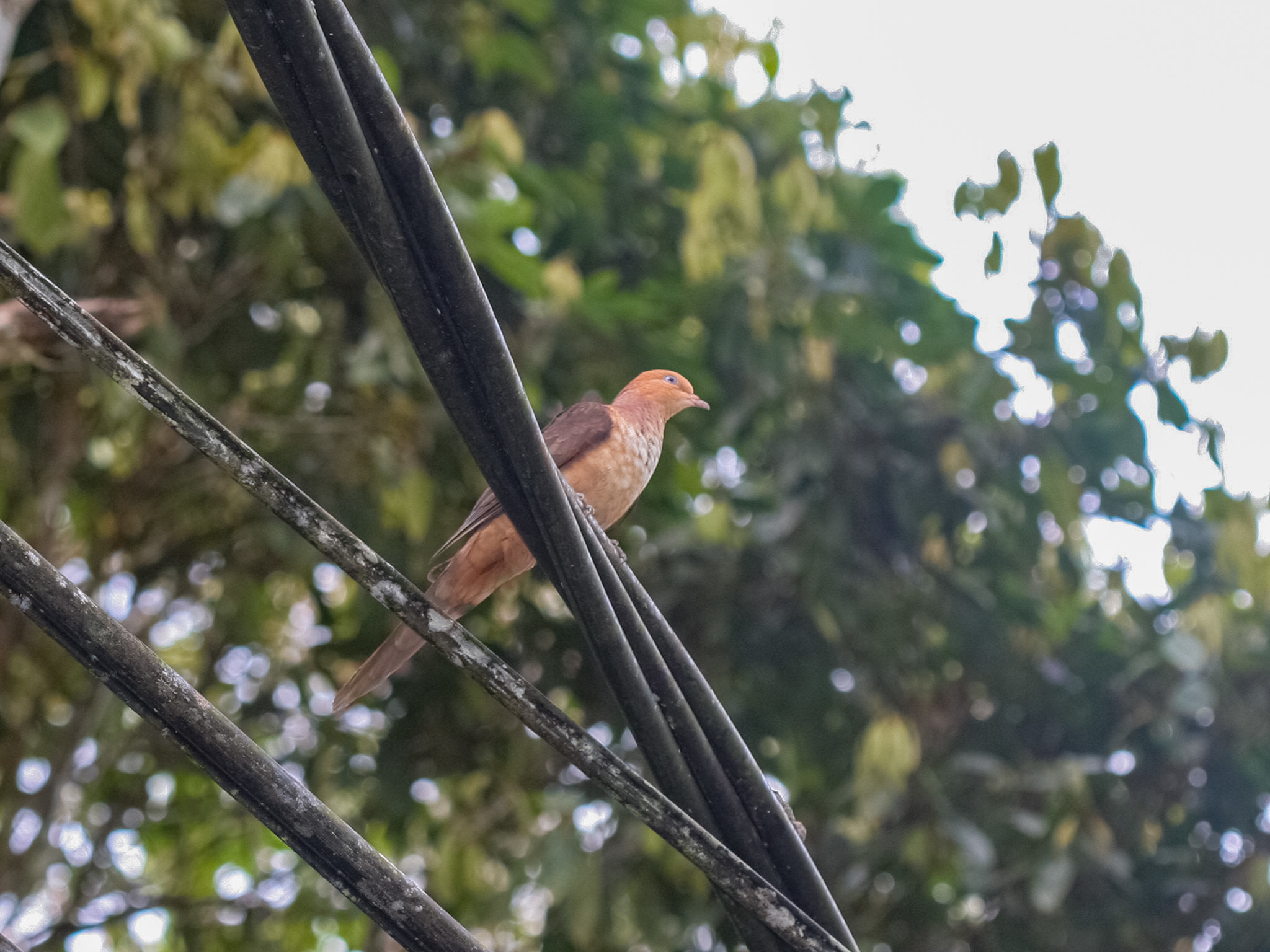
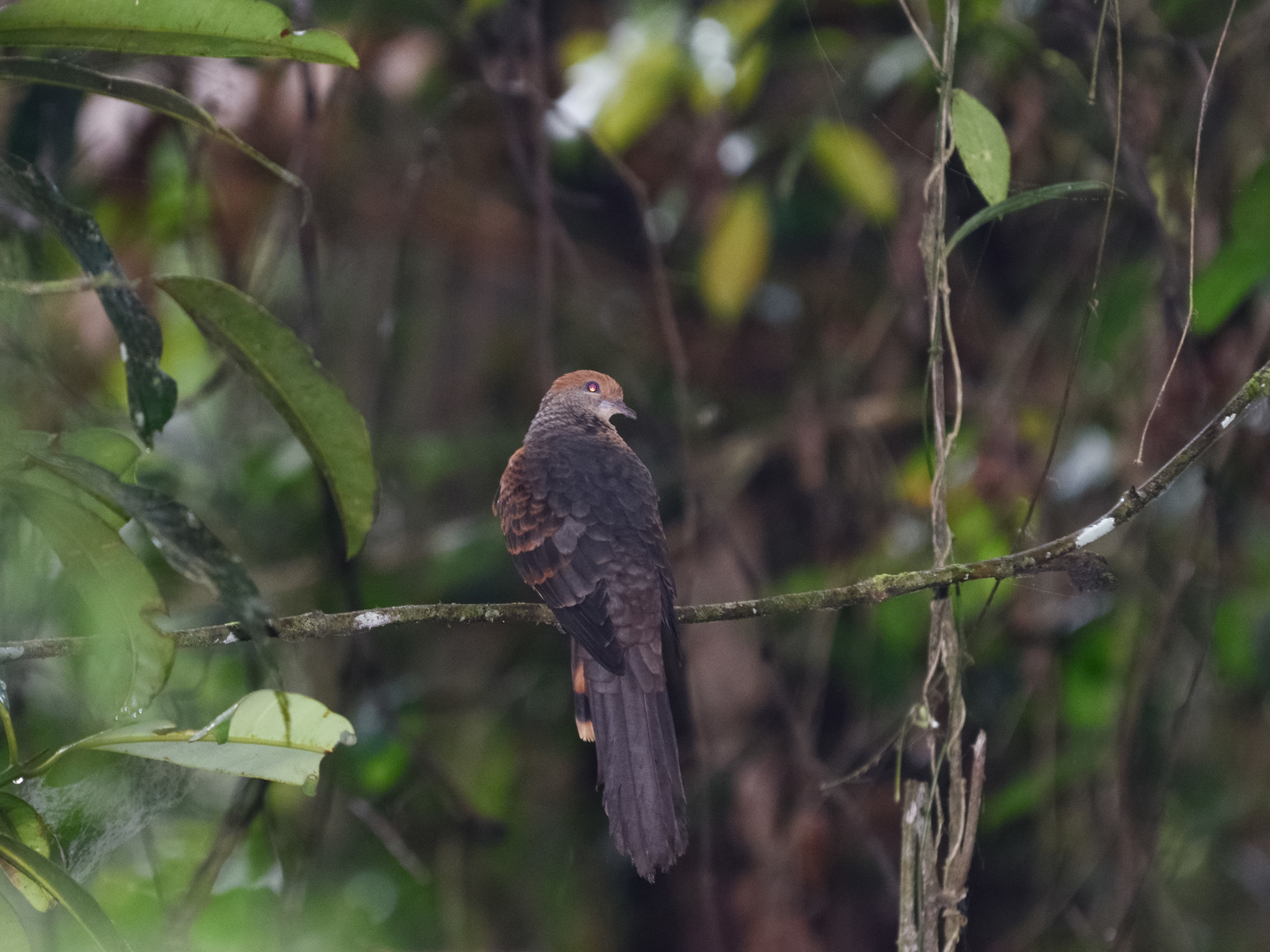
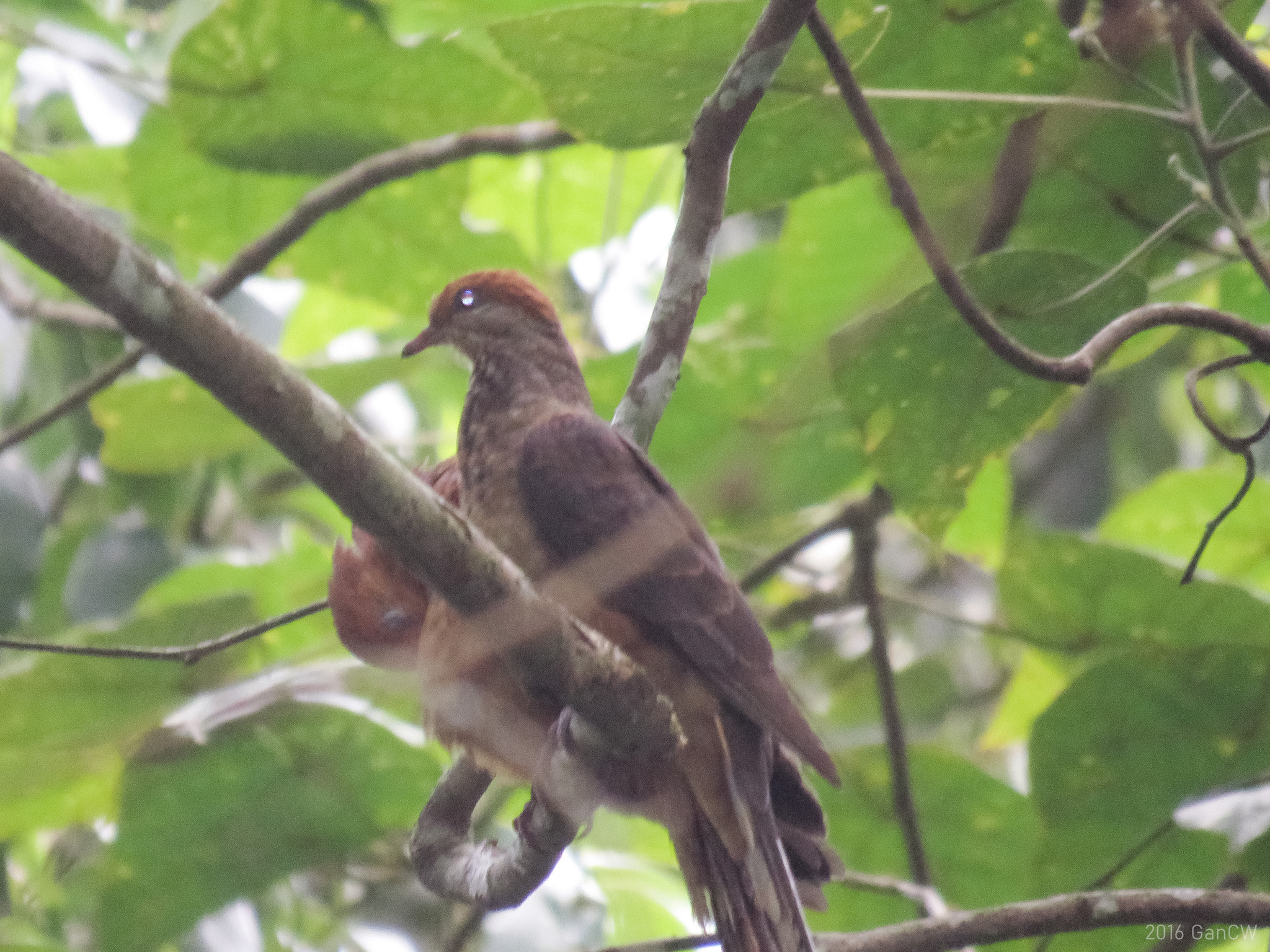
A reddish-brown pigeon measuring 27 to 30 cm in length and weighing 74 to 88 g. It has cinnamon-buff plumage throughout. The irides are greyish white. The beak is brown with a black tip. The feet are coral red in color. The tail is notably long, which distinguishes this species from other sympatric pigeons.
Identification
The long tail is the key field mark that differentiates this species from other sympatric pigeons. Its overall reddish-brown or cinnamon-buff coloration is distinctive among doves and pigeons in its range. The combination of uniform cinnamon-buff plumage, coral red feet, and brown beak with black tip helps confirm identification in the field.
Distribution & Habitat
Occurs in Brunei, China, Indonesia, Laos, Malaysia, Myanmar, Thailand, and Vietnam. Inhabits evergreen hill forests and forest peripheries in the northern part of its range, and drier forests with adjacent second-growth areas in the south. Found in cultivated areas as well. Primarily occupies submontane habitats from 300 to 2,000 m elevation, though it has been recorded up to 3,000 m on Mount Kinabalu and occasionally at sea level.
Behavior & Ecology
Travels in loose flocks. No specific information on diet, breeding, or vocalizations is provided in the source material.
Conservation
Rated as Least Concern on the IUCN Red List since 1998. Has a large range exceeding 20,000 km² with a stable population trend. Although population numbers have not been precisely determined, they are estimated to exceed 10,000 individuals, which is above the threshold for a Vulnerable rating. Described as common in the southern part of its range and uncommon in the north. No major threats have been identified.
Source: Wikipedia · CC BY-SA 3.0
Taxonomy
- Order
- Columbiformes
- Family
- Columbidae
- Genus
- Macropygia
- eBird Code
- licdov1
Vocalizations
Subspecies (8)
-
Macropygia ruficeps assimilis
southern Myanmar, northwestern Thailand, and far southwestern China (Yunnan)
-
Macropygia ruficeps engelbachi
northwestern Vietnam (western Tonkin) and northern Laos
-
Macropygia ruficeps malayana
Malay Peninsula
-
Macropygia ruficeps nana
Borneo and Sibatik Island
-
Macropygia ruficeps orientalis
Lombok, Sumbawa, Komodo, and Flores; populations from Sumba through Timor may be undescribed taxon
-
Macropygia ruficeps ruficeps
Java and Bali
-
Macropygia ruficeps simalurensis
Simeulue (off Sumatra)
-
Macropygia ruficeps sumatrana
Sumatra
Data Sources
Species description from Wikipedia, licensed under CC BY-SA 3.0.
Bird images and sounds sourced from GBIF, contributed by citizen scientists worldwide under Creative Commons licenses.
Taxonomy data from AviList 2025.