Two-barred Crossbill
Loxia leucoptera
白翅交嘴雀
Introduction
A small passerine bird in the finch family Fringillidae. Breeds in coniferous forests across North America and the Palearctic, from Alaska and Canada through the northern United States and across Eurasia from northern Europe to east Siberia and northeast China. Distinguished by its crossed bill, an adaptation for extracting seeds from conifer cones, and a strong preference for larch as a food source. The species exhibits irregular irruption behavior when food supplies fail. Two subspecies are recognized: L. l. bifasciata in Eurosiberia and L. l. leucoptera in North America.
Description
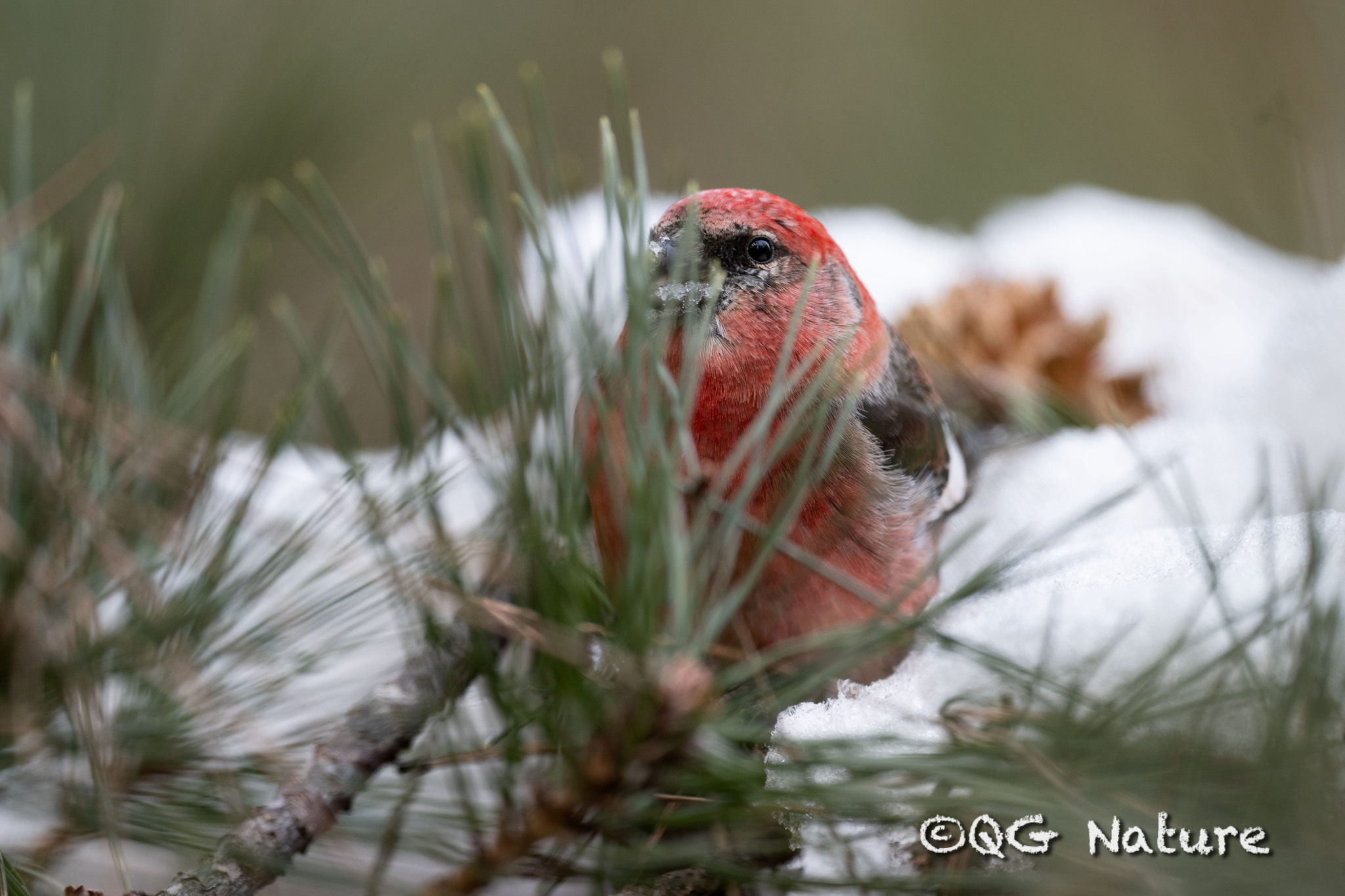
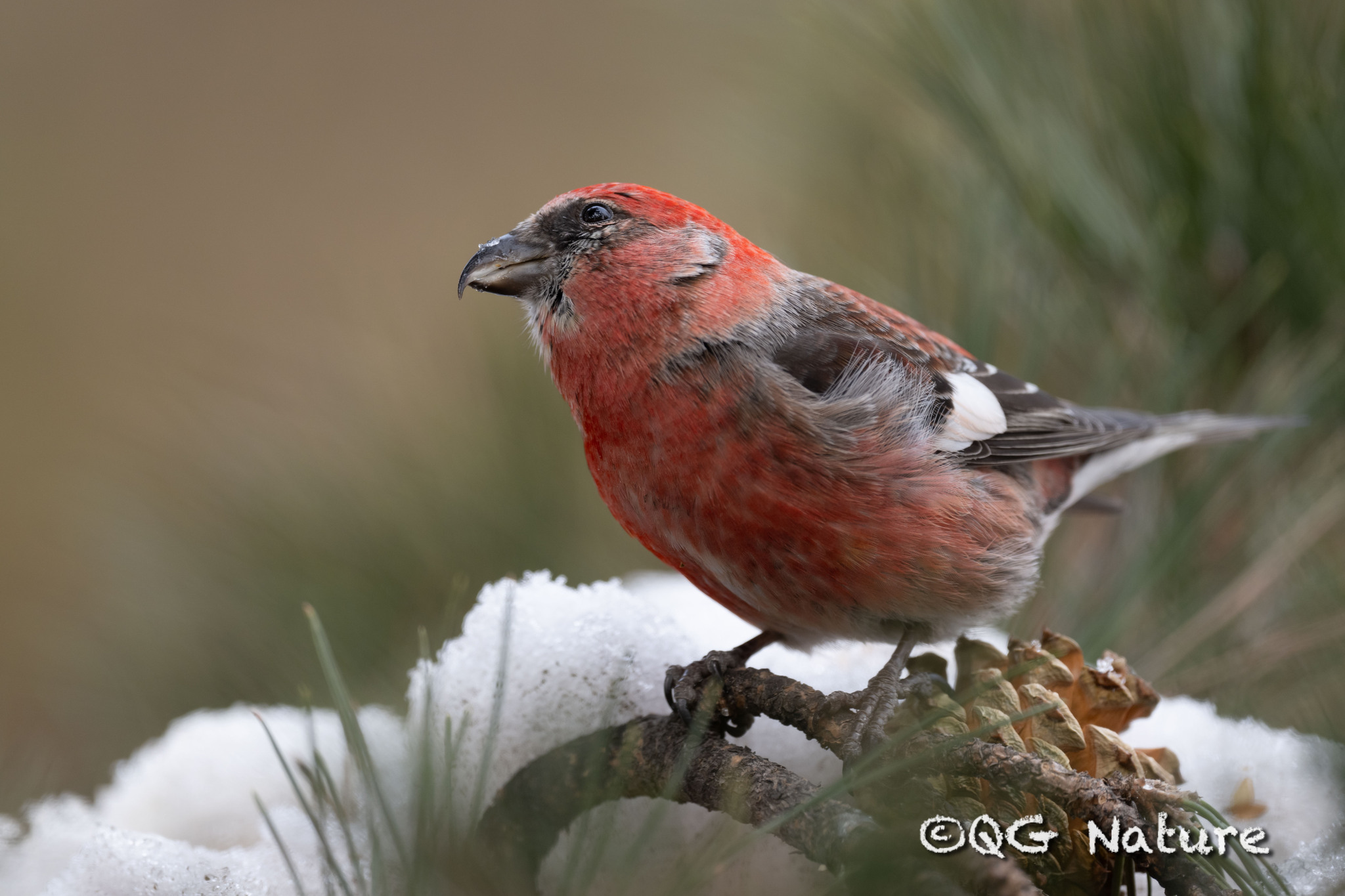
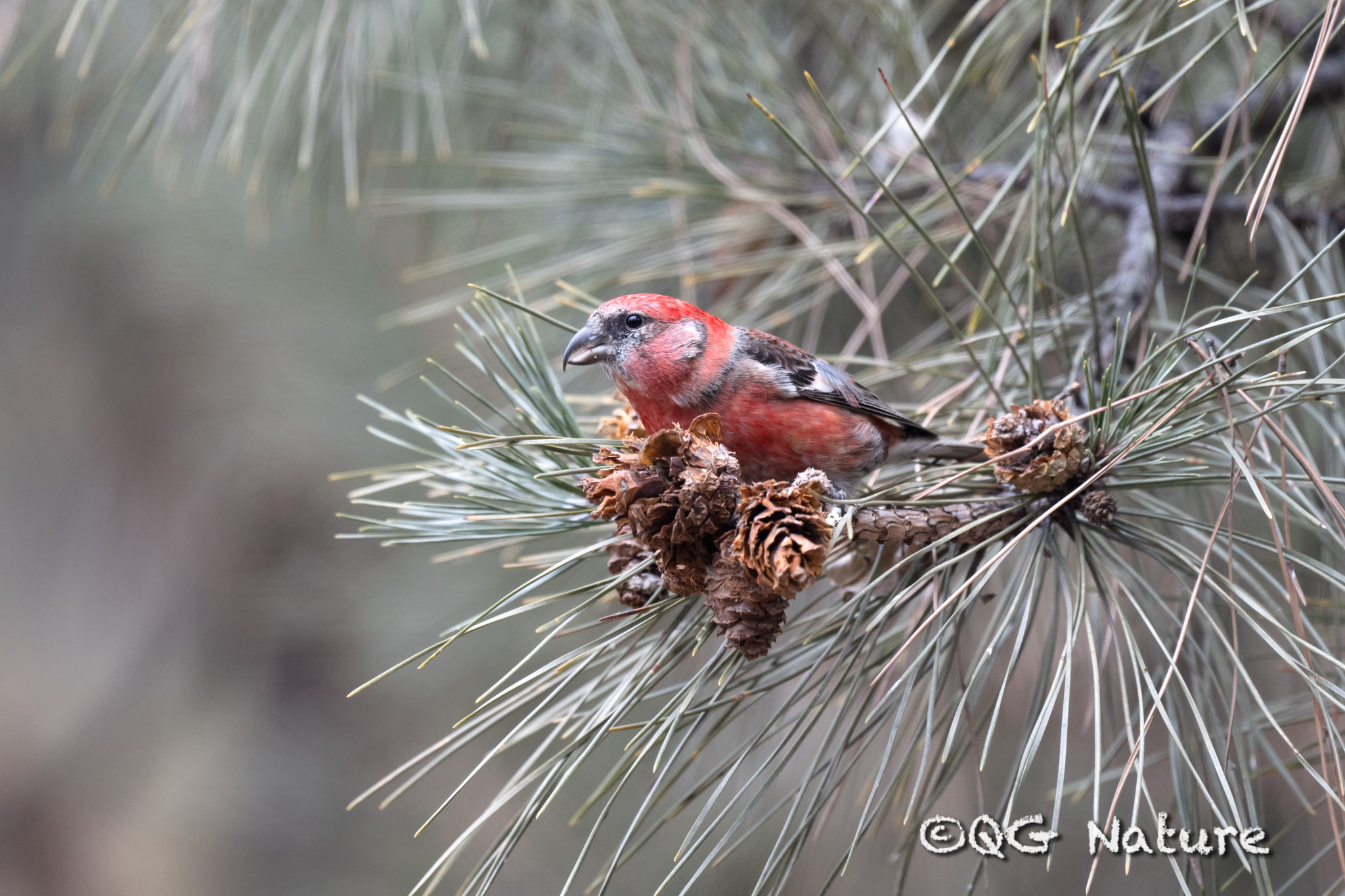
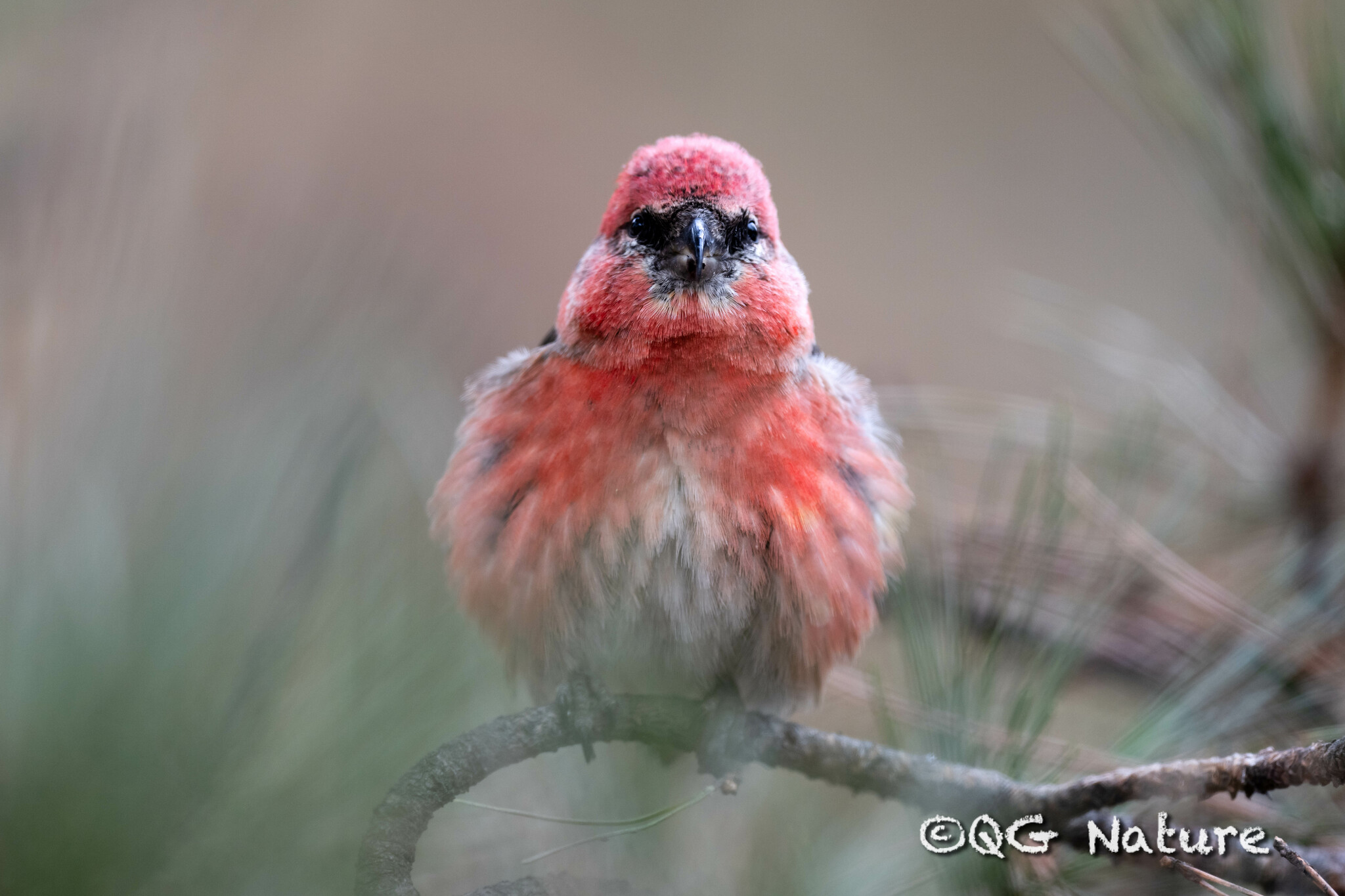
Length ranges from 14.5 to 17 cm (5.7–6.7 in) with a weight of 25–40 g (0.88–1.41 oz). Characterized by short legs, a forked tail, distinctive crossed bill, and two prominent white wing-bars. Adult males have bright raspberry-red coloration on the forehead, crown, nape, and upperparts; scapulars are black or blackish brown with pink edges; upper tail coverts are black with white fringes. Females lack the pink coloration, instead displaying greenish-yellow head and upperparts. White tertial tips provide an additional distinguishing feature.
Identification
The white wing-bars and white tertial tips are the primary field marks, giving this species its English and scientific names. Males appear a brighter, pinker red than other crossbill species. In North America, confusion is possible with the red crossbill, though that species lacks prominent wing-bars (though some individuals may show weak bars). In the Palearctic, this species is smaller-headed and smaller-billed than the parrot crossbill and Scottish crossbill. The chip call is weaker and higher-pitched than that of the red crossbill.
Distribution & Habitat
Breeds throughout the coniferous forest belt of North America (Alaska, Canada, northern United States) and across the Palearctic from northern Europe through Siberia to northeast China and northeast Europe. Nests in coniferous trees at heights of 2–20 m above ground. Mainly resident but undergoes irregular irruptions southward when cone crops fail. The North American subspecies wanders more frequently than the Eurosiberian population. Forms flocks outside breeding season, often mixed with other crossbill species. A rare visitor to western Europe, typically arriving with red crossbill irruptions.
Behavior & Ecology
Specialist feeder on conifer cone seeds, using its crossed bill to extract seeds. Shows strong preference for larch: Siberian larch and Dahurian larch in Eurosiberia, Tamarack larch in North America. Also consumes rowan berries, eastern hemlock cones, and white spruce cones. Nest is built by the female 2–20 m high against conifer trunks, consisting mainly of conifer twigs. Clutch contains 3–4 eggs incubated by the female for 14–15 days. Both parents feed chicks, which fledge after 22–24 days but remain with parents for up to 6 weeks.
Source: Wikipedia · CC BY-SA 3.0
Taxonomy
- Order
- Passeriformes
- Family
- Fringillidae
- Genus
- Loxia
- eBird Code
- whwcro
Subspecies (2)
-
Loxia leucoptera bifasciata
coniferous forest of northern Eurasia
-
Loxia leucoptera leucoptera
north-central Alaska to Newfoundland, Canada, and northern USA
Data Sources
Species description from Wikipedia, licensed under CC BY-SA 3.0.
Bird images and sounds sourced from GBIF, contributed by citizen scientists worldwide under Creative Commons licenses.
Taxonomy data from AviList 2025.