Swinhoe's Pheasant
Lophura swinhoii
蓝腹鹇
Introduction
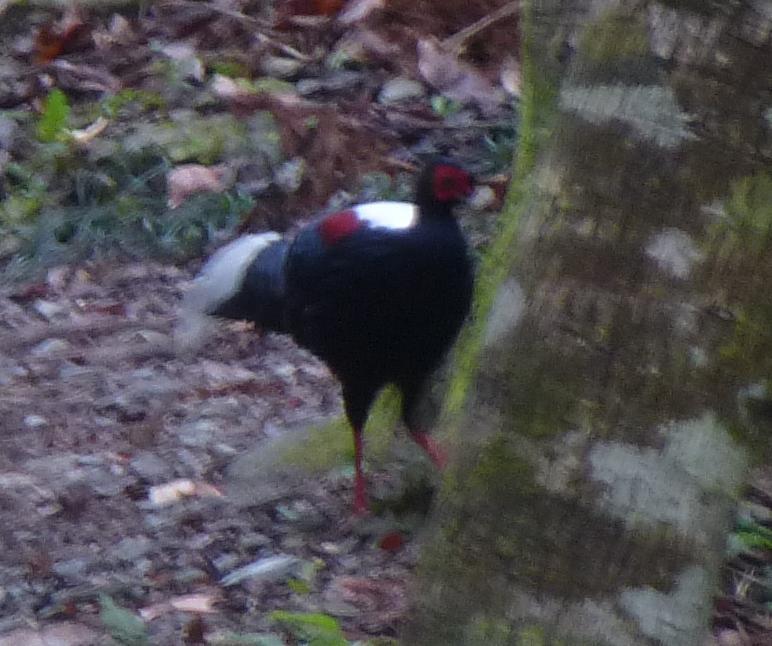
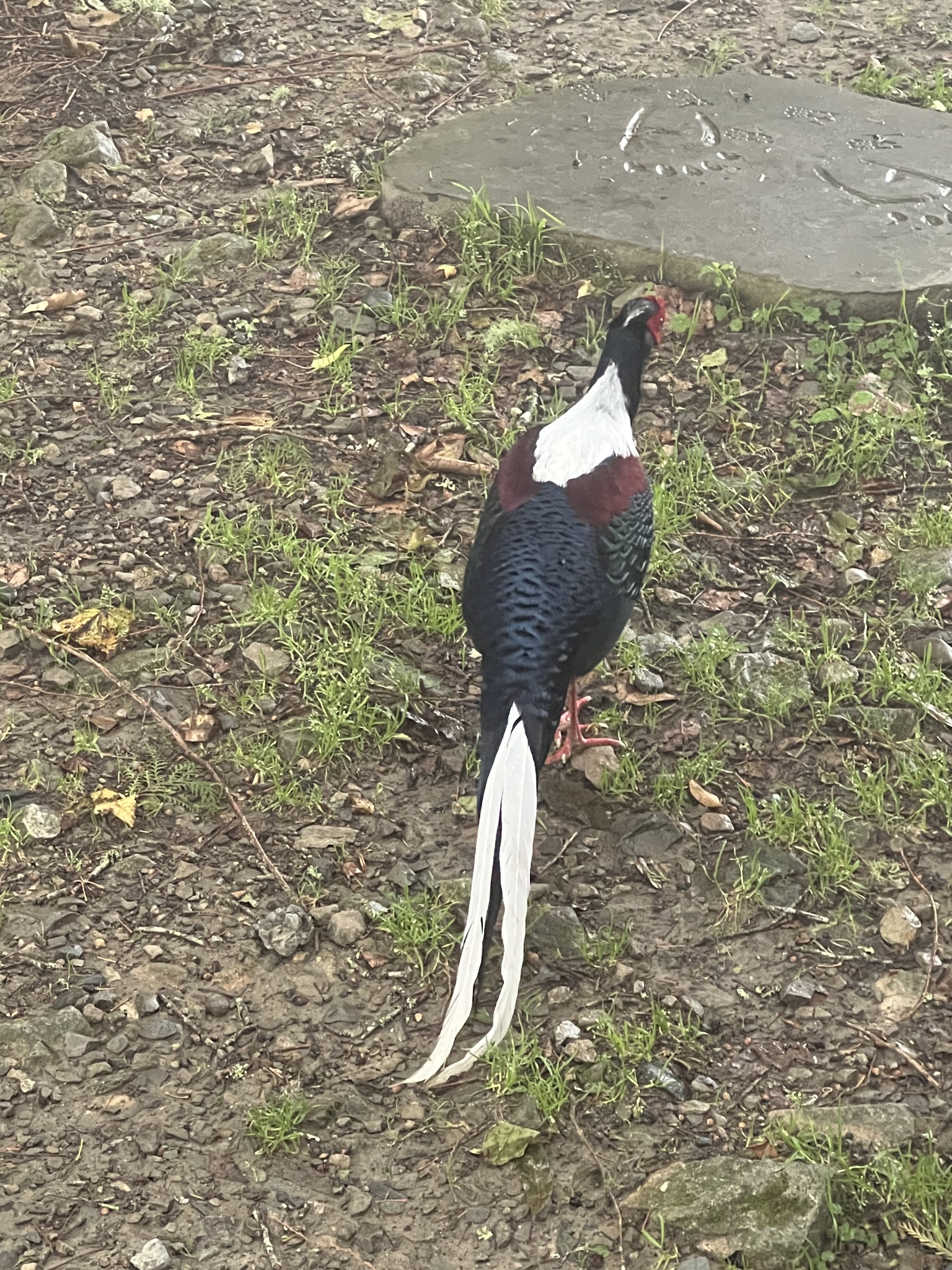
A bird of the pheasant subfamily in the fowl family Phasianidae, endemic to Taiwan. Inhabits primary broadleaf forest in the mountains of central Taiwan up to 2,300 meters elevation. Distinguished by the male's glossy blue-purple plumage on the chest, belly, and rump, combined with a white nape, white crest, and red legs. The species has a small population in a limited range that has been shrinking due to habitat degradation. Some populations were extirpated in the 1960s and 1970s following historical hunting pressure. Current global population is estimated at over 10,000 individuals. Along with the Mikado pheasant and Taiwan blue magpie, it is sometimes considered an unofficial national symbol for Taiwan, bearing the colors of the national flag.
Description
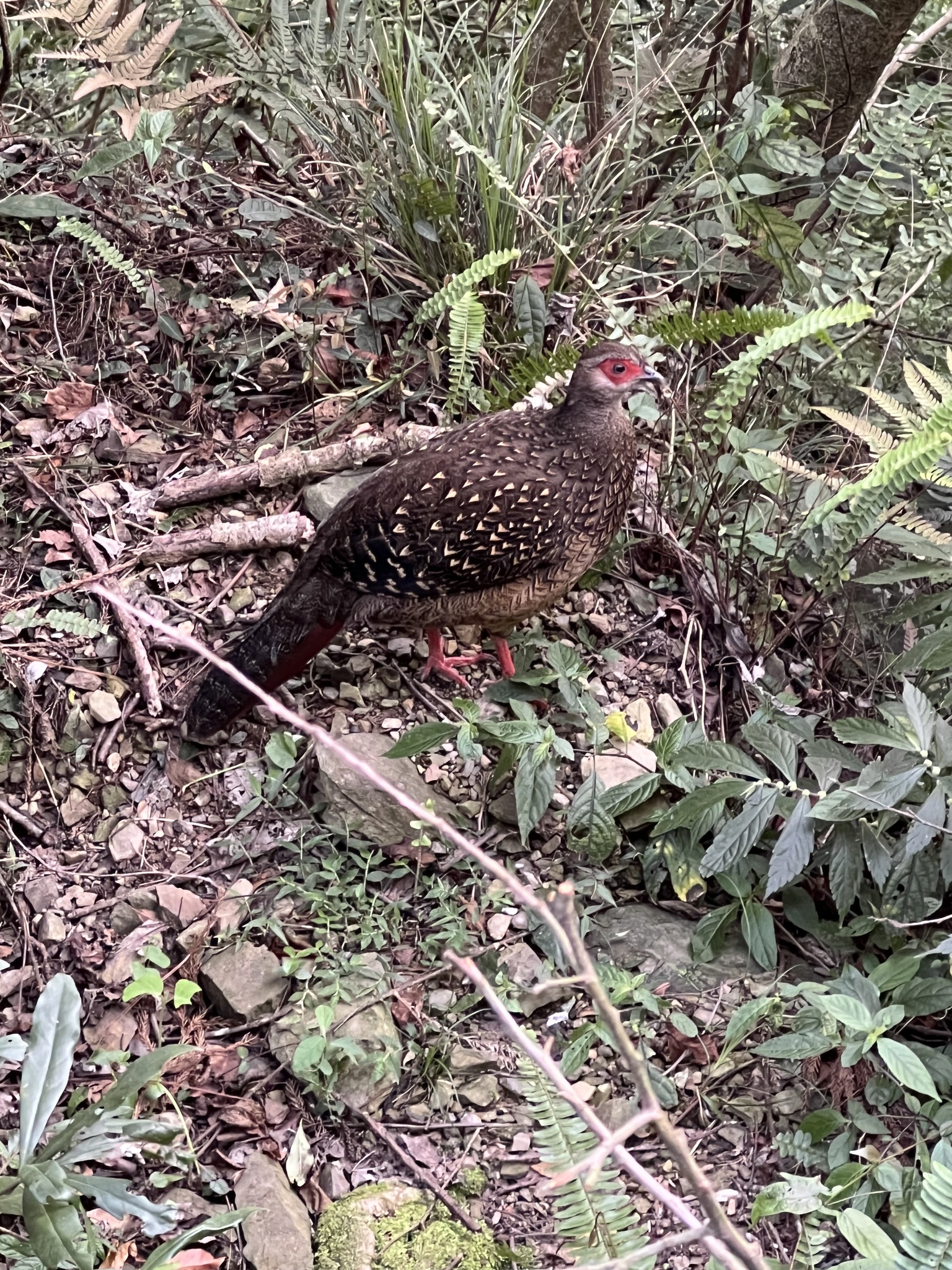
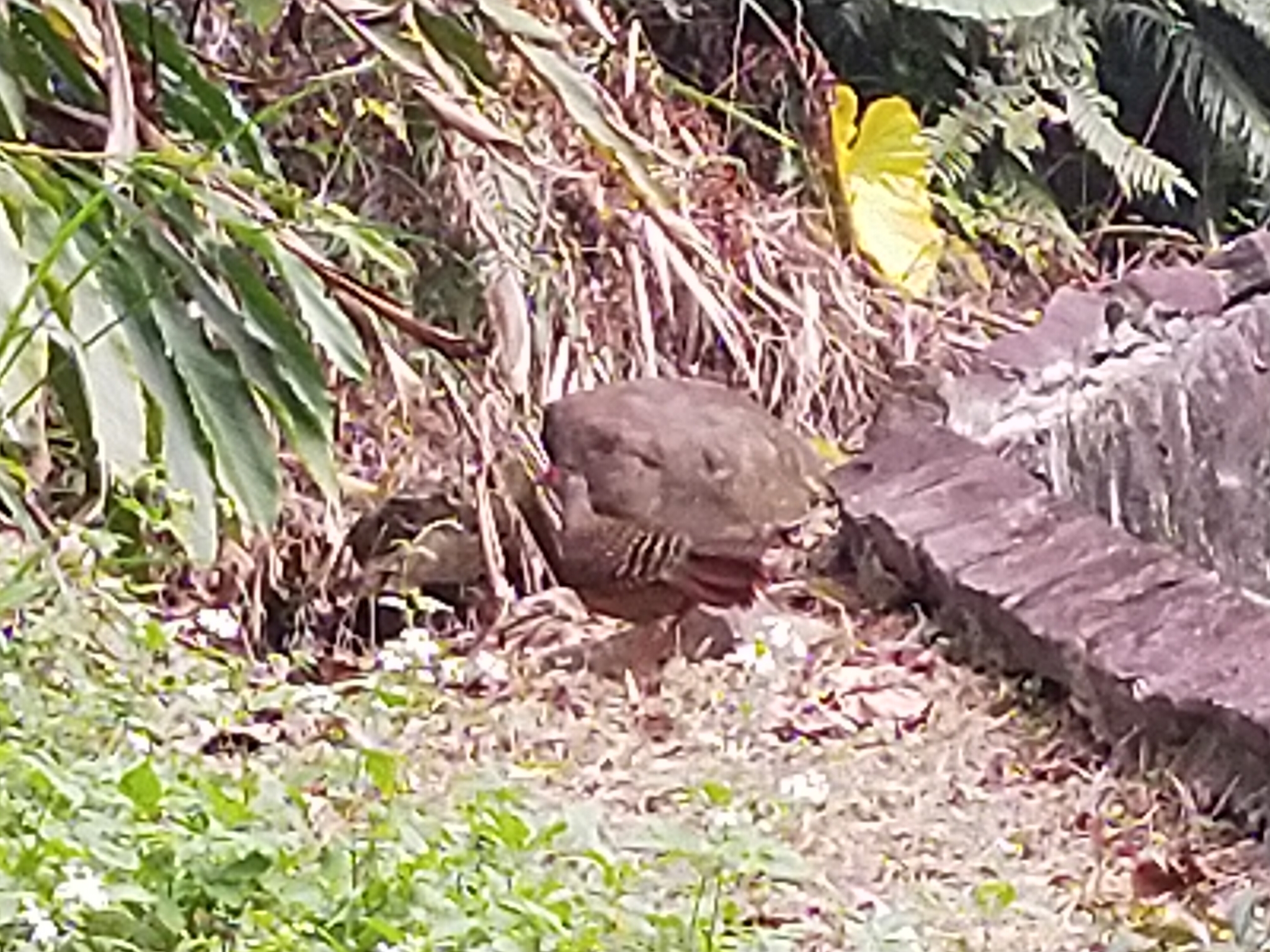
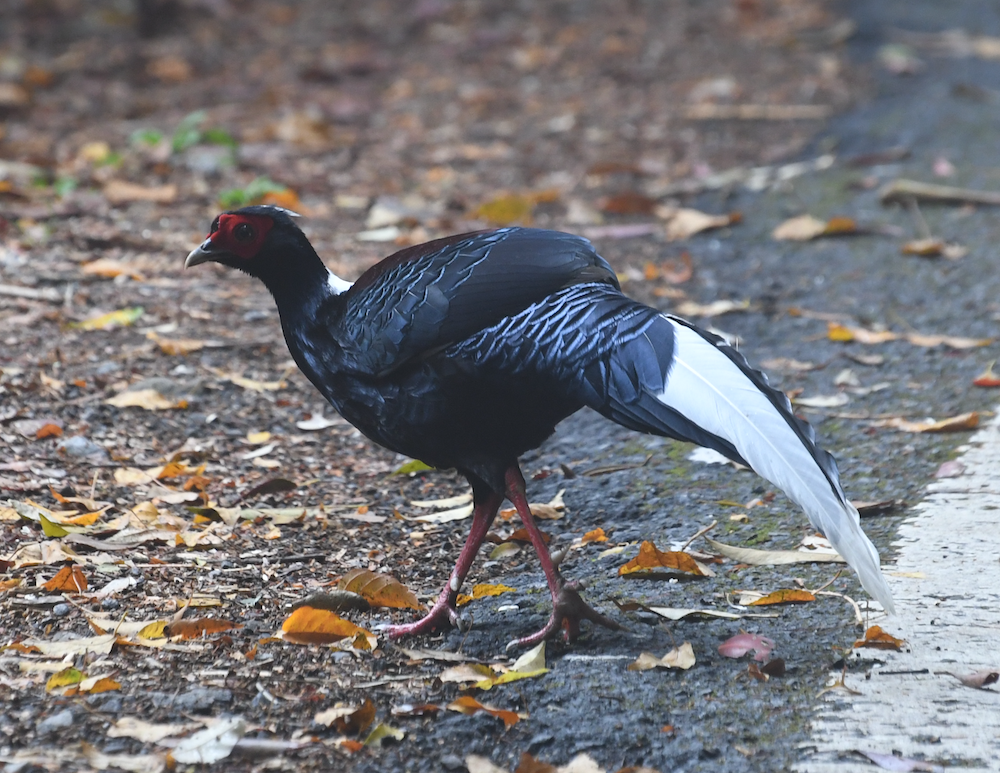
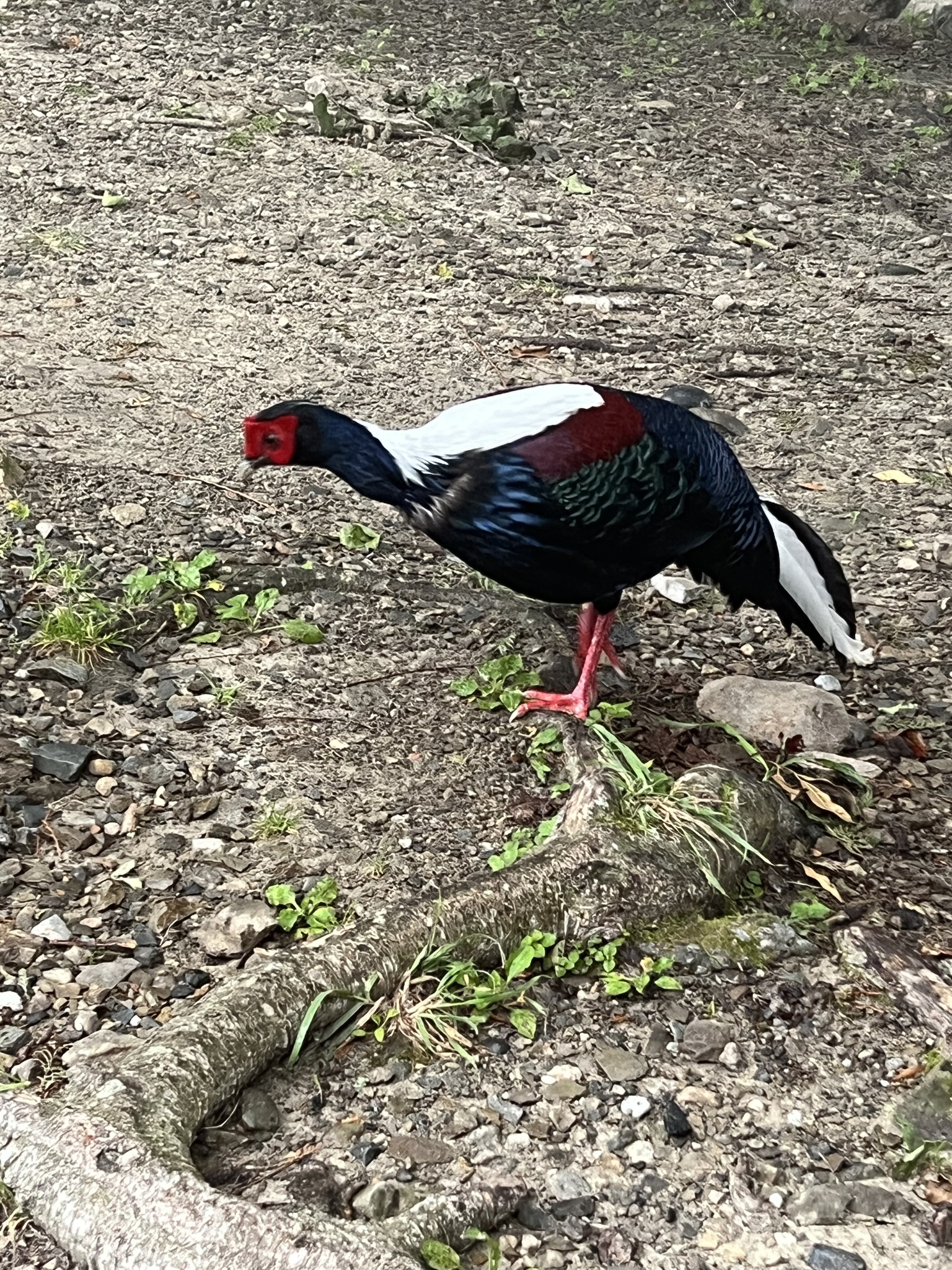
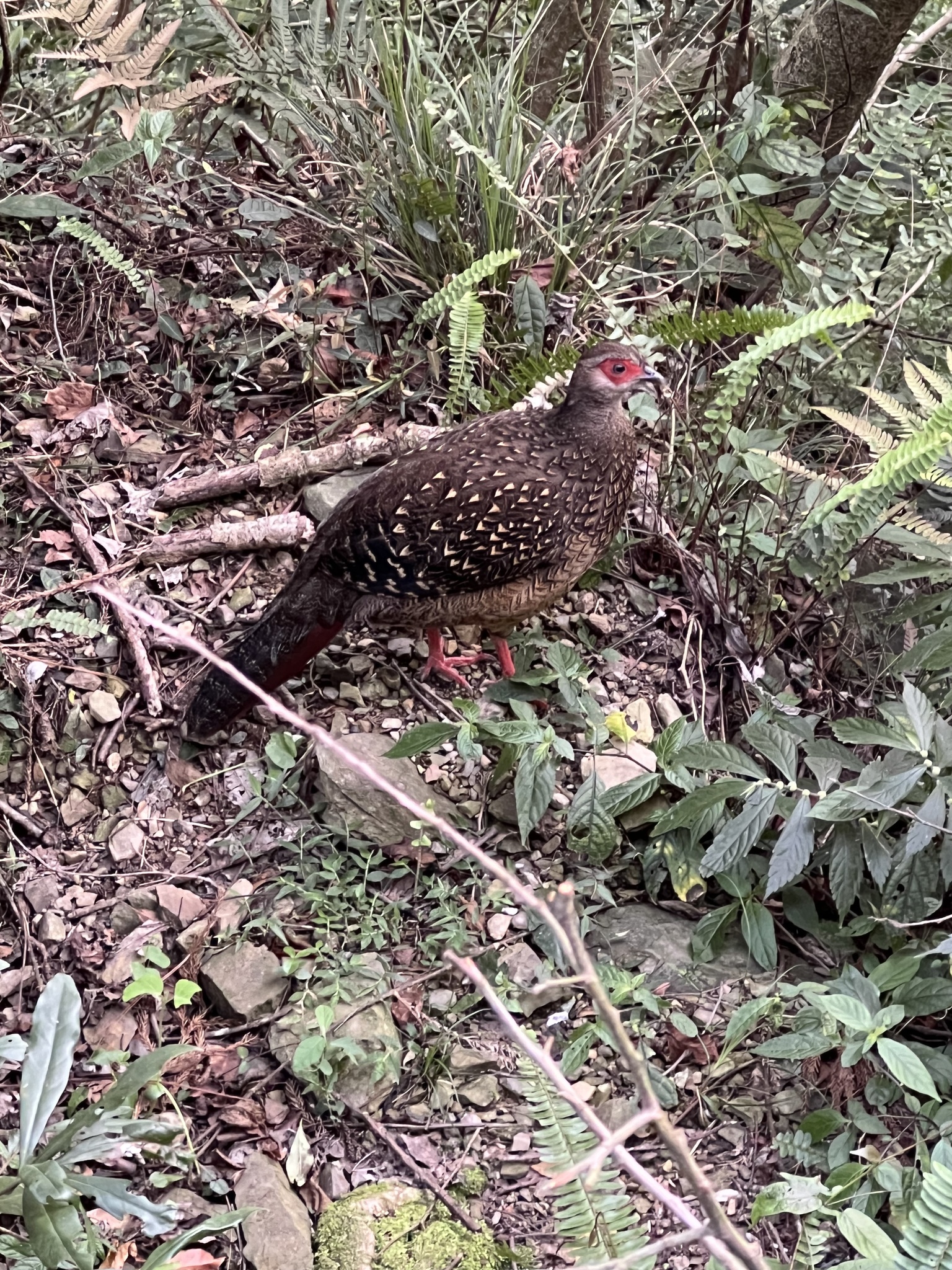
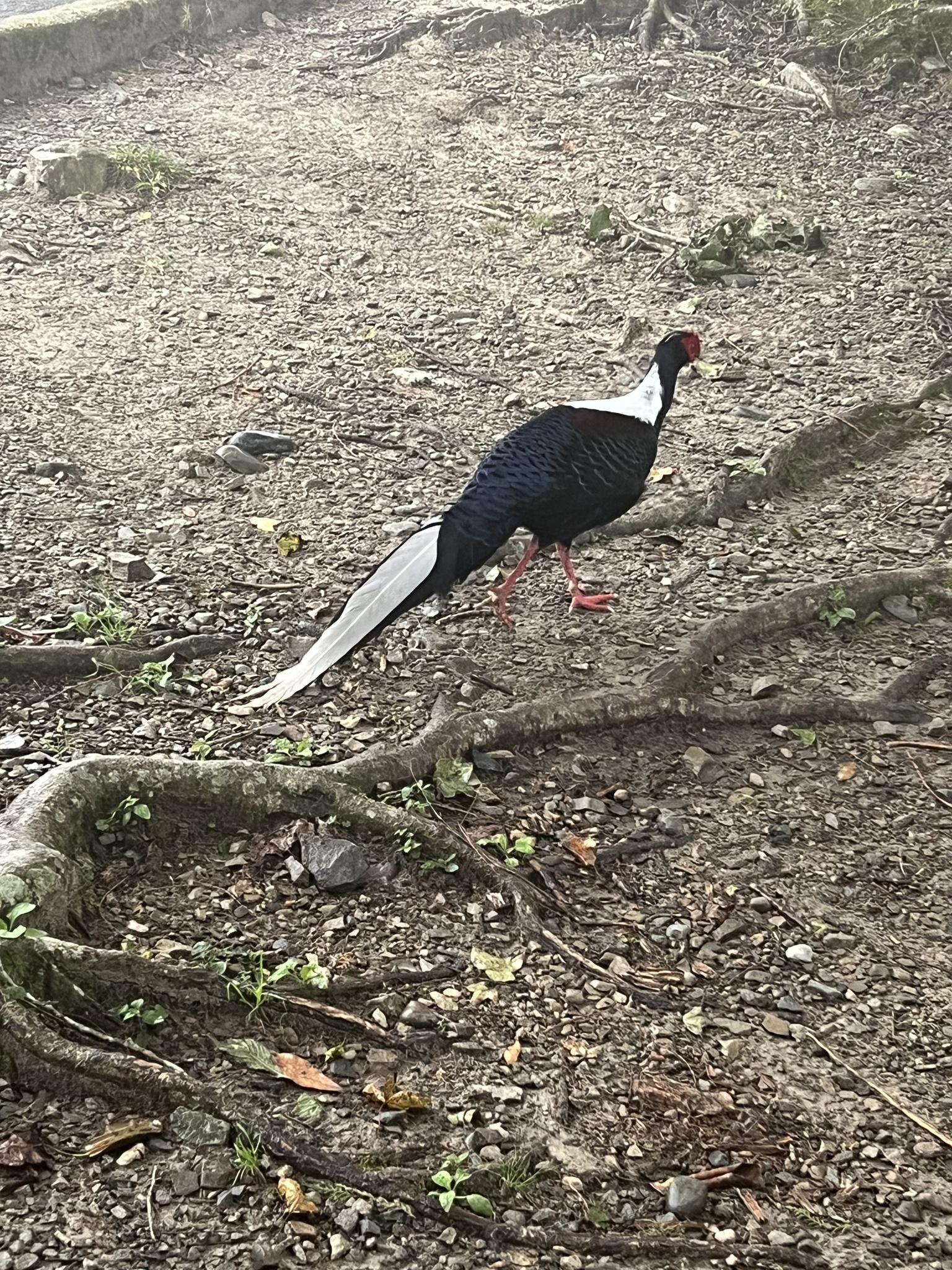
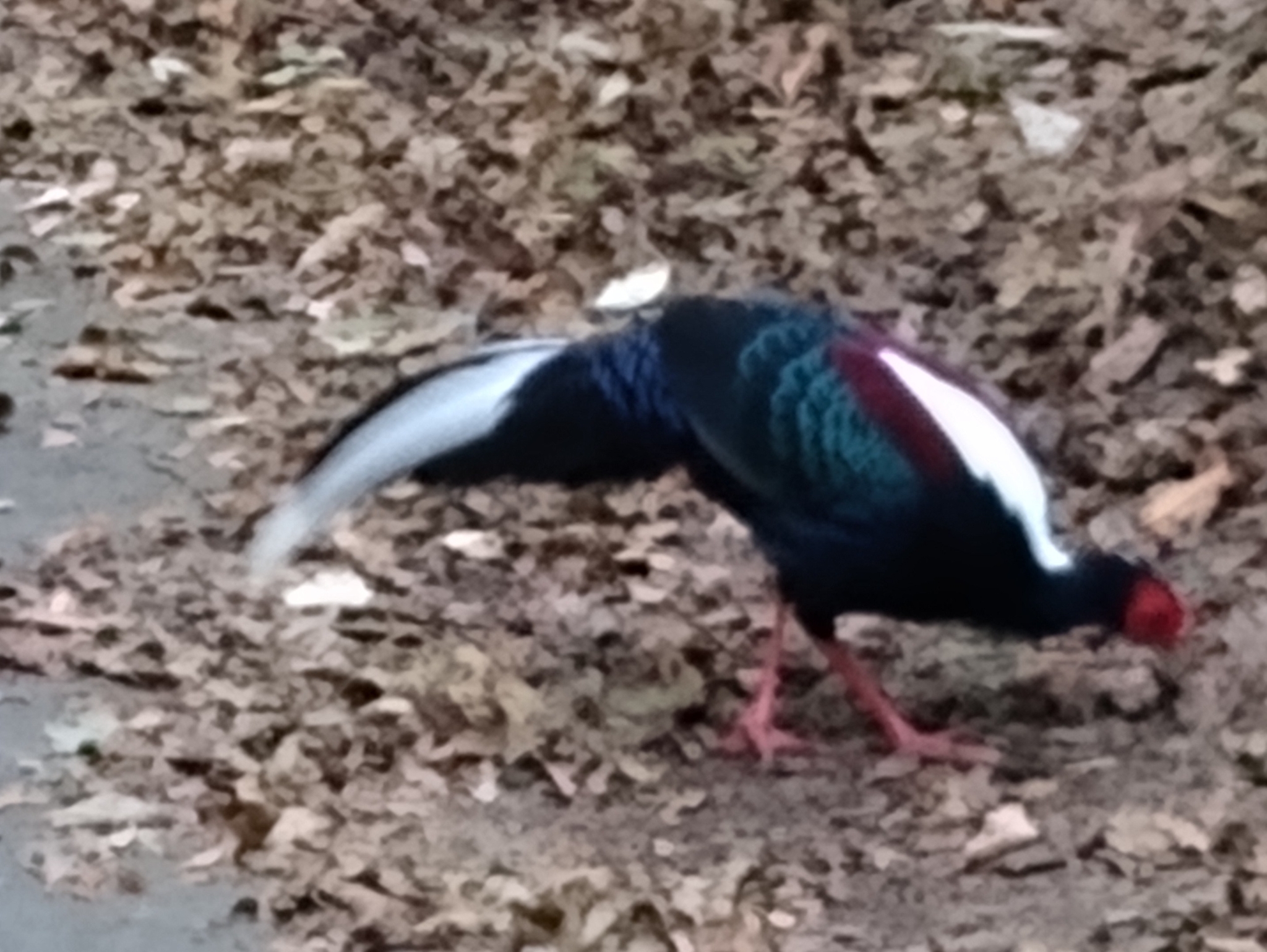
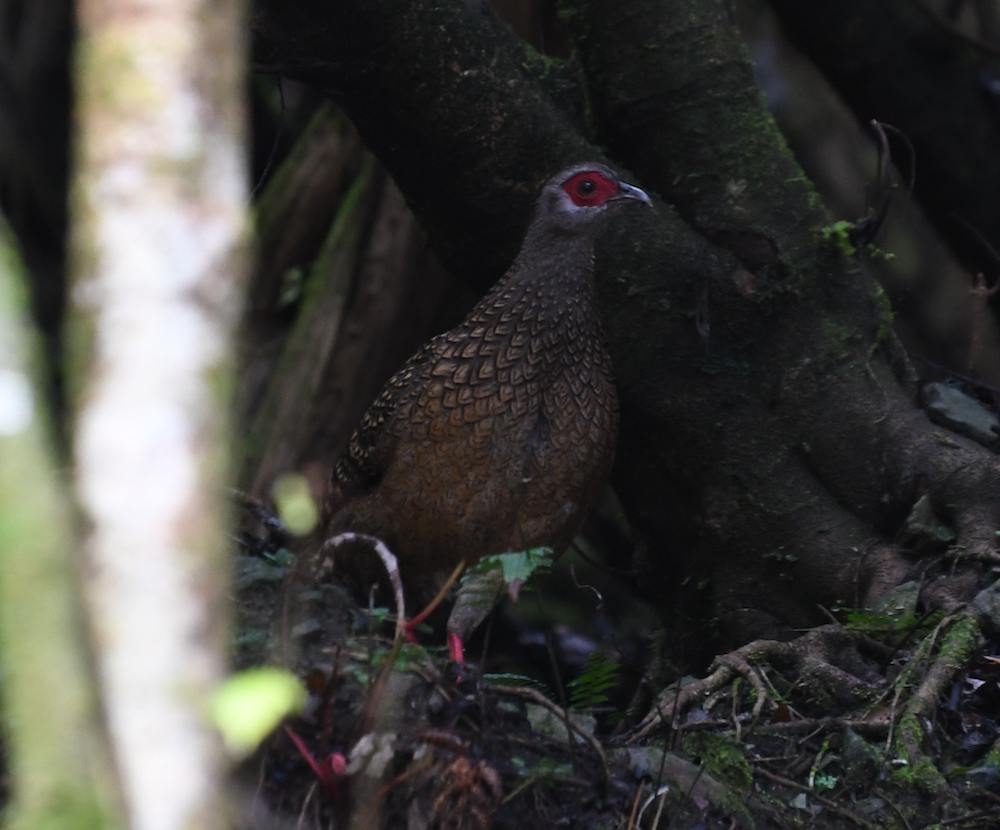
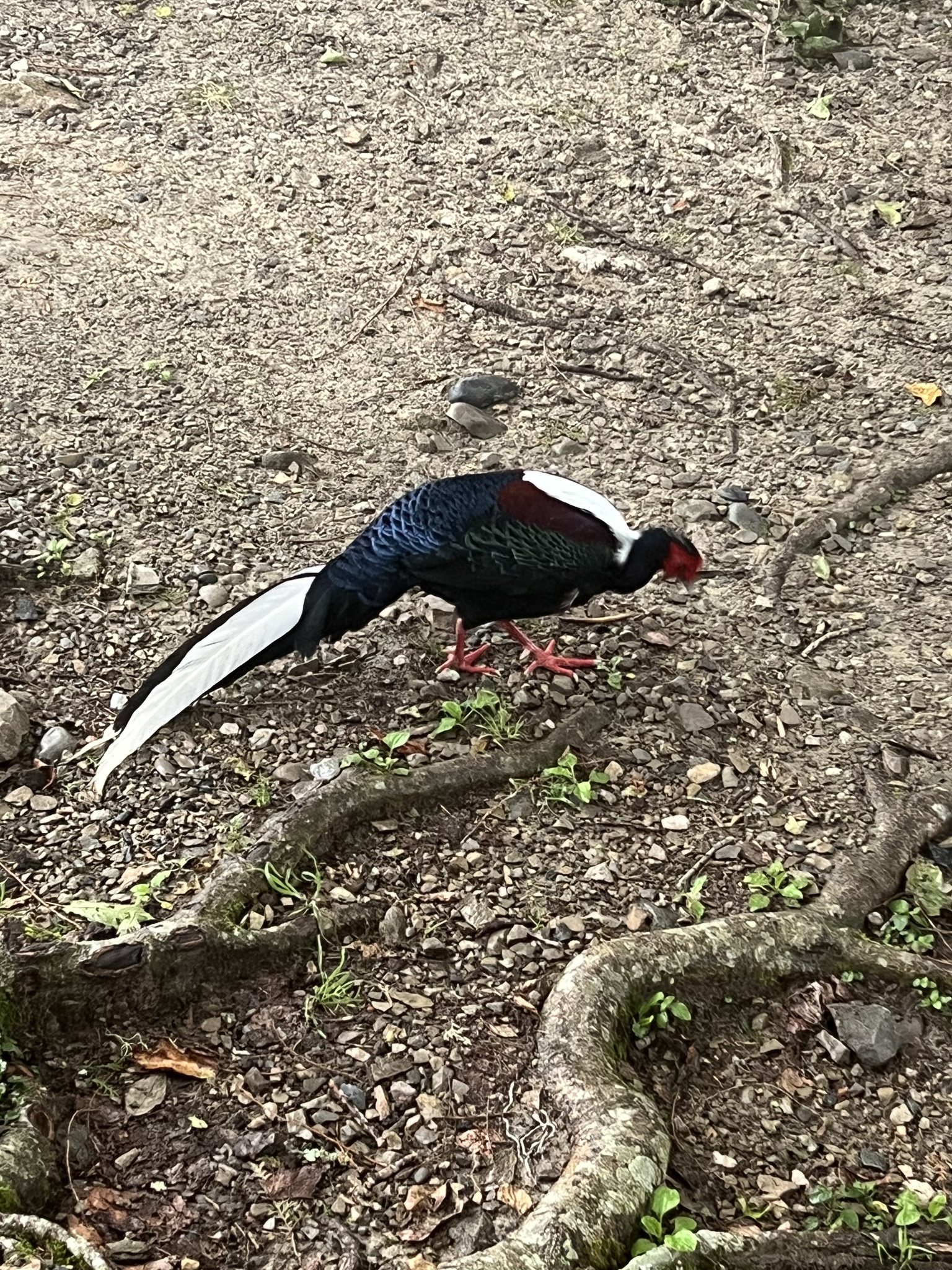
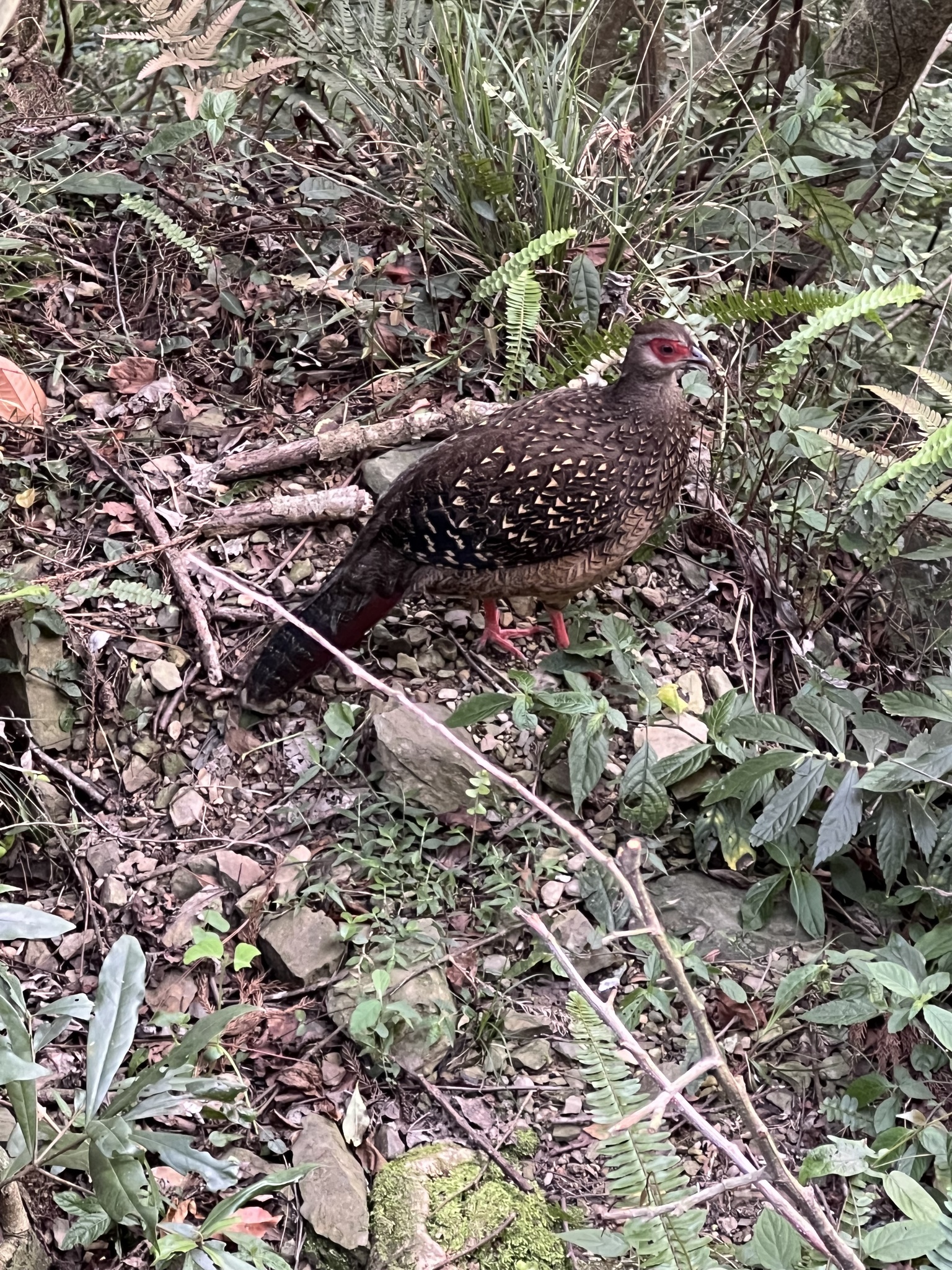
Males grow up to 79 cm in length and display glossy blue-purple plumage on the chest, belly, and rump, complemented by a white nape, white crest, red wattles, and white tail feathers. Females are brown with yellow, arrow-shaped spots and complex barring patterns, featuring maroon outer rectrices. Juvenile males are dark blue with brown and yellow patterns on the wings.
Identification
Red legs distinguish this species from the similar Mikado pheasant. During courtship displays, males exhibit engorged wattles and perform a distinctive routine of hopping followed by running in circles around females. A frontal display with the tail fanned and wing-whirring displays are also characteristic behaviors.
Distribution & Habitat
Endemic to the mountains of central Taiwan. Inhabits primary broadleaf forest at elevations up to 2,300 meters. This is a non-migratory species that remains in its habitat year-round.
Behavior & Ecology
Diet consists of seeds, fruits, and some insects and other animal matter. Females lay clutches of two to six eggs, incubated for 25 to 28 days. Chicks can leave the nest at 2-3 days old. Males are often observed with multiple females, suggesting polygyny, though this has not been confirmed. Predators include crested goshawk, white-bellied sea eagle, Gurney's eagle, spot-bellied eagle-owl, civet, and badger.
Conservation
The species has a small global population estimated at over 10,000 individuals, restricted to a limited range that continues to shrink. Primary threats include habitat degradation from logging. Some populations are secure within protected areas, while others may be declining. Its unofficial status as a national symbol has aided conservation efforts and protection measures.
Culture
Along with the Mikado pheasant and Taiwan blue magpie, this bird is sometimes considered an unofficial national symbol for Taiwan, as its plumage bears the colors of the national flag (red, white, and blue). In some areas, particularly Dasyueshan National Forest Recreation Area, it has become a draw for birdwatchers and photographers, though feeding by photographers has raised conservation concerns.
Source: Wikipedia · CC BY-SA 3.0
Taxonomy
- Order
- Galliformes
- Family
- Phasianidae
- Genus
- Lophura
- eBird Code
- swiphe1
Distribution
montane forest of central Taiwan
Vocalizations
Data Sources
Species description from Wikipedia, licensed under CC BY-SA 3.0.
Bird images and sounds sourced from GBIF, contributed by citizen scientists worldwide under Creative Commons licenses.
Taxonomy data from AviList 2025.