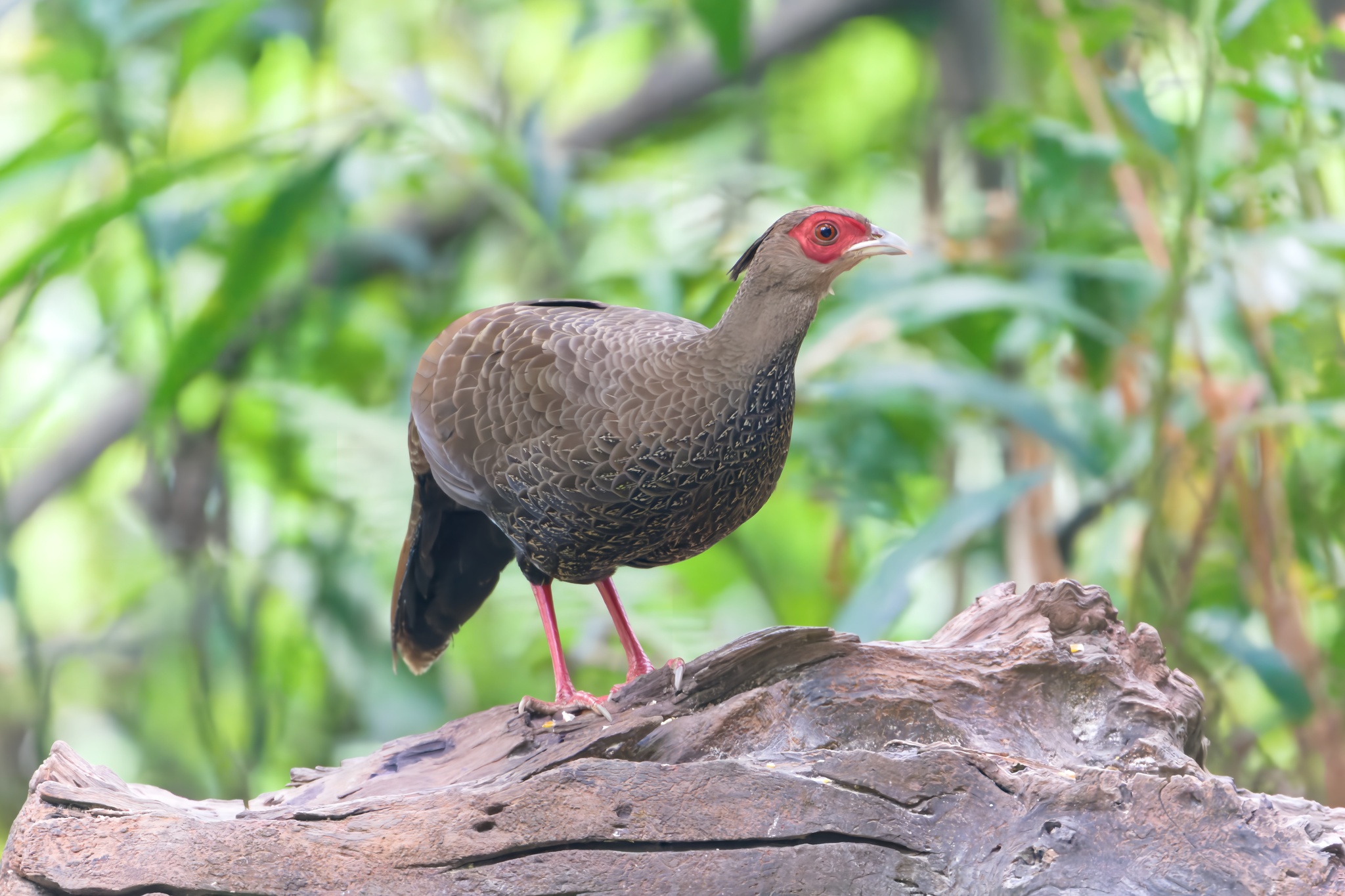
Silver Pheasant
Lophura nycthemera
白鹇
Introduction
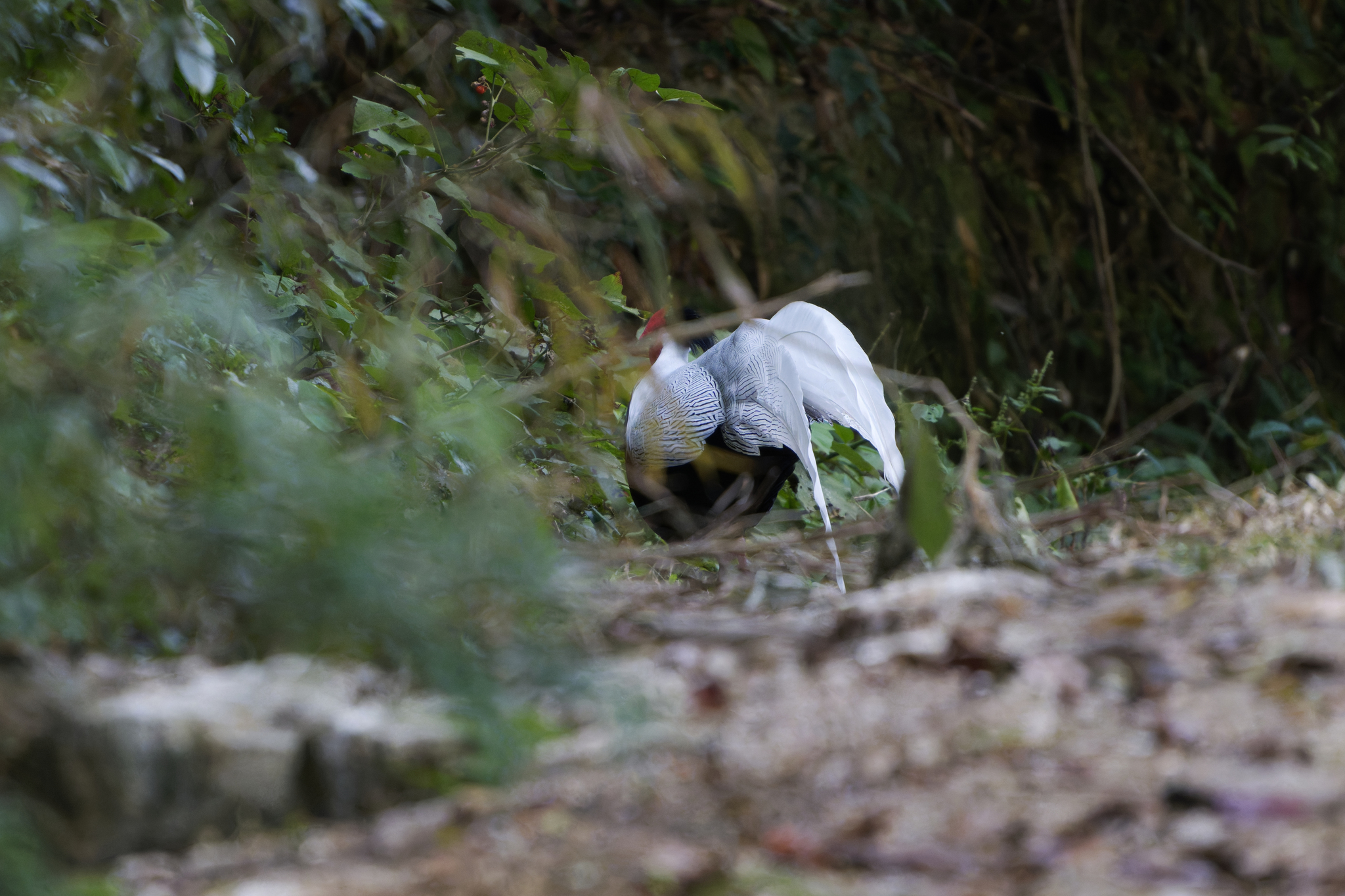
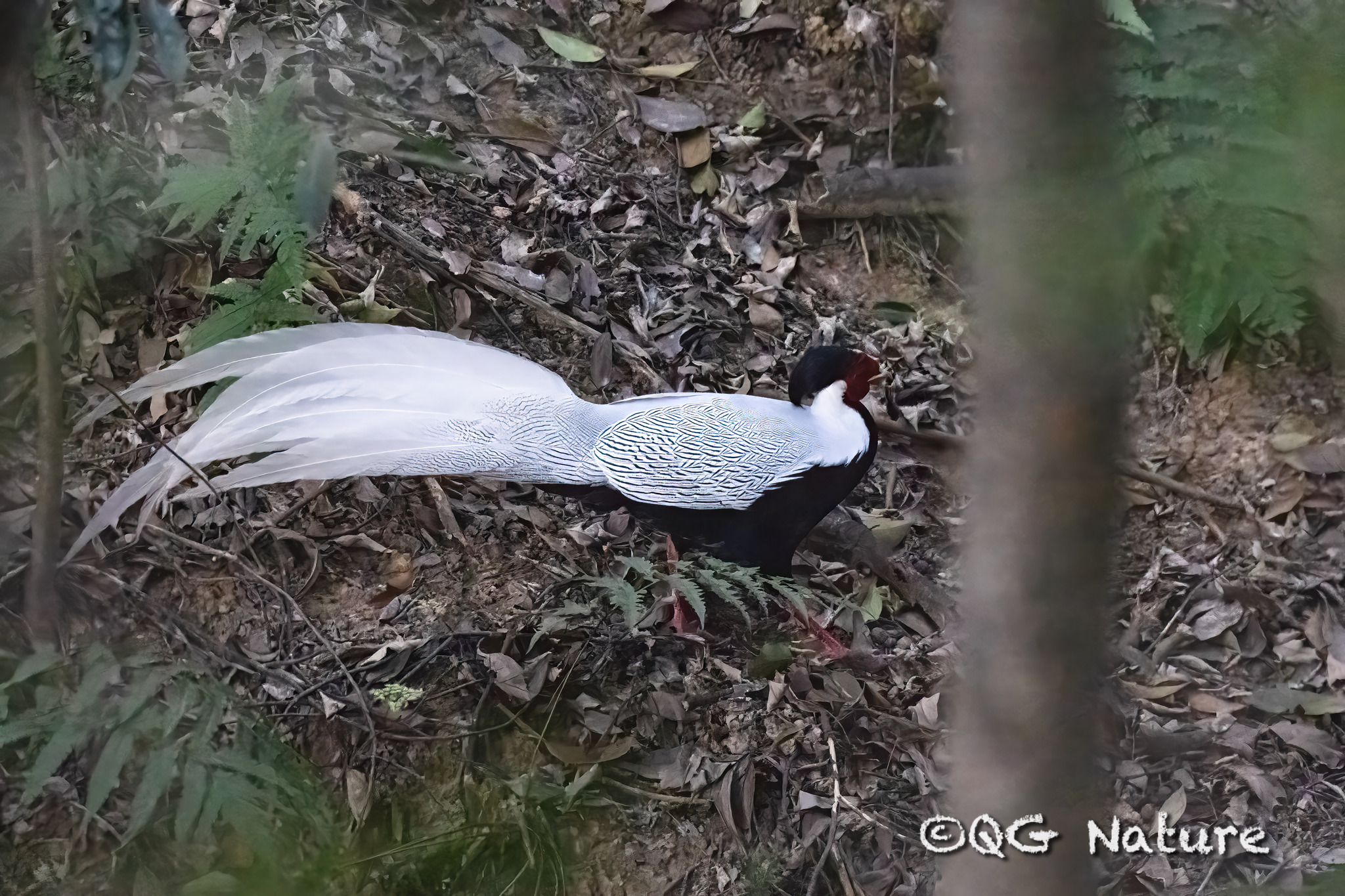
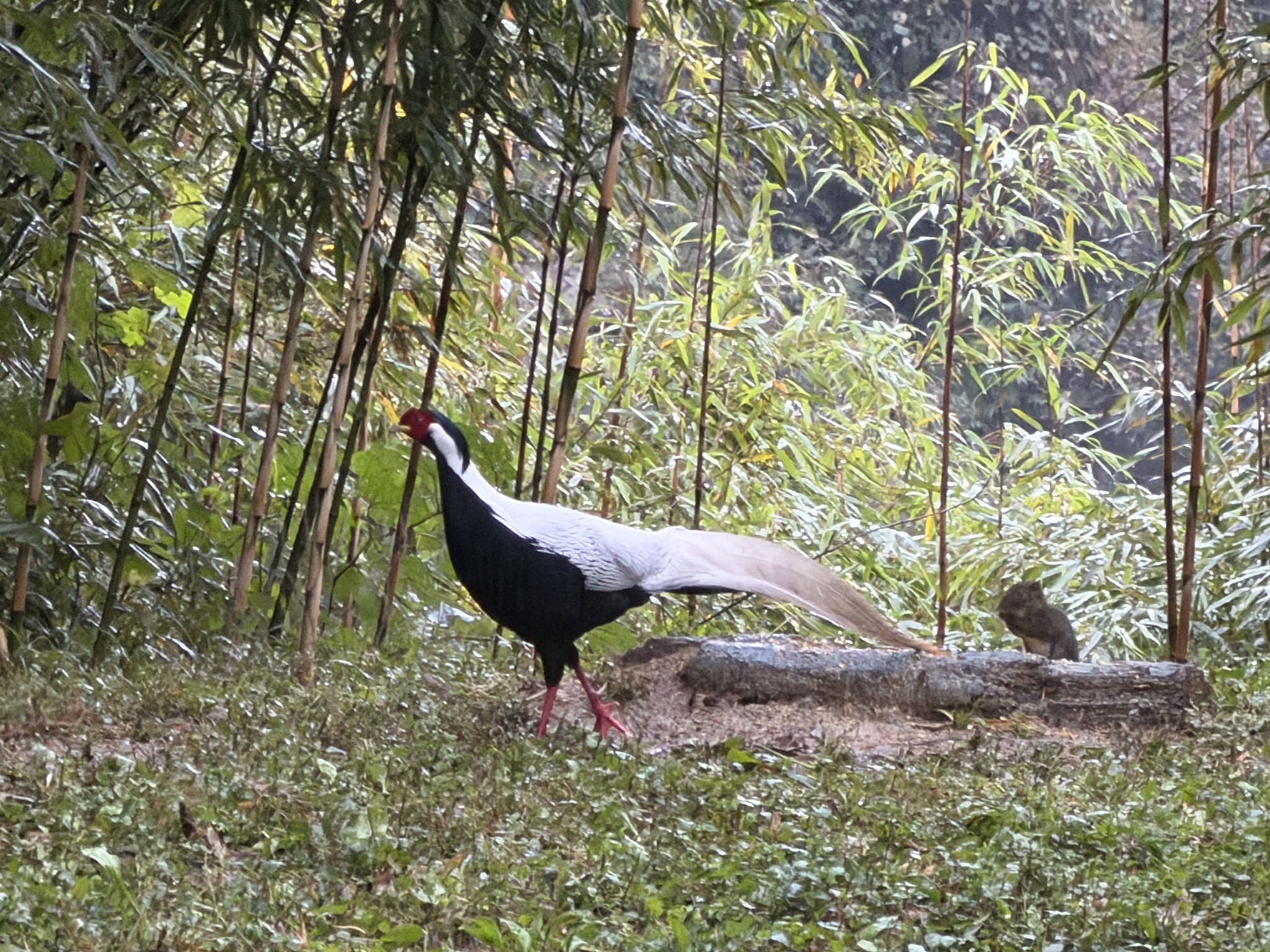
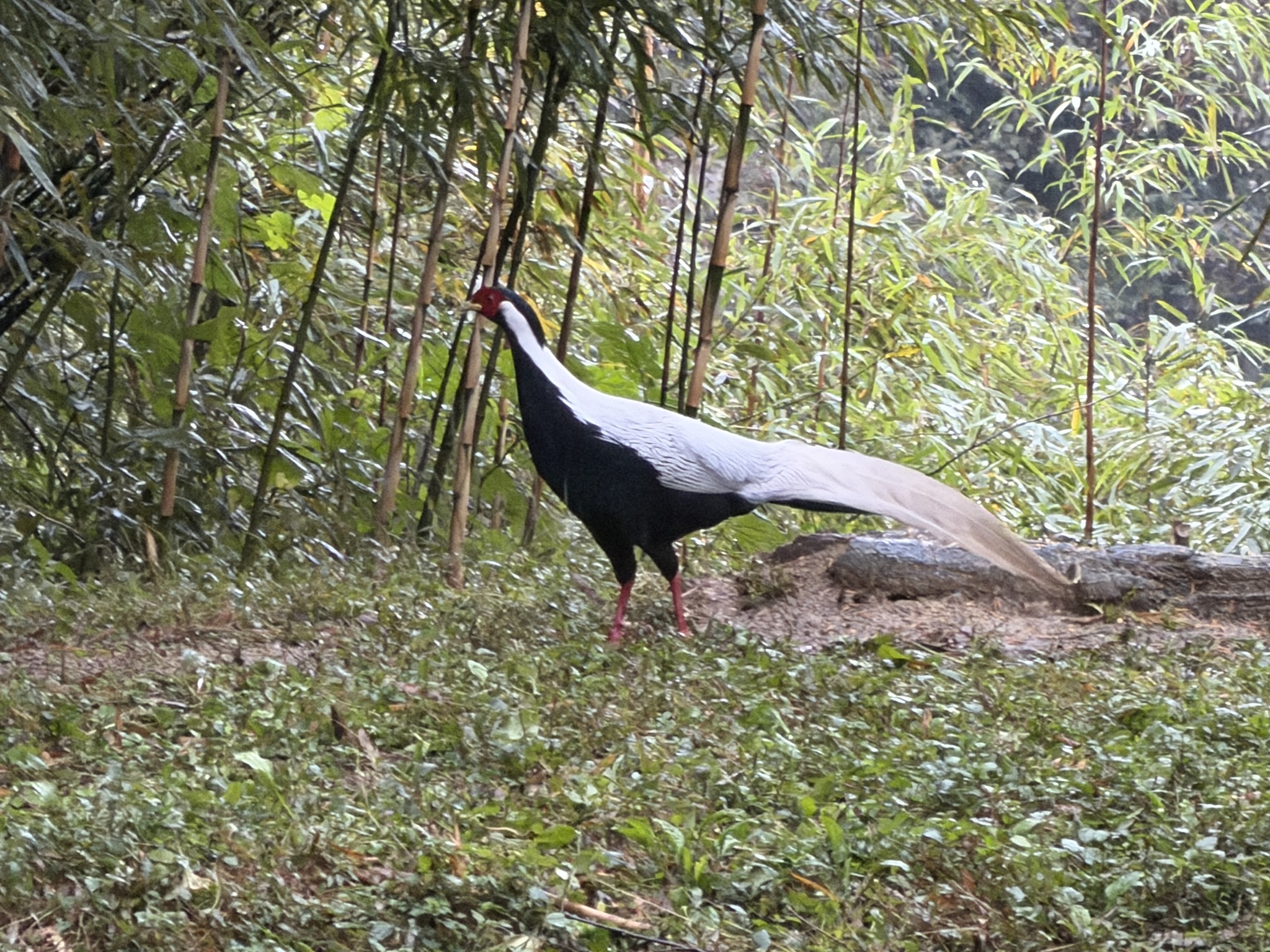
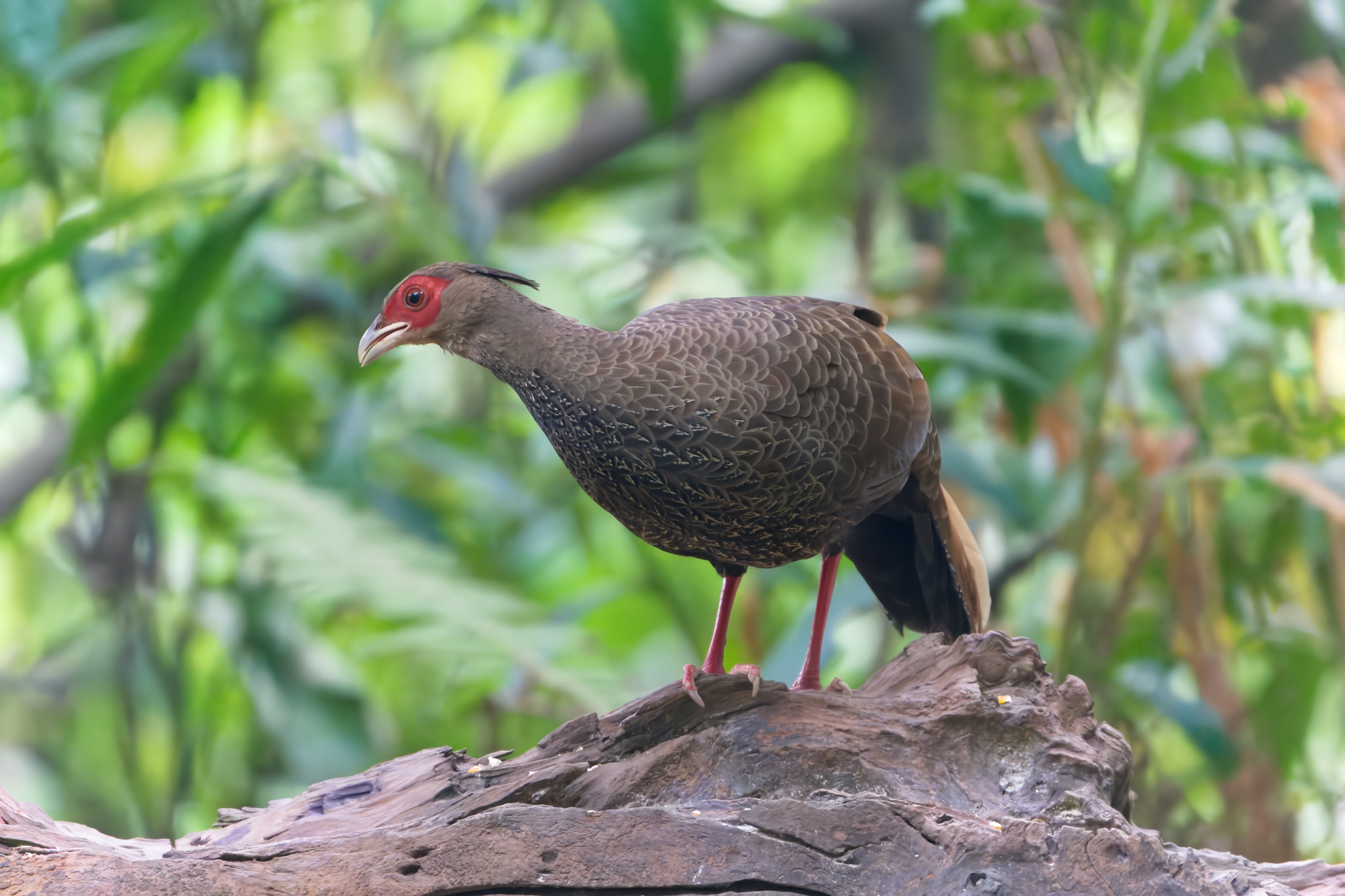
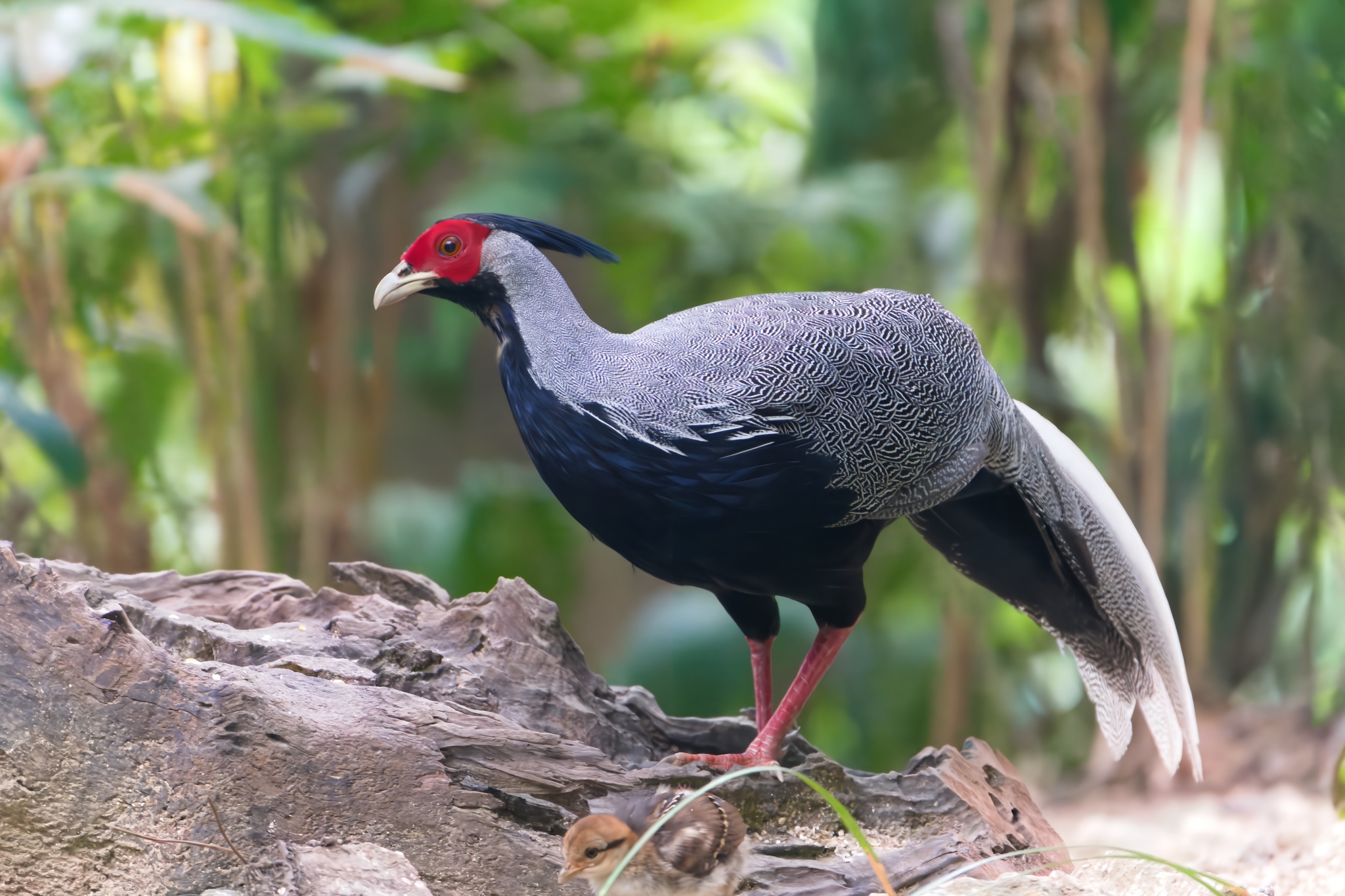
A species of pheasant in the family Phasianidae, genus Lophura. Found in forests, mainly mountainous regions, of mainland Southeast Asia and eastern and southern China. Introduced to Victoria Island in Nahuel Huapi Lake, Neuquén, Argentina and Vancouver Island, Canada. Males are black and white while females are predominantly brown; both sexes have bare red facial skin and red legs, distinguishing them from the similar kalij pheasant which has greyish legs. Common in aviculture and overall remains common in the wild, though several subspecies (L. n. whiteheadi from Hainan, L. n. engelbachi from southern Laos, and L. n. annamensis from southern Vietnam) are rare and threatened.
Description
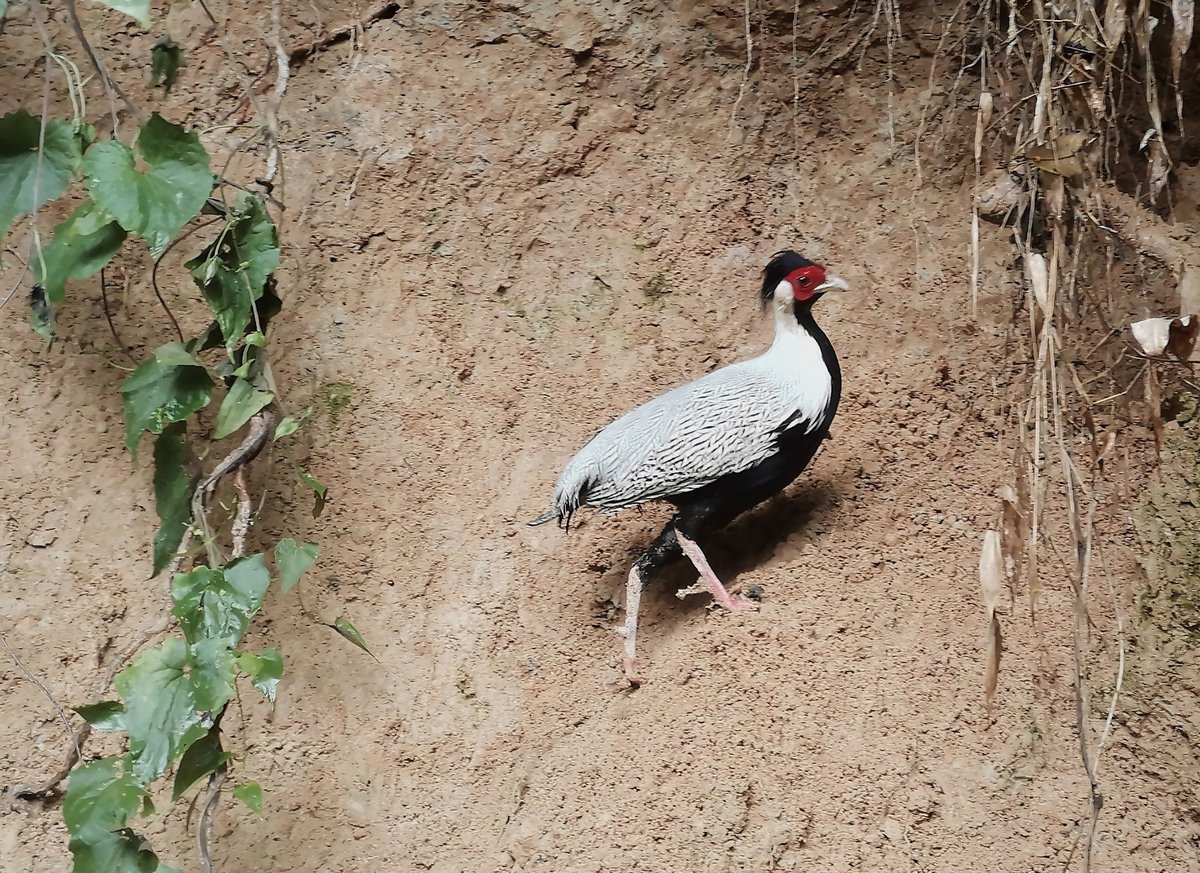
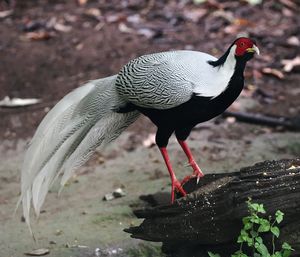
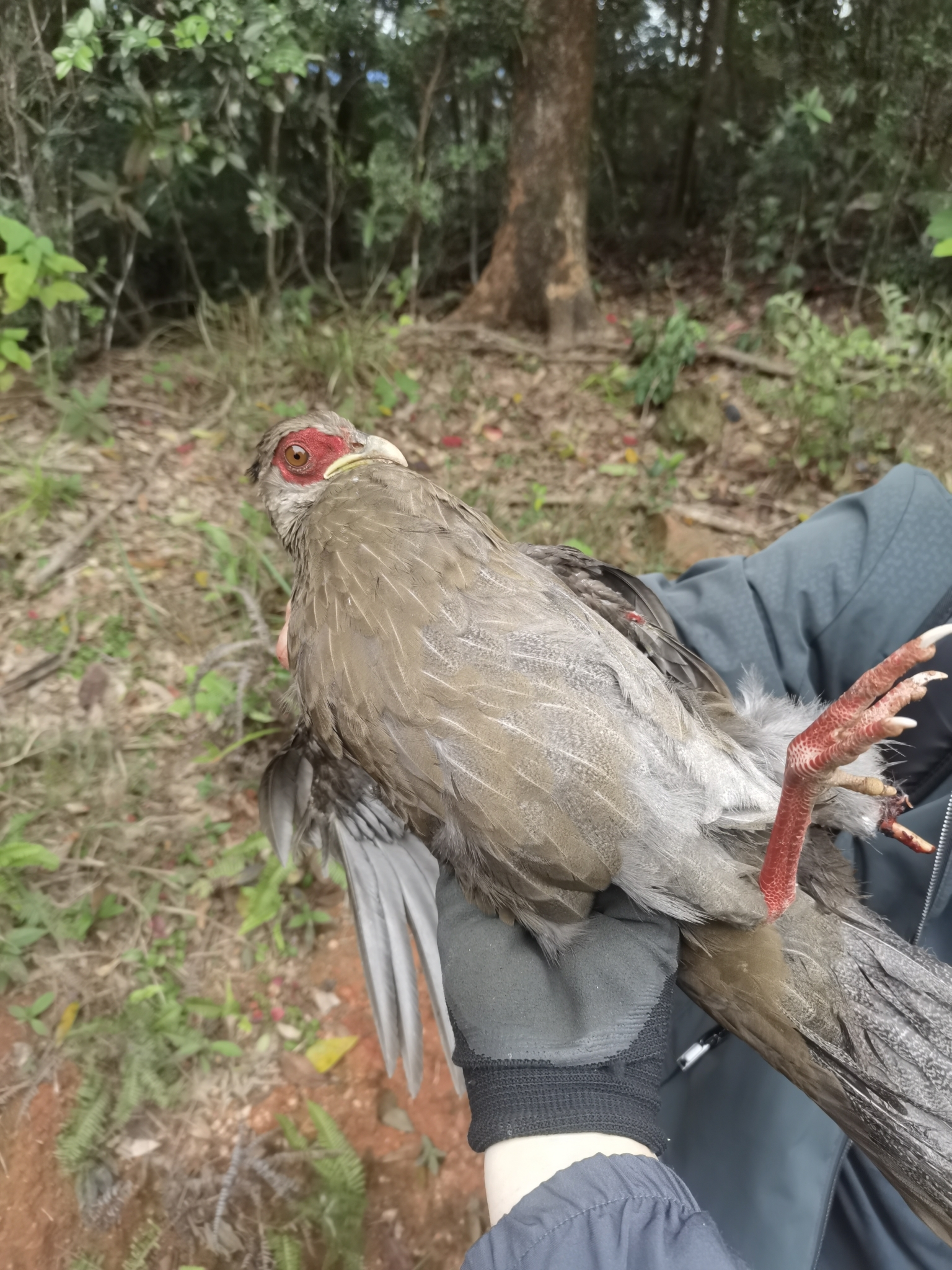
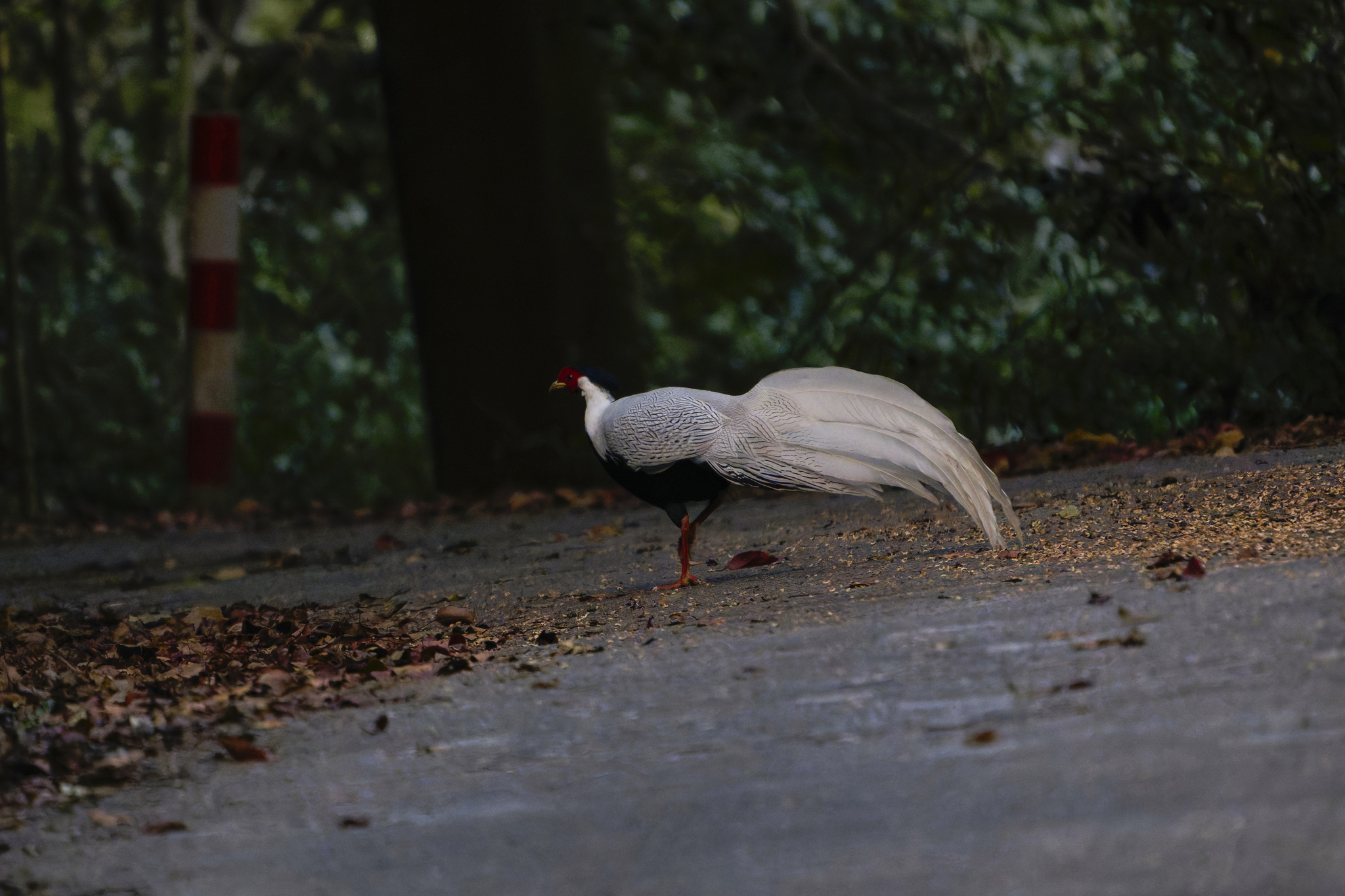
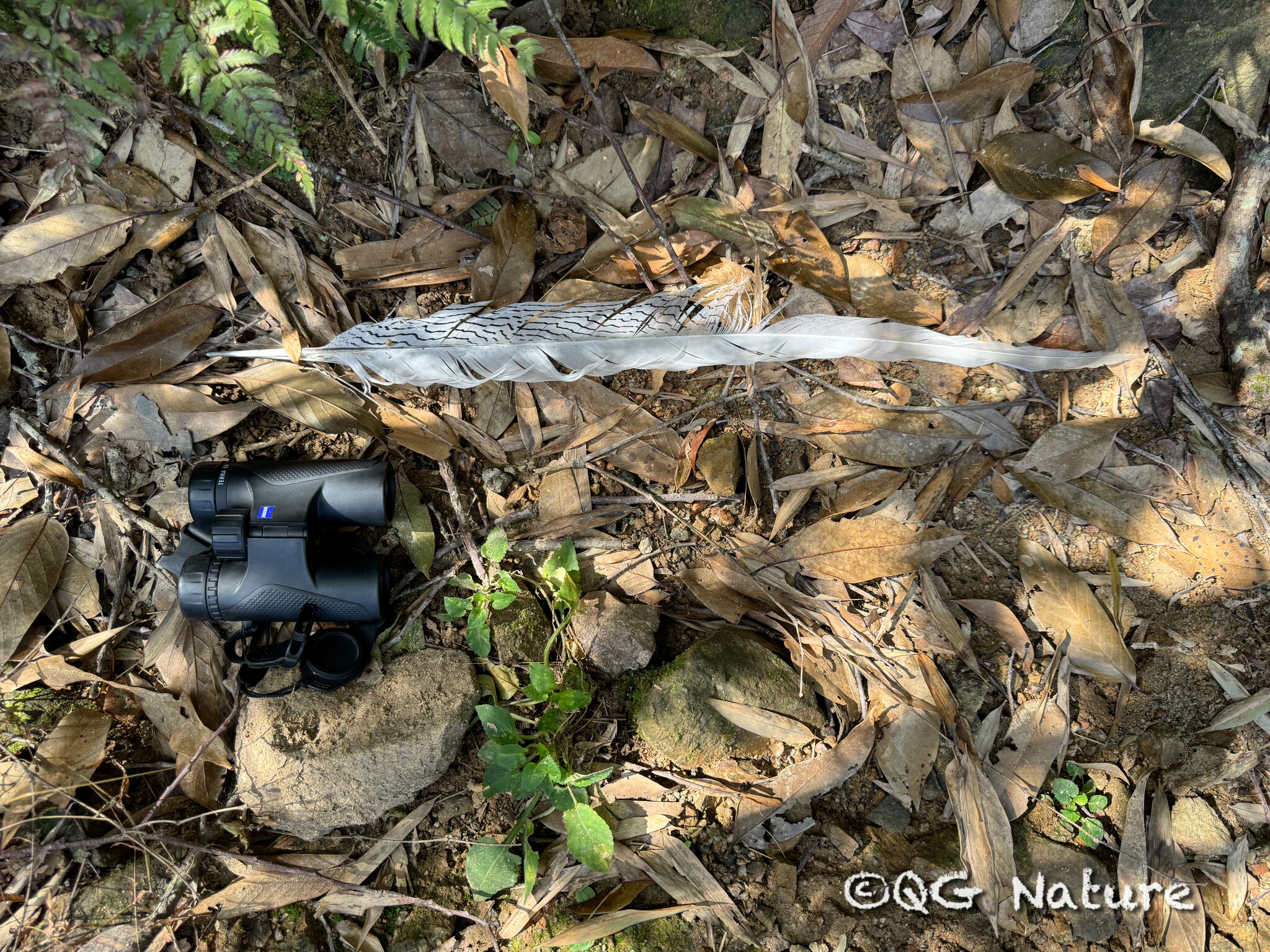
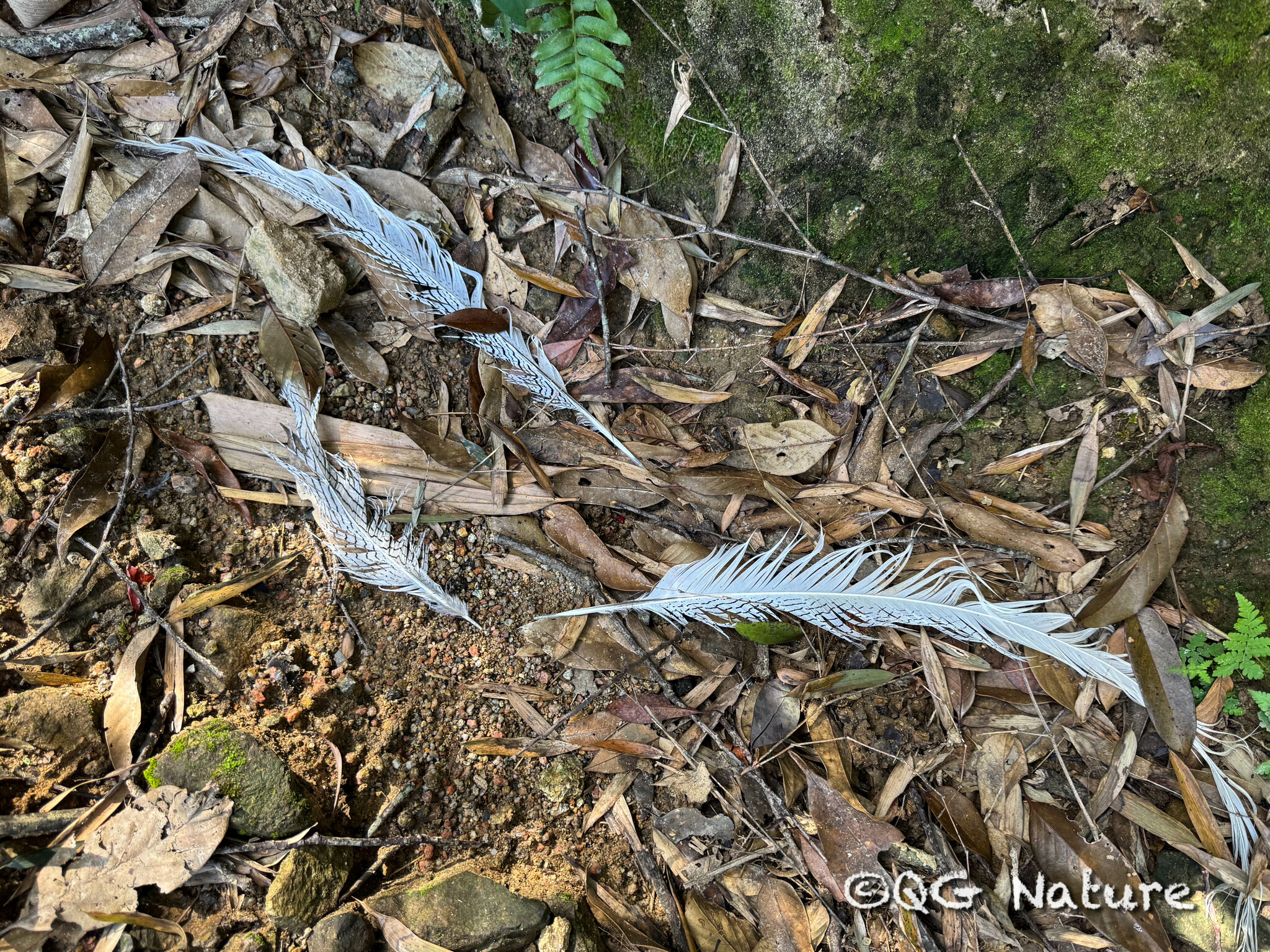
A relatively large pheasant. Males of the largest subspecies reach 120-125 cm in total length including a tail up to 75 cm, while males of the smallest subspecies barely reach 70 cm with a tail around 30 cm. Male body mass ranges from 1.13-2.00 kg. Females are notably smaller at 55-90 cm total length with a 24-32 cm tail, weighing 1.0-1.3 kg. Northern subspecies males have white upperparts and tail with black markings and glossy bluish-black underparts and crest. Southern subspecies males have greyer upperparts and tail with more extensive black markings, appearing darker. Females are brown with shorter tails; some subspecies have whitish underparts strongly patterned with black, extending to the upper mantle in L. n. whiteheadi. Adult male plumage develops in the second year.
Identification
Males are distinctive with black and white plumage and a glossy bluish-black crest and underparts. Females are brown with variable patterning on underparts. The bare red face and red legs separate this species from the kalij pheasant, which has greyish legs. The extent of white versus black in male plumage varies by subspecies latitude, with northern birds appearing whiter and southern birds darker.
Distribution & Habitat
Native to mountainous forest regions of mainland Southeast Asia and eastern and southern China. Range extends from central Sichuan and southeast Guizhou through Guangxi, Guangdong, and Fujian in China, south through Myanmar, Thailand, Laos, and Vietnam. Introduced populations exist on Victoria Island in Nahuel Huapi Lake, Argentina and on Vancouver Island, Canada. No mention of migration behavior.
Behavior & Ecology
No specific information on diet, breeding behavior, social structure, or vocalizations provided in the article.
Conservation
Overall species remains common in the wild and in aviculture. However, three subspecies are considered rare and threatened: L. n. whiteheadi endemic to Hainan Island, L. n. engelbachi from southern Laos, and L. n. annamensis from southern Vietnam. These localized populations face conservation concerns due to their restricted ranges.
Culture
No cultural significance, folklore, or traditional uses mentioned in the article.
Source: Wikipedia · CC BY-SA 3.0
Taxonomy
- Order
- Galliformes
- Family
- Phasianidae
- Genus
- Lophura
- eBird Code
- silphe
Subspecies (15)
-
Lophura nycthemera annamensis
montane forest of southern Vietnam
-
Lophura nycthemera beaulieui
south-central China (southeastern Yunnan) to northern Laos and northern Vietnam
-
Lophura nycthemera beli
central Vietnam (east slope of Annamitic Mountains)
-
Lophura nycthemera berliozi
central Vietnam (west slope of Annamitic Mountains)
-
Lophura nycthemera engelbachi
southern Laos (Bolaven Plateau)
-
Lophura nycthemera fokiensis
southeastern China (northwestern Fujian and (?) Zhejiang)
-
Lophura nycthemera jonesi
Myanmar to southwestern China (southwestern Yunnan) and central Thailand
-
Lophura nycthemera lewisi
mountains of southwestern Cambodia and southeastern Thailand
-
Lophura nycthemera nycthemera
southern China (Guangdong and Guangxi) to northern Vietnam
-
Lophura nycthemera occidentalis
south-central China (northwestern Yunnan) and northeastern Myanmar
-
Lophura nycthemera omeiensis
south-central China (southern Sichuan)
-
Lophura nycthemera ripponi
highlands of northern Myanmar (Southern Shan State)
-
Lophura nycthemera rongjiangensis
south-central China (southeastern Guizhou)
-
Lophura nycthemera rufipes
highlands of northern Myanmar (Northern Shan State)
-
Lophura nycthemera whiteheadi
Hainan (southern China)
Data Sources
Species description from Wikipedia, licensed under CC BY-SA 3.0.
Bird images and sounds sourced from GBIF, contributed by citizen scientists worldwide under Creative Commons licenses.
Taxonomy data from AviList 2025.