


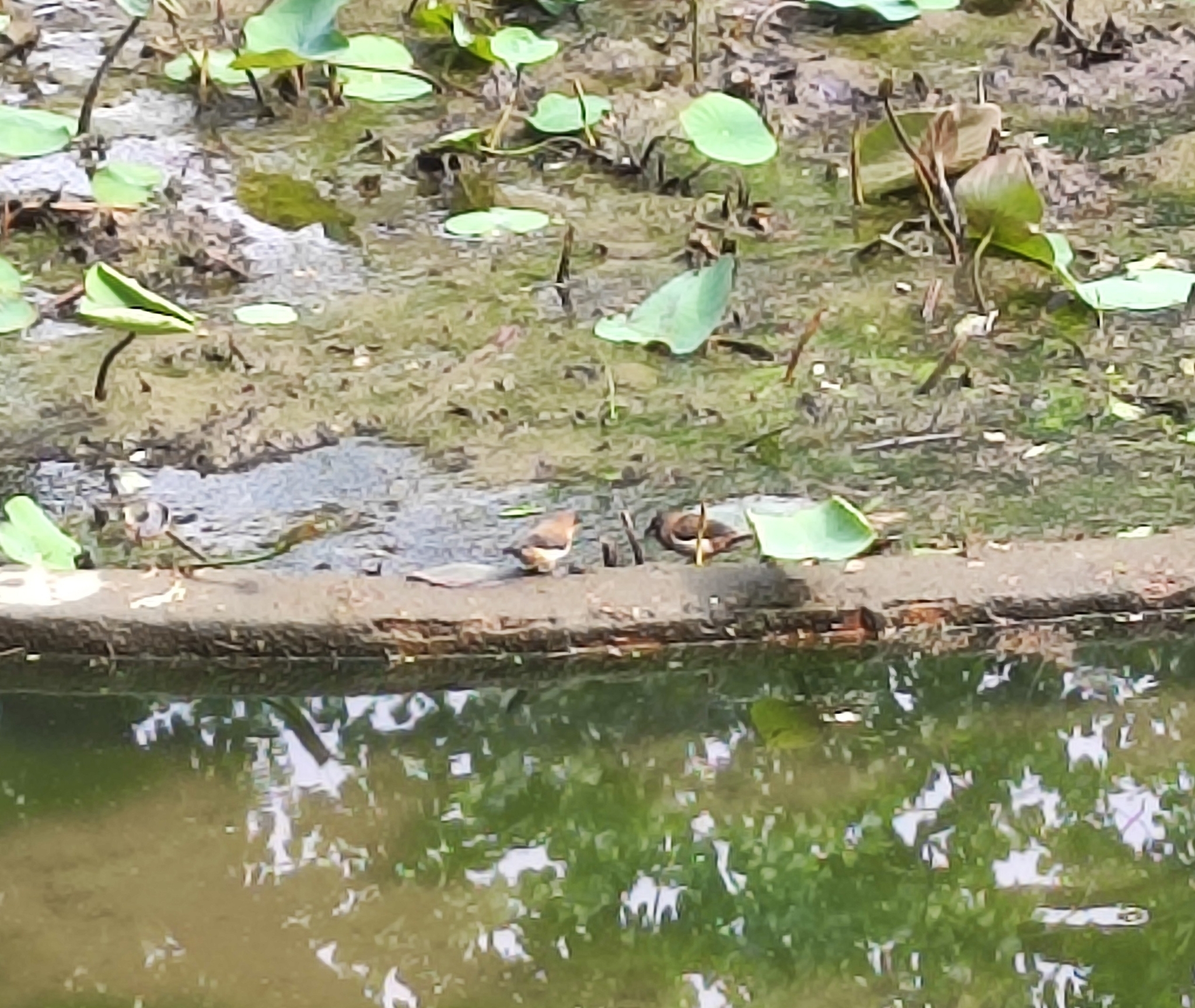

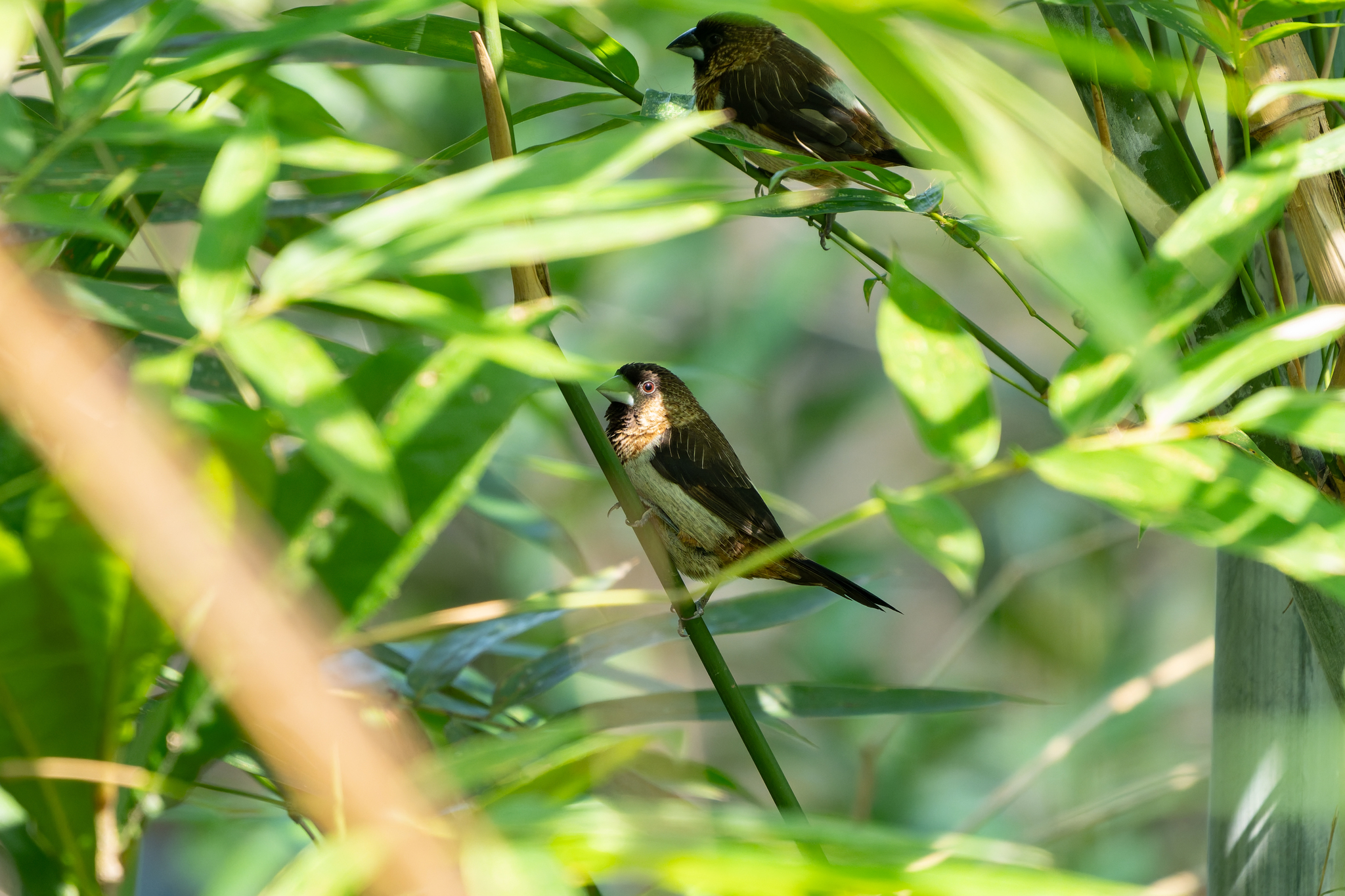
White-rumped Munia
Lonchura striata
白腰文鸟
Introduction
Scaly-breasted Munia (Lonchura punctulata) Family: Estrildidae (waxbill finches) Range: Tropical Asia from India and Sri Lanka through Southeast Asia to the Philippines and Indonesia Habitat: Grasslands, woodlands, agricultural areas, and human-modified landscapes; favors dense vegetation and undergrowth Size: 11-12 cm Diet: Primarily grass seeds, including millet; occasionally feeds on small insects Behavior: Social species occurring in small flocks; maintains low profile in dense vegetation; white rump visible in flight Conservation: Common throughout range; locally abundant enough to be considered a pest of millet crops
Description
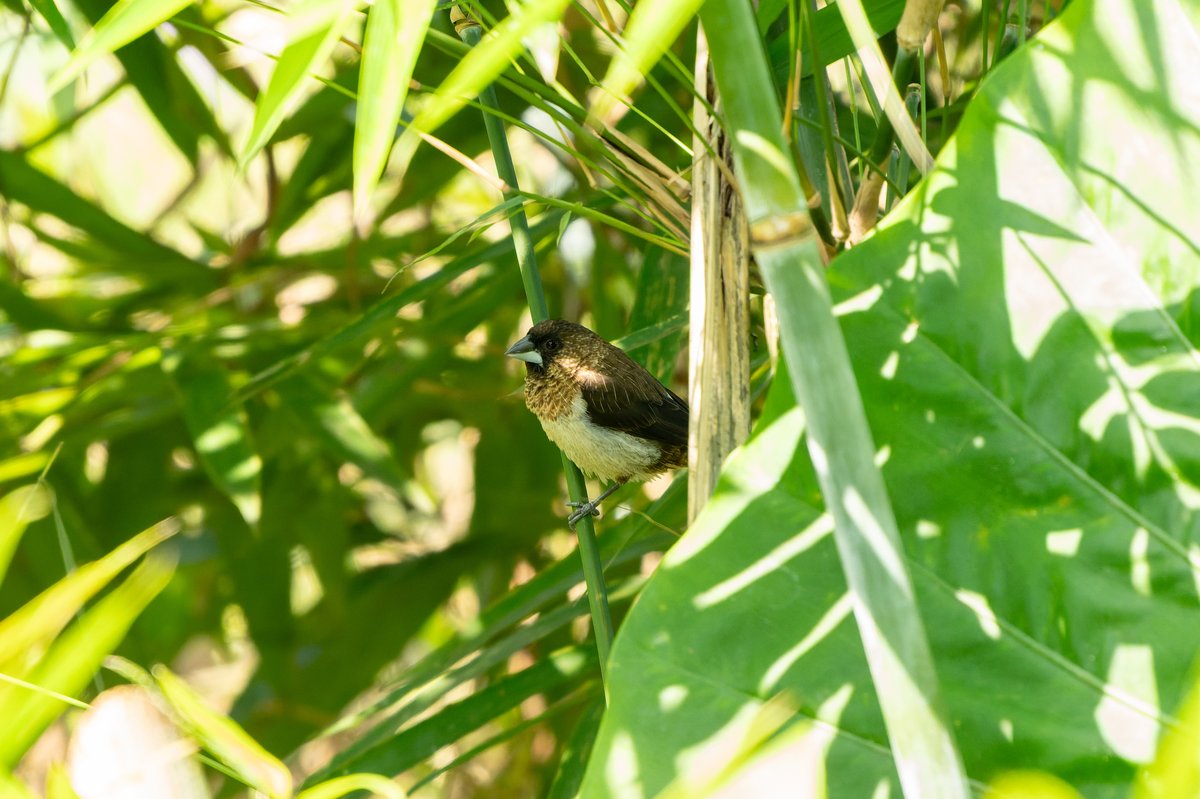
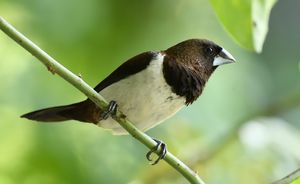
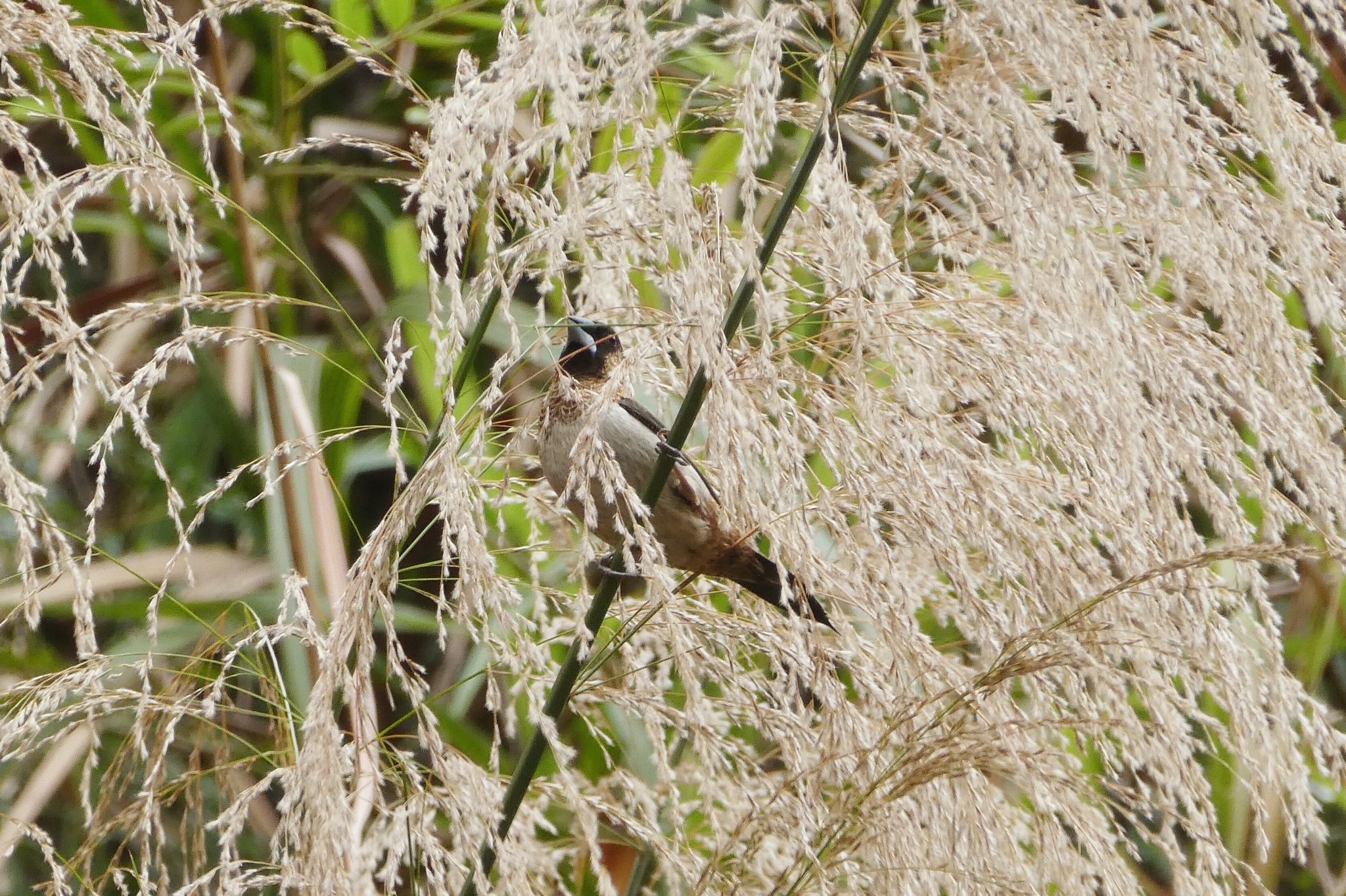
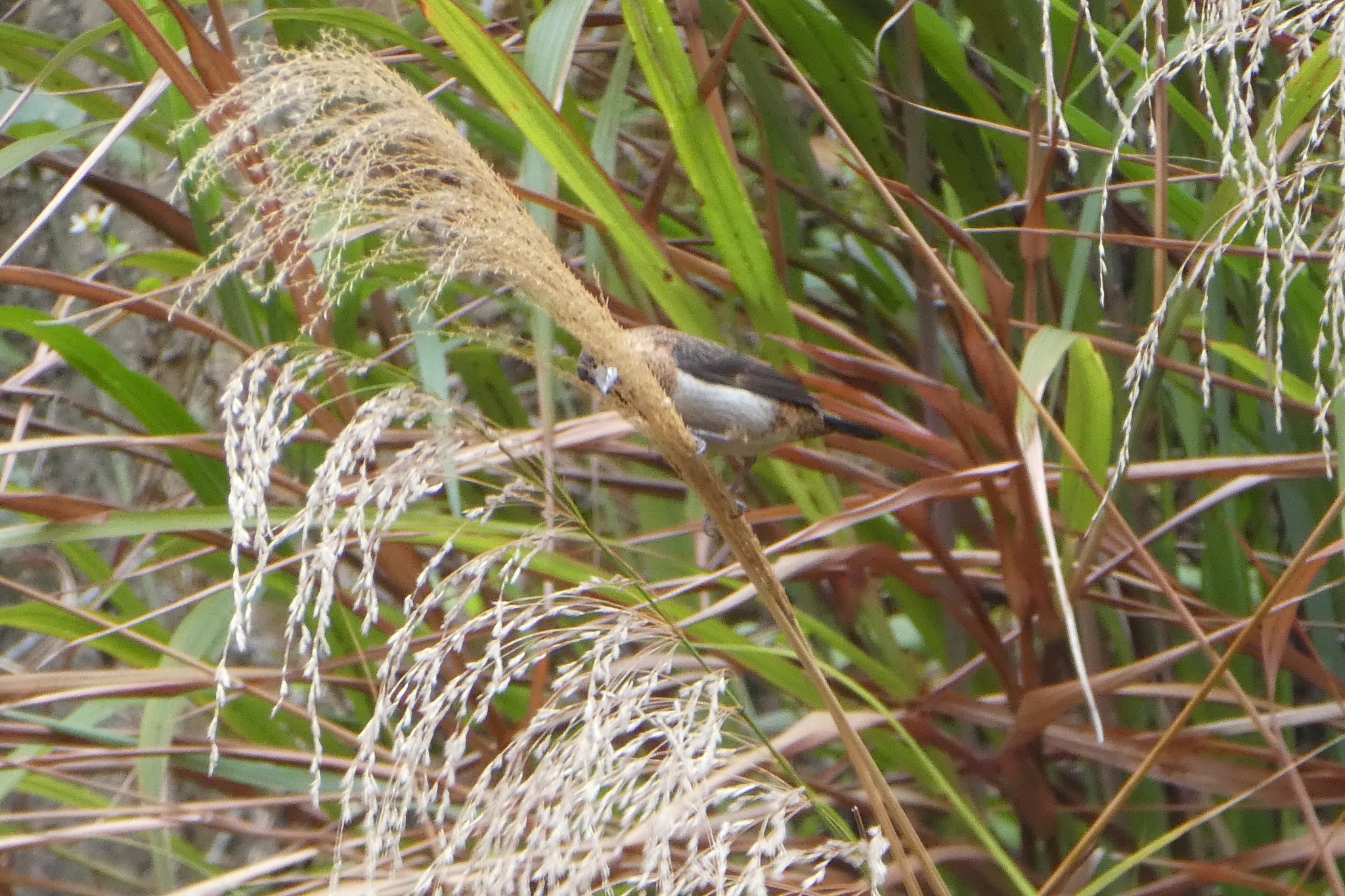
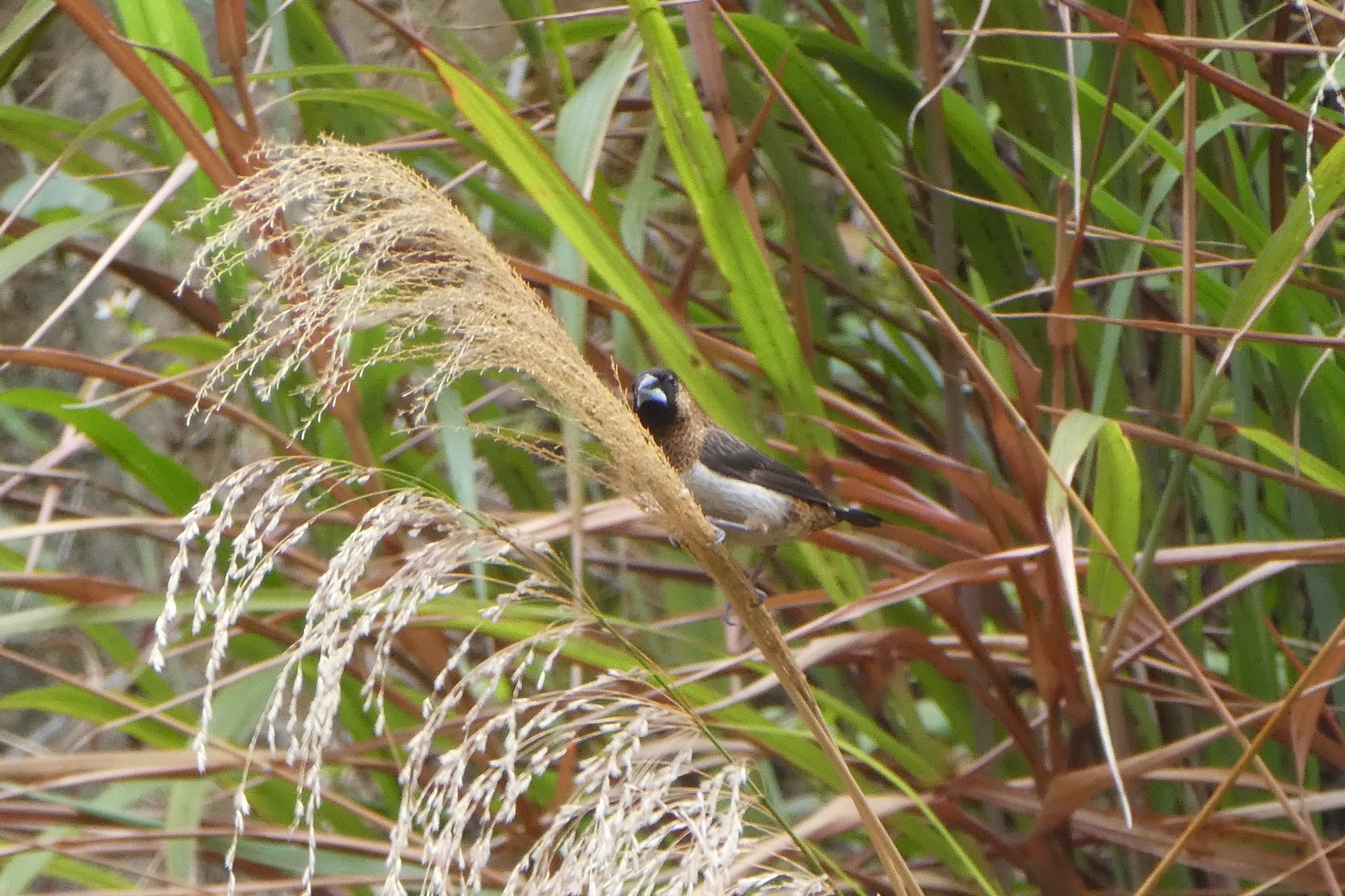
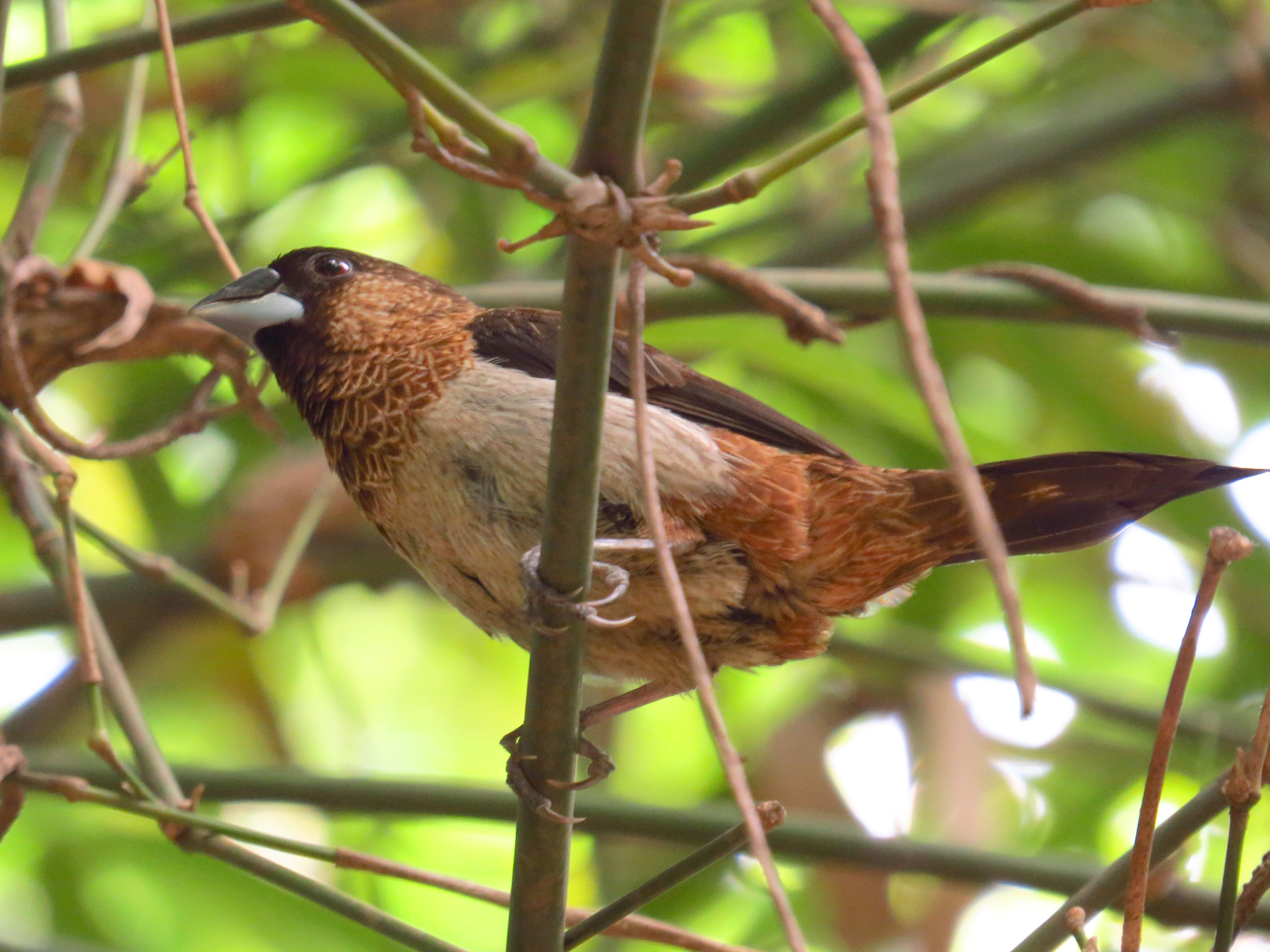
A compact, small finch measuring 10-11 cm in length with a distinctive silhouette. The species exhibits a robust grey bill and an elongated black tail that tapers to a point. Its overall coloration consists of brown tones on the upperparts and breast, transitioning to lighter shades underneath. The most diagnostic feature is the pure white rump, which becomes particularly conspicuous during flight. Sexual dimorphism is minimal, with males only subtly distinguished by slightly more robust head and bill structure. Regional populations display some variation in precise coloration and saturation, though all subspecies maintain the characteristic brown-and-white color scheme.
Identification
Field identification hinges on recognizing the combination of small size, brown plumage, and prominent white rump. The long black tail distinguishes it from similar munia species. In flight, the white rump provides the most reliable identifying characteristic, flashing brightly against the brown body. The species often moves in small groups through dense undergrowth, which can aid detection when birds scatter or regroup. Its relatively plain appearance means careful observation is necessary to distinguish from other brownish passerines in its range. The combination of brown upperparts, lighter underparts, and white rump distinguishes it from other munia species in the region.
Distribution & Habitat
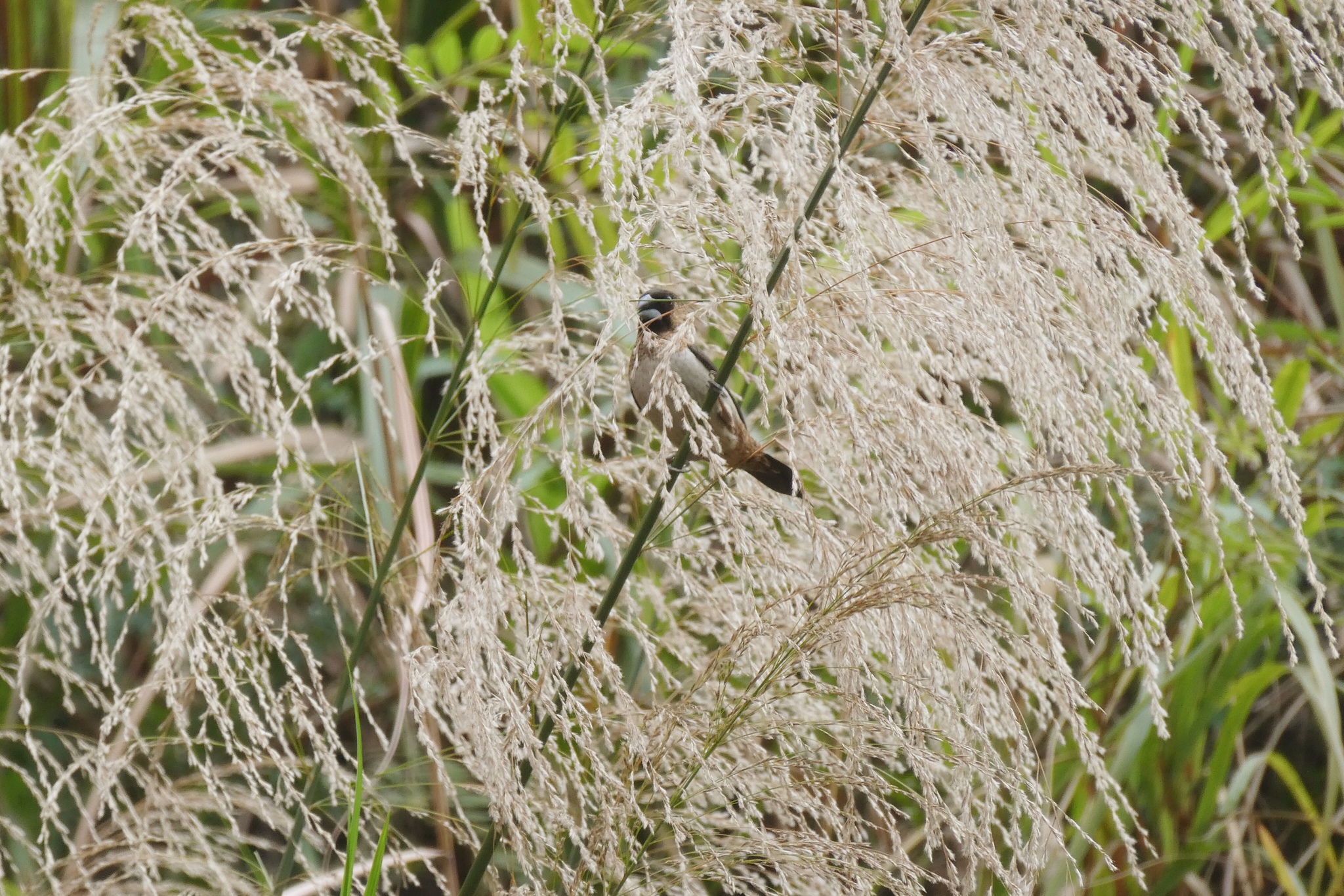
A widespread resident across tropical Asia, ranging from the Indian subcontinent through Southeast Asia to southern China, Taiwan, and Sumatra. The species demonstrates remarkable habitat flexibility, occupying open woodland, grassland, scrub, and agricultural landscapes. It has successfully adapted to human-modified environments, often found near settlements and cultivated areas including rice paddies. As a non-migratory species, it maintains territories year-round across its range, though some local movements may occur in response to food availability or seasonal changes. Naturalized populations exist in parts of Japan.
Behavior & Ecology
Highly gregarious, forming small flocks that navigate through dense undergrowth with agility. The species feeds mainly on seeds, particularly grass and cereal grains, moving through undergrowth in groups and sometimes accompanying other birds such as puff-throated babblers. Uniquely, it supplements its diet with algae, including Spirogyra species that grow in paddy fields, possibly obtaining protein from these aquatic plants. The nest is a large domed grass structure placed in trees, bushes, or tall grass, containing three to eight white eggs. The species shows opportunistic breeding behavior by readily using abandoned nests of Baya weavers.
Conservation
Classified as a species of Least Concern by the IUCN due to its extensive range and stable population numbers. The species demonstrates remarkable adaptability, even in island populations like the Nicobar subspecies with its limited range, which appears resilient to human settlement pressures. While local populations may fluctuate and it can occasionally be considered a pest of millet and grain crops, no significant conservation concerns exist at the species level. Its ability to thrive in agricultural landscapes suggests resilience to moderate habitat modification.
Culture
The domesticated descendant of this species, the society finch or Bengalese finch, has become one of the world's most popular pet birds. This selectively bred hybrid, sometimes classified as Lonchura domestica, displays remarkable plumage diversity ranging from uniform colors to intricate patterns—quite unlike the drab wild ancestor. Society finches were established through avicultural efforts in Japan and have contributed to scientific research as biological model organisms. While the wild species itself holds little cultural significance, its domestic counterpart has global recognition in aviculture and has even influenced scientific understanding of behavior and genetics.
Source: Wikipedia · CC BY-SA 3.0
Taxonomy
- Order
- Passeriformes
- Family
- Estrildidae
- Genus
- Lonchura
- eBird Code
- whrmun
Subspecies (6)
-
Lonchura striata acuticauda
northwestern India from Uttarakhand eastward to Myanmar and northern Thailand
-
Lonchura striata fumigata
Andaman Islands
-
Lonchura striata semistriata
Nicobar Islands
-
Lonchura striata striata
central and southern India and Sri Lanka
-
Lonchura striata subsquamicollis
Malayan Peninsula to southern Indochina
-
Lonchura striata swinhoei
east-central and eastern China and Taiwan
Data Sources
Species description from Wikipedia, licensed under CC BY-SA 3.0.
Bird images and sounds sourced from GBIF, contributed by citizen scientists worldwide under Creative Commons licenses.
Taxonomy data from AviList 2025.