White-headed Munia
Lonchura maja
白头文鸟
Introduction
Small passerine bird in the estrildid finch family. Native to Southeast Asia, including Indonesia, Thailand, Malaysia, Vietnam, and Singapore. Inhabits tropical and subtropical grasslands, wetlands, cultivated areas, and rice fields. Distinctive for its chocolate-brown body with contrasting white head and throat. Builds dome-shaped nests low in vegetation, often near water.
Description
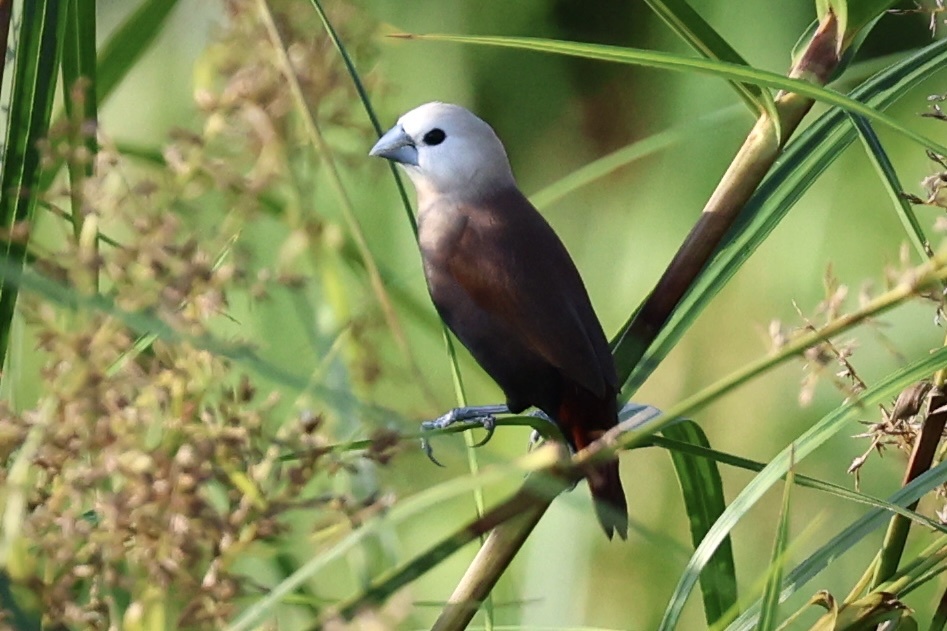
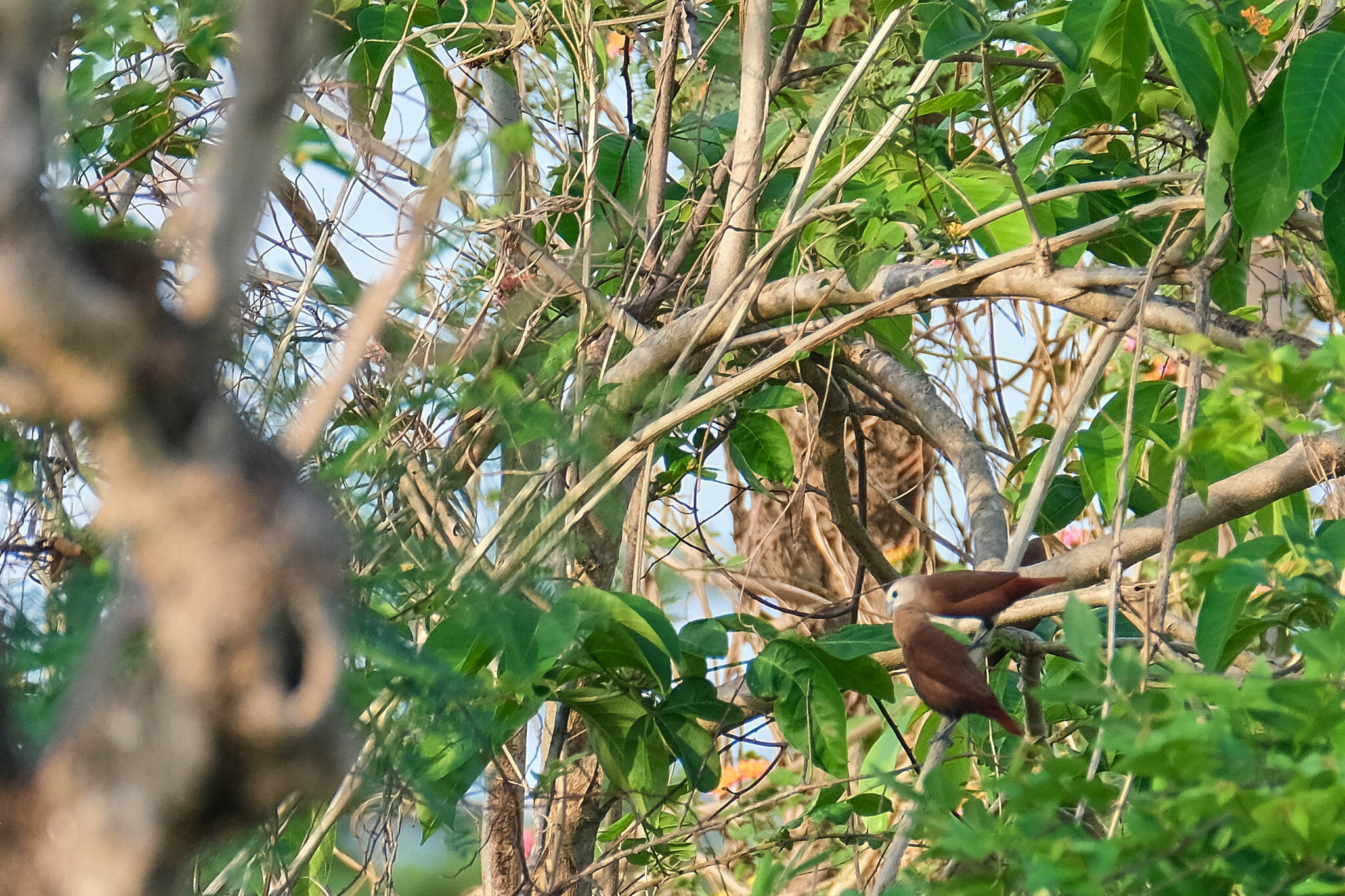
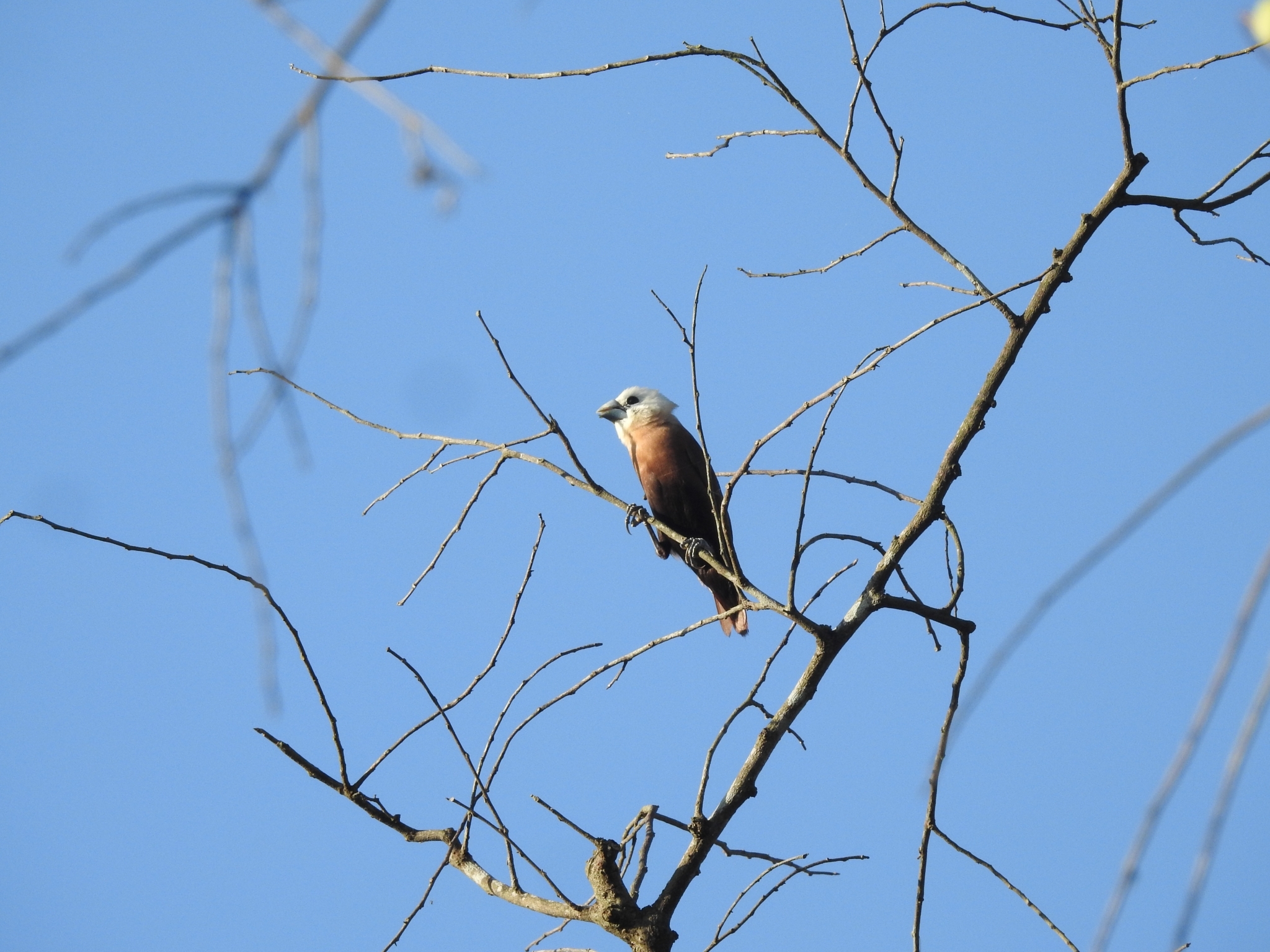
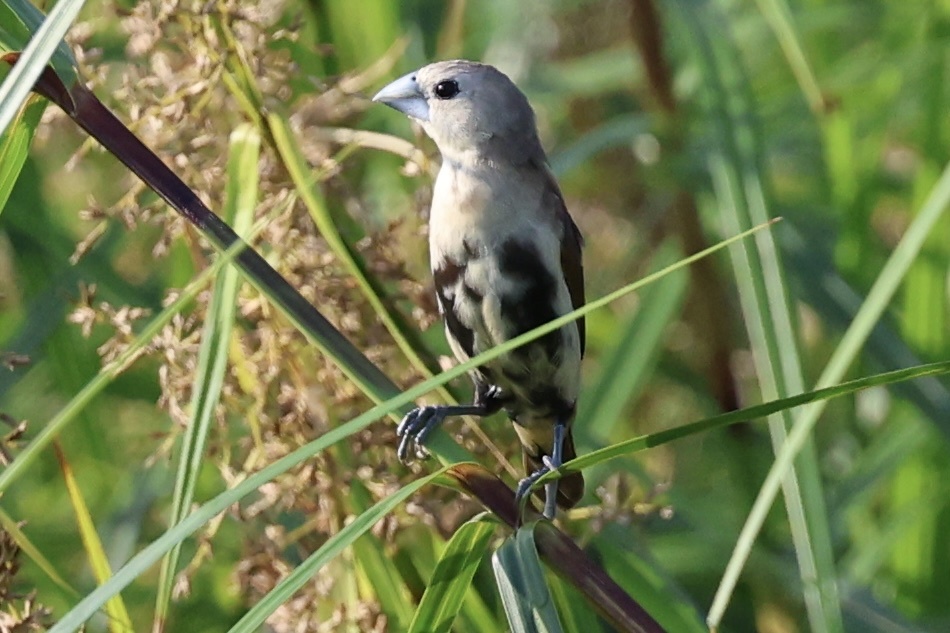
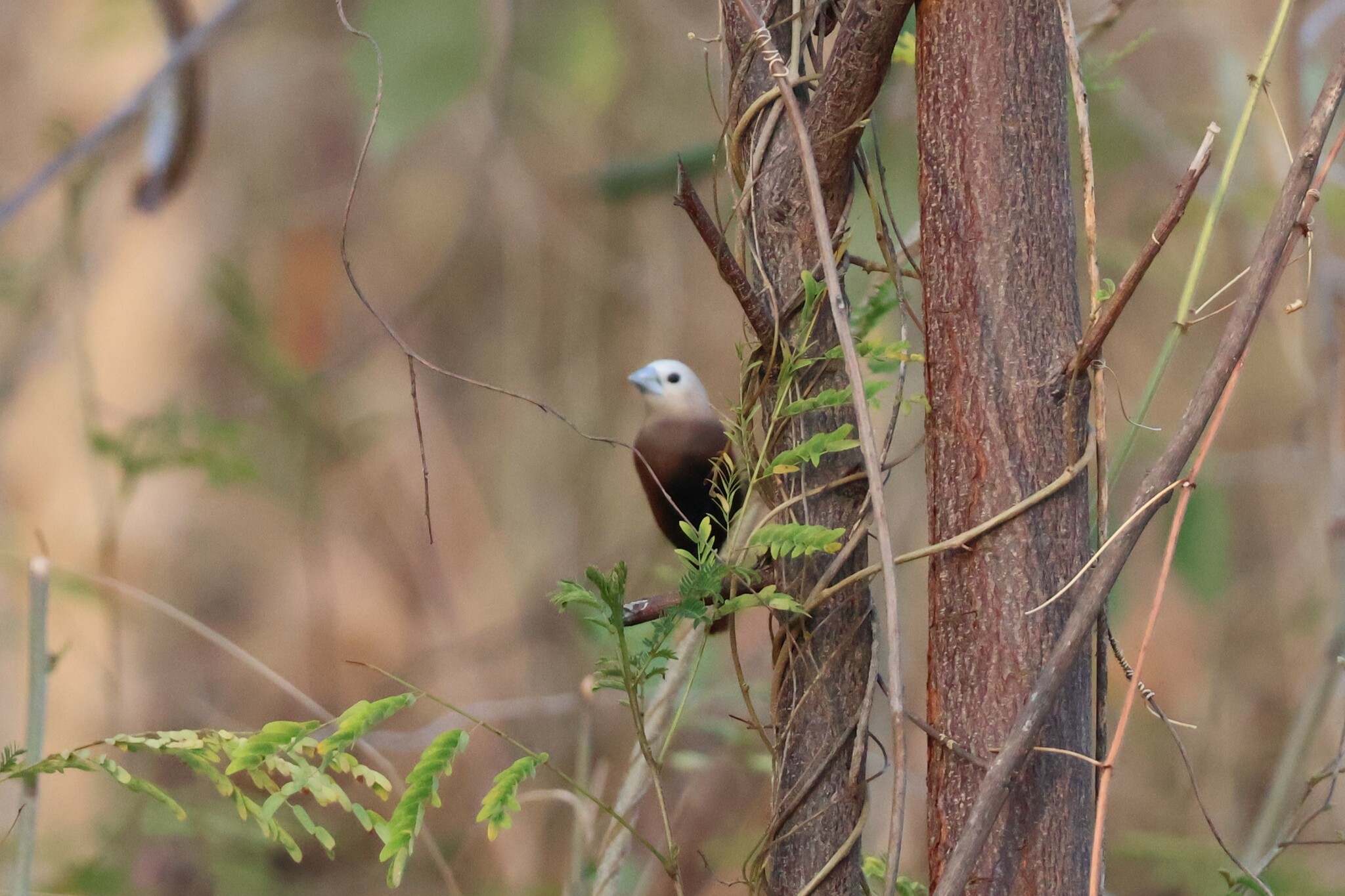
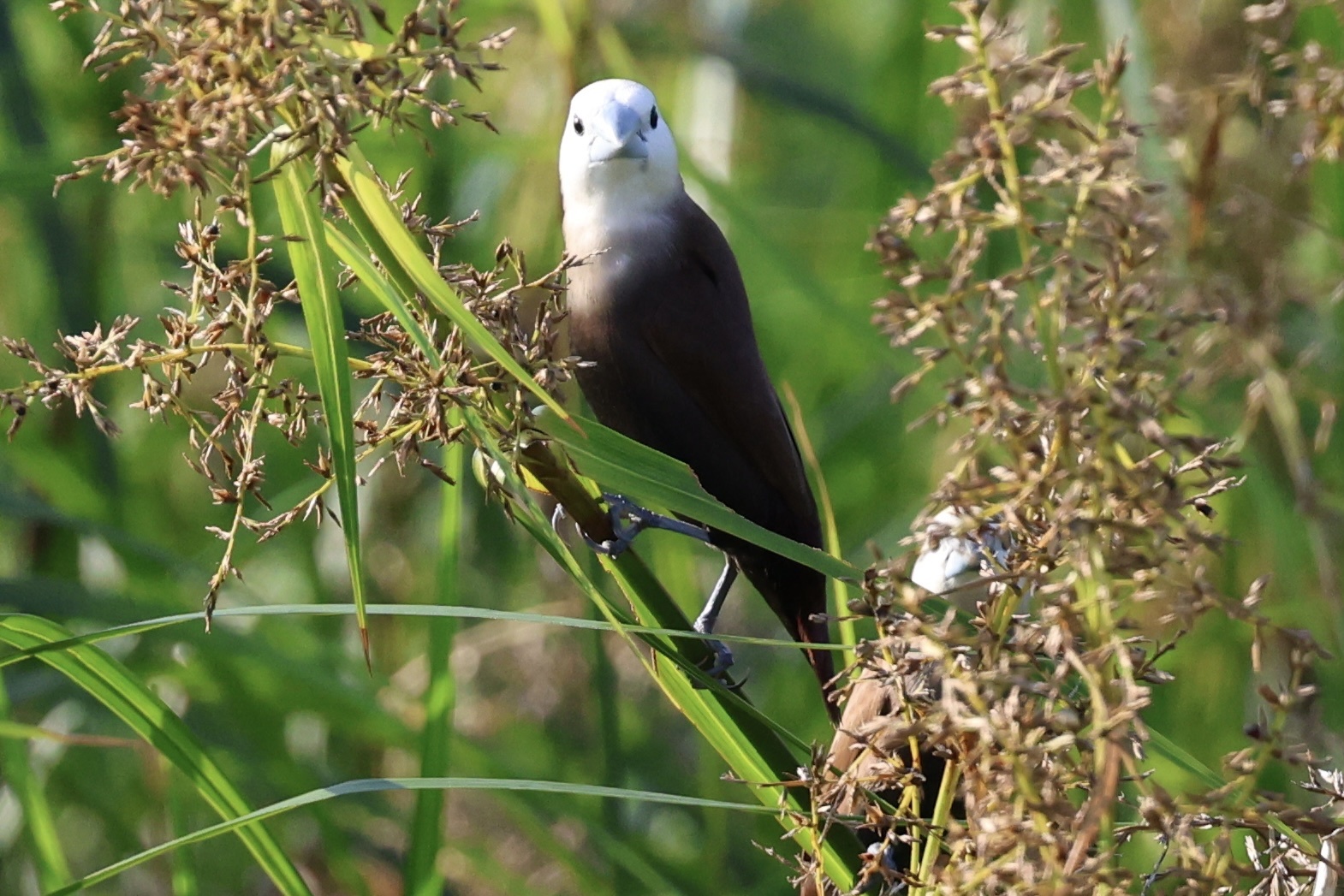
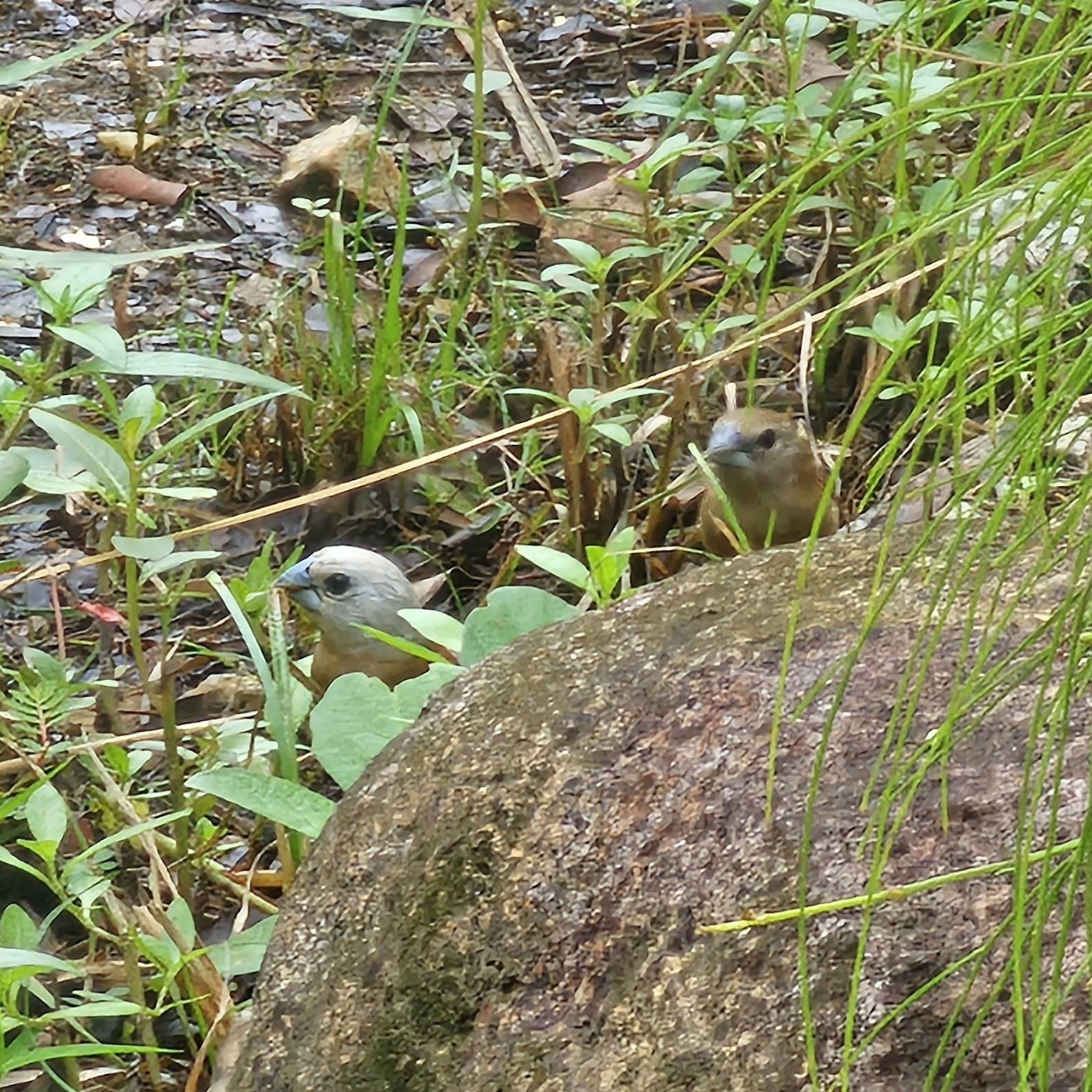
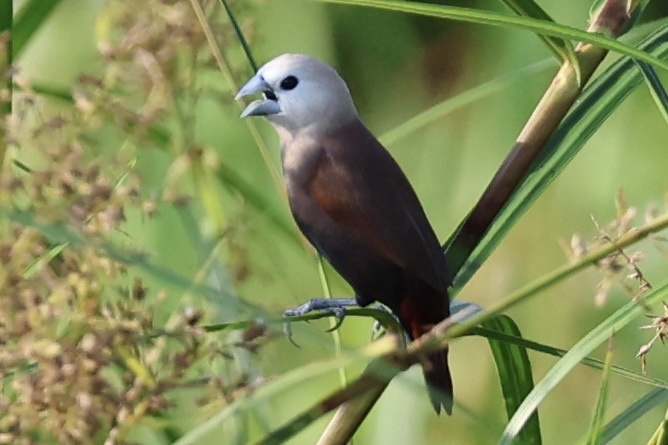
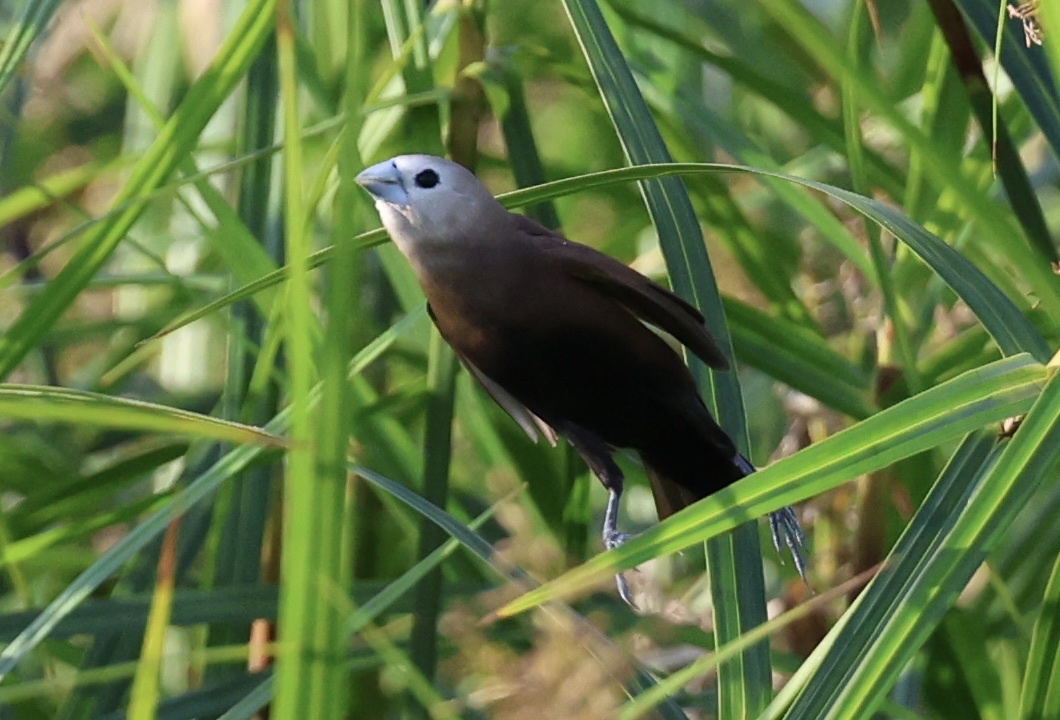
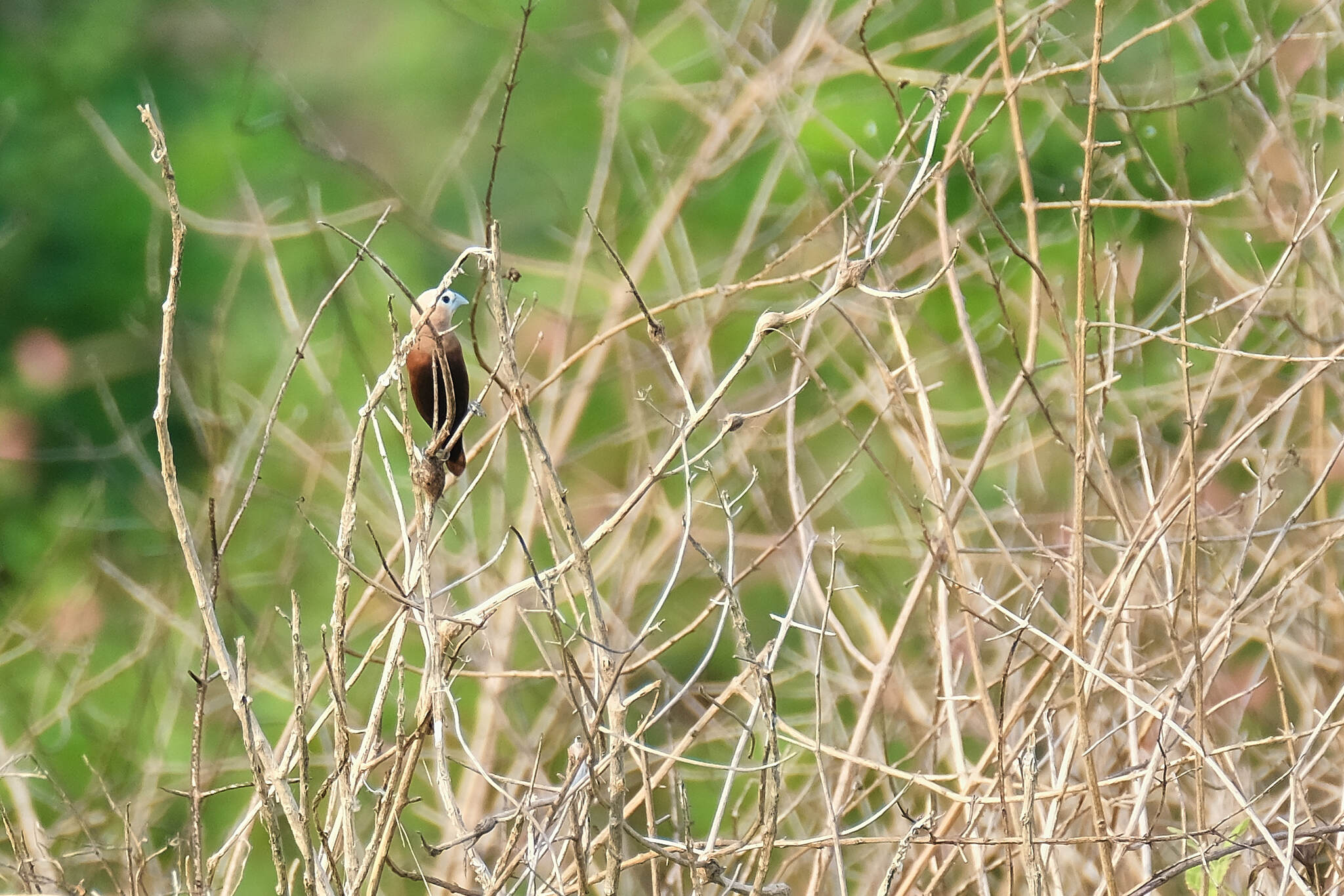
A small finch with a distinctive chocolate-brown body and contrasting white head and throat. Adults measure 11 cm in length and weigh approximately 11 grams. The upperparts, flanks, and wings are chestnut brown, while the head, throat, and upper breast are entirely white with a buff tinge. The tail is black-brown and the belly is black. The bill and legs are light grey. Sexual dimorphism is subtle, with males developing whiter heads as they age.
Identification
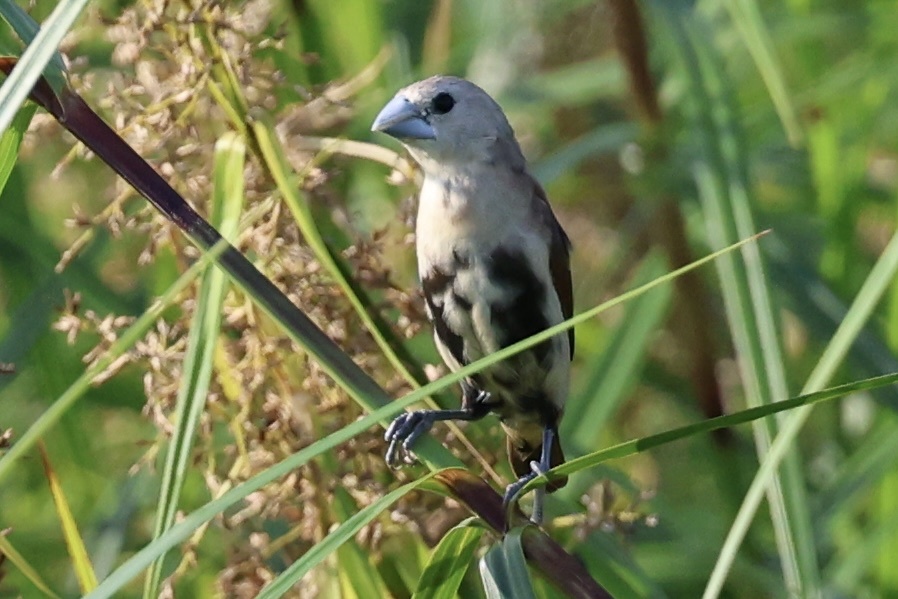
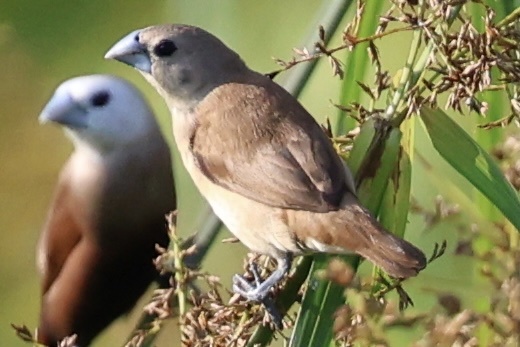
Often confused with the Pale-headed munia, which can be distinguished by its tan flanks that are lighter than the brown wings and by lacking a black belly. Adult males have whiter heads than females, with the difference becoming more pronounced with age, often causing young males to be mistaken for females. The line between the breast and flanks is more defined in males. Juveniles are cinnamon-colored above with buff face and underparts, and are practically indistinguishable from juveniles of White-capped munia, Pale-headed munia, Chestnut munia, or Scaly-breasted munia.
Distribution & Habitat
Native to Southeast Asia, occurring in Indonesia, Thailand, Malaysia, Vietnam, and Singapore. Inhabits tropical and subtropical habitats including grasslands, wetlands, and cultivated areas. Commonly associated with rice fields. No specific migration information available.
Behavior & Ecology
Diet consists primarily of seeds, especially grass seeds and rice grains. Highly social, typically observed in flocks. Both parents participate in constructing dome-shaped nests low in vegetation, often near or over water. Nests are made from woven grass, leaves, and other plant fibers, featuring a bulky structure with a side entrance. Females lay clutches of 4 to 7 white eggs. Both parents share incubation duties, which lasts 11-13 days. Breeding season coincides with food availability, typically during or after the rainy season.
Source: Wikipedia · CC BY-SA 3.0
Taxonomy
- Order
- Passeriformes
- Family
- Estrildidae
- Genus
- Lonchura
- eBird Code
- whhmun1
Distribution
Malayan Peninsula, Sumatra, Java, and southern Vietnam; introduced Taiwan and Hong Kong
Data Sources
Species description from Wikipedia, licensed under CC BY-SA 3.0.
Bird images and sounds sourced from GBIF, contributed by citizen scientists worldwide under Creative Commons licenses.
Taxonomy data from AviList 2025.