

Common Grasshopper Warbler
Locustella naevia
黑斑蝗莺
Introduction
Old World warbler in the genus Locustella. Breeds across much of temperate Europe and the western Palearctic, from Spain, France and the British Isles east to western Russia and the Baltic States. Migratory, wintering across the Sahel region of northern tropical Africa and locally in India and Sri Lanka. Inhabits dense grassland vegetation, often near water, with scattered shrubs including damp and dry areas with rough grass and bushes such as fen edges, clearings, hedgerows, heaths, moors and young plantations. Highly secretive and skulking, difficult to observe except when singing. Conservation status: Least Concern due to large population (estimated 3.4-13.2 million individuals globally) and extensive range.
Description
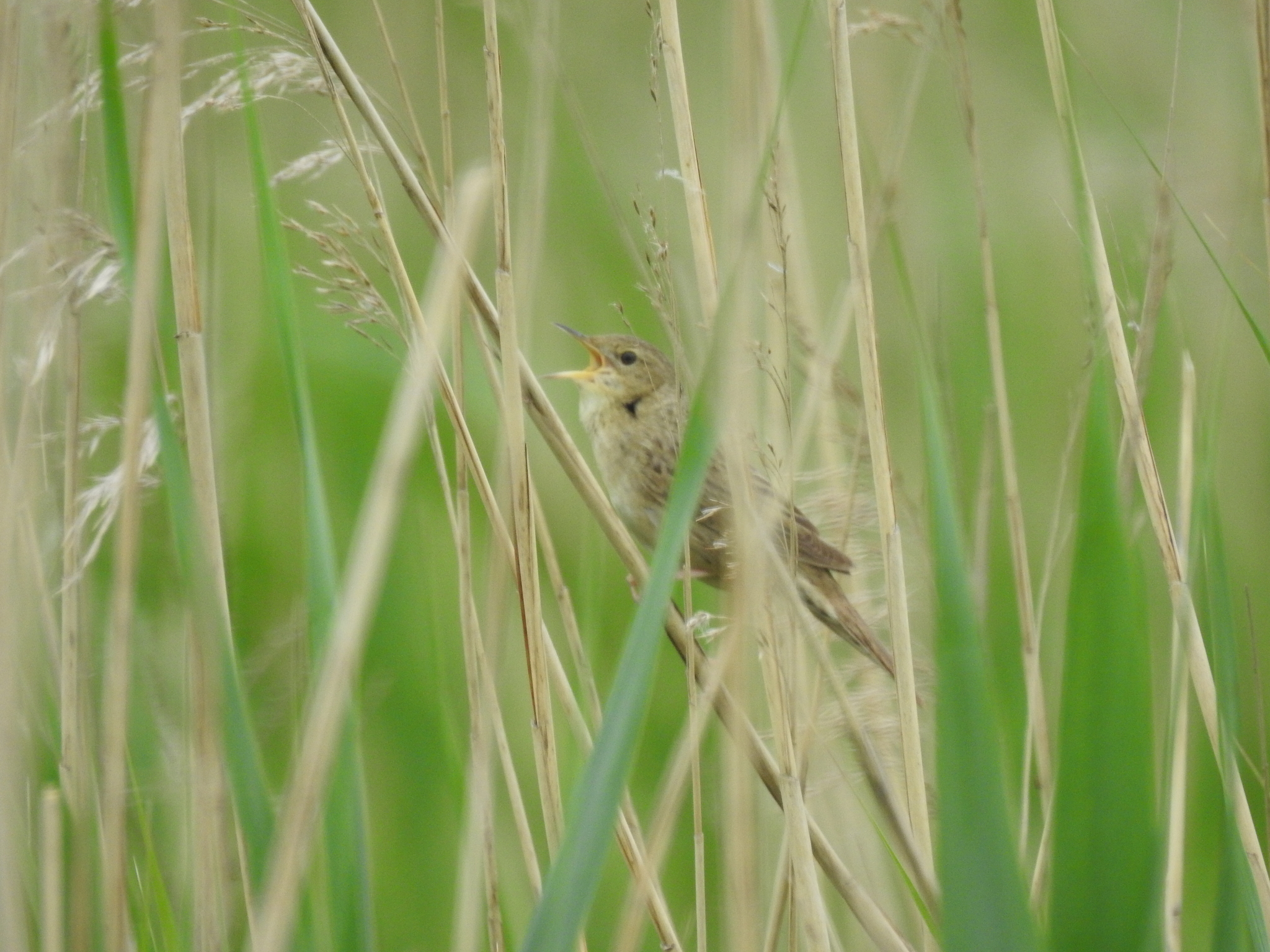
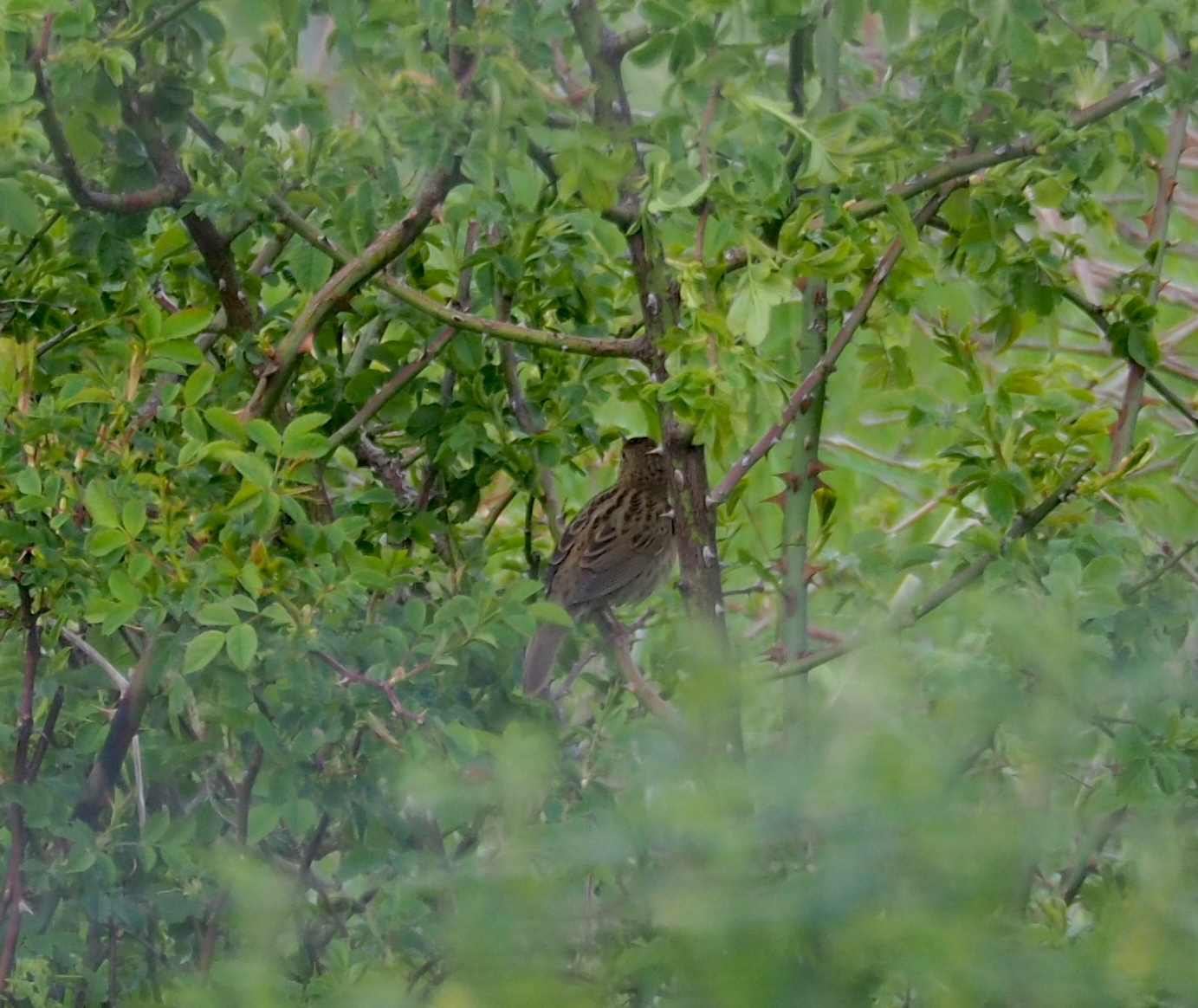
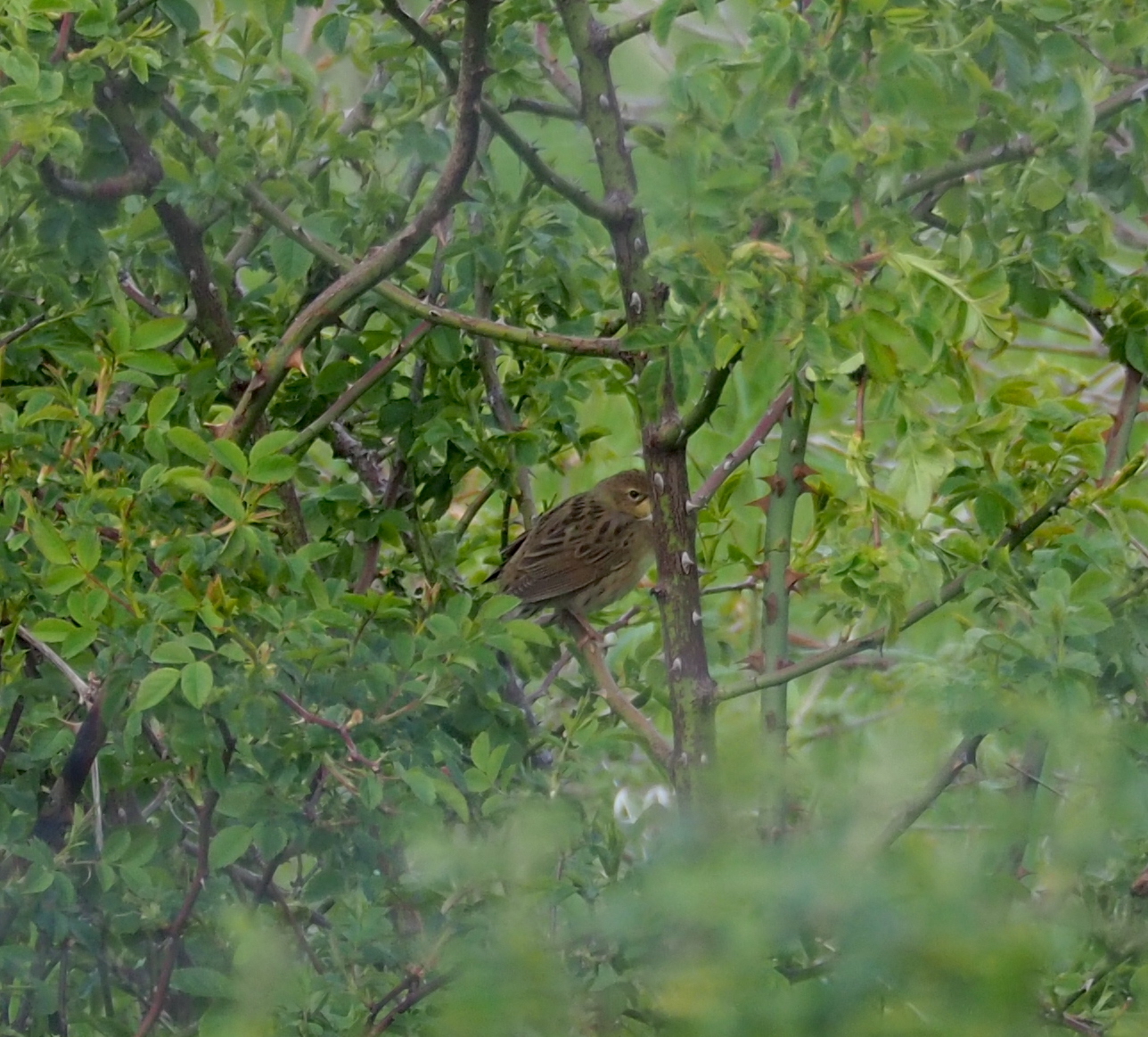
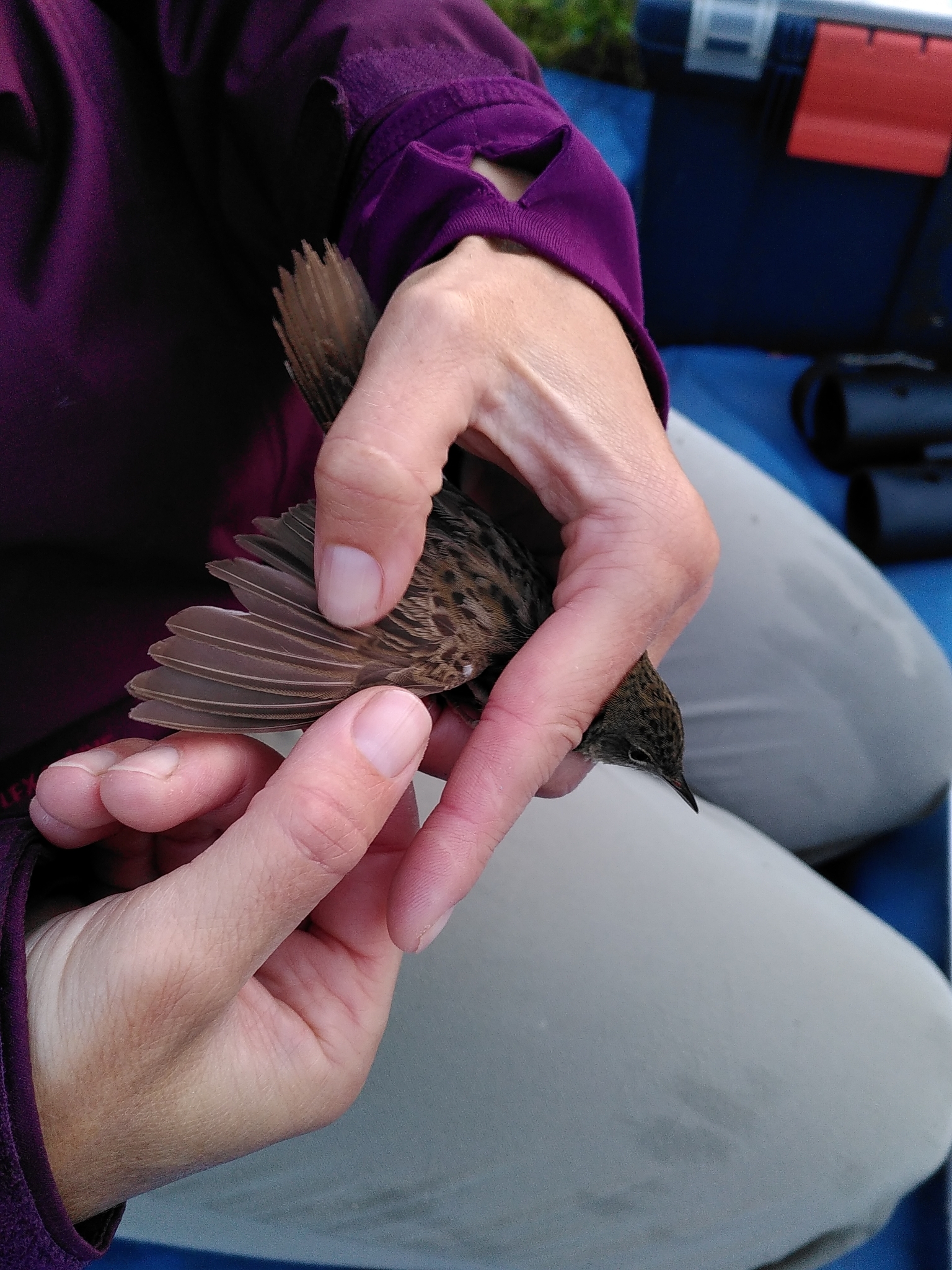
Small passerine approximately 12.5 cm long weighing 11.5-16 grams. Upper-parts pale olive-brown with each feather having a central darker brown streak. Cheeks greyish with faint eye streak behind eye. Underparts cream-colored or yellowish-buff with dark brown spots and streaks on breast and flanks. Wings brown with paler brown edges to feathers; tail reddish-brown with faint transverse bars visible in some individuals. Under-tail coverts streaked. Legs and feet pale yellowish-brown. Upper mandible dark brown, lower mandible yellowish-brown. Irises brown. Sexes identical; young birds yellower below.
Identification
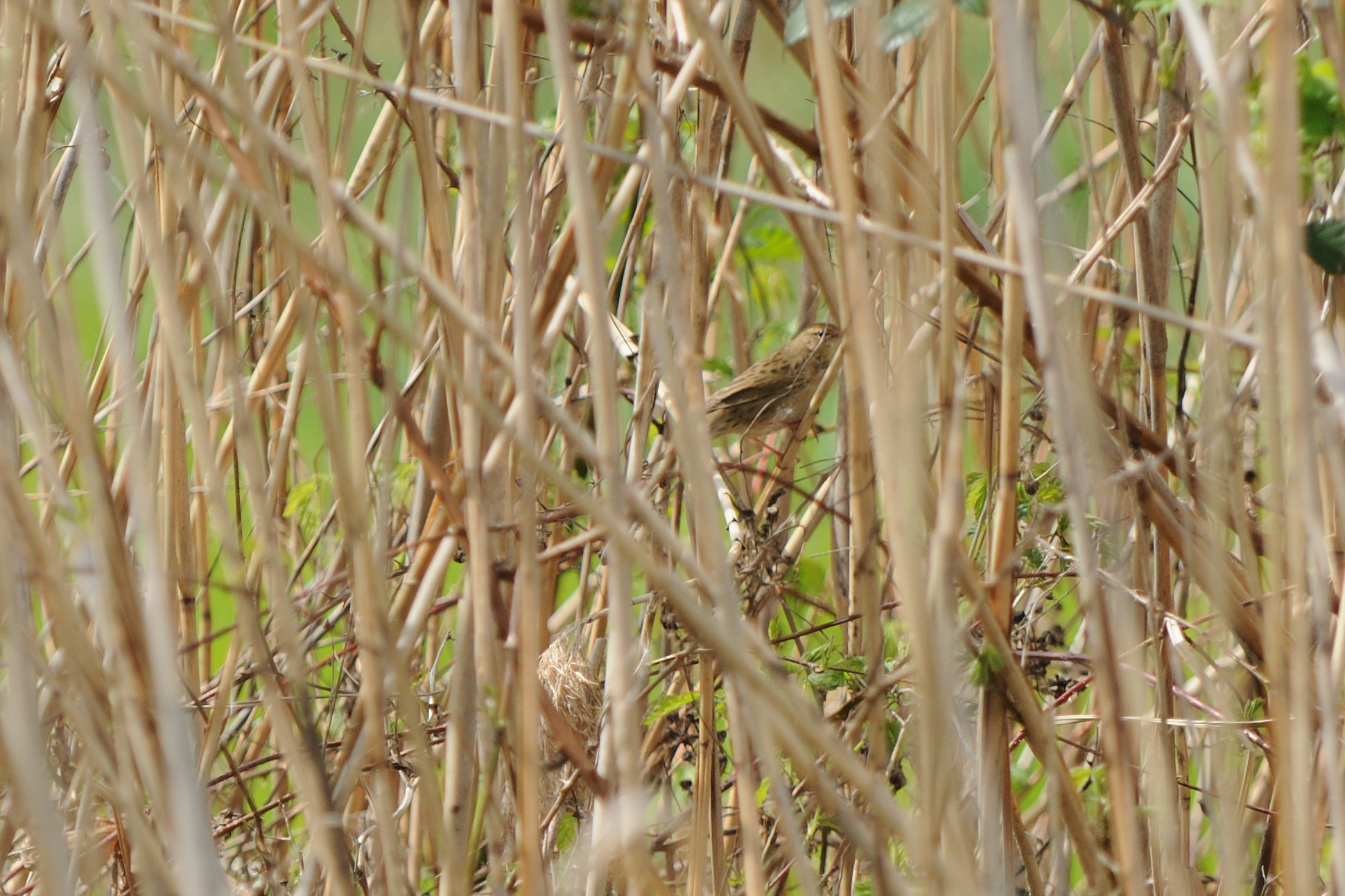
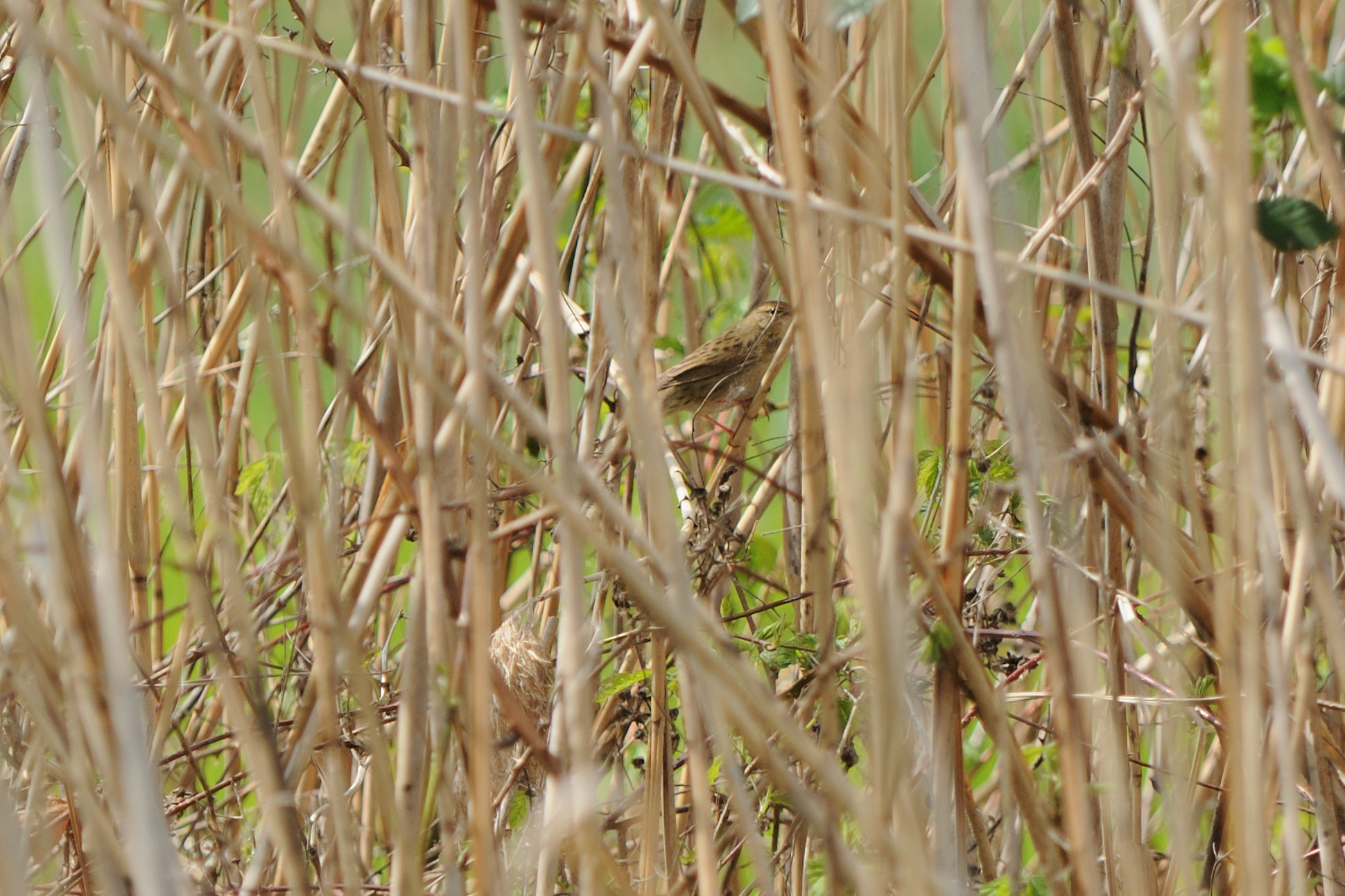
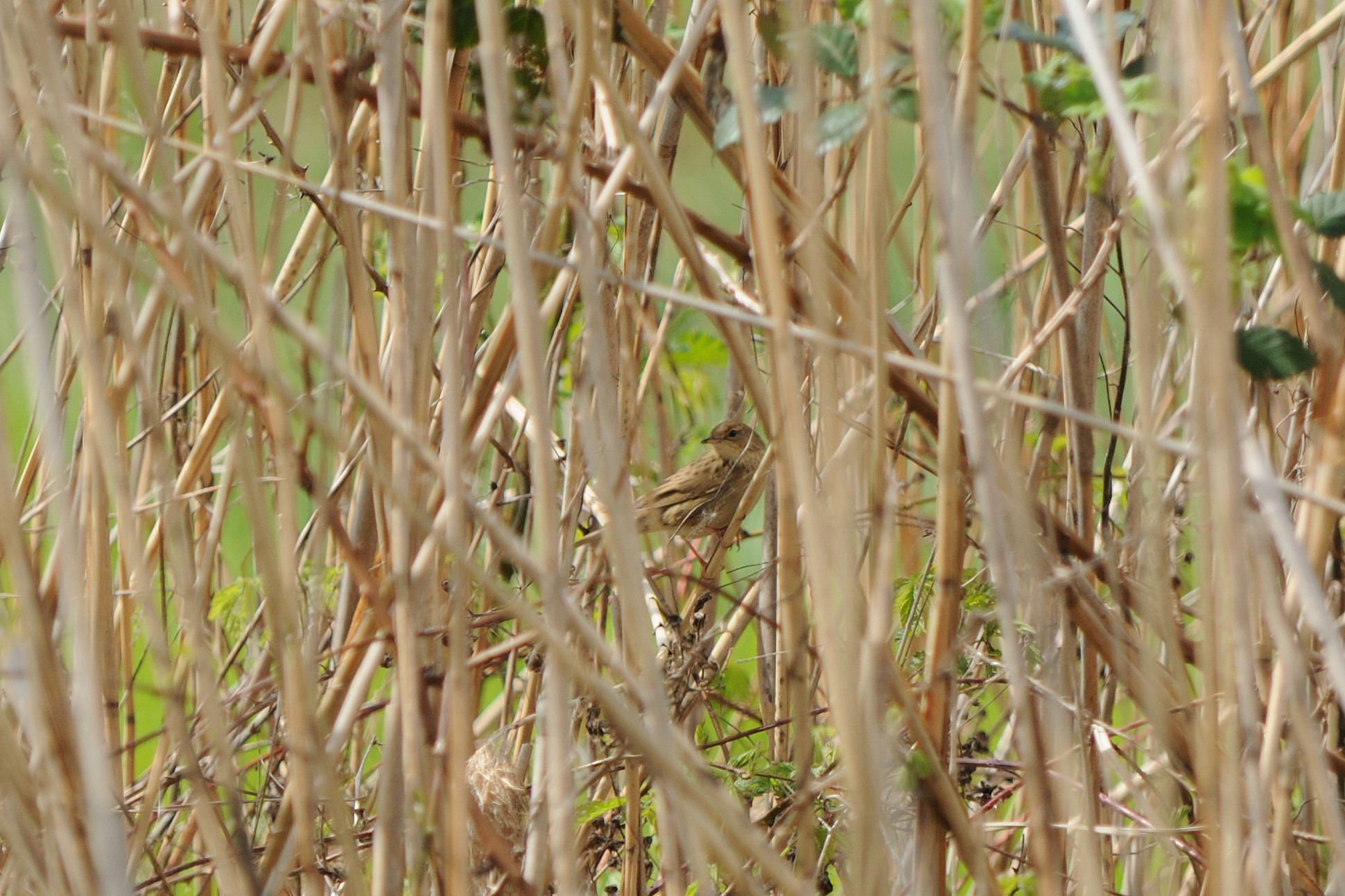
Small warbler with streaked olive-brown upperparts and relatively unstreaked underparts except for undertail coverts. Combination of small size and mechanical reeling song is distinctive. When flushed, shows reddish-brown tail with faint barring. High-stepping gait and habit of raising and flaring tail when perched are characteristic. Ventriloqual song makes locating the bird difficult despite its loudness. Distinguished from similar Locustella species by song characteristics including speed (52 notes per second) and tone.
Distribution & Habitat
Breeds across northwest Europe and western Palearctic, including Spain, France, Italy, Romania, Yugoslavia, British Isles, Belgium, Netherlands, Germany, Denmark, southern Sweden, Finland, Baltic States and western Russia. Autumn migration takes birds to the Sahel region of tropical Africa, India and Sri Lanka for wintering. Breeding habitat includes damp or dry areas with rough grass and bushes such as fen edges, clearings, neglected hedgerows, heaths, upland moors, gorse-covered areas, young plantations and felled woodland. Winter habitat information scarce due to skulking behavior.
Behavior & Ecology
Insectivorous, feeding on flies, moths, beetles, aphids, dragonflies, mayflies and their larvae, spiders and woodlice. Chicks fed aphids, green caterpillars, woodlice and flies. Secretive, spends time scurrying through dense vegetation rather than flying. Peculiar high-stepping gait and long stride on horizontal stems. Seldom flies, diving back into cover when flushed. Raises and flares tail when alighting; known to feign injury to distract predators. Song is a long, high-pitched reeling trill performed with beak wide open and body vibrating; 52 notes per second, audible up to 500m-1km. Alarm call: repeated ticking 'twkit-twkit-twkit'. Breeds April to August, usually two broods per season.
Conservation
IUCN Red List: Least Concern. European population estimated at 840,000-2.2 million breeding pairs (2.5-6.6 million individuals); global population estimated at 3.4-13.2 million individuals. Total population may be declining due to habitat loss but not at a rate sufficient for higher risk category. Climate change projections suggest breeding range could shift several hundred miles northward, covering British Isles and all of Scandinavia while disappearing from much of current European range.
Culture
The bird appears in early ornithological literature. Italian naturalist Ulisse Aldrovandi included it in the second volume of his Ornithologiae (published posthumously in 1637). French zoologist Mathurin Jacques Brisson described it in detail in his Ornithologie (1760). The first formal scientific description was by Georges-Louis Leclerc, Comte de Buffon in 1779 in Histoire Naturelle des Oiseaux. It was illustrated in a hand-colored plate by François-Nicolas Martinet for the Planches Enluminées D'Histoire Naturelle.
Source: Wikipedia · CC BY-SA 3.0
Taxonomy
- Order
- Passeriformes
- Family
- Locustellidae
- Genus
- Locustella
- eBird Code
- cogwar1
Subspecies (3)
-
Locustella naevia naevia
breeds Europe to eastern Russia and Crimea Peninsula; winters to northern and western Africa
-
Locustella naevia obscurior
breeds Caucasus to Georgia and northern Armenia; winters to northeastern Africa
-
Locustella naevia straminea
breeds eastern European Russia to south-western and south-central Siberia, eastern Kazakhstan, western Mongolia and northwestern China; winters to southern Asia
Data Sources
Species description from Wikipedia, licensed under CC BY-SA 3.0.
Bird images and sounds sourced from GBIF, contributed by citizen scientists worldwide under Creative Commons licenses.
Taxonomy data from AviList 2025.