Asian Dowitcher
Limnodromus semipalmatus
半蹼鹬
Introduction
Medium-large wader breeding in the grasslands of inland Siberia and Manchuria. Migrates to coastal wintering areas throughout Southeast Asia, with some individuals reaching northern Australia. During migration and winter, it inhabits intertidal mudflats and shallow waters, employing a distinctive probing foraging strategy. Global population is small and poorly monitored.
Description
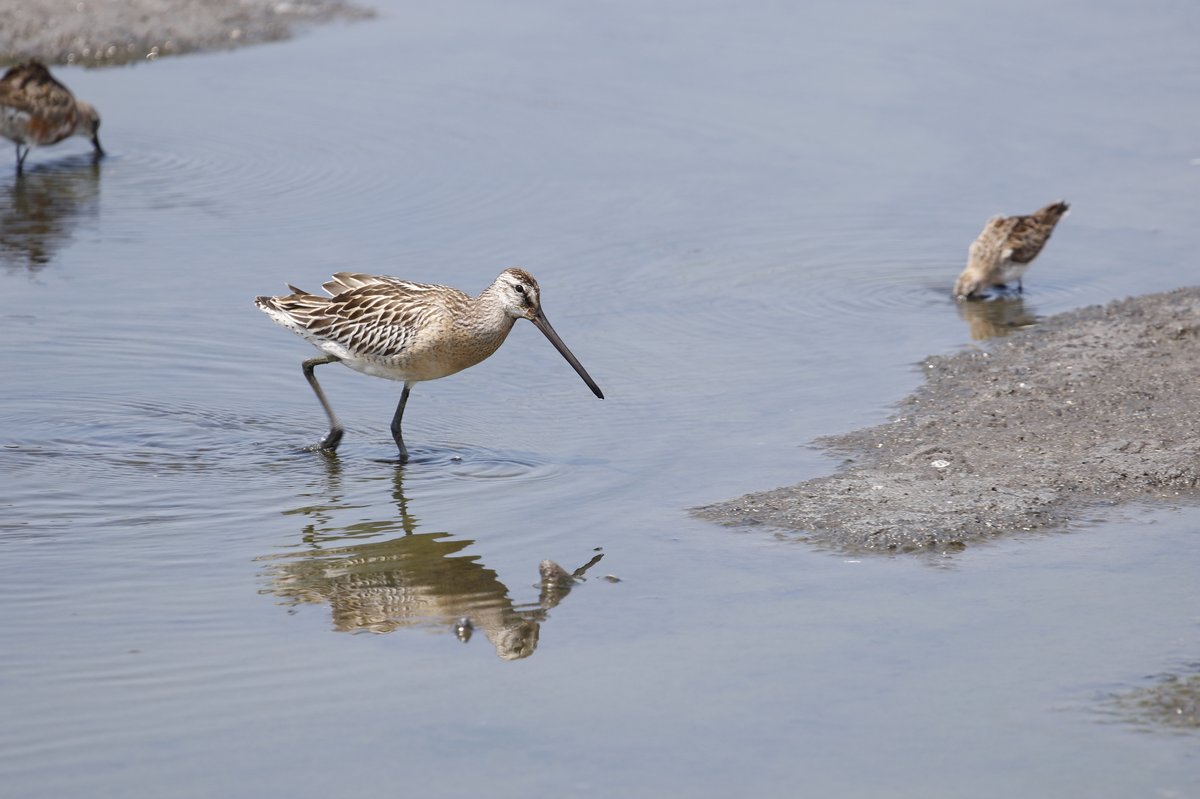
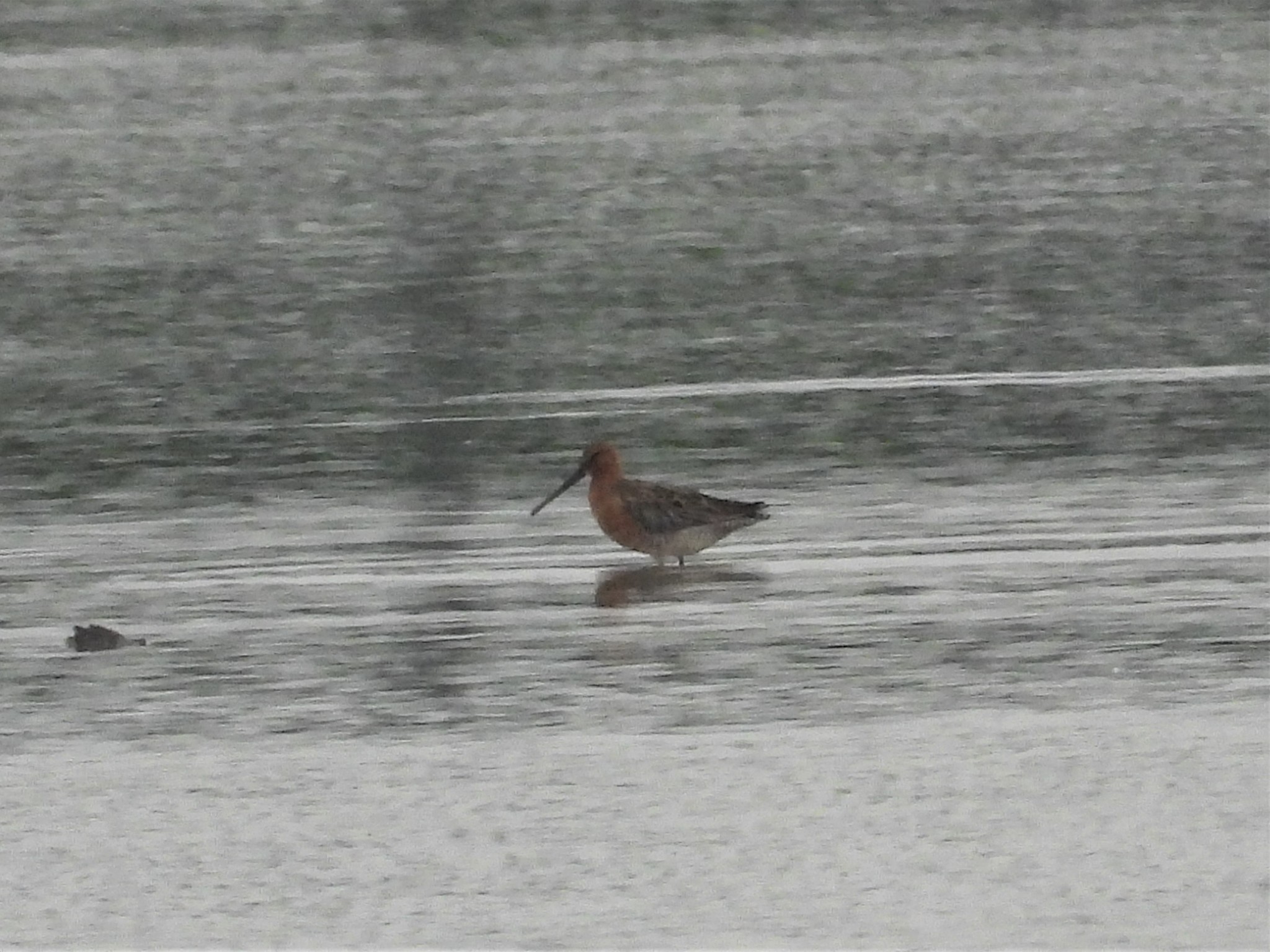
This medium-large wader displays marked seasonal plumage differences. Adults have dark legs and a long, straight dark bill, notably shorter than that of the long-billed dowitcher. In breeding plumage, the upperparts are brown while the underparts show reddish colouring. The tail exhibits a distinctive black and white barred pattern, visible in flight. During winter, the plumage becomes uniformly grey throughout. The overall impression is of a compact, pot-bellied shorebird with a somewhat hunchbacked posture when feeding.
Identification
The species closely resembles a small bar-tailed godwit in structure and winter plumage, presenting the main identification challenge. However, the mechanical 'sewing machine' probing action while feeding is a key distinguishing behaviour, as is the loud yelping call given in flight or when disturbed. Contrary to expectations, American dowitchers are not confusion species despite the shared name, as they are considerably smaller and do not overlap in range. The combination of coastal habitat, feeding action, and vocalizations provides the most reliable identification features.
Distribution & Habitat
Breeding occurs in grassy wetlands in inland regions of Siberia and Manchuria. Migration routes take this species to Southeast Asia, with some populations wintering as far south as northern Australia. Both the breeding and wintering ranges remain poorly documented. During migration periods and throughout the winter season, this bird is exclusively associated with coastal habitats, including intertidal mudflats, estuaries, and shallow coastal waters.
Behavior & Ecology
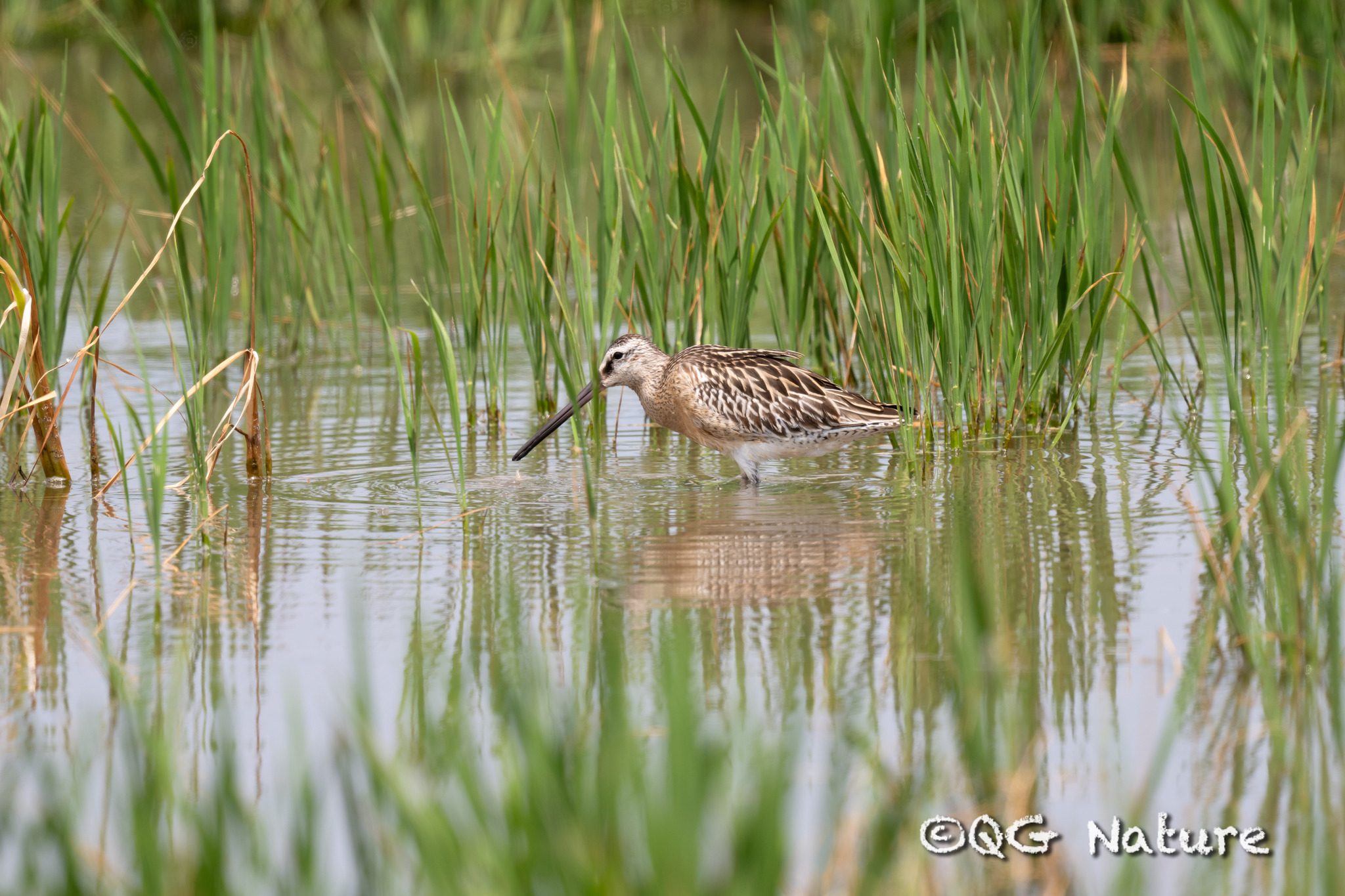
Foraging involves probing methodically in shallow water or soft mud, using the characteristic 'sewing machine' action of continuous vertical jabs. The diet consists primarily of insects, mollusks, crustaceans, and marine worms, with some plant material occasionally consumed. The species is typically encountered alone or in small loose flocks during migration and winter. When disturbed or in flight, it gives a distinctive yelping call that carries across the flats.
Conservation
IUCN assessment: Near Threatened. The global population is small, estimated at fewer than 25,000 individuals, and is believed to be declining. The species faces multiple threats including habitat loss and degradation at key staging and wintering sites, disturbance from coastal development, and potential hunting pressure along migration routes. The remote nature of breeding grounds and limited data make population trends difficult to assess precisely, though significant declines have been noted at some wintering sites.
Source: Wikipedia · CC BY-SA 3.0
Taxonomy
- Order
- Charadriiformes
- Family
- Scolopacidae
- Genus
- Limnodromus
- eBird Code
- asidow1
Distribution
breeds inland wetlands from southwestern Siberia and eastern Kazakhstan, (probably) northern Mongolia to southeastern Siberia, and northeastern China; winters coastal southern Thailand, Malayan Peninsula, Indonesian Archipelago, and northern Australia
Data Sources
Species description from Wikipedia, licensed under CC BY-SA 3.0.
Bird images and sounds sourced from GBIF, contributed by citizen scientists worldwide under Creative Commons licenses.
Taxonomy data from AviList 2025.