
Long-billed Dowitcher
Limnodromus scolopaceus
长嘴半蹼鹬
Introduction
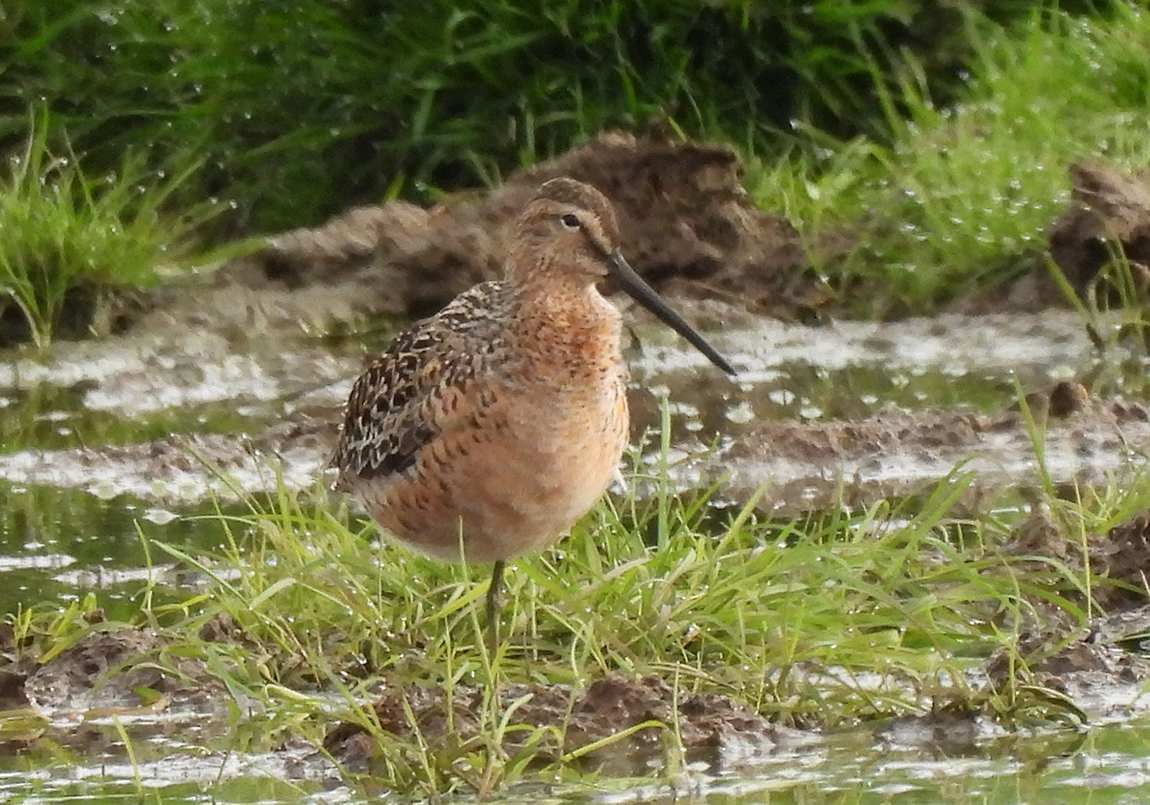
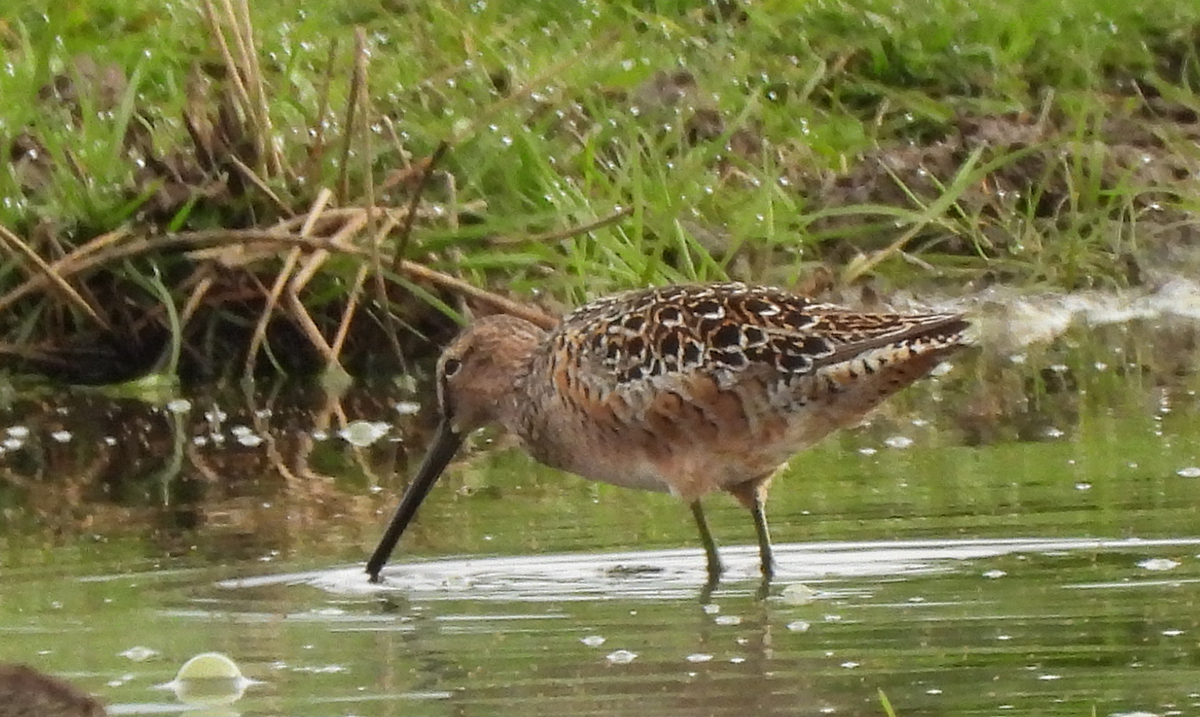
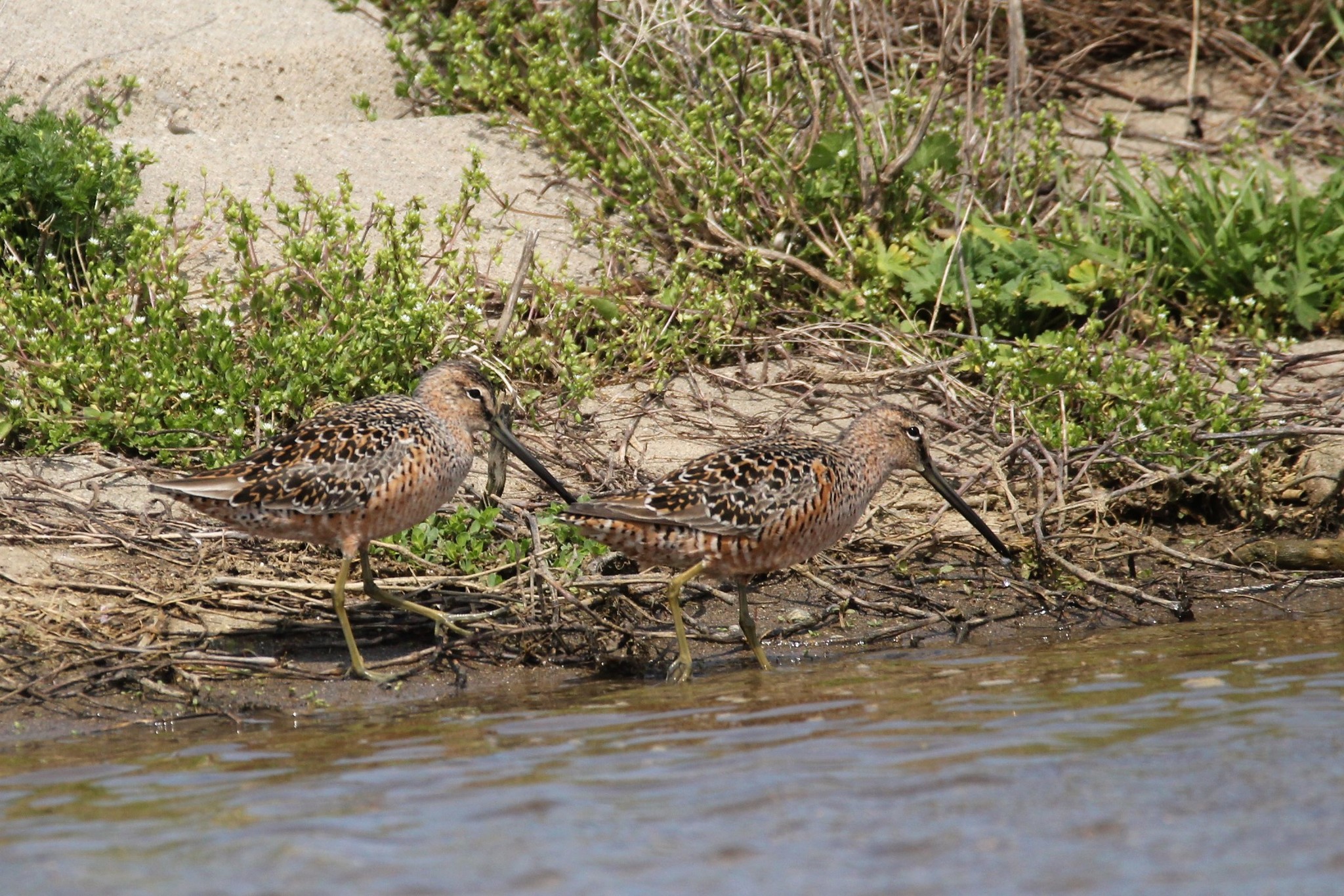
A medium-sized sandpiper with a relatively long, straight bill measuring roughly twice the length of its head. In breeding plumage, adults display rufous coloration on the head and underparts with a darker, mottled back. When disturbed, they reveal a large white rump patch. These birds inhabit freshwater habitats and forage with a distinctive pumping motion, submerging their heads while probing mud. Breeding behavior includes aerial courtship displays with males pursuing females in flight. This species was recognized as distinct from the short-billed dowitcher in 1950. It differs from the short-billed dowitcher in habitat preference, favoring freshwater environments over saltwater.
Description
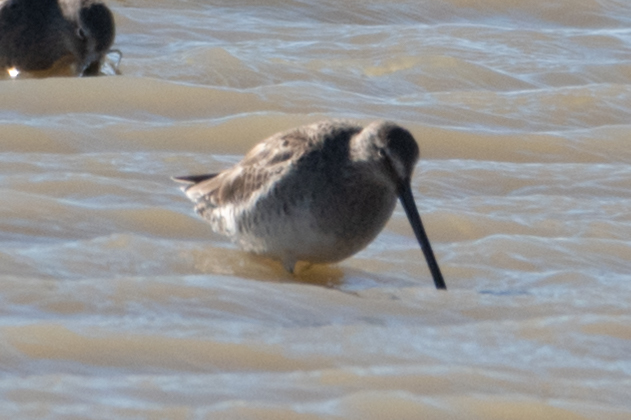
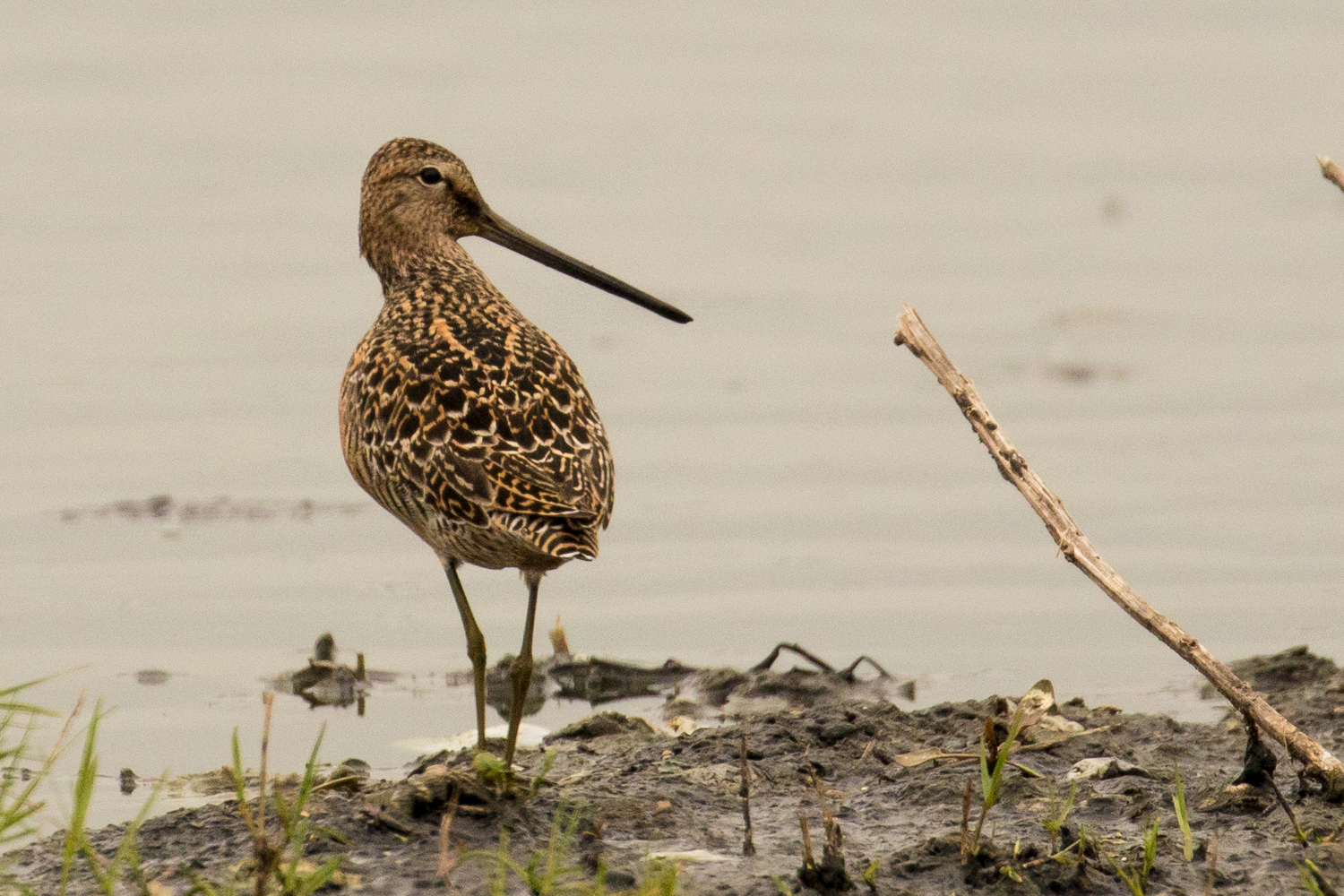
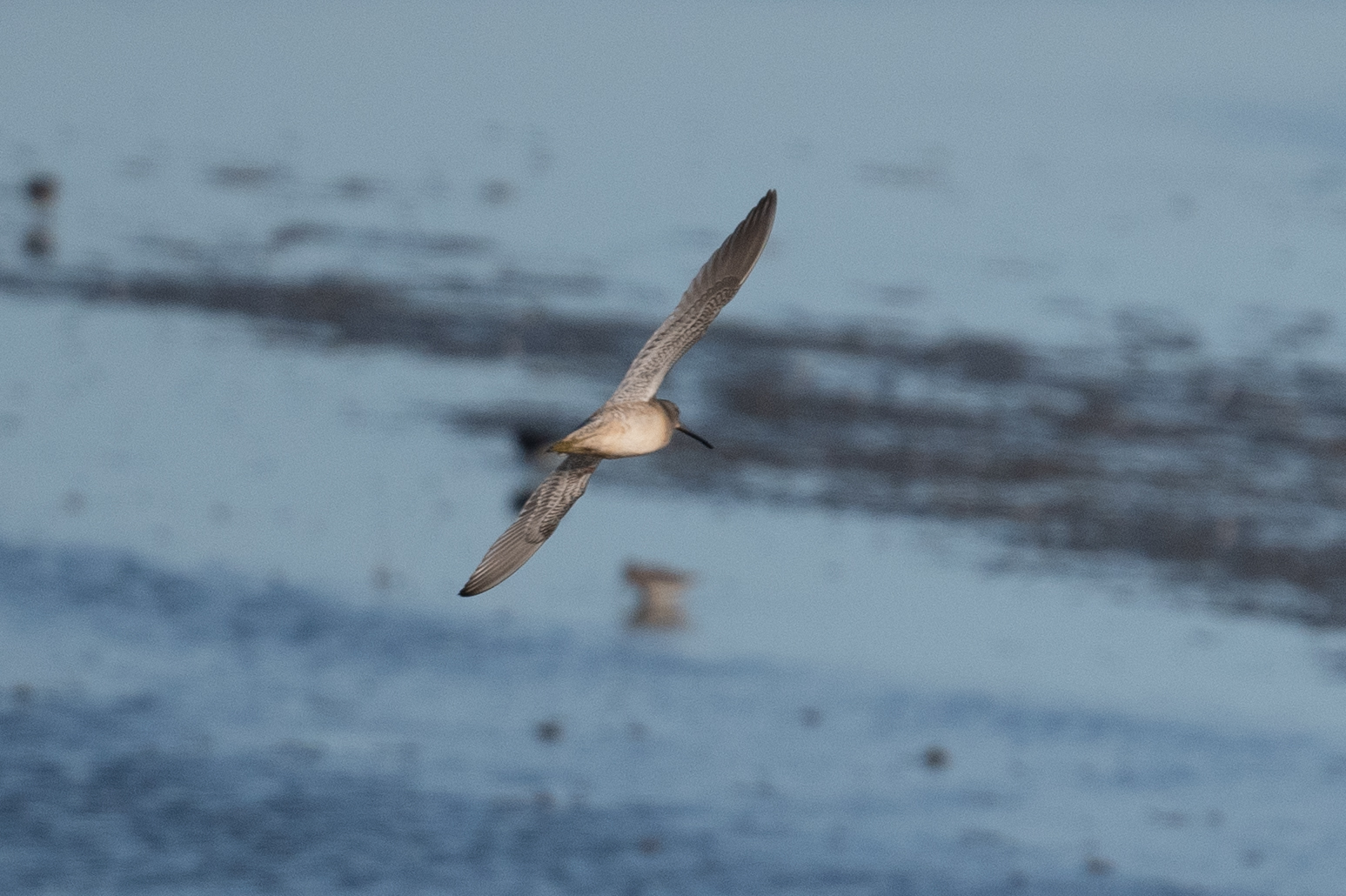
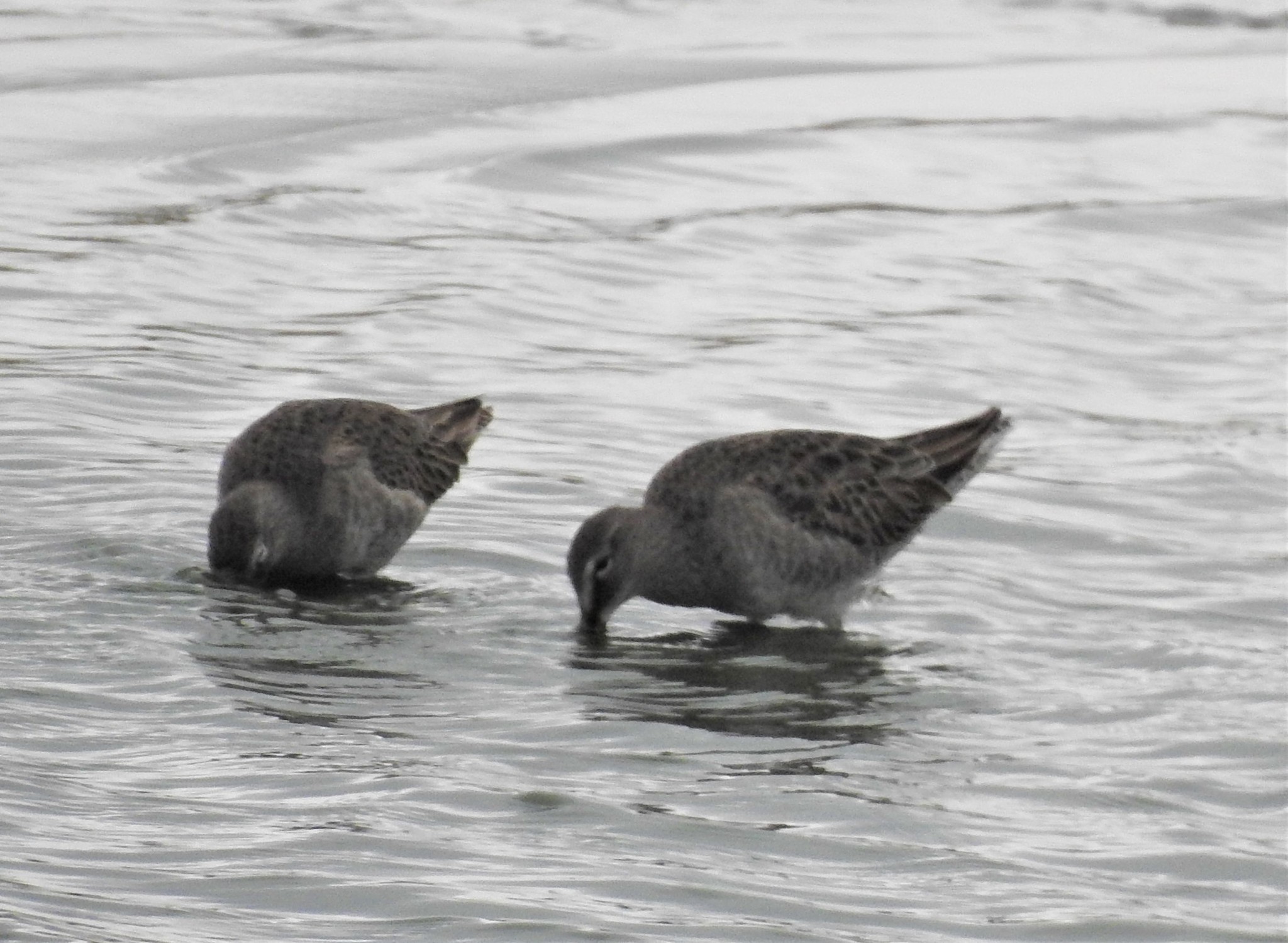
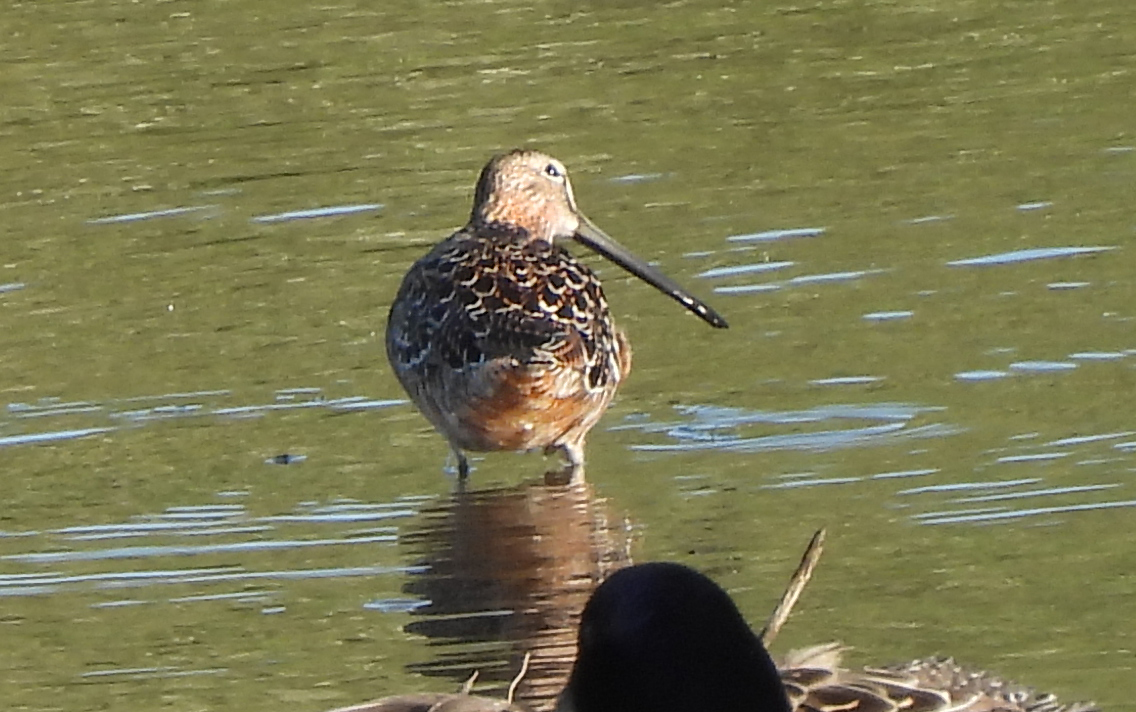
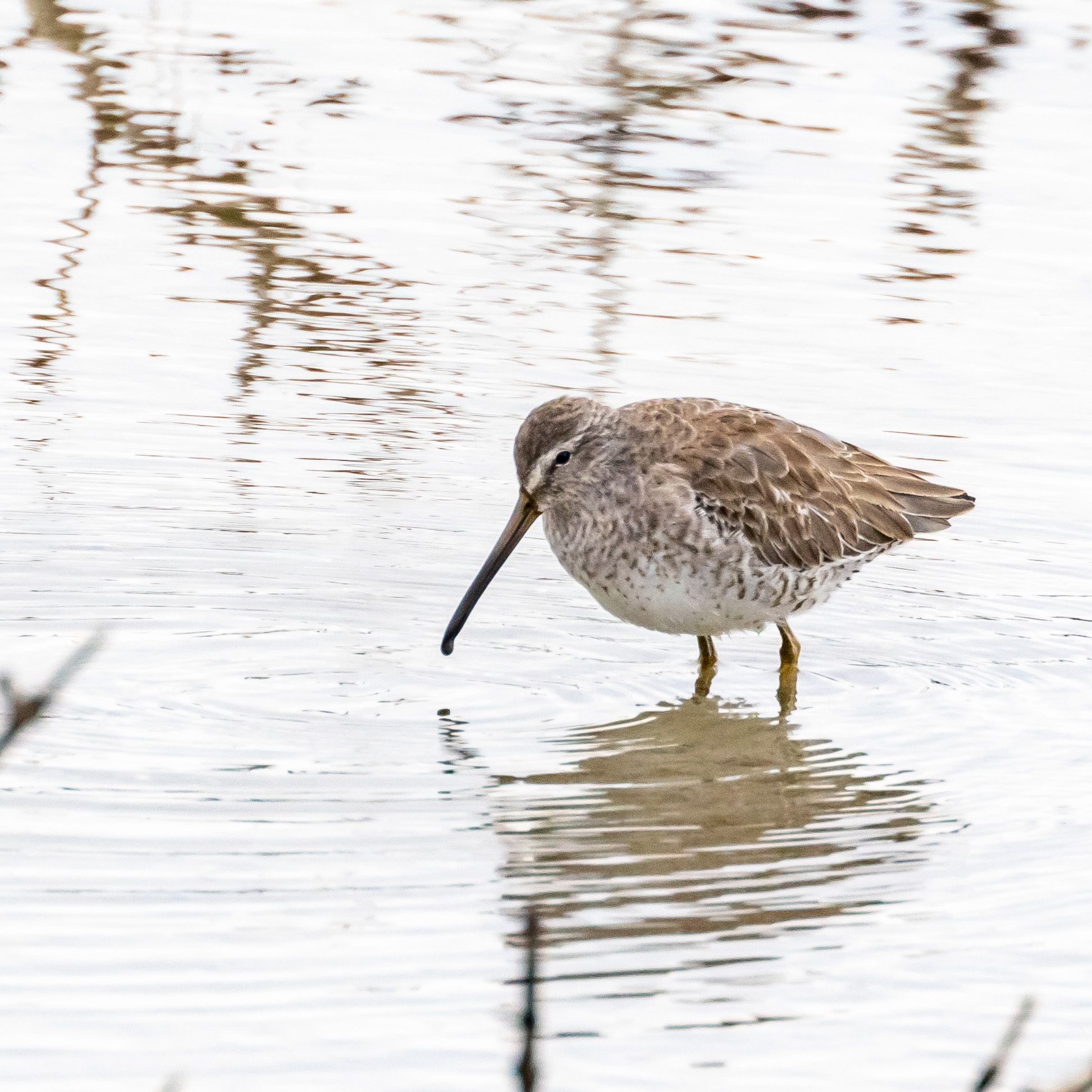
A stocky, medium-sized sandpiper with an extremely long, straight bill measuring 62-72mm. Adults show a whitish supercilium and dark loral stripe that extends past the eye. The tail displays bold black-and-white barring with black bands nearly twice the width of white ones, and a large white rump patch reaching mid-back. In breeding plumage, a dark crown tops a rufous head, neck, chest, and belly with black barring on the breast. The back and wings appear mottled dark brown with buff and white markings. Winter plumage becomes drab gray overall with darker upperparts and breast contrasting against a paler belly. Juveniles resemble breeding adults but paler, with chestnut-fringed upperparts and gray breasts grading to rufous bellies. Legs and bill base are yellowish, and sexes appear similar, though females average larger with longer wings and bills. Measures 29cm in length, 88-130g in weight, with an 47-49cm wingspan.
Identification
Extremely similar to the short-billed dowitcher, making visual identification challenging, especially in winter plumage when both species appear nearly identical. The primary distinguishing characteristic is their flight call—listen for a high, sharp 'keek'. In the hand, the longer bill (averaging longer than 65mm) helps confirm identification. The whitish supercilium combined with the dark loral stripe extending past the eye is a consistent field mark. Juvenile long-bills show dark gray tertiaries with narrow buff edges and internal markings appearing very dull. The barred tail pattern with black bands nearly twice as wide as white bands differs subtly from the short-billed's pattern. Habitat preferences offer clues: this species strongly favors freshwater habitats while short-bills prefer saltwater coastal areas.
Distribution & Habitat
Breeds across western and northern Alaska from Hooper Bay to western Mackenzie, south to the Brooks Range foothills, favoring wet grass and sedge freshwater meadows. Also breeds in eastern Siberia from the lower Yana River through the Chukotka Peninsula to the Anadyr Lowlands, nesting along Bering Sea coasts and inland river drainages. During non-breeding season, winters along the Pacific coast from southern British Columbia to Baja California, and inland to Arizona, New Mexico, Texas, and throughout Mexico. Atlantic coast wintering range extends from North Carolina through Florida and west along the Gulf Coast. In winter, they utilize mudflats, flooded wetlands, wet meadows, fields, lakes, and marshes in water less than three inches deep, strongly preferring fresh, muddy habitats over saltwater and sandy areas. Migrates later in fall and earlier in spring than the short-billed dowitcher.
Behavior & Ecology
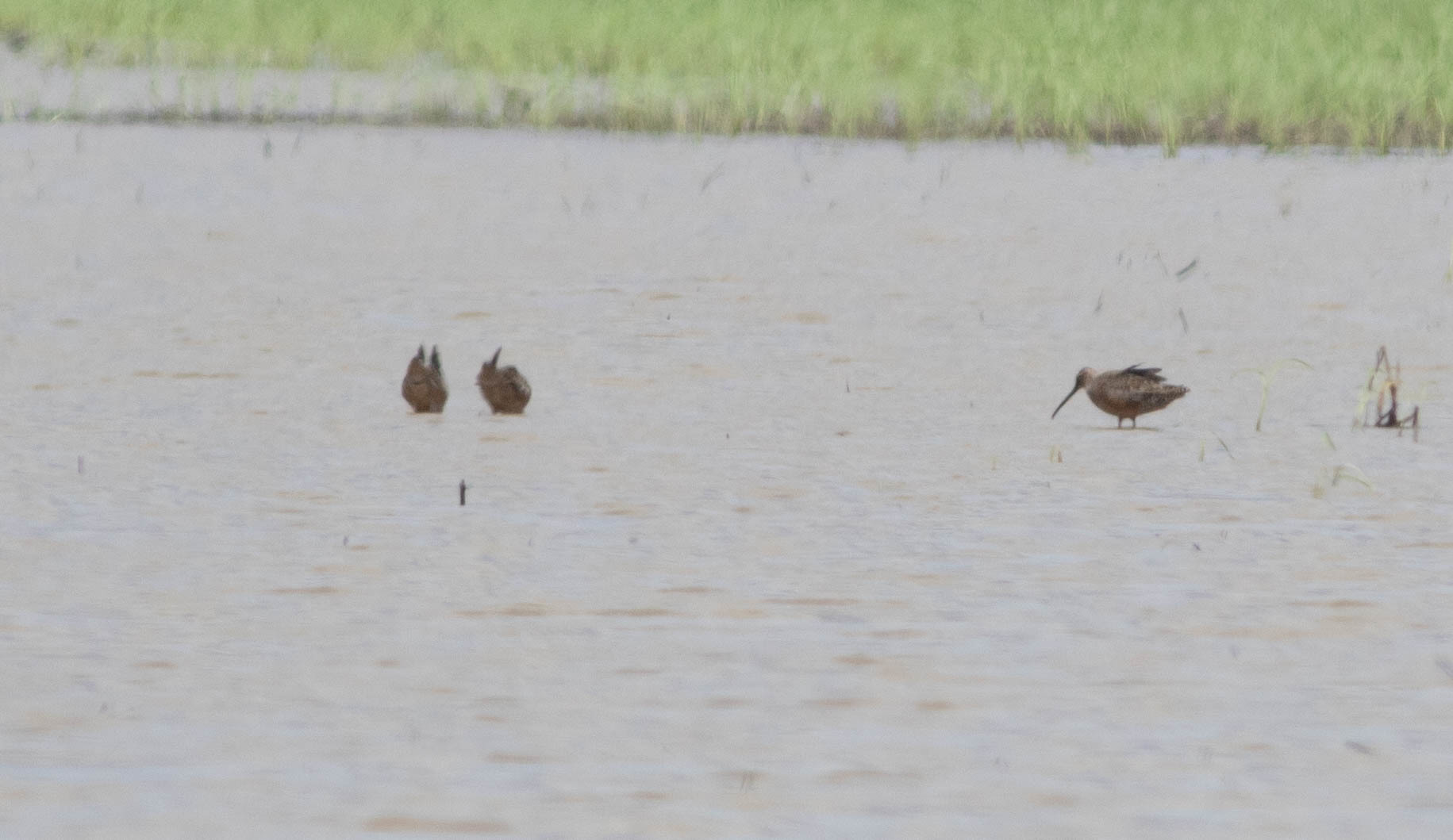
Forages by jabbing and probing with a distinctive 'sewing machine' motion in shallow water, often with heads submerged, using tactile receptors on the bill tip. During breeding, consumes mainly chironomid and other insect larvae with occasional plant matter and seeds. Winter and migration diets expand considerably to include polychaetes, crustaceans, and mollusks. Known to forage at night during migration. Males court females by singing and then pursuing them in flight displays, even singing while hovering 15 feet above territories. Pairs are seasonally monogamous. Nests in wet grass troughs on raised mounds, creating simple depressions lined with vegetation. Lays a clutch of four eggs, oval to pear-shaped, buff olive to greenish-blue with heavy brown splotching. Both parents share 20-day incubation. Chicks are precocial and self-feeding within hours; males provide primary parental care until fledging. More vocal than short-billed dowitchers, giving 'keek' calls in feeding flocks.
Conservation
The article does not provide specific conservation information.
Culture
The English name derives from Iroquois languages and was first recorded in 1840. The genus name Limnodromus combines Ancient Greek words for 'marsh' (limne) and 'racer' (dromos), referring to its wetland habitat and swift movements. The species name scolopaceus is Neo-Latin meaning 'snipe-like', referencing its resemblance to true snipes.
Source: Wikipedia · CC BY-SA 3.0
Taxonomy
- Order
- Charadriiformes
- Family
- Scolopacidae
- Genus
- Limnodromus
- eBird Code
- lobdow
Distribution
breeds wet meadows from Lena River through northeastern Siberia, St. Lawrence Island (Bering Sea; rare), western Alaska and northern Northwest Territories (north-central Canada); winters inland from the southern US through Mexico, along the Pacific coast from the Pacific Northwest south to northwestern Costa Rica, and along the Atlantic and Gulf coasts from the mid-Atlantic south to the Yucatan Peninsula
Data Sources
CBR Notes: 中文名由长嘴鹬改为长嘴半蹼鹬 IUCN红色名录等级由LC升为VU
Species description from Wikipedia, licensed under CC BY-SA 3.0.
Bird images and sounds sourced from GBIF, contributed by citizen scientists worldwide under Creative Commons licenses.
Taxonomy data from AviList 2025.