Asian Rosy Finch
Leucosticte arctoa
粉红腹岭雀
Introduction
A species of finch (Leucosticte arctoa) in the family Fringillidae. Breeds in Mongolia and the East Palearctic; winters in Manchuria, Korea, Sakhalin, and Japan. Inhabits tundra and temperate grassland. Genetic studies reveal close relationship with three American rosy finch species, with the four often treated as conspecific. Exhibits migratory, partly migratory, and altitudinal movements.
Description
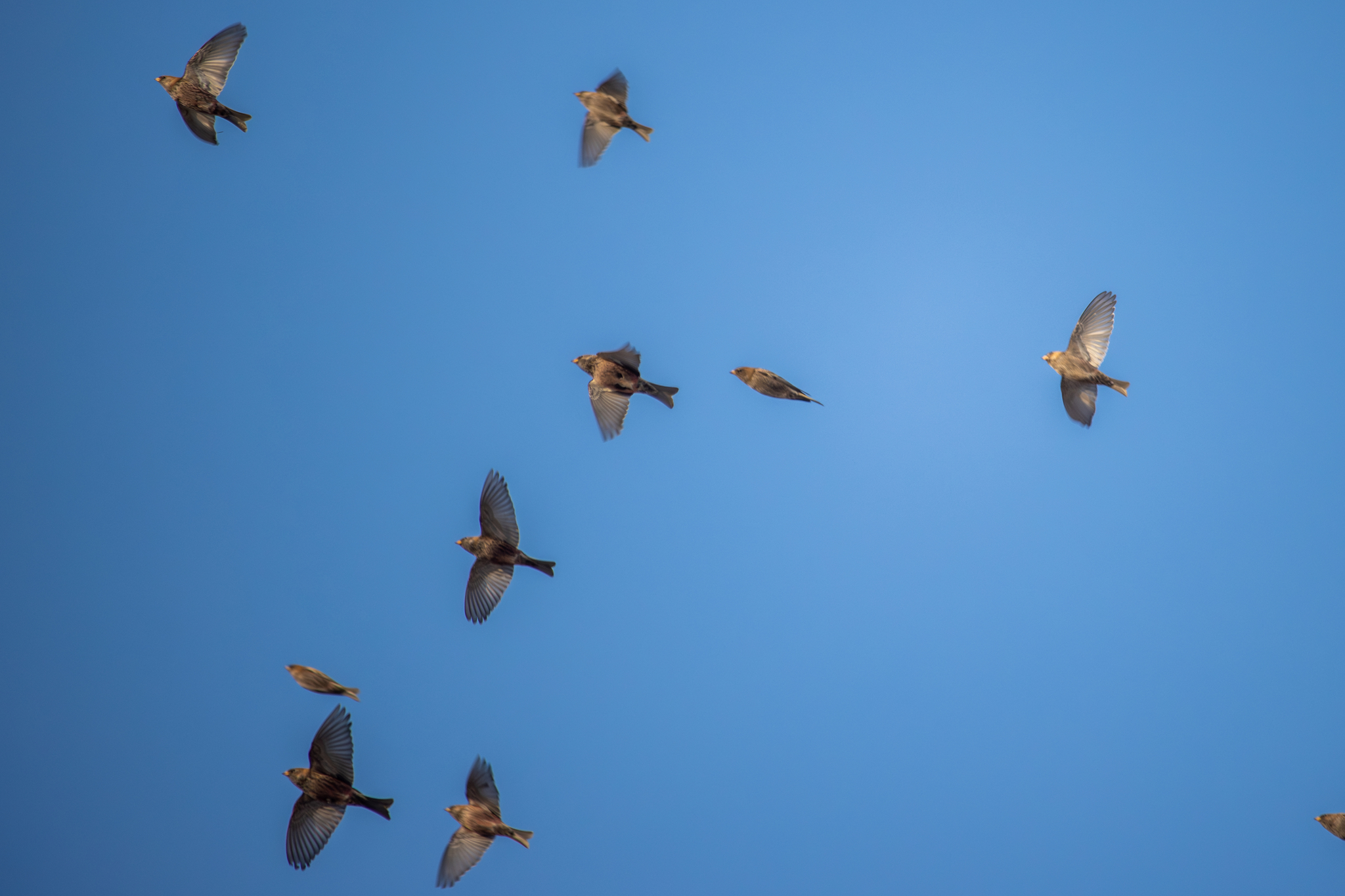
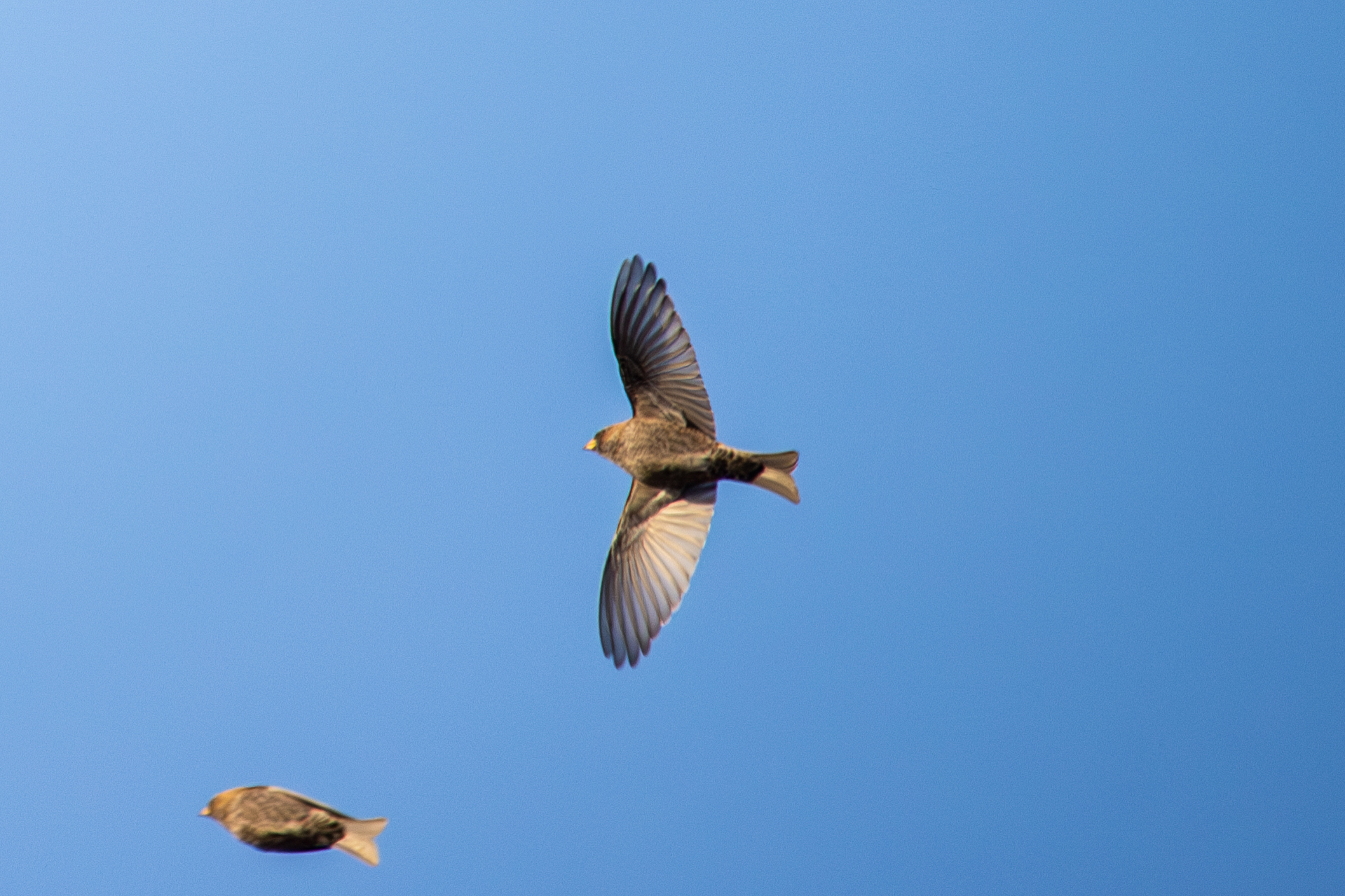
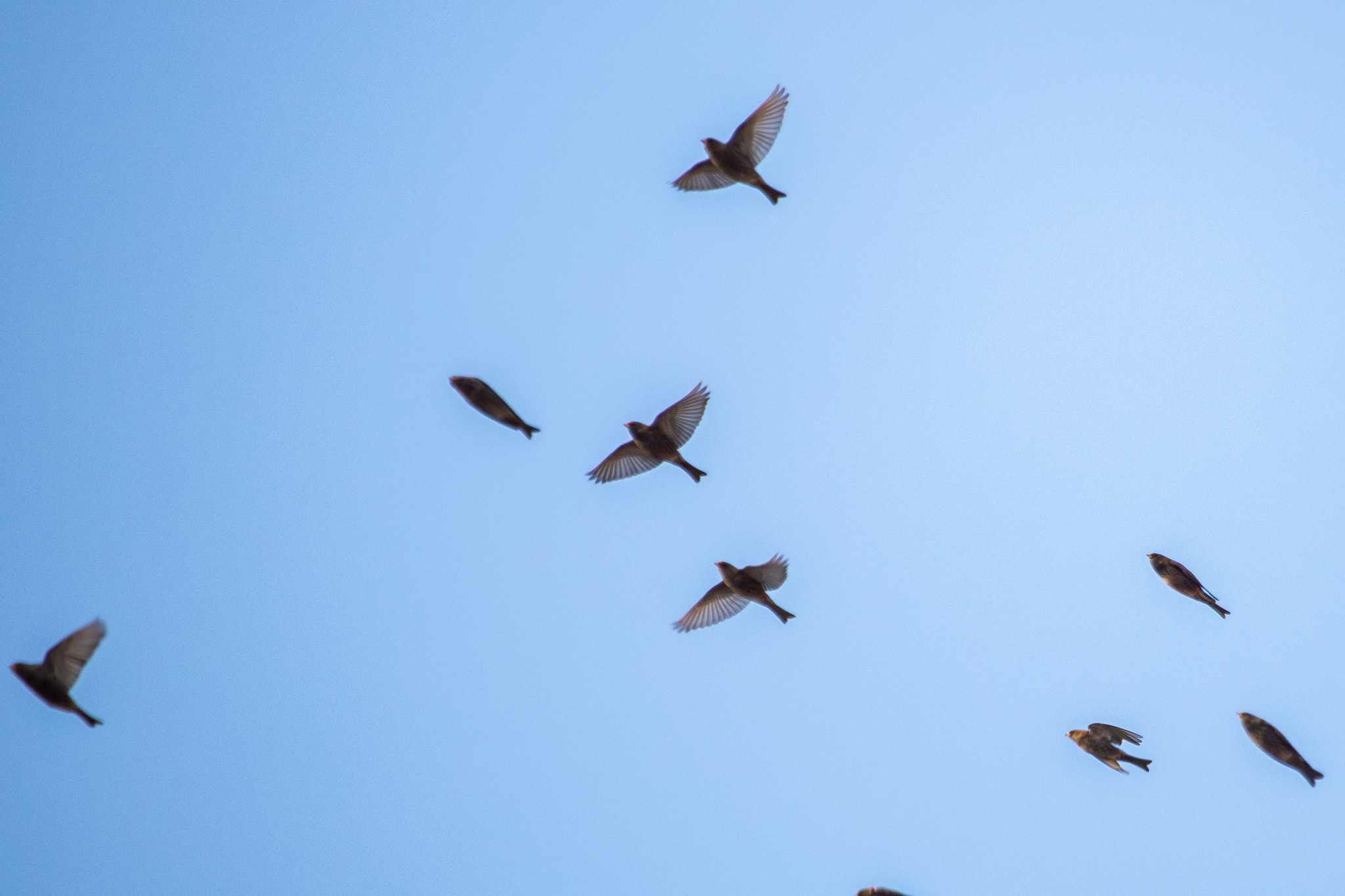
A stout, dark brown finch. Males across most of the range display black faces and throats, with wings and flanks suffused with pinkish coloration. The Yakutian subspecies is an exception, showing deeper brown wings without pink traces. Females are more muted in coloration, lacking the pink hues and presenting paler faces and throats compared to males.
Distribution & Habitat
Breeding range extends across Mongolia and the East Palearctic. Wintering areas include Manchuria, Korea, Sakhalin, and Japan. Inhabits rocky tundra and mountainous areas above the tree line during summer. The species displays complex movement patterns, being migratory, partly migratory, and altitudinal in its movements.
Behavior & Ecology
Feeds primarily on seeds, buds, and shoots, supplementing the diet with invertebrates. Breeding occurs between June and August, with breeding in coldest areas starting in July. The breeding biology remains poorly documented, with few nests ever found. Raises a single brood per season. Nests in loose colonies or as solitary pairs.
Source: Wikipedia · CC BY-SA 3.0
Taxonomy
- Order
- Passeriformes
- Family
- Fringillidae
- Genus
- Leucosticte
- eBird Code
- asrfin1
Subspecies (5)
-
Leucosticte arctoa arctoa
Russian Altai
-
Leucosticte arctoa brunneonucha
mountains of eastern Siberia (Lena River to Kamchatka and Kuril Islands)
-
Leucosticte arctoa cognata
Sayan Mountains and adjacent mountains on Russia/Mongolia border
-
Leucosticte arctoa gigliolii
mountains north of Lake Baikal (eastward to Yablonovy Mountains)
-
Leucosticte arctoa sushkini
northern Mongolia (Khangai region)
Data Sources
Species description from Wikipedia, licensed under CC BY-SA 3.0.
Bird images and sounds sourced from GBIF, contributed by citizen scientists worldwide under Creative Commons licenses.
Taxonomy data from AviList 2025.