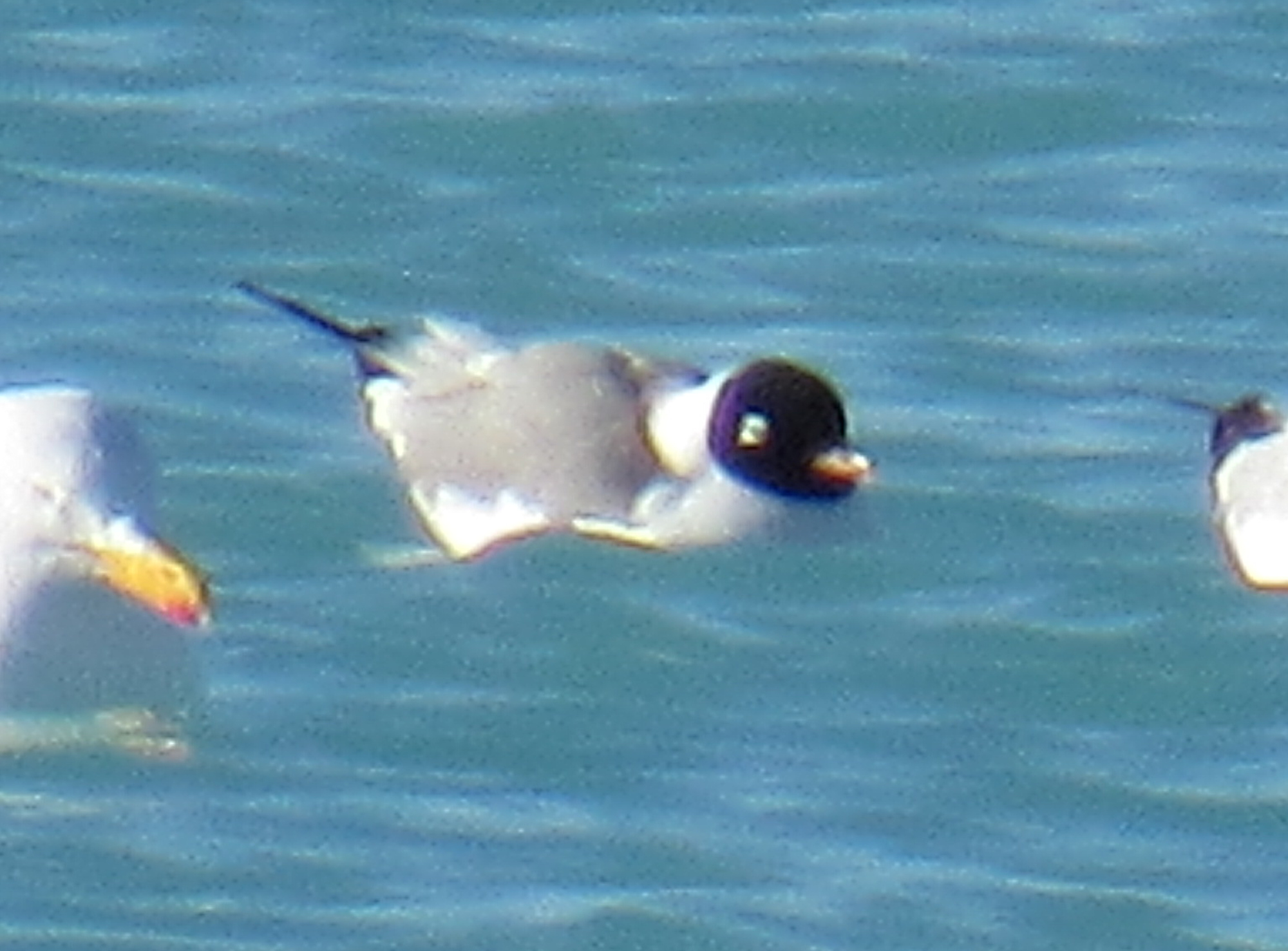
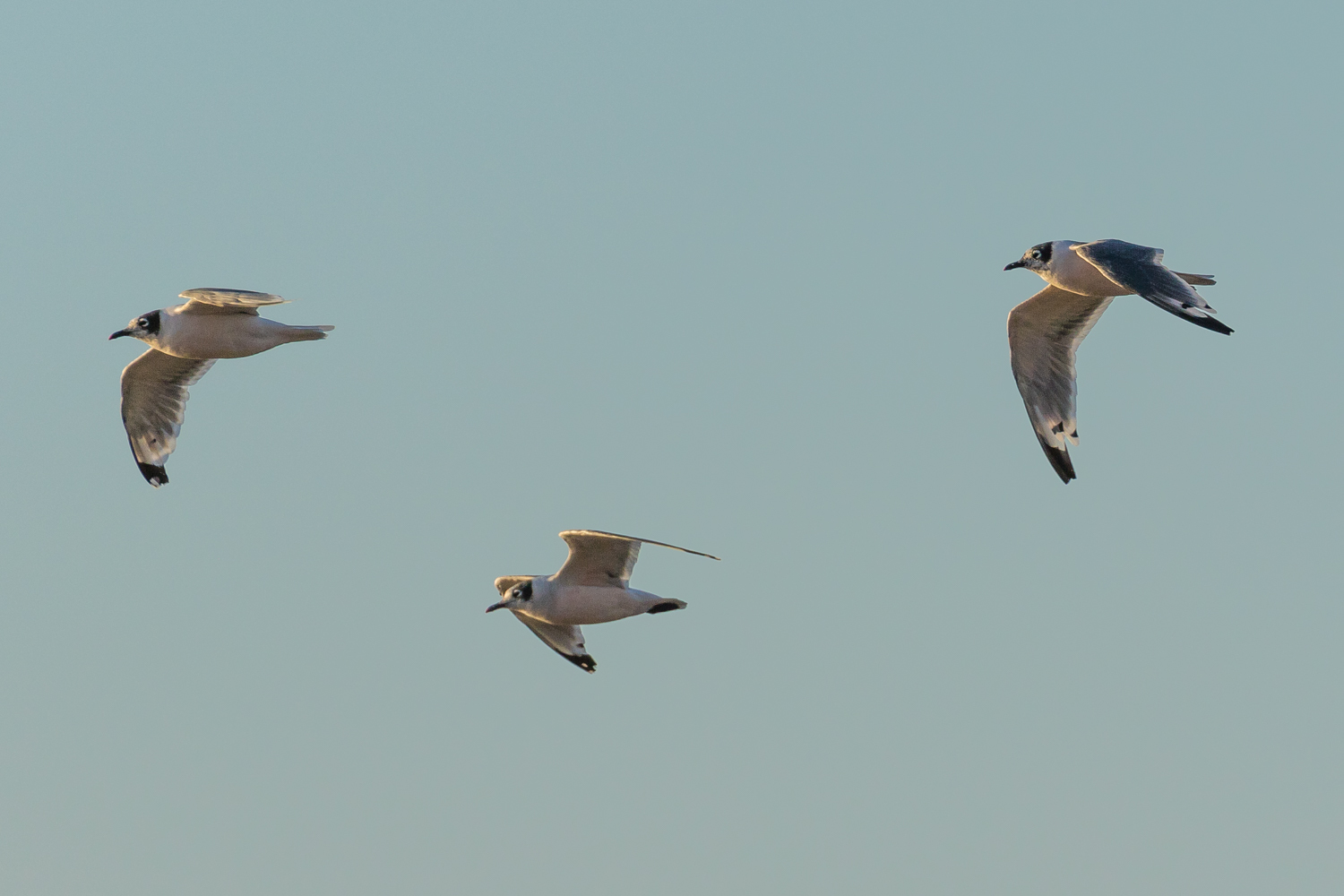
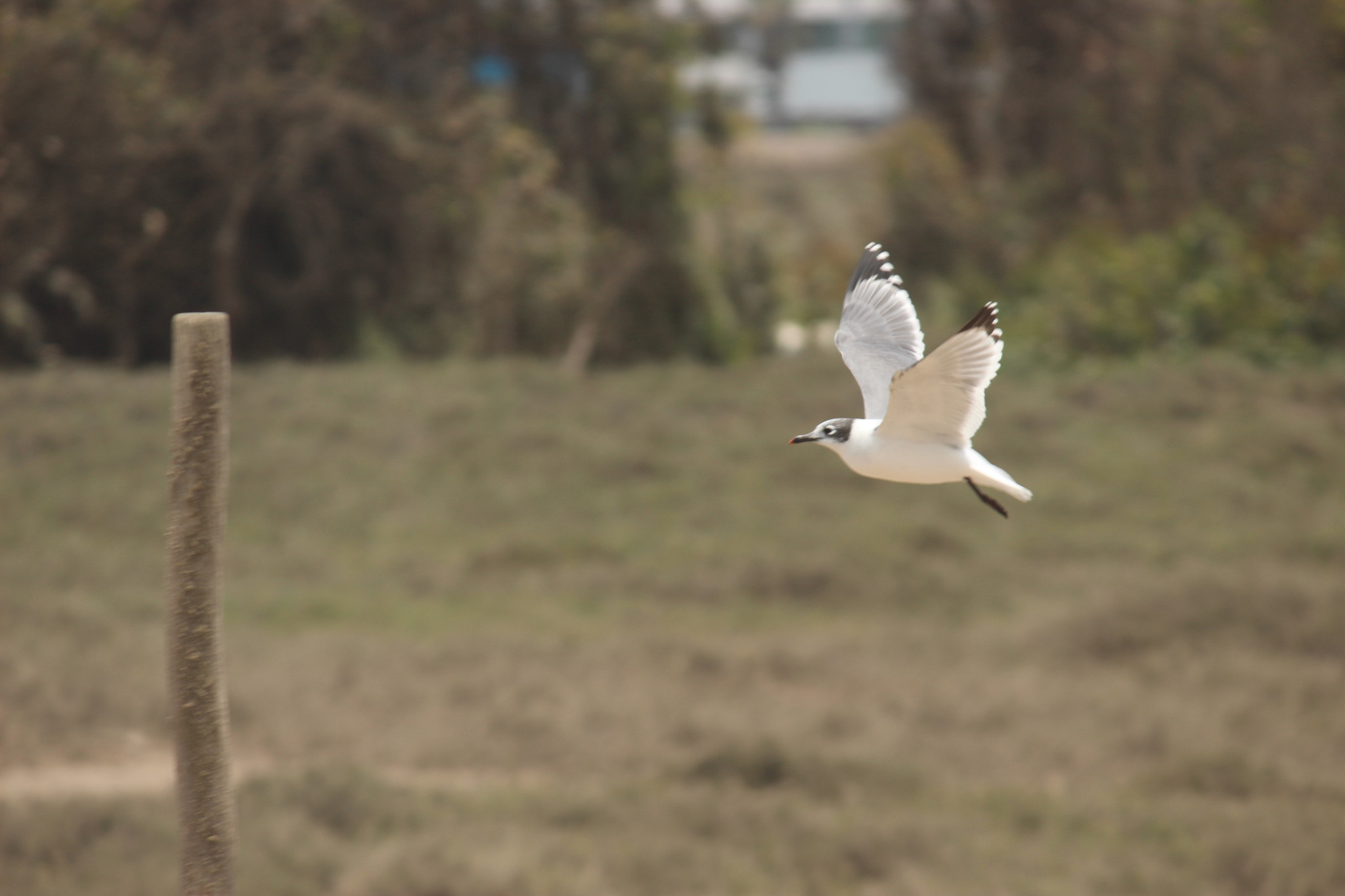
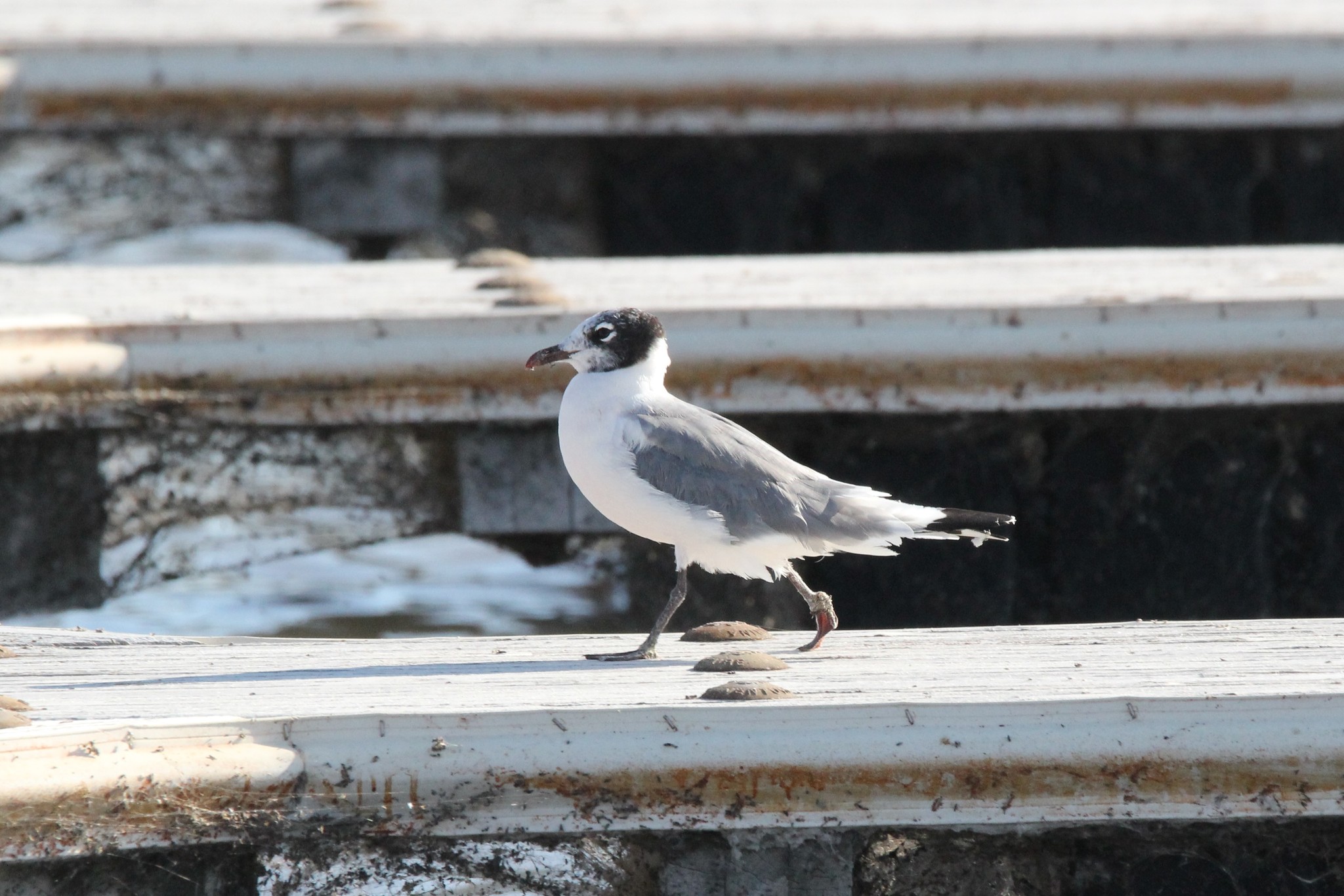
Franklin's Gull
Leucophaeus pipixcan
弗氏鸥
Introduction
A small gull species (Leucophaeus pipixcan) breeding in central Canadian provinces and adjacent northern US states. Inhabits prairie lakes for nesting and migrates to South America for winter, reaching Argentina, Chile, Peru, and the Caribbean. Distinguished by darker grey upperparts than most similar-sized gulls (except the larger laughing gull), with black wing tips featuring an adjacent white band. Red bill and legs in breeding plumage. The species has a black hood during summer that is mostly lost in winter. Classified as Least Concern on the IUCN Red List, with an estimated global population of 1,000,000-1,490,000 individuals that is currently increasing.
Description
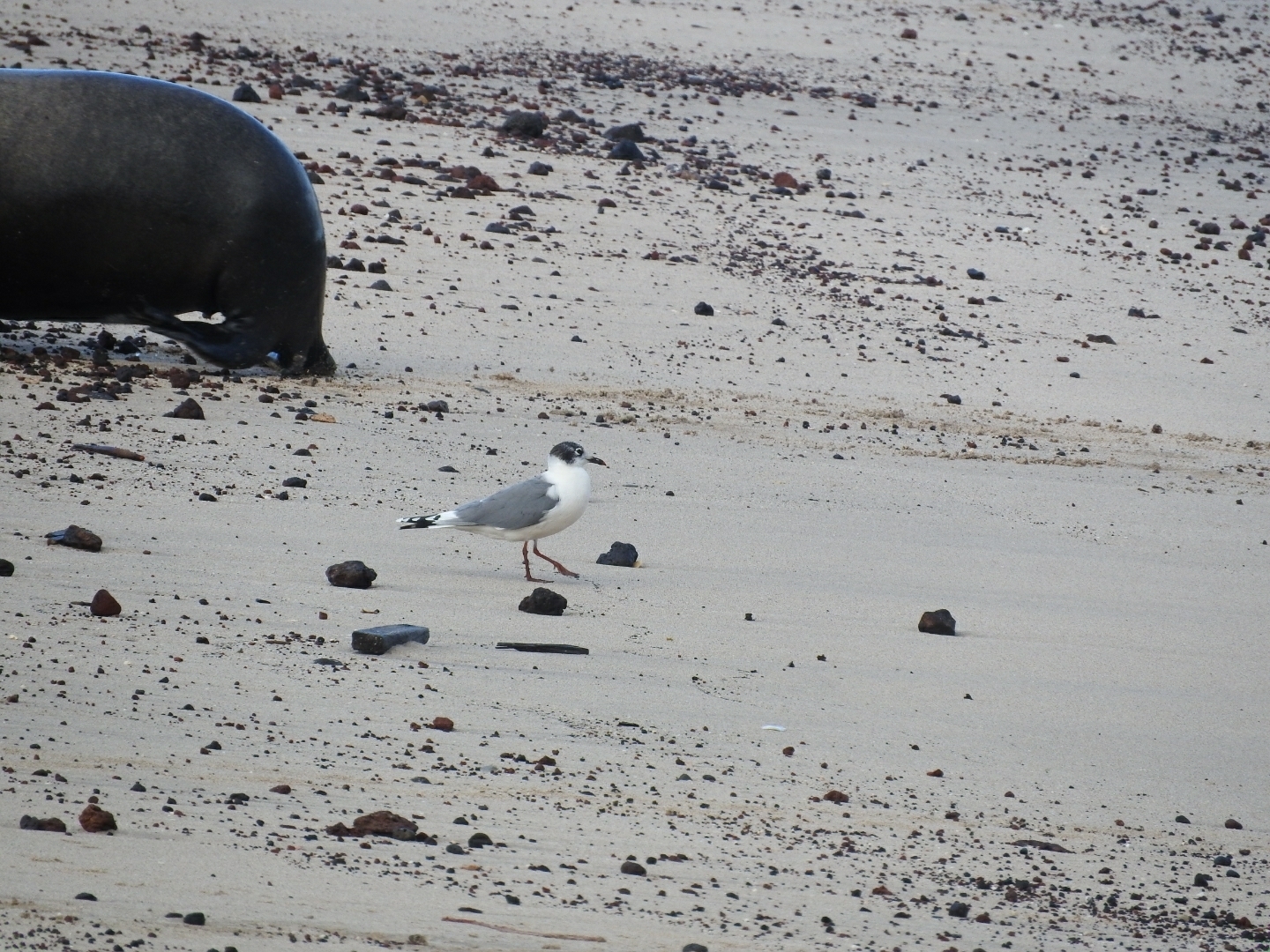
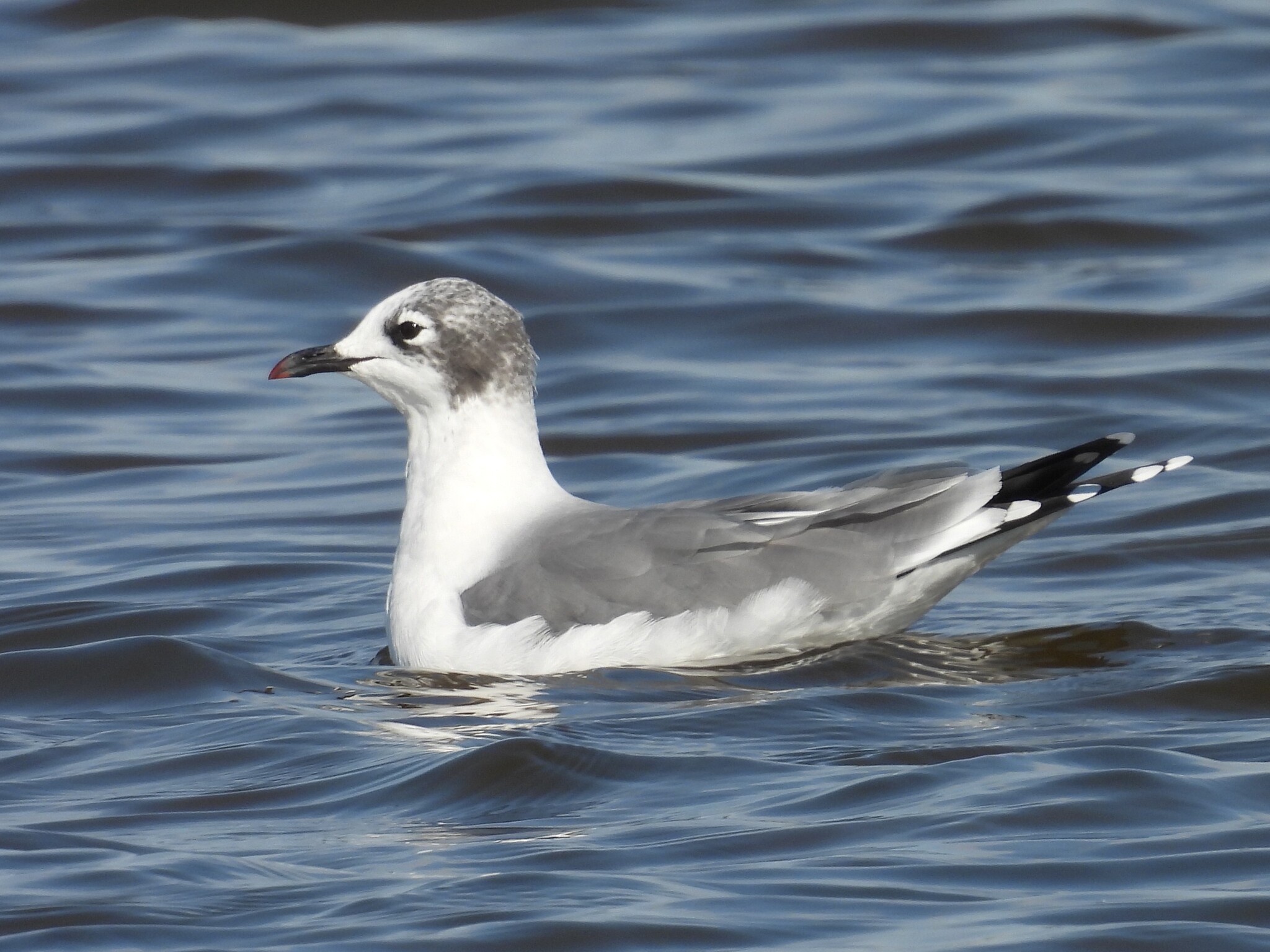
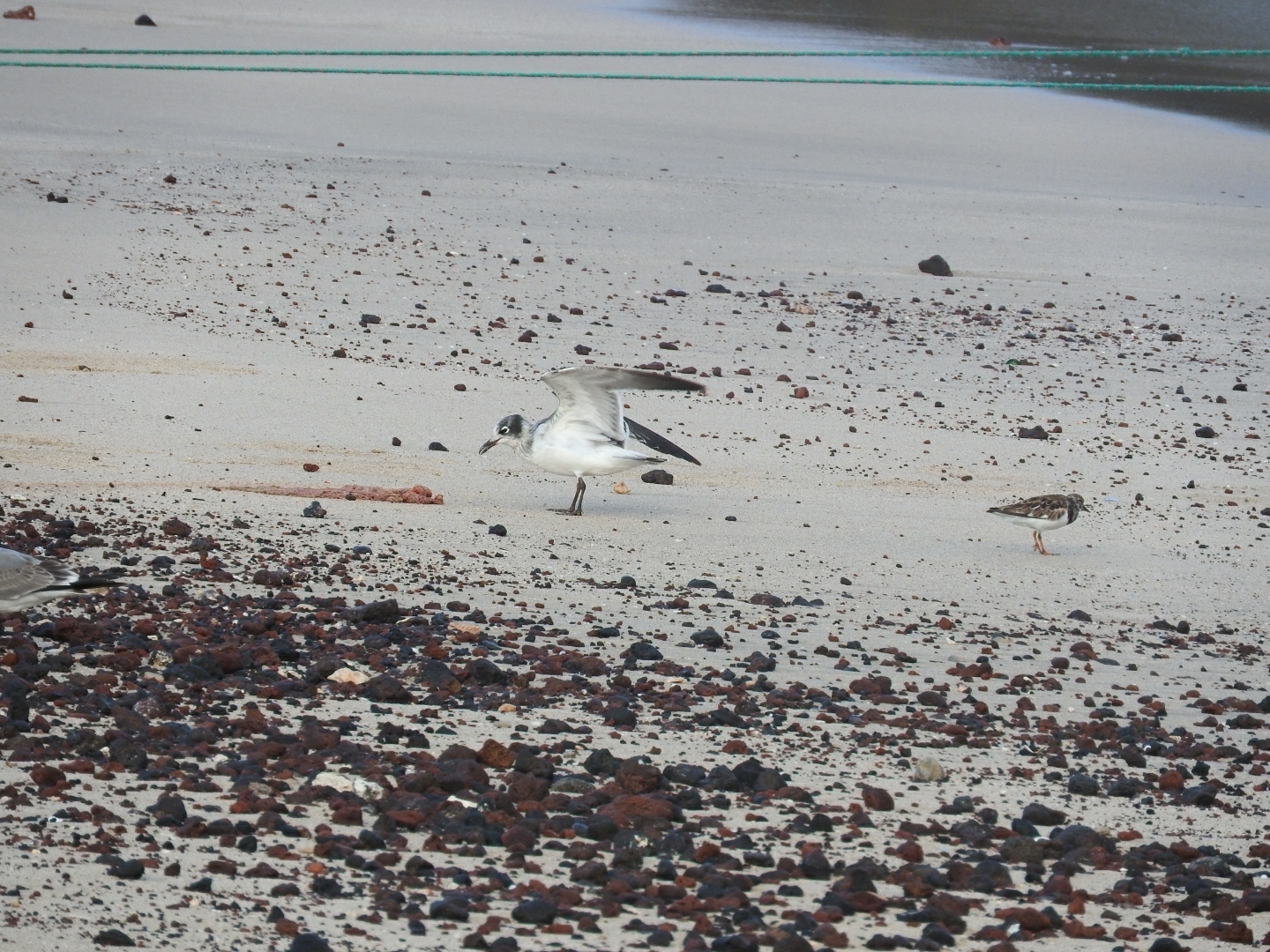
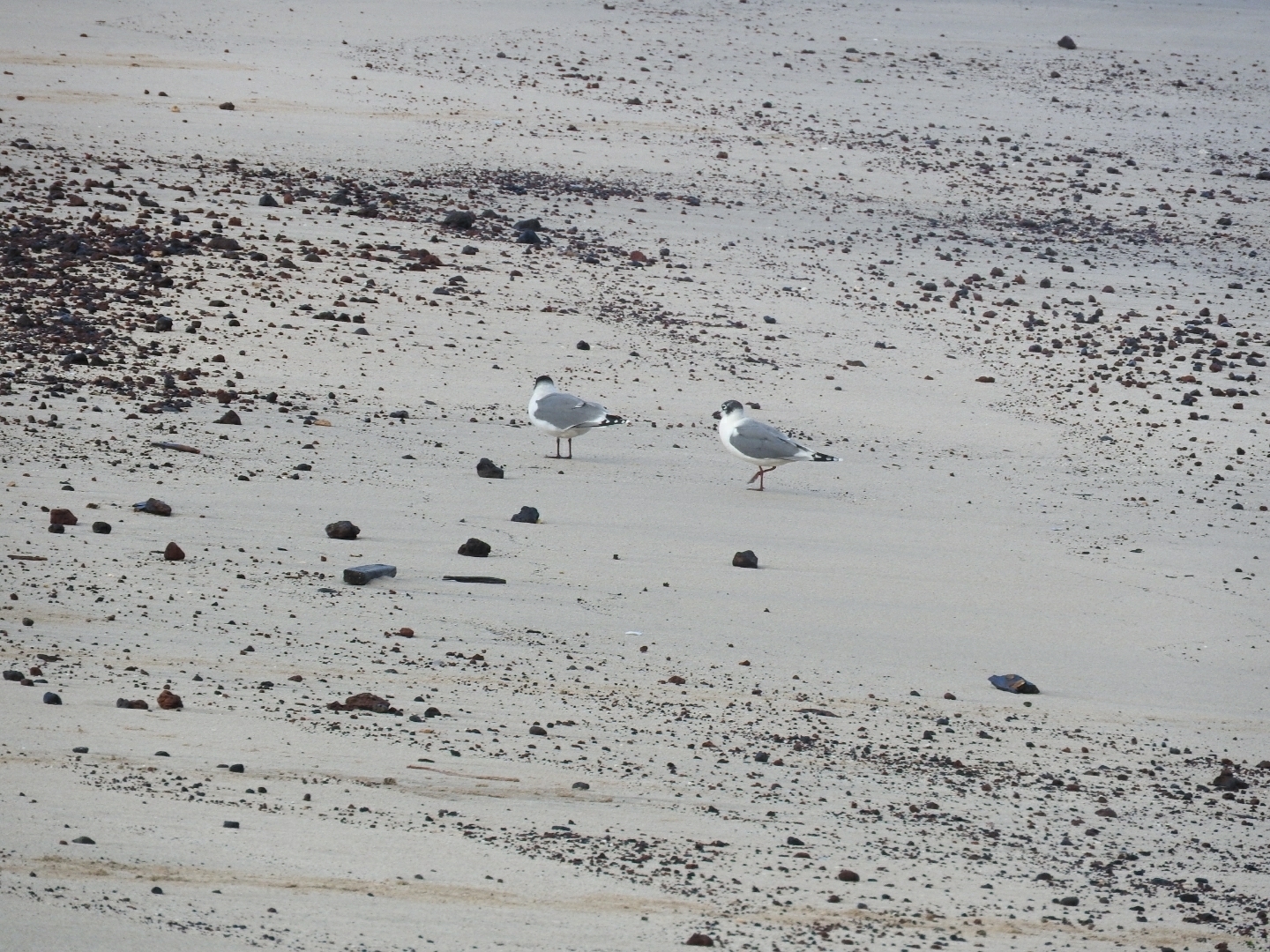
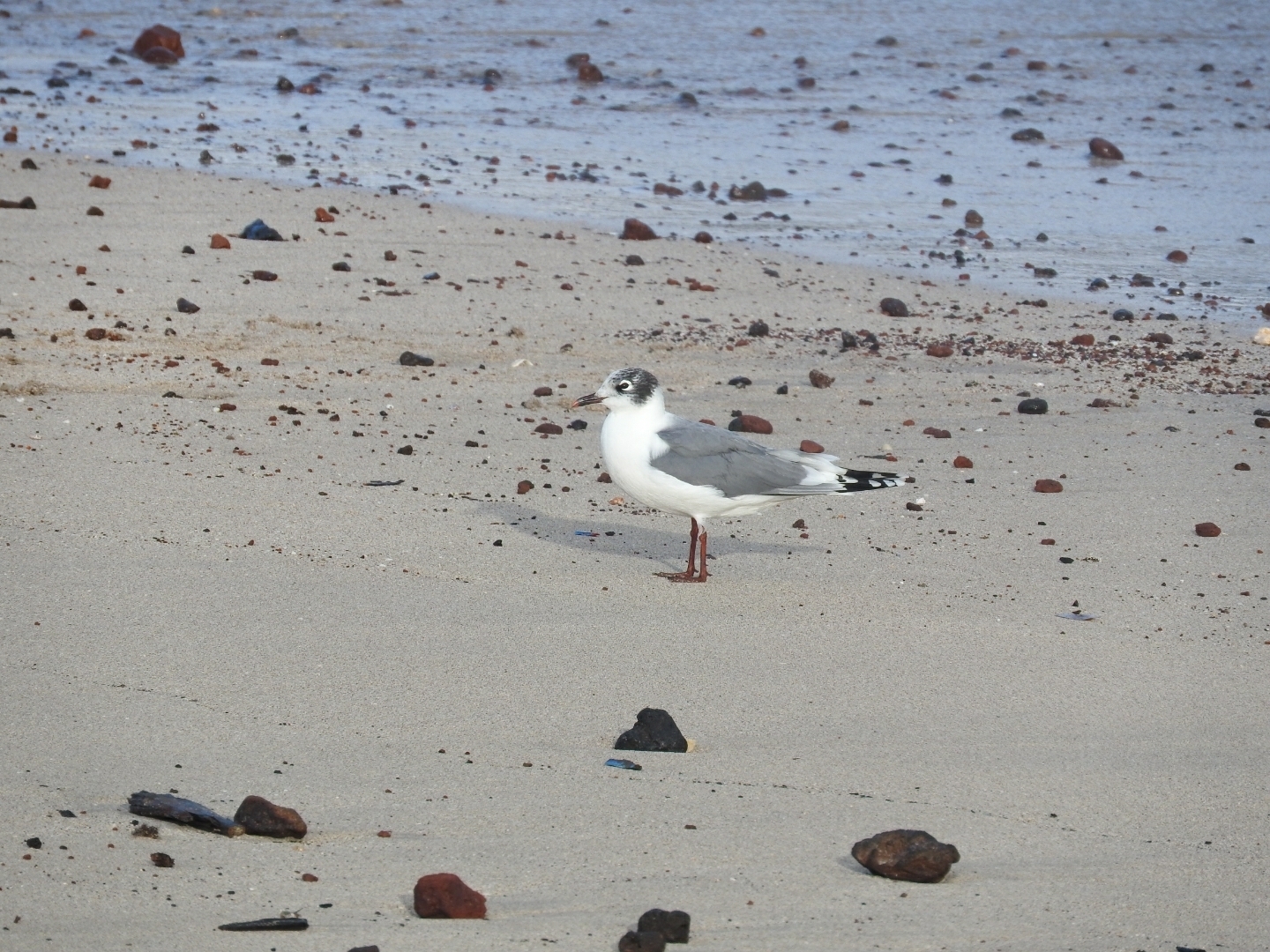
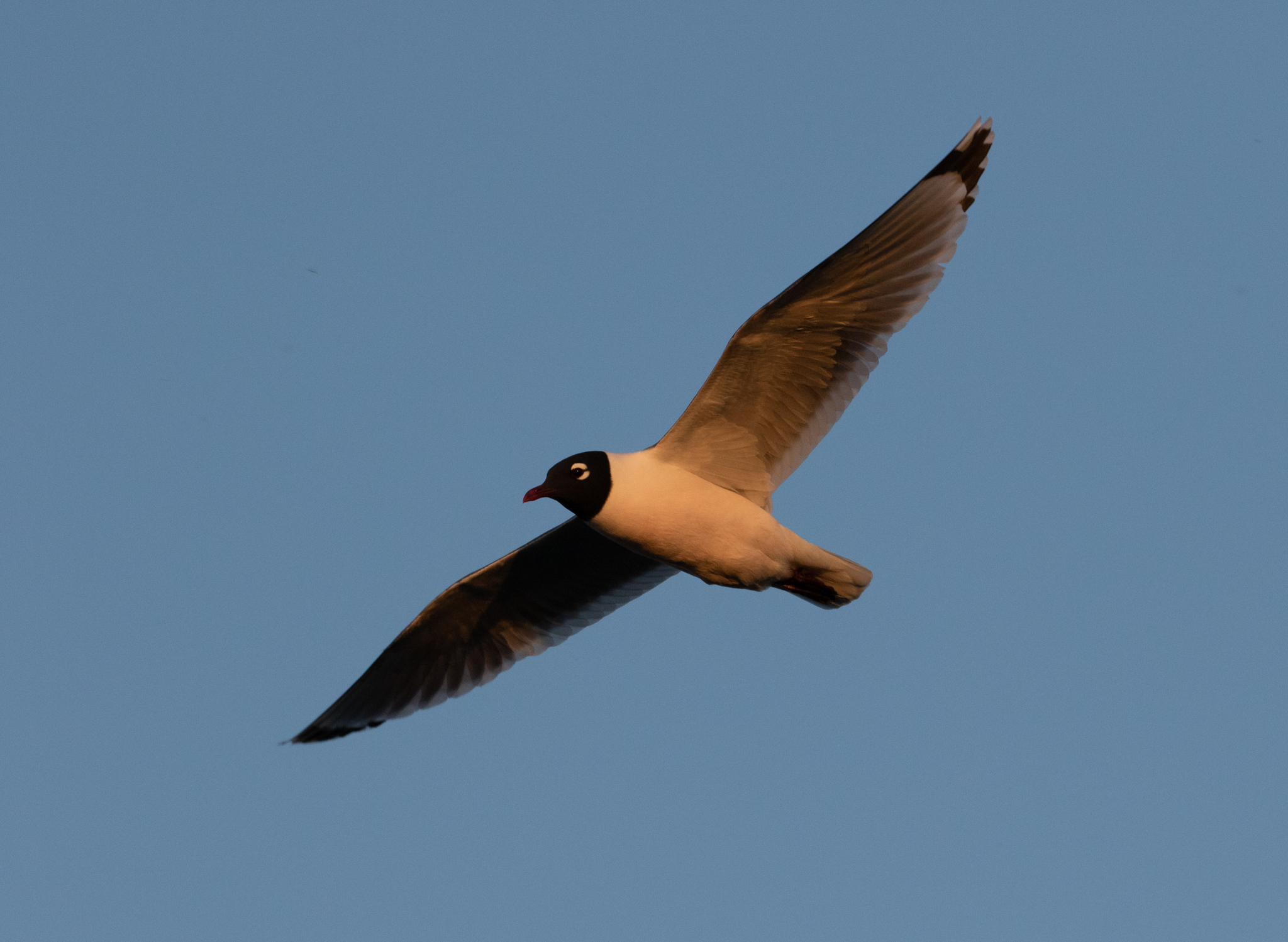
A small gull measuring 12.6–14.2 inches (32–36 cm) in length with a wingspan of 33.5–37.4 inches (85–95 cm). Adults in summer plumage have a white body with a black hood. The back and wings are dark grey—darker than other gulls of similar size except the larger laughing gull. Wings feature black tips with an adjacent white band. The bill and legs are red. In winter plumage, the black hood is mostly lost. Immature birds have less developed hoods and lack the white wing band. Young birds take three years to reach maturity. Weight ranges from 8.1–10.6 oz (230–300 g).
Identification
Best distinguished from other small gulls by the combination of dark grey upperparts (darker than most similar species) and black wing tips with a white band. The red bill and legs are also diagnostic. The larger laughing gull is similar but significantly bigger. In non-breeding plumage, the lack of hood helps separate it from other hooded gulls. The three-year maturation period means immatures of various ages can be encountered with plumage intermediate between young bird and adult characteristics.
Distribution & Habitat
Breeds in central provinces of Canada and adjacent northern US states, primarily in prairie lake habitats. Migrates south to winter in Argentina, the Caribbean, Chile, and Peru. Uncommon along the coasts of North America. Occurs as a rare vagrant to northwest Europe, south and west Africa, Australia, Japan, Israel (single 2011 record), Cyprus (single 2006 record), and Southern Romania (observed in early 2017).
Behavior & Ecology
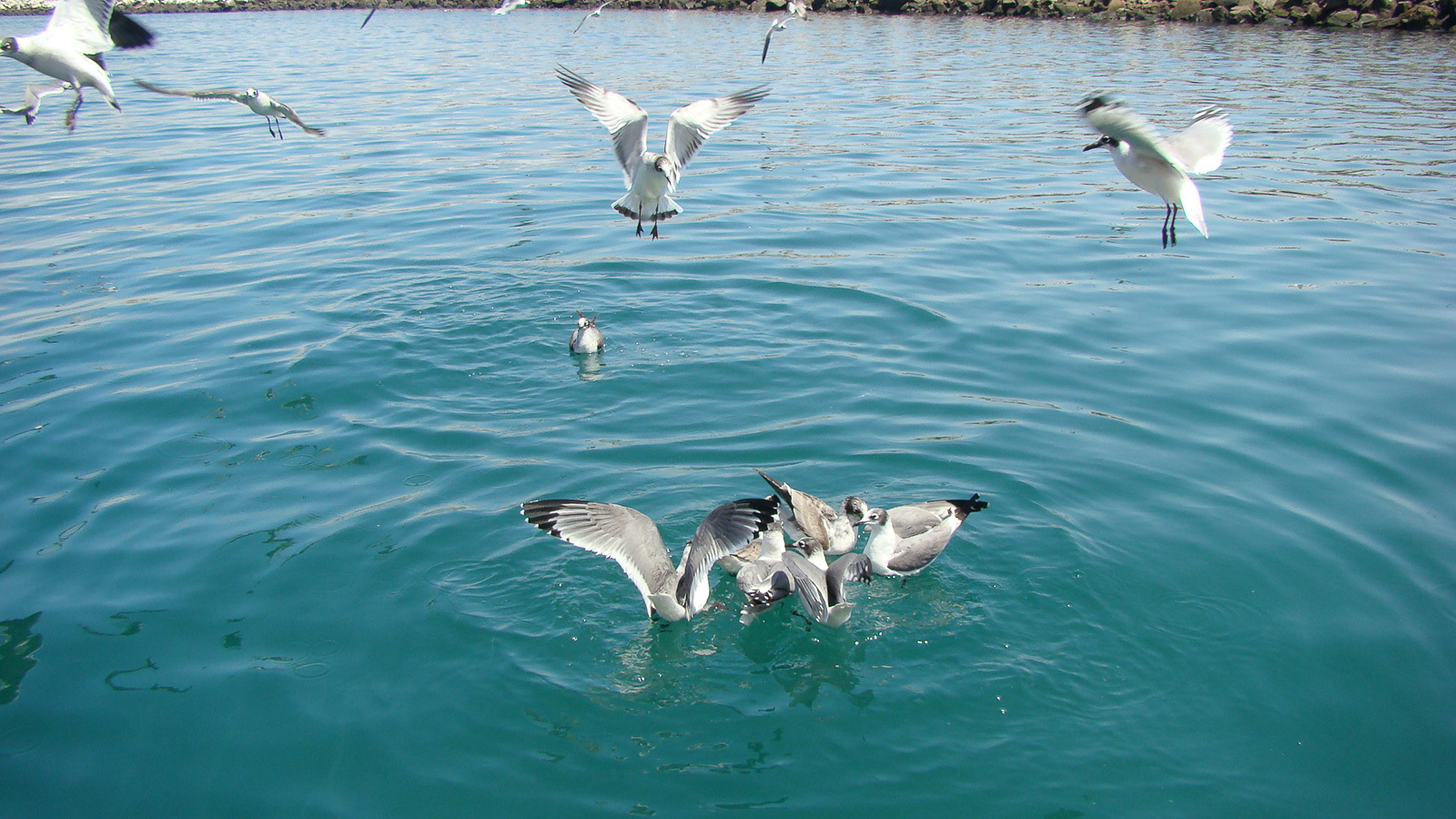
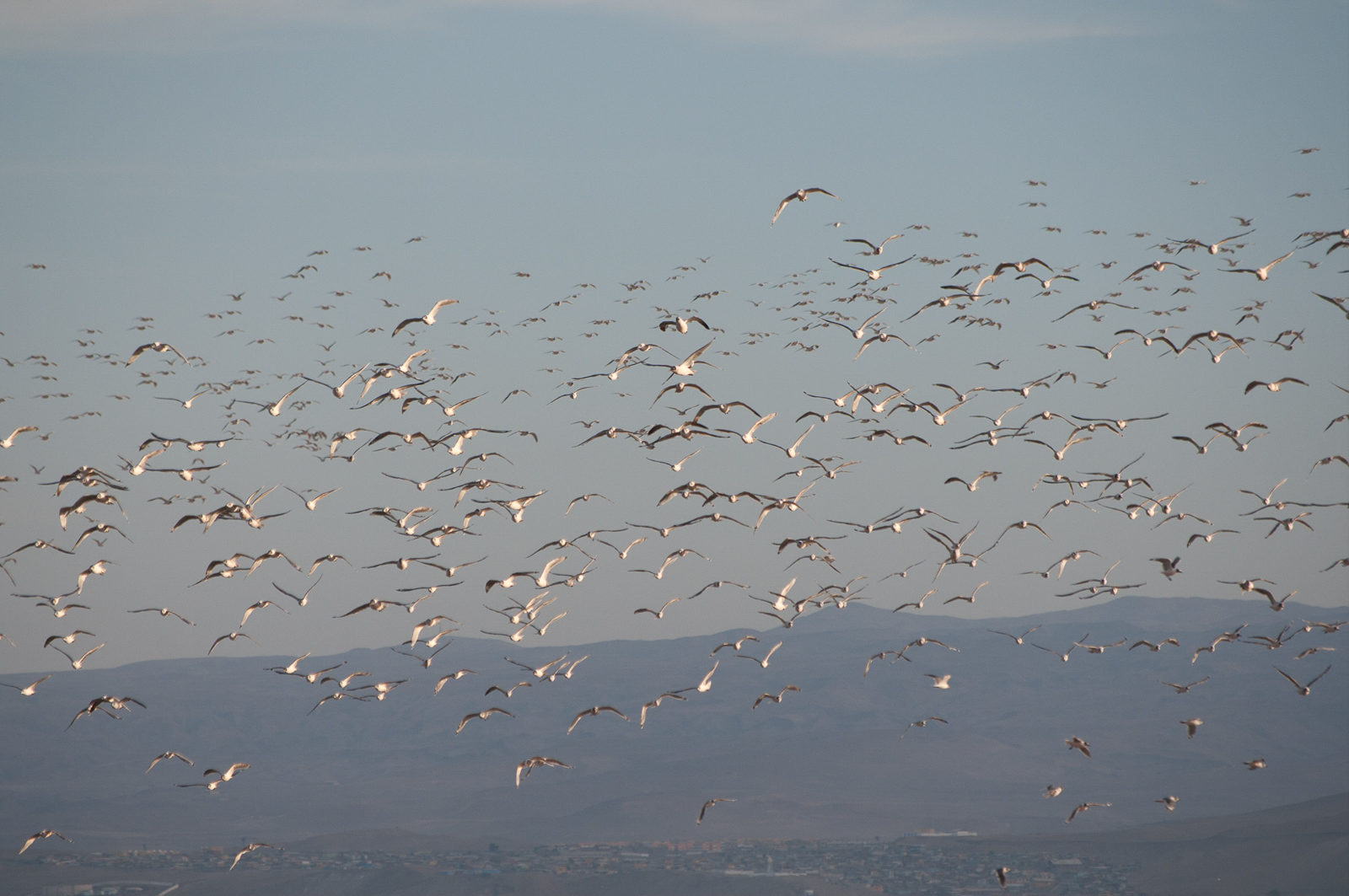
Omnivorous, feeding on insects, small prey, and scavenging. In spring, large groups float downstream on rivers such as the Bow River, sipping emerging insect hatches and repeatedly returning to the same river section. During breeding season, feeds aerially on swarming insects and forages for terrestrial and aquatic insects. Nests in colonies near prairie lakes, constructing nests on the ground or sometimes floating. Lays two or three eggs incubated for approximately three weeks.
Conservation
IUCN Red List status: Least Concern. The species has a wide distribution range and large population estimated at 1,000,000-1,490,000 individuals (Wetlands International, 2018). Population trend is currently increasing. No significant conservation concerns identified.
Culture
Named after Arctic explorer Sir John Franklin, who led an 1823 expedition during which the first specimen was collected. The scientific name pipixcan is a Nahuatl name for a type of gull. Otherwise, no significant cultural or folklore associations documented.
Source: Wikipedia · CC BY-SA 3.0
Taxonomy
- Order
- Charadriiformes
- Family
- Laridae
- Genus
- Leucophaeus
- eBird Code
- fragul
Distribution
breeds prairie marshes of western and northern Alberta eastward to southwestern Manitoba, and southward from east-central Oregon to northwestern Minnesota; winters coasts from Ecuador (including Galapagos) to central Chile
Vocalizations
Data Sources
Species description from Wikipedia, licensed under CC BY-SA 3.0.
Bird images and sounds sourced from GBIF, contributed by citizen scientists worldwide under Creative Commons licenses.
Taxonomy data from AviList 2025.