Laughing Gull
Leucophaeus atricilla
笑鸥
Introduction
A medium-sized gull occurring across coastal regions of the Americas. Its range extends along the Atlantic seaboard from Canada through the Caribbean to northern South America. It inhabits coastal beaches, fishing ports, and inland waterways. The species is an opportunistic omnivore and scavenger, feeding on fish kills, garbage, insects, and small prey. It breeds in large colonies numbering thousands of pairs, nesting on coastal islands and marshy ground. Northern populations are migratory, moving southward in winter, while southern populations are sedentary. The species has adapted well to human presence and frequently associates with fishing vessels and harbors.
Description
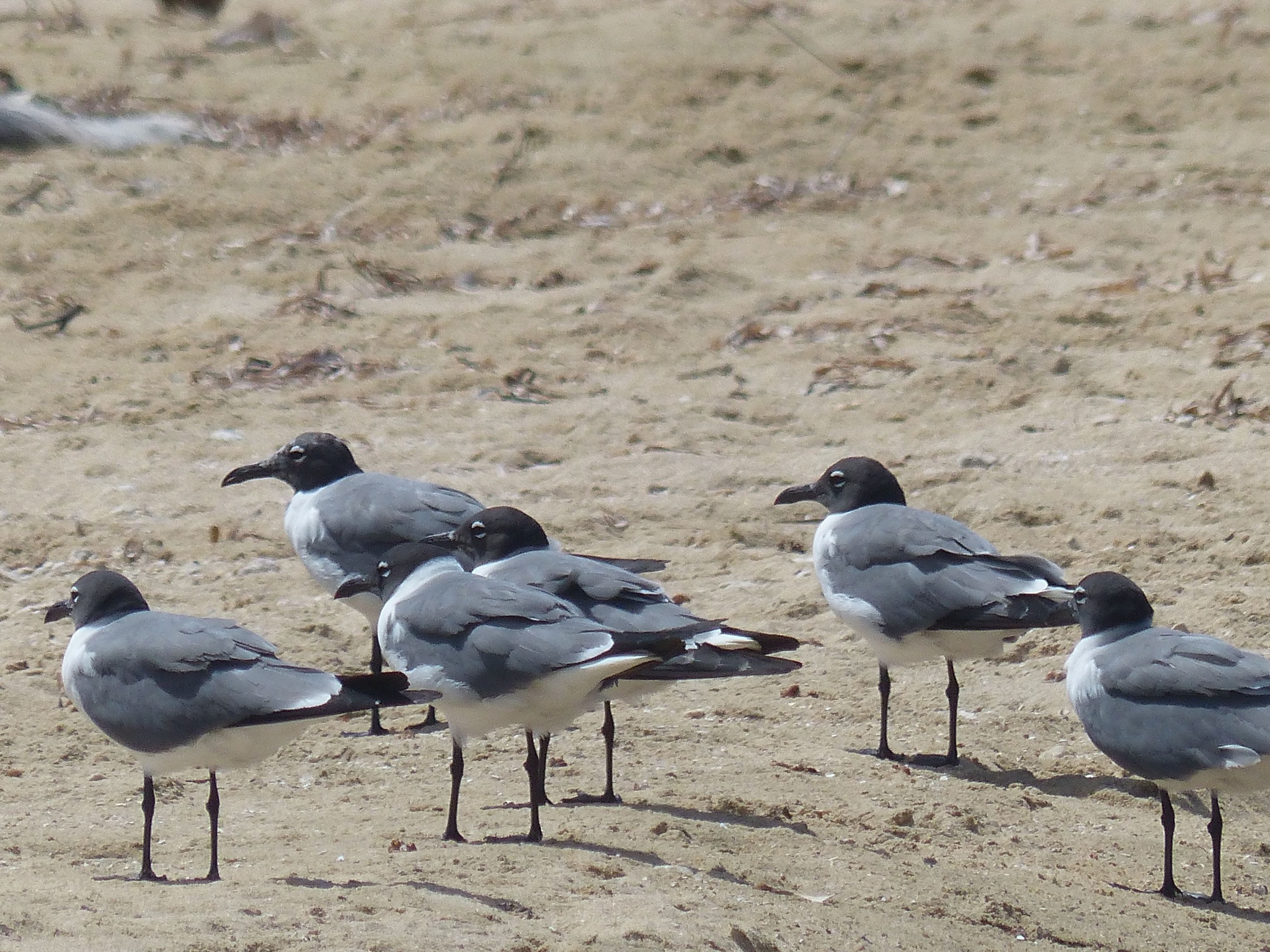
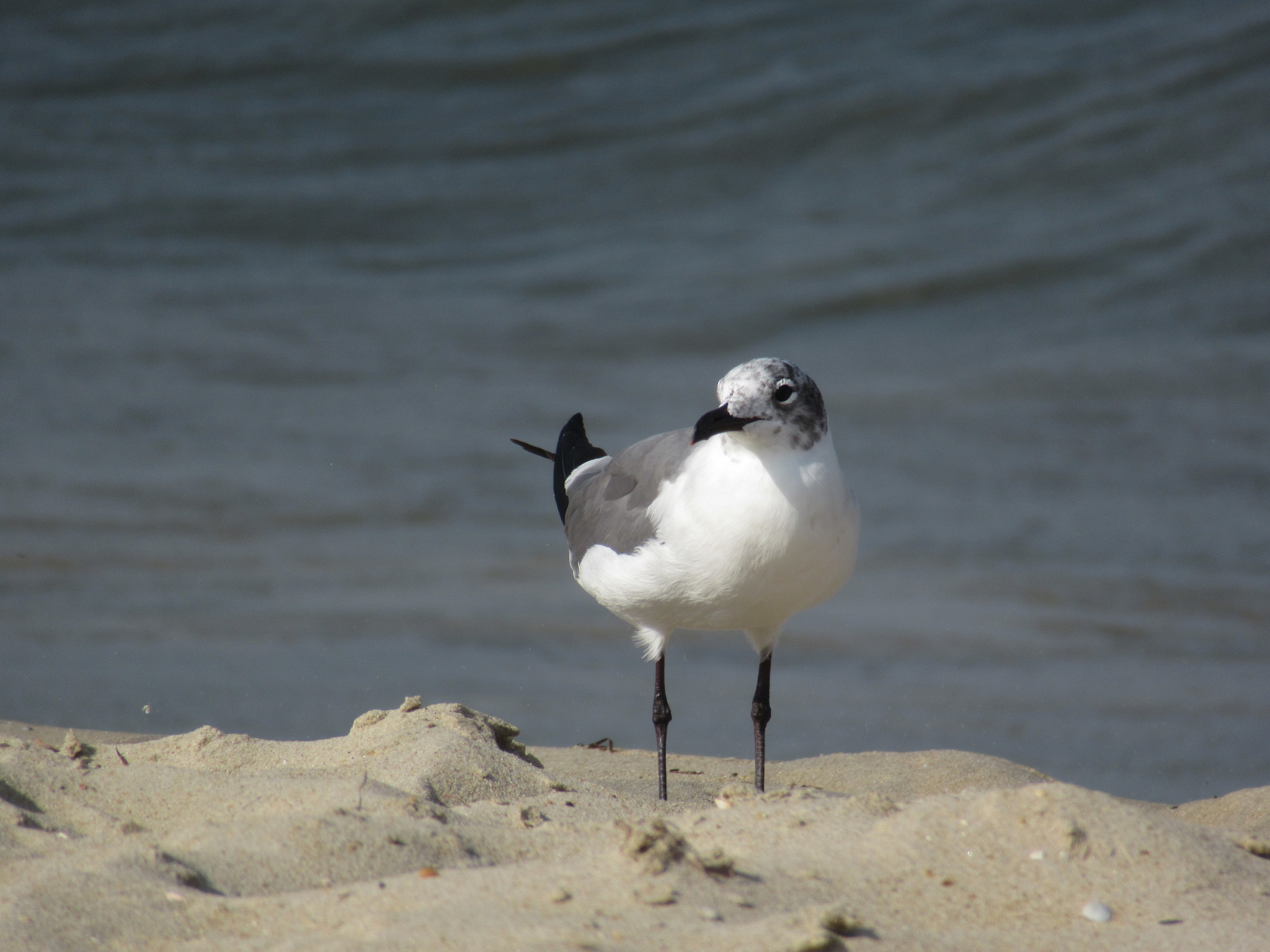
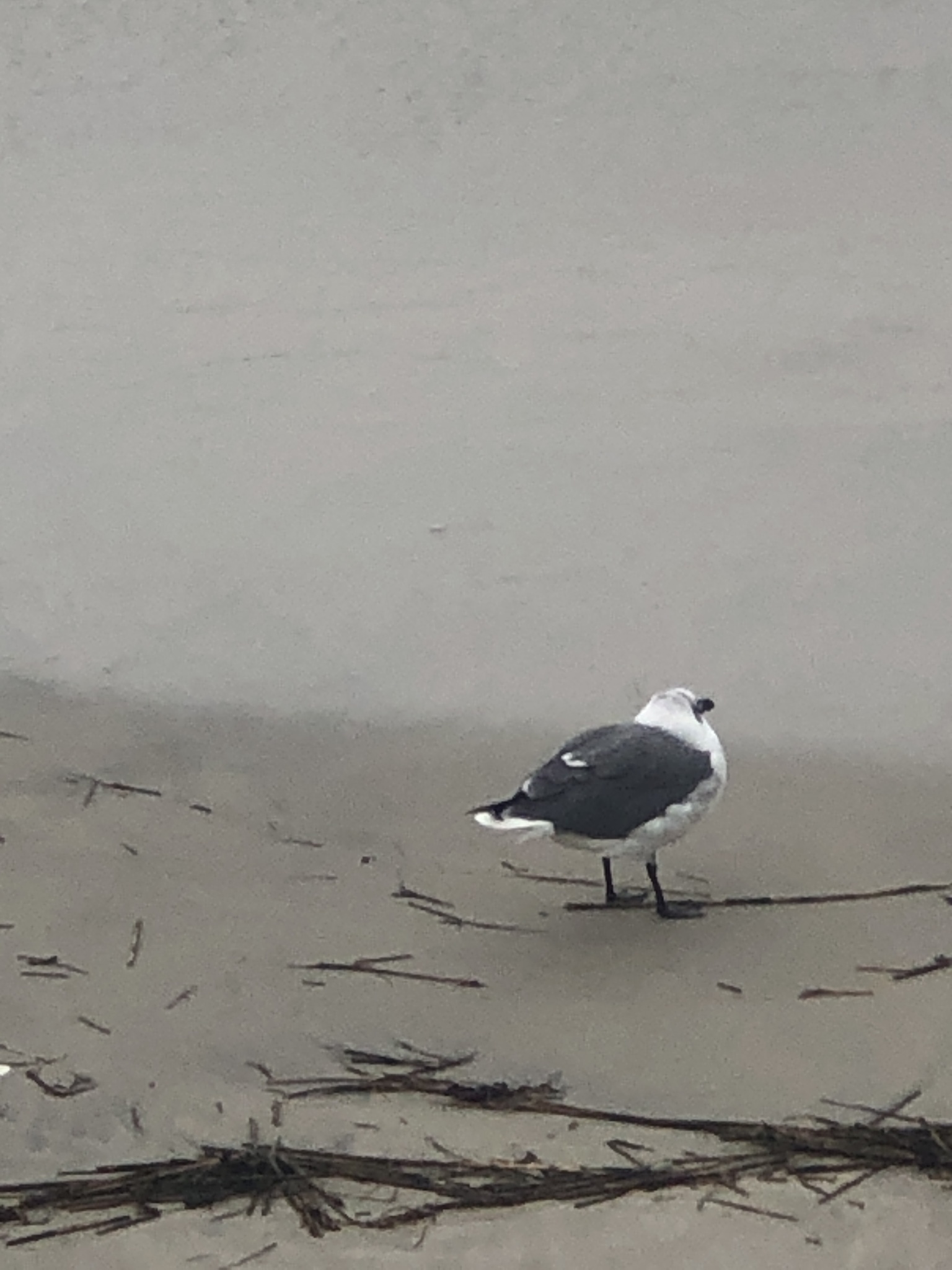
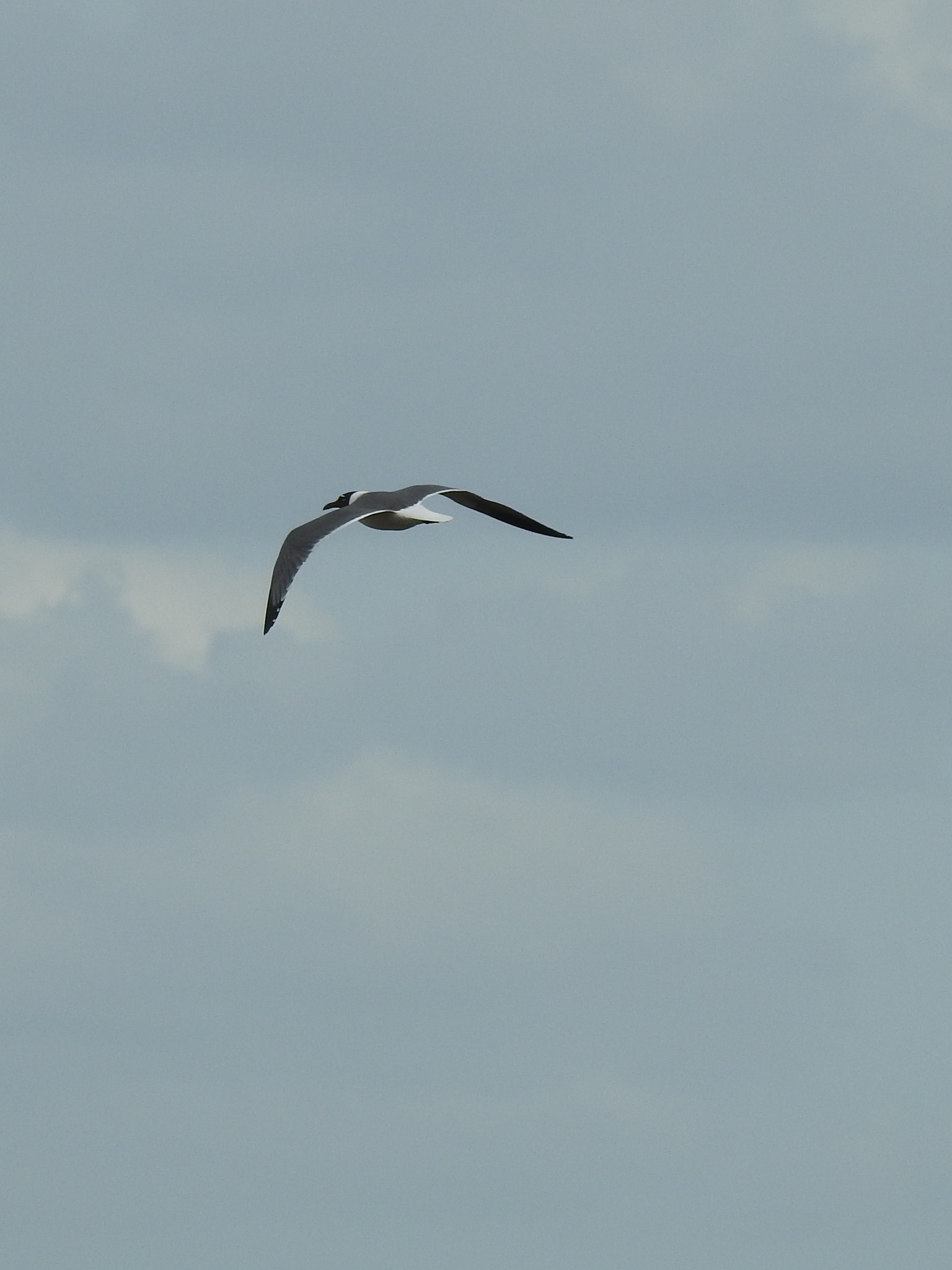
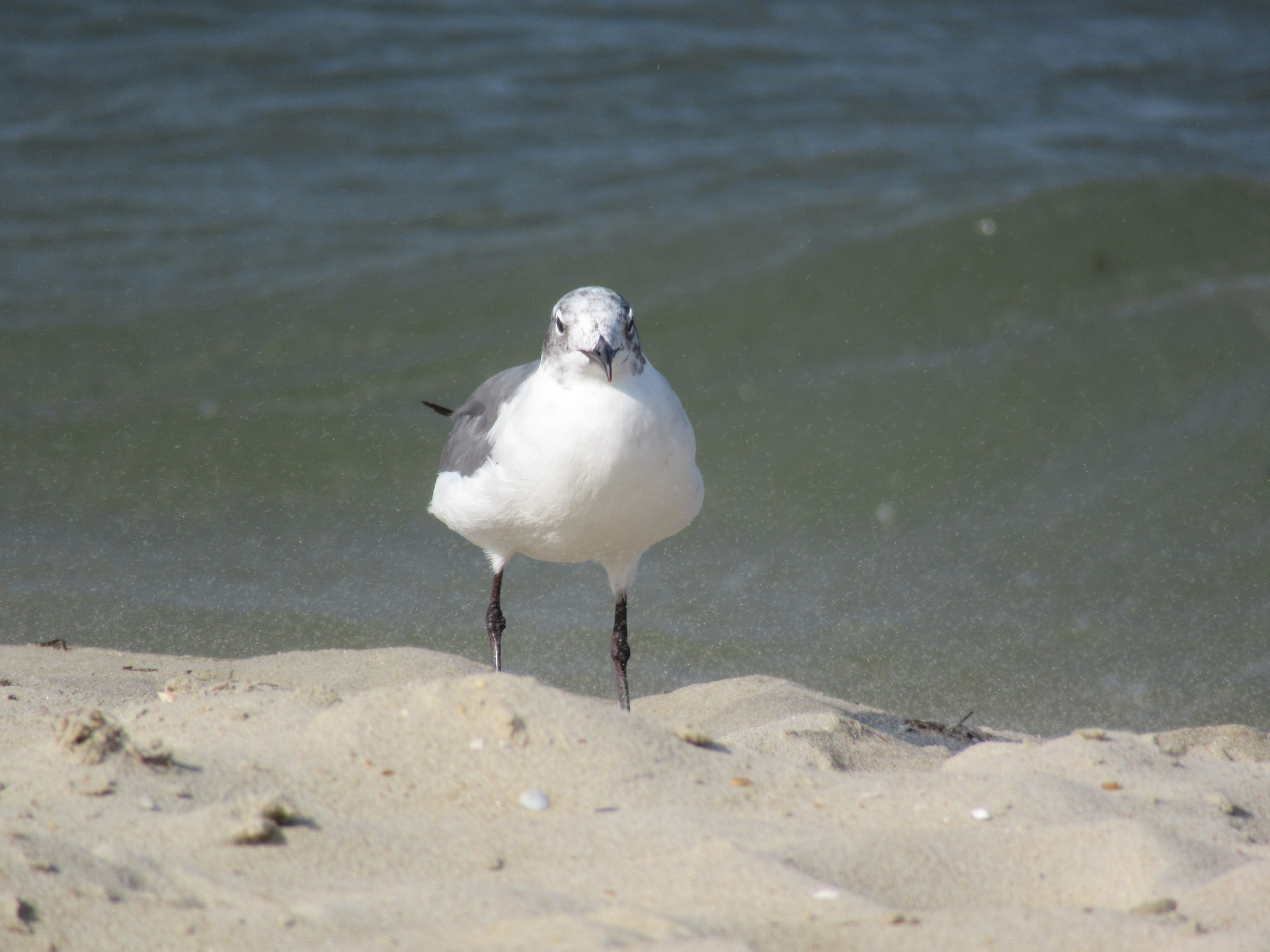
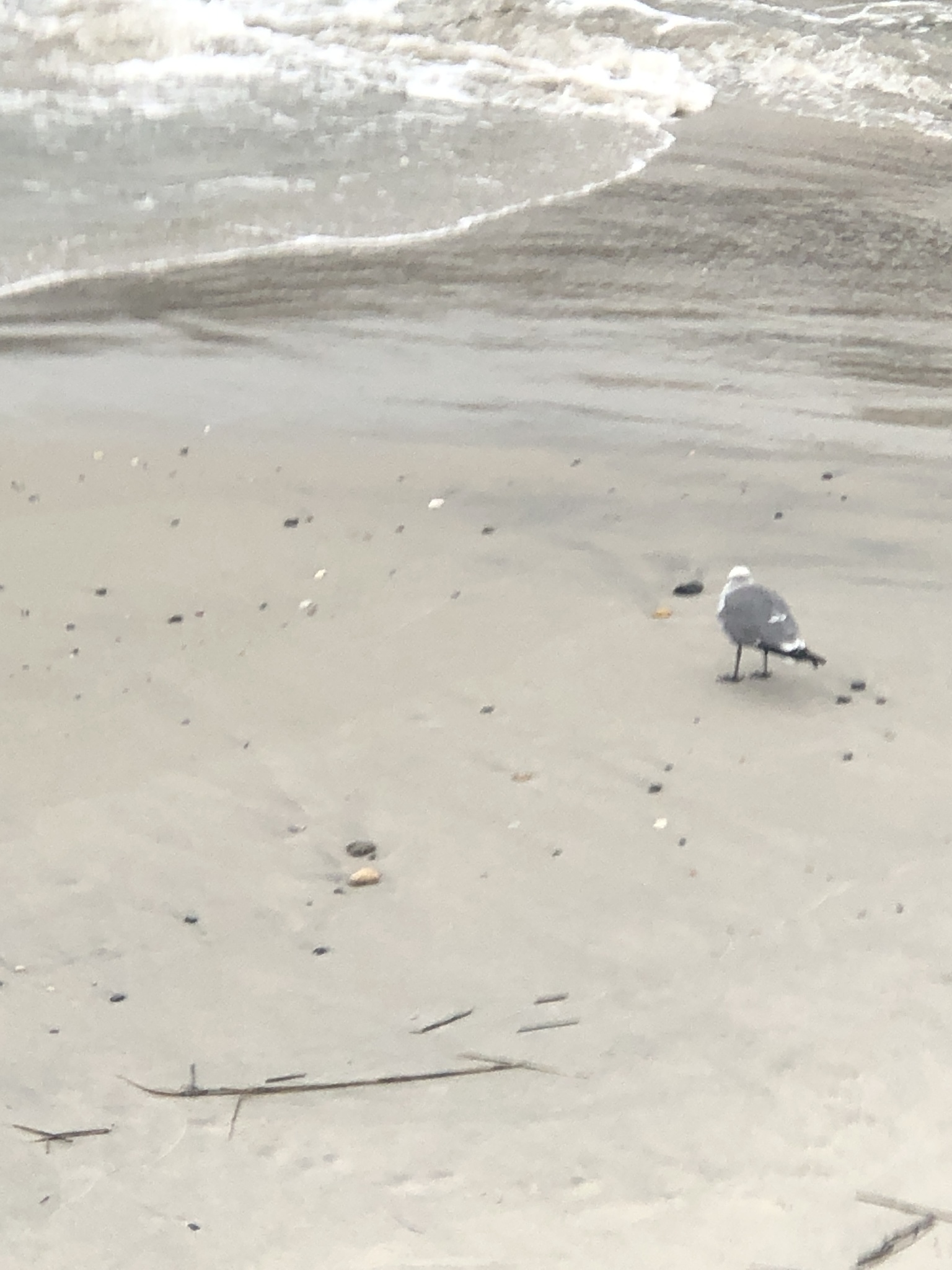
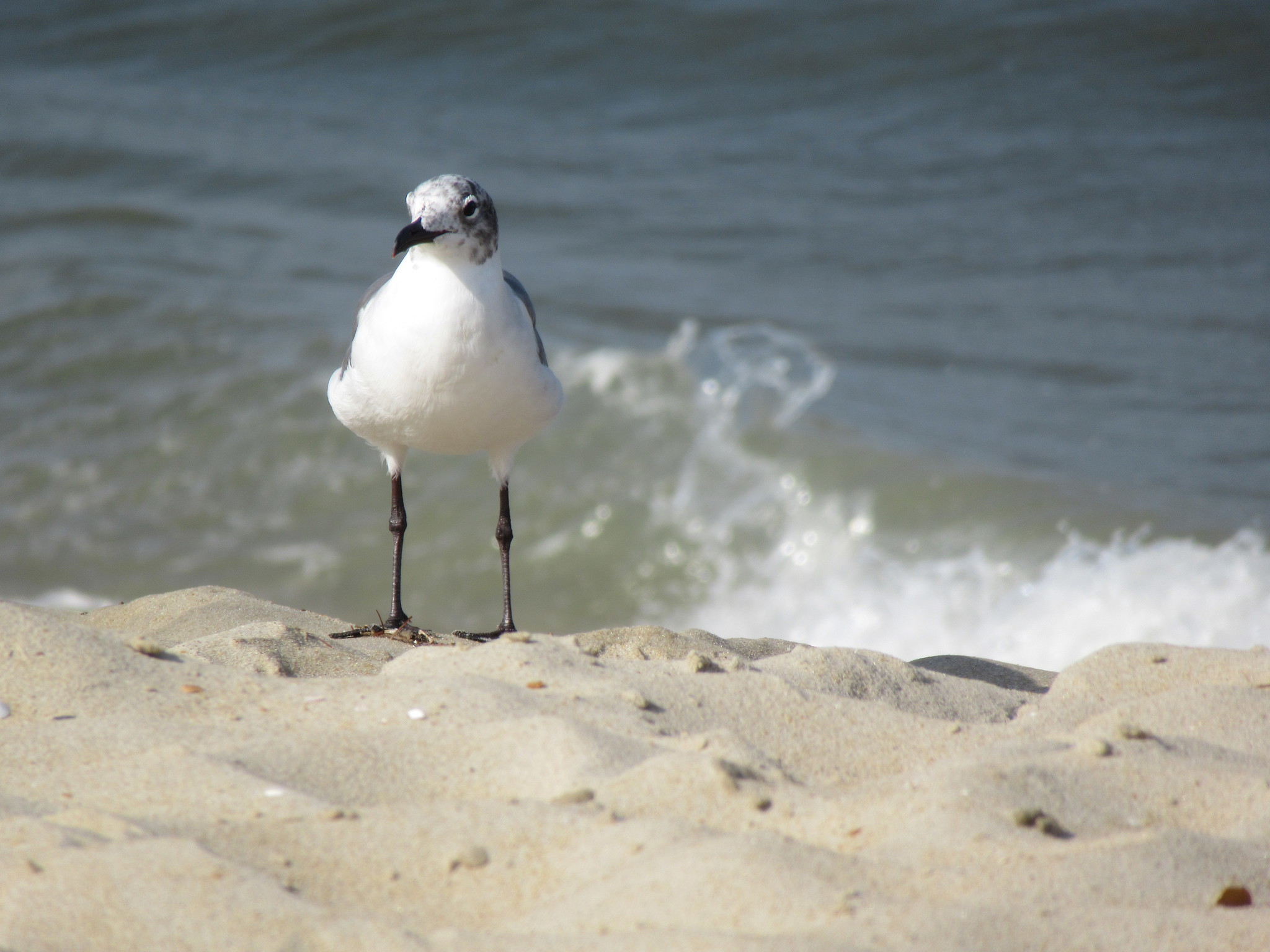
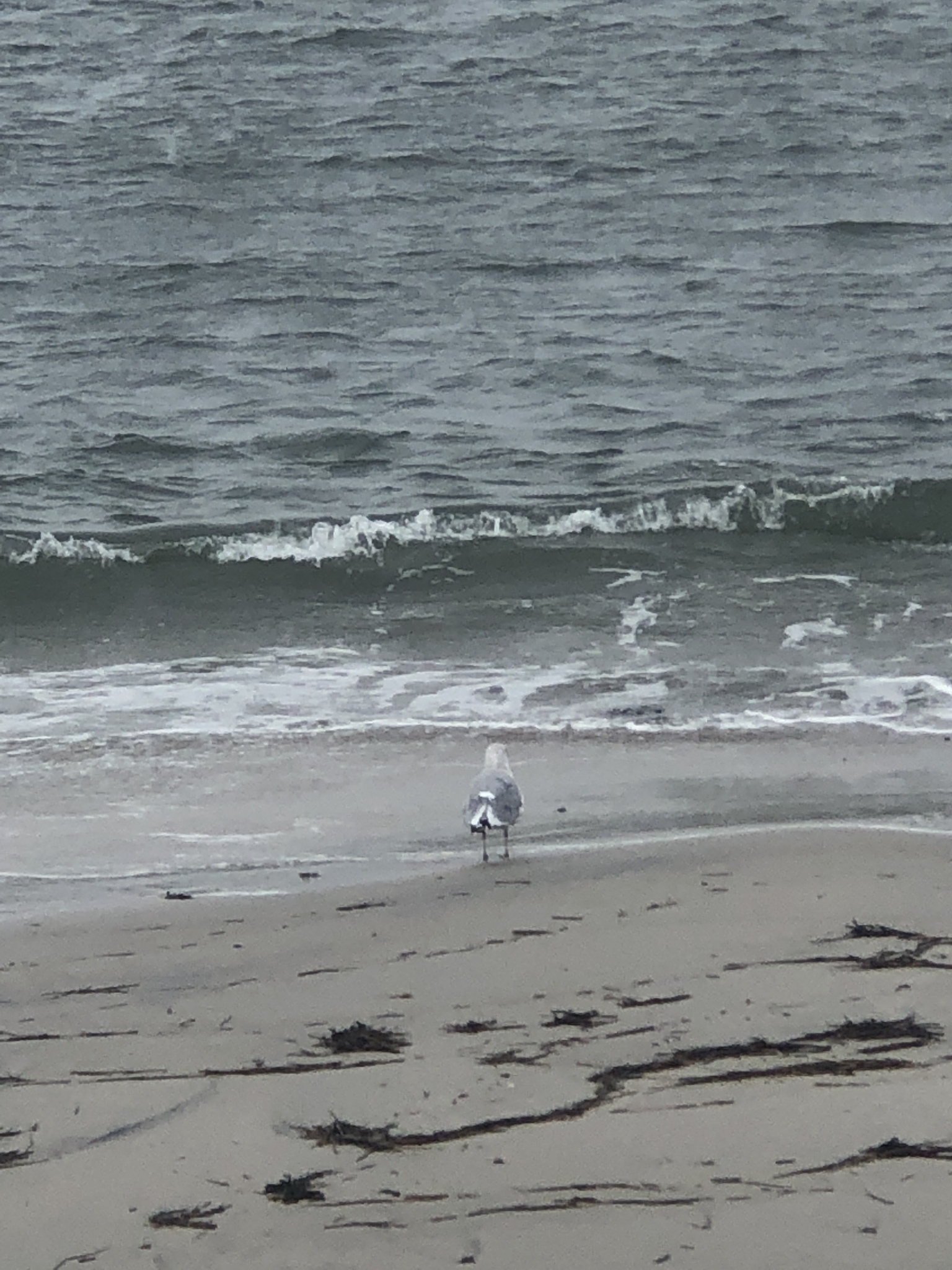
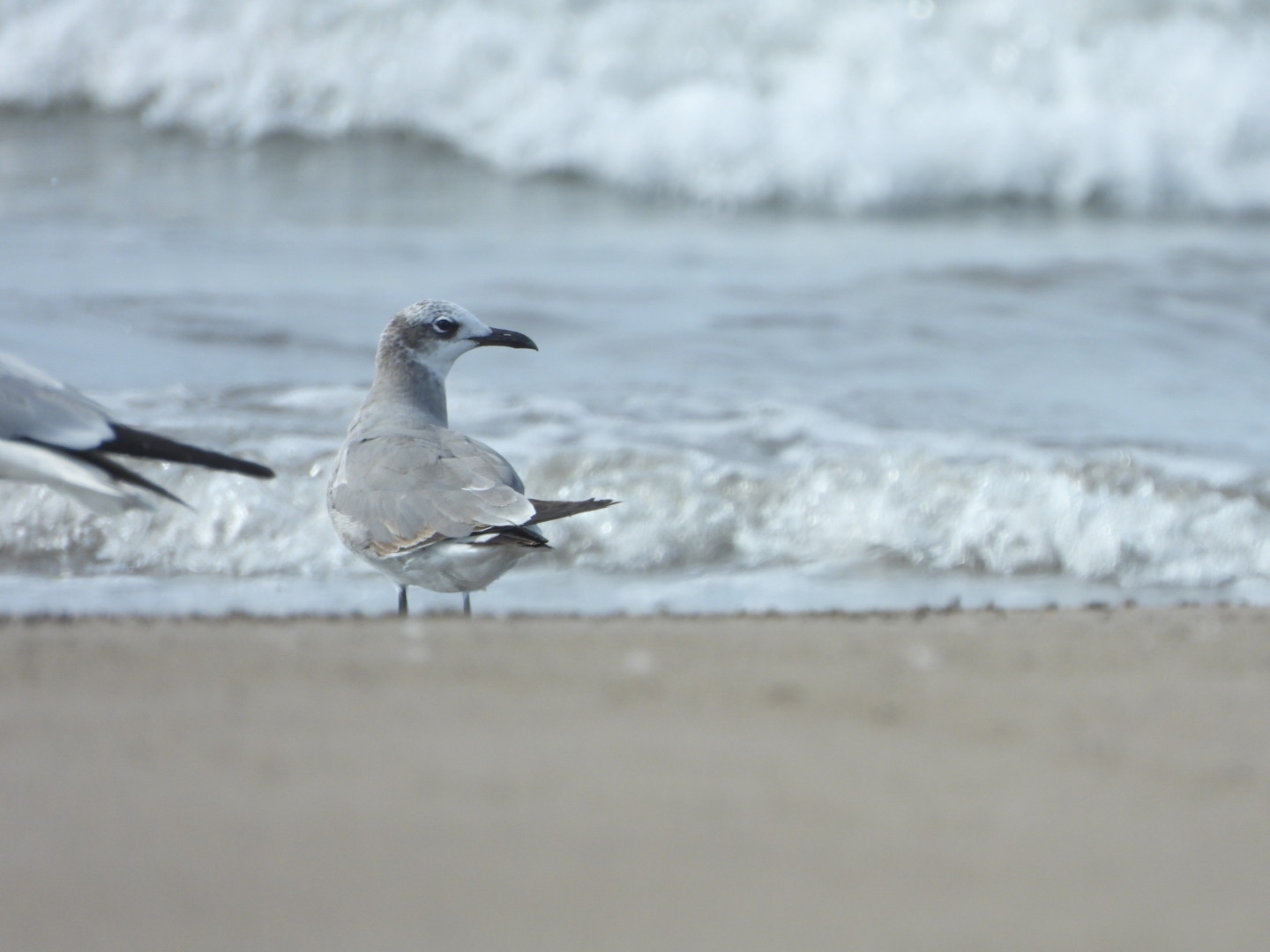
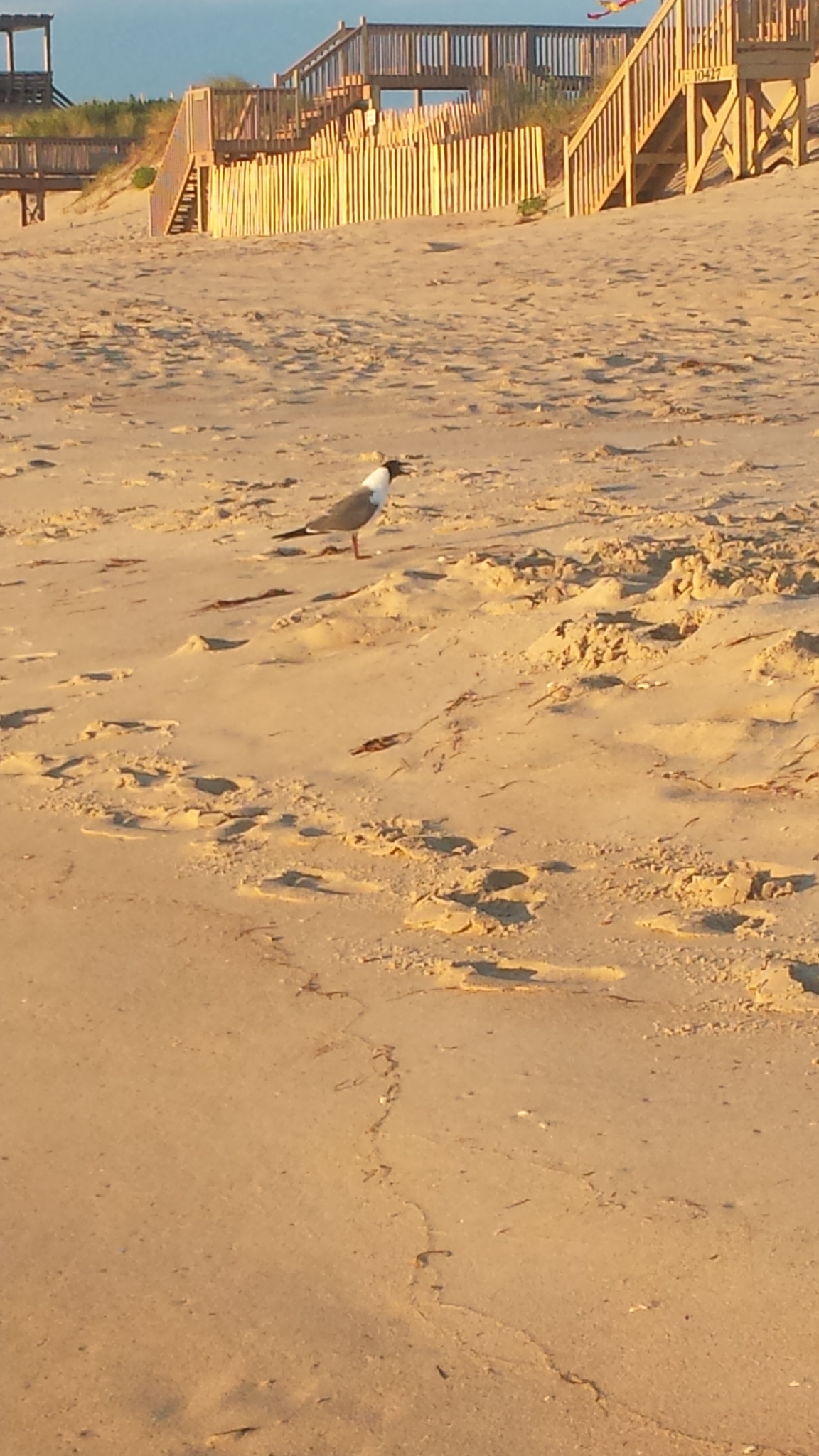
Adults measure 36-41 cm in length with a wingspan of 98-110 cm and weigh between 203-371 grams. In summer breeding plumage, the body is white with a dark grey back and wings, accented by a striking black head and a long, deep red beak. The wings appear much darker grey than those of similar-sized gulls, with black tips that lack the white crescent seen in some relatives. During winter, the distinctive black hood is mostly lost, leaving a white head with only faint markings. The species requires three years to attain full adult plumage, with immature birds consistently darker than most other gulls of comparable size. First-year birds show grey underparts, paler heads, and an entirely black tail, while second-year individuals display more extensive black on the primary wing coverts.
Identification
The dark grey wings with black tips serve as a key distinguishing feature, separating this species from larger gulls that typically show white crescents on the wingtips. The smaller Franklin's gull most closely resembles it but has paler wings and a distinctive white crescent on the wingtips. First-year birds can be distinguished from Franklin's by their greyer underparts and paler heads, along with the all-black tail that Franklin's lacks. Second-year birds retain more extensive black on the wing coverts compared to other species. The long red bill in breeding adults is also diagnostic among North American gulls. The three-year maturation period means multiple plumage types may be seen in the same flock, with birds showing intermediate characteristics between first-winter and adult plumage.
Distribution & Habitat
This species breeds along the Atlantic coast of North America, throughout the Caribbean islands, and down the northern coast of South America. The northern subspecies megalopterus ranges from southeastern Canada through Central America, while the nominate subspecies atricilla occurs from the West Indies to the Venezuelan islands. Northern populations migrate southward for the winter months, expanding their range considerably during the non-breeding season. The species occurs as a rare but regular vagrant to western Europe, with most records involving birds in winter plumage. Habitat preferences include coastal beaches, salt marshes, offshore islands, and inland areas near water, particularly around human settlements and fishing operations.
Behavior & Ecology
Breeding begins from mid-May in northern colonies and late April in southern areas, with colonies ranging from just a few pairs to extraordinary concentrations of 25,000 nests. Both parents construct the nest from available vegetation on low-lying coastal islands, typically producing a clutch of three eggs incubated for 22-27 days. Chicks remain near the nest for their first five days while being fed and brooded by both parents, achieving flight capability around 40 days old. The species is highly gregarious, forming large flocks both while breeding and when roosting. Its famous kee-agh call, a high-pitched laugh-like series of notes, is given frequently and serves as the source of its common name, carrying across considerable distance and alerting observers to the bird's presence.
Conservation
The species maintains a broad distribution and large population across its range. Its adaptable feeding habits and ability to exploit human-provided food sources have allowed it to thrive in areas where other species have declined. However, coastal development, disturbance of breeding colonies, and pollution continue to present ongoing concerns. Conservation efforts focus on protecting critical nesting habitats, particularly coastal islands from predator introduction and human disturbance during the breeding season.
Culture
The species derives its common name directly from its distinctive vocalization, which early naturalists compared to human laughter. The call, a raucous kee-agh that breaks into a laughing ha... ha... ha..., is so characteristic that experienced birders can identify the bird by sound alone. This vocal quality has made the species memorable in coastal communities throughout its range, where its loud calls announce its arrival at any potential food source. The association with laughter has also given the bird a place in folklore as a cheerful, if raucous, presence along beaches and harbors.
Source: Wikipedia · CC BY-SA 3.0
Taxonomy
- Order
- Charadriiformes
- Family
- Laridae
- Genus
- Leucophaeus
- eBird Code
- laugul
Subspecies (2)
-
Leucophaeus atricilla atricilla
breeds West Indies, islands off Yucatan Peninsula, islands north of Venezuela, Trinidad and Tobago, and to French Guiana; winters to northern Brazil
-
Leucophaeus atricilla megalopterus
breeds islands off western North Atlantic coast of southeastern Canada (sporadic or formerly) southward to Florida and southern Texas, Salton Sea (se California; formerly), and Gulf of California to Colima (western Mexico); some southward movement in winter
Data Sources
Species description from Wikipedia, licensed under CC BY-SA 3.0.
Bird images and sounds sourced from GBIF, contributed by citizen scientists worldwide under Creative Commons licenses.
Taxonomy data from AviList 2025.