Indian Blue Robin
Larvivora brunnea
栗腹歌鸲
Introduction
A small passerine bird in the family Muscicapidae (Old World flycatchers), formerly classified within the thrush family. It breeds in the Himalayan forests of Nepal, India, Myanmar, and Bangladesh, migrating southward to winter in the hill forests of the Western Ghats in India and in Sri Lanka. The species is insectivorous and feeds primarily on the ground, skulking in dense undergrowth. It arrives on breeding grounds in May and departs by September; winter visitors arrive in mid-September and remain until mid-April.
Description
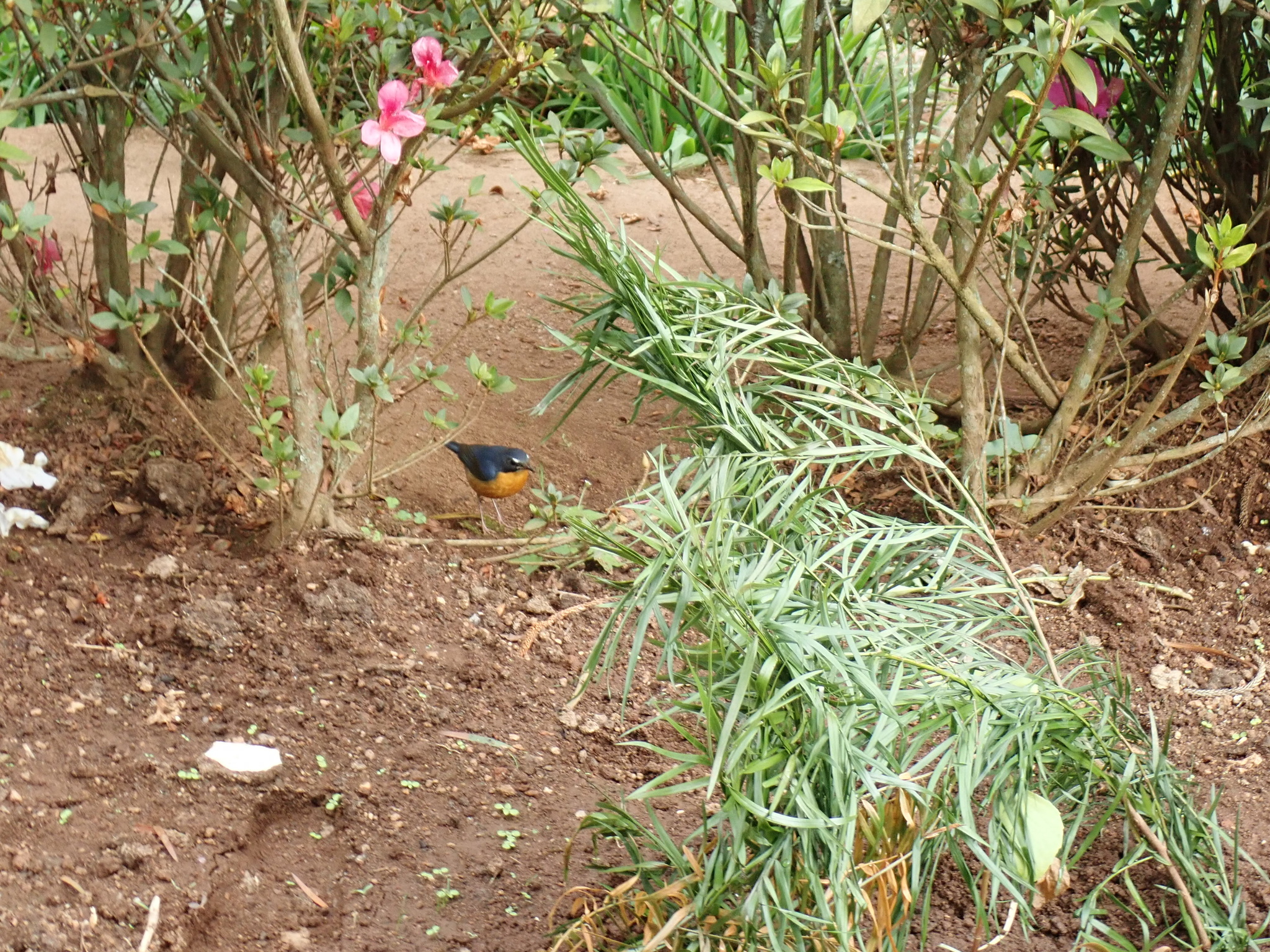
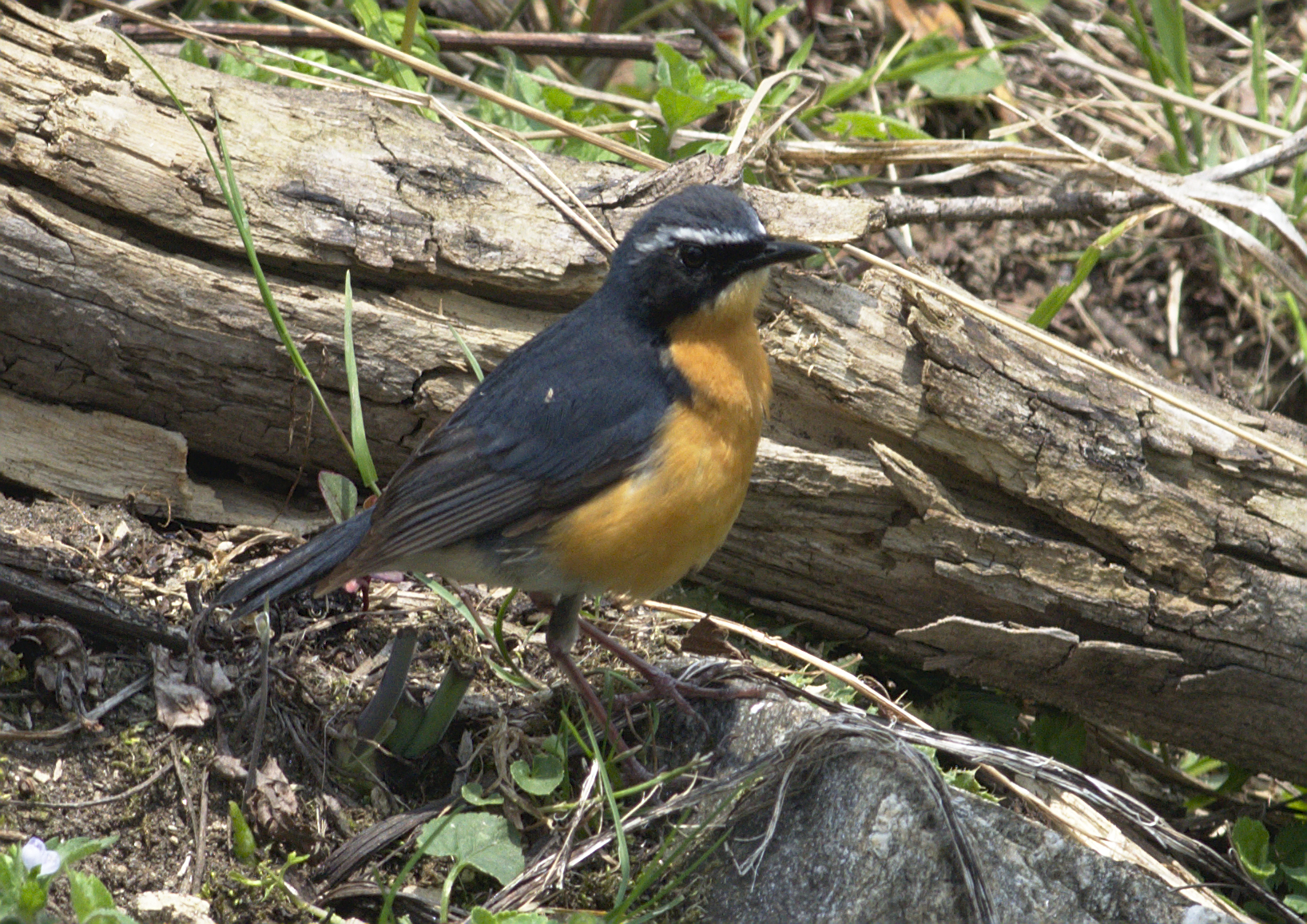
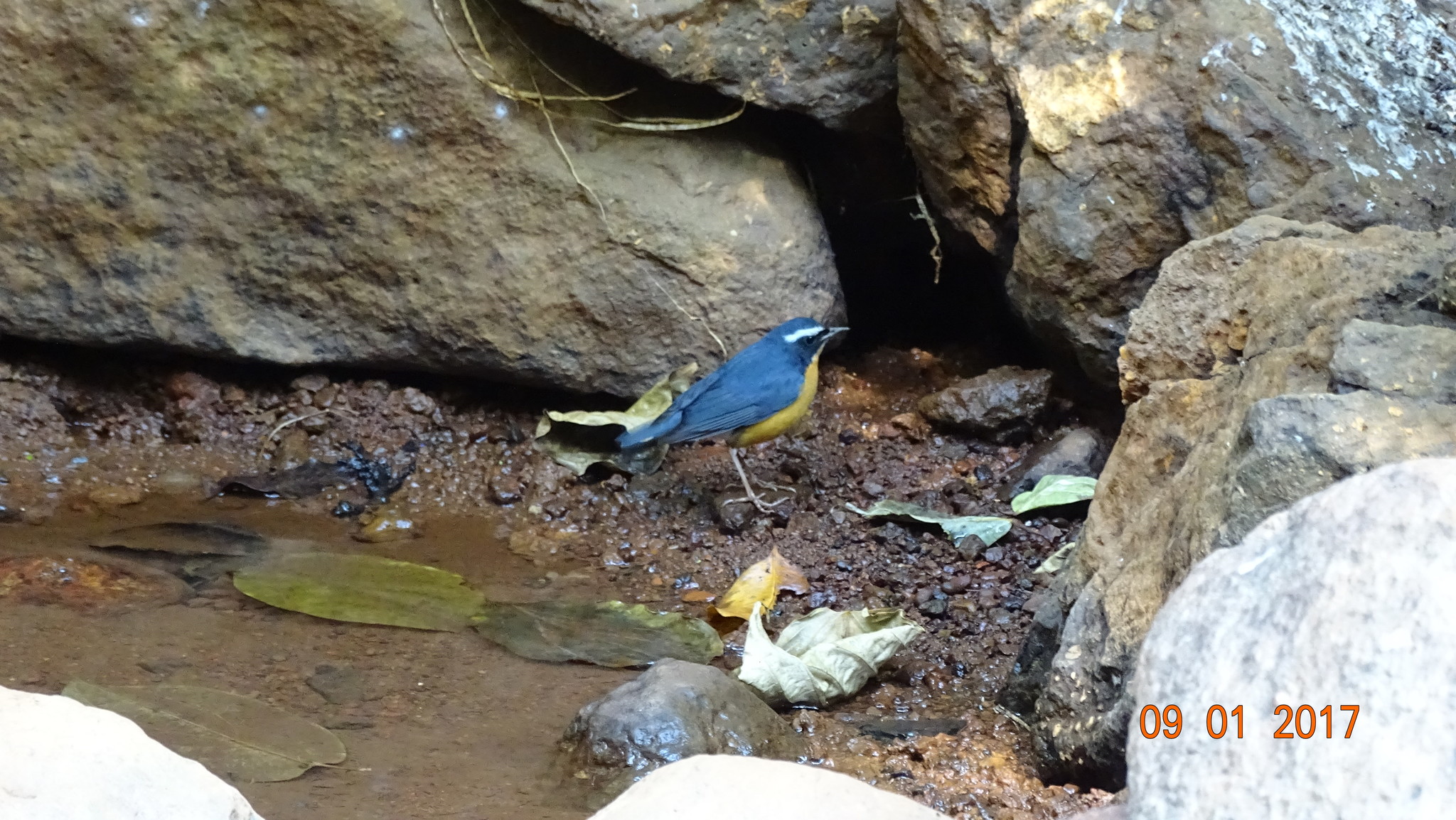
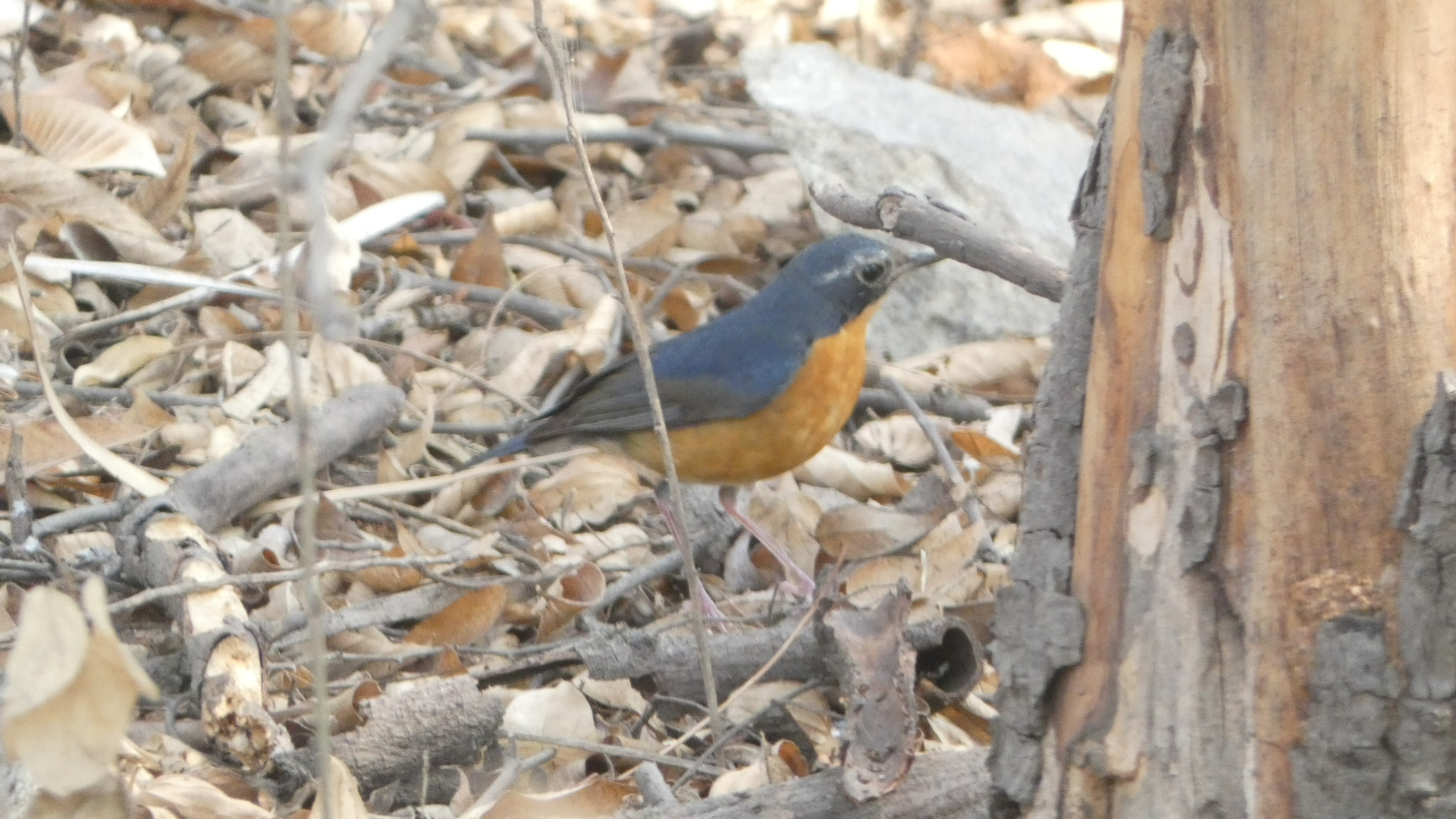
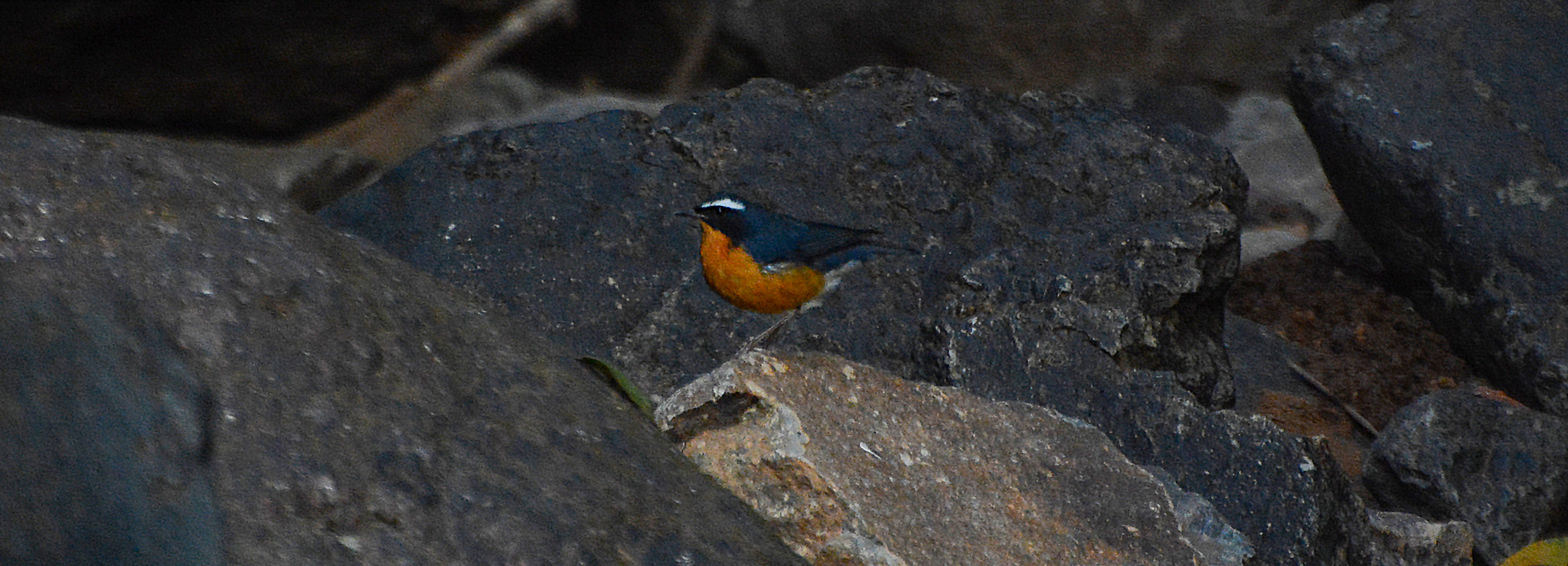
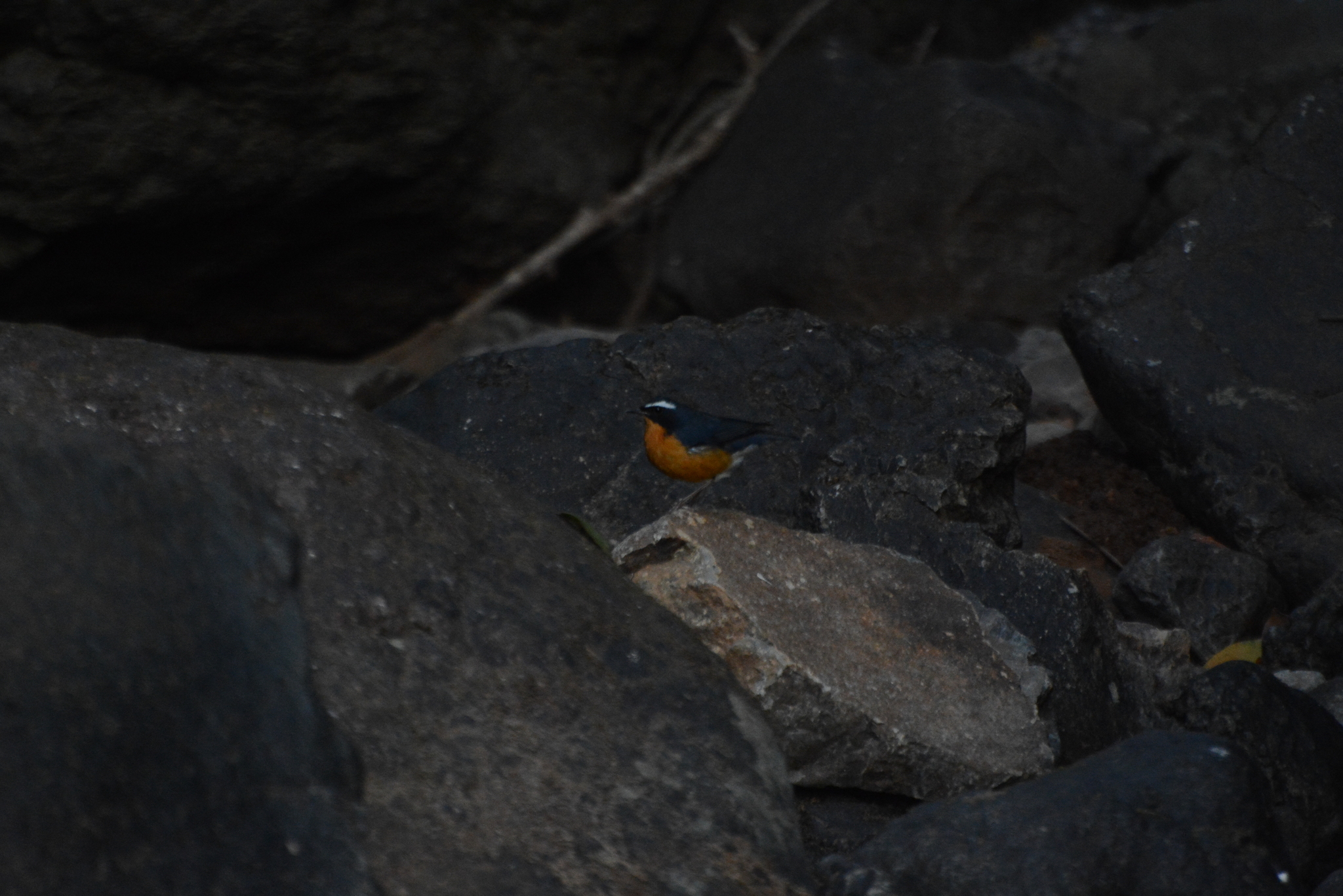
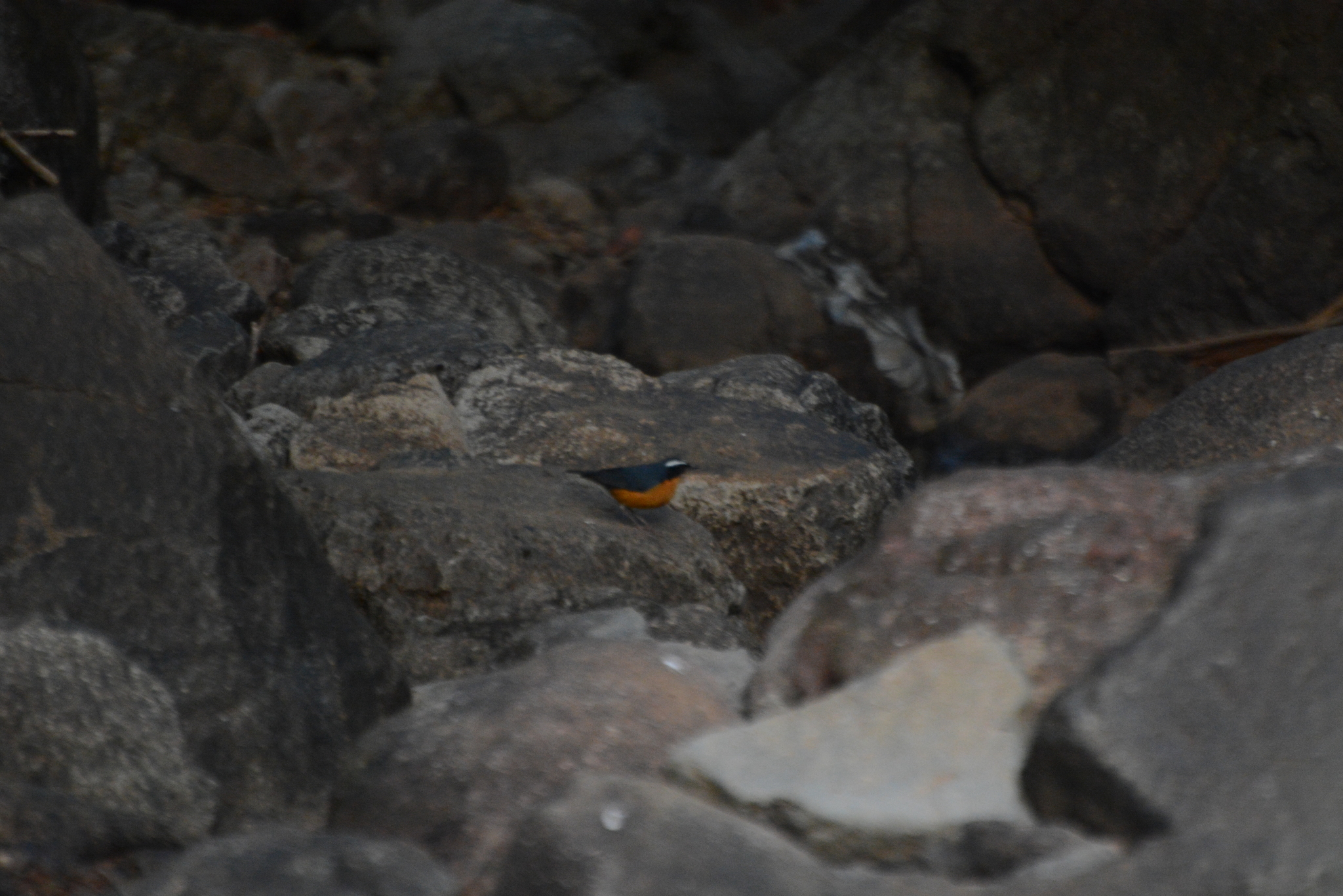
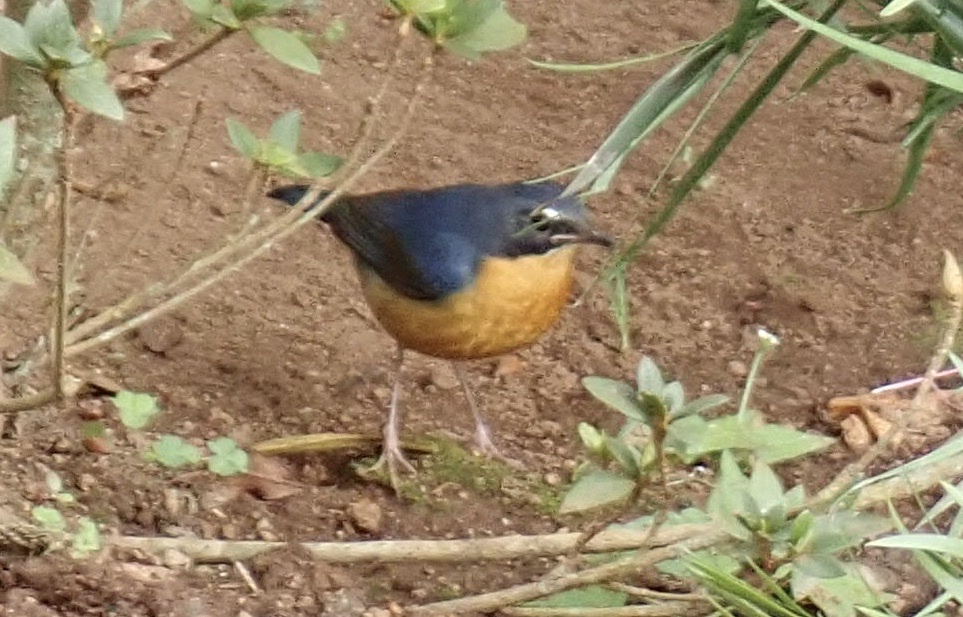
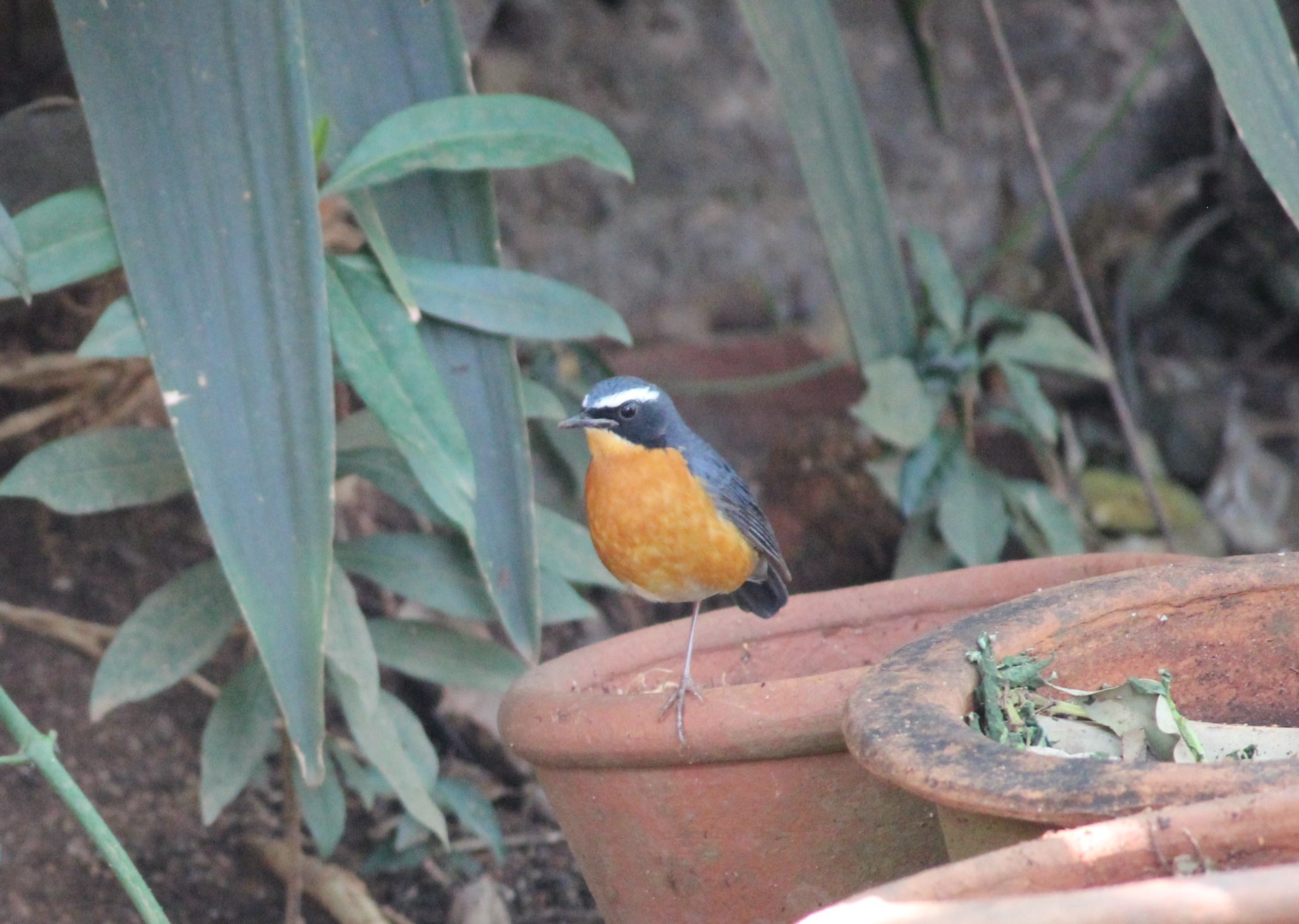
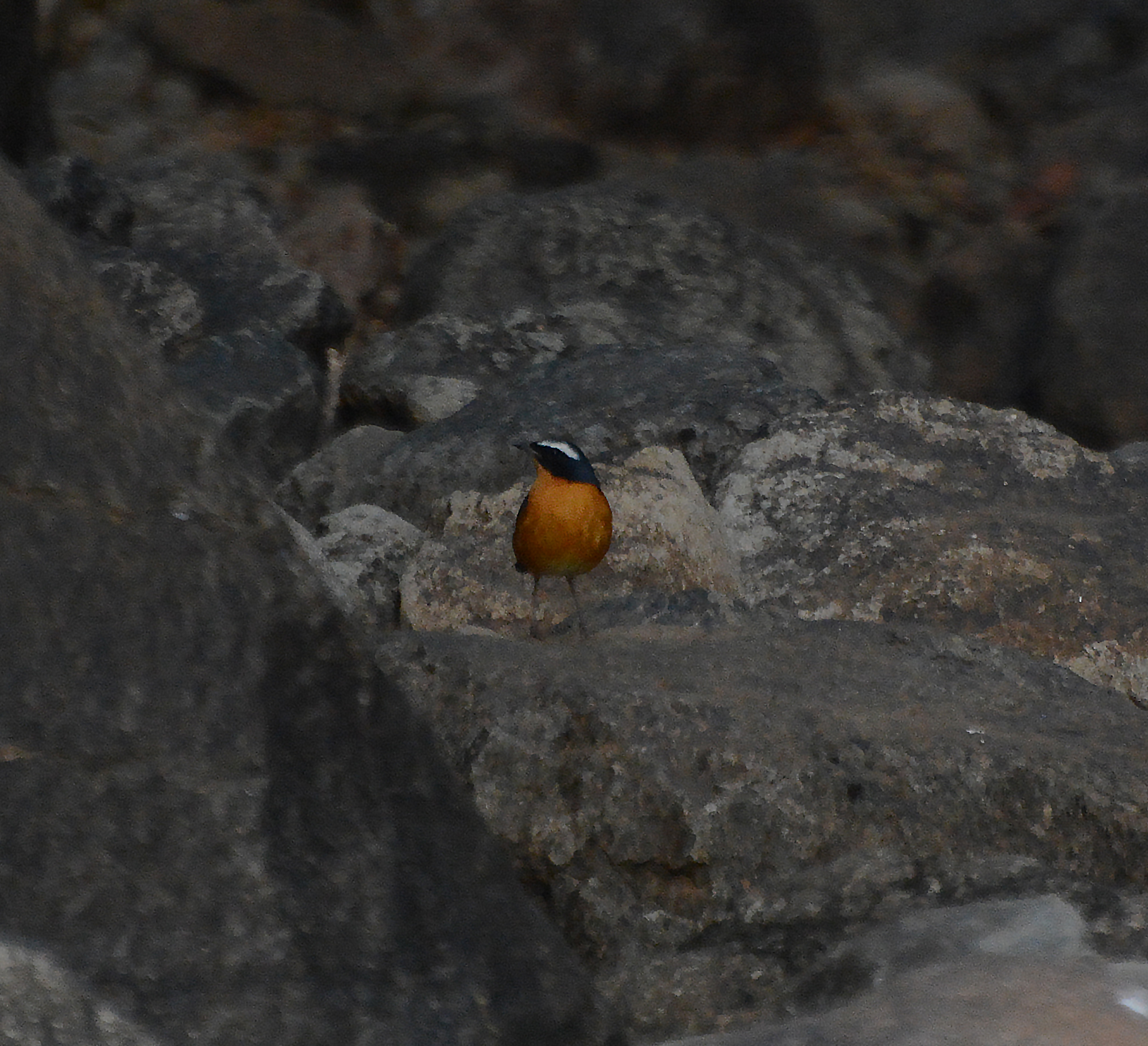
Length 15 cm, similar in size to the bluethroat. Adult males have blue upperparts and rufous underparts, with a conspicuous white supercilium contrasting against a black mask that extends down the neck. The lower belly and undertail are whitish. Females are olive-brown above and buff below, with a pale eye-ring and rufescent rump; the breast and flanks are buffy. Juveniles are dark brown with buff spotting.
Identification
Males are distinctive with their combination of blue upperparts, rufous underparts, white supercilium, and black facial mask. Females are more subdued, being olive-brown above and buff below with a pale eye-ring. Similar in size to the bluethroat but distinguished by plumage characteristics. The skulking habits and ground-feeding behavior help distinguish it from other small forest birds.
Distribution & Habitat
The nominate race breeds from eastern Afghanistan to the eastern Himalayas. The race wickhami breeds in the Chin Hills of western Myanmar and is non-migratory. Winter range includes the hill forests of southern India, the Western Ghats, and Sri Lanka. During migration, individuals pass through peninsular India as passage migrants. At Point Calimere, they are regularly trapped during October and November on return migration from Sri Lanka.
Behavior & Ecology
Strictly insectivorous, feeding mainly on the ground by hopping through leaf litter and undergrowth. The breeding season spans May to July. The nest is a large cup of vegetation placed on the ground among tree roots, lined with roots, hair, and down. Clutch size is 4 light blue eggs; only the female incubates, though both parents feed the young. The common cuckoo (Cuculus canorus) has been recorded as a brood parasite. Behavior includes frequent tail flicking and fanning. Song is a sudden series of whistles ending in rapid notes; call is a sharp, low clicking alarm note.
Conservation
No IUCN assessment or population data provided in source material.
Culture
No cultural significance, folklore, or mythology mentioned in source material.
Source: Wikipedia · CC BY-SA 3.0
Taxonomy
- Order
- Passeriformes
- Family
- Muscicapidae
- Genus
- Larvivora
- eBird Code
- inbrob1
Vocalizations
Subspecies (2)
-
Larvivora brunnea brunnea
breeds from northeastern Afghanistan eastward through the Himalayas to northeastern India and central China; winters primarily in southwestern India and in Sri Lanka
-
Larvivora brunnea wickhami
Myanmar (Chin Hills)
Data Sources
Species description from Wikipedia, licensed under CC BY-SA 3.0.
Bird images and sounds sourced from GBIF, contributed by citizen scientists worldwide under Creative Commons licenses.
Taxonomy data from AviList 2025.