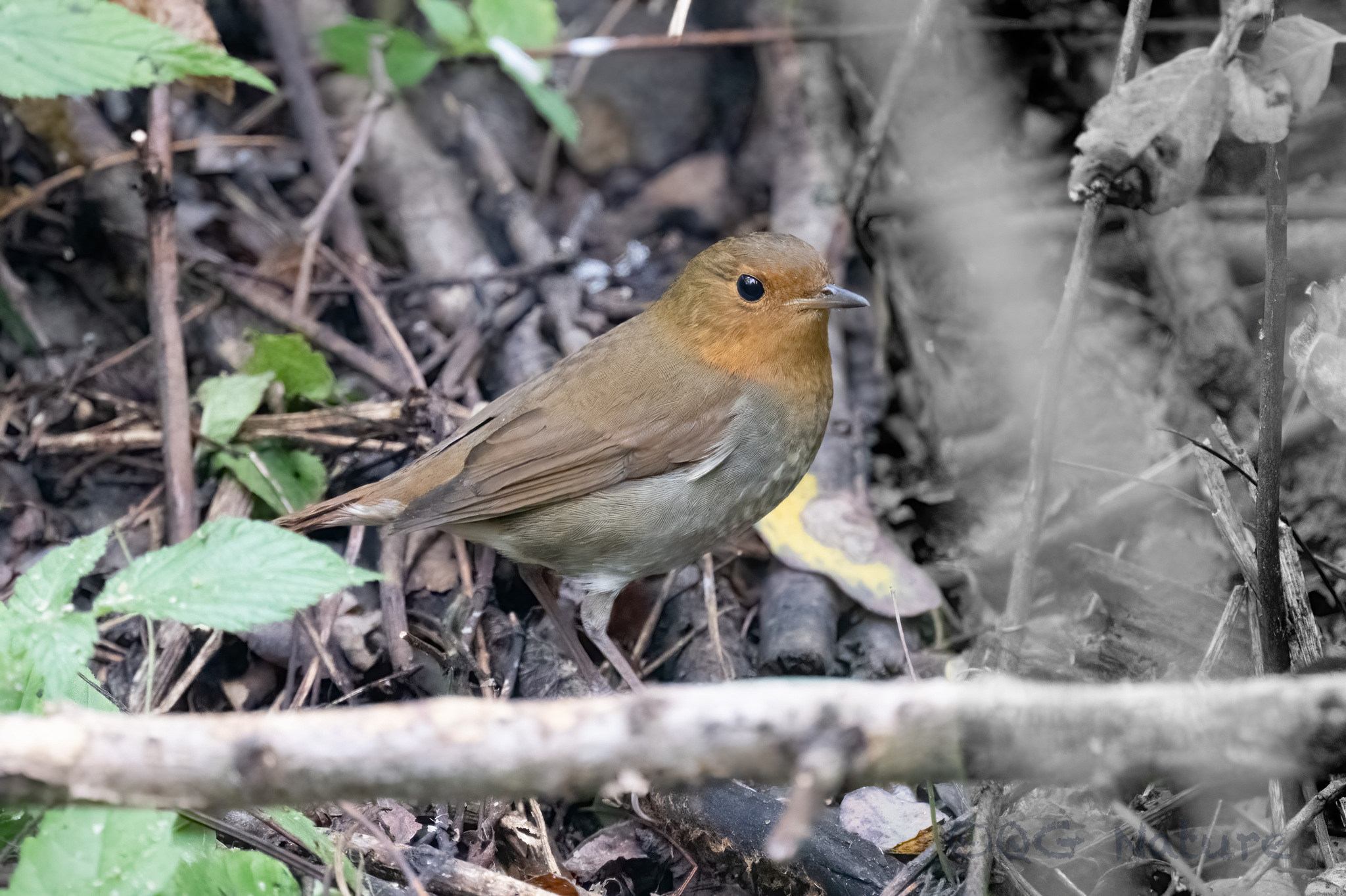
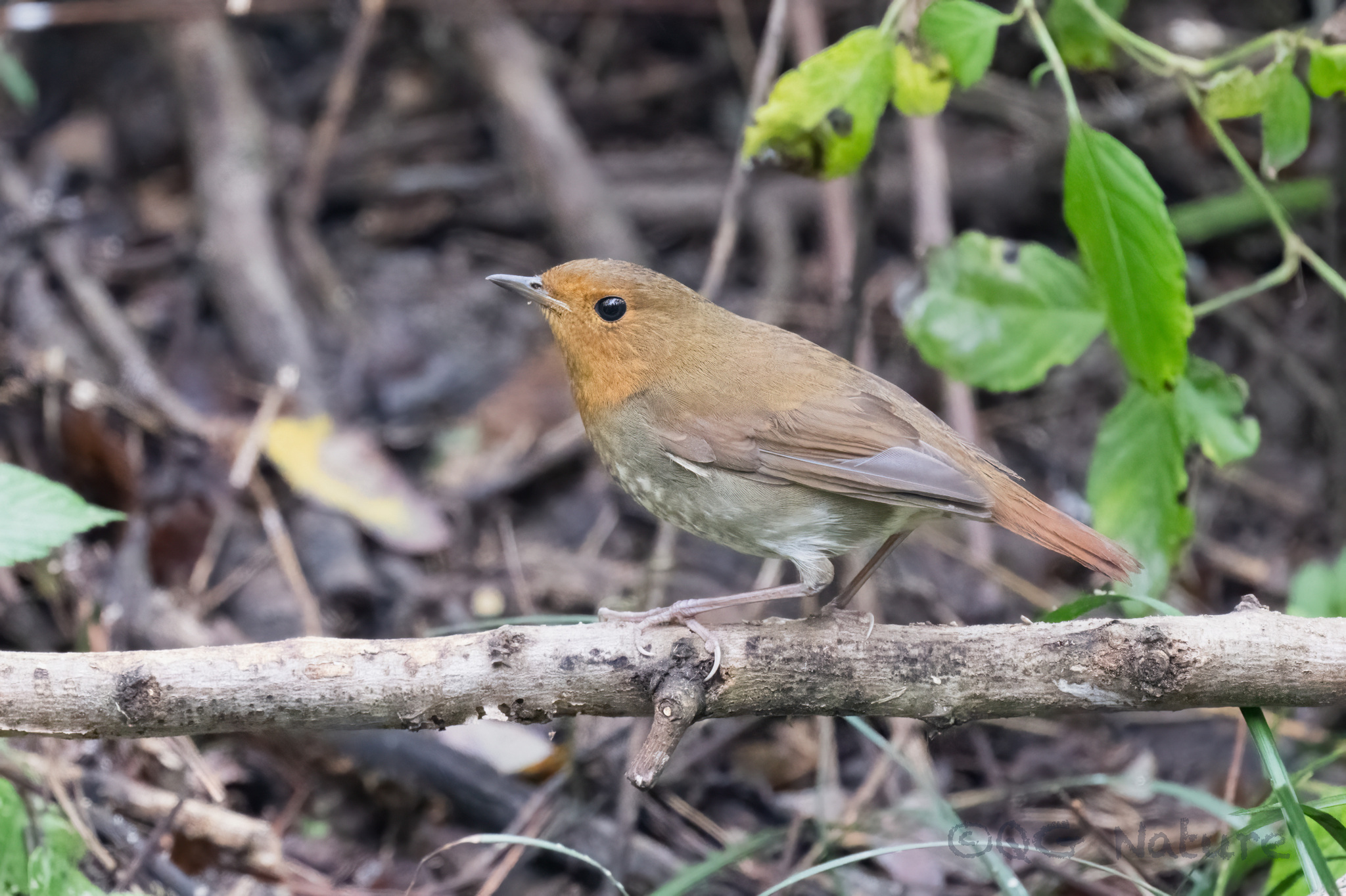
Japanese Robin
Larvivora akahige
日本歌鸲
Introduction
A small passerine bird in the family Muscicapidae. Native to the southern Kuril and Sakhalin Islands throughout Japan. Inhabits natural habitats including islands, lakes, mountains, and temperate forests, particularly damp, dense, and shady undergrowth along valleys and streams in broadleaf and deciduous forests. Found on Honshu, Shikoku, Hokkaido, Sakhalin, and Yakushima Islands, migrating to Southeast Asia in winter. Populations on the Izu Islands represent a distinguishable subspecies (L. a. tanensis) due to geographic isolation. Molecular phylogenetic studies in 2006 and 2010 led to reclassification from Erithacus to Larvivora genus.
Description
A small bird measuring 14-15 centimeters in length. The species exhibits a predominantly gray and bright orange plumage. Males have olive-brown upperparts from crown to rump, with an orange face and neck, grey breast and underside, reddish-brown tail, pinkish-brown legs, and a black bill. Females are similar but with duller and less extensive orange and brown coloration. Juveniles resemble adults but display dark spotting on the breast, pale rufous feathers from crown to mantle, and rufous buff coloration.
Distribution & Habitat
Breeds throughout the Japanese archipelago including Honshu, Shikoku, Hokkaido, and the Sakhalin Islands. Summer habitat consists of deciduous and mixed coniferous forests, particularly damp undergrowth in valleys and streams. Migrates to Southeast Asia for winter. The Izu Islands population (subspecies L. a. tanensis) exhibits distinct phenotypic characteristics including different feather coloration and inhabits lowland warm-temperature forests rather than the mixed forests preferred by mainland populations (L. a. akahige).
Behavior & Ecology
Omnivorous diet includes beetles, insects, milled worms, small crickets, fruits, and other small invertebrates. Breeds during May and June in central Japan. Nest construction uses moss, twigs, dry leaves, ferns, and roots. Clutch size is 3-5 greenish eggs, incubated for approximately two weeks. Chicks remain in the nest for 31 days before becoming independent. Vocalization consists of a single note that begins extremely loud and gradually tones down, resembling a telephone ring with well-spaced, simple phrases and short chattering. Females sing during nest building and incubation; male singing frequency decreases after eggs are laid.
Conservation
Described as an abundant species throughout its range.
Culture
The Japanese name 'Komadori' was historically used for this species. Note: The specific name 'akahige' is confusingly the common name of its relative Larvivora komadori in Japanese.
Source: Wikipedia · CC BY-SA 3.0
Taxonomy
- Order
- Passeriformes
- Family
- Muscicapidae
- Genus
- Larvivora
- eBird Code
- japrob2
Distribution
breeds on southern Sakhalin Island, the southern Kuril Islands, and Japan; winters in southeastern China (northwestern Fujian southward to Guangdong and Guangxi)
Vocalizations
Data Sources
Species description from Wikipedia, licensed under CC BY-SA 3.0.
Bird images and sounds sourced from GBIF, contributed by citizen scientists worldwide under Creative Commons licenses.
Taxonomy data from AviList 2025.