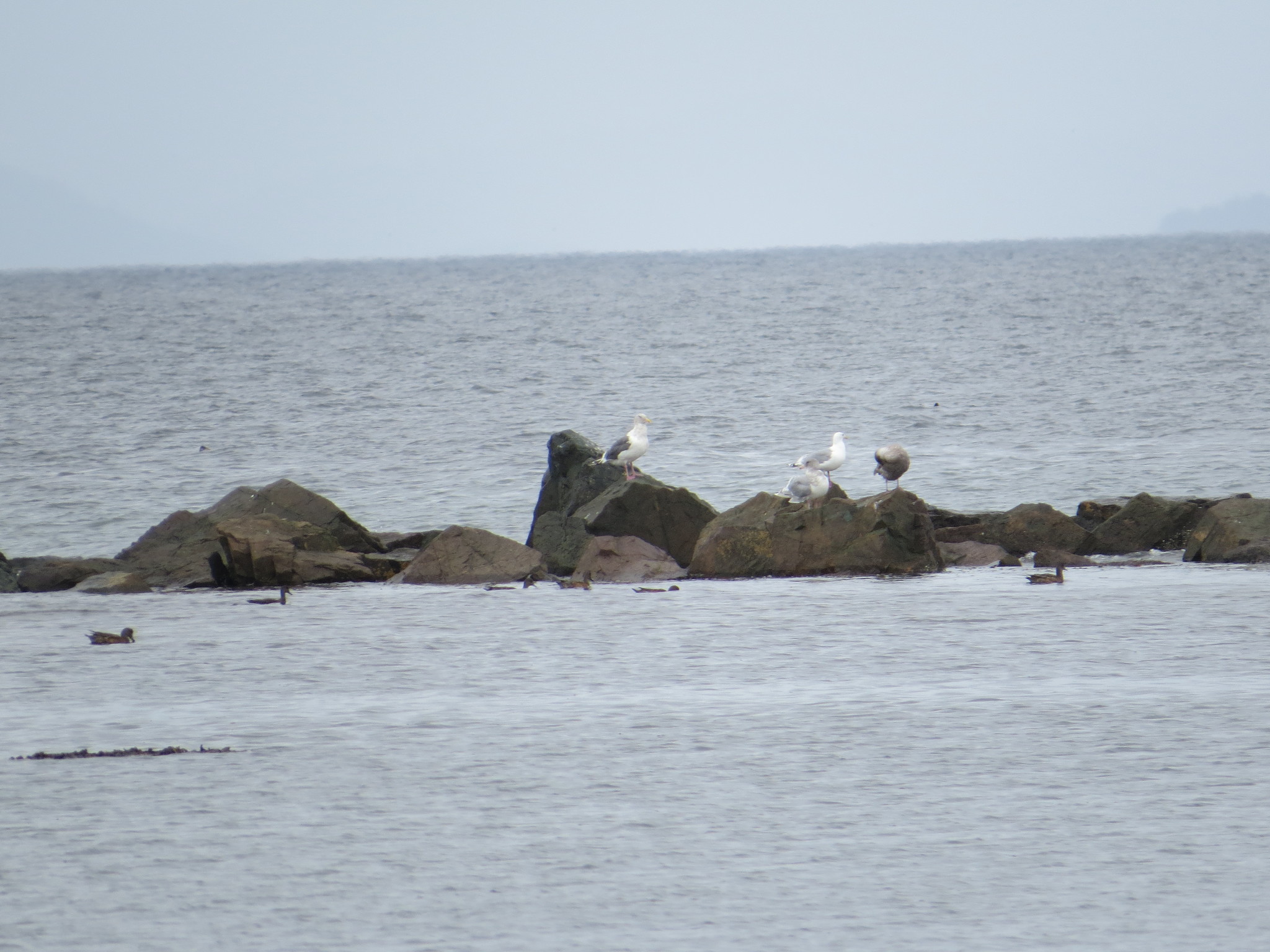
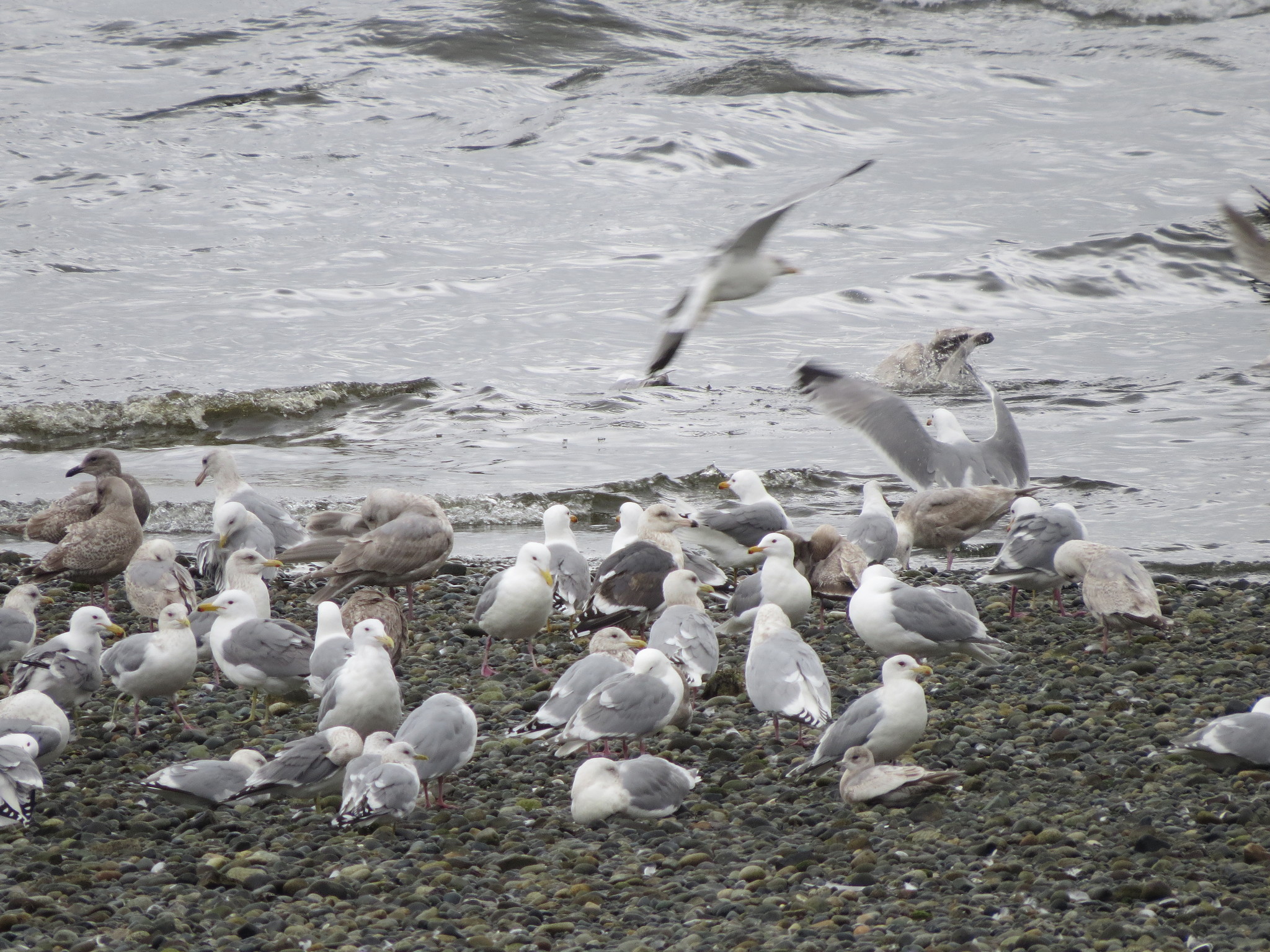
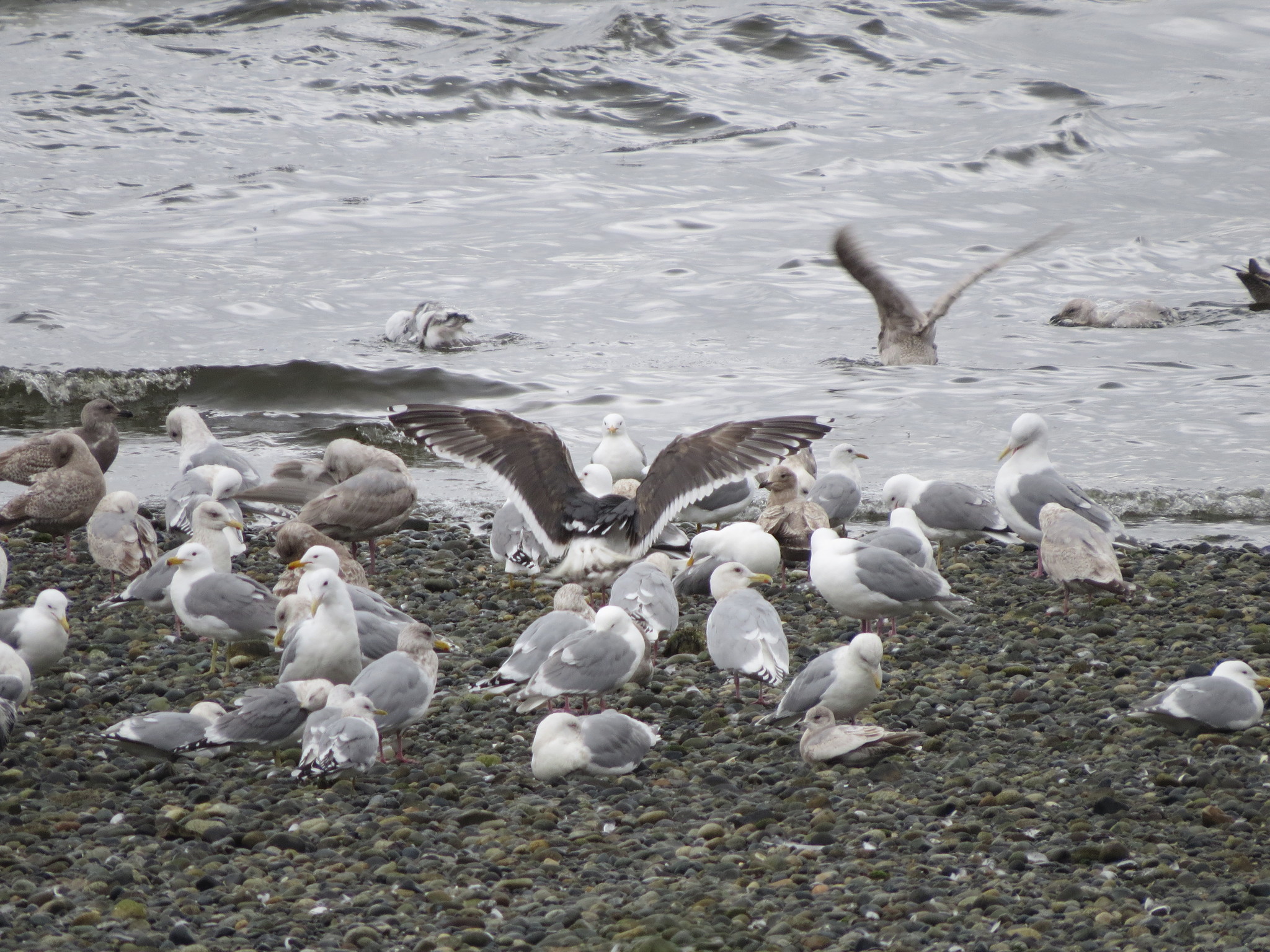
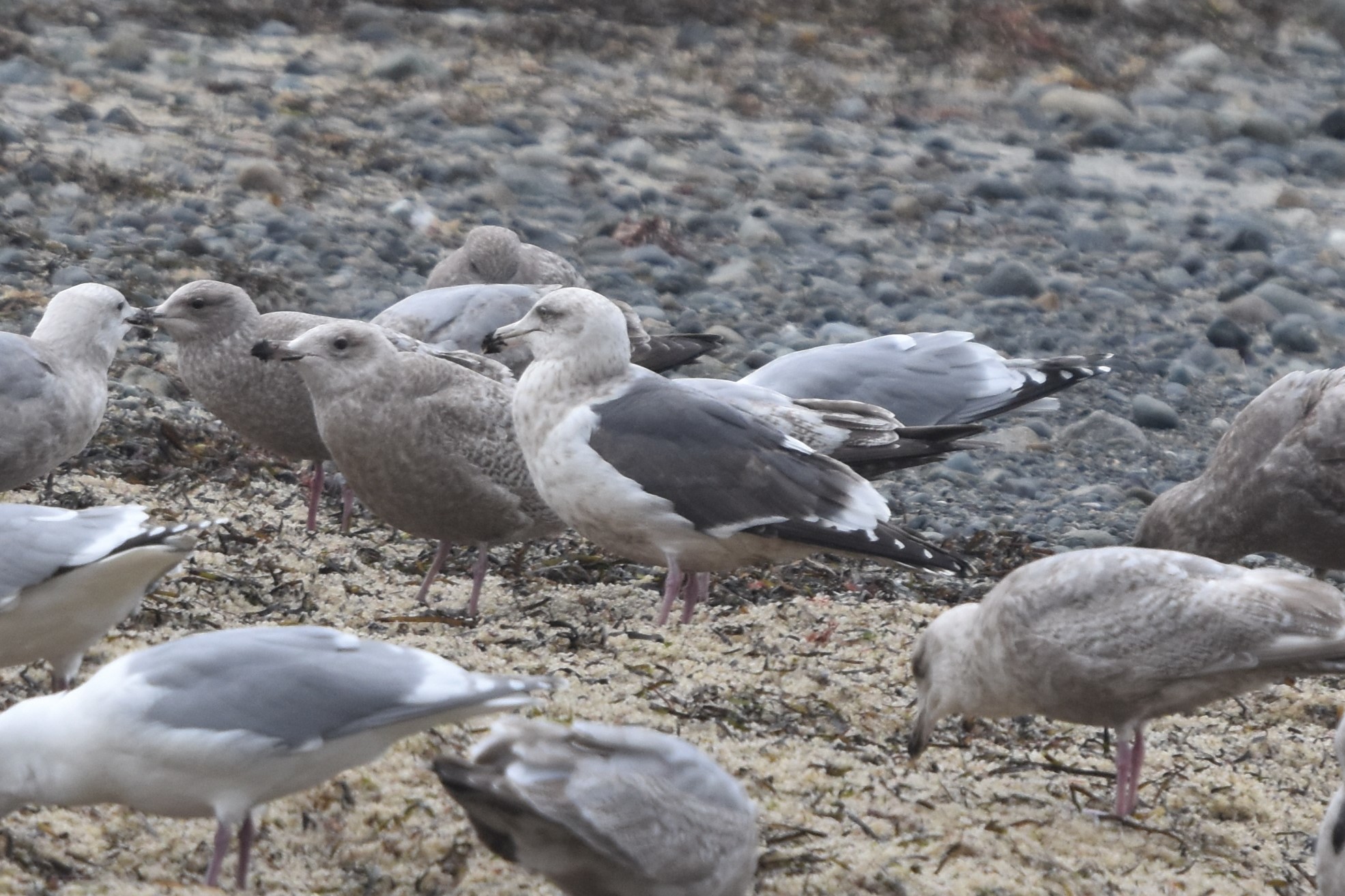
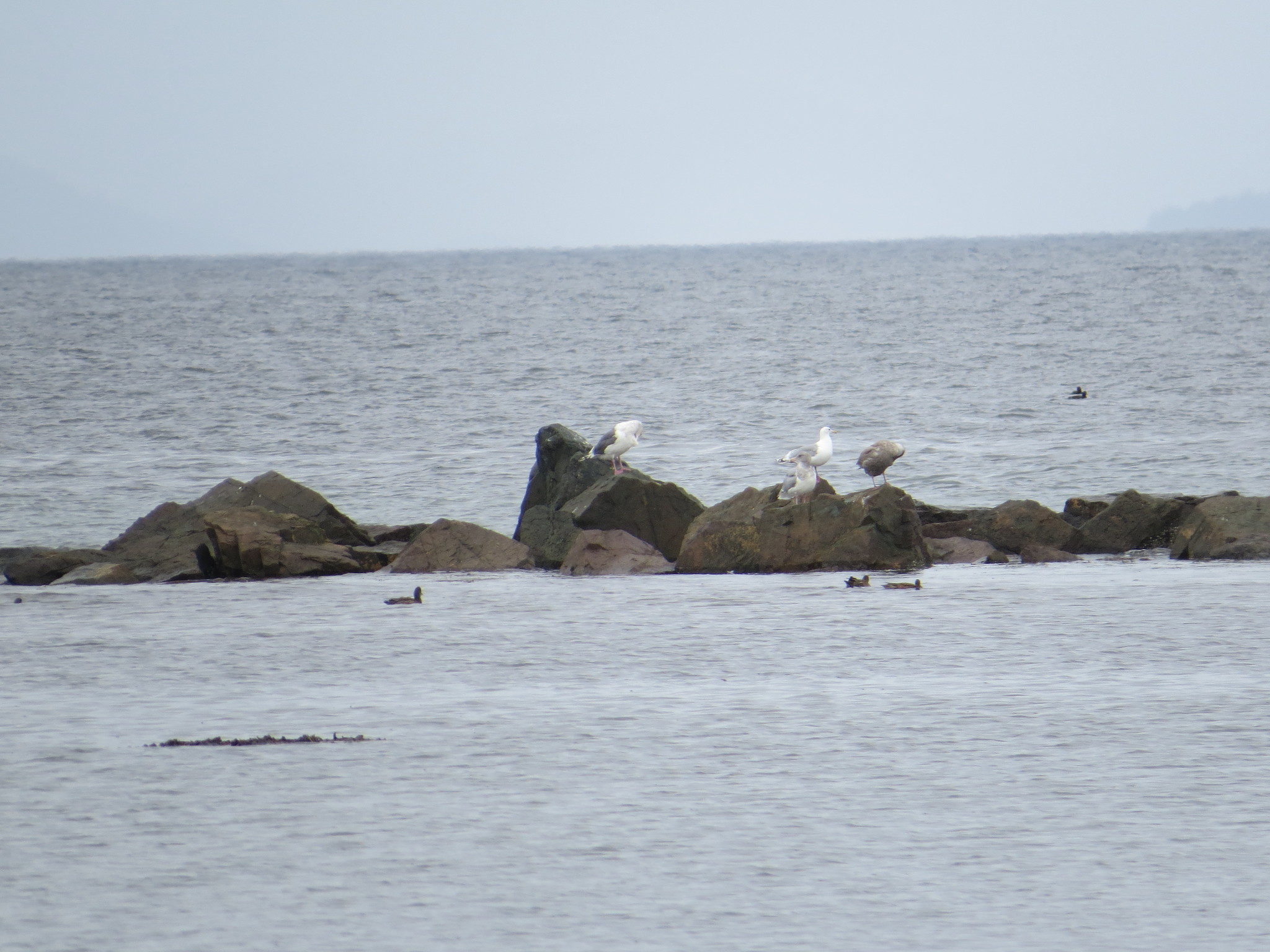

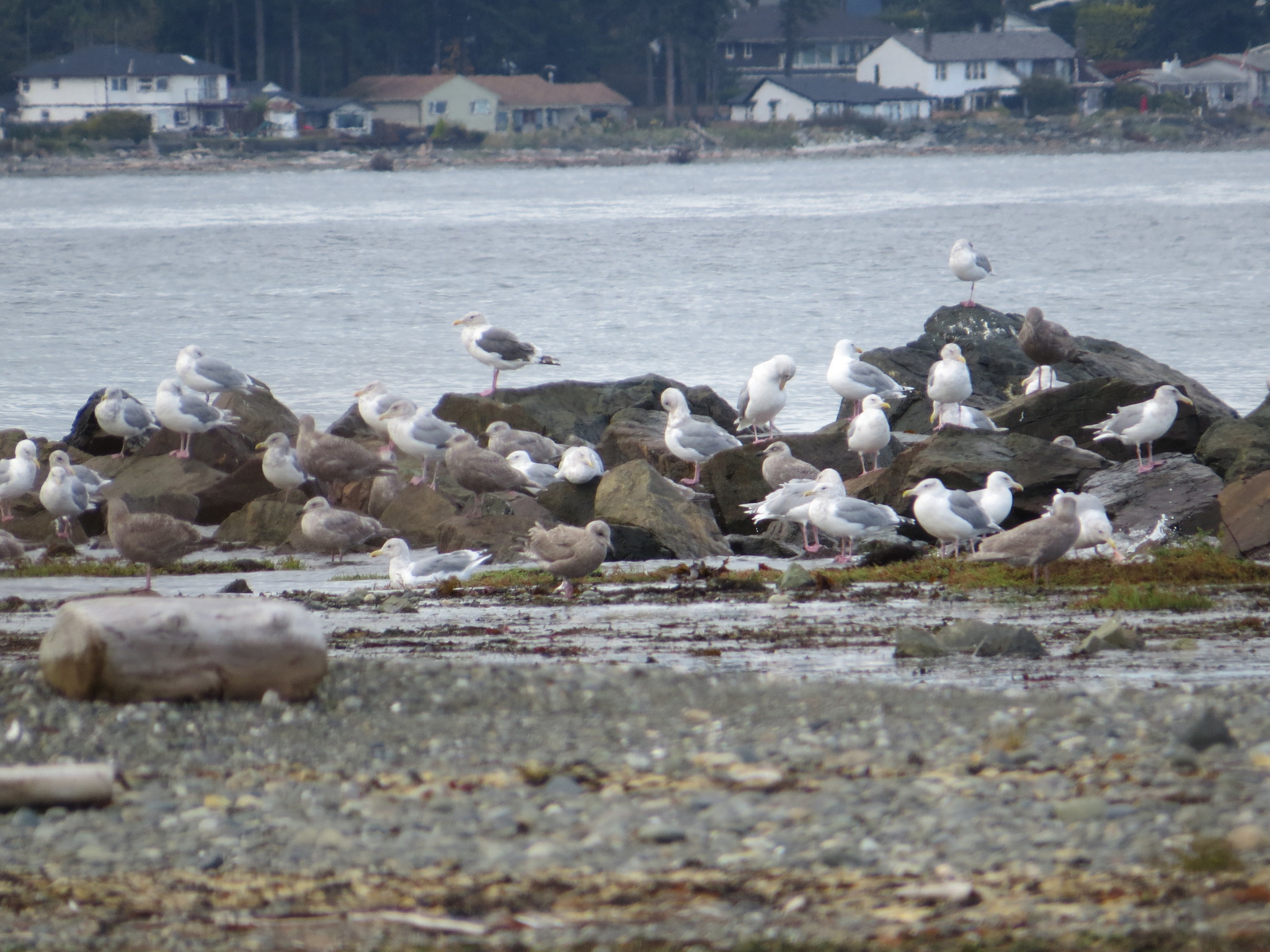
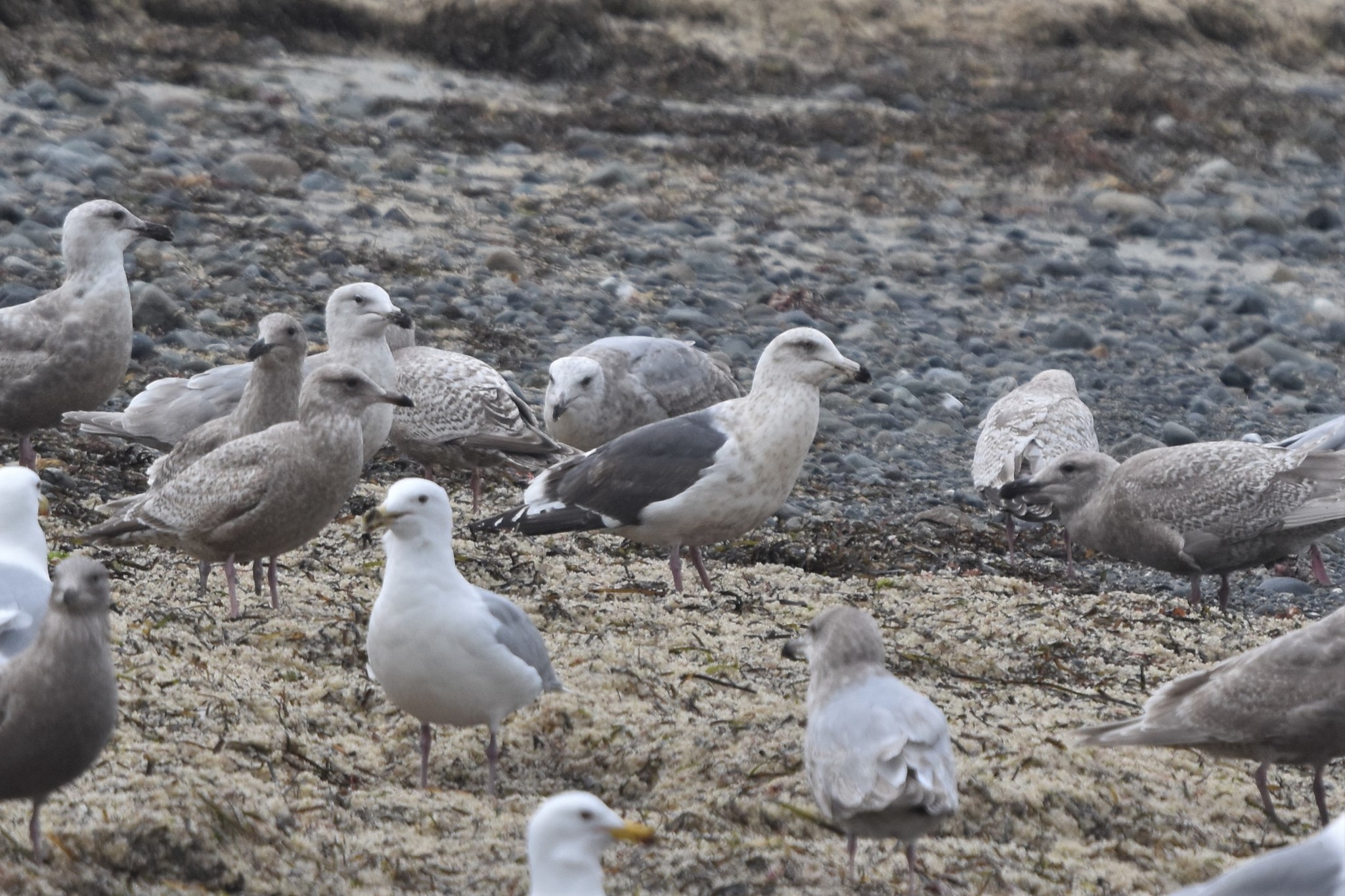
Slaty-backed Gull
Larus schistisagus
灰背鸥
Description
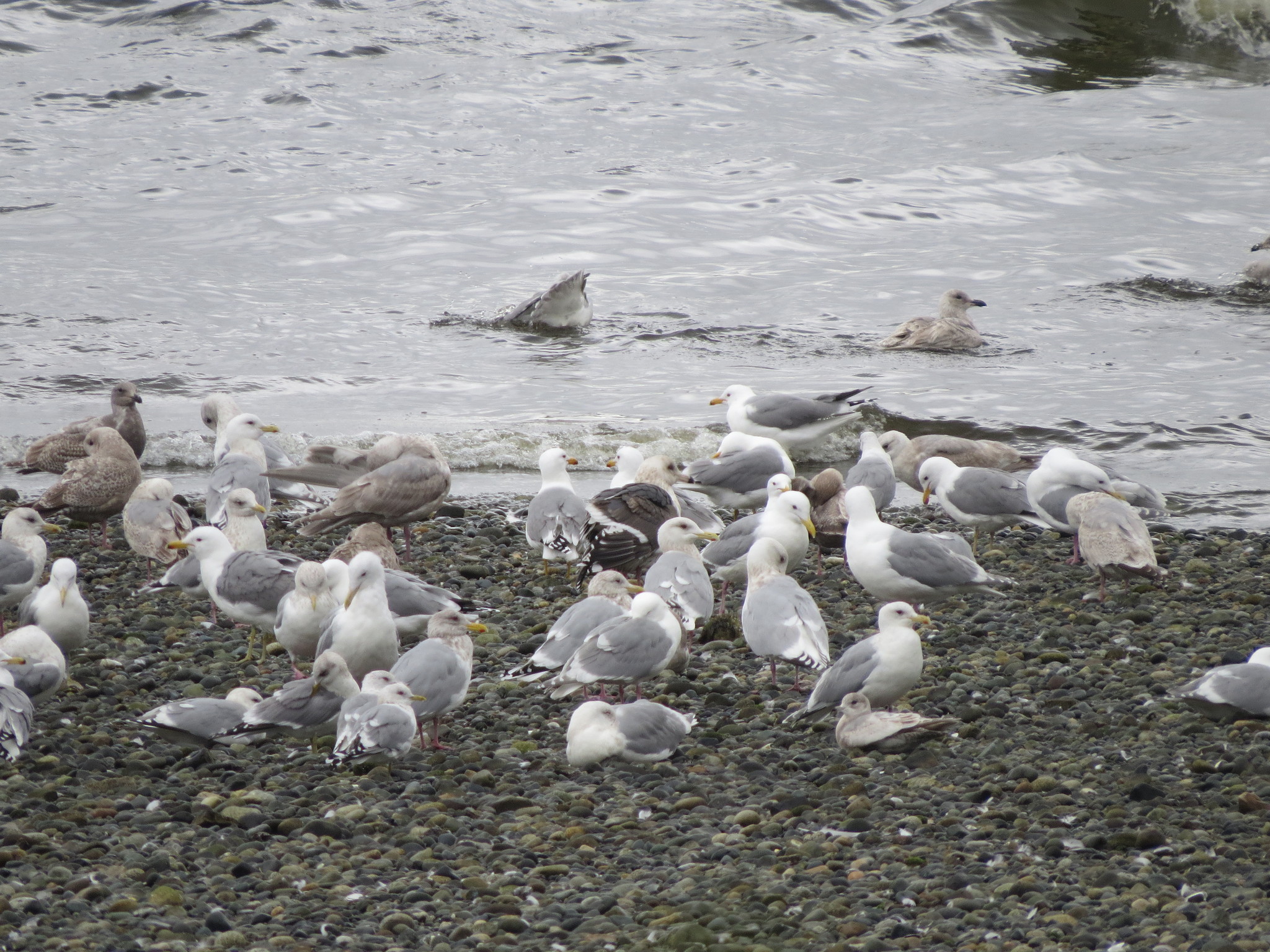
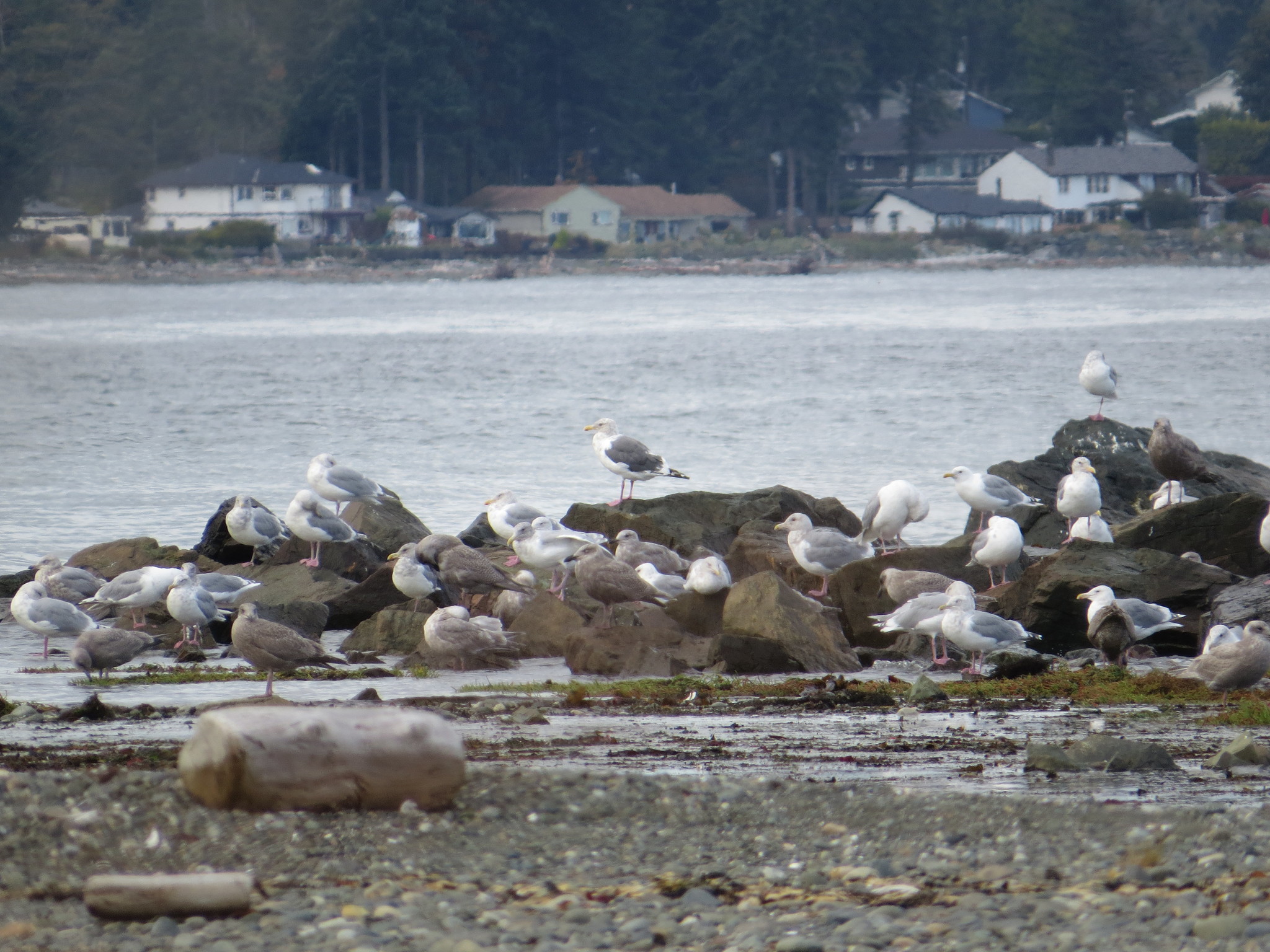
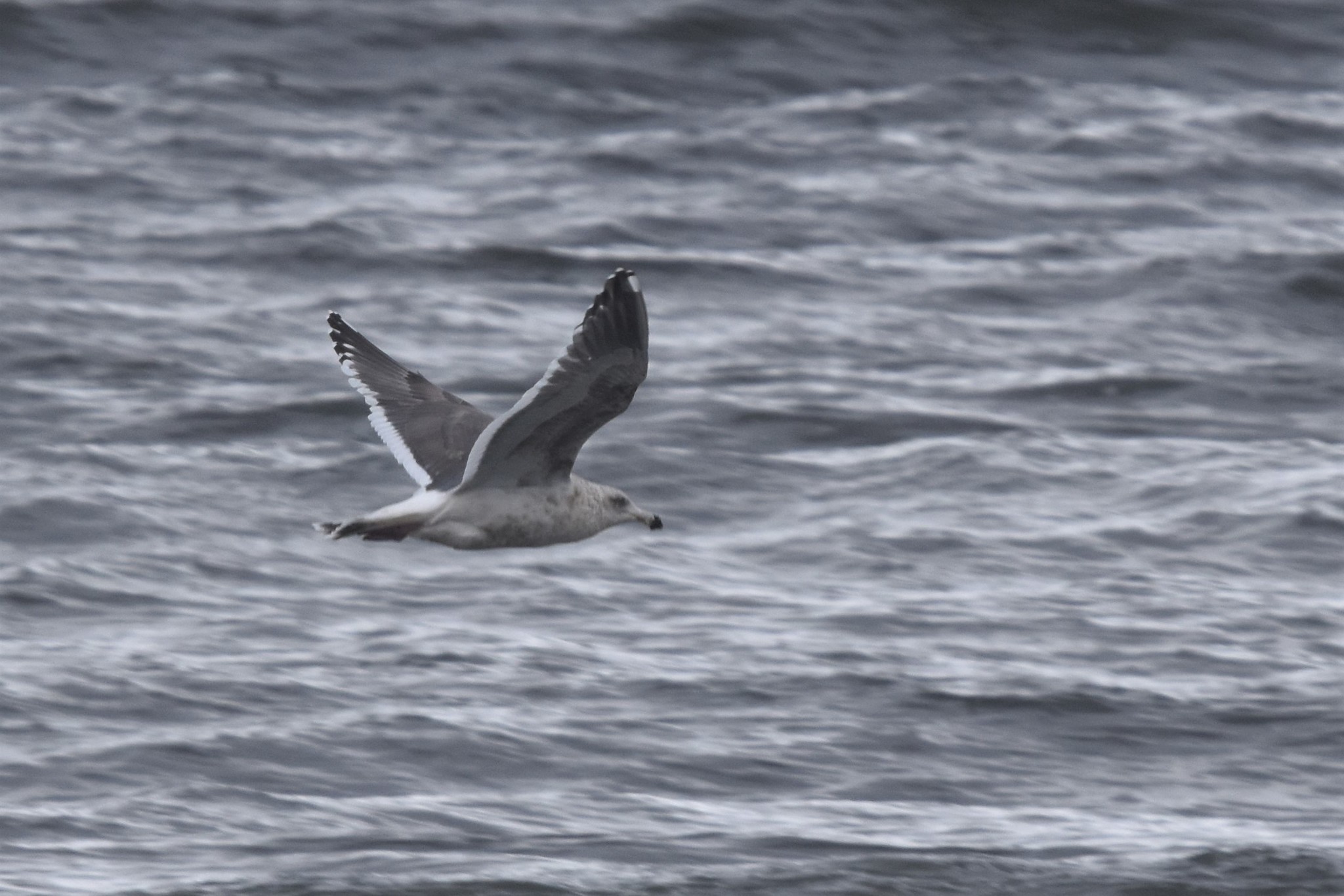
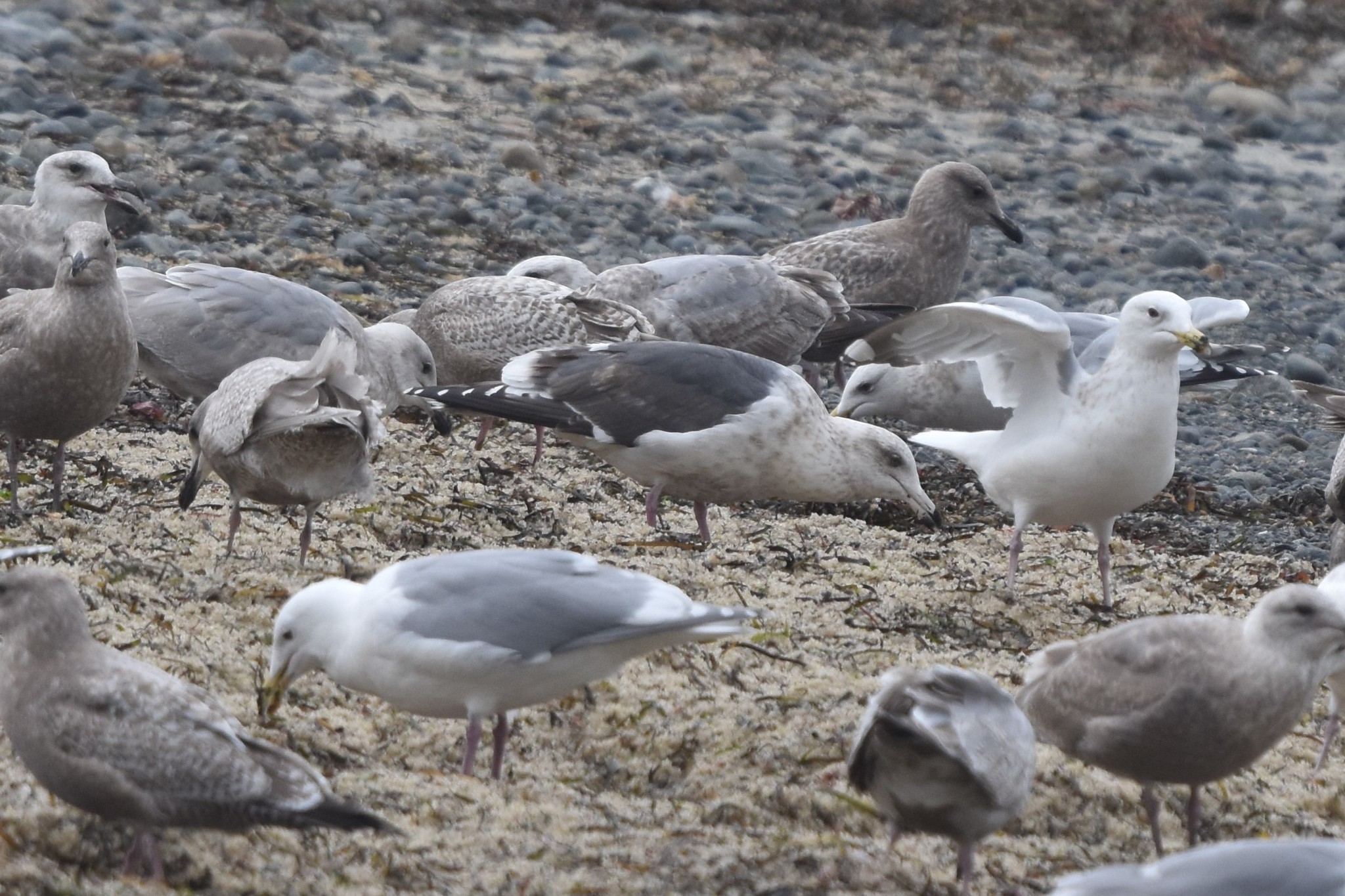
A large gull species tied for fourth-largest. Adults measure 55–68.5 cm in length with a 132–160 cm wingspan and weigh 1.05–1.7 kg. They have a white head, belly, and tail with a dark slaty-gray back and wings featuring a broad white trailing edge. The wings are slightly darker than those of the western gull (Kodak grey scale 9.5–12 vs. 9–11). White spots called mirrors appear on the outer primaries (p9 and p10). The mid-primaries display long grey tongues tipped with white crescents forming a 'string of pearls' pattern. Eyes are yellow surrounded by purple to deep pink orbital skin. The bill is yellow with an orange-red subterminal spot. Legs are pink and relatively short, giving the bird a stout, pot-bellied appearance. Immature plumage is brown, similar to the great black-backed gull but paler.
Identification
Nearly identical in appearance to the western gull and glaucous-winged gull. The back and wings are slightly darker than western gulls, but this distinction is subtle. Immature birds are brown and practically indistinguishable from immature herring gulls in the field. Key distinguishing features include the 'string of pearls' wing pattern, pink orbital skin around yellow eyes, and short pink legs.
Distribution & Habitat
Native to the Pacific coast of northeastern Asia. During nonbreeding seasons, individuals wander widely and have strayed to various locations throughout North America, including New England and Texas. Rare vagrants to Europe, with one individual recorded in Finland on November 3, 2012, representing only the fourth European record.
Behavior & Ecology
Information on specific behaviors is limited in available sources.
Source: Wikipedia · CC BY-SA 3.0
Taxonomy
- Order
- Charadriiformes
- Family
- Laridae
- Genus
- Larus
- eBird Code
- slbgul
Distribution
breeds coasts and lakes of northeastern Siberia including Kamchatka southward to Kuril Islands (eastern Russia), and eastward to Hokkaido and northern Honshu (northern Japan); winters to coasts of Japan, Korean Peninsula, Bohai Sea (northeastern China), and Taiwan; prone to extreme vagrancy
Data Sources
Species description from Wikipedia, licensed under CC BY-SA 3.0.
Bird images and sounds sourced from GBIF, contributed by citizen scientists worldwide under Creative Commons licenses.
Taxonomy data from AviList 2025.