Glaucous Gull
Larus hyperboreus
北极鸥
Introduction
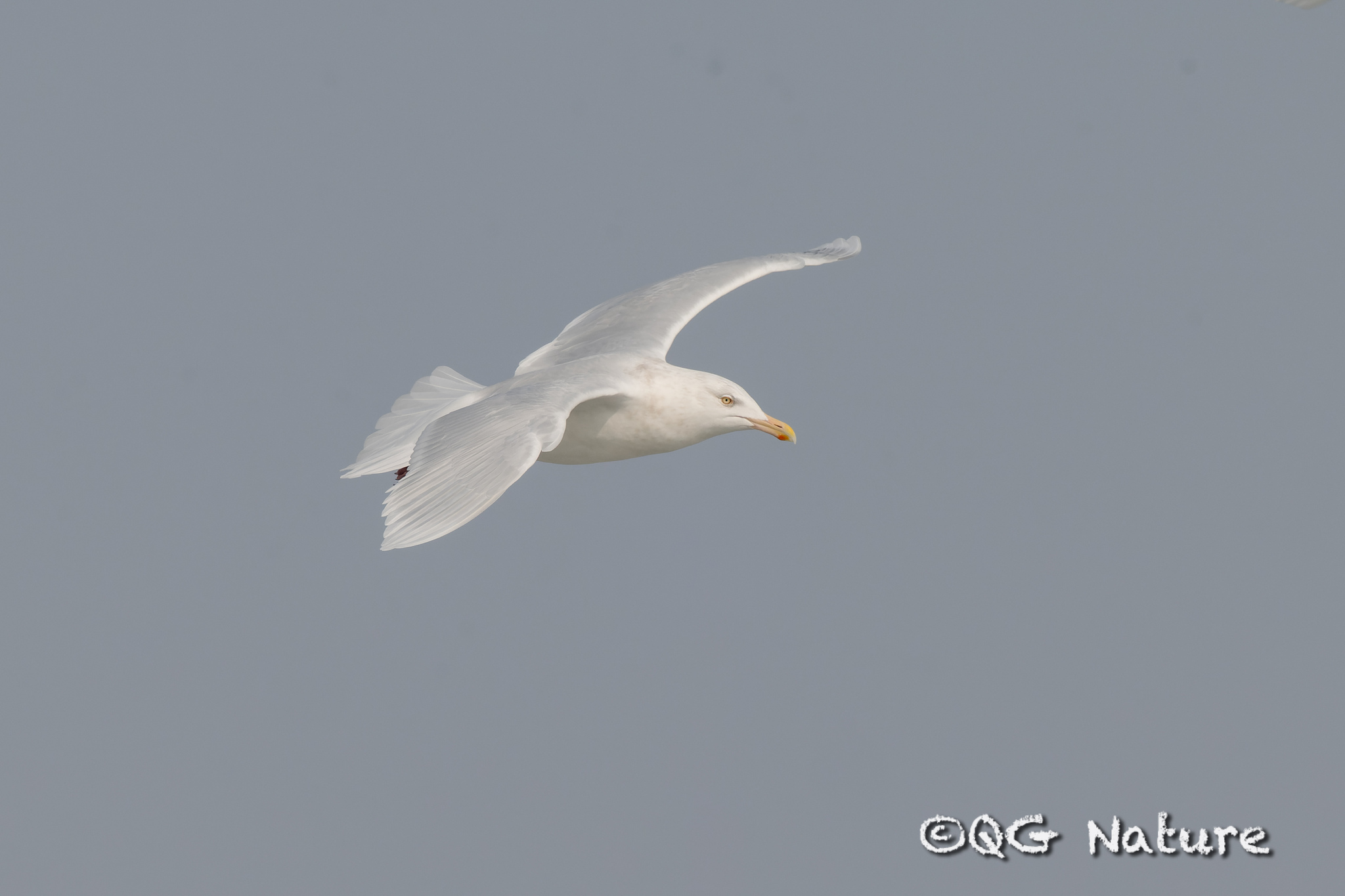
The great black-backed gull ranks as the second-largest gull species worldwide. It inhabits Arctic coastlines during breeding season and ice-choked coastal waters in winter. Adults have pale grey upperparts and thick yellow bills, while juveniles display very pale grey plumage. The species takes four years to reach full adult plumage. Its diet is opportunistic. It is characterized by uniformly pale plumage lacking the dark markings common in many large gulls.
Description
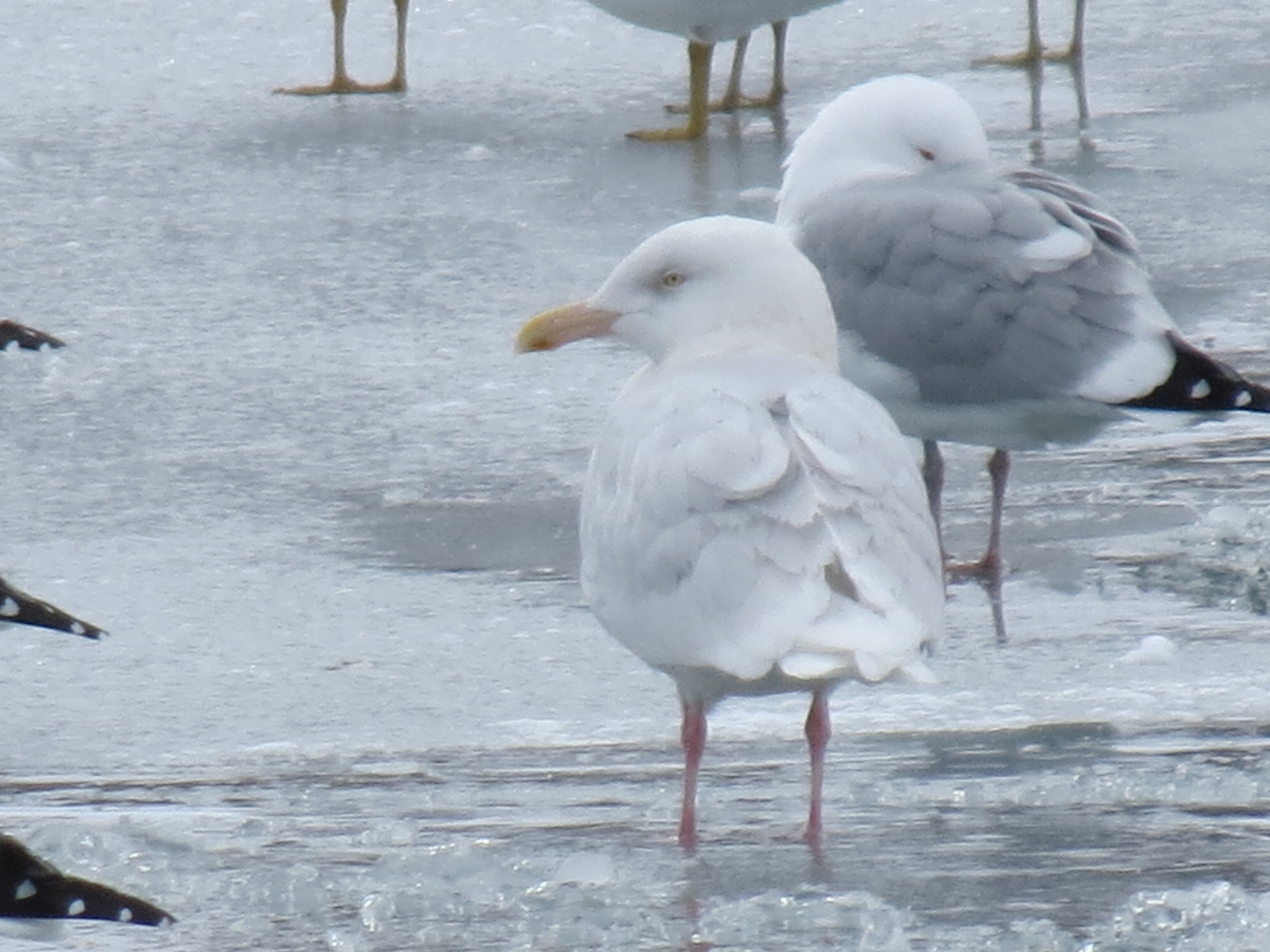
This is a very large and powerful gull, ranking as the second-largest gull species worldwide. It is notably pale in all plumages, completely lacking black coloration on both wings and tail. Adults display pale grey upperparts with a thick, robust yellow bill. Juveniles appear very pale grey overall and possess a distinctive pink and black bicolored bill. The species is considerably larger, bulkier, and thicker-billed than the similar Iceland gull, and can approach the size of the great black-backed gull. Body mass ranges from 960 to 2,700 grams, with males averaging approximately 1.55 kg and females 1.35 kg. Standard measurements show wing chord of 40.8 to 50.1 cm, bill length of 4.9 to 6.9 cm, and tarsus length of 6 to 7.7 cm.
Identification
This species' most distinctive feature is its uniformly pale plumage without any black wing or tail markings—a key characteristic separating it from most other large gulls. The combination of enormous size, bulky build, and thick bill helps distinguish it from the smaller and more delicate Iceland gull. While it can approach the great black-backed gull in size, the lack of dark coloration immediately separates them. Juveniles are especially pale, appearing almost white or cream-colored compared to the darker juvenile plumages of other large gull species. The pink and black bill of first-year birds provides another identifying feature. Size is the most reliable field characteristic, and experienced observers note the heavy, powerful appearance compared to sympatric gull species.
Distribution & Habitat
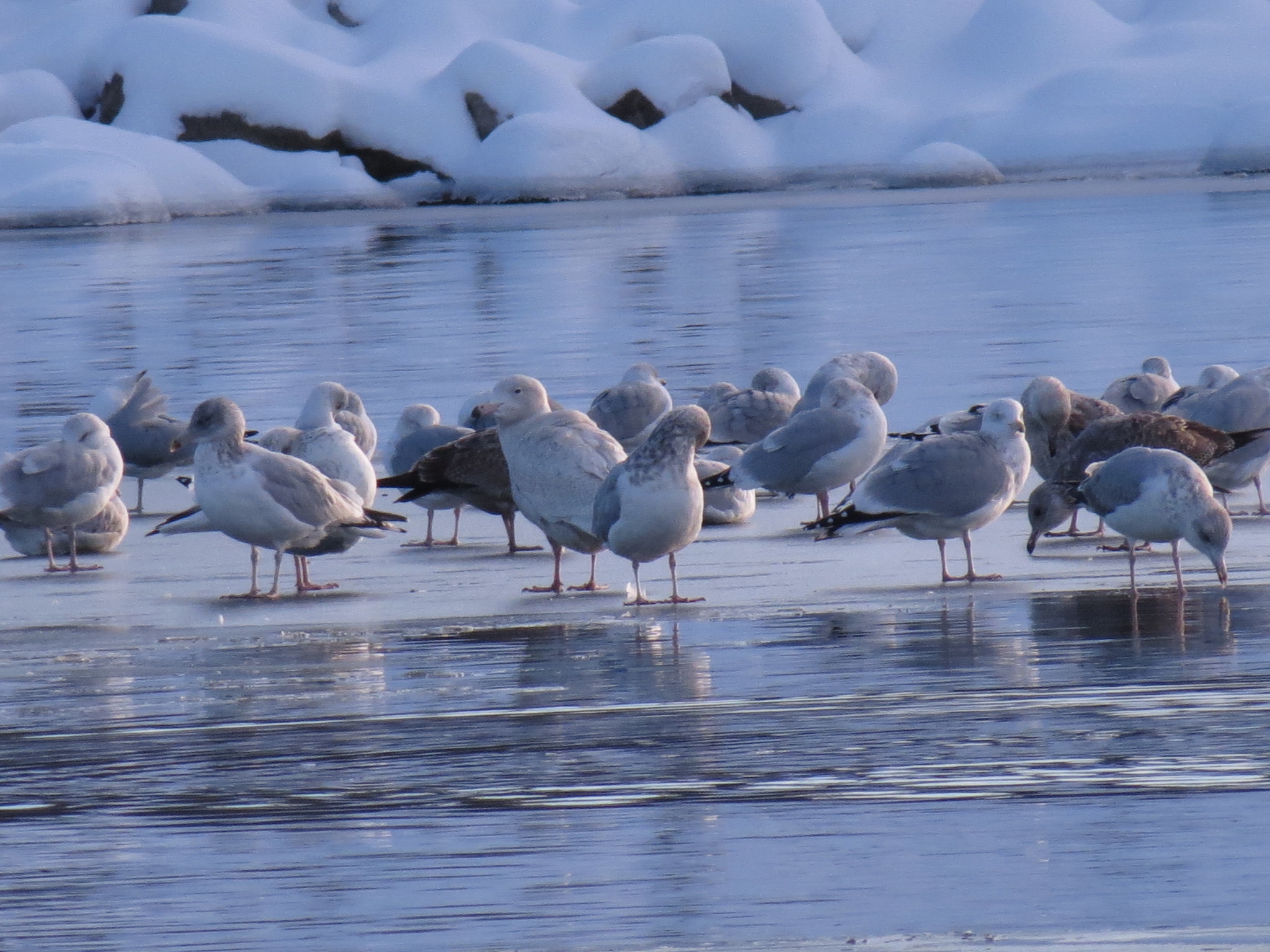
This gull breeds across Arctic regions of the Northern Hemisphere, nesting colonially or singly along coasts and cliffs. It is migratory, wintering southward throughout the Holarctic region. In the North Atlantic, it winters from the British Isles across to the northernmost states of the United States, including the Great Lakes. Pacific populations winter from Alaska southward along coastlines. A few individuals annually reach the southern United States and northern Mexico. Breeding habitat consists of coastal areas and cliff ledges where pairs establish ground nests lined with vegetation and debris.
Behavior & Ecology
Like most Larus gulls, this species is highly omnivorous and opportunistic. Its diet includes fish, insects, molluscs, starfish, carrion, offal, scraps, eggs, small birds, small mammals, and plant matter such as seeds, berries, and grains. Breeding occurs colonially or as solitary pairs, with nests constructed on the ground or cliff ledges. Females lay two to four light brown eggs marked with dark brown splotches. The species is known for its aggressive feeding behavior, often pirating food from other birds and predators. The call is a characteristic 'laughing' cry similar to the herring gull but notably deeper in tone. These gulls are powerful fliers and capable predators throughout their range.
Conservation
This species currently maintains a stable population across its extensive Arctic breeding range and is not considered globally threatened. Its vast remote habitat provides inherent protection from many human impacts, though it remains vulnerable to environmental contaminants, climate change affecting Arctic ecosystems, and fluctuations in prey availability. Conservation monitoring continues across various national jurisdictions within its range, with particular attention to potential impacts from offshore industrial activities and changing sea ice conditions. The species' adaptability to varied food sources provides some resilience against environmental changes, though long-term population trends require ongoing assessment.
Culture
This species historically carried the older English name 'burgomaster,' reflecting its imposing and authoritative presence that reminded early observers of a mayor or town official. This name captures the commanding impression this large, pale gull makes on observers—dignified, dominant, and somewhat pompous in its carriage. The genus name Larus derives from Latin, appearing to have referred generally to gulls or other large seabirds, while the specific epithet hyperboreus means 'northern' from ancient Greek references to mythical northern peoples. No extensive folklore traditions appear prominently associated with this Arctic species, though its dramatic presence in northern coastal communities has certainly influenced local bird lore and perceptions of marine environments.
Source: Wikipedia · CC BY-SA 3.0
Taxonomy
- Order
- Charadriiformes
- Family
- Laridae
- Genus
- Larus
- eBird Code
- glagul
Subspecies (4)
-
Larus hyperboreus barrovianus
breeds coastal western and northern Alaska to western Canada (western Northwest Territories)
-
Larus hyperboreus hyperboreus
breeds Jan Mayen and Spitsbergen eastward to Taymyr Peninsula (northwestern Siberia)
-
Larus hyperboreus leuceretes
breeds Greenland and Iceland, and eastern Northwest Territories (northwestern Canada) eastward through high Arctic northeastern Canadian islands
-
Larus hyperboreus pallidissimus
breeds Taymyr Peninsula eastward to Bering Sea and Pribilof Islands
Data Sources
Species description from Wikipedia, licensed under CC BY-SA 3.0.
Bird images and sounds sourced from GBIF, contributed by citizen scientists worldwide under Creative Commons licenses.
Taxonomy data from AviList 2025.