Common Gull
Larus canus
普通海鸥
Introduction
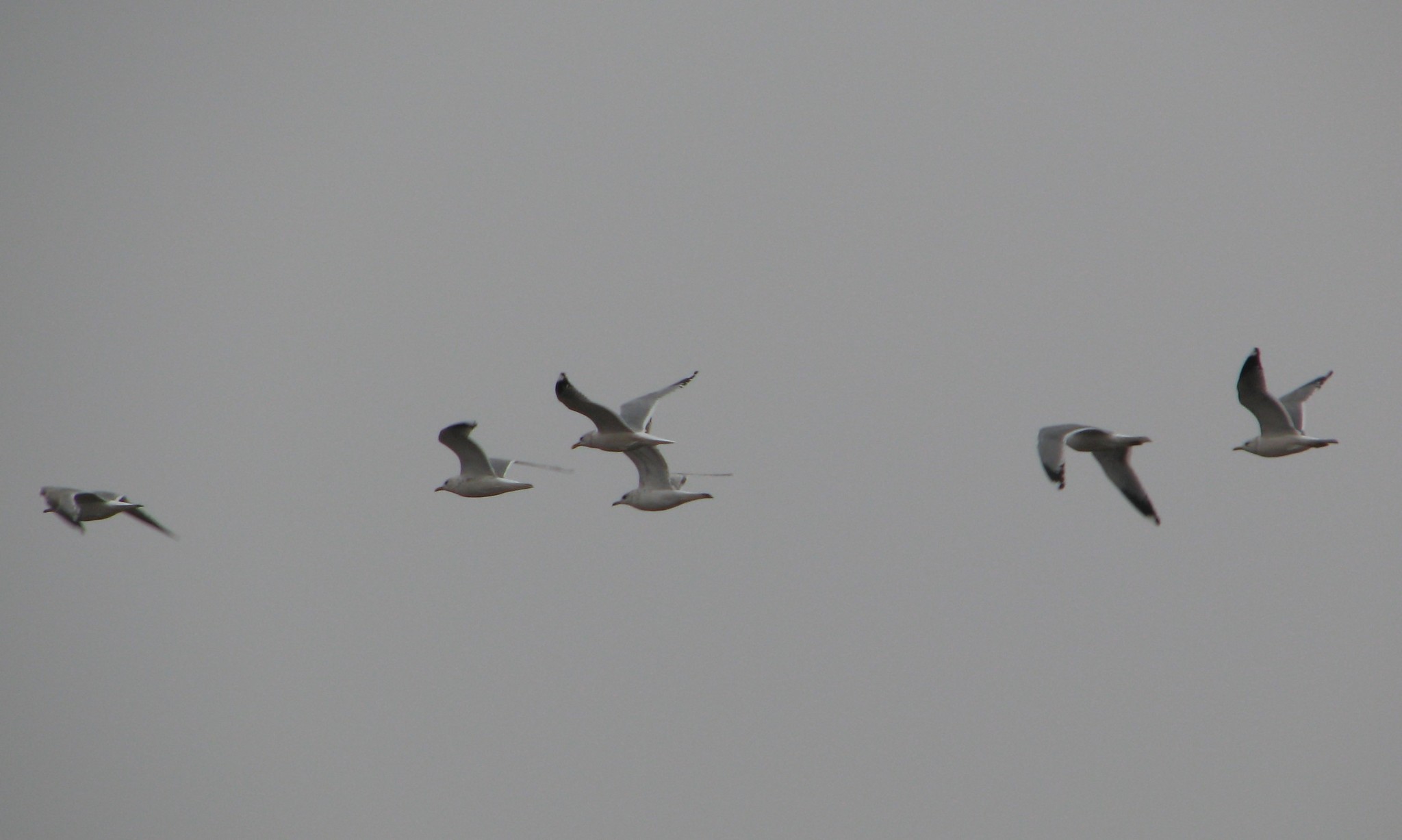
The common gull Larus canus breeds across much of Europe and northern Asia, from Iceland eastwards to Kamchatka. It inhabits cool temperate regions. Most populations are migratory, moving southward in winter to coastlines and inland waters around the Mediterranean, Caspian Sea, and East Asia; however, some northwest European populations are resident year-round. In winter, it occurs in farmland, fields, and coastal areas, typically in small flocks.
Description
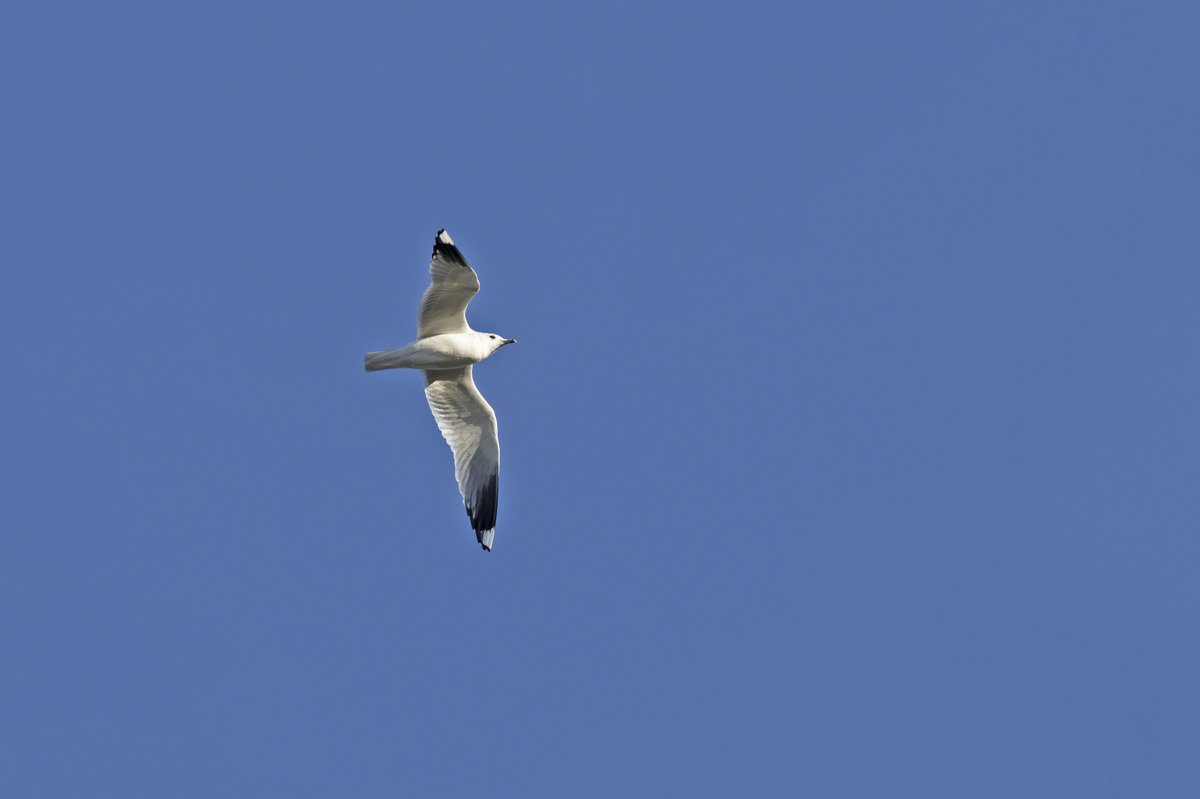
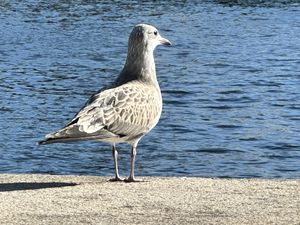
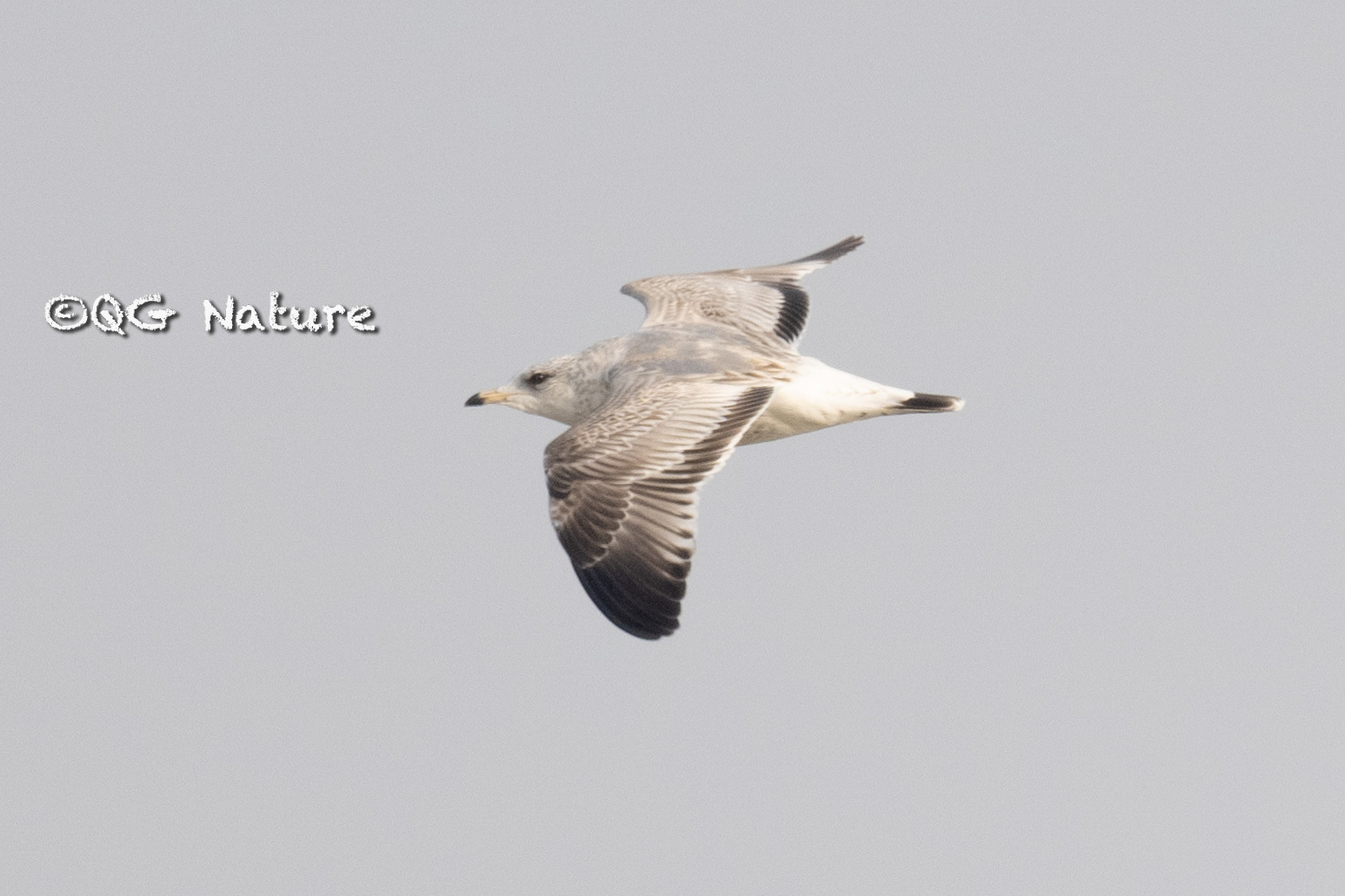
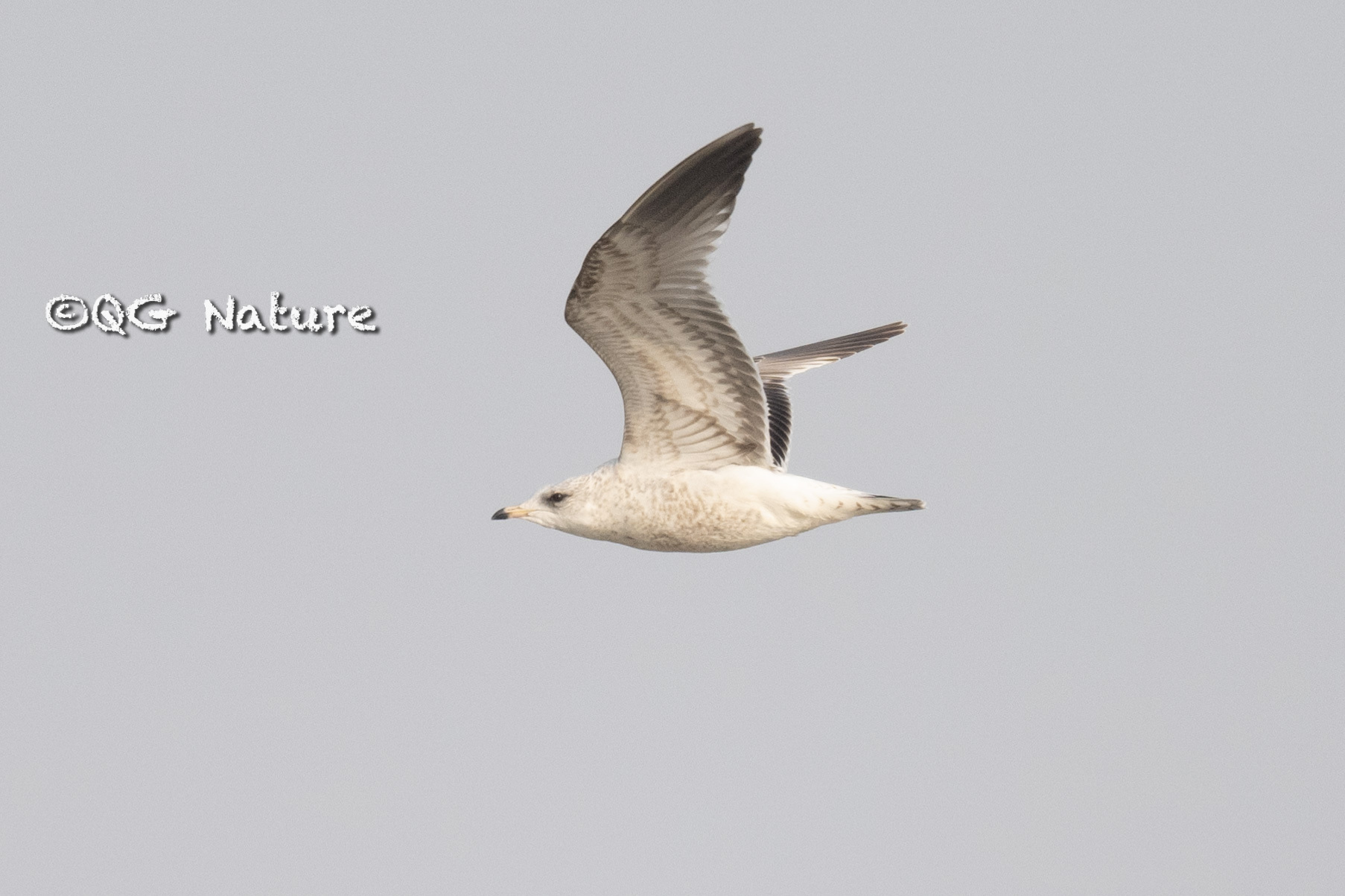
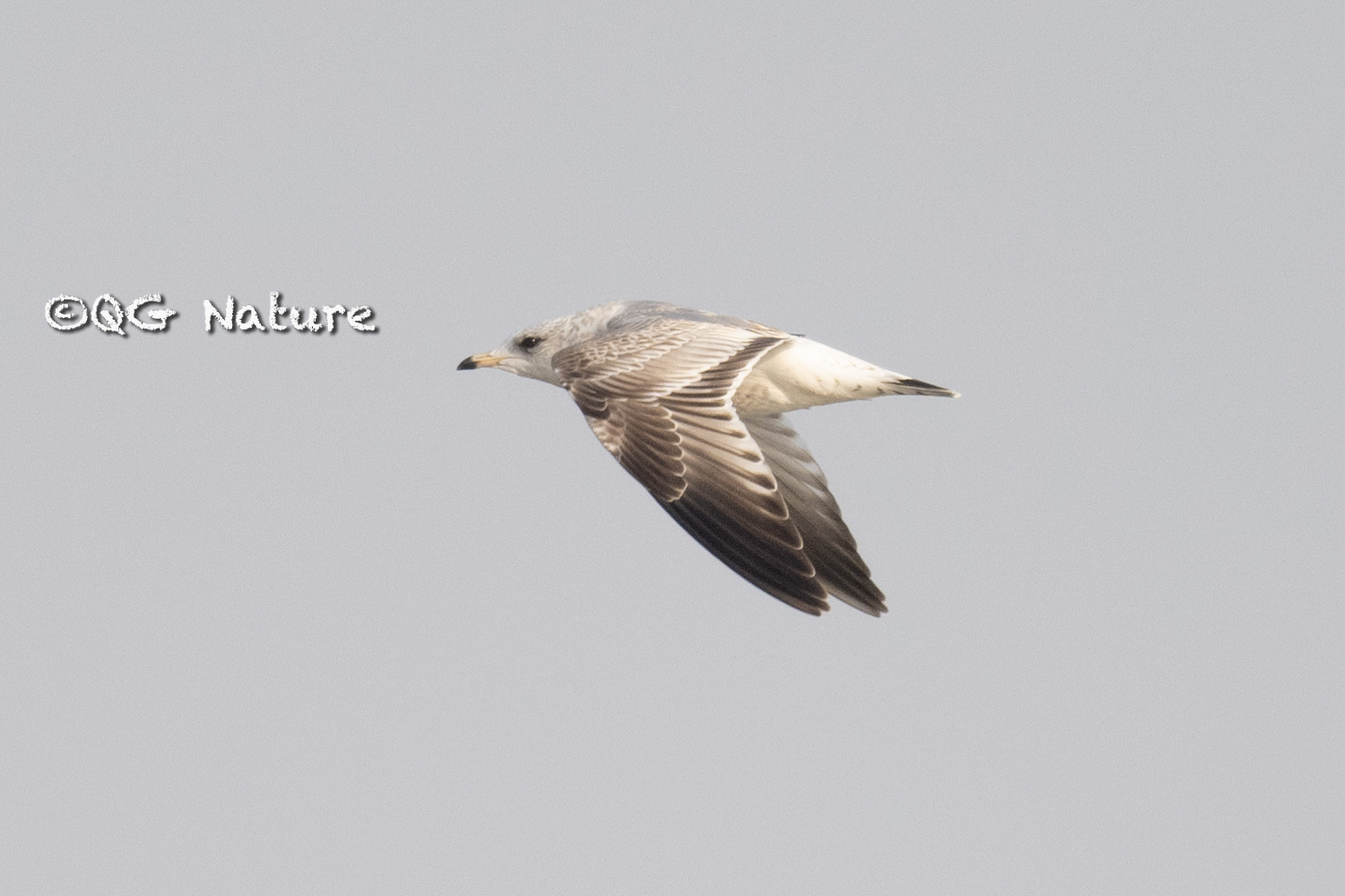
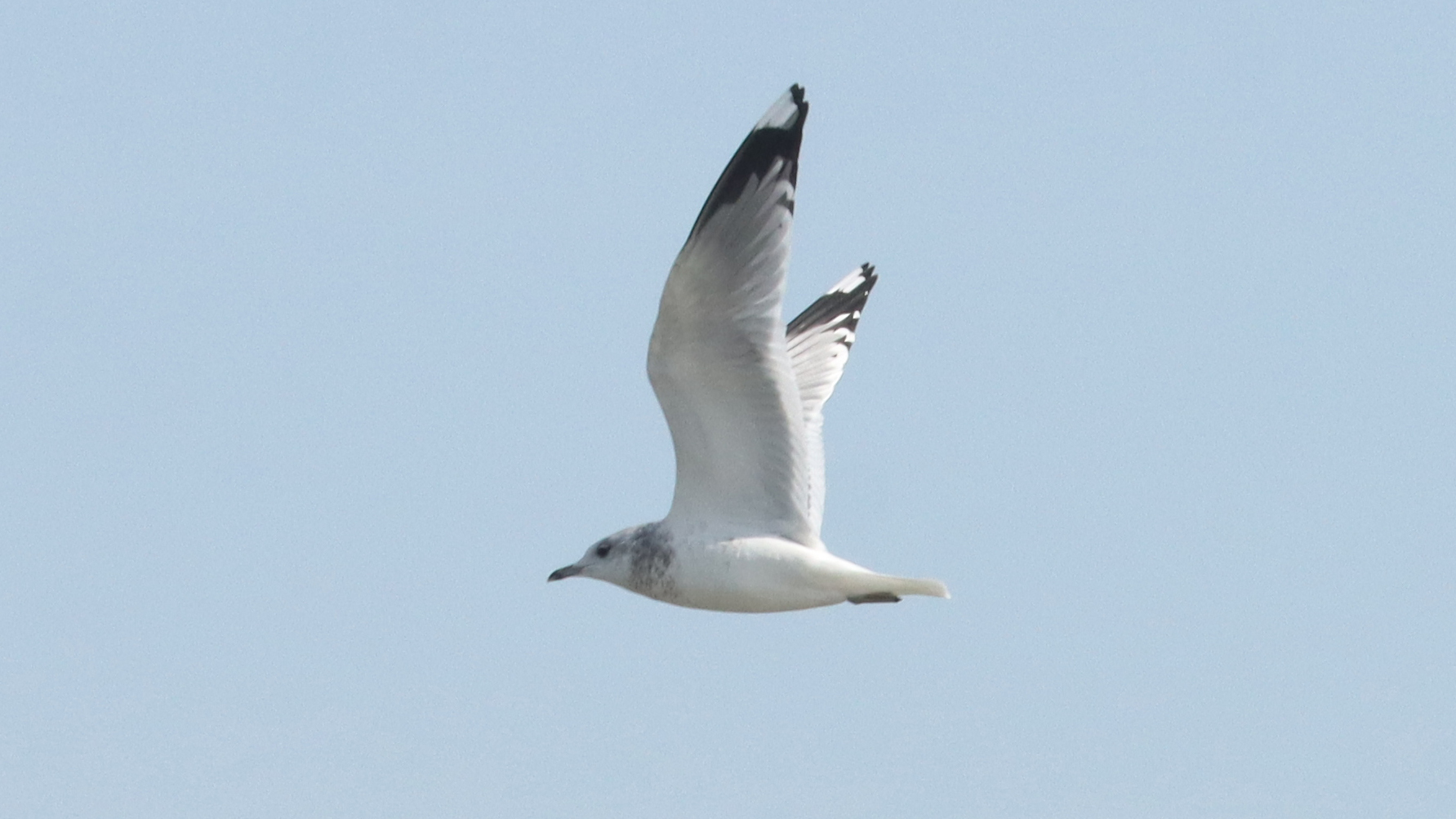
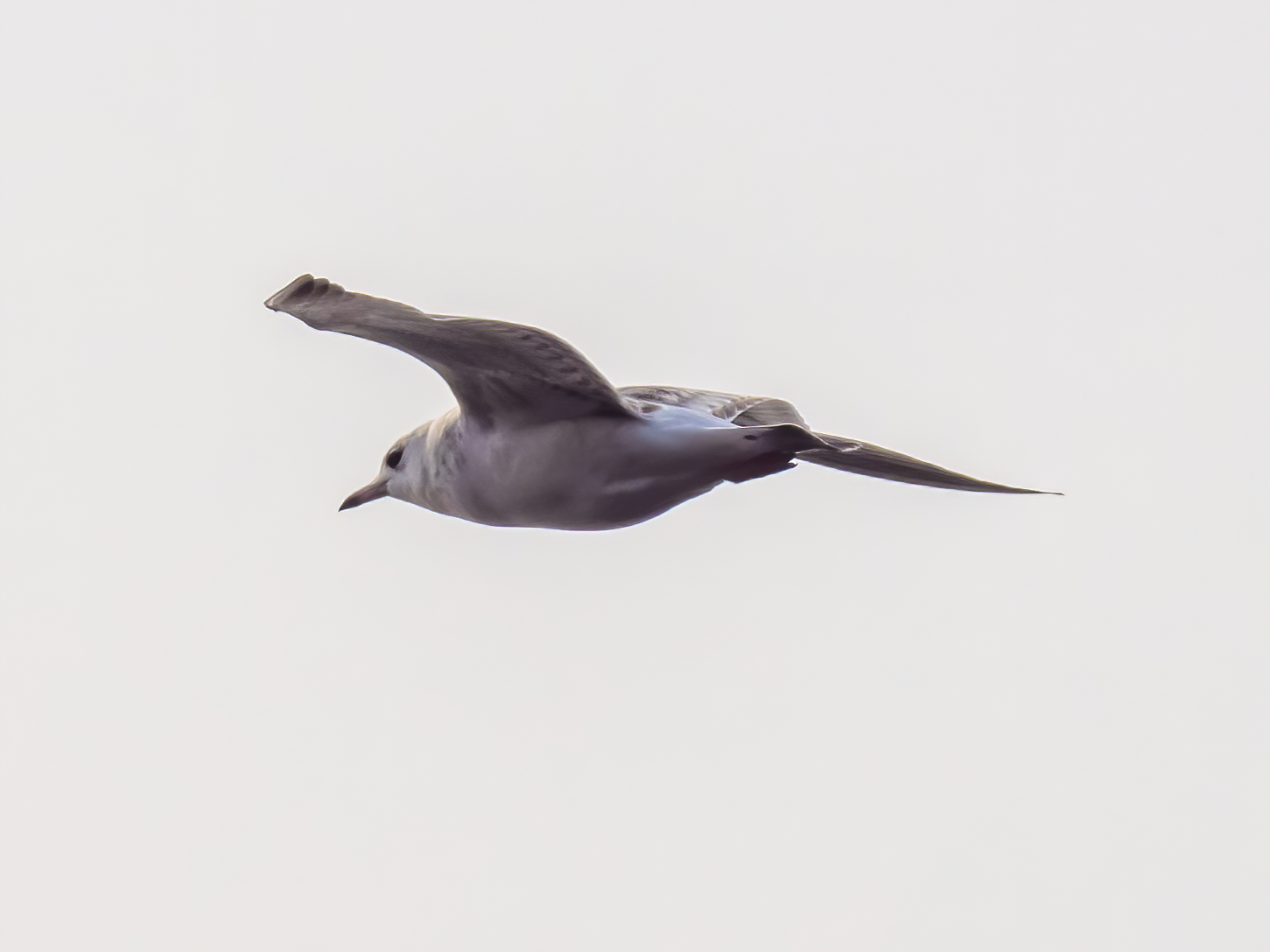
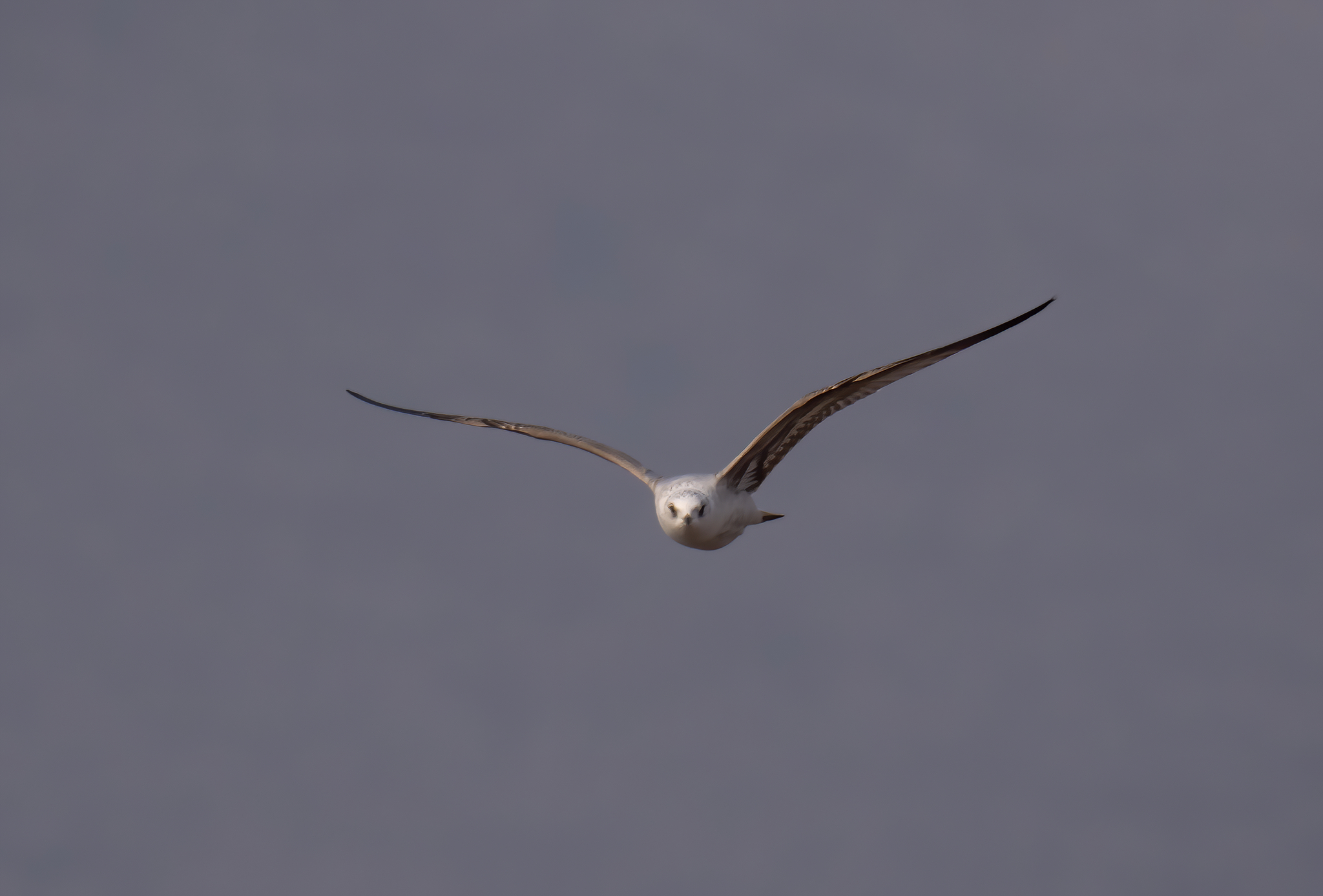
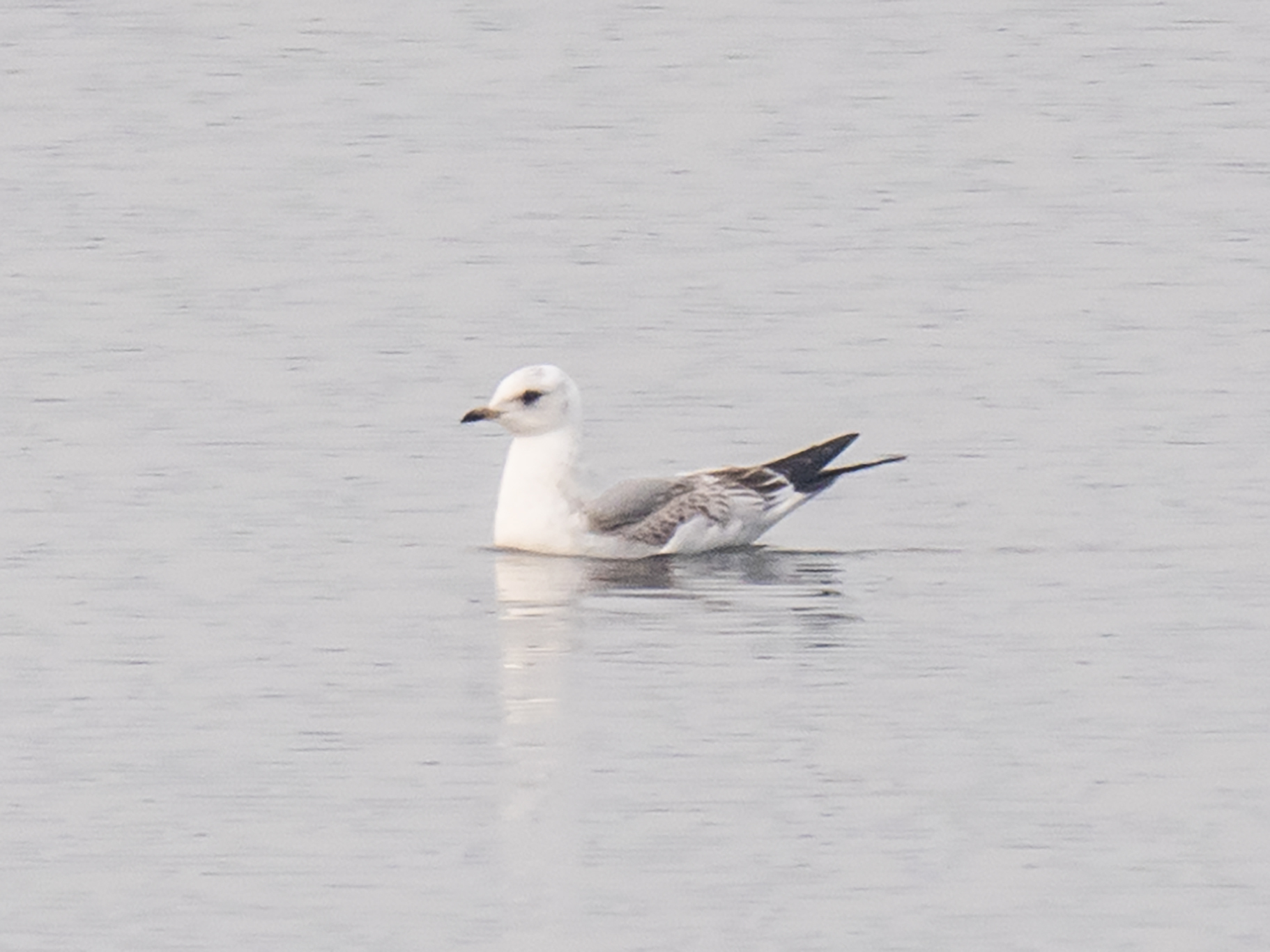
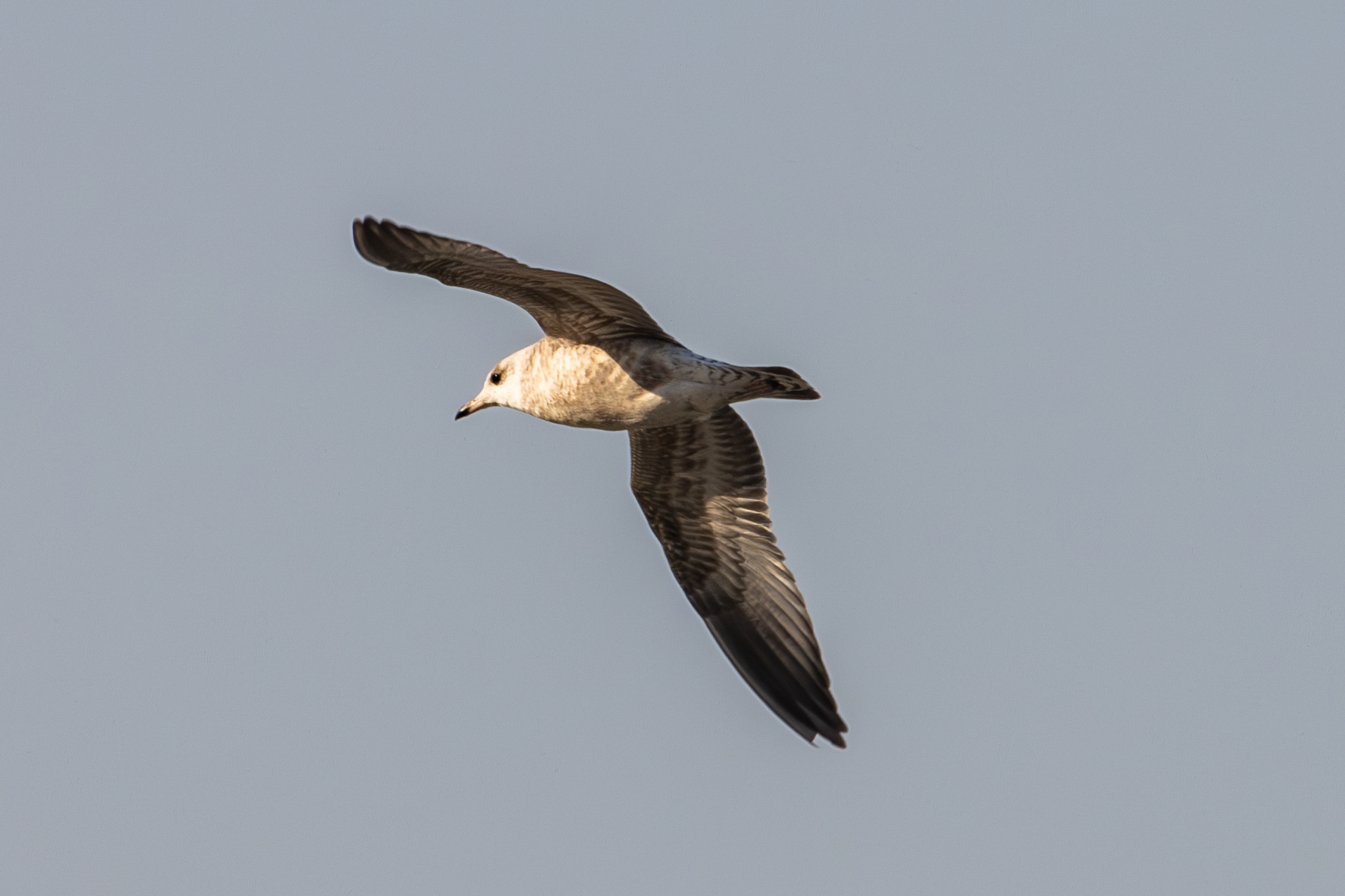
This medium-sized gull measures 40–46 cm in length with a wingspan of 100–115 cm, making it noticeably smaller than the herring gull and slightly smaller than the ring-billed gull. Adults have grey upperparts and white underparts, with a relatively short, tapered bill that is unmarked during breeding season and shows a greenish-yellow hue. The legs are yellow in summer, becoming duller in winter. The wingtips are black with distinctive white 'mirrors' on the outer primaries (p9 and p10). In winter plumage, the head becomes streaked with grey, and the bill often develops a poorly defined dark band near the tip. Juveniles have scaly black-brown upperparts and pink legs that gradually turn grey before becoming yellow. They reach maturity after three years, though the Kamchatka subspecies may take up to four years. The call is a distinctive high-pitched, laughing cry.
Identification
Field identification hinges on size and bill structure. Compared to the herring gull, this species is distinctly smaller with more rounded wingtips. The ring-billed gull is a frequent source of confusion; the common gull has a shorter, more tapered bill that lacks the prominent dark ring of the ring-billed, though winter birds can show a subtle dark band. The greenish-yellow bill color is paler and more uniform than the ring-billed's. In flight, the white mirrors on the primaries are smaller than those of the short-billed gull. First-winter birds show neat wing patterns and scaly upperparts, while their pink legs distinguish them from similar-aged larger gulls. The three-year immature plumage sequence is also characteristic.
Distribution & Habitat
Breeding occurs across the northern Palearctic from Iceland through Scotland and Scandinavia eastwards to Kamchatka and northeast Siberia. The species is mainly migratory, with wintering areas including Europe, the Mediterranean, Black and Caspian seas, Persian Gulf, Sea of Okhotsk, Japan, the Korean Peninsula, and southeast China. Northwest European populations are at least partially resident. In North America, the species is a scarce winter visitor to coastal eastern Canada and a rare vagrant to the northeastern United States. The Kamchatka gull subspecies is occasionally recorded in northwestern North America, primarily in spring, with a single autumn record from Newfoundland.
Behavior & Ecology
Breeding typically occurs colonially, though solitary pairs are also found. Nests are constructed on the ground or in small trees near water or marshes, lined with vegetation. Clutches usually contain three eggs, though one or two are possible, incubated by both parents for 24–26 days. Chicks are precocial but remain near the nest, receiving care from both adults until fledging at around 35 days. As omnivores, they scavenge and hunt small prey, feeding on a varied diet typical of gulls. The global population is estimated at approximately one million breeding pairs, with over half concentrated in Europe. In contrast, the short-billed gull population in Alaska numbers only around 10,000 pairs.
Conservation
The species is classified as Least Concern by the IUCN, reflecting its large range and stable population. The global population of roughly one million pairs is considered secure, with European populations comprising the majority. However, as with many coastal birds, they face ongoing threats from habitat degradation, pollution, and disturbance at breeding sites. Climate change effects on coastal and wetland habitats may pose future concerns. The species remains relatively common across its range, though local populations can fluctuate based on environmental conditions and human activities affecting their wetland and coastal habitats.
Culture
The species has accumulated numerous regional names across Britain, typically variations on 'maa', 'mar', and 'mew'. The word 'mew' is related to German 'möwe' and Dutch 'meeuw', ultimately being onomatopoeic in origin. In Norse-influenced regions, names like 'maw' or 'sea-maw' were used, with the old Norfolk form being 'mow'. The word 'gull' derives from a Celtic root, with the Welsh form 'gwylan' still used today. The name 'common sea-mall' was employed by John Ray, and Thomas Pennant coined the name 'common gull' in 1768, considering it the most numerous of its genus at the time. These names reflect the species' long association with coastal communities throughout northern Europe.
Source: Wikipedia · CC BY-SA 3.0
Taxonomy
- Order
- Charadriiformes
- Family
- Laridae
- Genus
- Larus
- eBird Code
- mewgul
Subspecies (3)
-
Larus canus canus
breeds Iceland, northern British Isles, Scandinavia, and patchily in central Europe to White Sea (far northwestern Russia); winters to northern Africa
-
Larus canus heinei
breeds northwestern Russia from White Sea to Lena River (central Siberia); winters to Mediterranean, Black Sea, and Caspian Sea
-
Larus canus kamtschatschensis
breeds northeastern Siberia and Kamchatka (northeastern Siberia); winters Sea of Okhotsk (southeastern Russia) southward to southeastern China and Taiwan
Data Sources
CBR Notes: 中文名由海鸥改为普通海鸥
Species description from Wikipedia, licensed under CC BY-SA 3.0.
Bird images and sounds sourced from GBIF, contributed by citizen scientists worldwide under Creative Commons licenses.
Taxonomy data from AviList 2025.