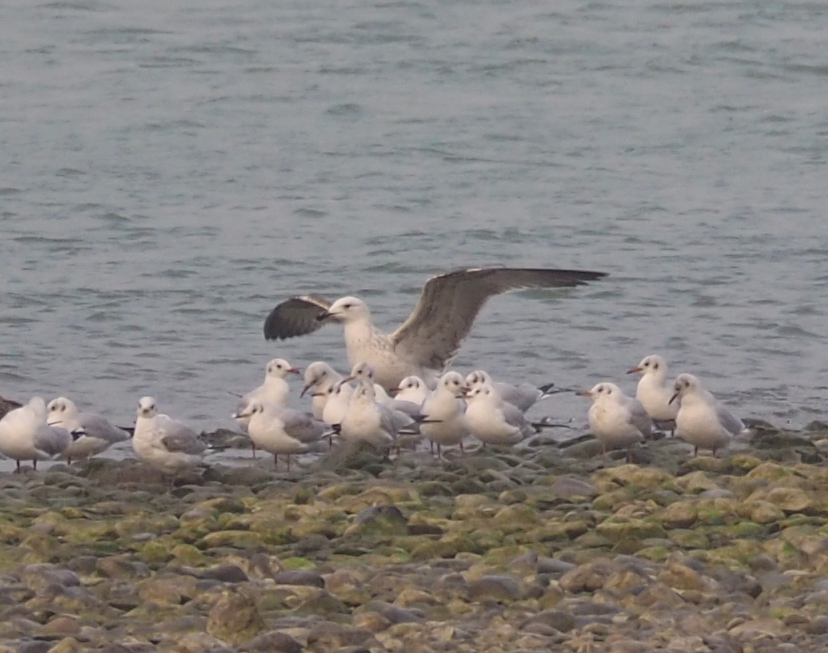
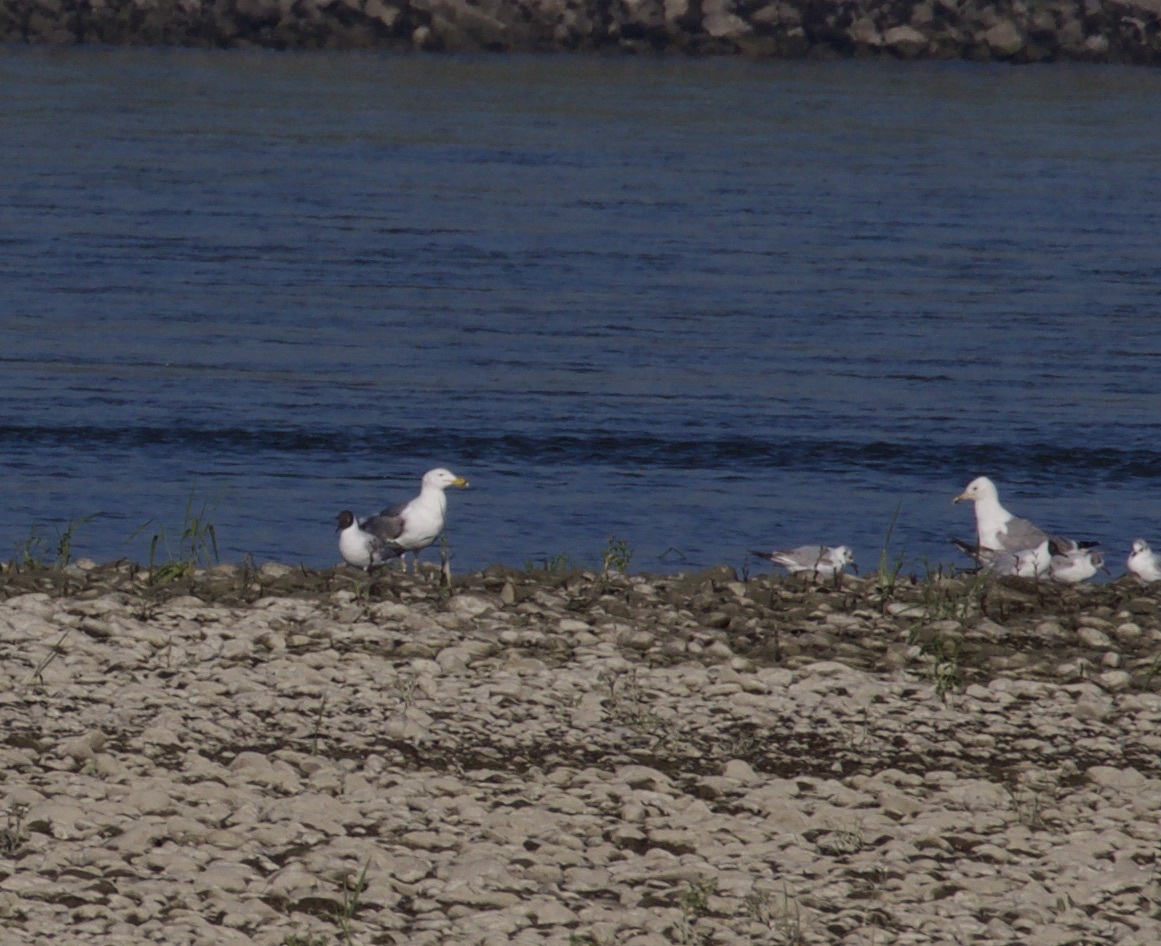
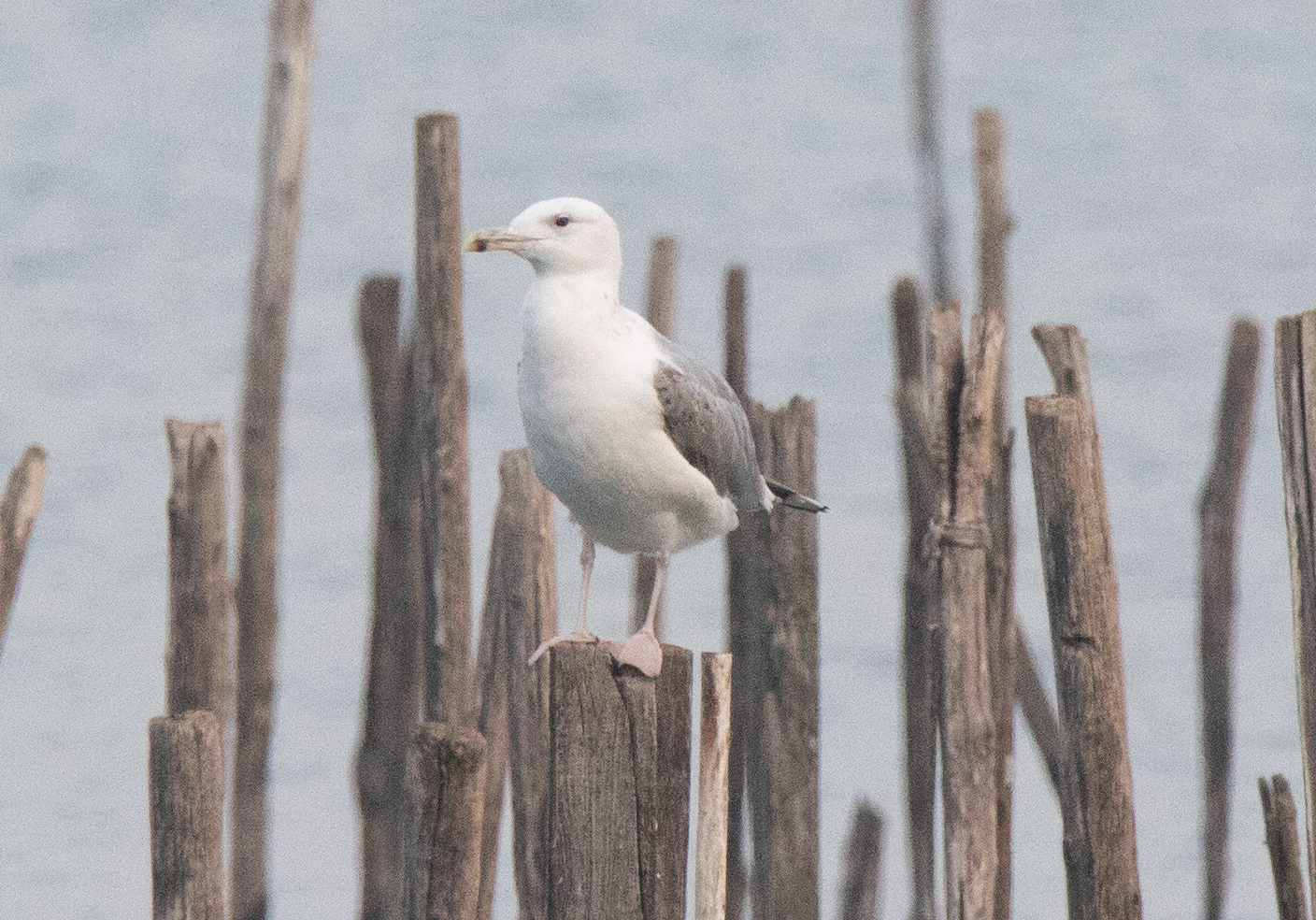
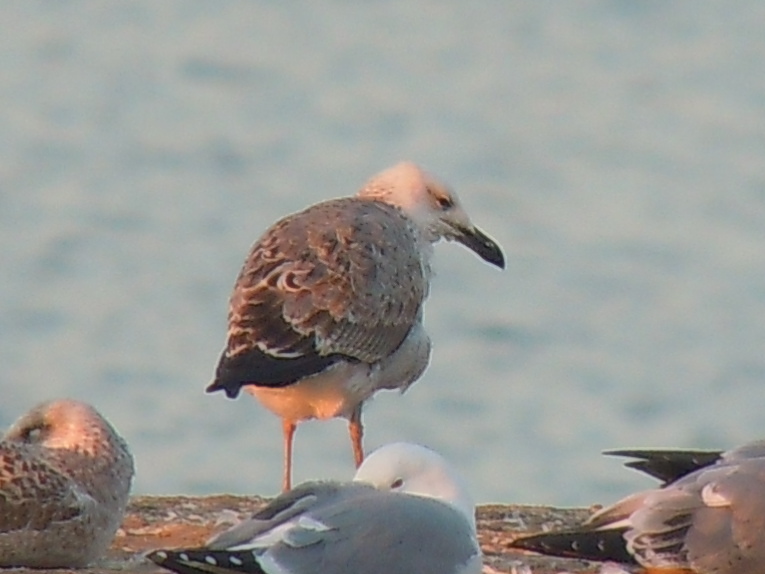
Caspian Gull
Larus cachinnans
黄腿银鸥
Introduction
A large gull belonging to the herring and lesser black-backed gull complex. It breeds around the Black and Caspian Seas, extending eastward across Central Asia to northwest China. In Europe, its range has expanded north and west to include Poland, eastern Germany, southern Russia, and Ukraine year-round. Distinguished by its long, slender bill, longer limbs compared to related species, and specialized foraging behavior of flying into steppes to hunt rodents during breeding season. Some populations migrate south to the Red Sea and Persian Gulf, while others disperse into Western Europe.
Description
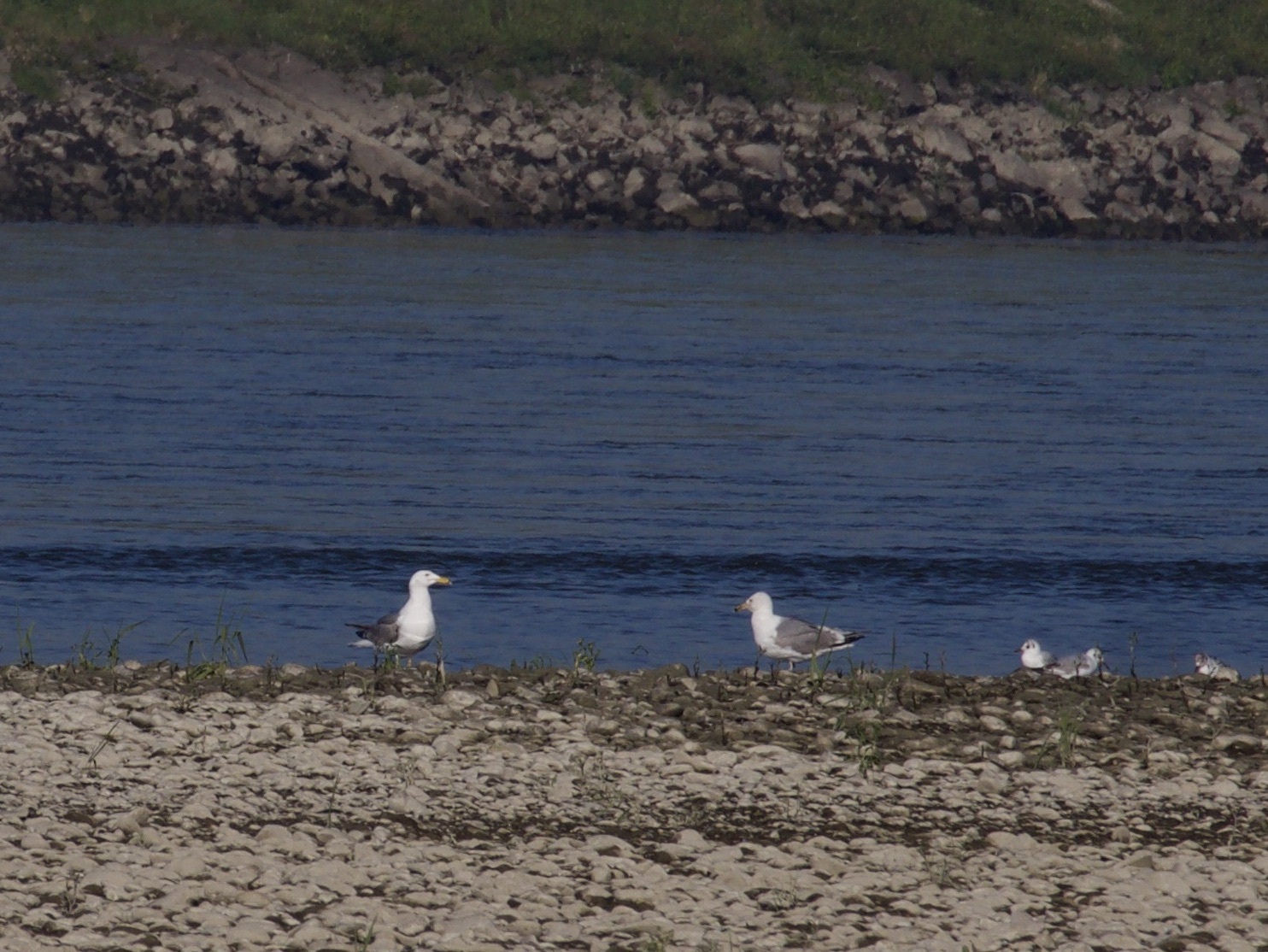
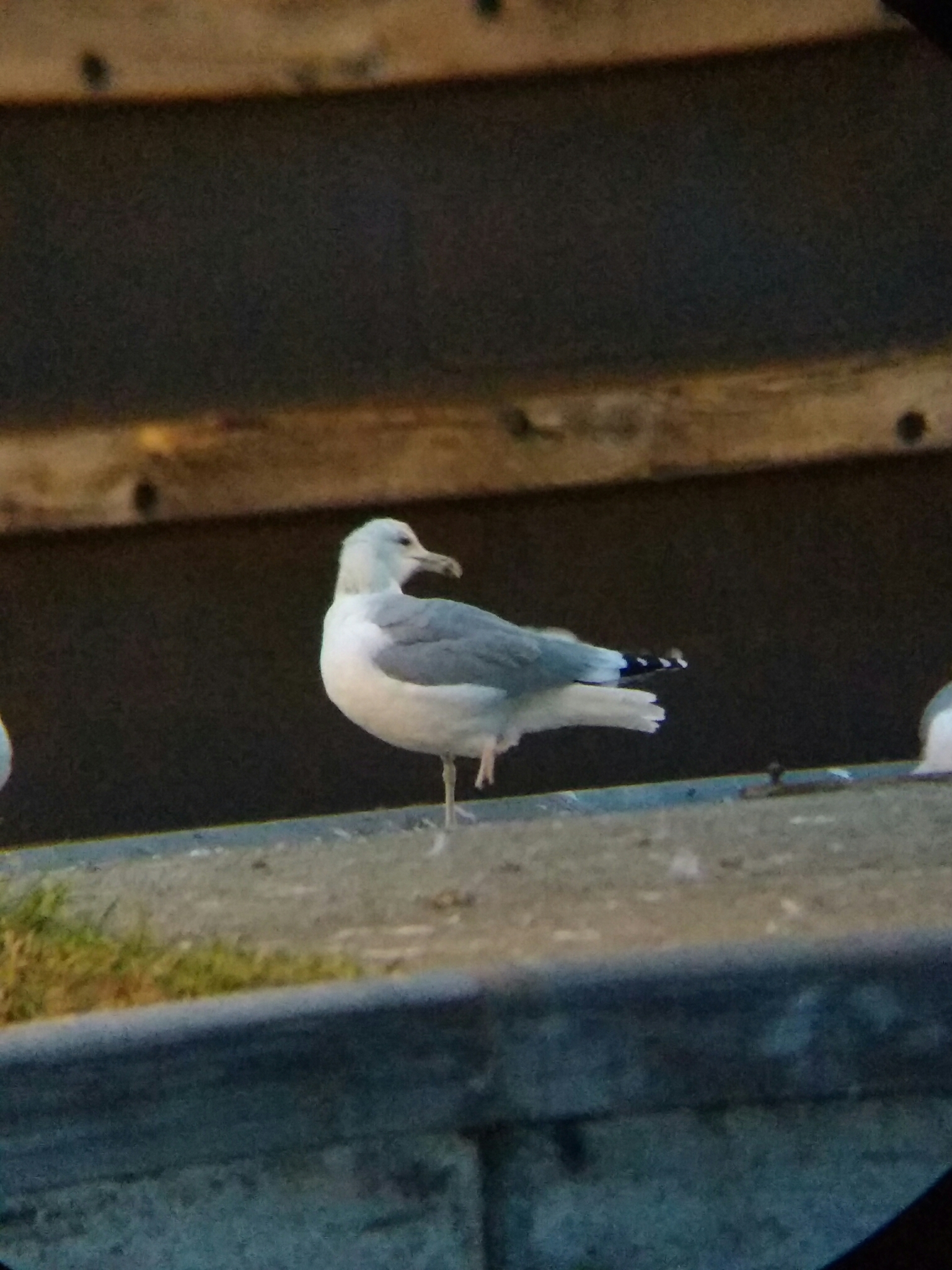
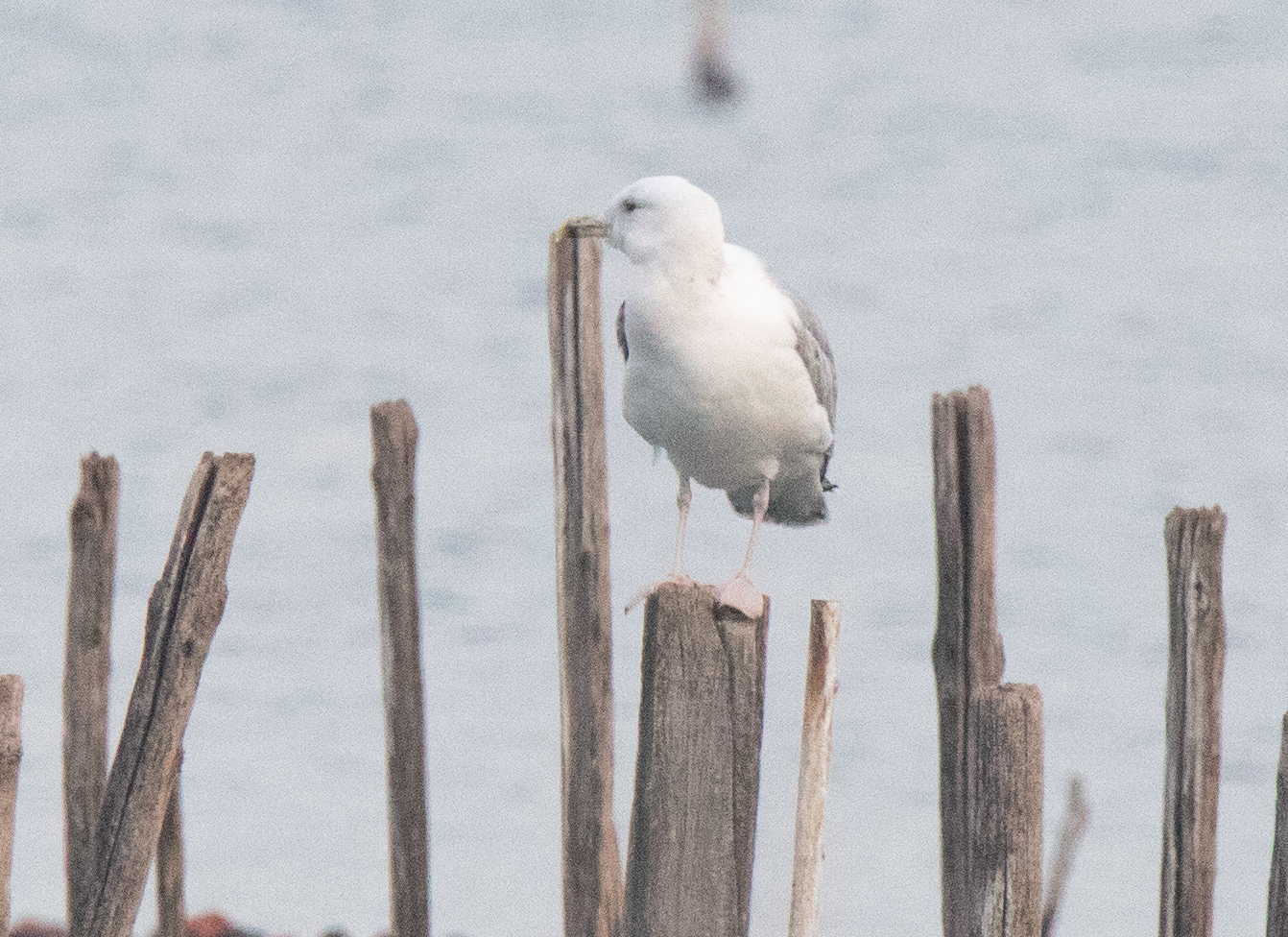
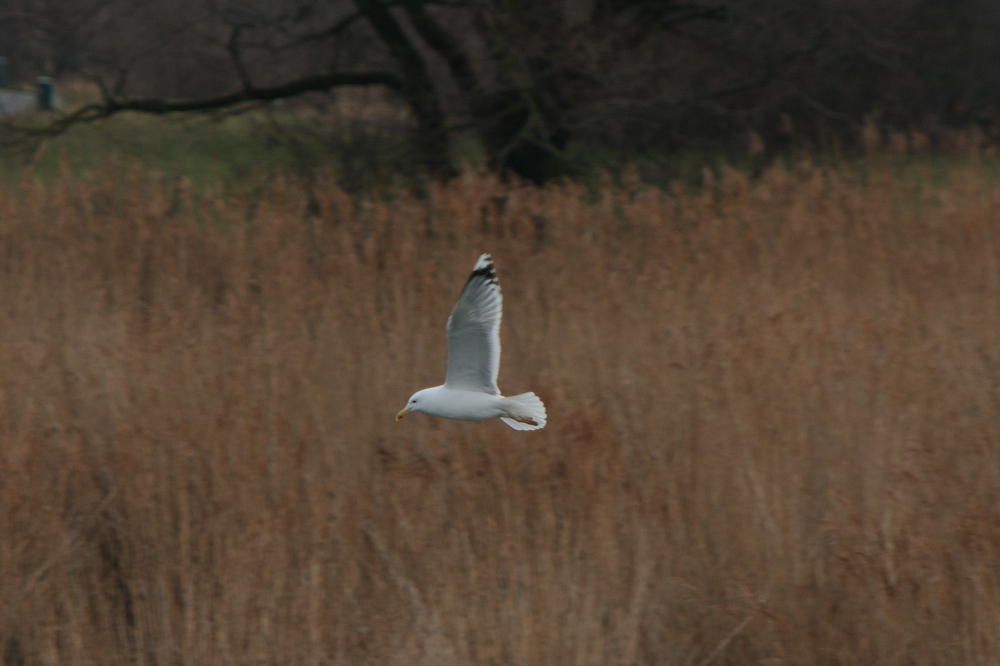
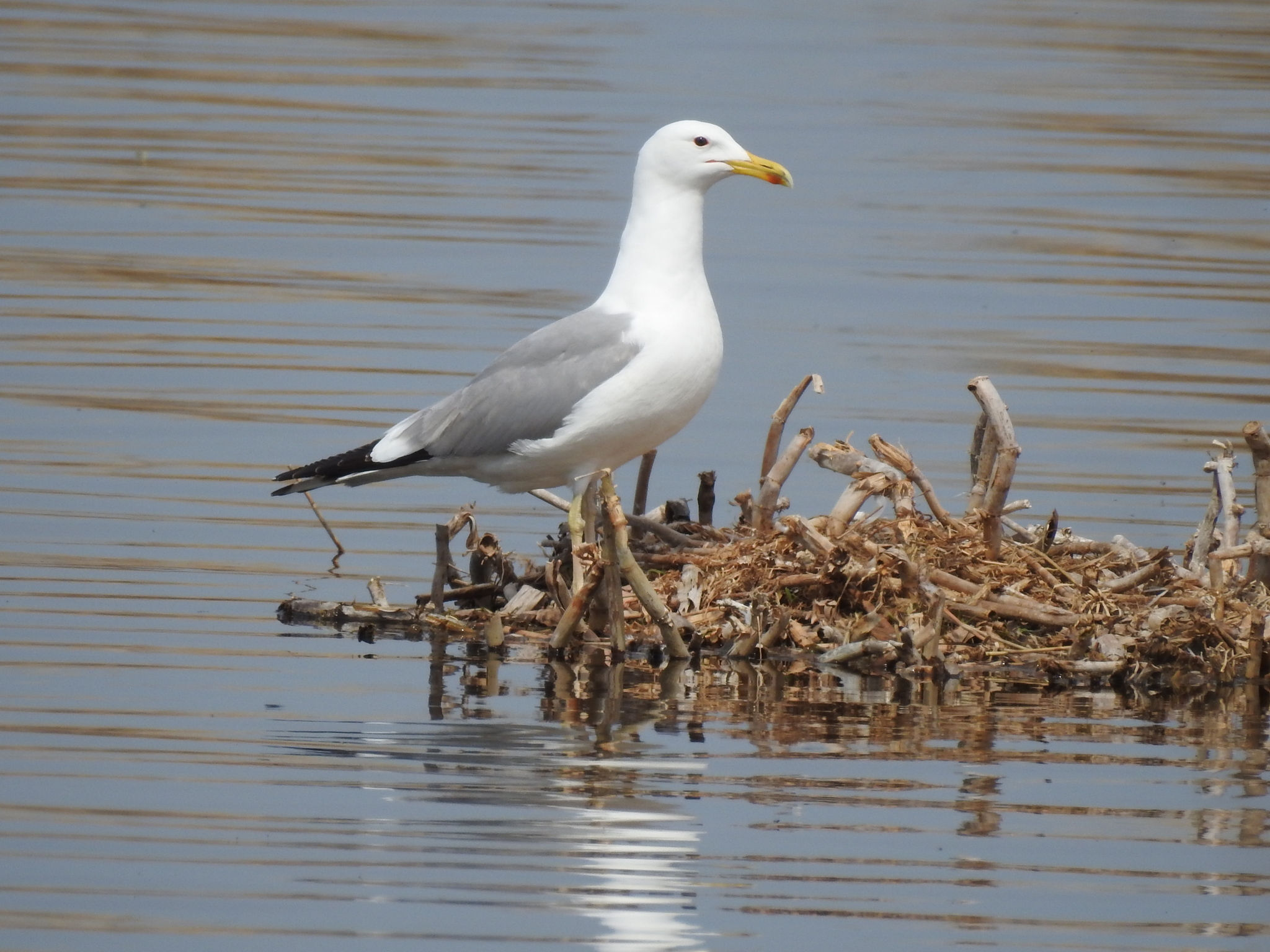
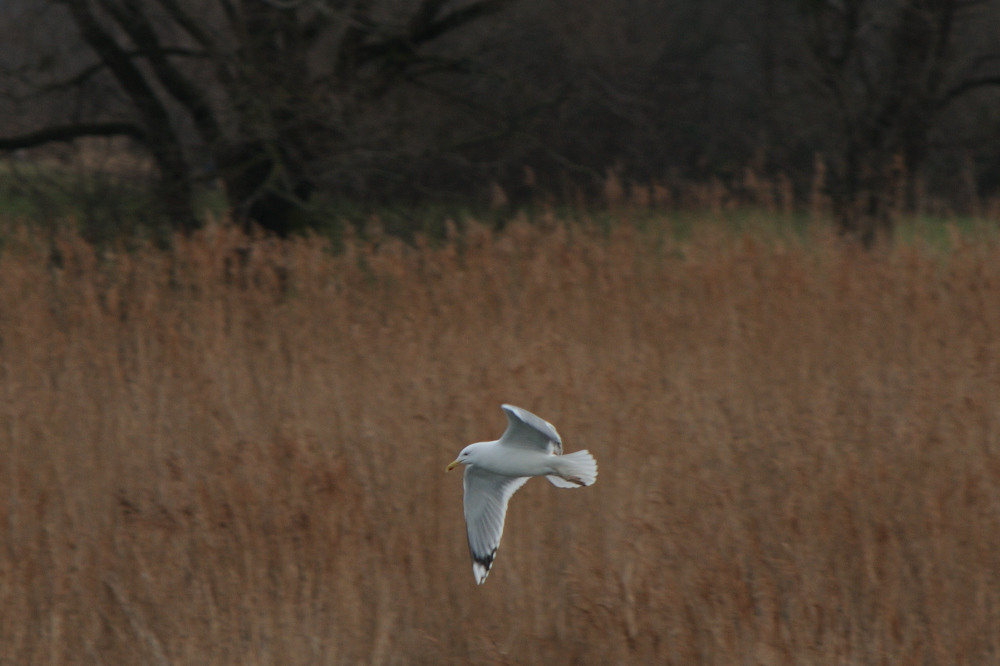
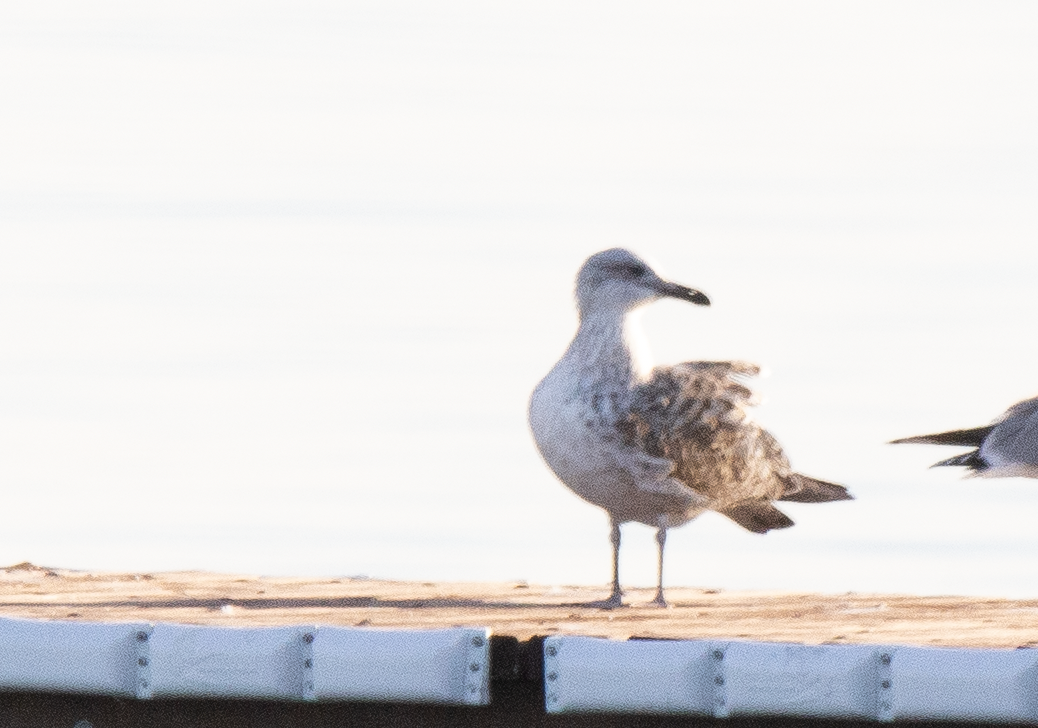
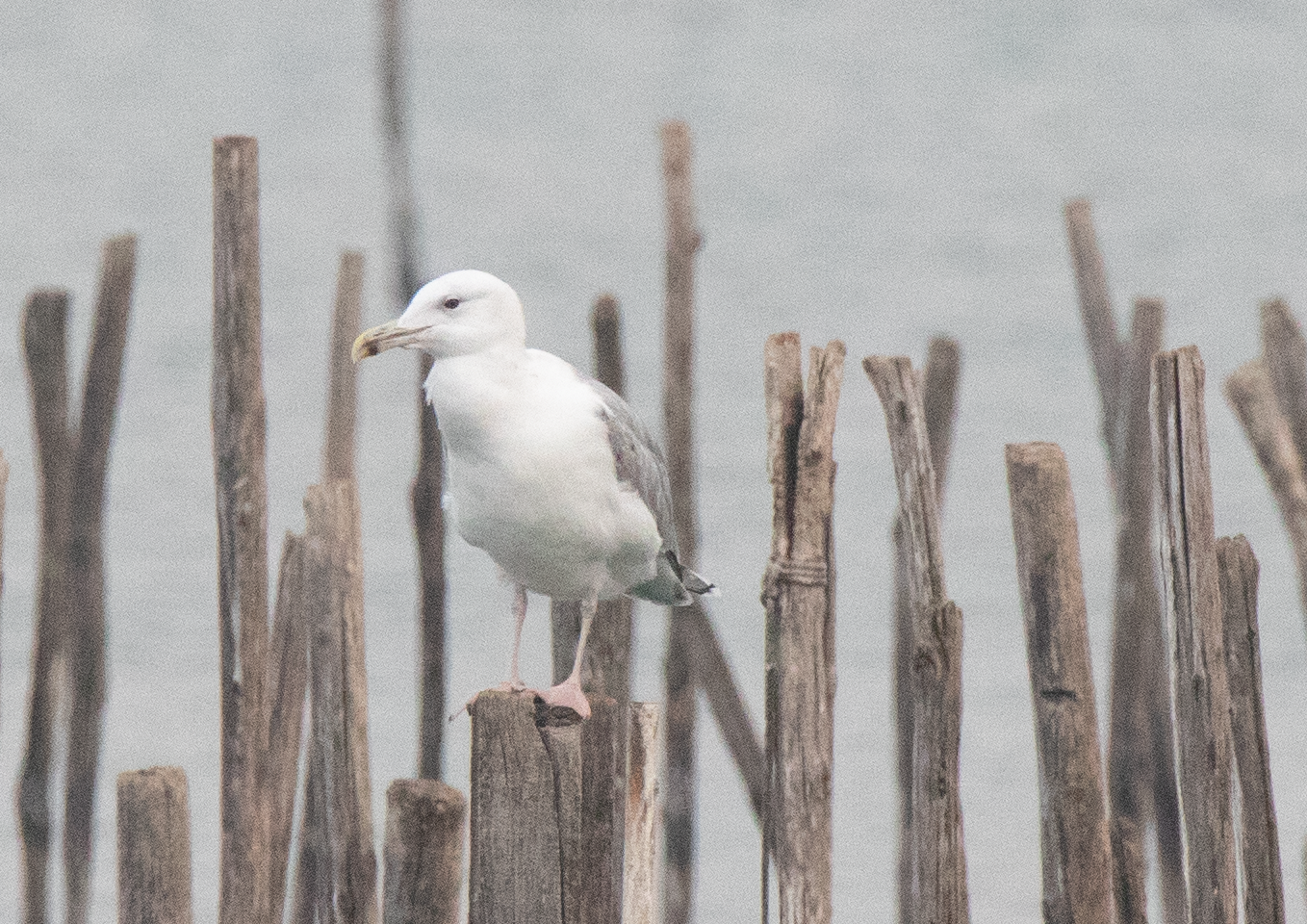
A large gull measuring 56-68 cm in length with a 137-155 cm wingspan and body mass of 680-1,590 g. It has a long, slender bill accentuated by a sloping forehead. The legs, wings, and neck are proportionally longer than those of herring or yellow-legged gulls. The eye is small and typically dark, while the legs range from pale pink to yellowish. The back and wings are a slightly darker grey than the herring gull but paler than the yellow-legged gull. The outermost primary feather has a distinctive large white tip and white tongue running up the inner web. First-winter birds have a pale head with dark streaking on the rear neck, pale underparts, and greyish upperparts with two pale lines formed by whitish tips on the wing coverts.
Identification
Separated from herring gull by longer legs, wings, and neck, a slightly darker grey back and wings, and a more slender bill with a sloping forehead. Compared to yellow-legged gull, it shows a paler grey back and wings, and different habitat preferences during breeding. First-winter birds are identified by the pale head with dark streaking on the rear neck and the two pale lines across the wing formed by the whitish-tipped wing coverts.
Distribution & Habitat
Breeds around the Black and Caspian Seas, extending east across Central Asia to northwest China. In Europe, now breeds in Poland, eastern Germany, southern Russia, and throughout Ukraine. Some populations migrate south to the Red Sea and Persian Gulf, while others disperse into Western Europe including Sweden, Norway, Denmark, Benelux, and northern France. Small numbers are now regular visitors to Britain, particularly in South-east England, East Anglia, and the Midlands.
Behavior & Ecology
An opportunistic feeder combining scavenging and predation with a varied diet. During the breeding season, frequently hunts rodents such as ground squirrels, flying considerable distances into steppe habitats to find them. Typically nests on flat, low-lying ground near water, contrasting with yellow-legged gull's cliff-nesting habits where ranges overlap. Breeding begins in early April with a clutch of two or three eggs incubated for 27-31 days.
Conservation
IUCN conservation status not assessed in source material.
Culture
No cultural significance, folklore, or mythology documented.
Source: Wikipedia · CC BY-SA 3.0
Taxonomy
- Order
- Charadriiformes
- Family
- Laridae
- Genus
- Larus
- eBird Code
- casgul2
Distribution
breeds inland southern Poland and Hungary eastward through Black, Caspian, and Aral seas to eastern Kazakhstan; winters southeastern Europe, Black Sea, eastern Mediterranean, Persian Gulf, and northern Arabian Sea
Data Sources
CBR Notes: 中文名由黄脚银鸥改为里海银鸥
Species description from Wikipedia, licensed under CC BY-SA 3.0.
Bird images and sounds sourced from GBIF, contributed by citizen scientists worldwide under Creative Commons licenses.
Taxonomy data from AviList 2025.