
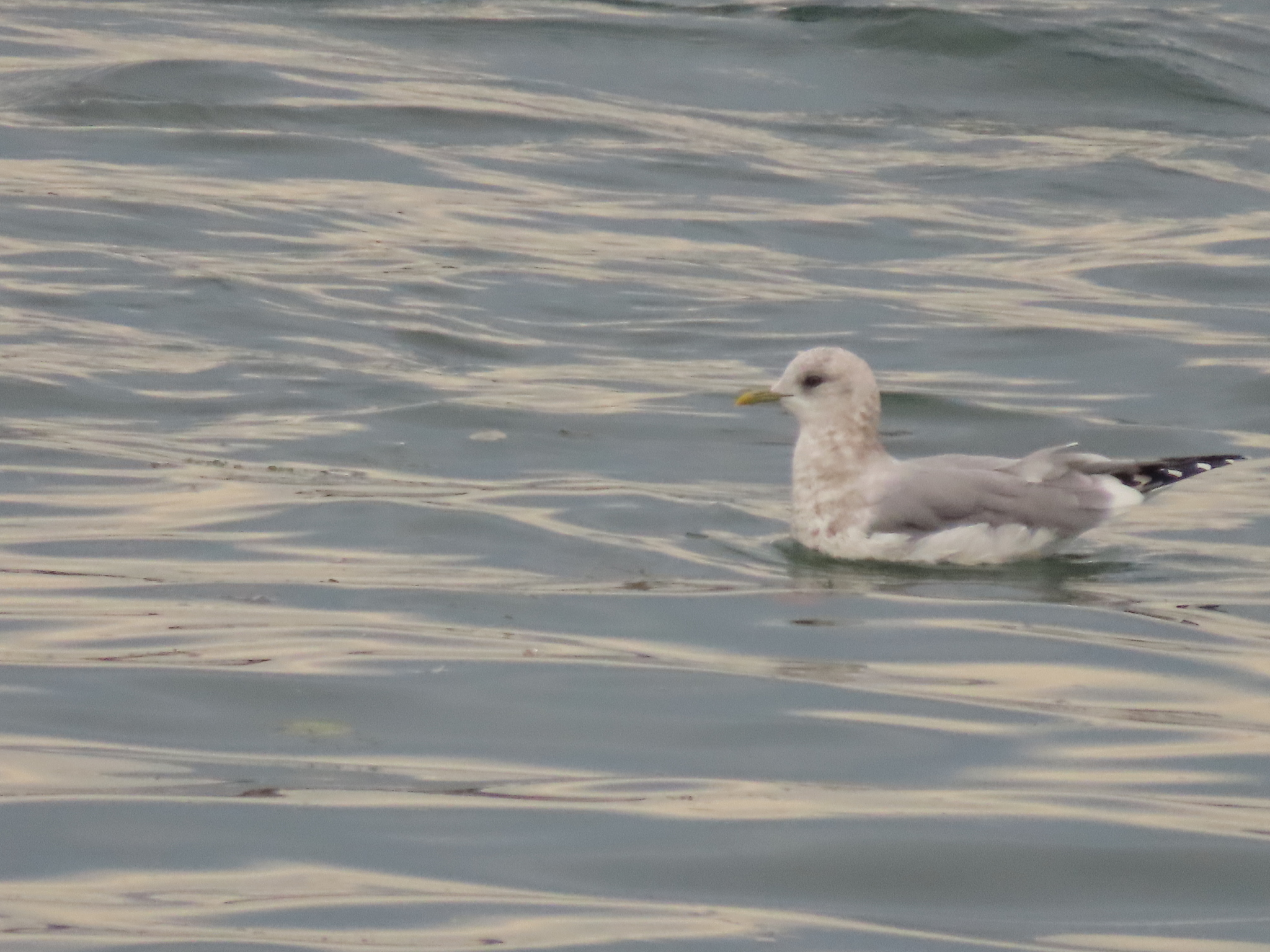
Short-billed Gull
Larus brachyrhynchus
美洲海鸥
Introduction
A medium-sized gull species (Larus brachyrhynchus) that breeds in northwestern North America. Previously classified as conspecific with the Palearctic common gull (Larus canus) under the name 'mew gull' in North America. The American Ornithological Society split the two populations as distinct species in 2021 based on differences in genetics, plumage, morphology and vocalizations. The name 'short-billed gull' was chosen to distinguish it from the broader 'mew gull' terminology now applied to all forms of L. canus.
Description
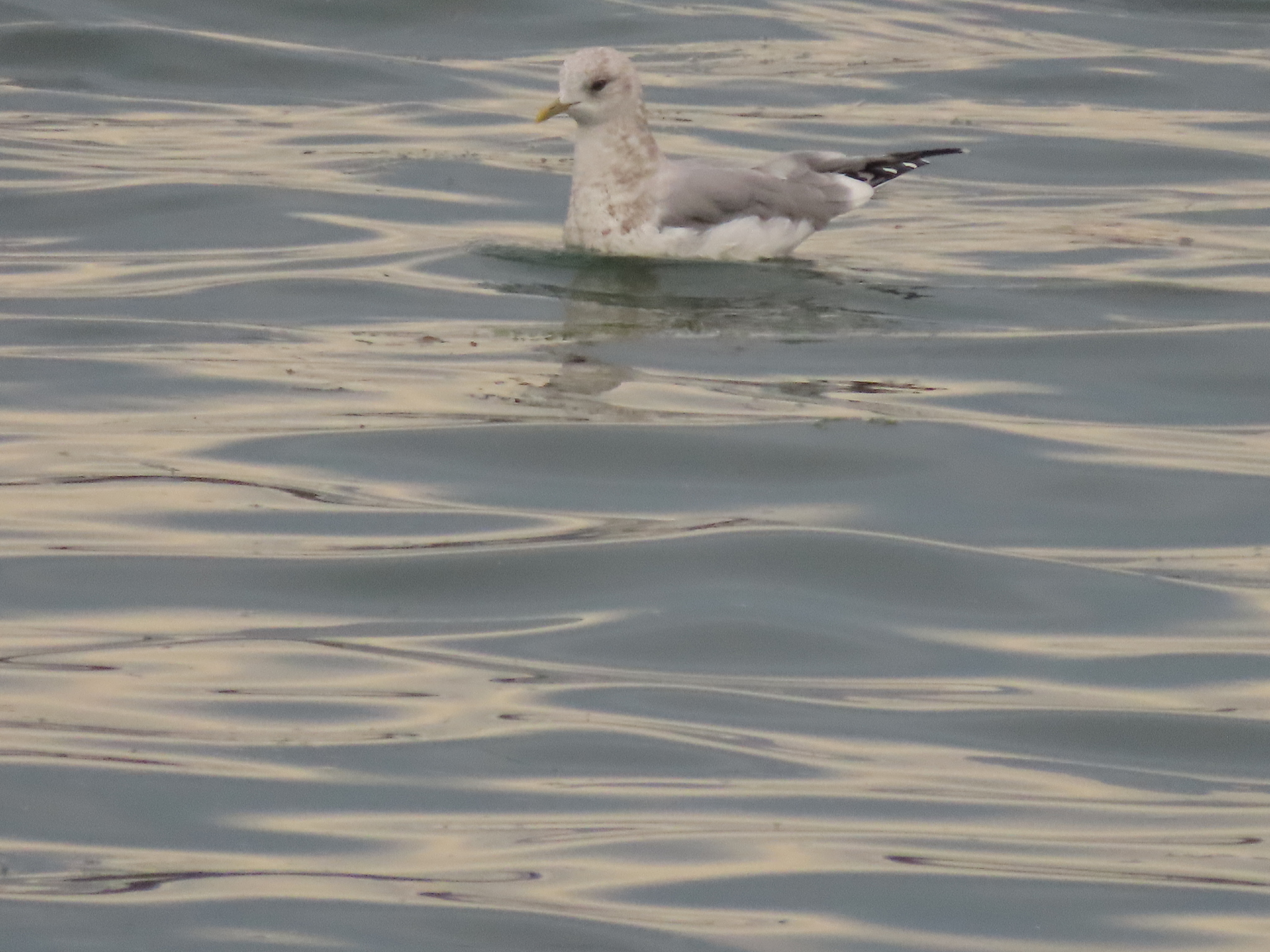
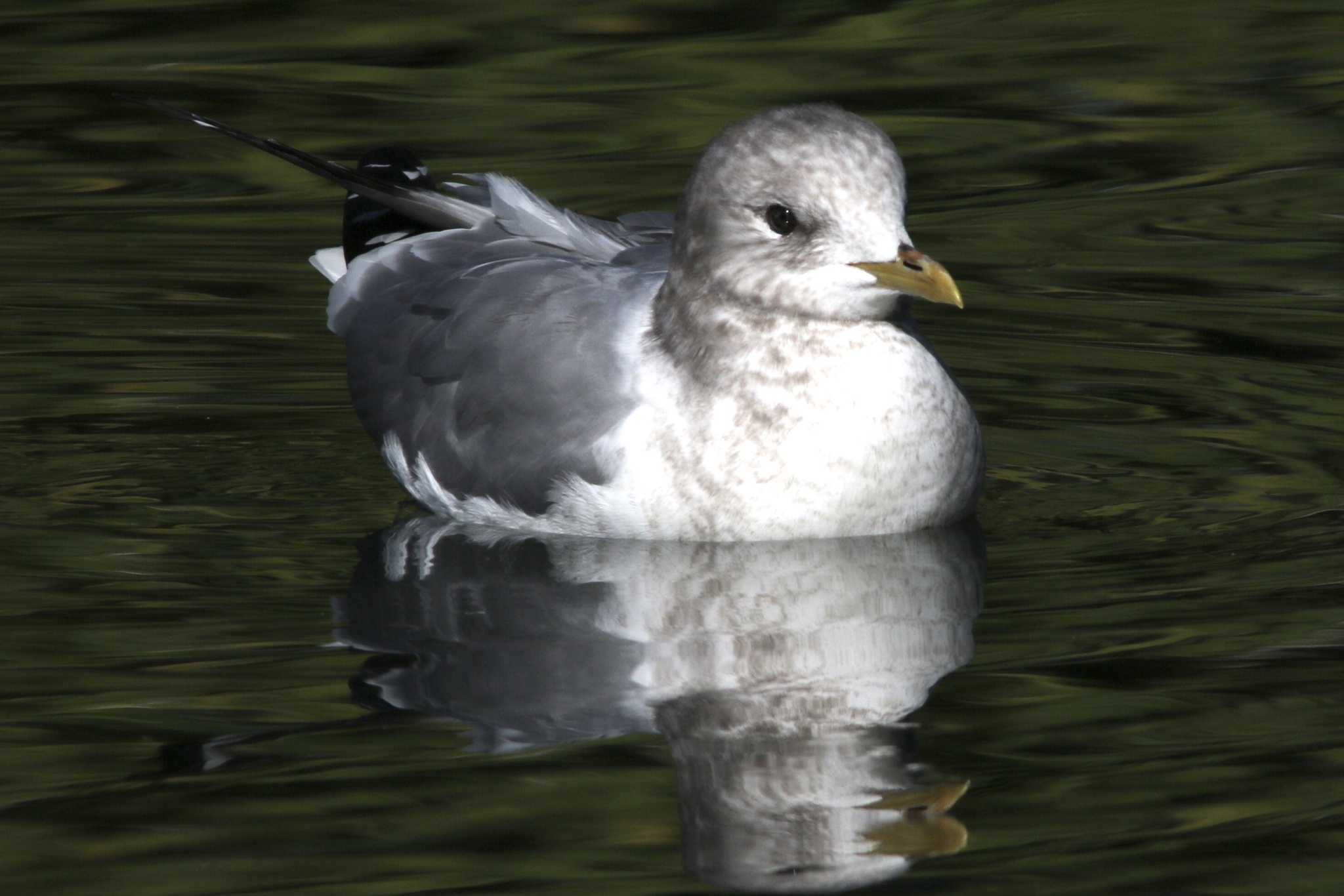
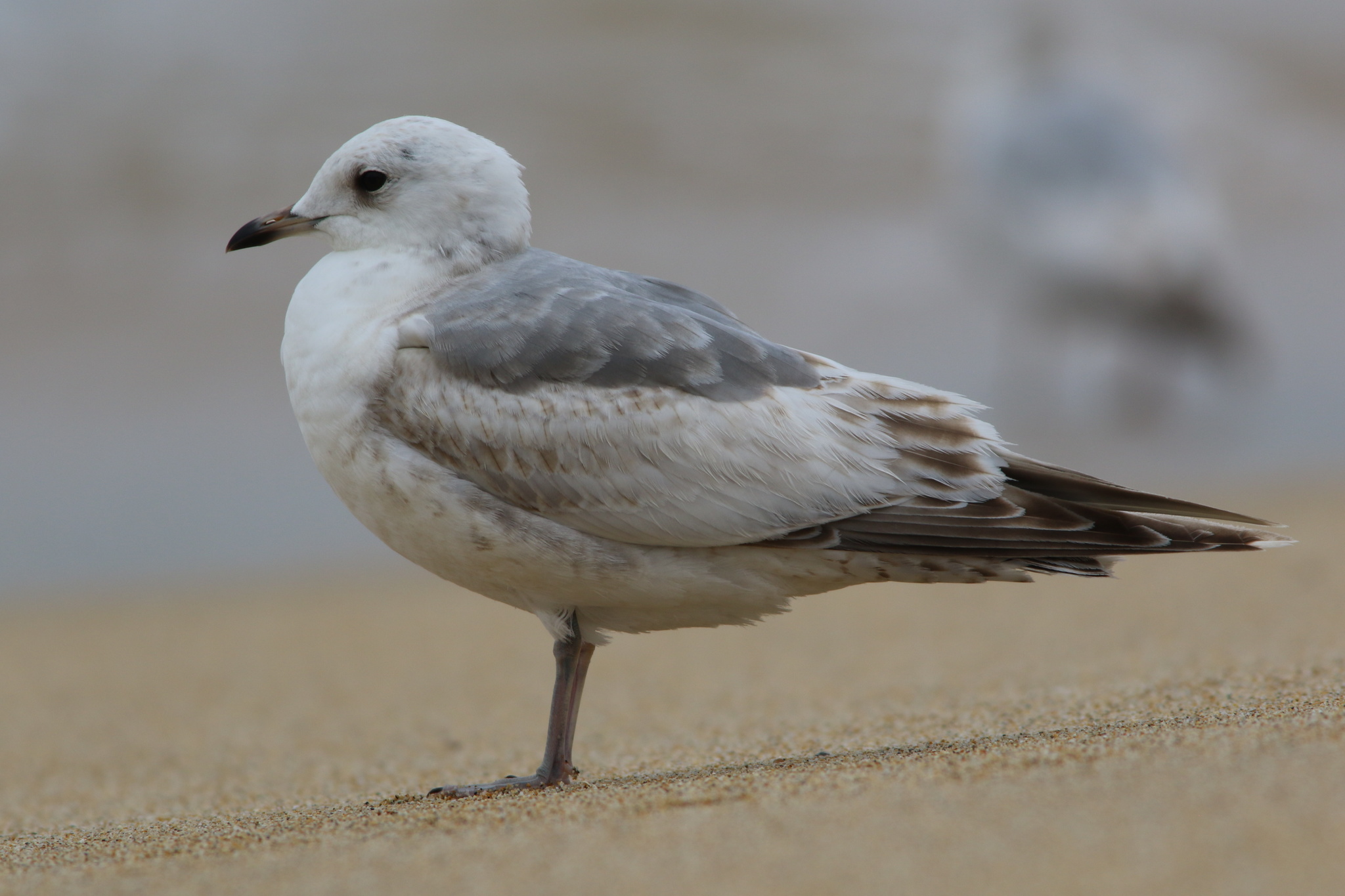
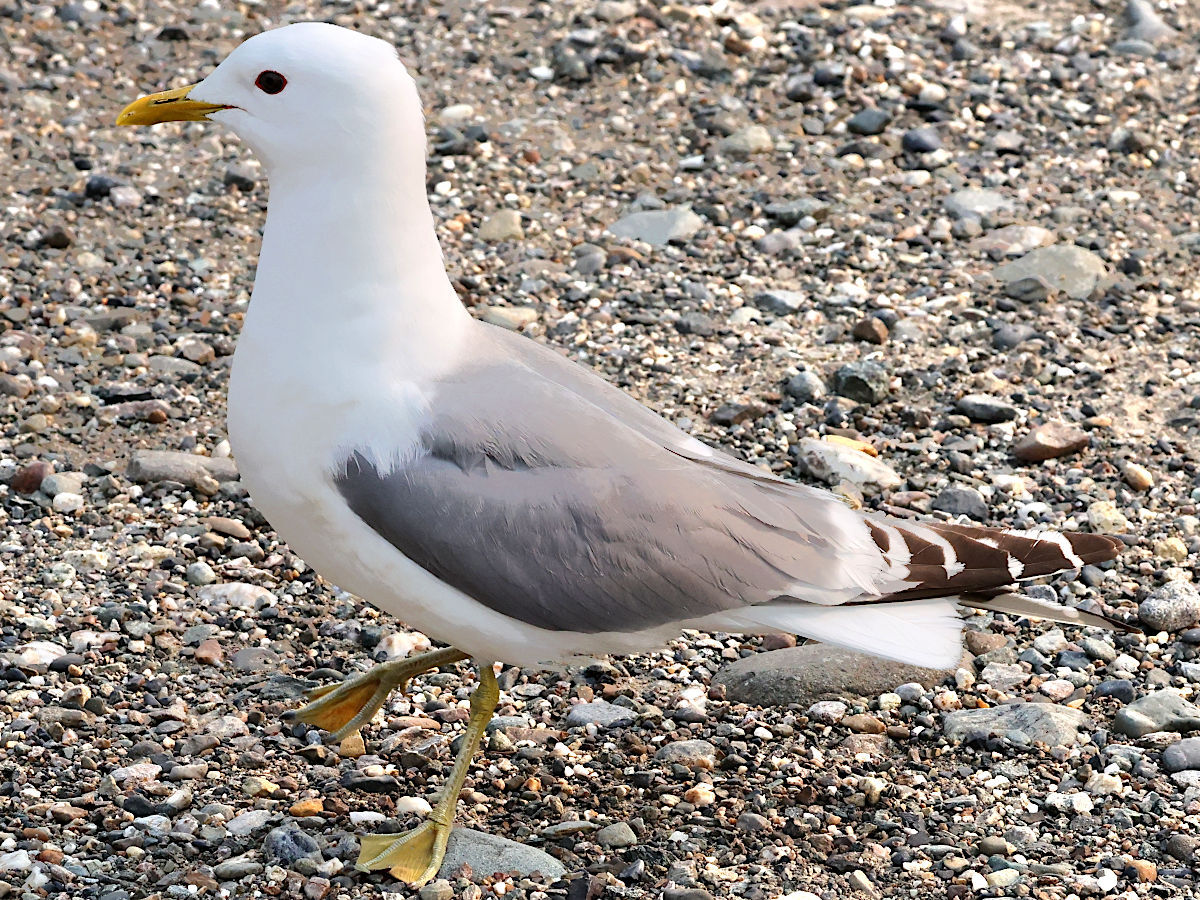
A compact gull measuring 40-45 cm in length with a wingspan of 100-120 cm. Smaller than other members of the common gull complex with a notably shorter bill and relatively longer wings, appearing long-winged and narrow in flight relative to its short body. Adults in breeding plumage display a white head, pale eyes surrounded by distinctive red orbital skin, and unmarked yellow legs and bill. Winter plumage shows brown mottling on the head, grayish orbital skin, and a duller bill with a faint dark marking. Flight feathers feature diagnostic white mirrors on the two outermost primary feathers (p9-10), white 'tongue tips' on p5-8 creating a 'string of pearls' pattern, and a broad white trailing edge. Juveniles are brownish overall with dark brown wingtips and show darker, more smudged markings on the head and neck. Molts to adult plumage over three years.
Identification
Smaller and shorter-billed than common gulls with proportionally longer wings. Best distinguished in flight by wing pattern: short-billed gulls have larger white mirrors on p9-10, a broader white trailing edge, black markings often present on p4, and white tongue tips extending to p8. Common gulls show more extensive black wingtips with smaller mirrors, narrower trailing edges, and typically lack both black on p4 and the white tongue tip on p8. Juveniles are darker and more smudged overall compared to the paler, more finely-marked juveniles of common gulls, which more closely resemble ring-billed gull juveniles at that age.
Distribution & Habitat
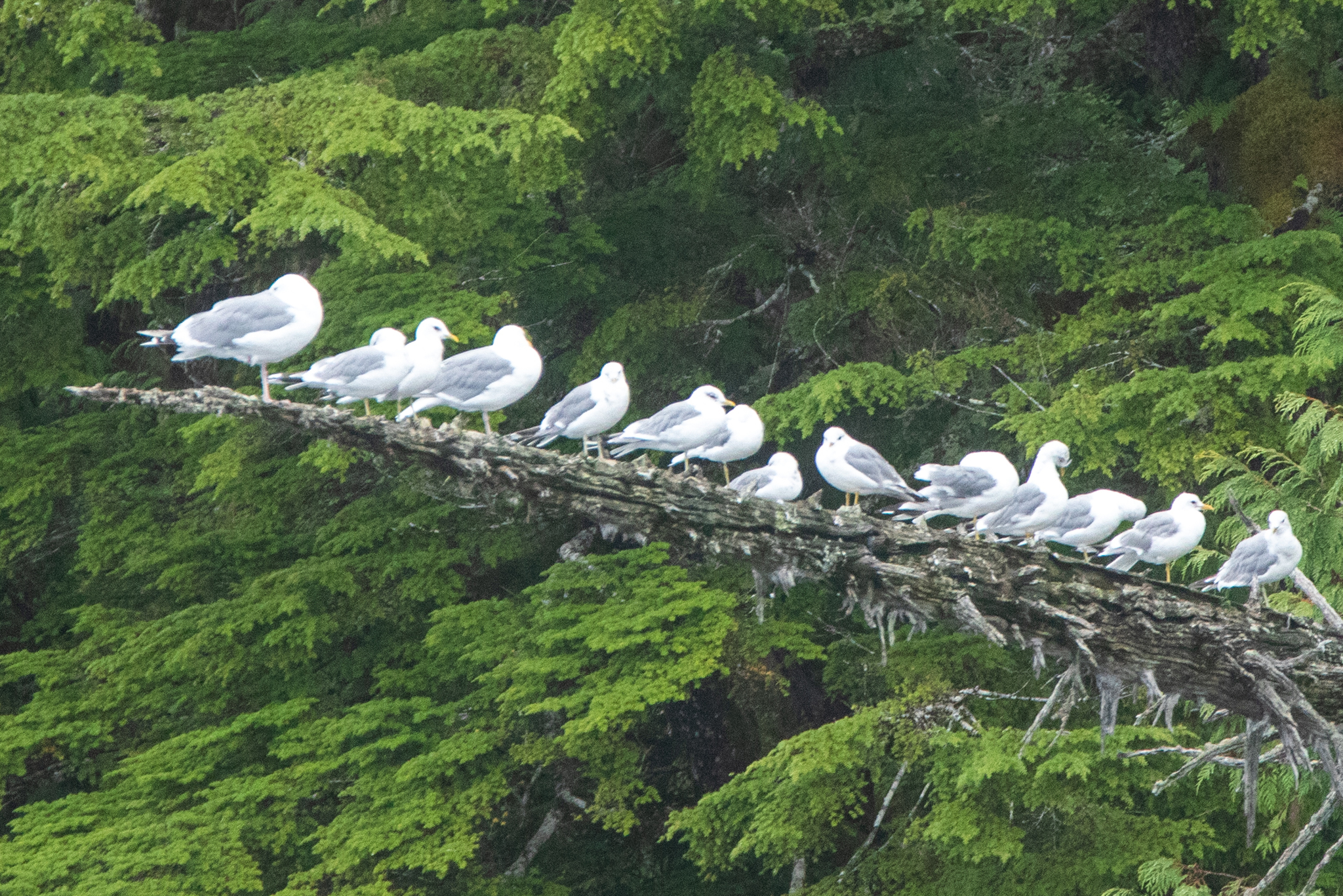
Breeds in colonies along coastal areas and inland wetlands across Alaska and Northwest Canada. Most individuals winter along the Pacific coast, ranging south to the Sacramento Valley, with smaller numbers reaching Baja California, the Northern Rockies, and Ontario. A very rare visitor to eastern North America and an exceptional vagrant to East Asia. European records consist of two individuals: one on the Azores in 2003 and another on the Faroe Islands in 2026.
Behavior & Ecology
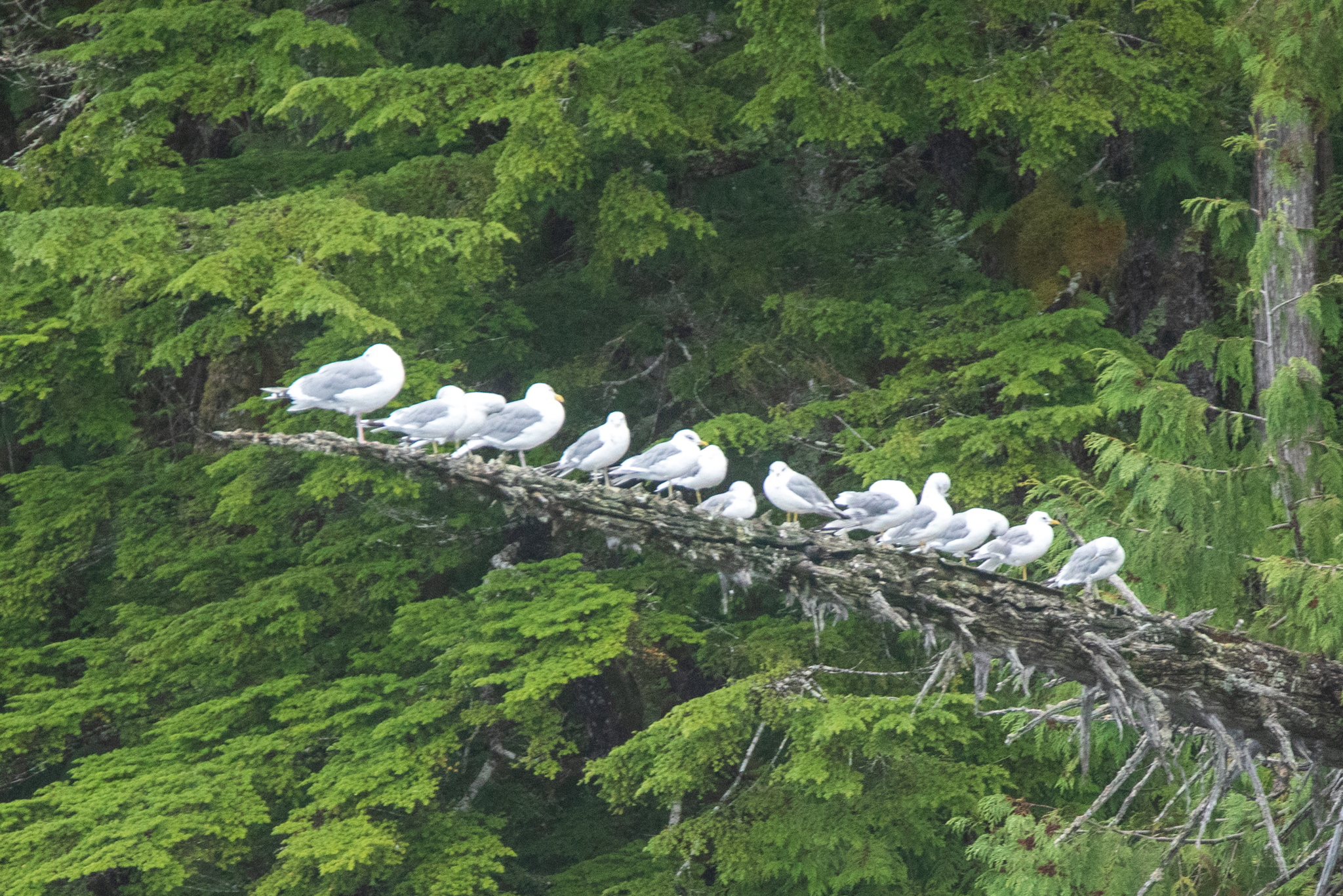
Breeds colonially in coastal and wetland habitats. Diet consists primarily of small fish, insects, and worms. During winter, forages singly or in small groups, often associating with mixed flocks of other gull species. Takes three years to reach full breeding plumage. First-winter juveniles develop pink coloration at the bill base with a black tip. Second-year birds closely resemble adults but may retain brown wing covert feathers and black tertial markings without white wingtip mirrors except on p10. Third-year birds approach adult appearance but may show dark markings on primary coverts, secondaries, underwing coverts and tail, with more extensive black on the wingtips.
Conservation
No specific conservation assessment provided in source material.
Culture
No cultural significance or folklore documented in source material.
Source: Wikipedia · CC BY-SA 3.0
Taxonomy
- Order
- Charadriiformes
- Family
- Laridae
- Genus
- Larus
- eBird Code
- mewgul2
Distribution
breeds Alaska mainland eastward to northwestern Alberta and southward to southwestern British Columbia (southwestern Canada); winters Pacific coast from southern British Columbia southward to northwestern Baja California (northwestern Mexico)
Vocalizations
Data Sources
Species description from Wikipedia, licensed under CC BY-SA 3.0.
Bird images and sounds sourced from GBIF, contributed by citizen scientists worldwide under Creative Commons licenses.
Taxonomy data from AviList 2025.