Bay-backed Shrike
Lanius vittatus
褐背伯劳
Introduction
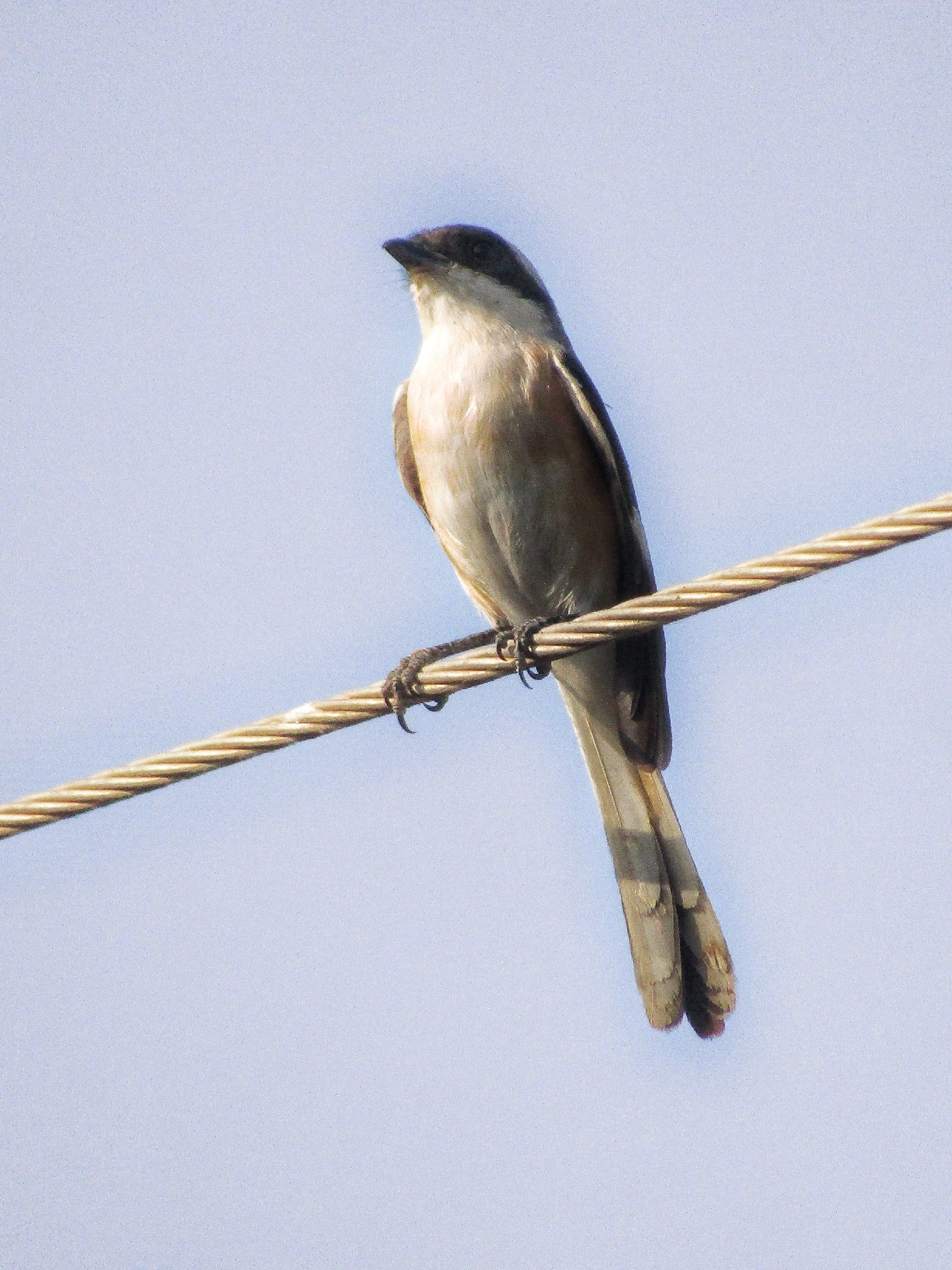
A member of the bird family Laniidae (shrikes), this species is resident in South Asia. It occupies habitats with bushes in scrubby areas and cultivated land. Characteristic behavior includes an upright perching posture on bushes, from which it sallies after prey. It exhibits the shrike behavior of impaling prey on sharp points such as thorns to hold it while tearing with its strong hooked bill. Occurs throughout Iran, Afghanistan, Pakistan, Nepal, India, and Turkmenistan, with occasional presence in Sri Lanka, Bhutan, Oman, United Arab Emirates, and Qatar. The species nests in bushes, laying 3-5 eggs.
Description
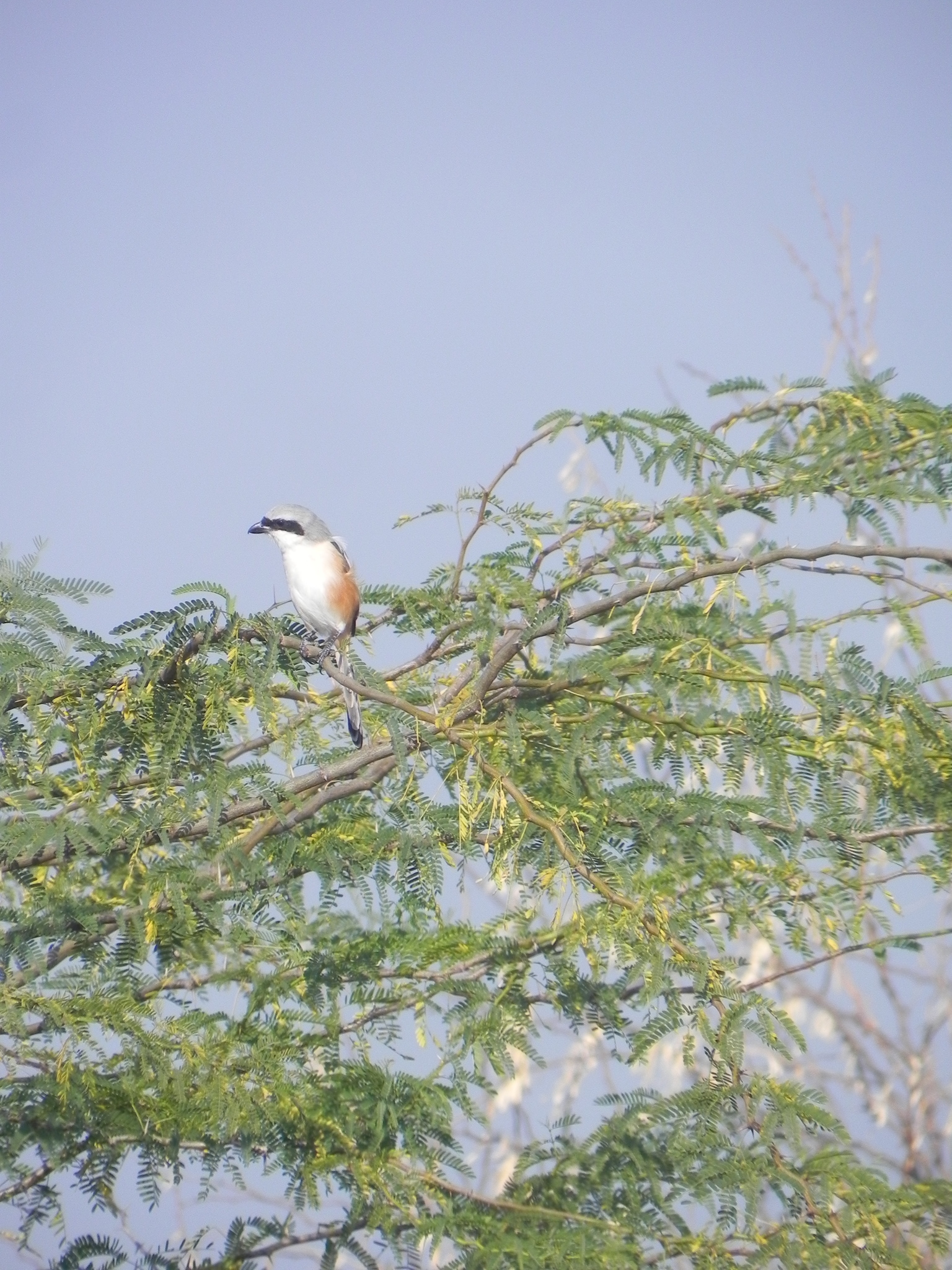
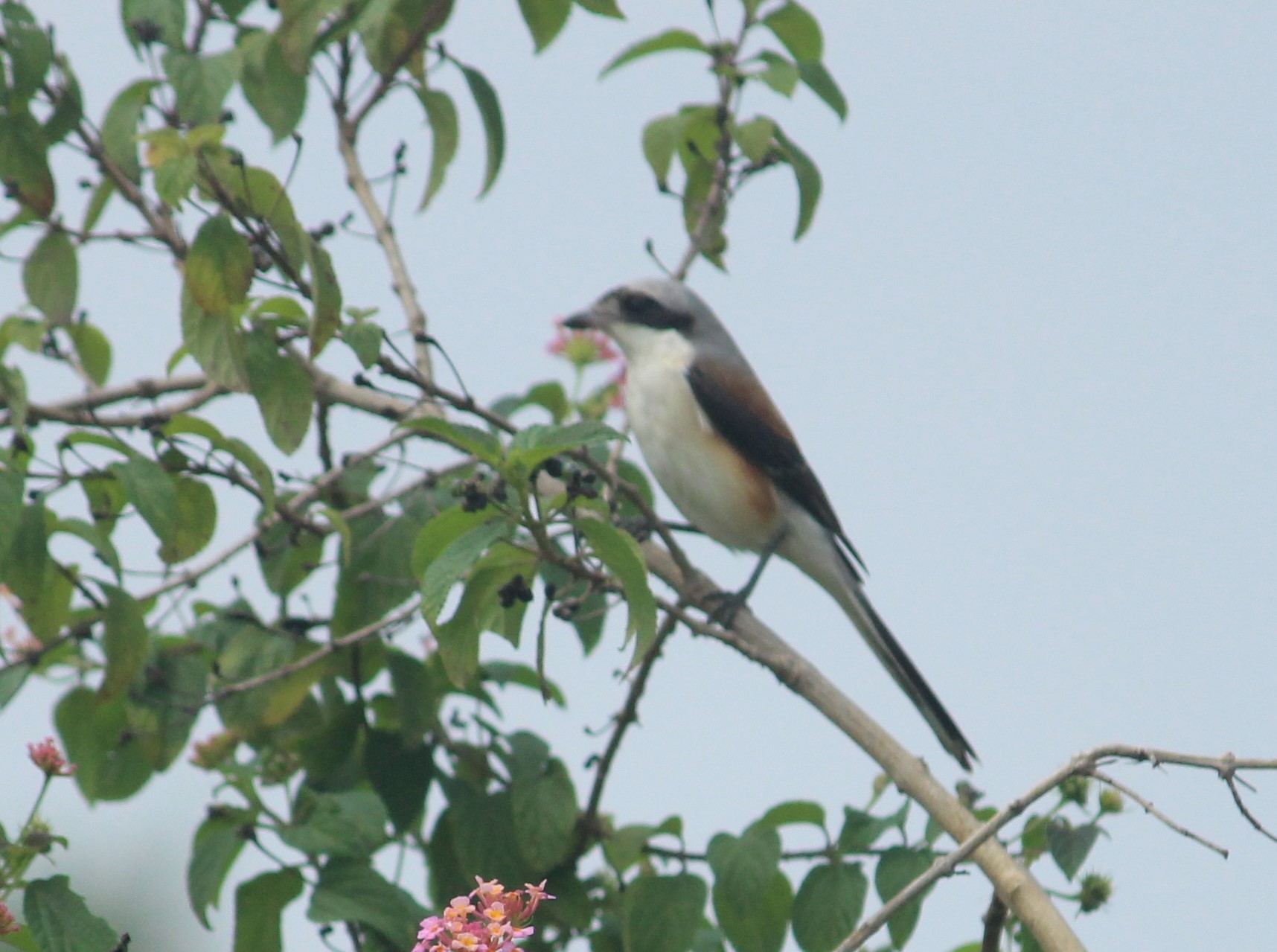
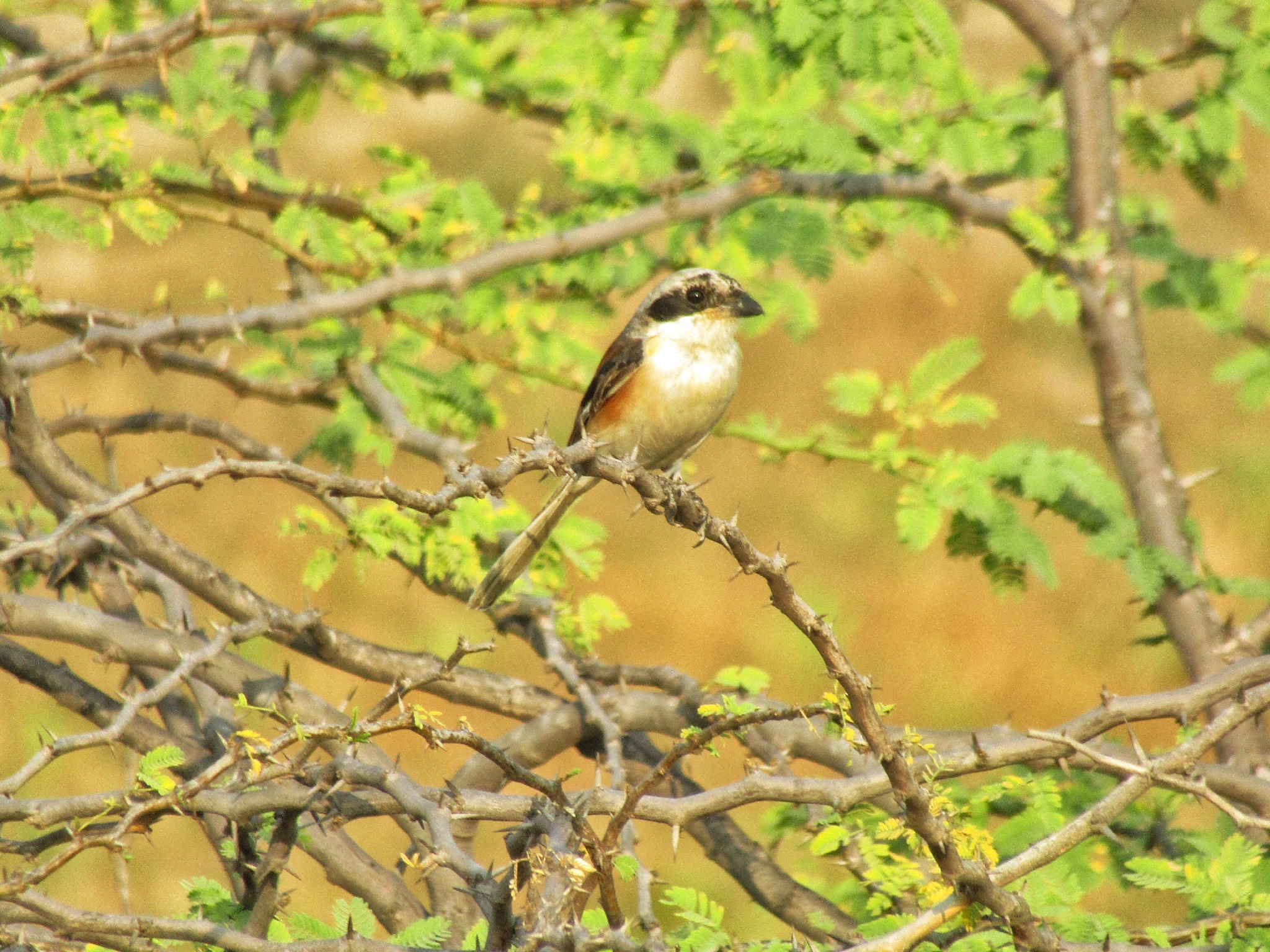
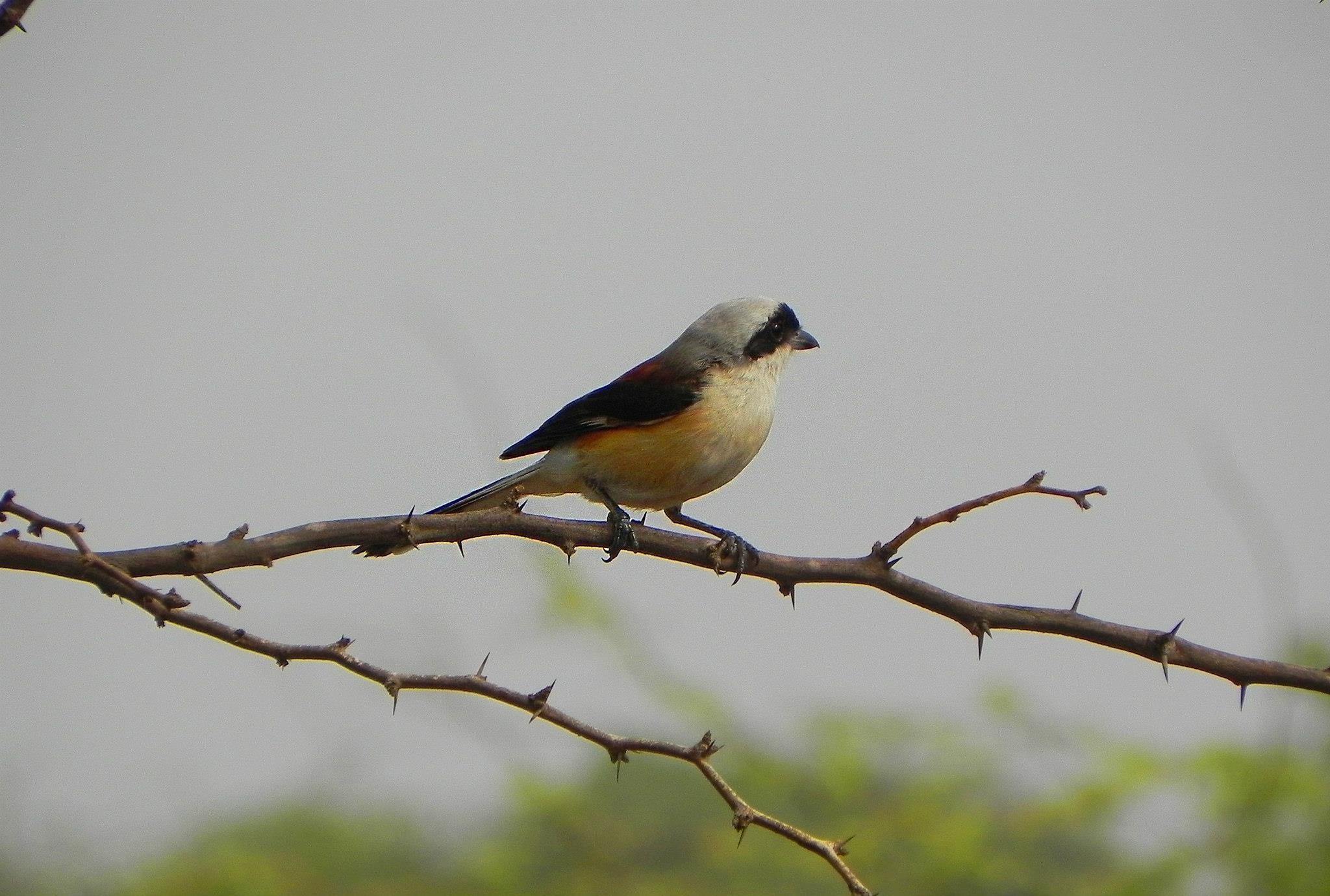
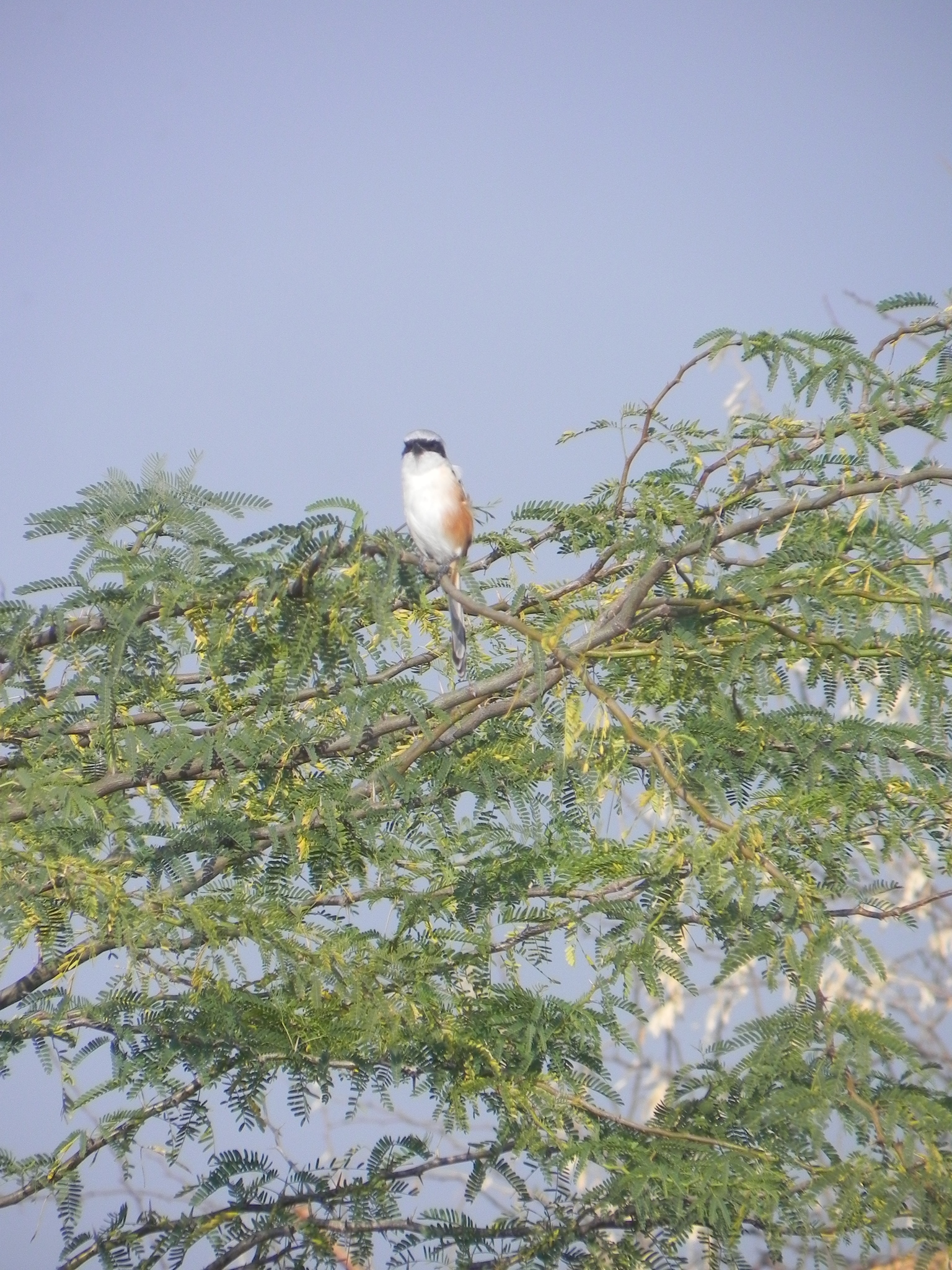
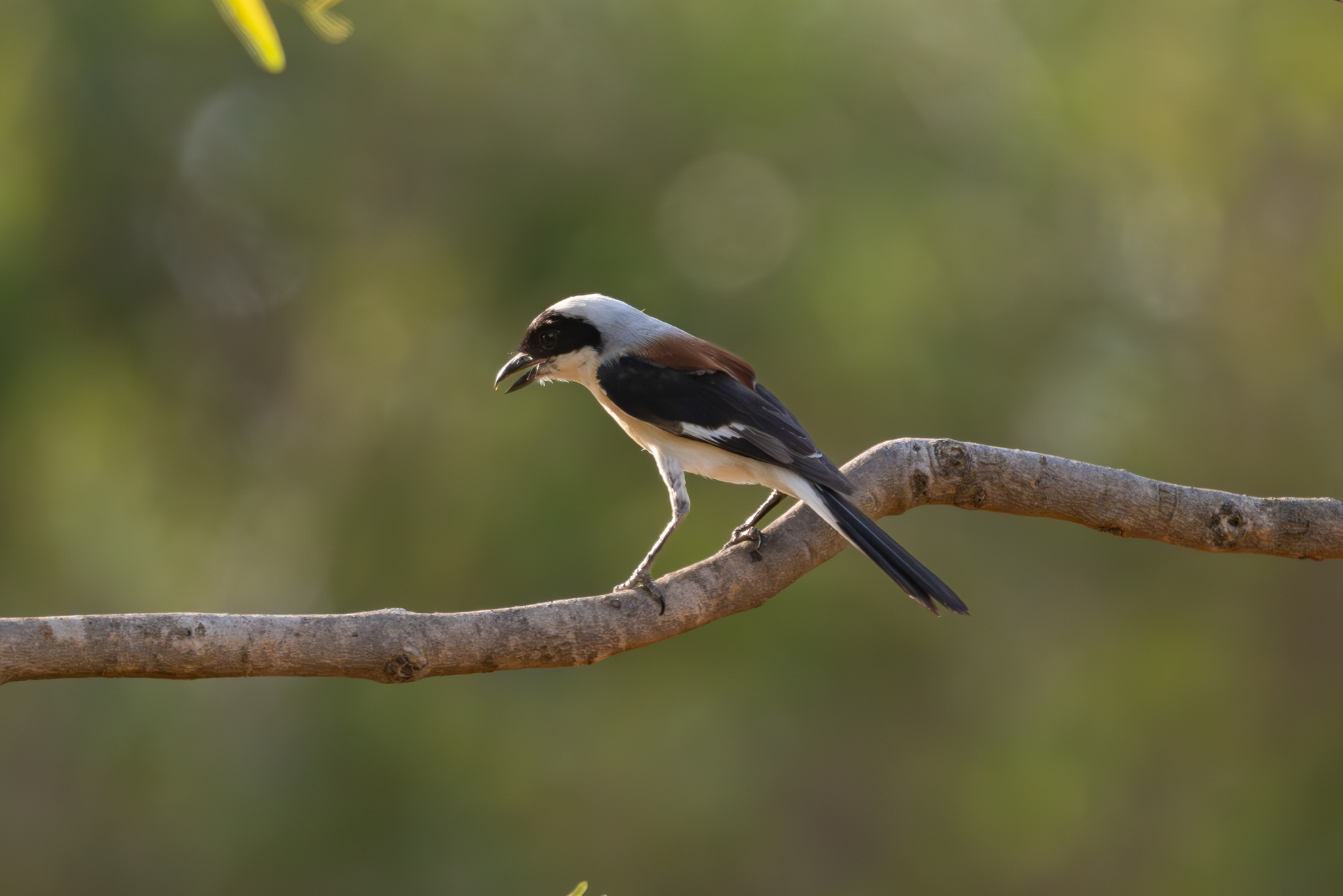
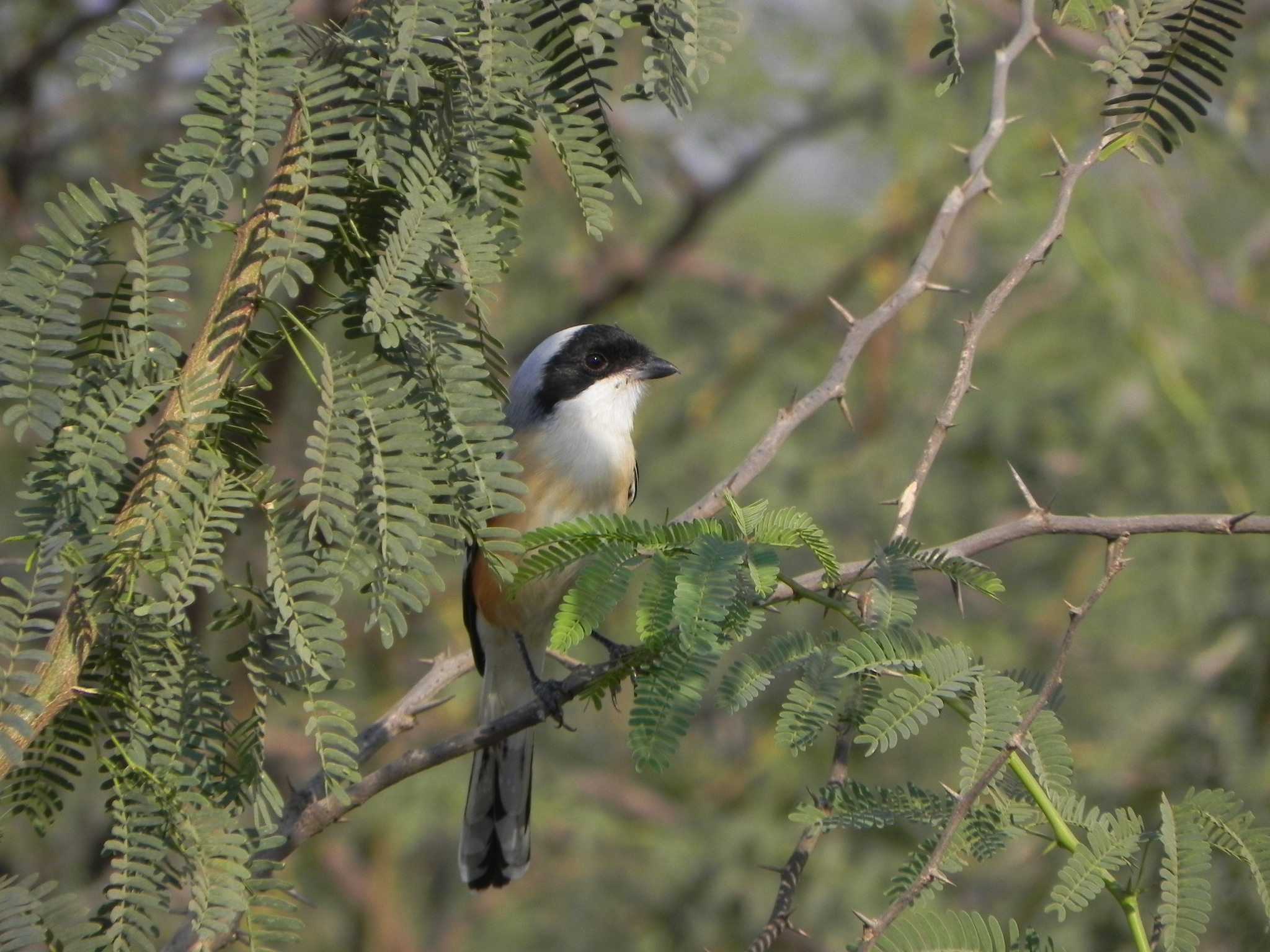
A smallish shrike measuring 17 cm in length. The upperparts are maroon-brown with a pale rump, contrasting with a long black tail edged in white. Underparts are white with buff flanks. The crown and nape are grey, and like other shrikes it has the characteristic black bandit mask running through the eye. A small white wing patch is visible on the darker flight feathers. The bill and legs are dark grey. Sexes are similar in plumage, while juveniles appear as washed-out versions of the adults.
Identification
The combination of maroon-brown upperparts, grey crown and nape, and white underparts with buff flanks distinguishes this species from other shrikes in its range. The black tail with white edges and small white wing patch are additional field marks. Its upright perching posture and habit of hunting from exposed bush tops are characteristic.
Distribution & Habitat
A widespread resident or breeding species across southern Asia. Core range includes Iran, Afghanistan, Pakistan, Nepal, India, and Turkmenistan. Occasional records from Sri Lanka, Bhutan, Oman, United Arab Emirates, and Qatar. Inhabits areas with scattered bushes including scrubby terrain and cultivated land where it nests.
Behavior & Ecology
Maintains a characteristic upright posture when perched on bushes, from which it launches attacks on prey. Diet includes lizards, large insects, small birds, and rodents. Employs the shrike's distinctive method of impaling prey on thorns or sharp points to secure it while tearing with the hooked bill. The feet are not adapted for tearing prey. Nests in bushes, with clutch size of 3-5 eggs.
Source: Wikipedia · CC BY-SA 3.0
Taxonomy
- Order
- Passeriformes
- Family
- Laniidae
- Genus
- Lanius
- eBird Code
- babshr1
Subspecies (2)
-
Lanius vittatus nargianus
southeastern Turkmenistan, eastern Iran (Hormuzgan, Sistan, and Baluchistan, probably also Khorasan), Afghanistan and Pakistan (Baluchistan eastward to Sind and Punjab); breeding recently recorded in Oman (Musandam) and United Arab Emirates
-
Lanius vittatus vittatus
Pakistan (Indus Plains) to West Bengal and southern India (except for southwestern)
Data Sources
Species description from Wikipedia, licensed under CC BY-SA 3.0.
Bird images and sounds sourced from GBIF, contributed by citizen scientists worldwide under Creative Commons licenses.
Taxonomy data from AviList 2025.