Lesser Grey Shrike
Lanius minor
黑额伯劳
Introduction
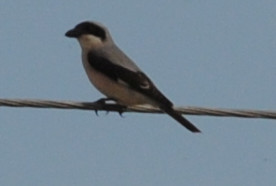
A member of the shrike family Laniidae, this species breeds in South and Central Europe and western Asia during summer, migrating to southern Africa in early autumn and returning in spring. It is a scarce vagrant to western Europe, including Great Britain, usually appearing in spring or autumn. The bird prefers dry open lowlands and is often observed on telephone wires. It feeds primarily on large insects, especially beetles, butterflies, moths, and grasshoppers. Unlike most shrikes, it frequently hovers when hunting on breeding grounds. Like other shrikes, it hunts from prominent perches and occasionally impales prey on thorns or barbed wire. The IUCN lists the species as Least Concern, with a global population estimated between 2.5 and 9 million individuals.
Description
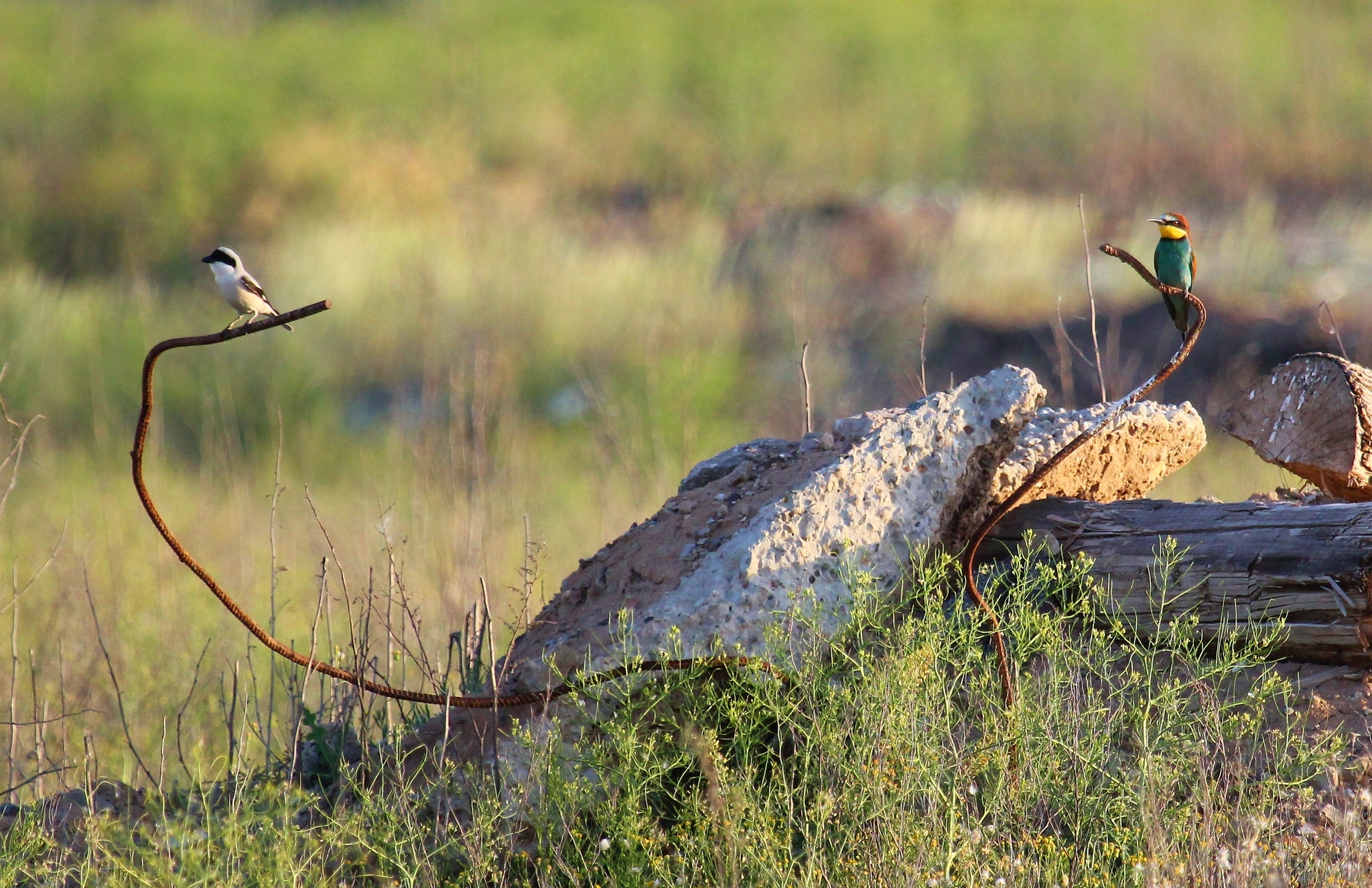
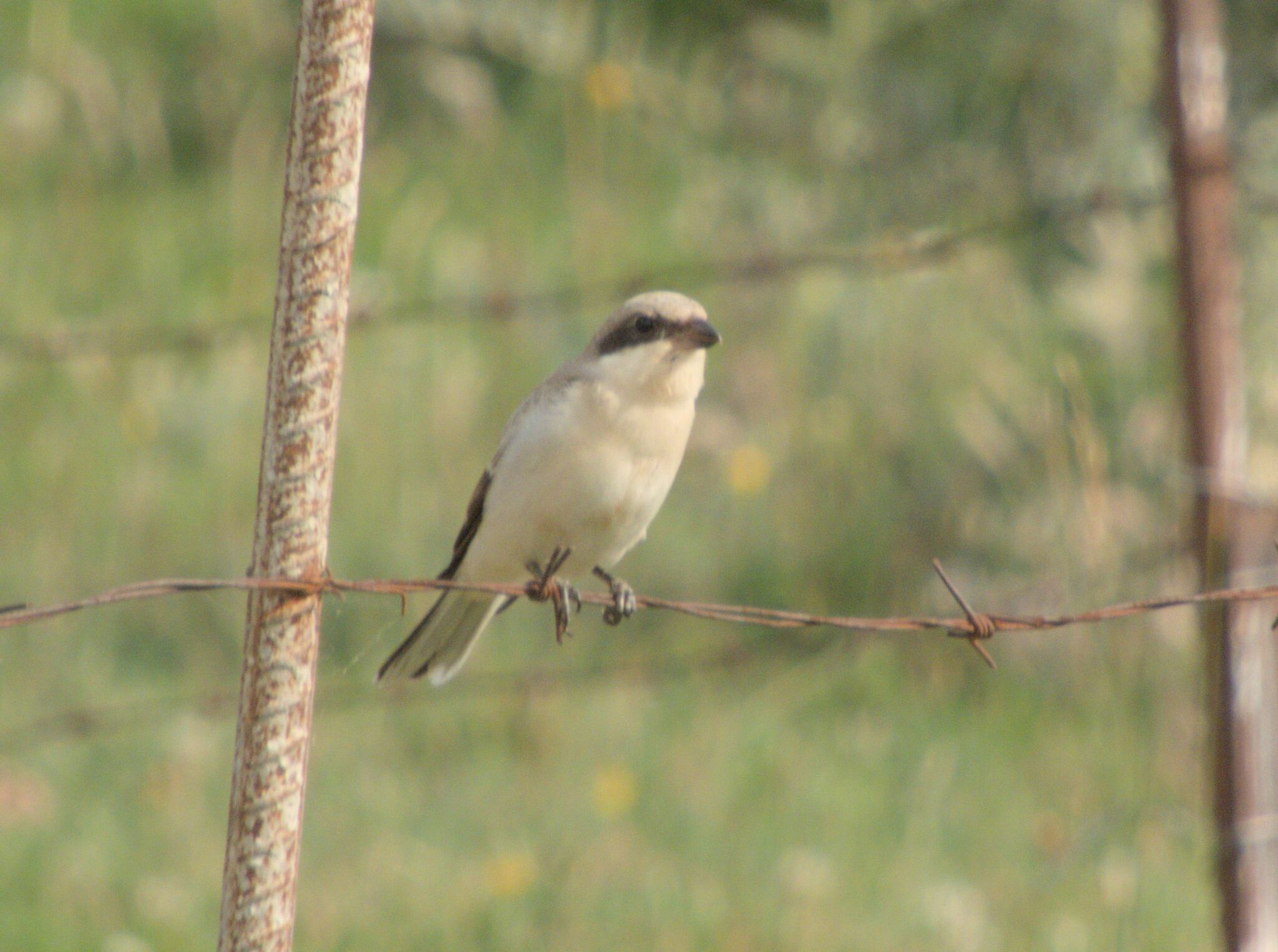
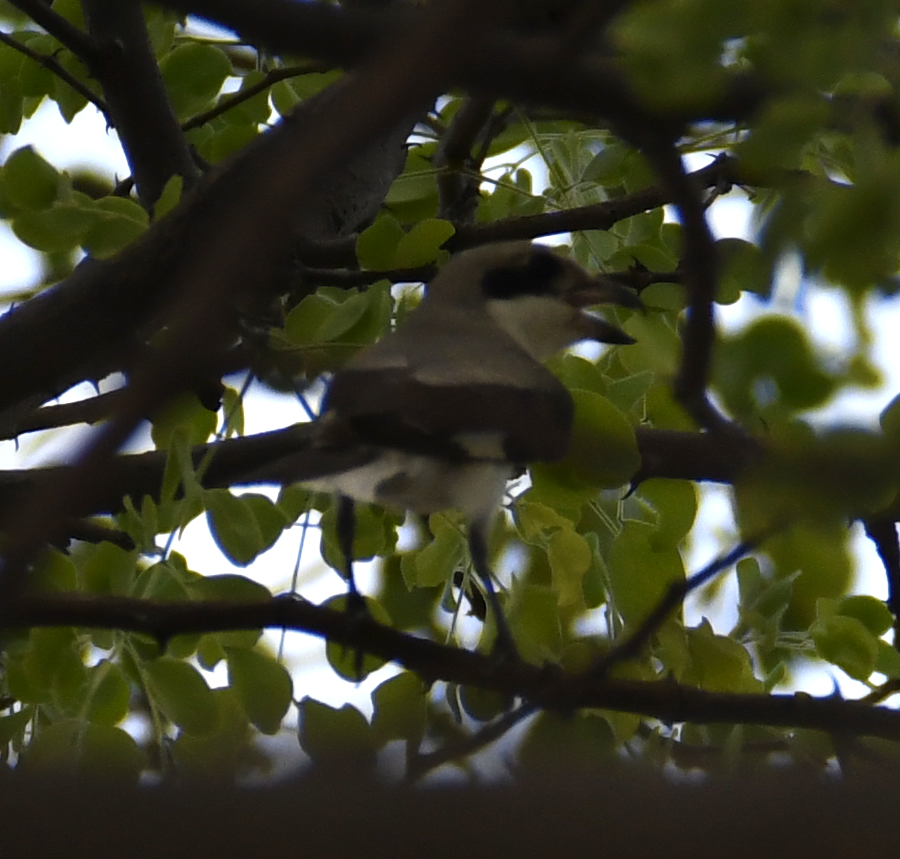
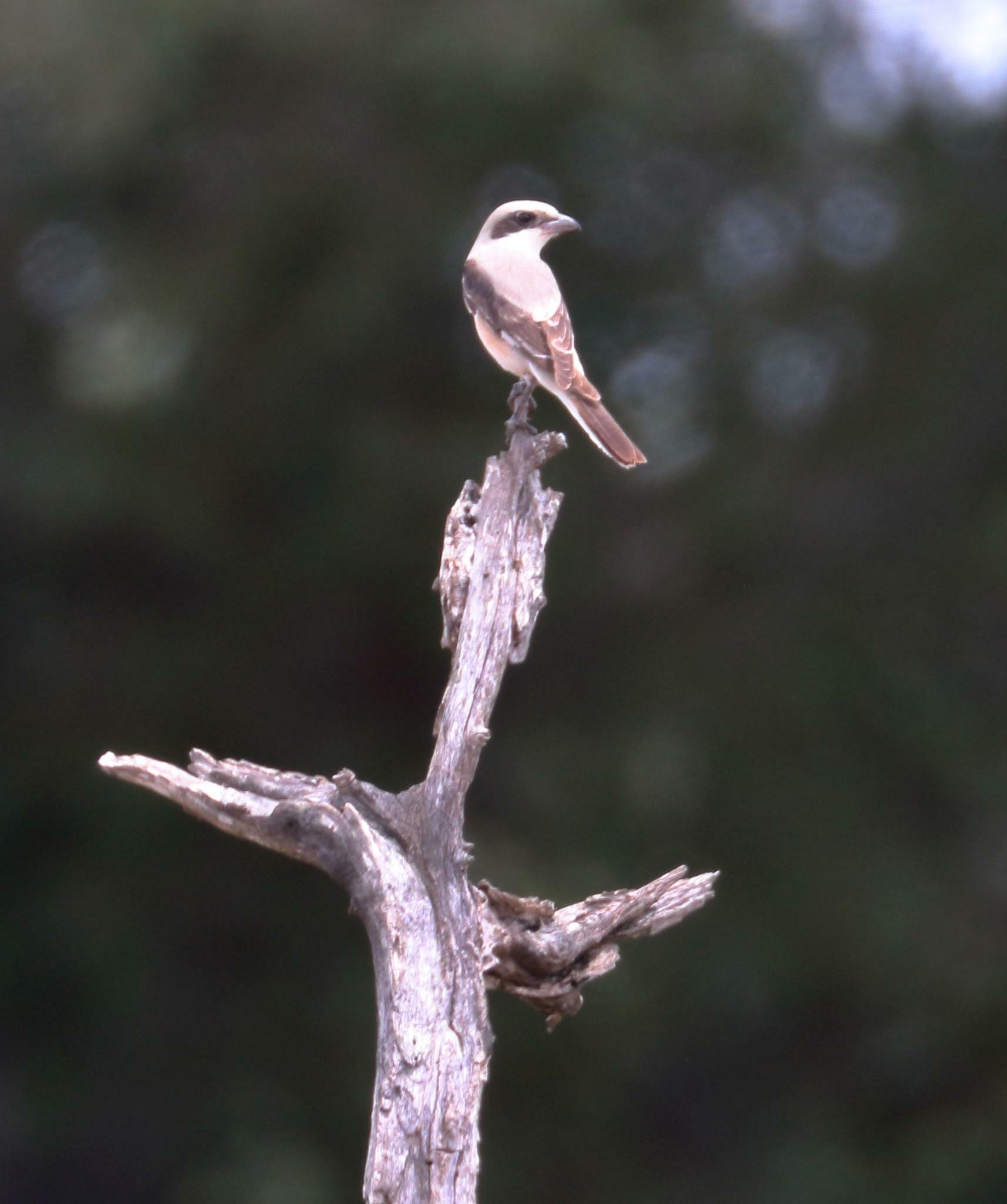
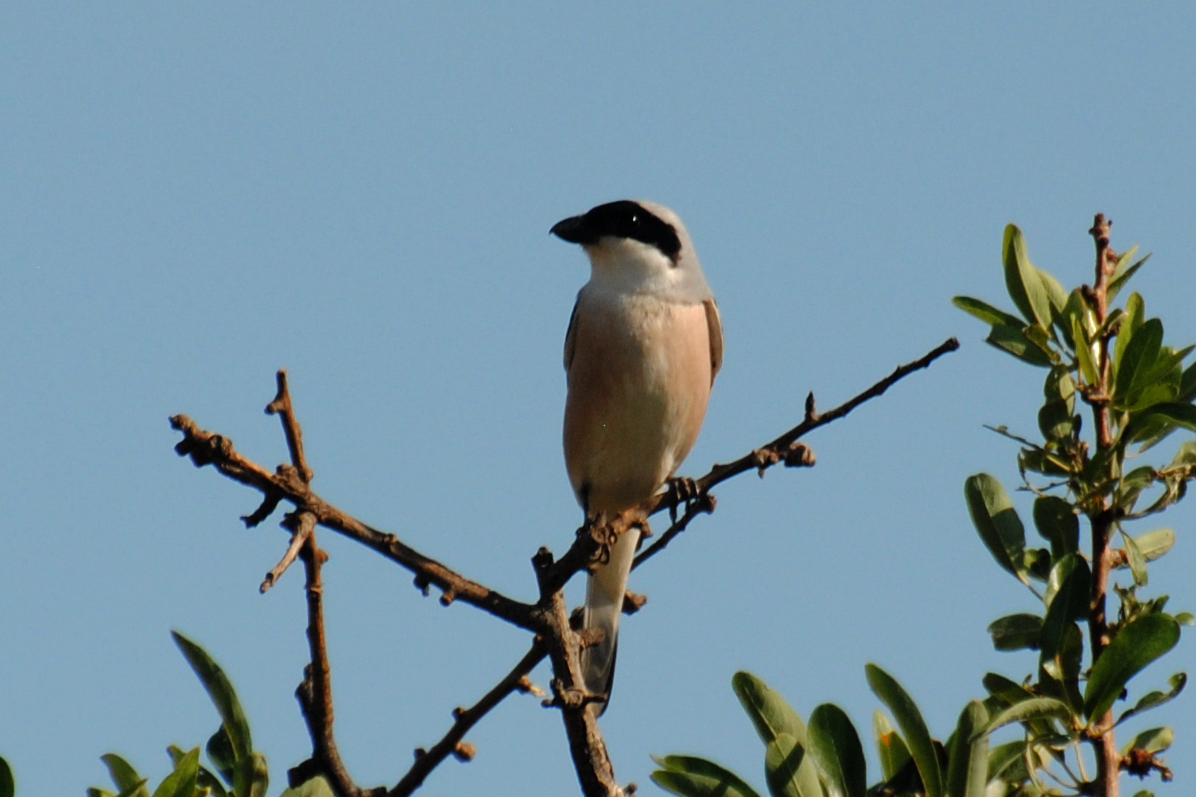
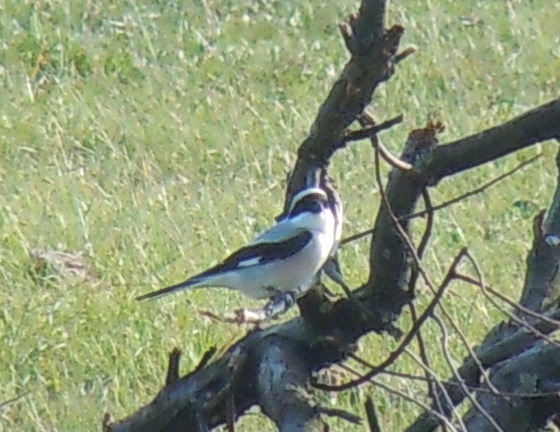
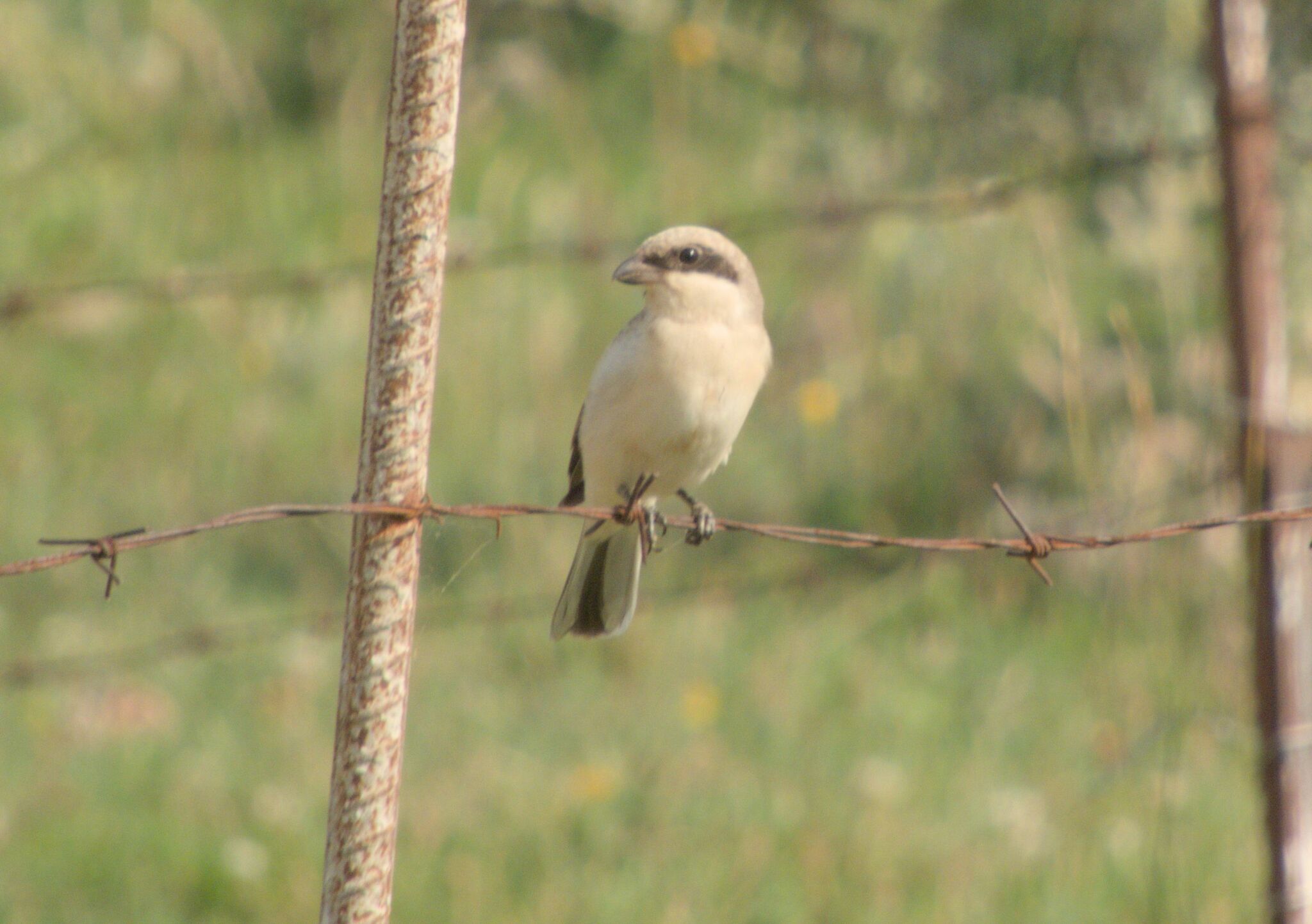
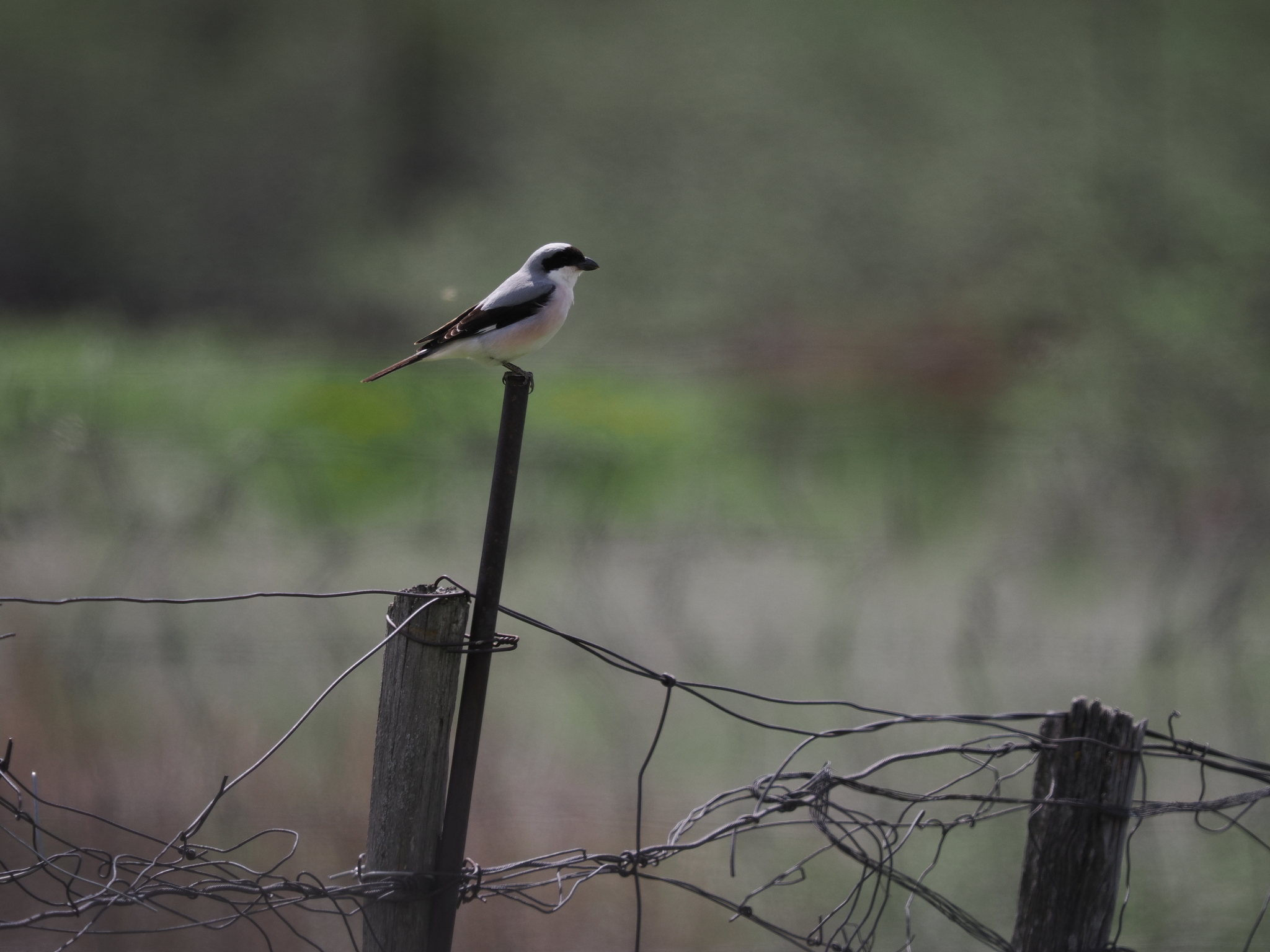
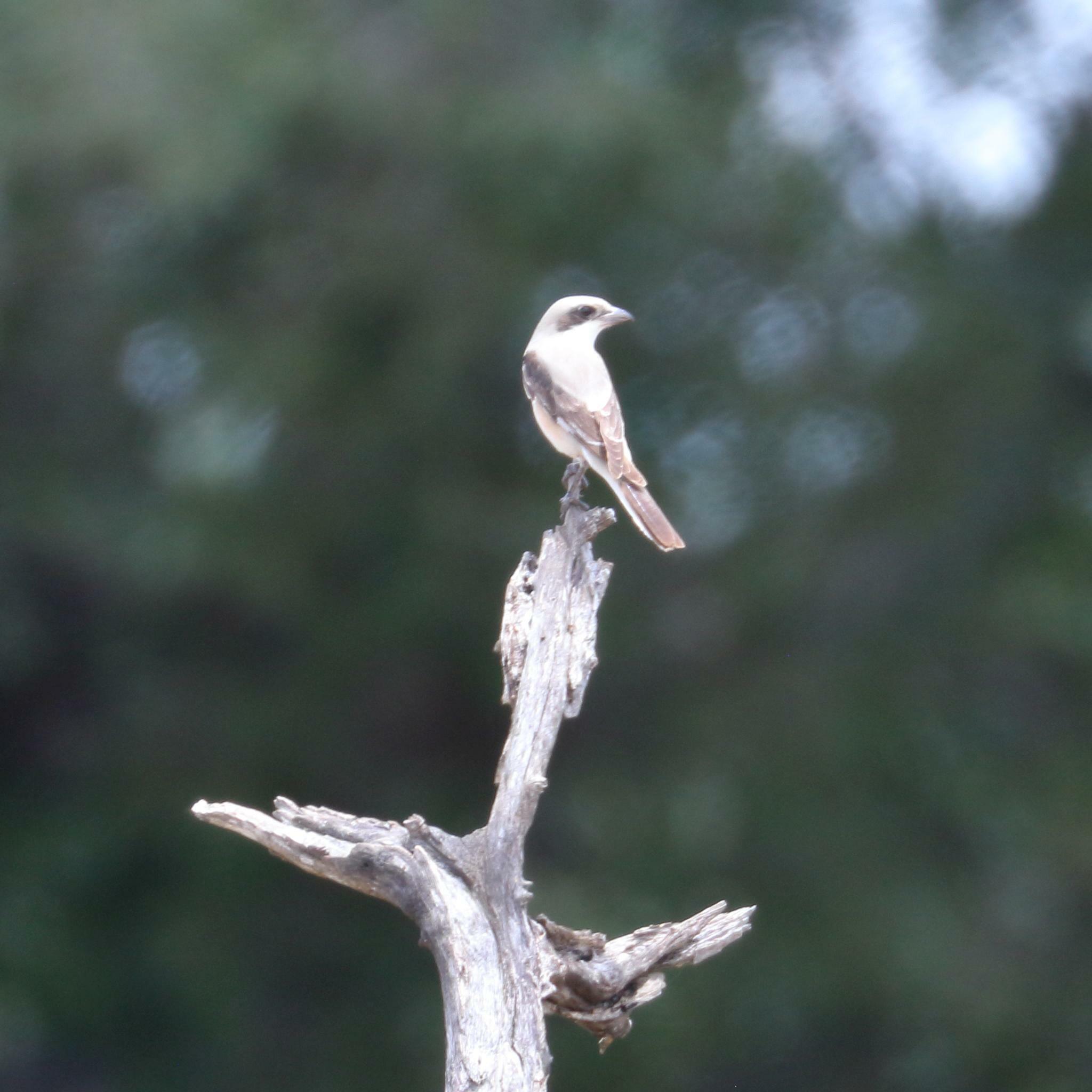
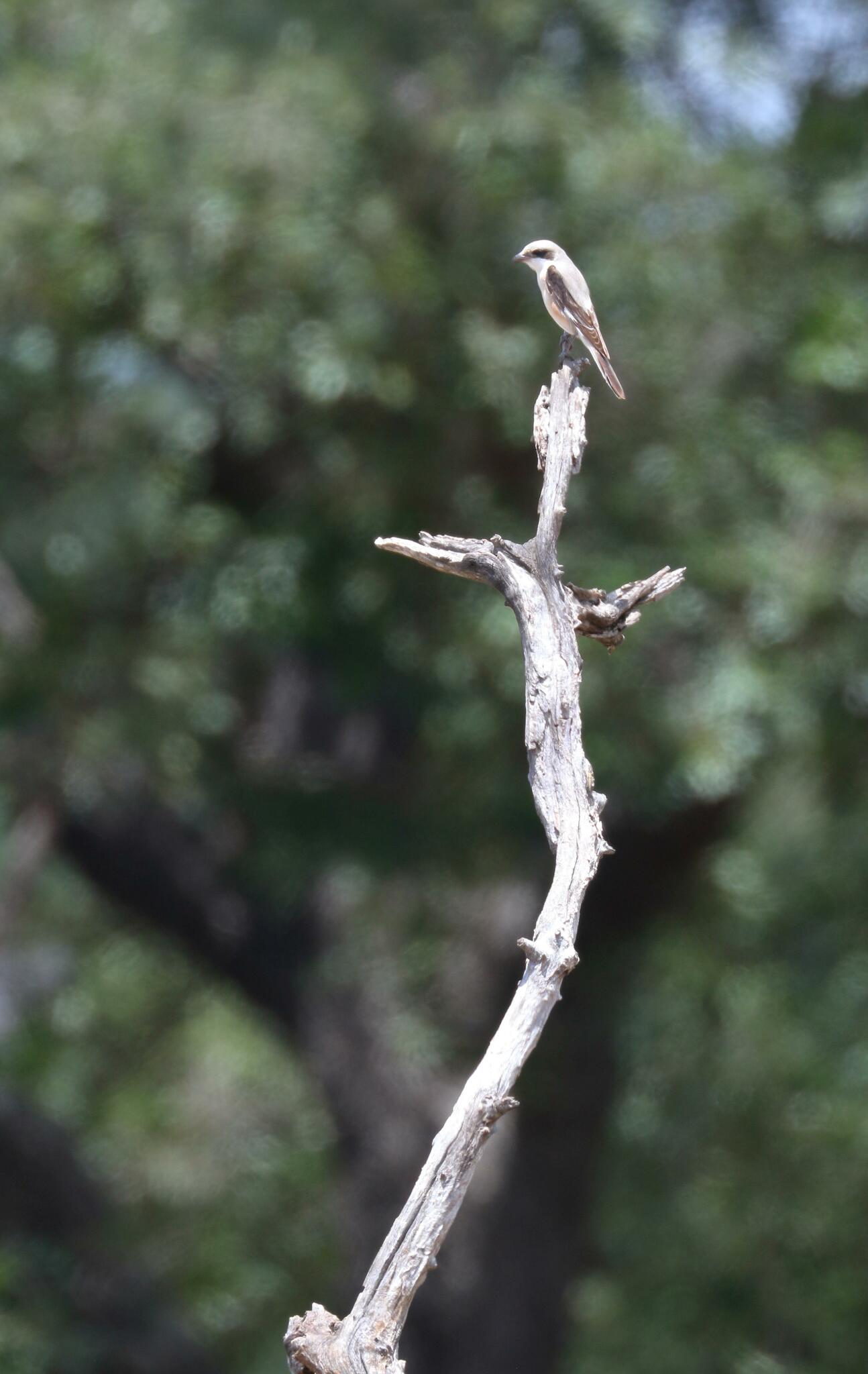
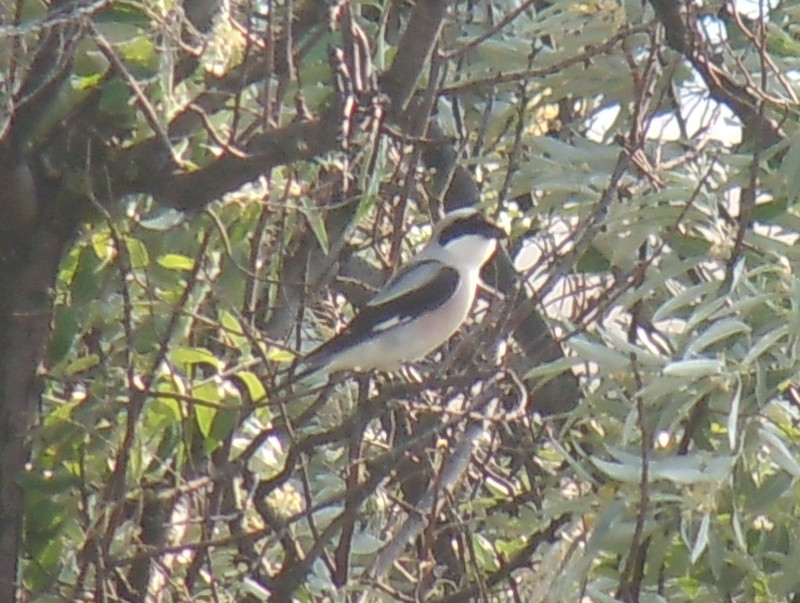
The adult male has a black nape, cheeks, ear and eye coverts, and front crown. The hind crown and back are pale bluish-grey, with a paler rump. Underparts are white with pink suffusion on the lower breast and belly. Axillaries are greyish-white; underwing coverts are brownish-black. The two central tail feathers are black with white tips and bases; outer pairs show increasing white. Primaries are black with buff tips and white bases; secondaries are black with broader, paler tips. Wing coverts are black with grey-fringed lesser coverts. The female has similar plumage but with a dark grey head, brownish-black ear coverts, brownish-grey upperparts, and less pink below. Juveniles are browner overall, lacking the grey back and rump (instead pale brown and faintly barred), with white and cream underparts lacking pink. All birds have a brownish-black beak with a paler lower mandible base, brown irises, and black legs and feet. Adult length is around 20 cm (7.9 in), wing length 13 cm (5.1 in), and tarsus 2.5 cm (1 in).
Identification
Similar in appearance to the great grey shrike and Iberian grey shrike, with both sexes showing predominantly black, white, and grey plumage. Males can be distinguished by pink-flushed underparts. This species is slightly smaller than the great grey shrike and has a black forehead with relatively longer wings. The pink wash on the underparts of males is a key distinguishing feature. Birds are typically found in dry open lowlands, often perched conspicuously on telephone wires, which aids detection. The black forehead distinguishes it from similar species that have white foreheads.
Distribution & Habitat
The species spends summer in South and Central Europe and western Asia. Breeding occurs in southern France, Switzerland, Austria, Hungary, Slovakia, Czech Republic, Italy, the former Yugoslavia, Albania, Greece, Romania, Bulgaria, Ukraine, and southern Russia. In Asia, breeding extends through the Middle East to eastern Turkey and Iran. It appears as a vagrant in Sweden, Finland, Denmark, the United Kingdom, Netherlands, Belgium, and northern France, typically in spring or autumn. A migratory species, it winters in a broad belt across tropical southern Africa. Summer habitat includes open countryside, edges of cultivated areas, heathland with scattered bushes and trees, gardens, coppices, woodland, and roadside trees. Winter quarters are typically scrubland and thorn trees.
Behavior & Ecology
Hunting occurs from a strategic perch, wire, or branch, with prey caught in the air or on the ground. The diet consists of beetles, moths, butterflies, large flies, grasshoppers, crickets, and millipedes, with limited fruit consumption including cherries and figs. Prey is occasionally impaled on thorns, but less frequently than in other shrike species; experimental studies show impaling only occurs when the bird is satiated. The male feeds the female before creating food stores. Flight is low and somewhat undulating with occasional glides, swooping upward to land on a new perch. The bird turns its head side to side while searching for prey and hops briefly on the ground only to collect food. When excited, it fans its tail and moves it up and down or side to side. It is pugnacious, vigorously defending the nest and driving away larger birds. The nest is built 4 to 10 meters (13 to 33 ft) above ground in roadside trees with good visibility, constructed by both parents from plant stems and lined with wool, hairs, roots, and feathers. Clutches contain five to seven eggs, averaging 26.1 by 18.2 mm, in bluish-green or cream with brown blotches. Incubation lasts about 15 days, chiefly by the female, with both parents feeding young that fledge after about 14 days. Usually a single brood is raised.
Conservation
The global population is estimated between 2.5 and 9 million individuals spread across a wide range. The IUCN Red List categorizes the species as Least Concern. Although numbers may be decreasing slightly, the decline is not considered sufficient to warrant Vulnerable status. However, European populations have dwindled to an estimated 3,000 to 5,000 breeding pairs. Declines may be attributed to a series of wet summers reducing insect abundance, as well as changes in agricultural practices where small enclosures with varied crops and woodland patches have been replaced by large fields. Consequently, the species is listed as threatened in Annex I of the European Commission Birds Directive.
Culture
The genus name Lanius derives from the Latin word for "butcher," and shrikes are sometimes called "butcher birds" due to their habit of impaling prey. The specific epithet minor is Latin for "smaller." The English word "shrike" originates from Old English "scríc," meaning "shriek," referring to the bird's shrill call.
Source: Wikipedia · CC BY-SA 3.0
Taxonomy
- Order
- Passeriformes
- Family
- Laniidae
- Genus
- Lanius
- eBird Code
- legshr2
Distribution
breeds Iberian Peninsula to Siberia and central Asia; winters to southern Africa
Vocalizations
Data Sources
Species description from Wikipedia, licensed under CC BY-SA 3.0.
Bird images and sounds sourced from GBIF, contributed by citizen scientists worldwide under Creative Commons licenses.
Taxonomy data from AviList 2025.