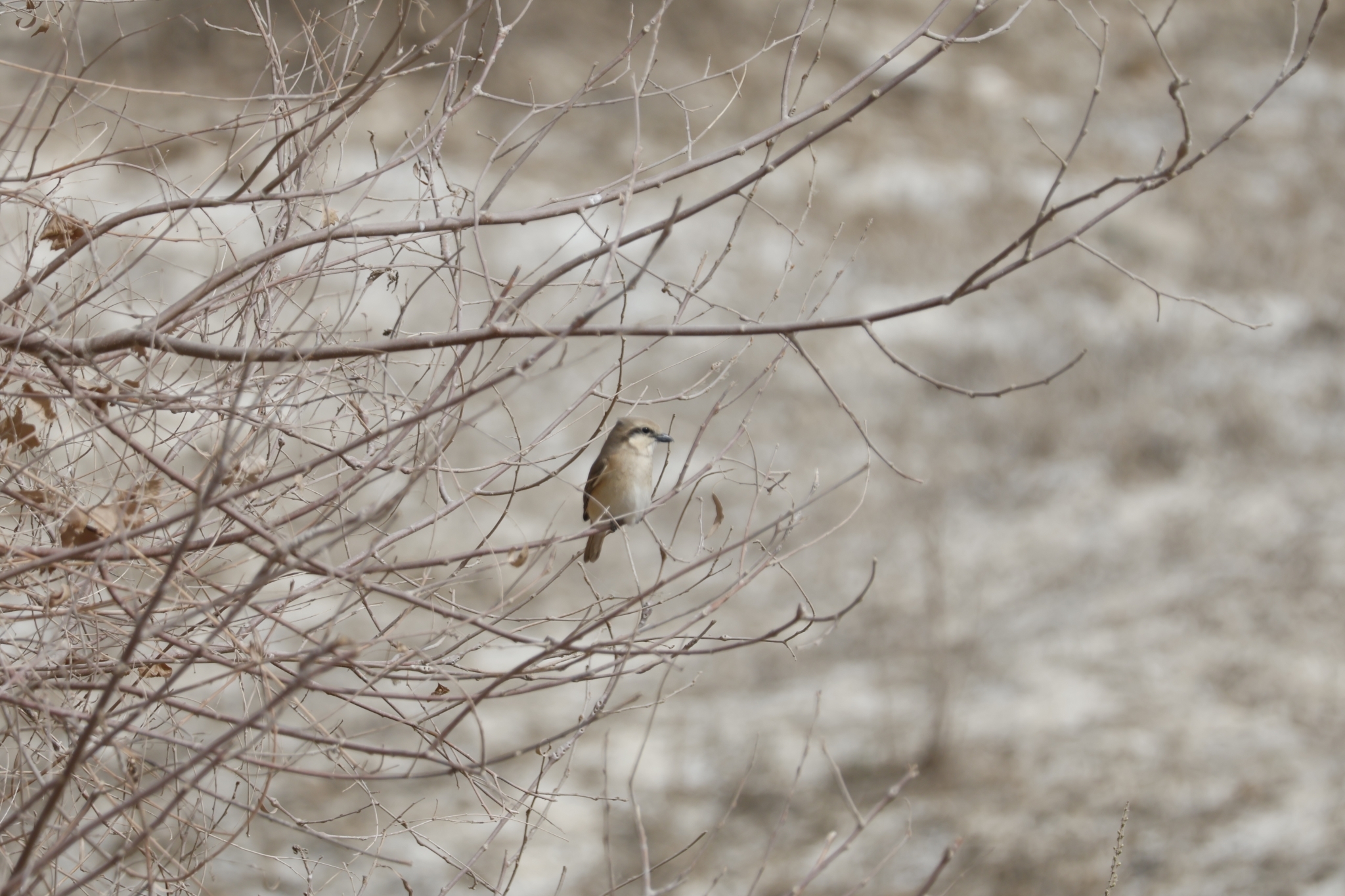
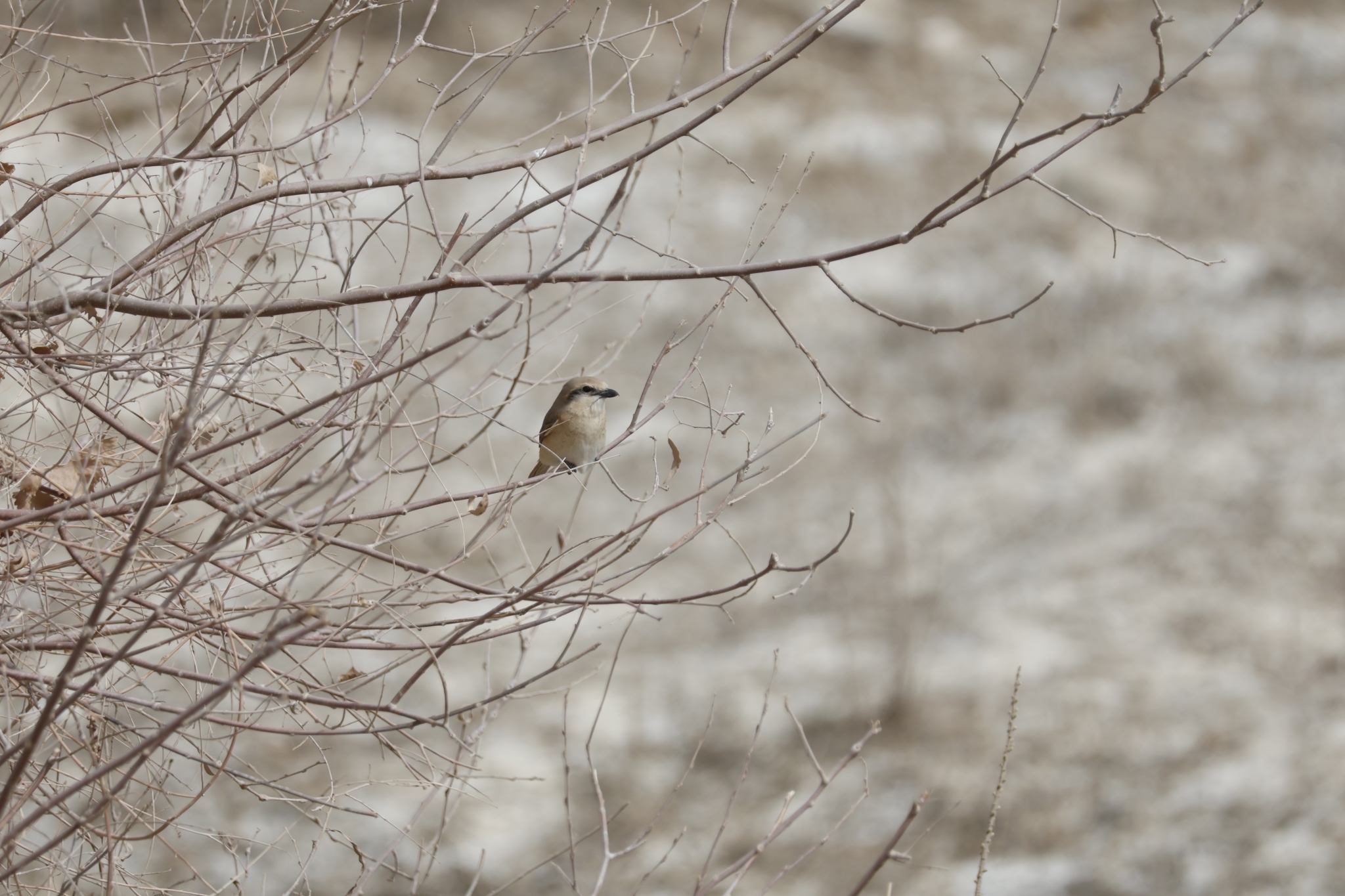
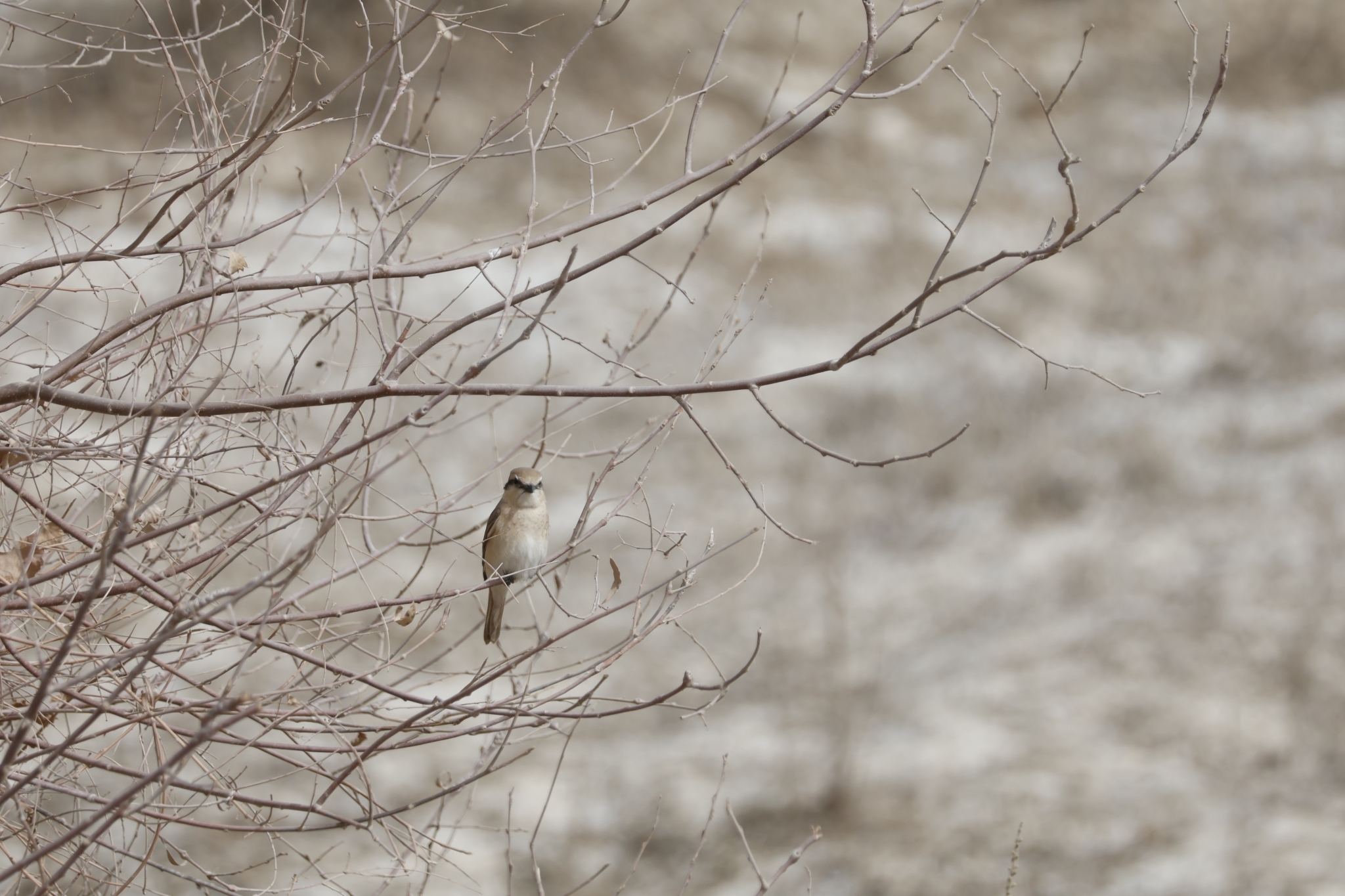
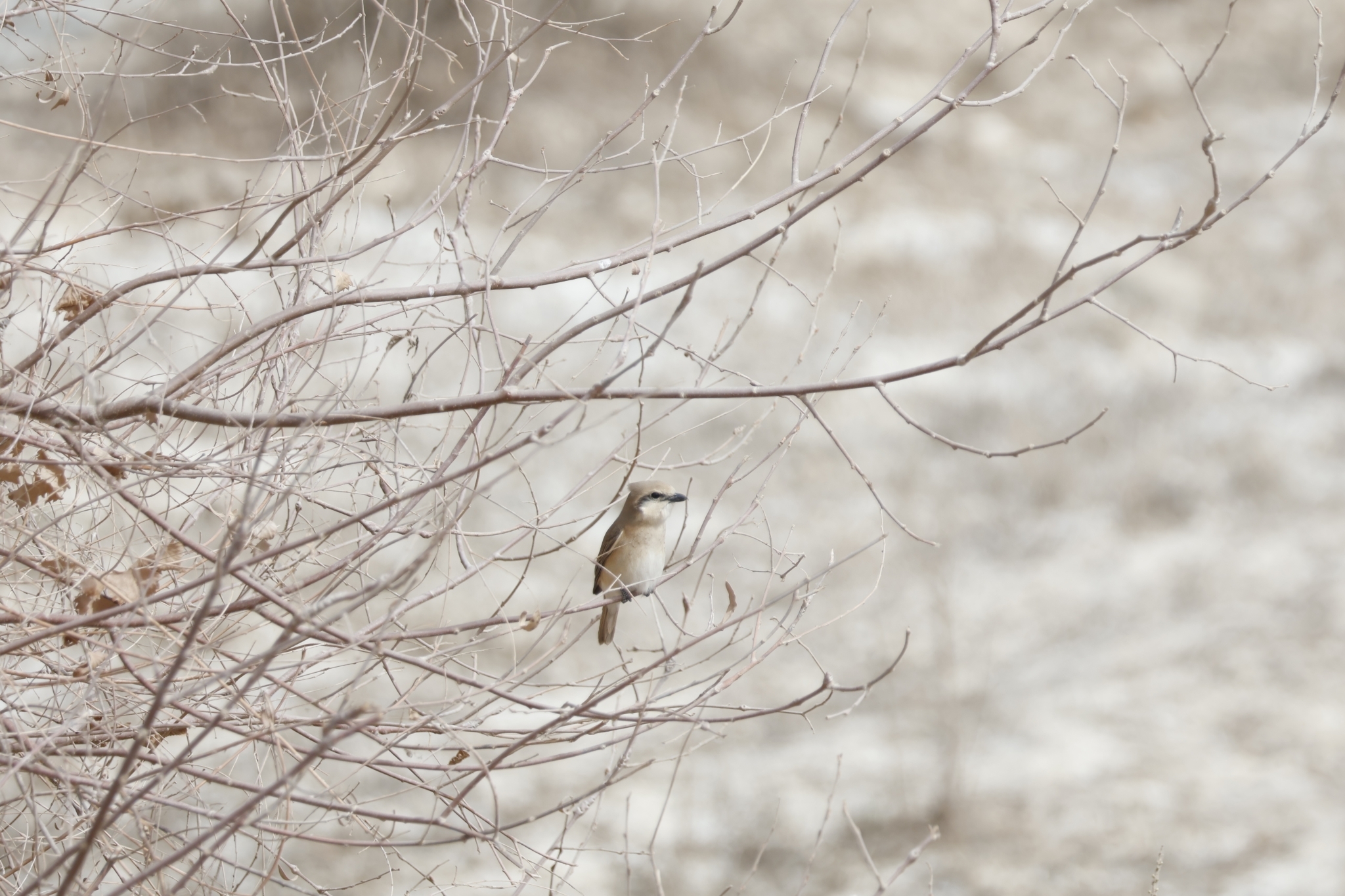
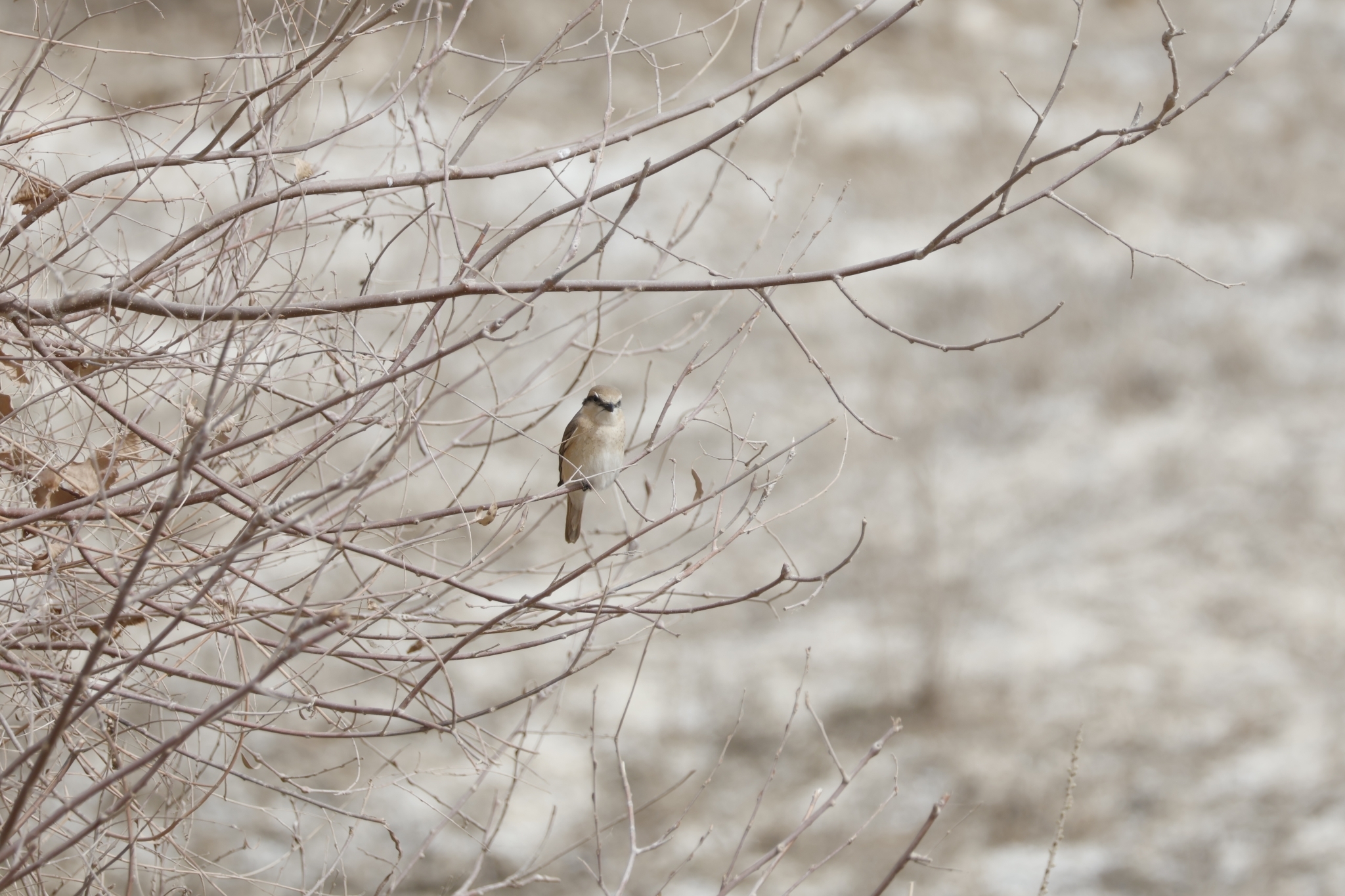


Isabelline Shrike
Lanius isabellinus
荒漠伯劳
Introduction
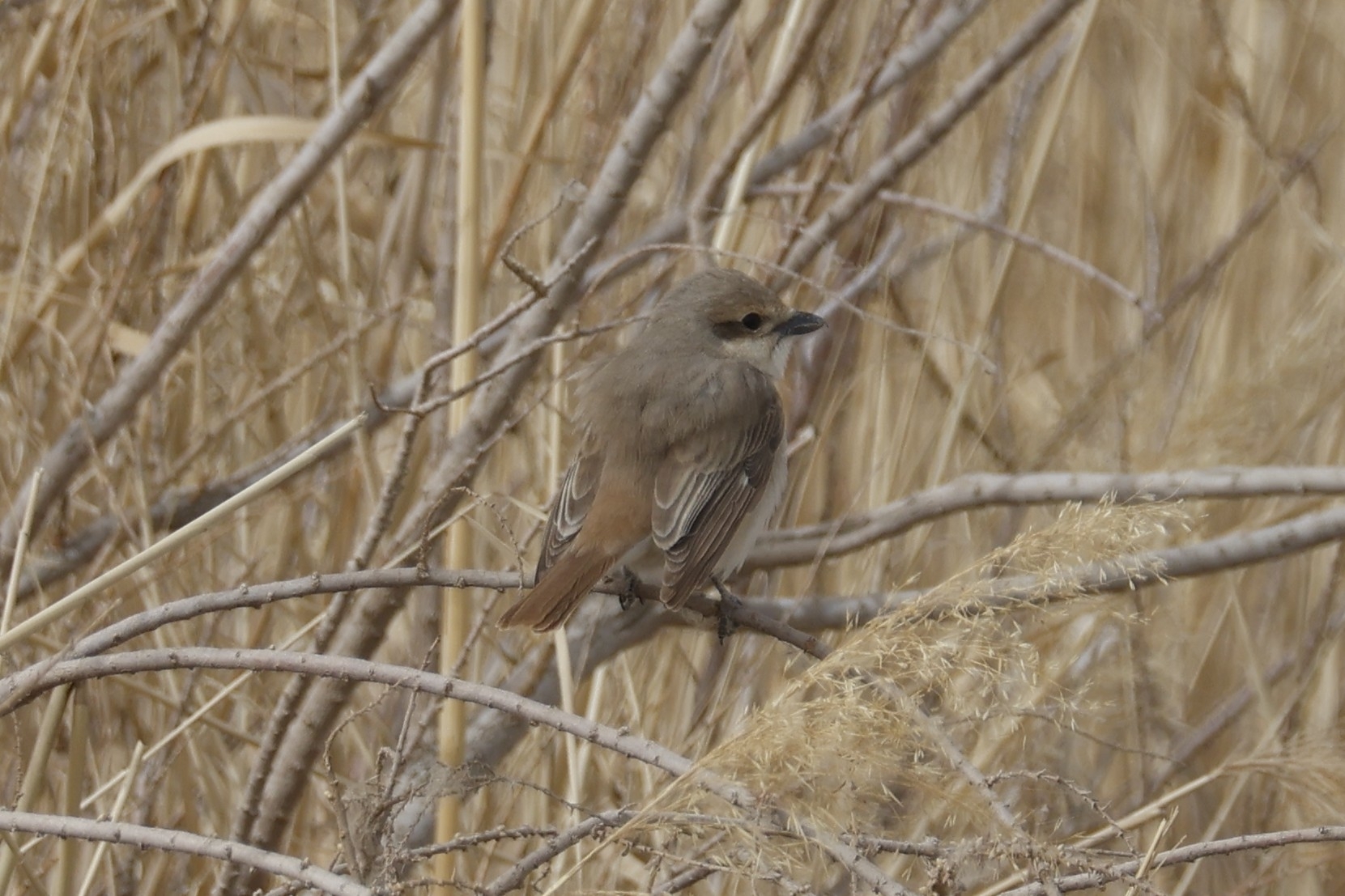
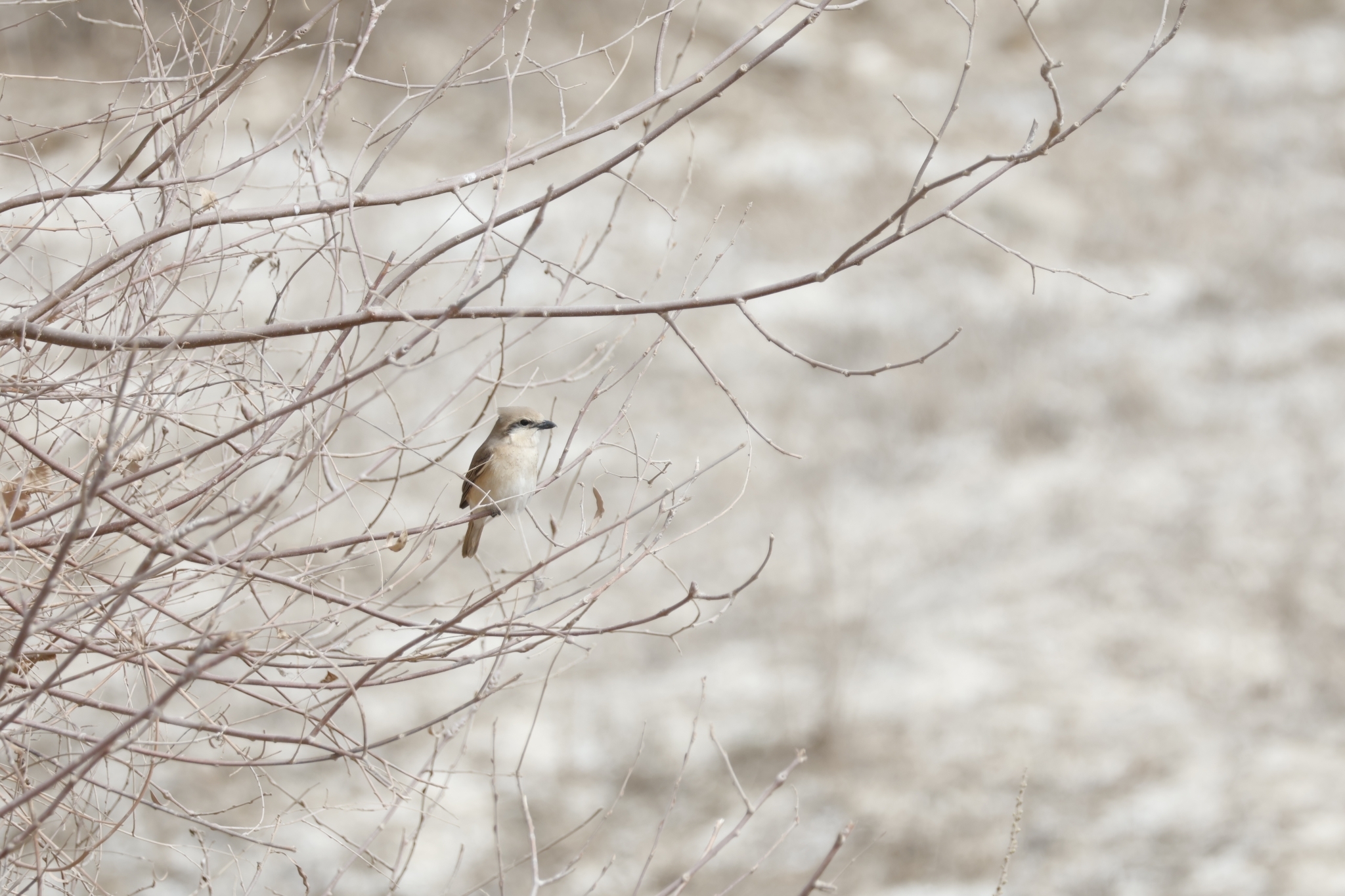
A medium-sized passerine in the shrike family (Laniidae). Previously considered conspecific with the red-backed shrike and red-tailed shrike. Inhabits an extensive range between the Caspian Sea and north and central China, extending southeast to the Qaidam Basin. Overwinters in Africa and Arabia. Breeds in open cultivated country with thorn bushes. Like other shrikes, it hunts from prominent perches and impales prey on thorns or barbed wire as a food cache.
Description
Plumage is isabelline—a sandy, greyish-yellow coloration that gives the species its name. The tail is distinctly red. Underparts in young birds show much sparser vermiculations compared to young red-backed shrikes. A medium-sized shrike with typical shrike proportions.
Identification
Young birds can be distinguished from young red-backed shrikes by the much sparser vermiculations on the underparts. The overall sandy isabelline plumage and red tail are diagnostic.
Distribution & Habitat
Breeds across an extensive area from the Caspian Sea east to north and central China, southeast to the Qaidam Basin. Winters in Africa and Arabia. Inhabits open cultivated country, preferably with thorn bushes.
Behavior & Ecology
Migratory species. Diet consists of large insects, small birds, rodents, and lizards. Like other shrikes, it hunts from prominent perches and impales prey items on thorns or barbed wire to create a larder. No vocalization details provided.
Conservation
IUCN conservation status and population data not provided in source material.
Culture
The genus name Lanius derives from the Latin word for 'butcher', reflecting the species' feeding habits. The specific name isabellinus is Neo-Latin for 'greyish-yellow', possibly named after Isabella I of Castile. The common name 'shrike' comes from Old English 'scríc' meaning 'shriek', referring to the call.
Source: Wikipedia · CC BY-SA 3.0
Taxonomy
- Order
- Passeriformes
- Family
- Laniidae
- Genus
- Lanius
- eBird Code
- isashr1
Subspecies (3)
-
Lanius isabellinus arenarius
breeds northwestern China (Xinjiang); winters to Iran, Pakistan, and northwestern India
-
Lanius isabellinus isabellinus
breeds southeastern Altai and north-central China; winters to India and eastern and central Africa
-
Lanius isabellinus tsaidamensis
breeds north-central China (Qinghai); wintering grounds unknown
Data Sources
Species description from Wikipedia, licensed under CC BY-SA 3.0.
Bird images and sounds sourced from GBIF, contributed by citizen scientists worldwide under Creative Commons licenses.
Taxonomy data from AviList 2025.