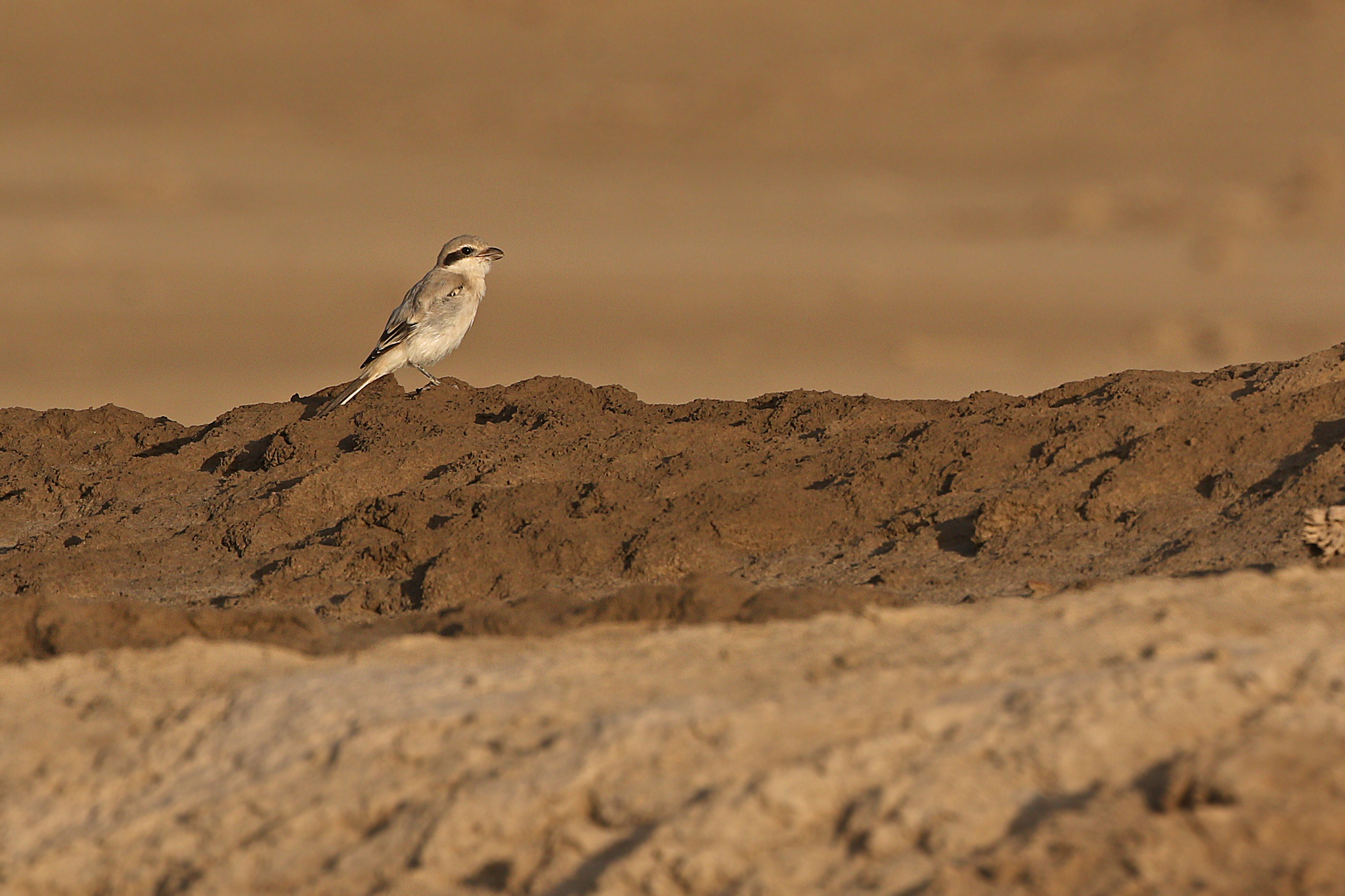
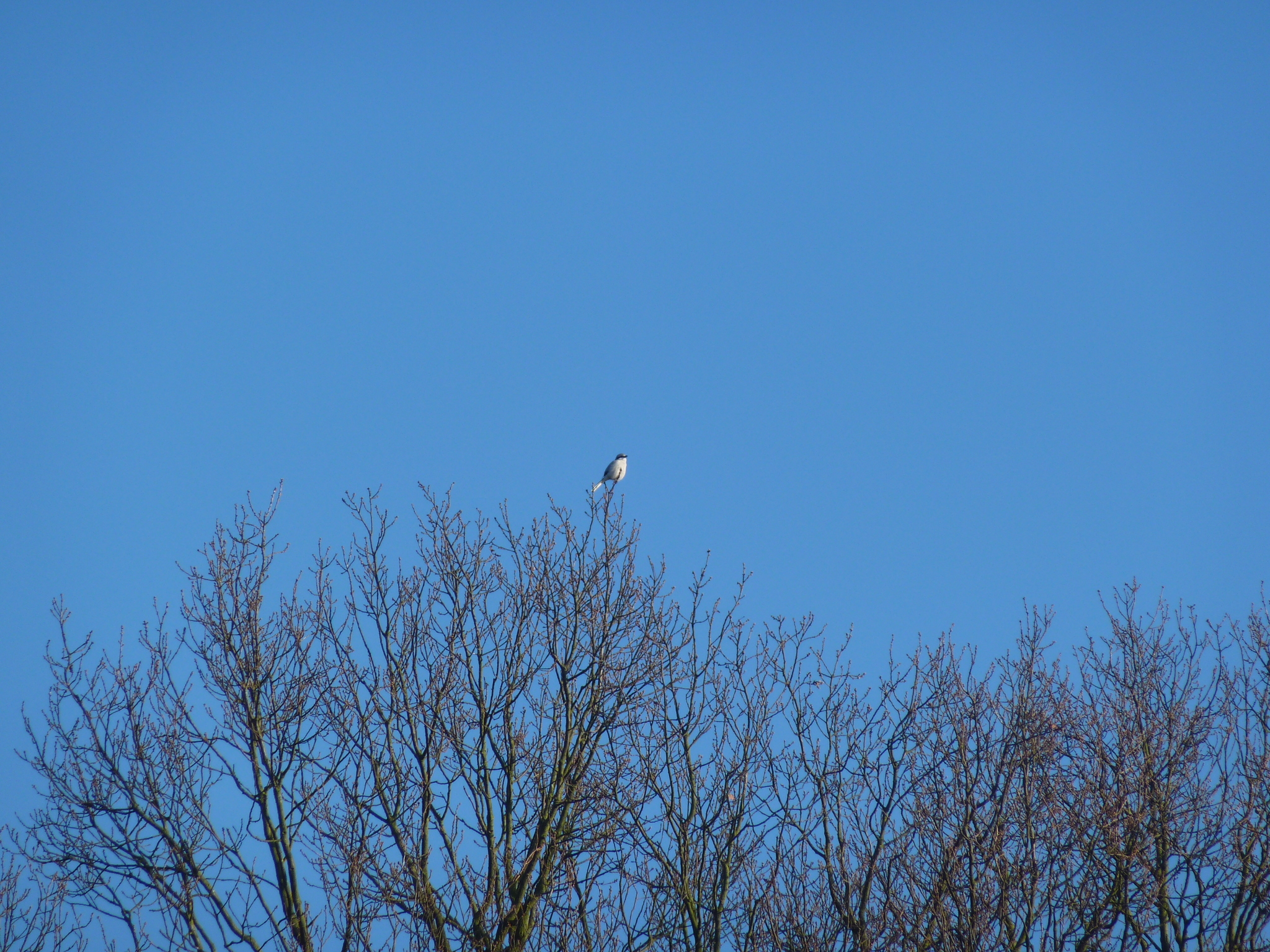
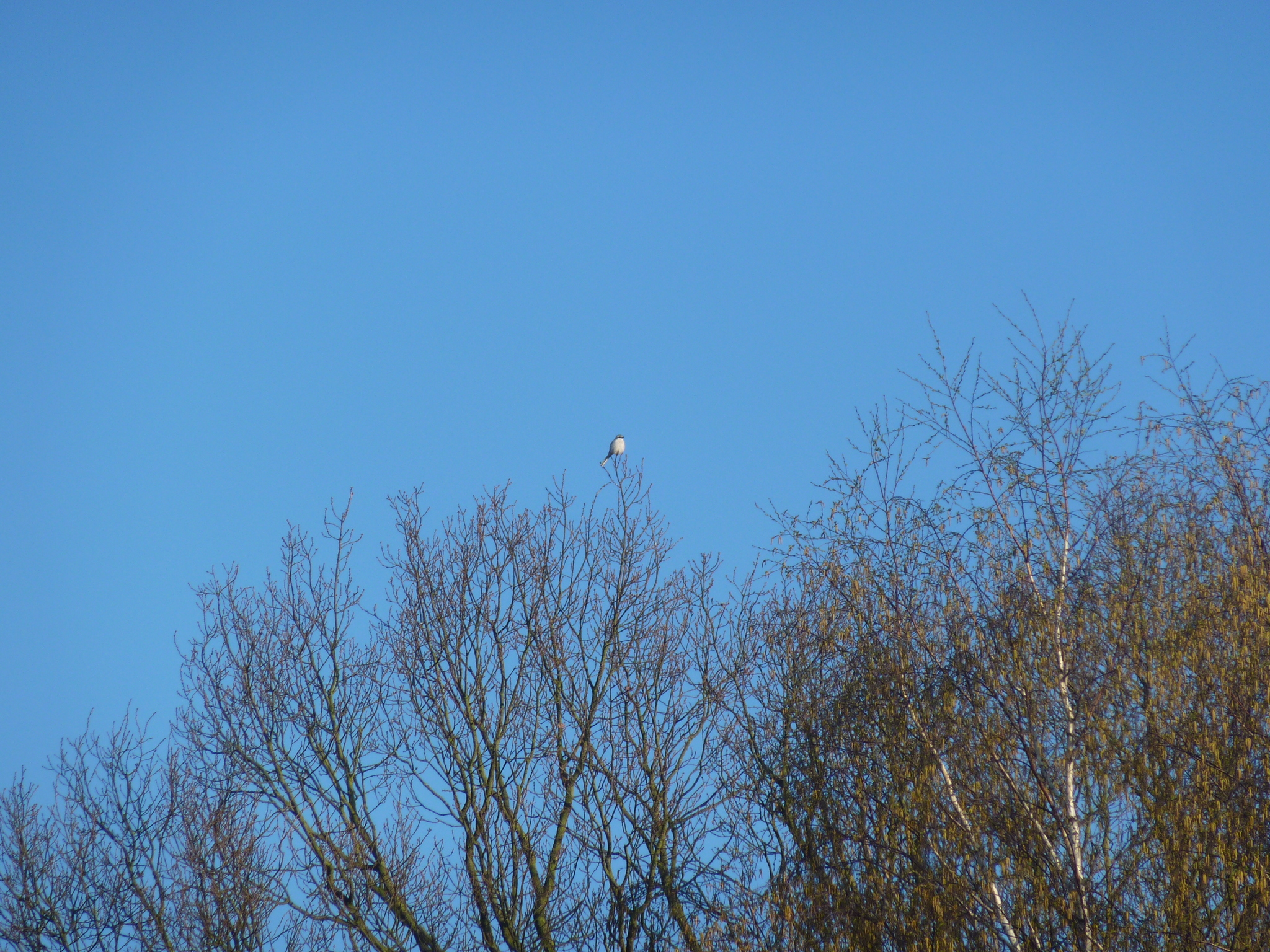
Great Grey Shrike
Lanius excubitor
西灰伯劳
Introduction
Large predatory songbird (Laniidae) forming a superspecies with Iberian grey shrike (L. meridionalis), Chinese grey shrike (L. sphenocerus) and loggerhead shrike (L. ludovicianus). Breeds generally north of 50°N in northern Europe and Asia, with most populations migrating south to temperate regions in winter. Most distinctive traits are impaling prey on thorns for storage and hunting from exposed perches. Rodents constitute over half the diet. IUCN assessment (2024): Least Concern, though populations declining in Europe since 1970s.
Description
Medium-sized passerine 22-26 cm long with 30-36 cm wingspan, typically weighing 60-70 g. Pearl grey upperparts with deep black eye-mask extending from beak through eye to ear coverts; white cheeks, chin and scapulars. Wings black with white bar from primary remiges bases. Tail black, long and pointed with white outer vanes. Underparts white, slightly grey-tinged. Females similar but greyer underparts with faint brownish barring. Young heavily greyish-brown tinged with barring on upperside.
Identification
Distinguished from Iberian grey shrike by clearer, darker grey upperparts and pinkish belly. Chinese grey shrike is larger with more extensive white in wings and tail. Loggerhead shrike has proportionally larger head and all-dark stubby bill. Lesser grey shrike is smaller with shorter tail, large black area above bill reaching nearly to forehead, and wide rather than pointed tail end. Key distinguishing features include white scapulars, wing pattern with single white bar, and white outer tail feathers.
Distribution & Habitat
Breeds across Eurasia and northern Africa from approximately 42°N to 70°N. Southern limit in Altai-Tian Shan mountains; absent from most of Kamchatka Peninsula. Vagrant to Iceland, British Isles, Korea and Mediterranean region. Generally short-distance migrant; populations in temperate Europe and subspecies bianchii are more resident. Females migrate more than males. Most migrate July-October, returning March-May. Prefers open grassland with scattered shrubs, trees at forest edges, and isolated perches in steppe. Requires 5-15 perching sites per hectare.
Behavior & Ecology
Carnivorous diet dominated by rodents (over half biomass), supplemented by shrews, songbirds, lizards, amphibians and large invertebrates. Hunts by perching elevated 1-18 m above ground or via hovering flight up to 20 minutes. Drops or swoops to capture prey; impales large prey on thorns or in forked branches. Territorial but breeds in dispersed groups of about half-dozen adults. Song consists of short warbling strophes with fluid whistles; harsh raspy whistles for territory alerts. Alarm call is jay-like harsh notes. Breeds once yearly, occasionally twice; nests built 2-16 m above ground in trees. Cup nest 20-28 cm outer diameter with 3-9 eggs.
Conservation
IUCN Red List (2024): Least Concern. Extinct as breeding bird in Switzerland and Netherlands. European populations declining since 1970s due to agricultural land consolidation reducing hedgerows and elevated perches. Pesticide use in 1960s impacted breeding success. Sweden stronghold with 20,000-50,000 birds late 20th century. Hundreds to thousands per country throughout range; density highest in Luxembourg. Main threats are habitat loss from agricultural intensification and pesticide accumulation affecting predatory birds.
Culture
Scientific name means 'sentinel butcher': Lanius (Latin for butcher) and excubitor (sentinel). English 'shrike' derives from Old English scríc meaning 'shriek'. Folk names include Wereangel/Wierangel (Pennines), Warkangel/Werkengel (German dialects), Linkenom (upper Rhine), Neghen-doer/Nünmöder (German). Falconer's name was mattages(s). Also called 'murdering pie' and Scottish 'white wisky John' referencing its wavy flight. Names refer to food-caching behavior or appearance. Used in falconry to announce approaching hawks.
Source: Wikipedia · CC BY-SA 3.0
Taxonomy
- Order
- Passeriformes
- Family
- Laniidae
- Genus
- Lanius
- eBird Code
- norshr1
Vocalizations
Subspecies (12)
-
Lanius excubitor algeriensis
Morocco (north of Atlas Mountains), coastal northern Algeria, and Tunisia
-
Lanius excubitor aucheri
east-central Sudan and northwestern Somalia eastward through Arabian Peninsula to Iraq and southern Iran
-
Lanius excubitor buryi
Yemen
-
Lanius excubitor elegans
northern Sahara (Mauritania to Sinai Peninsula and Red Sea)
-
Lanius excubitor excubitor
breeds western and northern Europe eastward to western Siberia; winters to Türkiye and the Caucasus
-
Lanius excubitor homeyeri
breeds southeastern Europe and southwestern Siberia; winters to southwestern and central Asia
-
Lanius excubitor koenigi
central and eastern Canary Islands
-
Lanius excubitor lahtora
eastern Pakistan and northern India
-
Lanius excubitor leucopygos
southern Sahara and Sahel from Mauritania to western and central Sudan
-
Lanius excubitor pallidirostris
breeds from southwestern Russia and northeastern Iran eastward to southern Mongolia, western China, southeastern Afghanistan, and southwestern Pakistan; partially migratory, south of northeastern Africa (to Sudan, northwestern Somalia), the Arabian Peninsula, and northwestern India
-
Lanius excubitor theresae
southern Lebanon and northern Israel
-
Lanius excubitor uncinatus
Socotra
Data Sources
Species description from Wikipedia, licensed under CC BY-SA 3.0.
Bird images and sounds sourced from GBIF, contributed by citizen scientists worldwide under Creative Commons licenses.
Taxonomy data from AviList 2025.