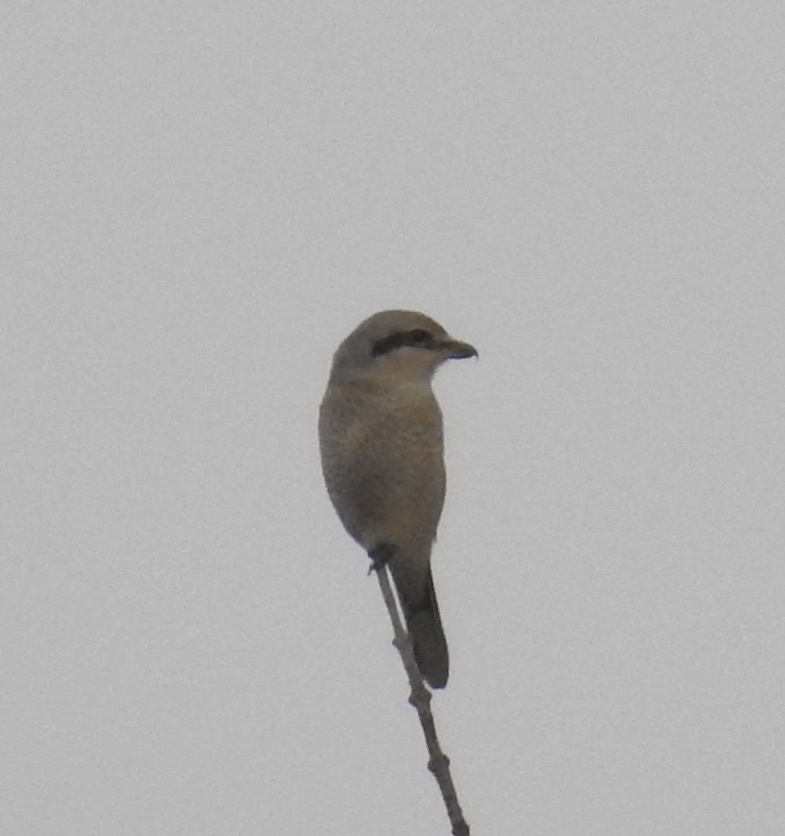
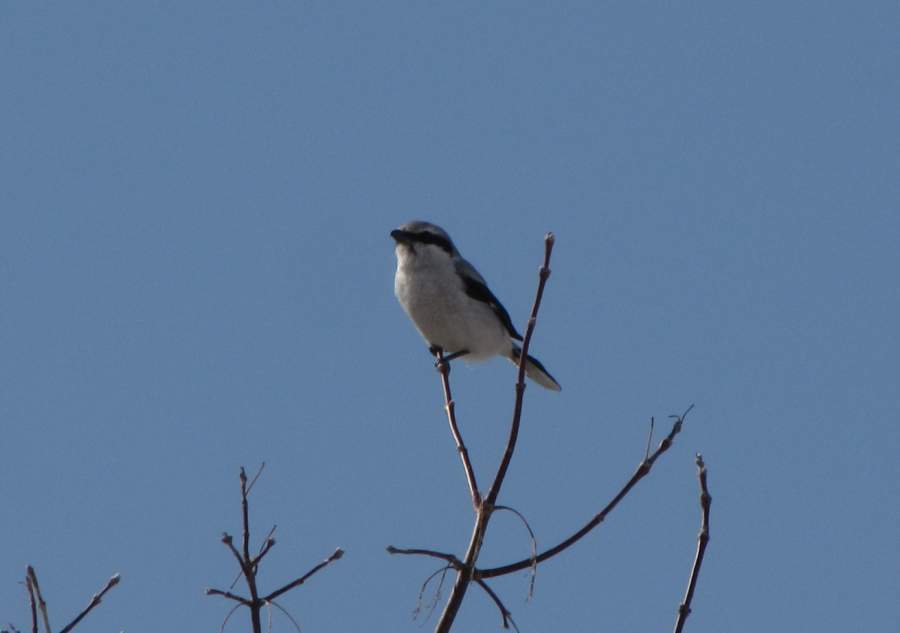
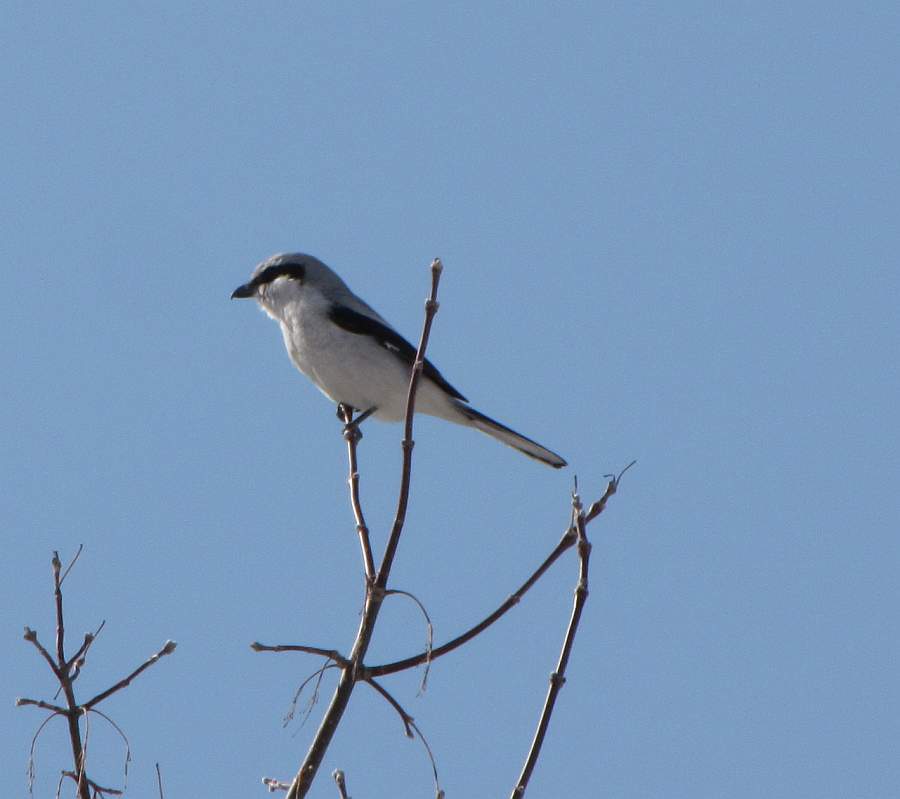
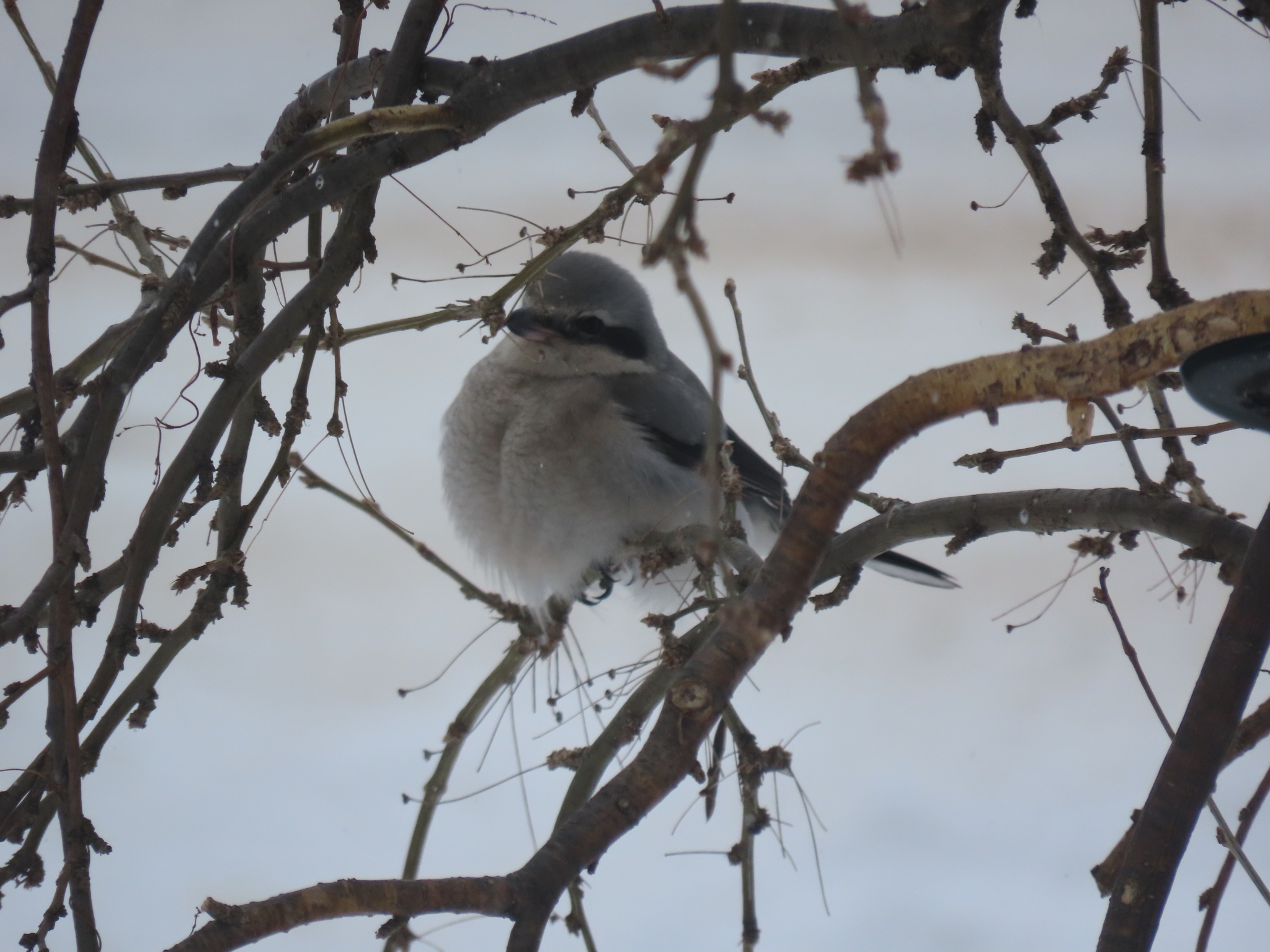
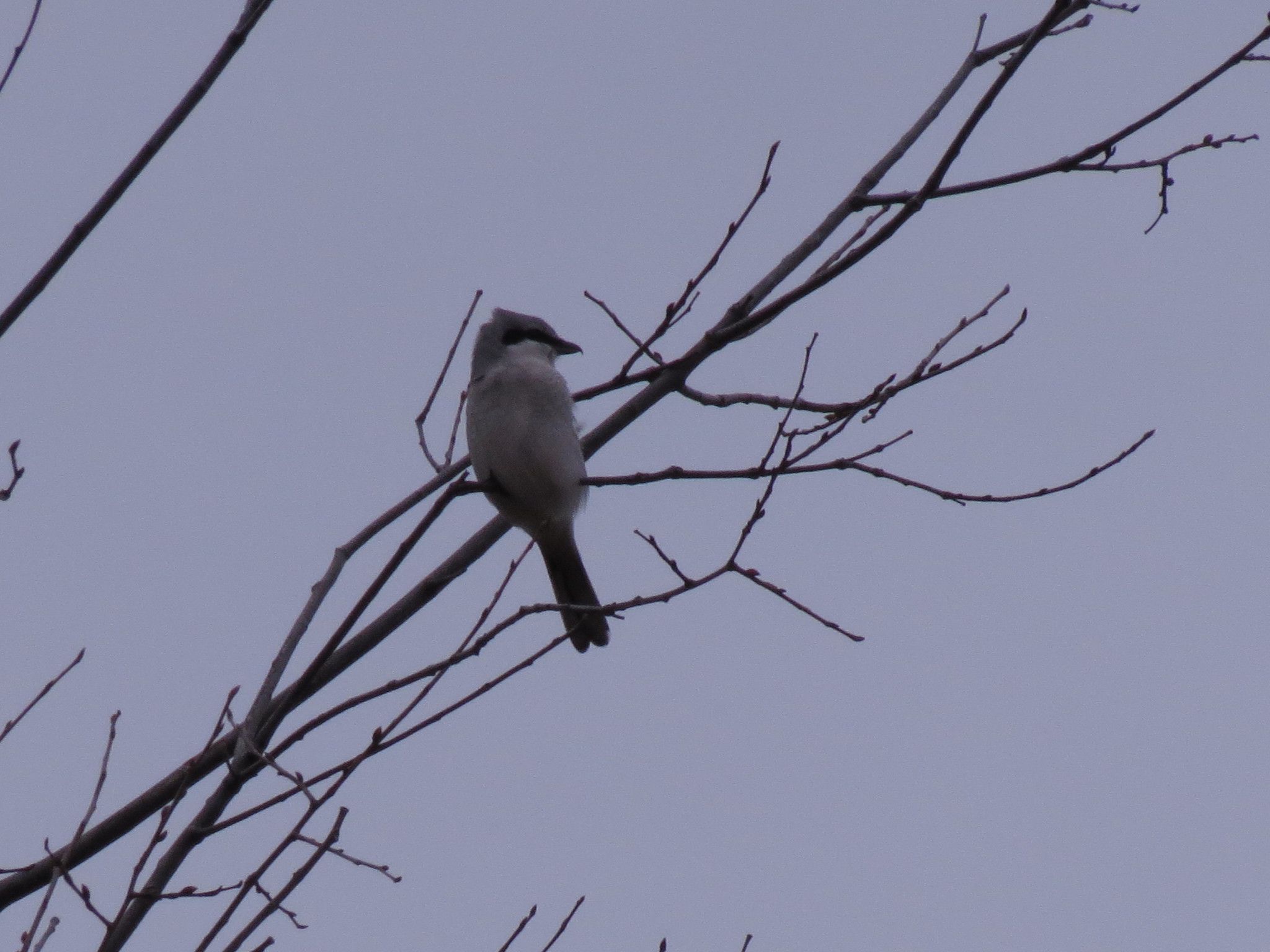
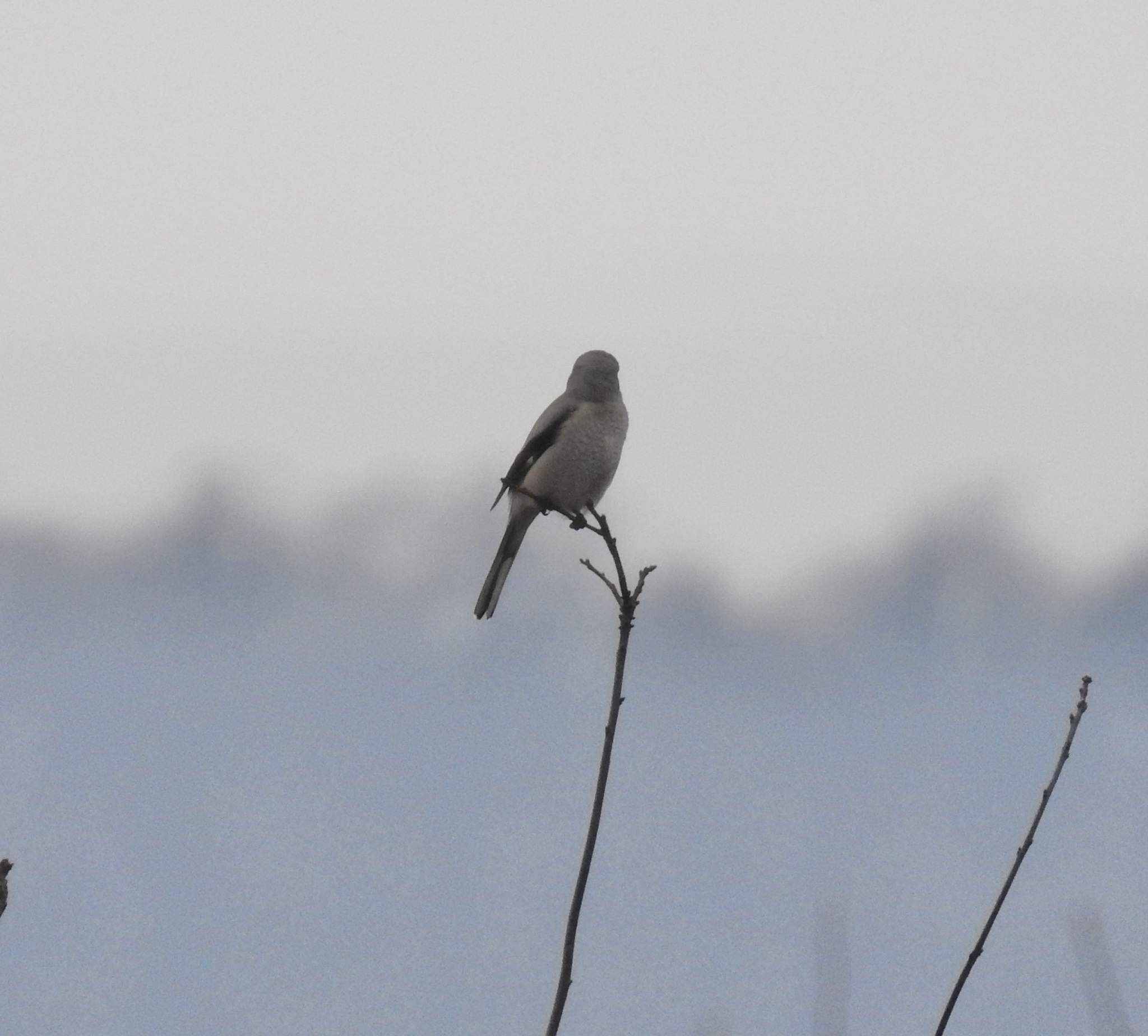
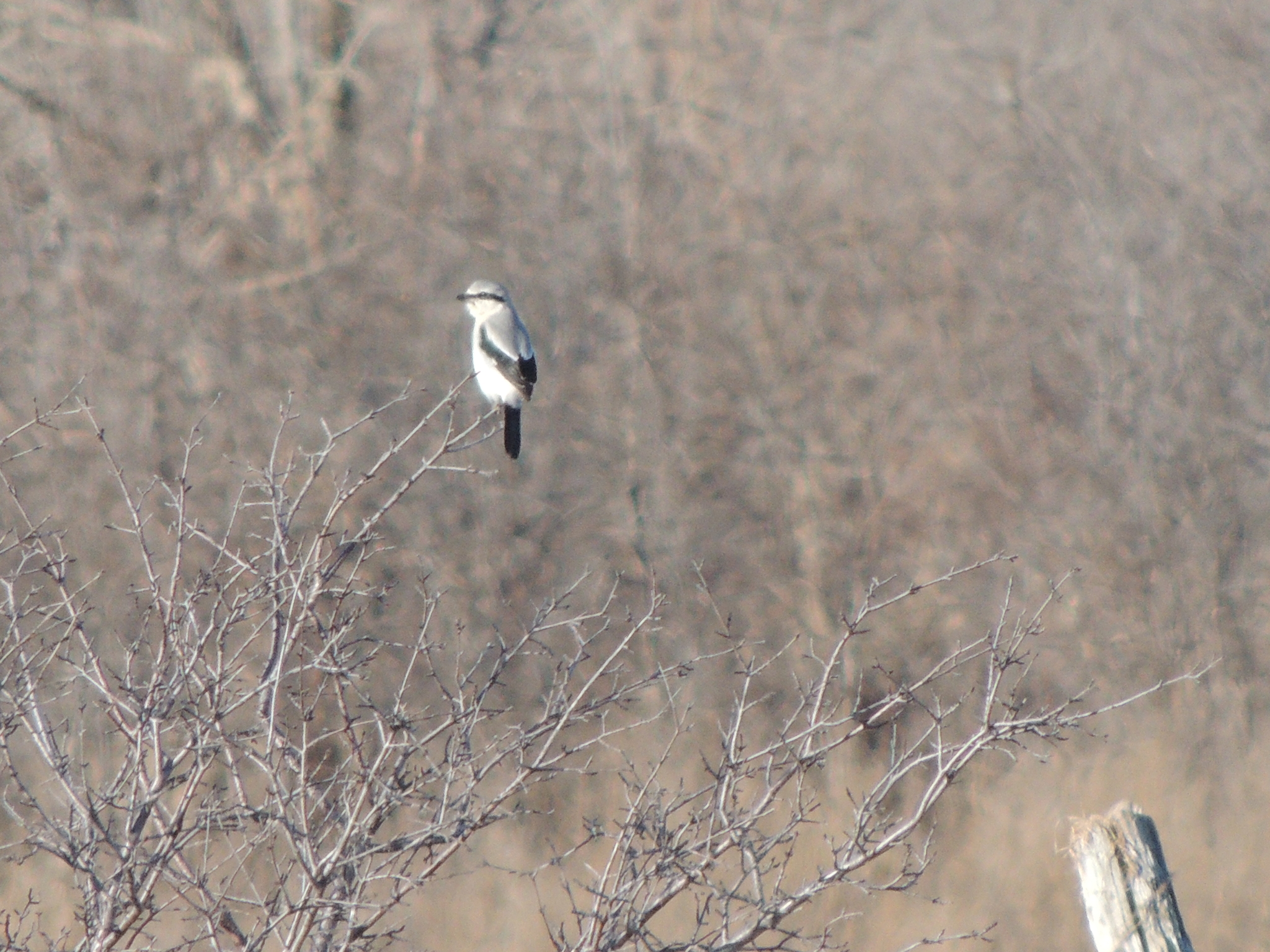
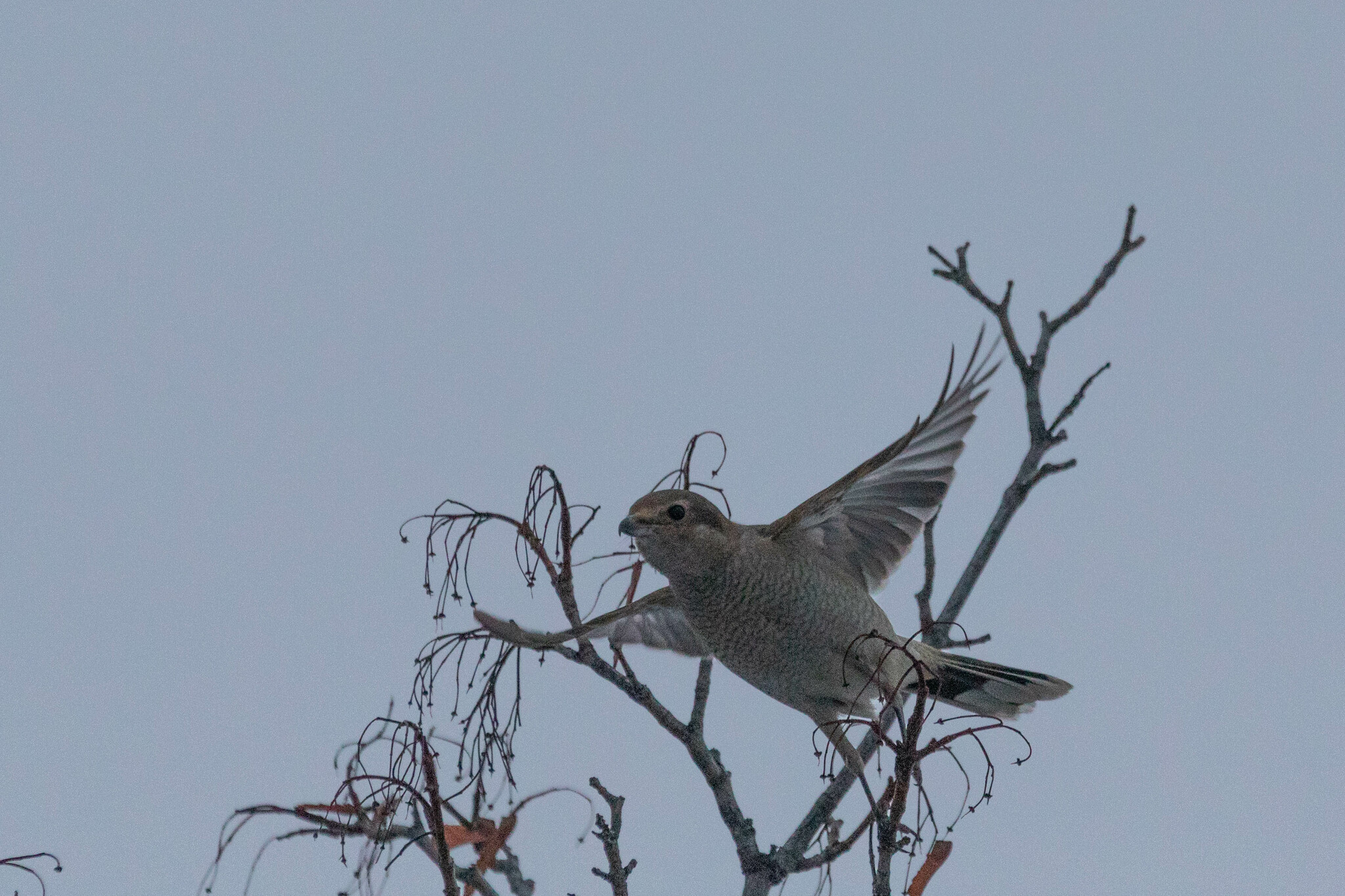
Northern Shrike
Lanius borealis
灰伯劳
Introduction
A large songbird species in the shrike family (Laniidae). Native to North America and Siberia, with six recognized subspecies. Long considered a subspecies of the great grey shrike, it was classified as a distinct species in 2017. It breeds in taiga and tundra habitats across its range. As a passerine, it has no talons but possesses the hooked beak of a raptor. Known for its distinctive habit of impaling prey on thorns or spikes, earning it the common name 'butcherbird'.
Description
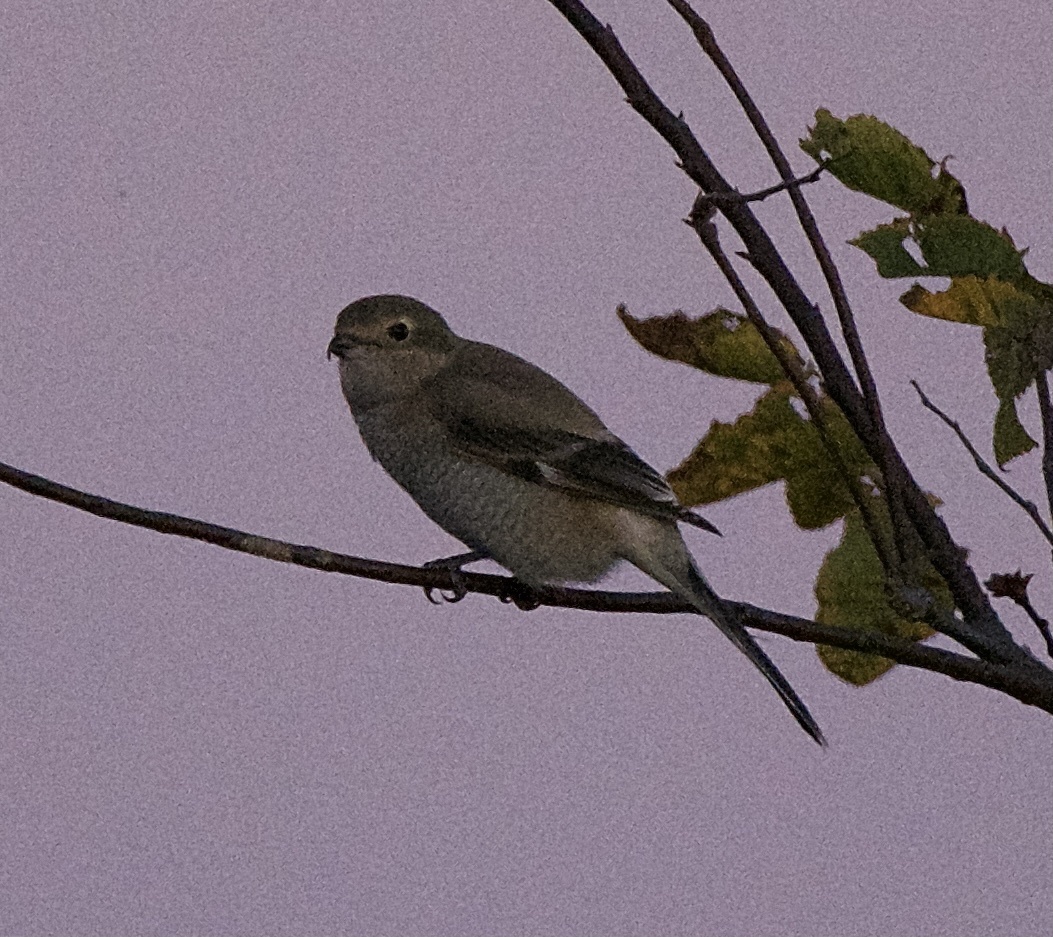
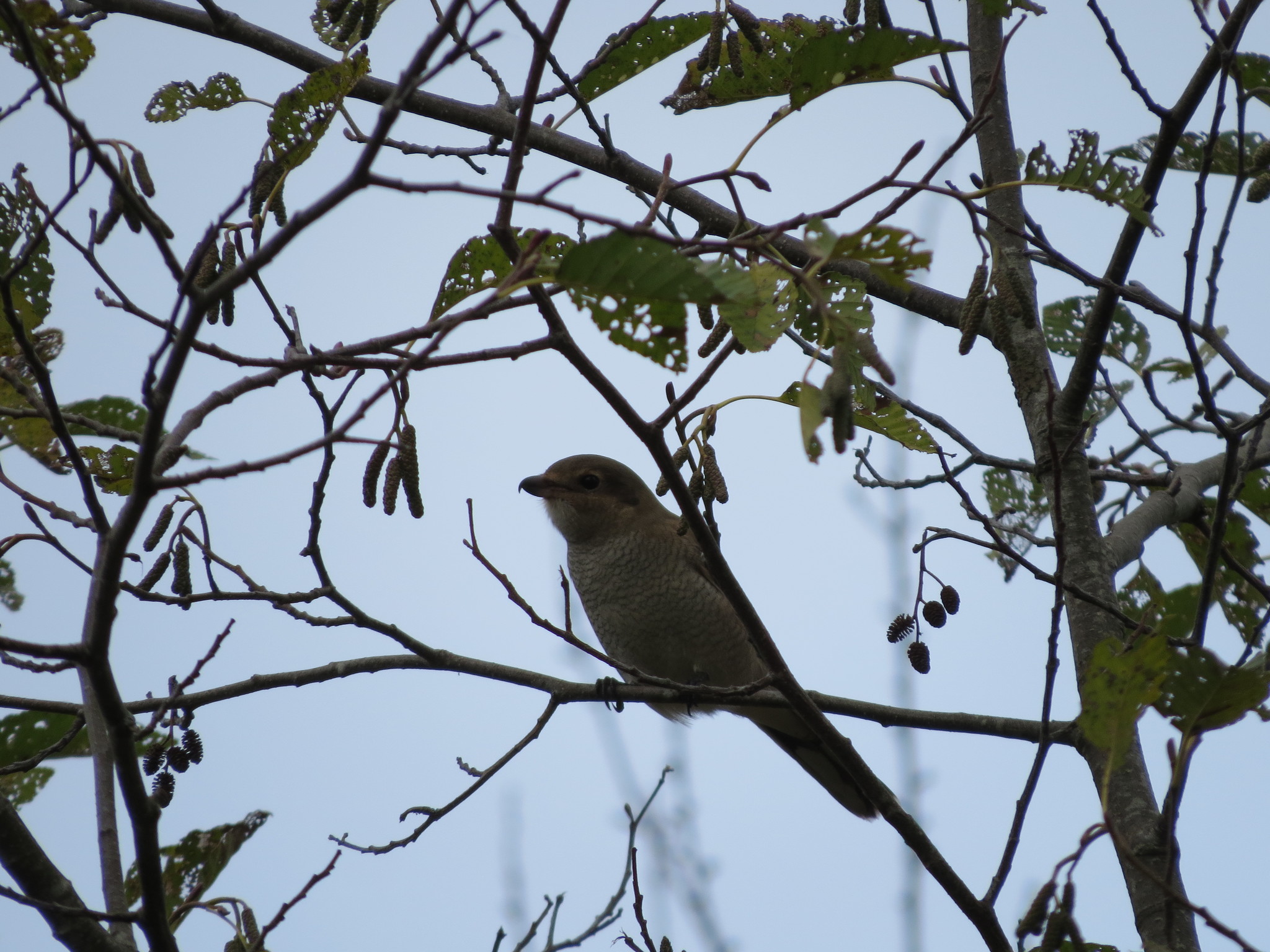
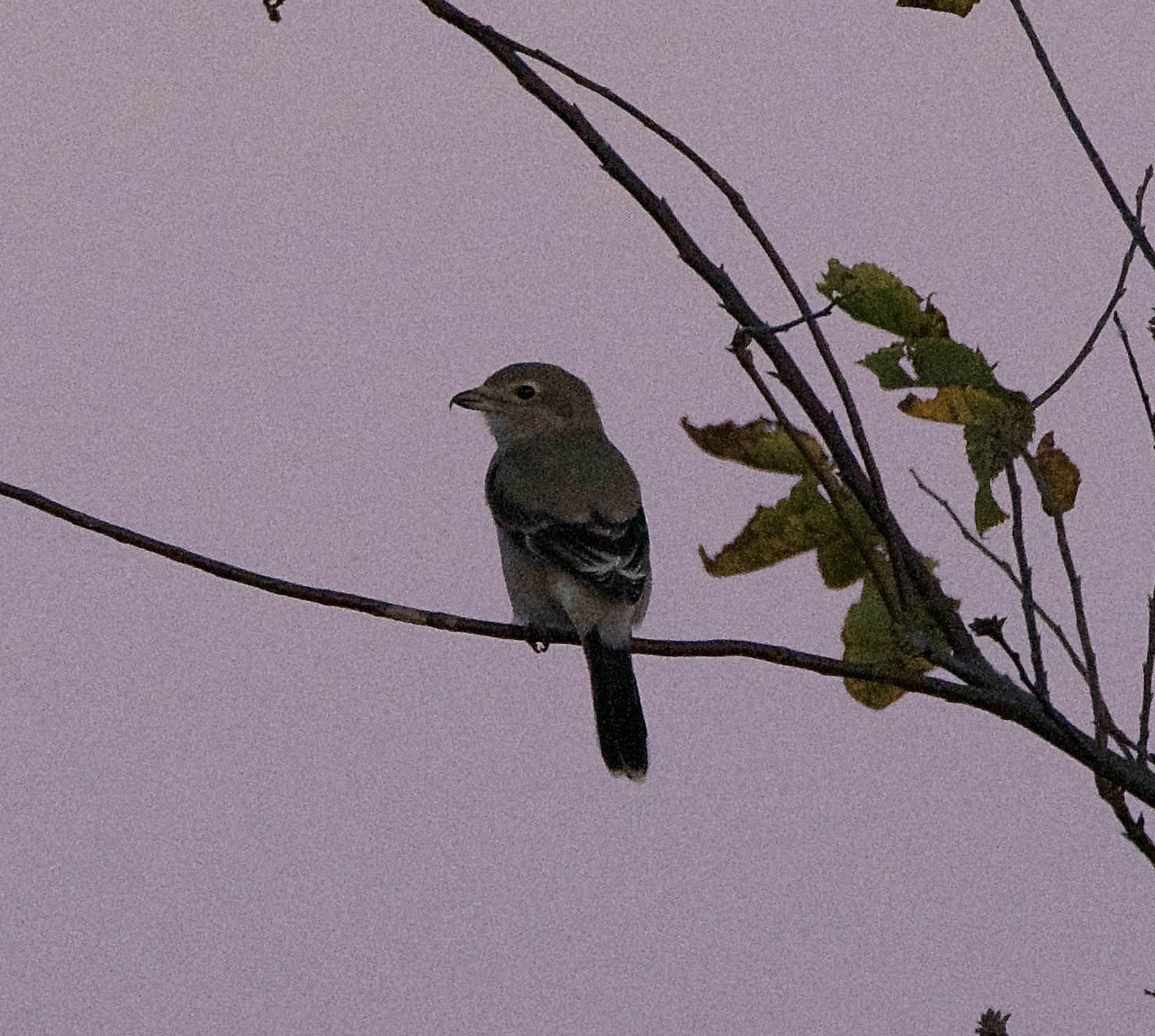
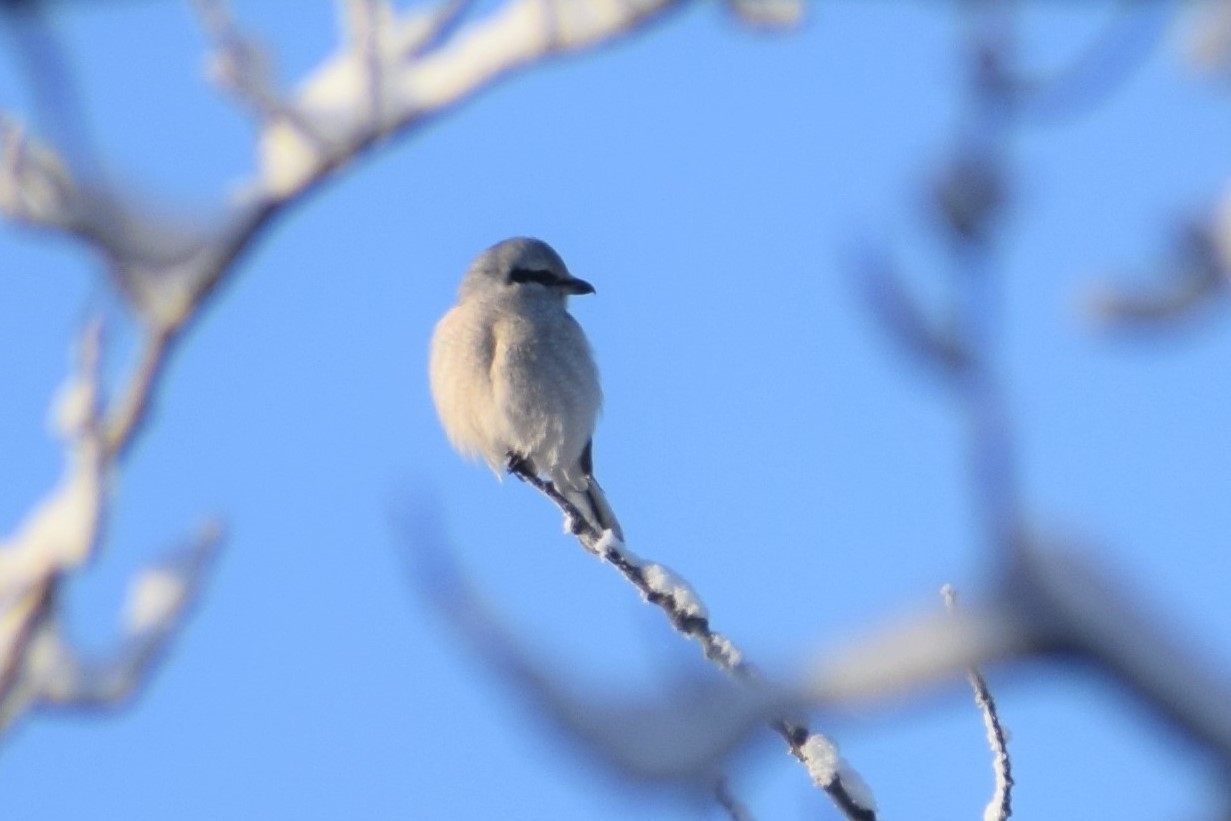
A large shrike with light grey upperparts and white underparts with fine barring. The black face mask extends through the eye but does not cover it completely, smaller than that of the loggerhead shrike. The bill is relatively long with a prominent hooked tip. Wings are black with white primary bases visible in flight. The tail is black with white outer feathers. Sexes appear similar. Measurements: length 9.1–9.4 inches (23–24 cm), weight 2.0–2.8 ounces (57–79 g), wingspan 11.8–13.8 inches (30–35 cm).
Identification
Larger and paler grey than the loggerhead shrike. The black face mask is smaller and does not cover the eye completely, whereas the loggerhead's mask covers the entire eye region. The bill is longer with a more prominent hook. In flight, the white at the base of the primaries is more extensive than in loggerhead shrikes. Vocalizations are similar to loggerhead shrike but identification is best confirmed by range, size, and face mask pattern.
Distribution & Habitat
Breeds across the taiga and tundra from Labrador west through Alaska to western Siberia, and south to extreme northwestern China, northern Mongolia, and James Bay. Breeds in forest edge habitats with suitable trees and shrubs including white spruce, black spruce, felt-leaf willow, mountain alders, and poplars. Northern limit defined by presence of 1-2 meter high shrubby willows. Irruptive in winter; some remain year-round but most move south depending on winter severity and food supply. Winter range extends to northeastern China, Japan, and irregularly to New Mexico, Kansas, Illinois, Ohio, Pennsylvania, and New Jersey. Wintering habitats include open country, forest edges, prairies, agricultural land, savannas, and coastal marshes.
Behavior & Ecology
Hunts from elevated perches such as tall poles and branches. Prey includes arthropods (spiders, beetles, bugs, grasshoppers) and small vertebrates. Known to hunt birds at feeders, including horned lark, black-capped chickadee, common starling, Brewer's sparrow, white-crowned sparrow, dark-eyed junco, pine siskin, and house sparrow. Small mammal prey includes vagrant shrew, western harvest mouse, deer mouse, long-tailed vole, meadow vole, and house mouse. Also takes reptiles such as spiny lizards. Known to lure small birds by imitating their calls. Stores surplus prey by impaling on thorns or spikes. Nests in coniferous and deciduous trees and shrubs.
Culture
Known as 'winter butcherbird' in Michigan folk tradition. The Vuntut Gwitchin First Nation people of Old Crow, Yukon call it Tzi kwut go katshi lyi. John James Audubon referred to the borealis subspecies as the 'great American shrike' in his book Birds of America. Related to loggerhead shrike, both commonly known as 'butcherbirds' in North America for their prey-caching behavior.
Source: Wikipedia · CC BY-SA 3.0
Taxonomy
- Order
- Passeriformes
- Family
- Laniidae
- Genus
- Lanius
- eBird Code
- norshr4
Vocalizations
Subspecies (5)
-
Lanius borealis bianchii
Sakhalin and southern Kuril Islands (northern Japan)
-
Lanius borealis borealis
breeds Alaska and northern Canada, southward to far northern British Columbia and Alberta, northern Ontario and Quebec; winters southern Canada and northern USA
-
Lanius borealis funereus
western China (Tien Shan Mountains)
-
Lanius borealis mollis
Russian Altai and northwestern Mongolia
-
Lanius borealis sibiricus
eastern Siberia to northern Mongolia and Kamchatka Peninsula
Data Sources
Species description from Wikipedia, licensed under CC BY-SA 3.0.
Bird images and sounds sourced from GBIF, contributed by citizen scientists worldwide under Creative Commons licenses.
Taxonomy data from AviList 2025.