Rock Ptarmigan
Lagopus muta
岩雷鸟
Introduction
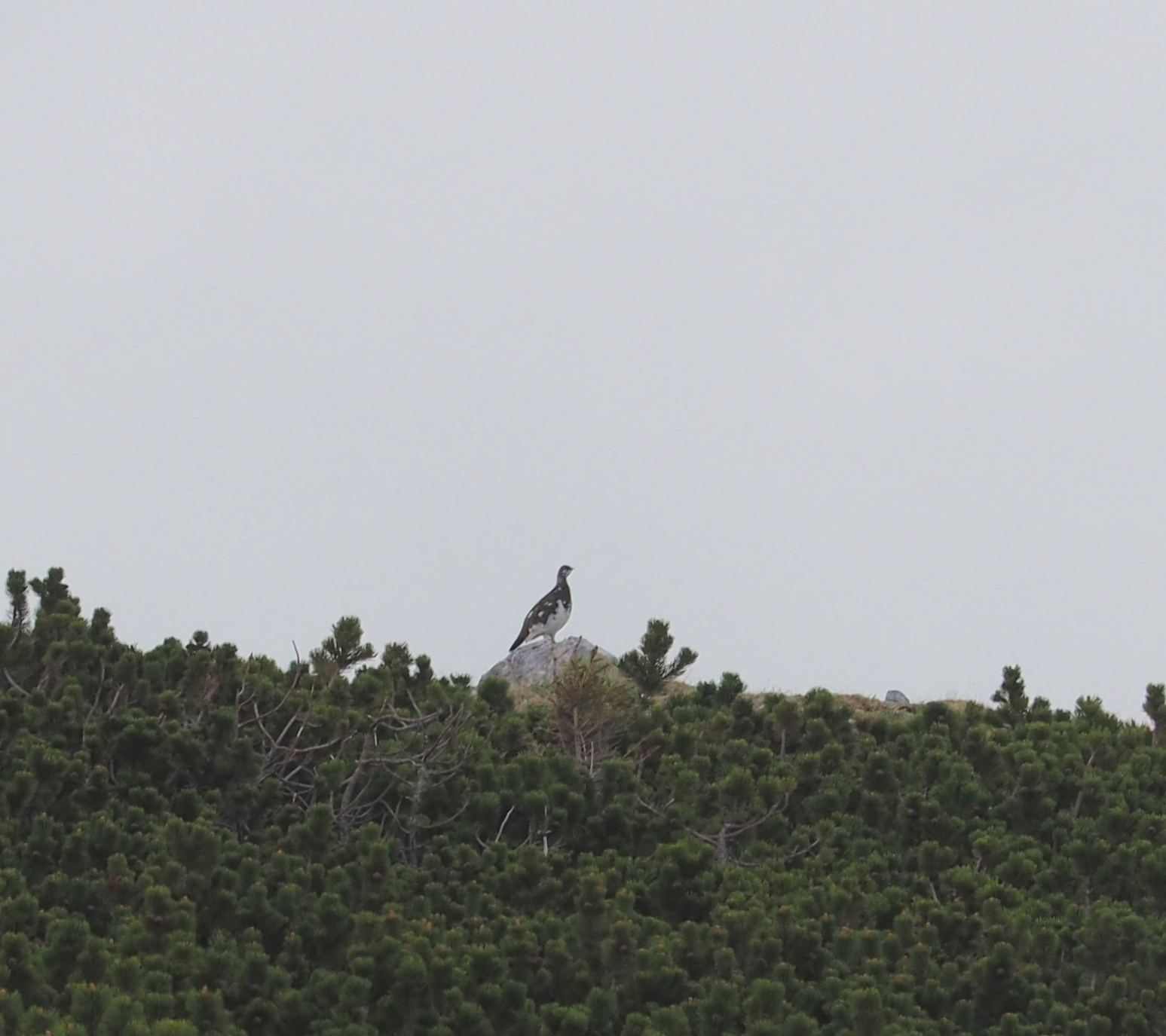
A medium-sized game bird in the grouse family (Tetraonidae). It breeds across Arctic and Subarctic Eurasia and North America, including Greenland, on rocky mountainsides and tundra. The species is characterized by its seasonally variable plumage, moultting from completely white in winter to grey and brown in summer, providing effective camouflage. It has feathered legs and a distinctive repertoire of guttural vocalizations during breeding season. The species is the official bird of Nunavut, Canada (Inuktitut name: aqiggiq) and the official game bird of Newfoundland and Labrador. In Japan, it is protected nationwide and serves as the official bird of Gifu, Nagano, and Toyama Prefectures. Twenty-three subspecies are recognized across its range.
Description
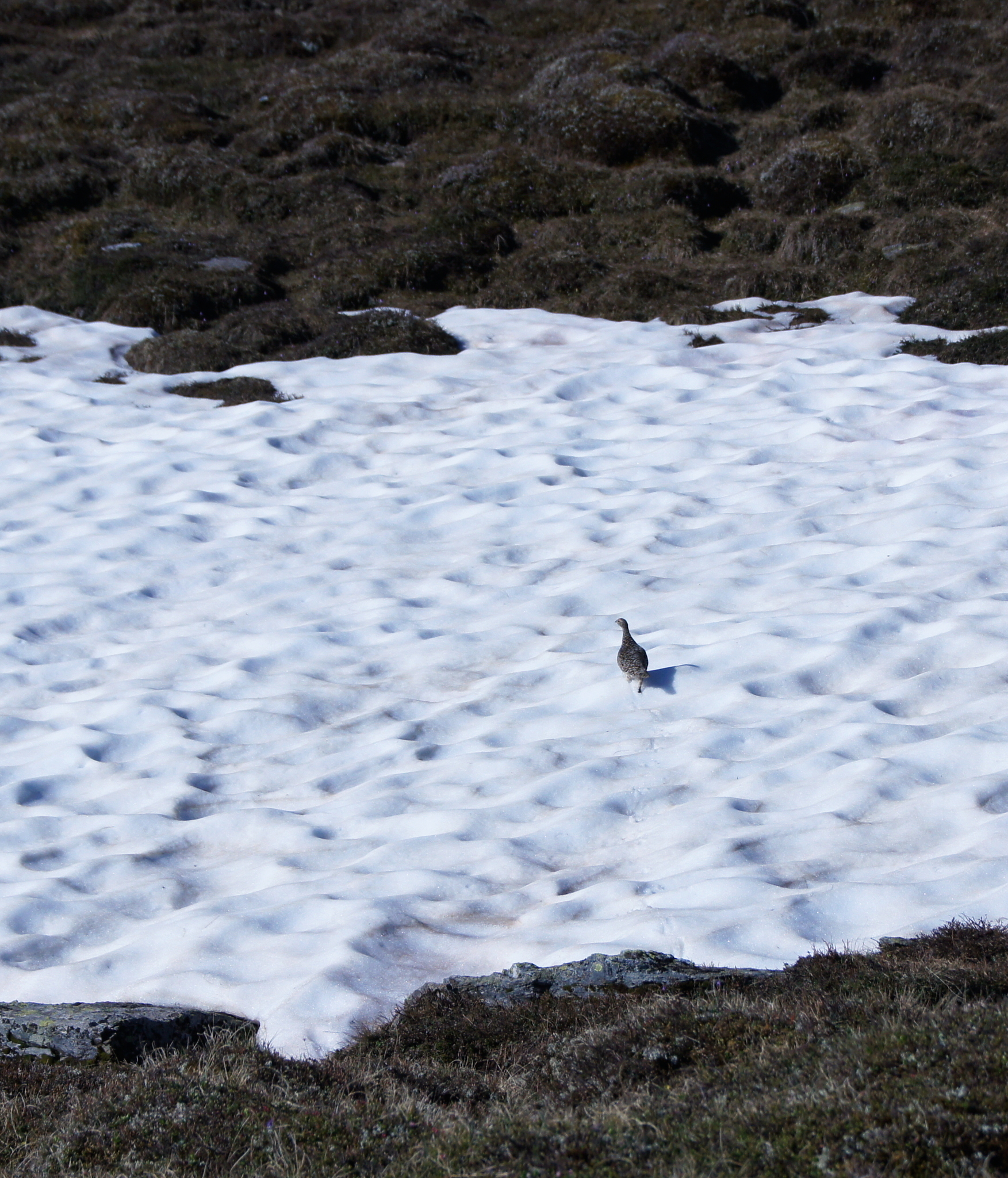
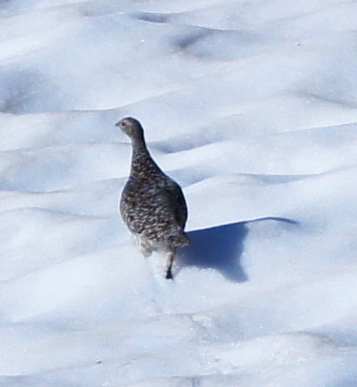
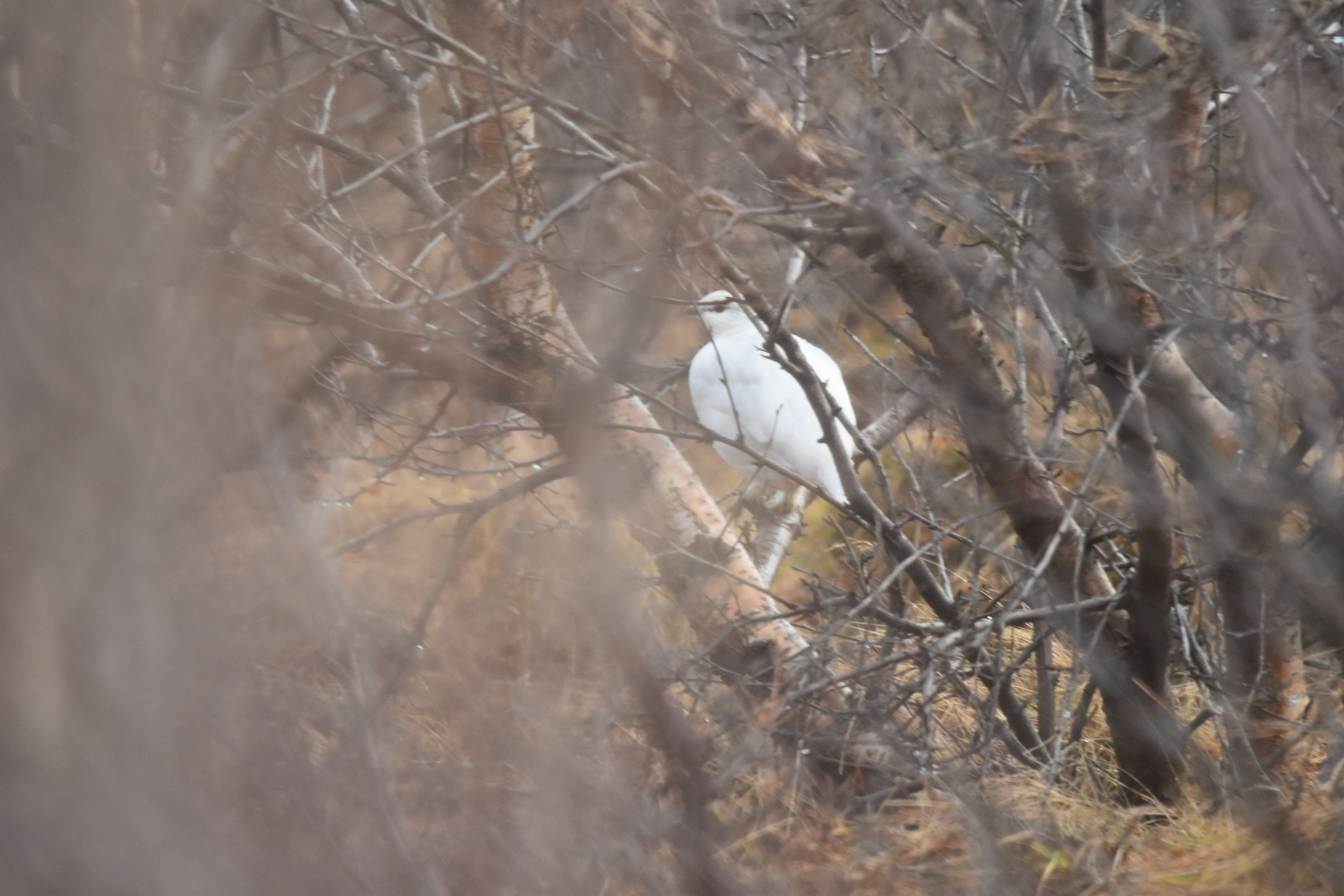
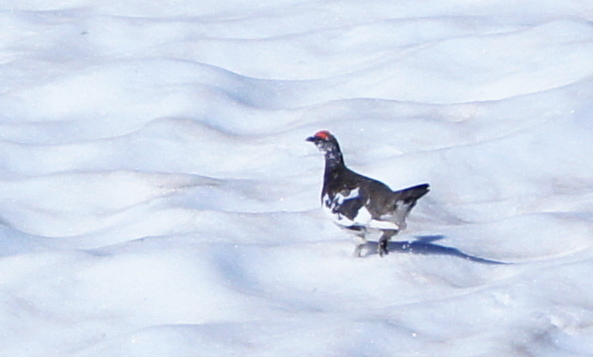
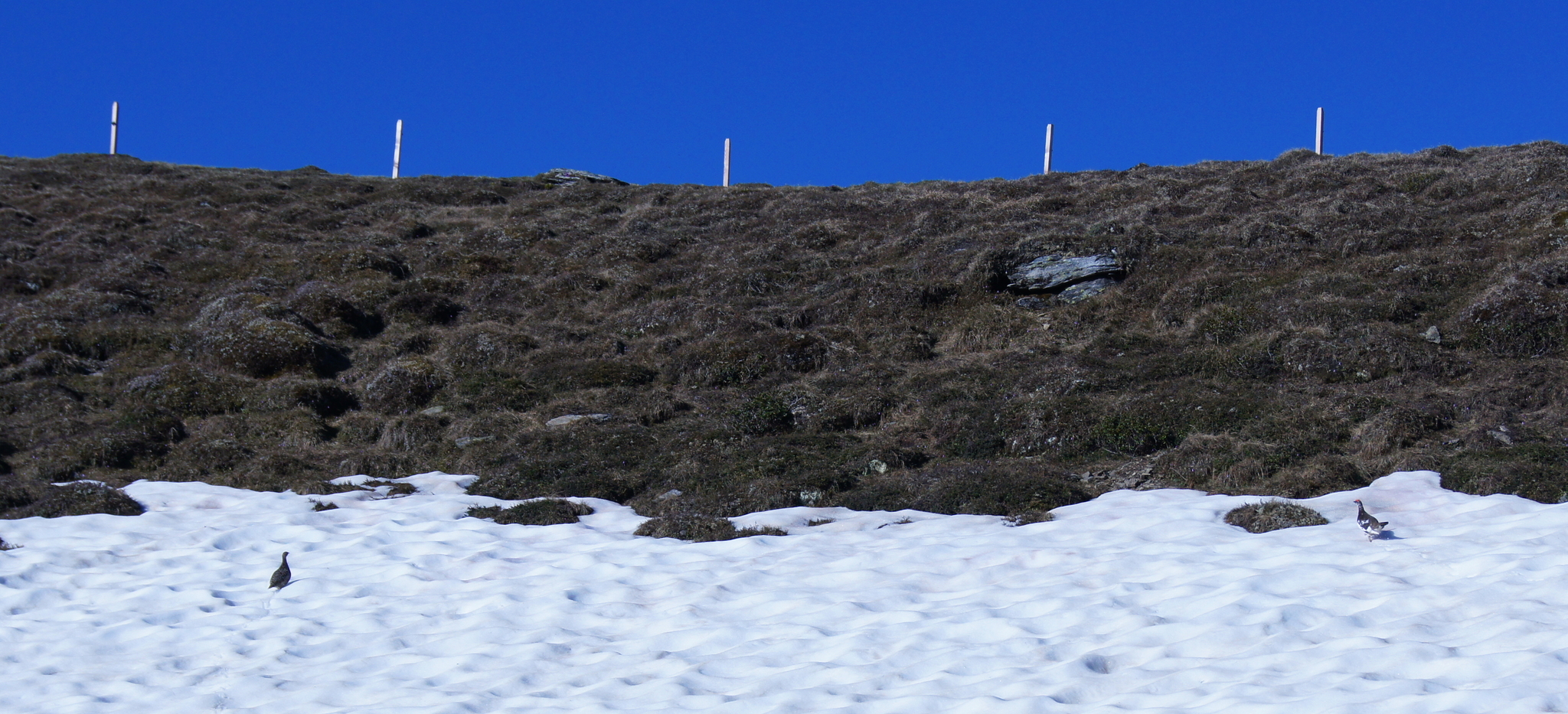
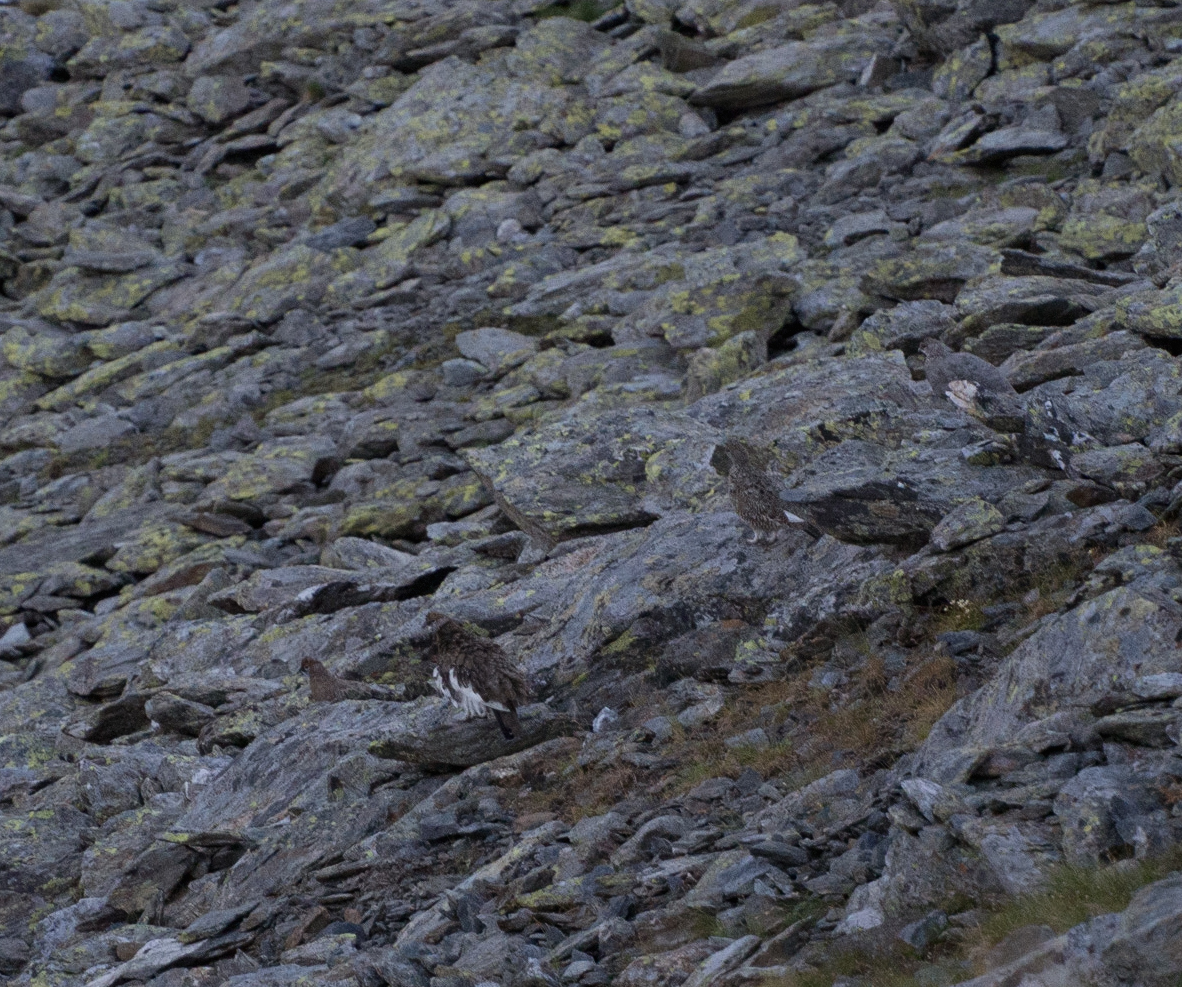
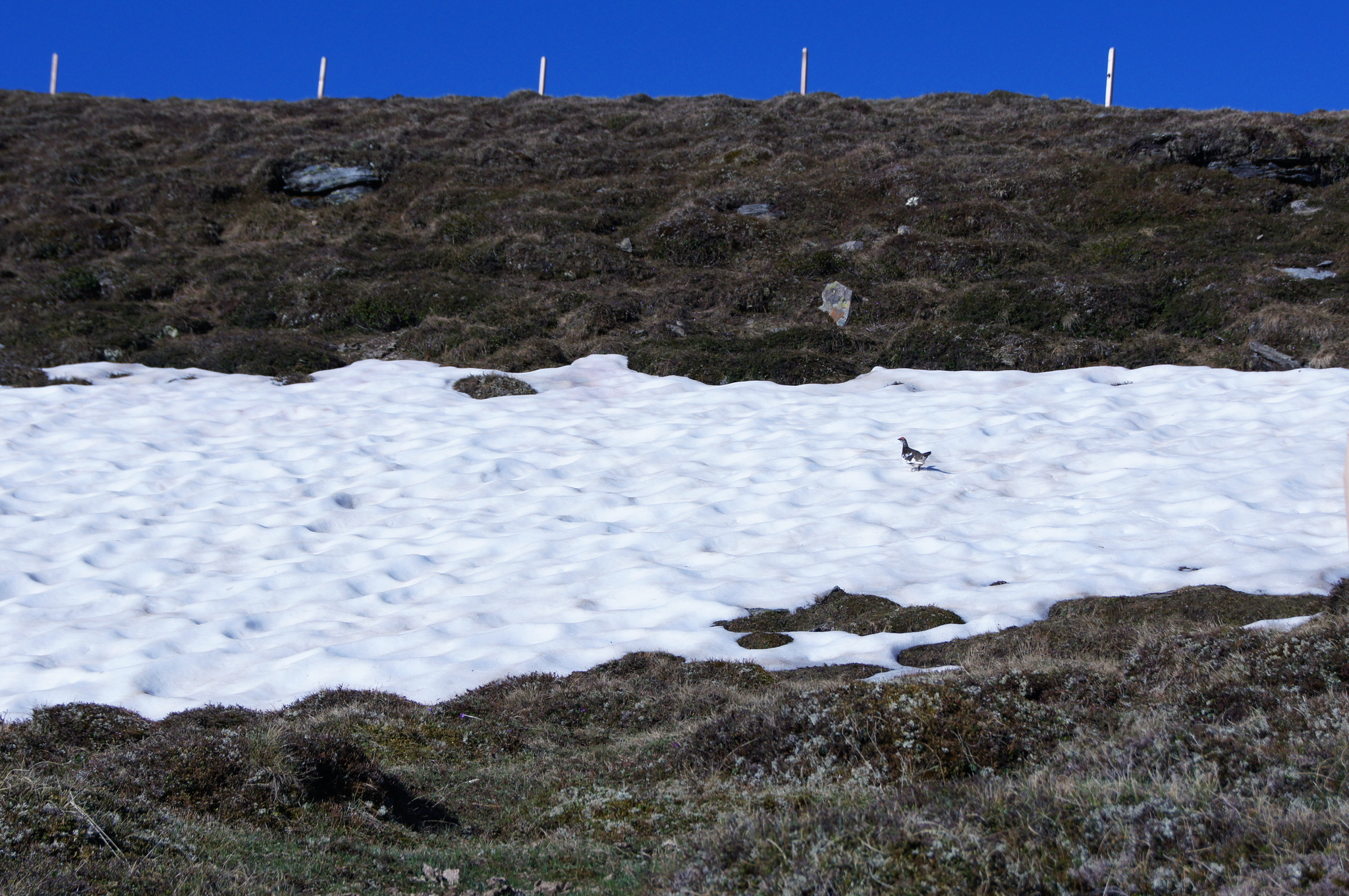
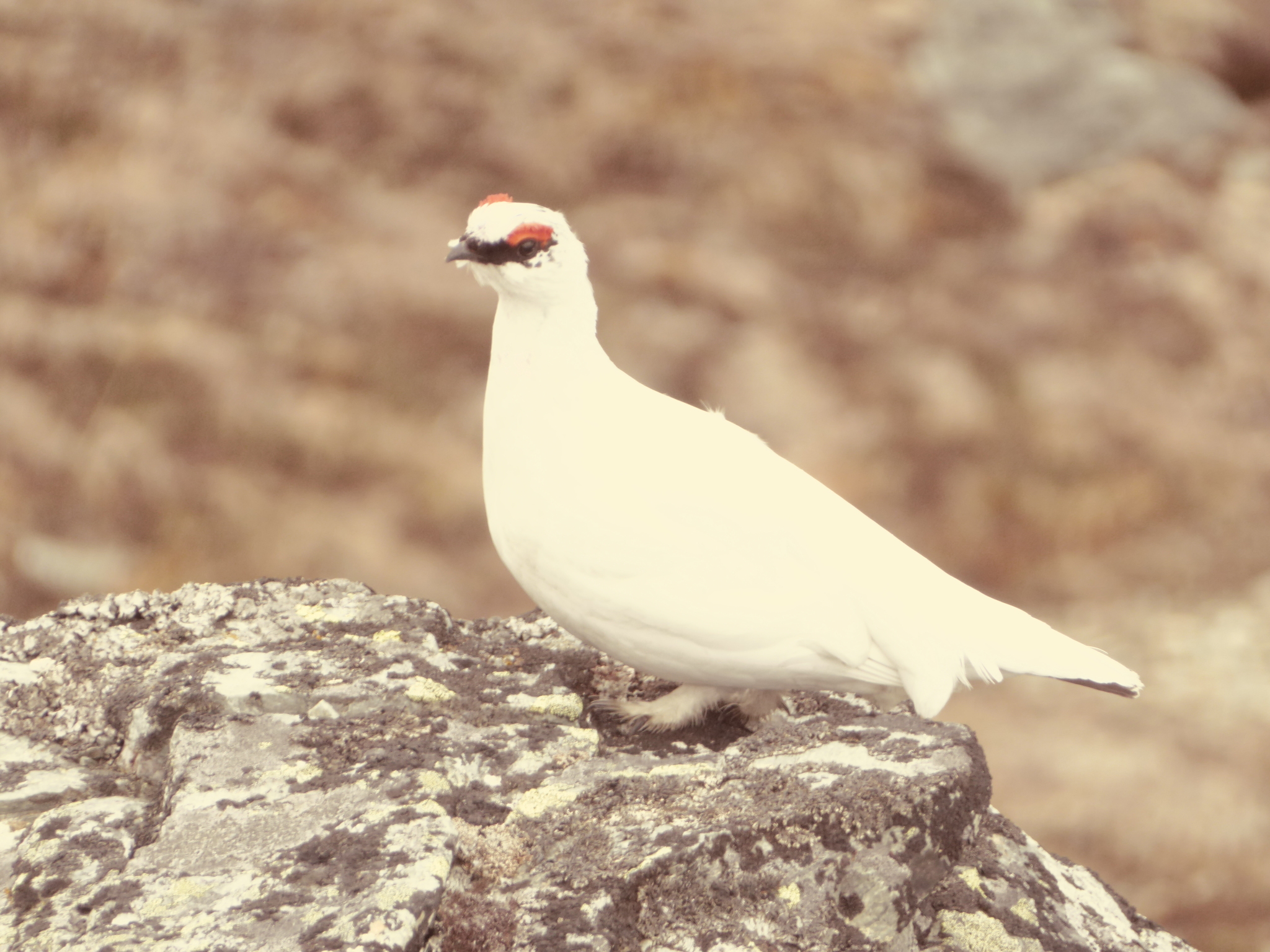
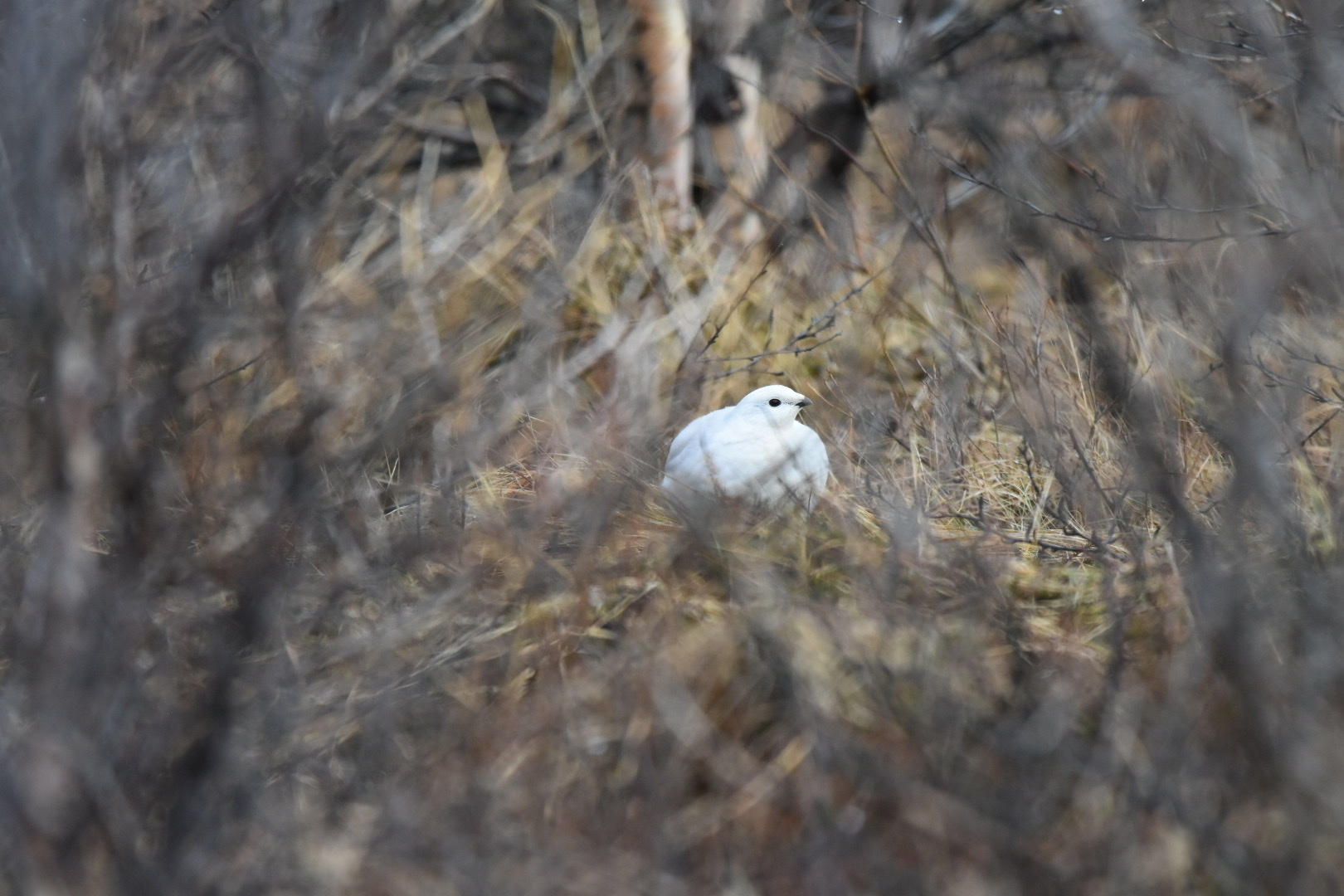
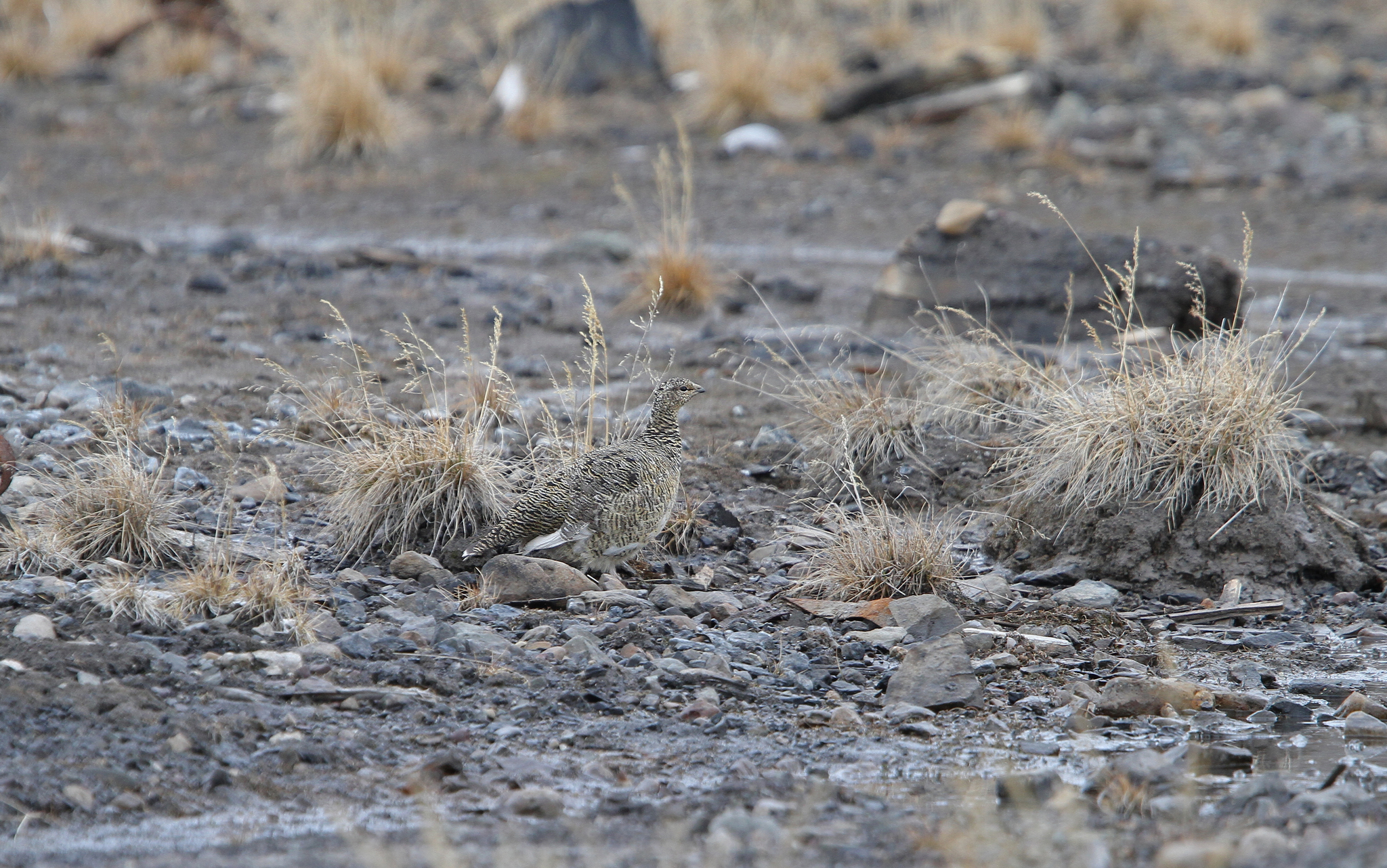
A compact grouse measuring 34-36 cm in length with an 8 cm tail and wingspan of 54-60 cm. Adults weigh 440-640 g, approximately ten percent smaller than the willow ptarmigan. The plumage undergoes complete seasonal transformation: winter birds are entirely white except for black outer tail feathers and a narrow eye line; summer plumage consists of greyish-brown upperparts with white wings and underparts in breeding males. The species derives its genus name Lagopus from Greek words for 'hare' and 'foot', referring to its feathered legs. Both sexes possess a red eyebrow comb used in courtship displays, though males have additional black lores absent in females.
Identification
Distinguished from the similar willow ptarmigan by habitat preference for higher elevations and more barren terrain. The rock ptarmigan has a notably slender bill. Males can be identified by black lores, which are absent in both female rock ptarmigan and all willow ptarmigan plumage phases. In winter plumage, habitat provides the most reliable distinction: rock ptarmigan inhabits higher, more barren terrain while willow ptarmigan occupies lower shrubbier areas. The species appears surprisingly approachable due to its remote habitat and few natural predators, including gyrfalcon, golden eagle, and arctic fox.
Distribution & Habitat
Breeds across Arctic and Subarctic regions of Eurasia and North America, including Greenland. Widespread throughout the Arctic Cordillera and Eurasian Arctic from Scandinavia east through Siberia. Isolated populations occur in Scotland, the Pyrenees, Alps, Urals, Pamir and Altay Mountains, and Japan's Japanese Alps and Mount Haku. The species is largely sedentary; southern populations in Japan and Scotland show only limited altitudinal migration. Northern populations are more dispersive, with documented movements including 300 km crossings of the Denmark Strait between Greenland and Iceland, and a ringed bird recovered over 1,000 km from its summer location. Introduced to New Zealand, South Georgia, and the Kerguelen and Crozet Islands.
Behavior & Ecology
Breeding begins at six months of age, with clutch sizes averaging six chicks. Males display on open leks with aerial displays involving fast forward flight with rapidly beating wings followed by an upward glide and rasping vocalizations described as resembling a stick drawn across fence slats. Ground displays include tail-fanning, extended necks, and circling receptive females. The diet varies seasonally: winter consumption focuses on aspen, dwarf birch, and willow buds; summer includes willow leaves, Dryas flowers, crowberries, and cowberries. Chicks consume insects, larvae, and snails. Males defend territories through calls and chases, with physical conflicts between males being rare. The species has limited fat storage capacity, requiring frequent foraging, though the Svalbard subspecies gains approximately 100 grams of adipose tissue for winter survival.
Conservation
The species maintains stable populations across most of its extensive range due to remote habitat and high reproductive rate (six chicks per brood). Iceland banned hunting in 2003-2004 following population declines but resumed limited hunting in 2005 with annual restrictions on selected days. All trade in rock ptarmigan is illegal in Iceland. Southern peripheral populations in the British Isles have declined significantly, disappearing from England's Lake District and Scotland's Southern Uplands by the early-to-mid 1800s. Climate change and habitat alteration at southern range edges pose ongoing conservation concerns.
Culture
A traditional festive food in Icelandic cuisine, though hunting was temporarily banned from 2003-2004 due to population concerns. The species holds official status as the territorial bird of Nunavut, Canada, where it is known as aqiggiq in Inuktitut. It is also the official game bird of Newfoundland and Labrador. In Japan, the species (raichō, meaning 'thunder bird') is protected nationwide and serves as a prefectural symbol for Gifu, Nagano, and Toyama. Thomas Bewick's 1797 work 'A History of British Birds' described the species as 'White Grouse' or 'White Game', noting that its diet of wild hill plants sometimes imparted a bitter but not unpalatable flavor to the dark meat.
Source: Wikipedia · CC BY-SA 3.0
Taxonomy
- Order
- Galliformes
- Family
- Phasianidae
- Genus
- Lagopus
- eBird Code
- rocpta1
Subspecies (23)
-
Lagopus muta atkhensis
Tanaga, Adak, and Atka islands (west-central Aleutian Islands, Alaska, northwestern USA)
-
Lagopus muta dixoni
coasts and mountains of Glacier Bay to northwestern British Columbia
-
Lagopus muta evermanni
Attu Island (Aleutian Islands)
-
Lagopus muta gerasimovi
Karaginskiy Island (Bering Sea, northeastern Russia)
-
Lagopus muta helvetica
Alps (Savoie to central Austria)
-
Lagopus muta hyperborea
Svalbard, Franz Josef Land, and Bear Island
-
Lagopus muta islandorum
Iceland
-
Lagopus muta japonica
Honshu Island (Japan)
-
Lagopus muta kurilensis
Kuril Islands
-
Lagopus muta macruros
eastern Greenland
-
Lagopus muta millaisi
Scotland
-
Lagopus muta muta
Norway, northern Sweden, northern Finland, and Kola Peninsula
-
Lagopus muta nadezdae
southern Siberia and northern Mongolia
-
Lagopus muta nelsoni
Unimak and Unalaska islands (eastern Aleutian Islands, Alaska, northwestern USA) and southern Alaska
-
Lagopus muta pleskei
northern Siberia
-
Lagopus muta pyrenaica
Pyrenees
-
Lagopus muta reinhardi
southwestern Greenland
-
Lagopus muta ridgwayi
Komandorskiye Islands
-
Lagopus muta rupestris
tundra of northern North America
-
Lagopus muta saturata
northwestern Greenland
-
Lagopus muta townsendi
Kiska, Amchitka, Little Sitkin, and Rat islands (western Aleutian Islands, Alaska, northwestern USA)
-
Lagopus muta welchi
Newfoundland
-
Lagopus muta yunaskensis
Yunaska Island (Aleutian Islands)
Data Sources
Species description from Wikipedia, licensed under CC BY-SA 3.0.
Bird images and sounds sourced from GBIF, contributed by citizen scientists worldwide under Creative Commons licenses.
Taxonomy data from AviList 2025.