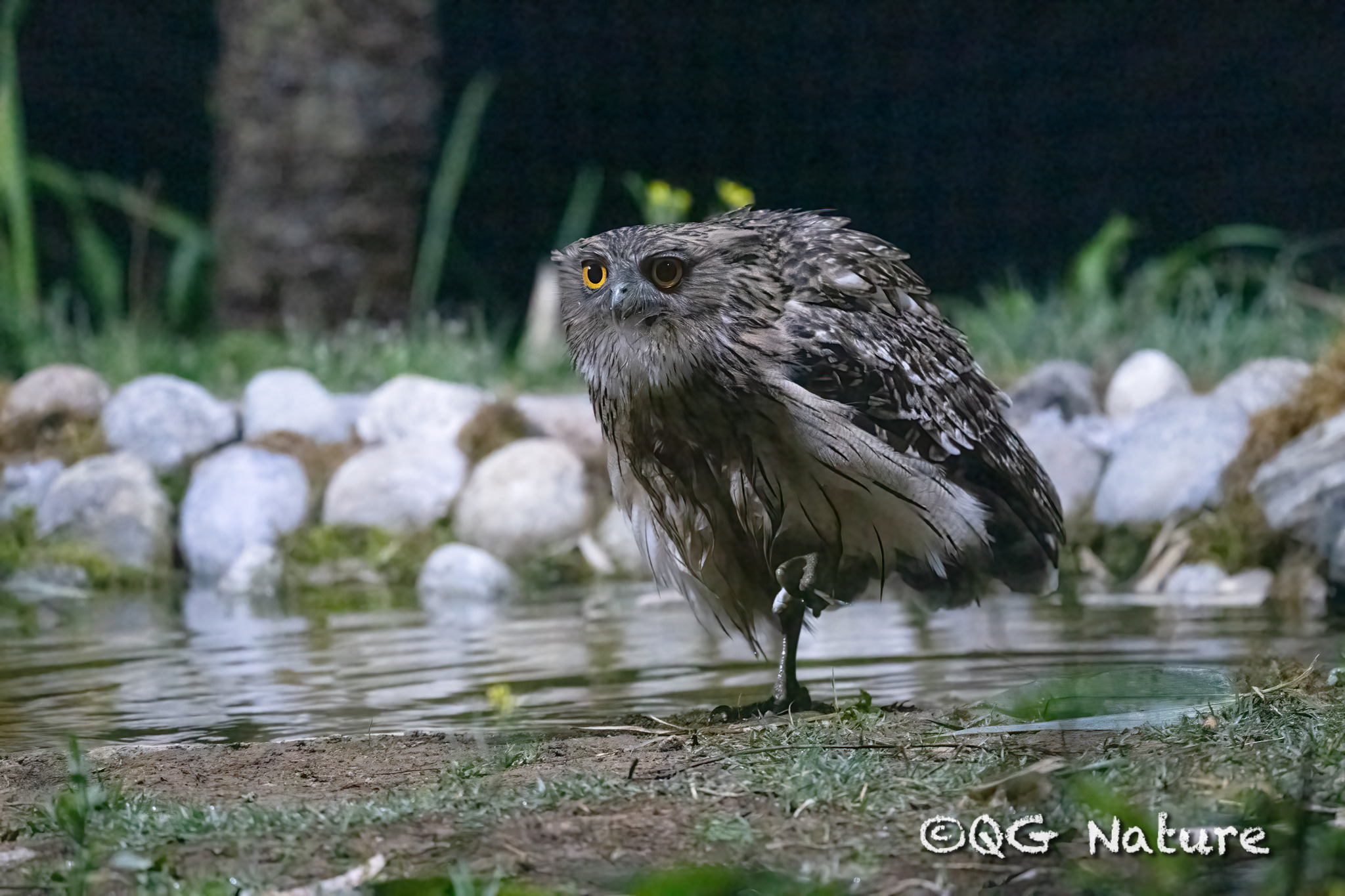
Brown Fish Owl
Ketupa zeylonensis
褐渔鸮
Introduction
A fish owl species in the family Strigidae (typical owls), genus Ketupa. Native range extends from Turkey through South and Southeast Asia. Inhabits forests and wooded wetlands, particularly areas bordering streams, lakes, and rice fields. Among the four living fish owl species, it is the most widely distributed, common, and best-studied, with a range exceeding 7,000 km. Classified as Least Concern on the IUCN Red List due to its extensive distribution.
Description
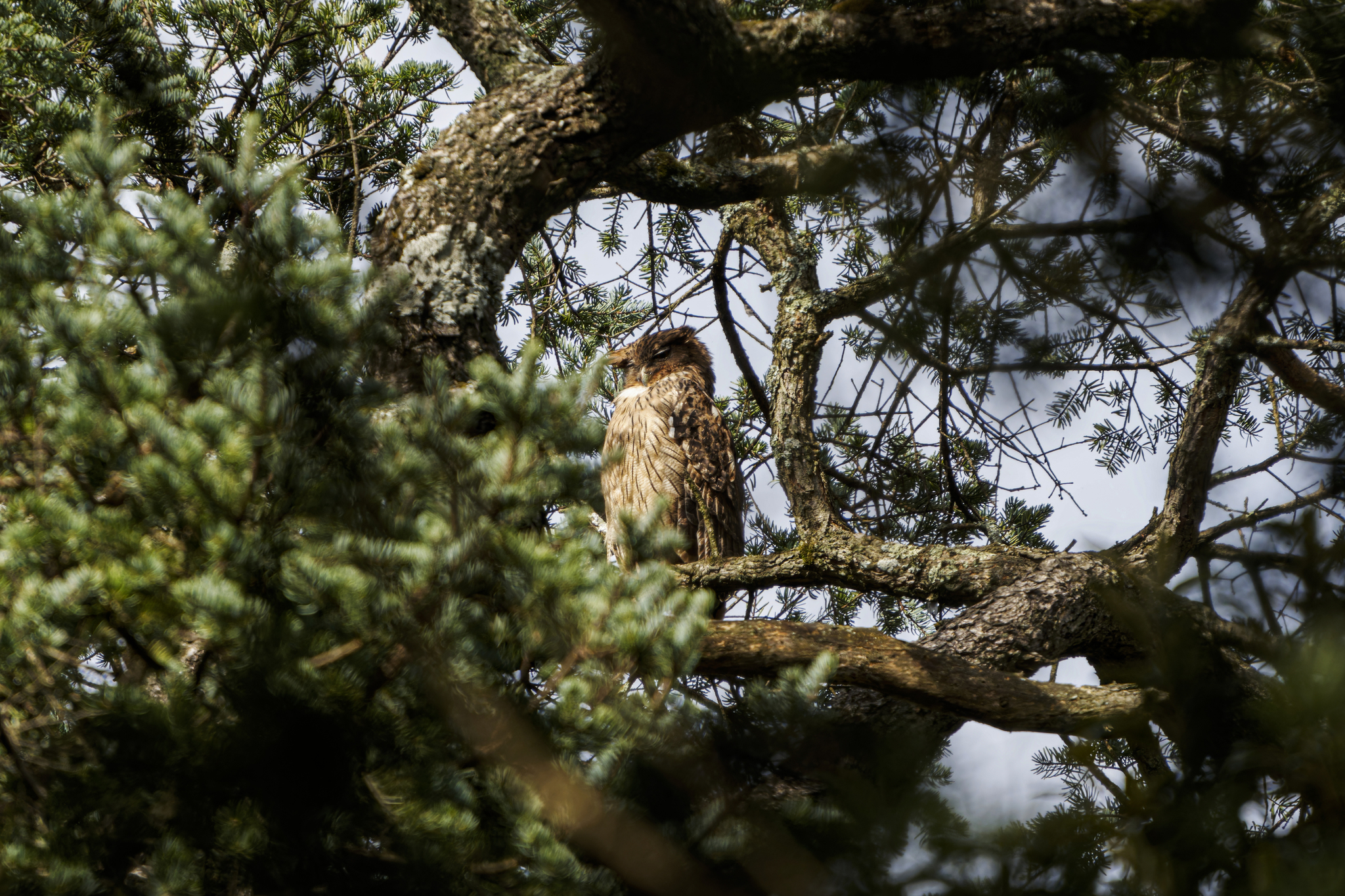
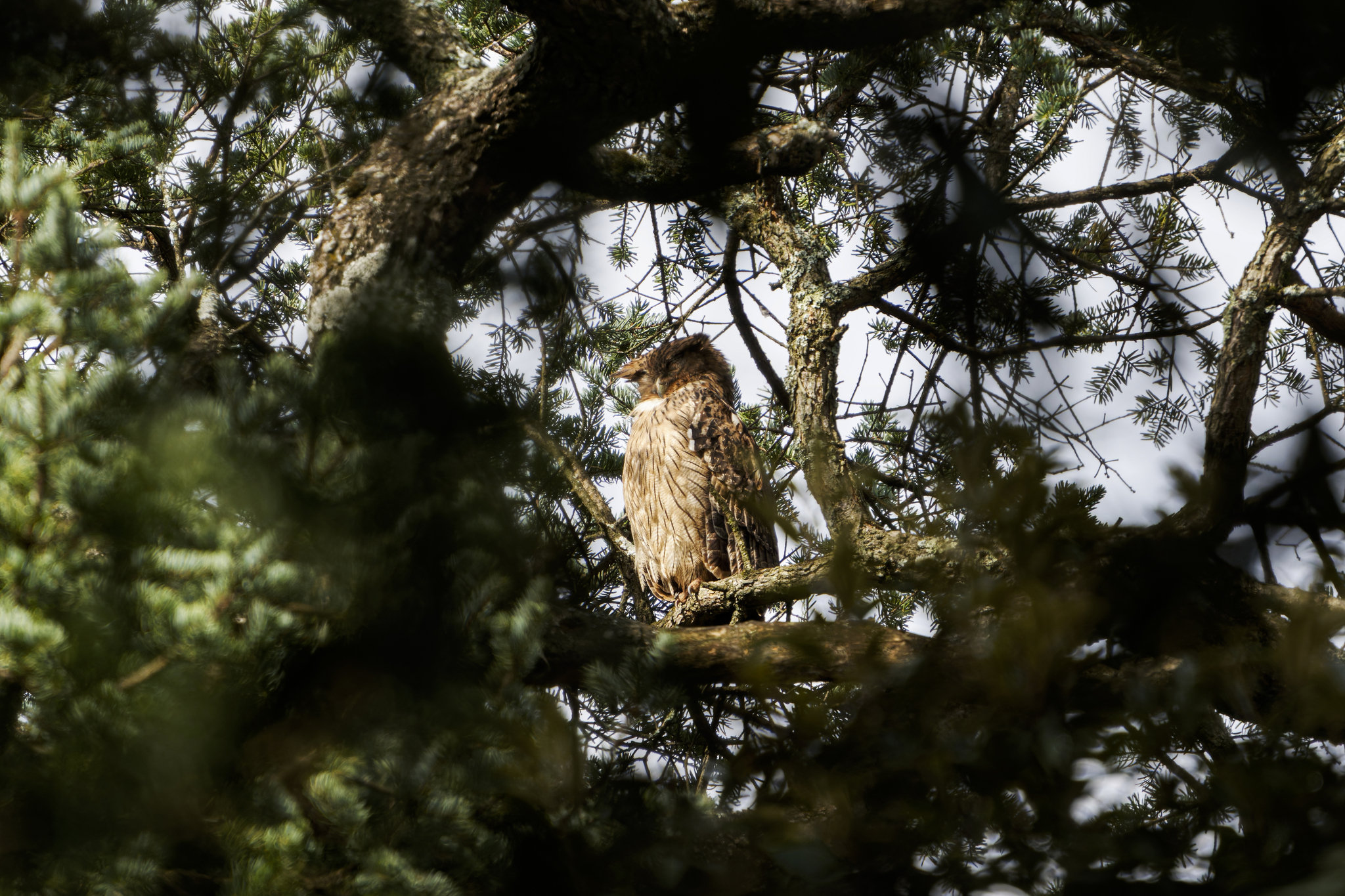
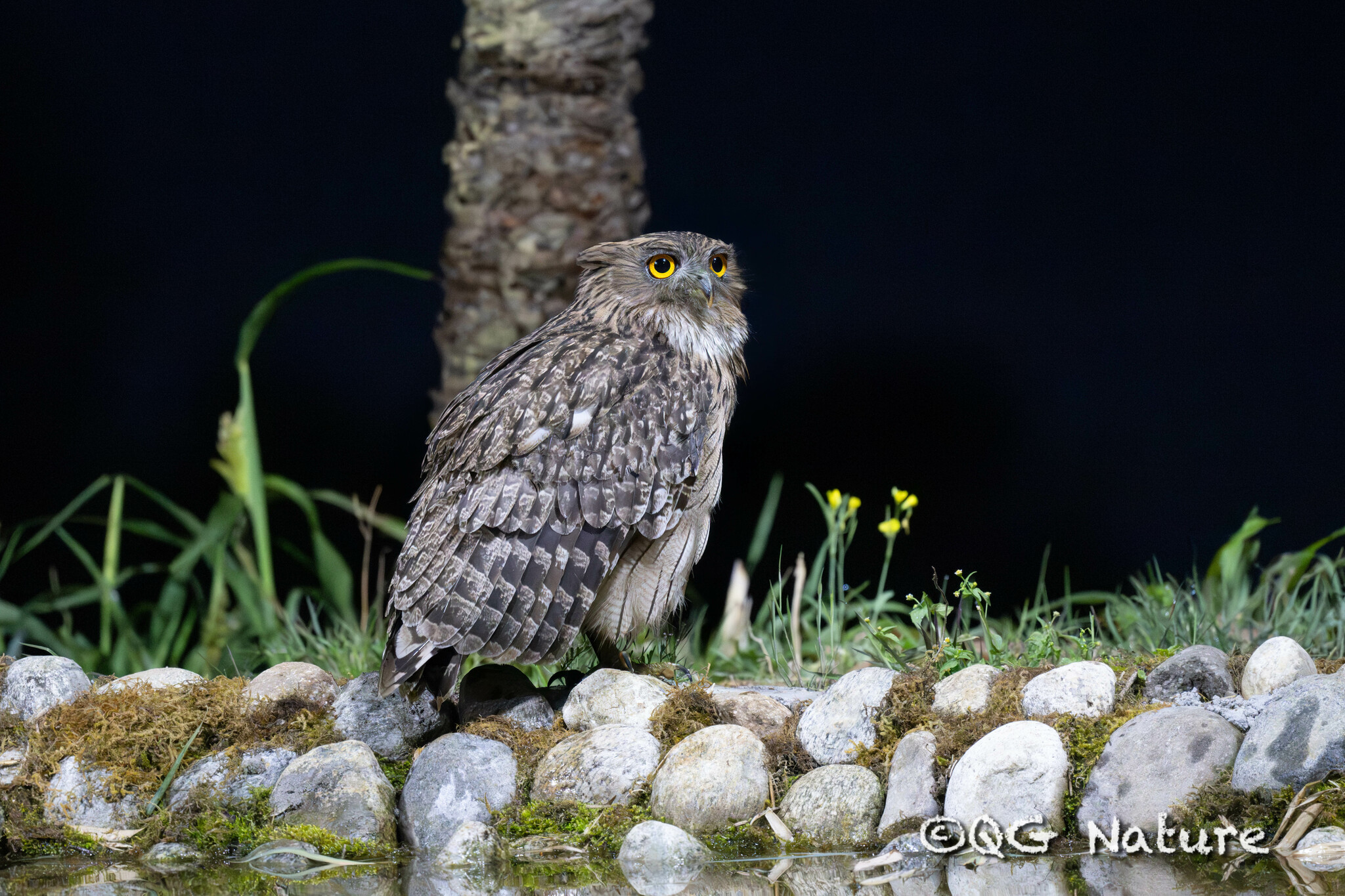
A medium-large owl with prominent ear tufts and rufous brown upperparts heavily streaked with black or dark brown. Underparts range from buffy-fulvous to whitish with wavy dark brown streaks and finer barring. Throat is white and conspicuously puffed. Facial disk is indistinct, bill is dark, iris is golden yellow, and featherless feet are yellow. Body length ranges from 48 to 61 cm with a wingspan of 125 to 140 cm. Weight varies from 1.1 to 2.5 kg. Females are larger than males. Two-year-old birds are somewhat paler than adults. Compared to the buffy fish owl, it is slightly larger with a darker brown hue.
Identification
Compared to eagle owls of similar length, this species has a shorter tail, heavier build, relatively larger wings, longer legs, and rough-textured toe pads adaptations for capturing fish. Unlike most owls, lacks soft feathers and comb-like fringes on primaries, making wing beats audible. Has a shallow facial disc and the bill is positioned between the eyes rather than below, giving a distinctive expression. Differs from Blakiston's fish owl by approximately 2,000 km range gap and significantly smaller size. Distinguished from tawny fish owl by preference for still or stagnant waters versus flowing waters.
Distribution & Habitat
Year-round resident across tropical and subtropical regions from the Indian subcontinent to Southeast Asia. Patchily distributed west to the Levant (possibly extinct) and southern Asia Minor (recently rediscovered). Inhabits forest and woodland bordering water bodies, from open woodland to dense forest, plantations, and bamboo stands. In the Himalayas ranges up to 1,500 m elevation. Found around water reservoirs, canals, village outskirts, and sea coasts. Western populations occur in semiarid landscapes and may breed in desert oases. Generally remains near larger bodies of water. Highest population densities occur in Sri Lanka.
Behavior & Ecology
Nocturnal, though may hunt during daytime in cloudy weather. Territorial song is a trisyllabic tu-hoo-hoo, comparable to a distant Eurasian bittern. Also produces deep humming boom-uh-boom and hup hup hu calls. Hunts by perching over water or wading into shallow waters, grabbing prey by extending long legs. Diet consists mainly of fish, frogs, and aquatic crustaceans (especially Potamon crabs), selecting larger freshwater fish. Also takes snakes, lizards, insects, small mammals including bats, water birds, and occasionally monitor lizards. Will scavenge carrion. Breeding occurs from November to April. Nests in old-growth trees, natural holes, rock ledges, caves, or abandoned nests of fish eagles and vultures. Clutch size is two eggs. Incubation lasts 38 days; young fledge after about seven weeks.
Conservation
Classified as Least Concern. In India, thousands are killed during Diwali due to superstitious beliefs associating owls with evil and black magic, though conservation programs counter this practice. Habitat destruction causes regional extinctions; the species is now extinct as a breeding bird in Israel, largely due to damming that dried waterways. Israeli populations were also decimated by the rodenticide thallium(I) sulfate, which poisons surface waters and rodent prey.
Culture
In some regions, associated with superstitious beliefs about evil nature and death omens. Killed during religious festivals like Diwali in India due to these superstitions and attempts to gain black magic powers. Misunderstood species in local folklore across parts of its range.
Source: Wikipedia · CC BY-SA 3.0
Taxonomy
- Order
- Strigiformes
- Family
- Strigidae
- Genus
- Ketupa
- eBird Code
- brfowl1
Vocalizations
Subspecies (4)
-
Ketupa zeylonensis leschenaulti
India south of Himalayas to Myanmar and Thailand
-
Ketupa zeylonensis orientalis
northeastern Myanmar to southeastern China, Malay Peninsula, Indochina, and Hainan
-
Ketupa zeylonensis semenowi
far southeastern Türkiye to Israel, northern Syria, and northwestern India
-
Ketupa zeylonensis zeylonensis
Sri Lanka
Data Sources
Species description from Wikipedia, licensed under CC BY-SA 3.0.
Bird images and sounds sourced from GBIF, contributed by citizen scientists worldwide under Creative Commons licenses.
Taxonomy data from AviList 2025.