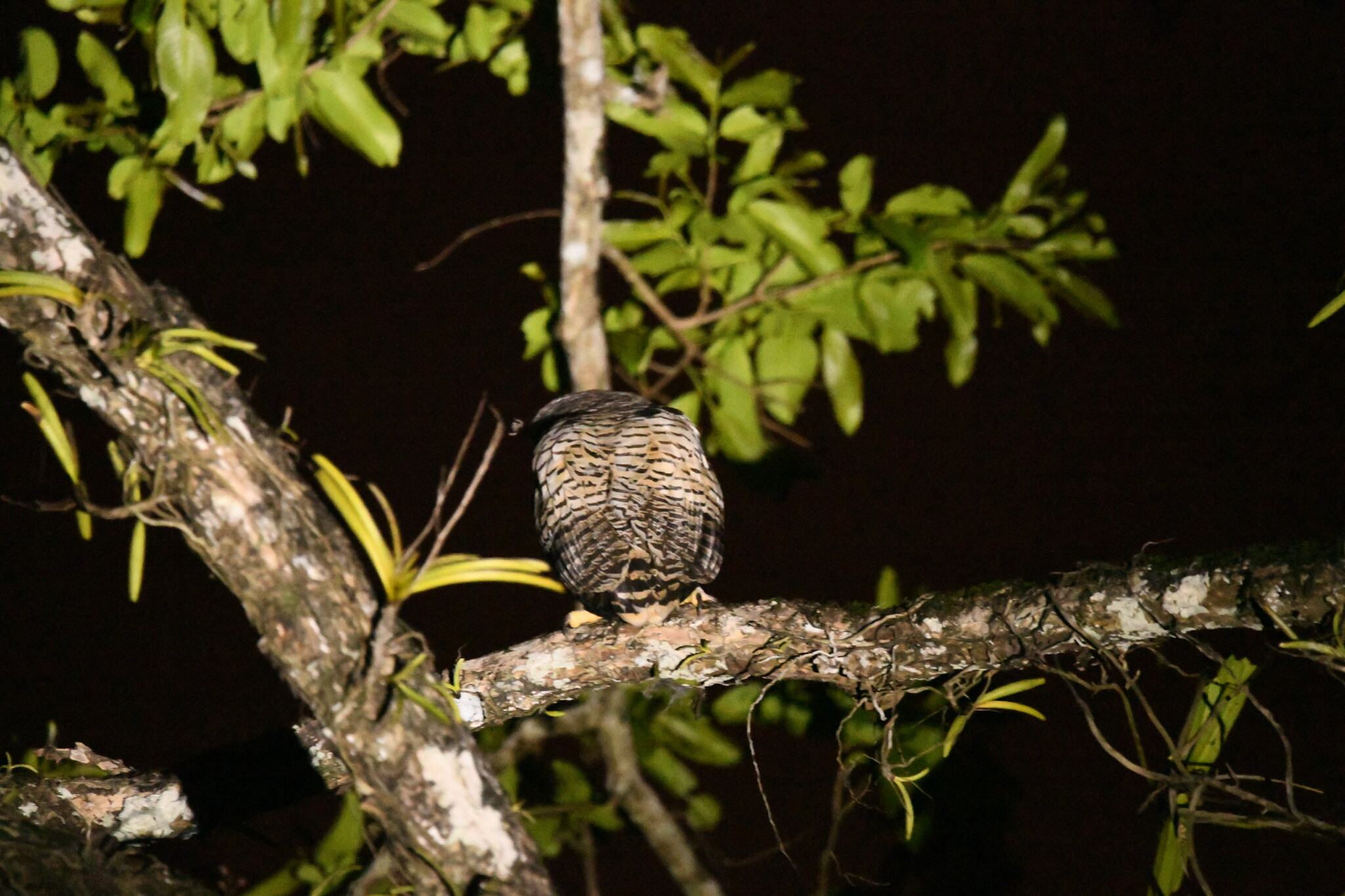
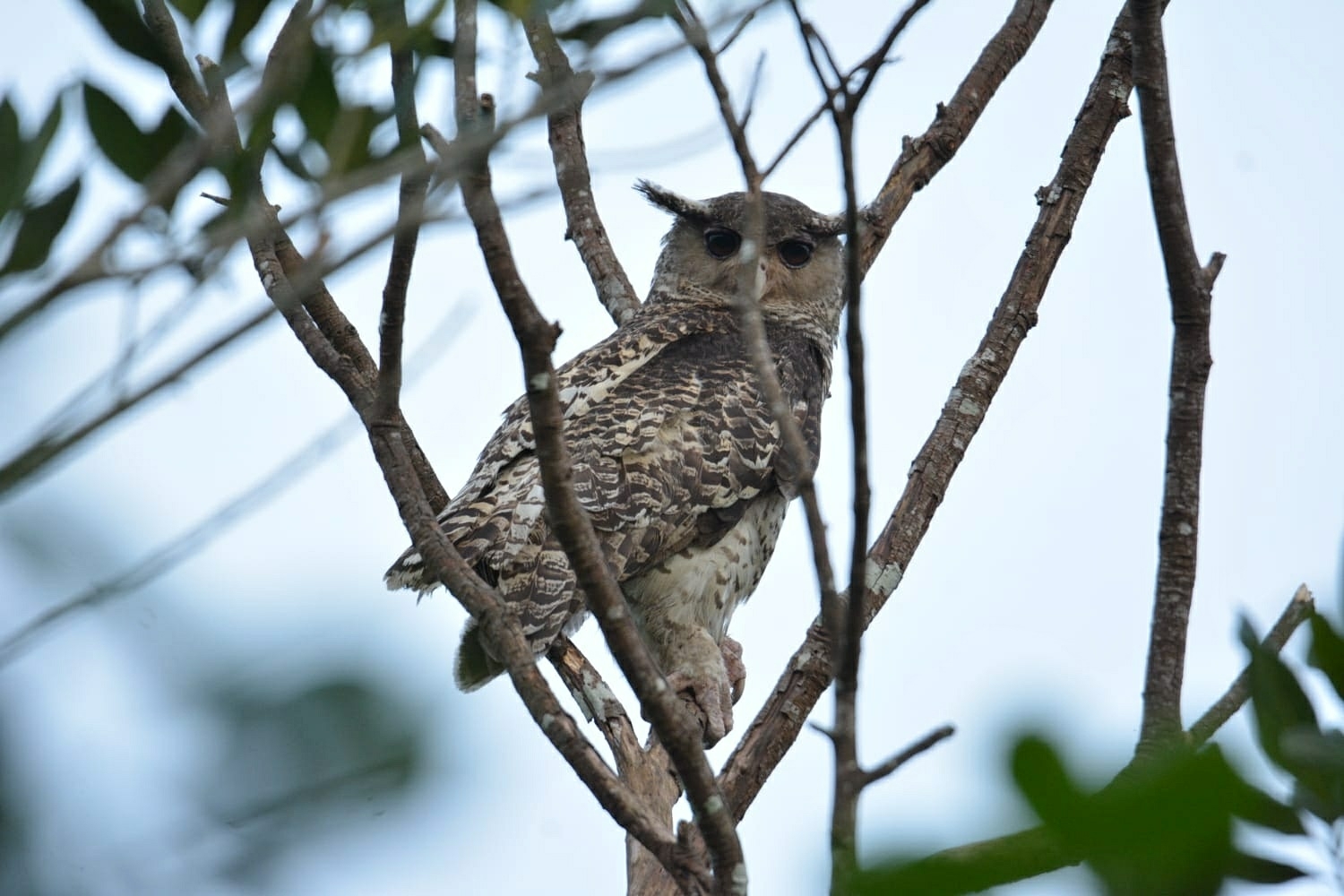
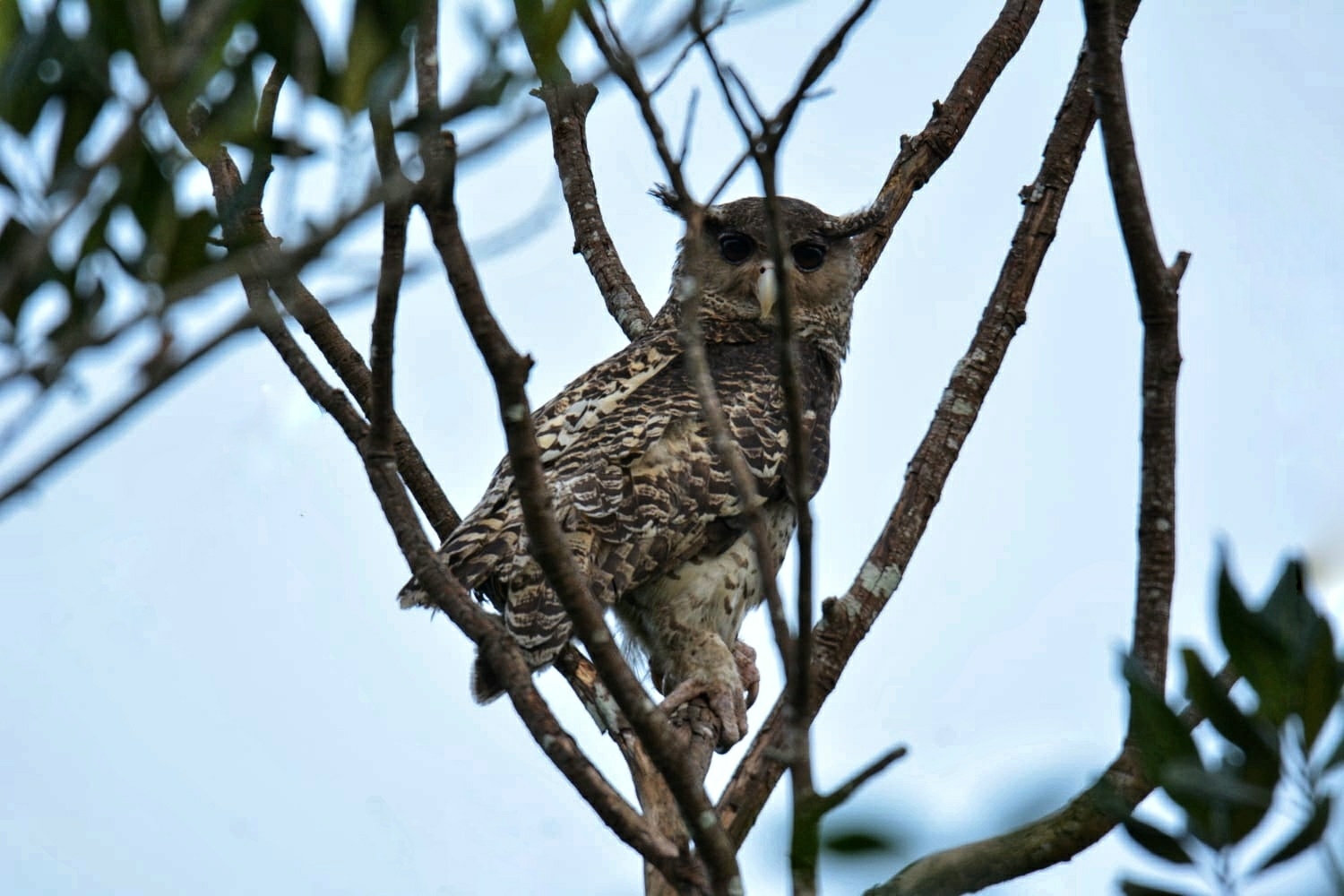



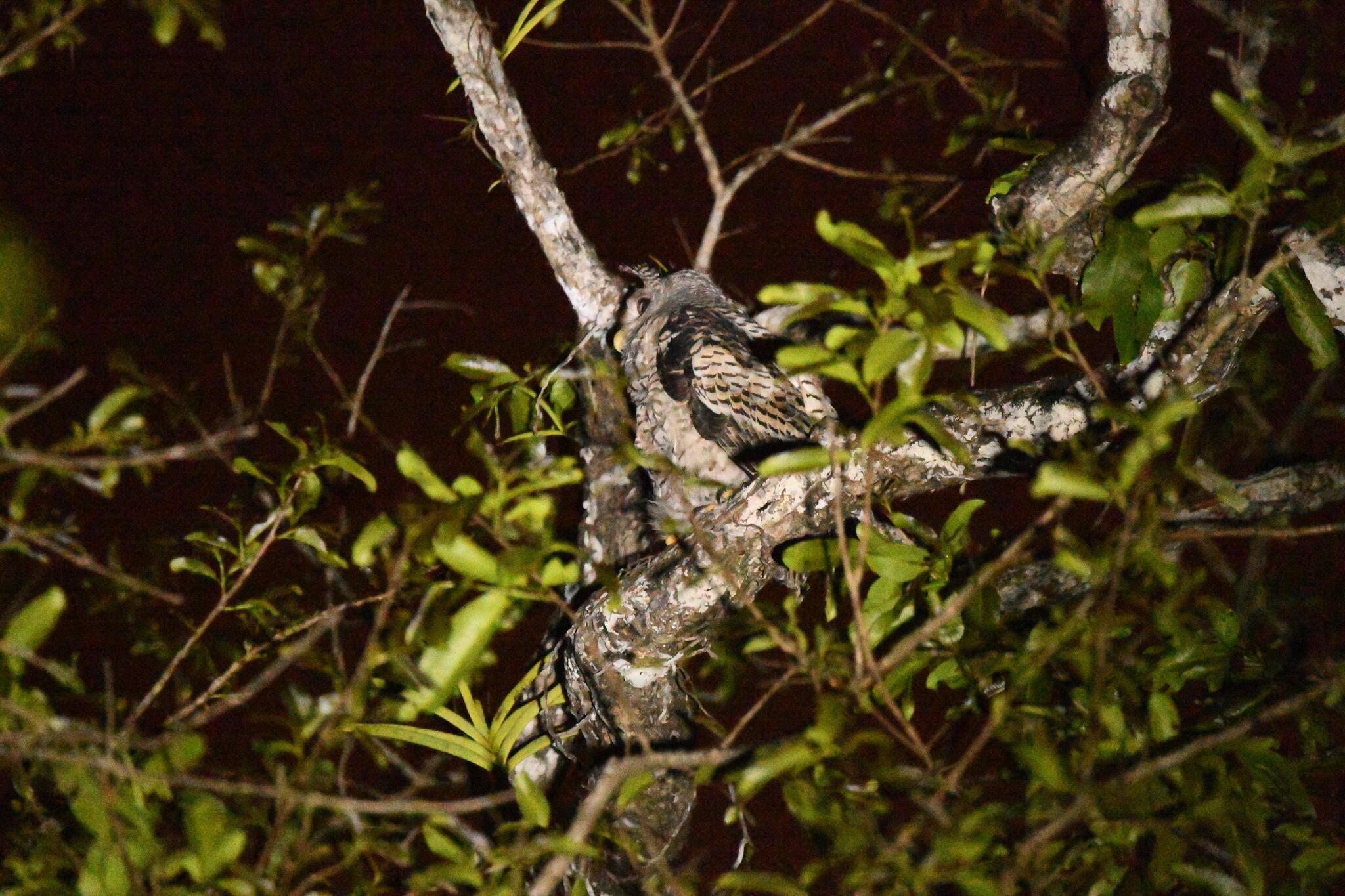
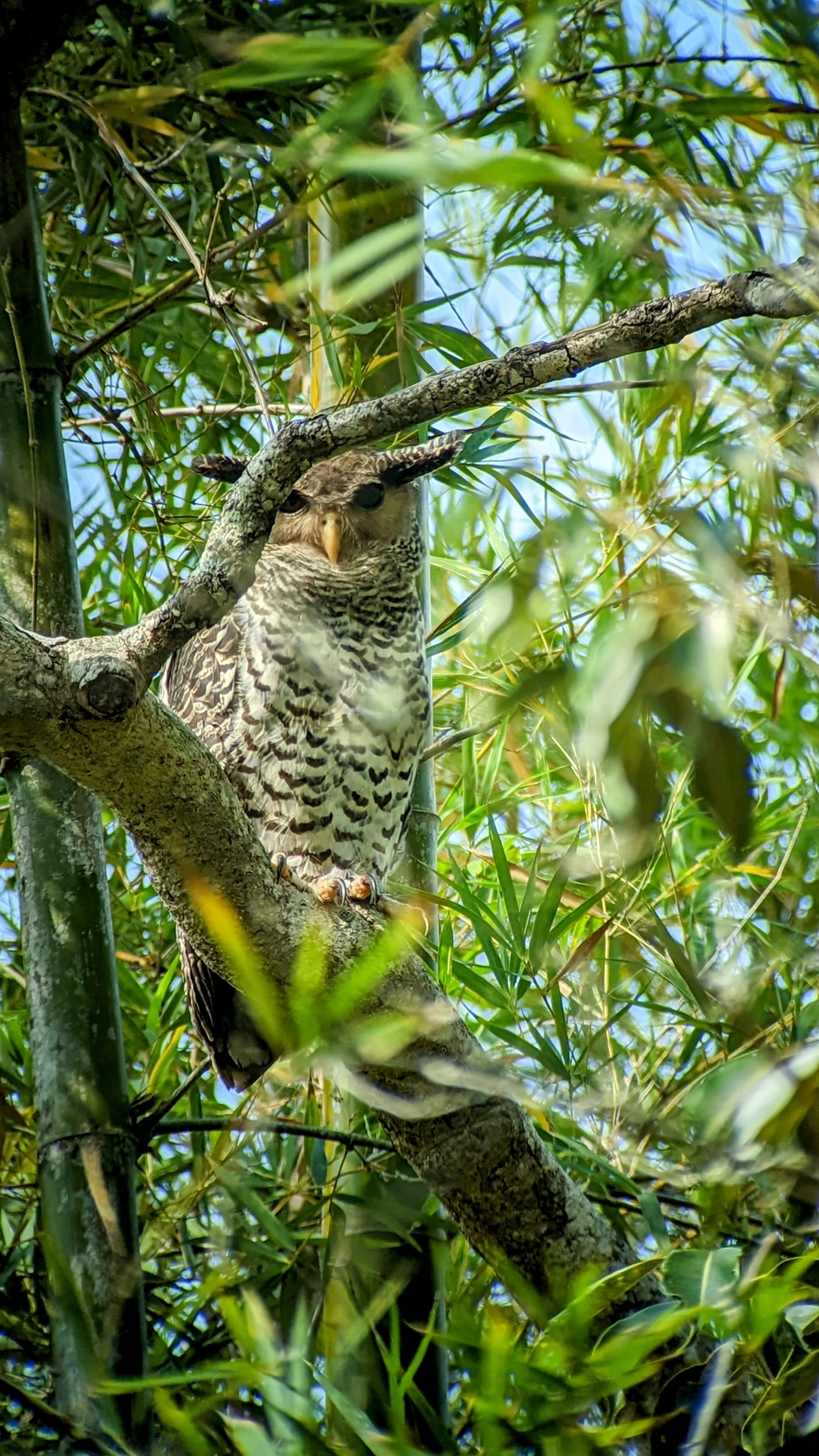

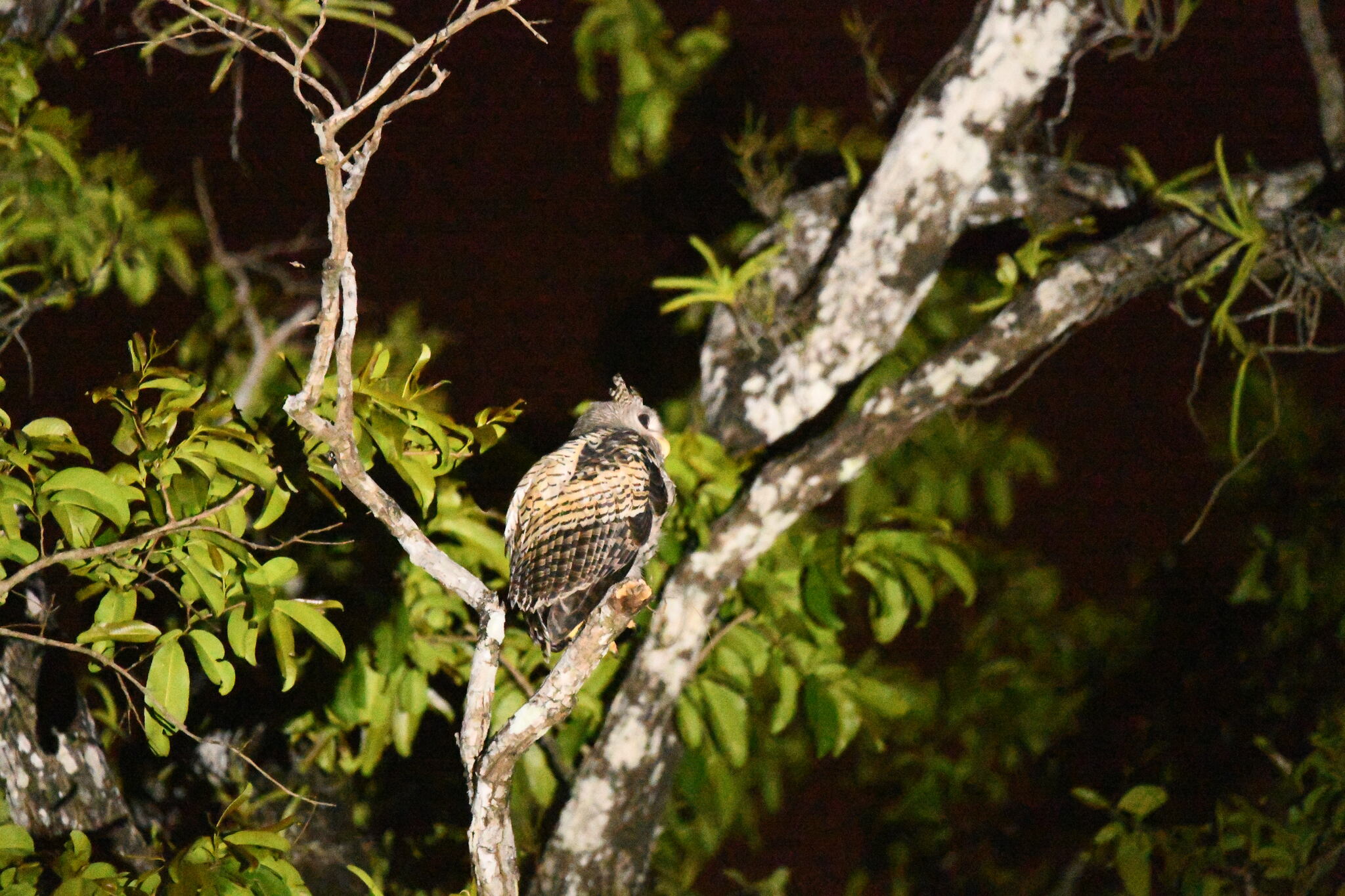
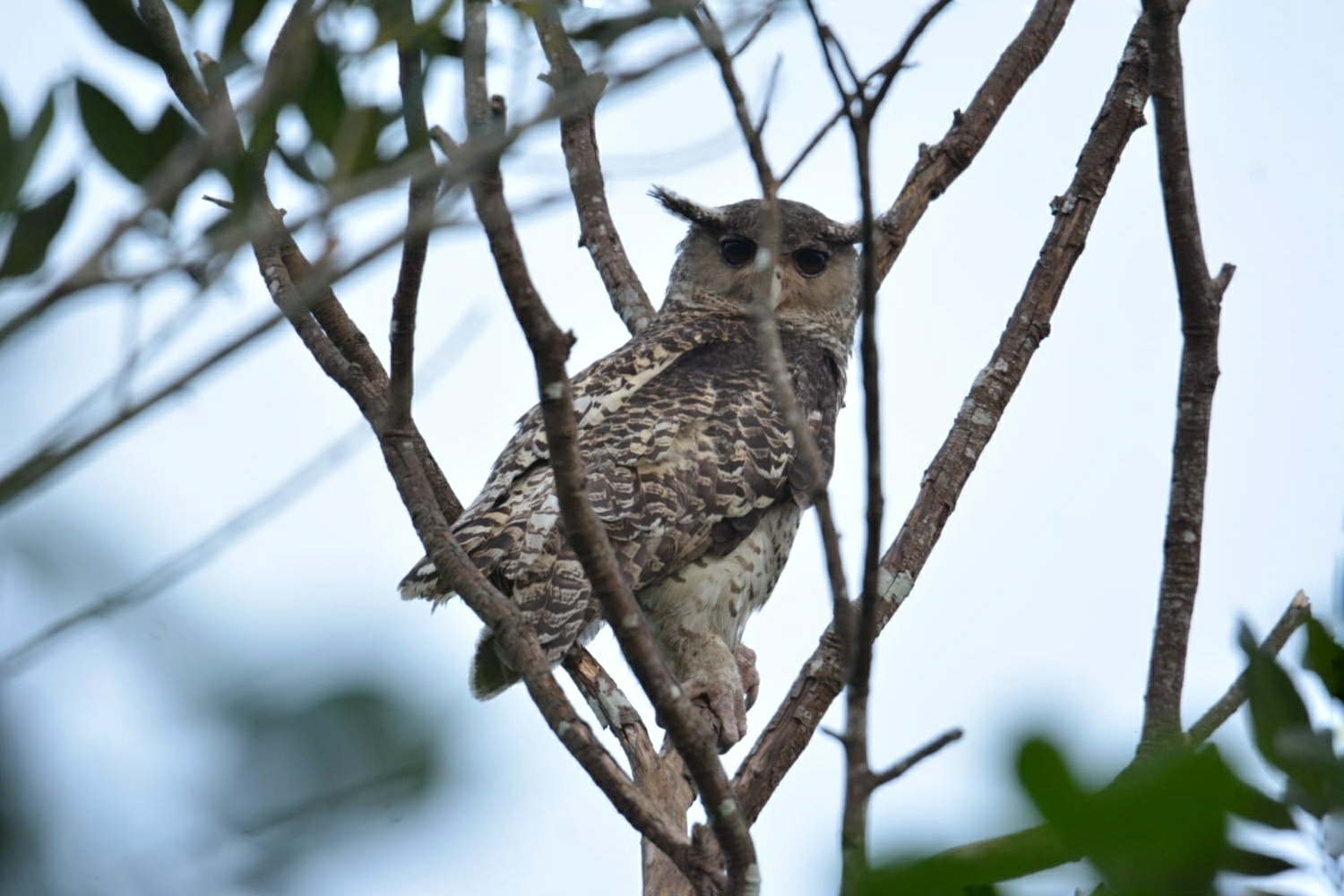
Spot-bellied Eagle-Owl
Ketupa nipalensis
林雕鸮
Introduction
Ketupa nipalensis is a large forest-dwelling owl classified within the Strigidae family. This species forms a superspecies with the barred eagle-owl (Ketupa sumatrana) and is distributed across the Lower Himalayas from Kumaon east through Burma to central Laos and central Vietnam, extending throughout the Indian subcontinent and Southeast Asia to Sri Lanka and southern Thailand. Its primary habitat consists of primary and older second-growth forests, including dense evergreen and moist deciduous forests in tropical and subtropical foothills at elevations of 900-1,200 m, though it ranges from sea level to 6,300 m. Unlike the closely related fish owls, this species is not tied to riparian habitats and is not primarily piscivorous. At 50-65 cm in length, it ranks as the sixth longest owl species globally. The owl is evaluated as Least Concern on the IUCN Red List despite occurring at low densities across its range.
Description
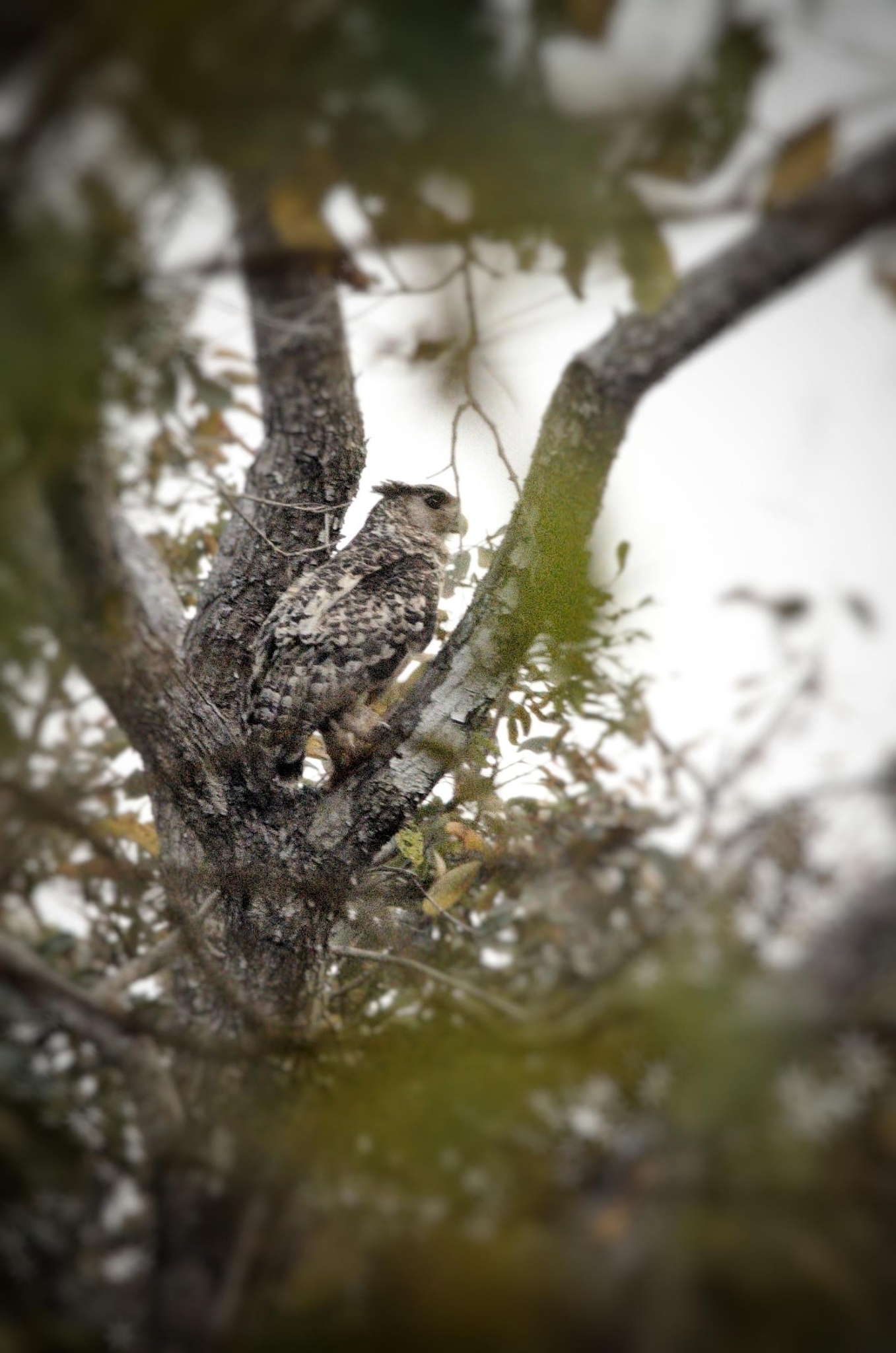
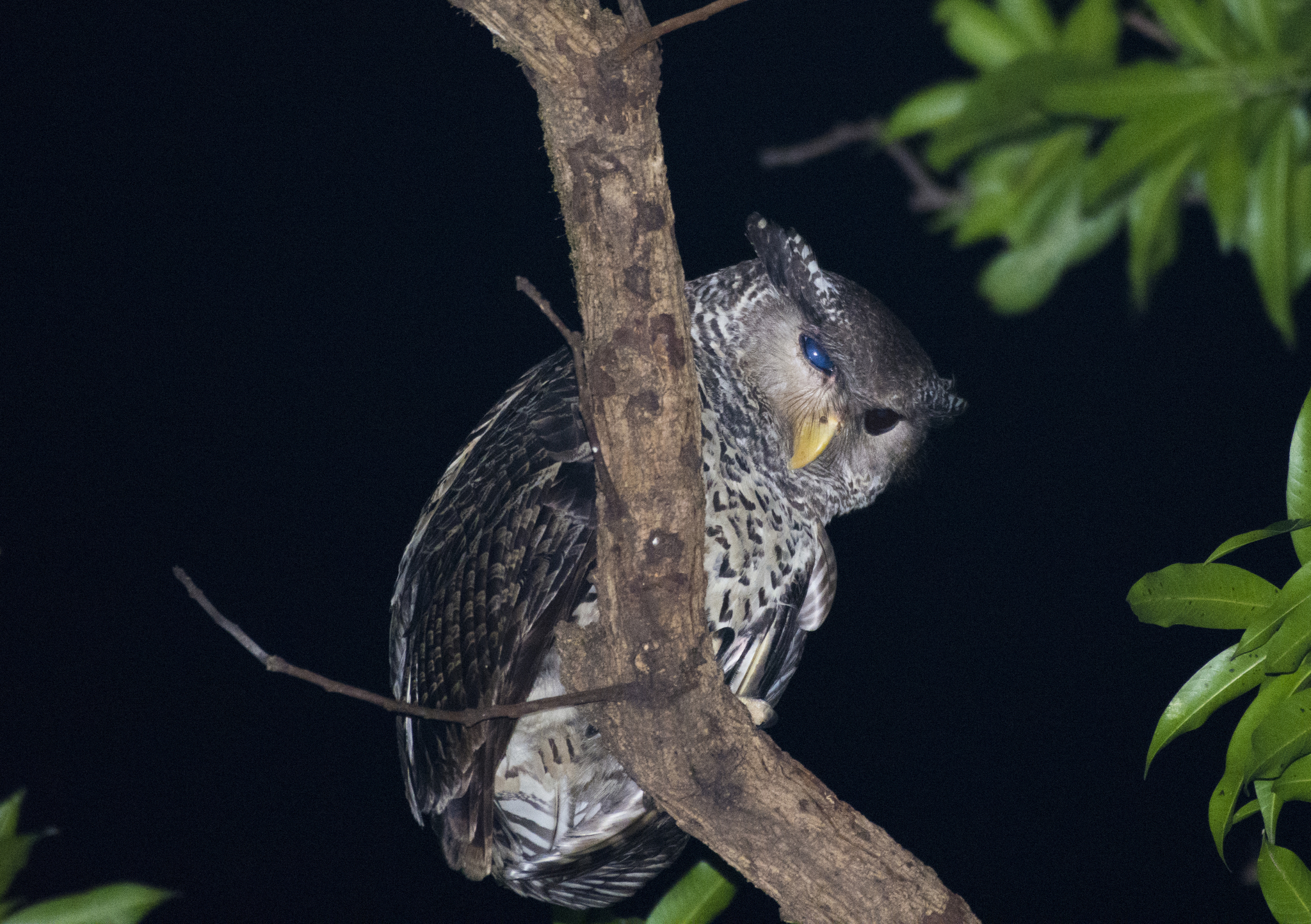
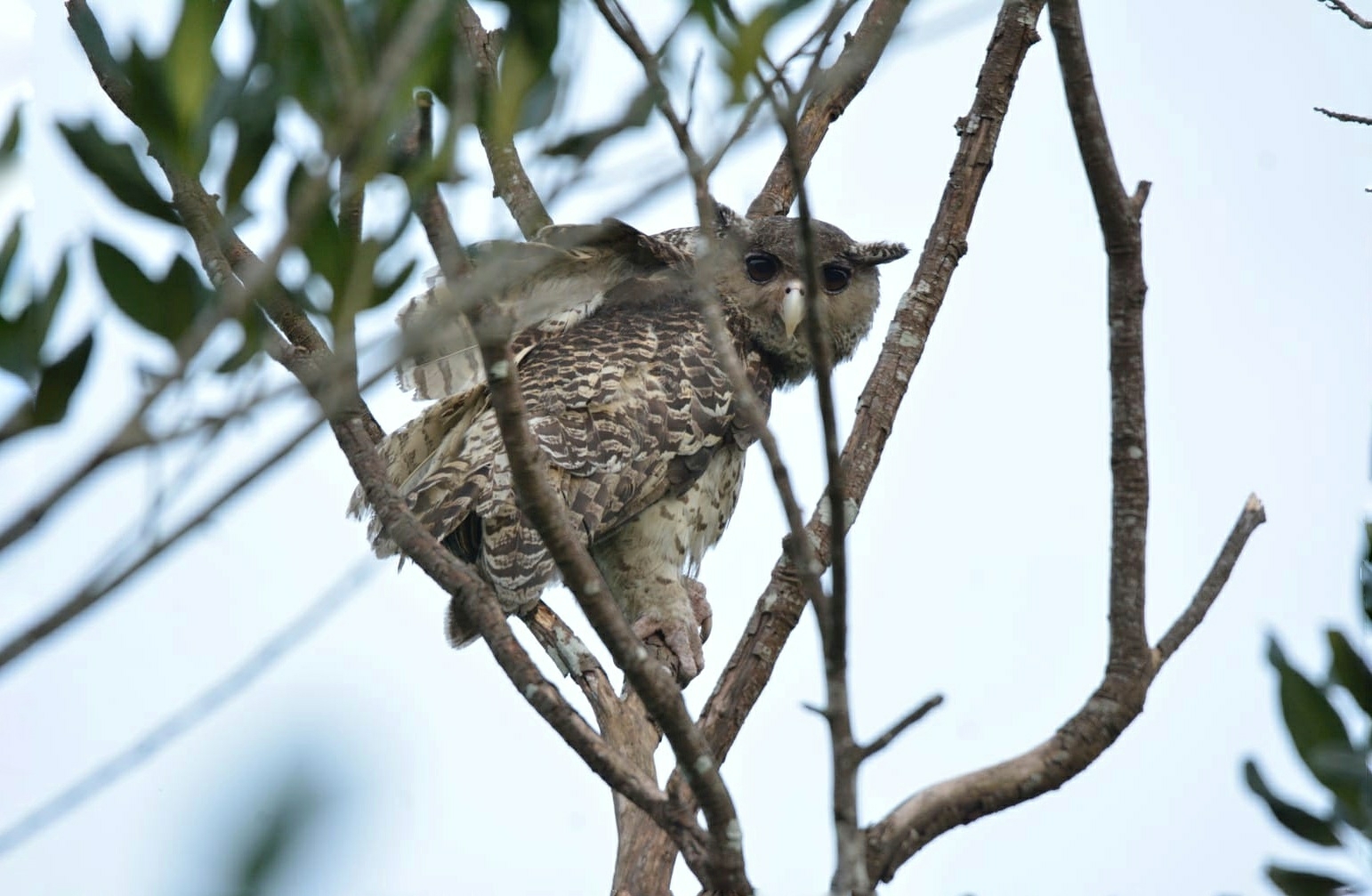
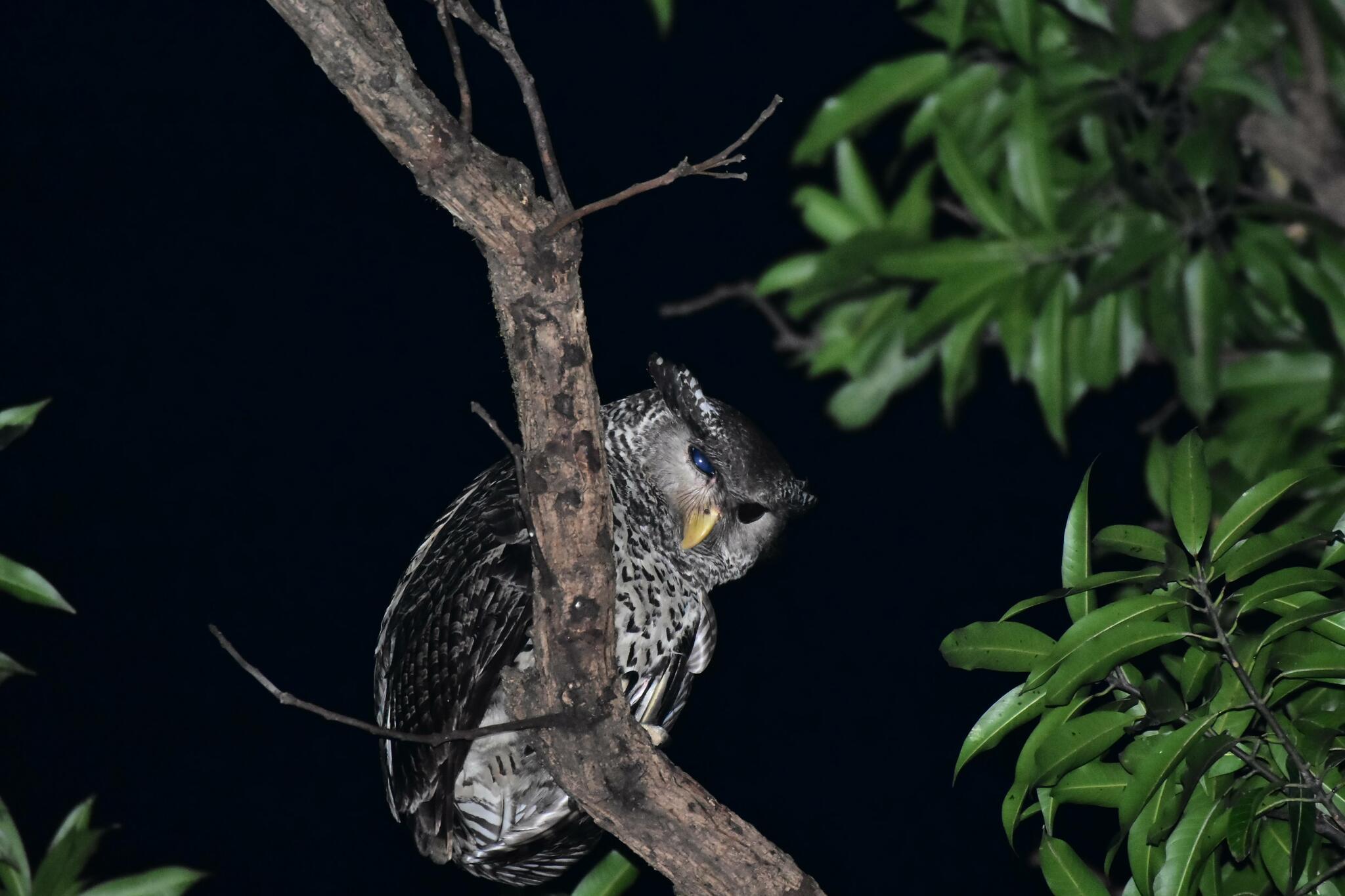
A very large owl measuring 50-65 cm in length with a wingspan of approximately 143 cm. Weight ranges from 1.5-2.5 kg on average, with one Sri Lankan female recorded at 1.7 kg and one individual from India reportedly weighing 3 kg. The species has notably long ear-tufts measuring 63-76 mm that slant sideways and appear scraggly at the tips. The plumage is overall grayish-brown with dark coarse coloration on the back and upper wings. The underparts are pale fulvous with black and white horizontal stripes along the flanks that become broad spots on the abdomen and undertail coverts. Primaries are dark brown with lighter brown stripes while secondaries are heavily barred with buff-brown. The legs and feet are feathered, though the terminal toe digits are bare before the talons. The feet and talons are exceptionally large, heavy and powerful for an owl. Juveniles are pale grayish-cream with heavy brownish barring. Sri Lankan populations (K. n. blighi) are approximately 10% smaller than northern birds.
Identification
The largest owl in its range except for the tawny fish owl, which is restricted to mountain streams. Distinguished from other regional eagle-owls by its forest-dwelling habits, very long sideways-slanting ear-tufts, horizontal rather than vertical underside markings, and pale ground coloration. The brown fish owl is slightly smaller and found in wetland habitats with different coloring. The Himalayan race of Eurasian eagle-owl occurs at higher elevations while the Indian eagle-owl is about 10% smaller. The dusky eagle-owl is around 15% smaller and the brown wood owl is approximately 35% smaller. The barred eagle-owl looks similar but is allopatric in distribution. This species is separated from sympatric eagle-owls by its pale, sideways-slanting ear-tufts, extensive leg feathering, horizontal marking pattern over pale underparts, and grayish back lacking warmer brown or tawny tones.
Distribution & Habitat
Distributed through the Lower Himalayas from Kumaon east to Burma, then to central Laos and central Vietnam. The range extends throughout the Indian subcontinent and peninsular Southeast Asia, reaching Sri Lanka in the south and approximately 12 degrees north in southern Thailand. This species inhabits primary or older second-growth forests, preferring dense evergreen forests and moist deciduous forests within tropical and subtropical foothill zones at 900-1,200 m elevation. It extends into tropical valleys, terrai and shola in the lower hills of India, occurring from temperate woodlands in Nepal to tropical rainforest in Southeast Asia. While found from sea level to 6,300 m in the Transhimalayas, it is primarily a species of tropical and subtropical foothills. Although considered uncommon to somewhat rare, photographic evidence suggests it is widely distributed where appropriate forest habitat remains.
Behavior & Ecology
Nocturnal species that spends daylight hours hidden in dense forest foliage, though it may hunt during the day in undisturbed forests with activity picking up at dusk. It is a powerful apex predator in its forested habitat. Known for a strange, human-sounding call consisting of a scream that rises and then falls in tone. The territorial call consists of low hoots at two-second intervals that are deep and carry far. Diet is diverse and impressive, reported to include pheasants such as junglefowl and kalij pheasants (500-1,500 g) and Indian peafowl (up to 6 kg), taken by pouncing on sleeping prey. Mammalian prey ranges from rodents to golden jackals, hares, civets, chevrotains, and muntjacs (2-9 kg). It also takes arboreal prey including giant squirrels and juvenile langurs, as well as snakes, lizards, monitor lizards, and fish. Unlike most owls, it has been recorded feeding on carrion such as goat and tiger carcasses. The breeding season runs from December to March with single-egg clutches recorded. Nests are placed in large tree hollows, abandoned stick nests of eagles or vultures, or in cave fissures.
Conservation
Evaluated as Least Concern on the IUCN Red List despite having an unknown and probably declining population. The species is generally uncommon and occurs at low densities due to needing large hunting and breeding territories. The primary threat is habitat loss through deforestation, as the species vacates areas where forests are cleared. It continues to occur over a large range and is not considered conservation dependent, though it requires intact forest habitat. Recent photographic evidence suggests it may be more widely distributed than previously believed where suitable habitat remains.
Culture
This owl is believed to be the source of the cryptid known as 'ulama' or 'Devil Bird' in Sri Lankan folklore, a creature associated with a eerie human-like scream. In July 2001, it was confirmed that descriptions of the ulama match the spot-bellied eagle-owl. The local name is 'Maha Bakamuna,' meaning 'large horned owl.' The owl's haunting, human-sounding call has contributed to its mystical reputation in local culture and folklore.
Source: Wikipedia · CC BY-SA 3.0
Taxonomy
- Order
- Strigiformes
- Family
- Strigidae
- Genus
- Ketupa
- eBird Code
- sbeowl1
Vocalizations
Subspecies (2)
-
Ketupa nipalensis blighi
Sri Lanka
-
Ketupa nipalensis nipalensis
Himalayas to India, southwestern China (Yunnan), Myanmar, and Vietnam
Data Sources
CBR Notes: 由Bubo属移入Ketupa属(WGAC and Clements, 2022)
Species description from Wikipedia, licensed under CC BY-SA 3.0.
Bird images and sounds sourced from GBIF, contributed by citizen scientists worldwide under Creative Commons licenses.
Taxonomy data from AviList 2025.