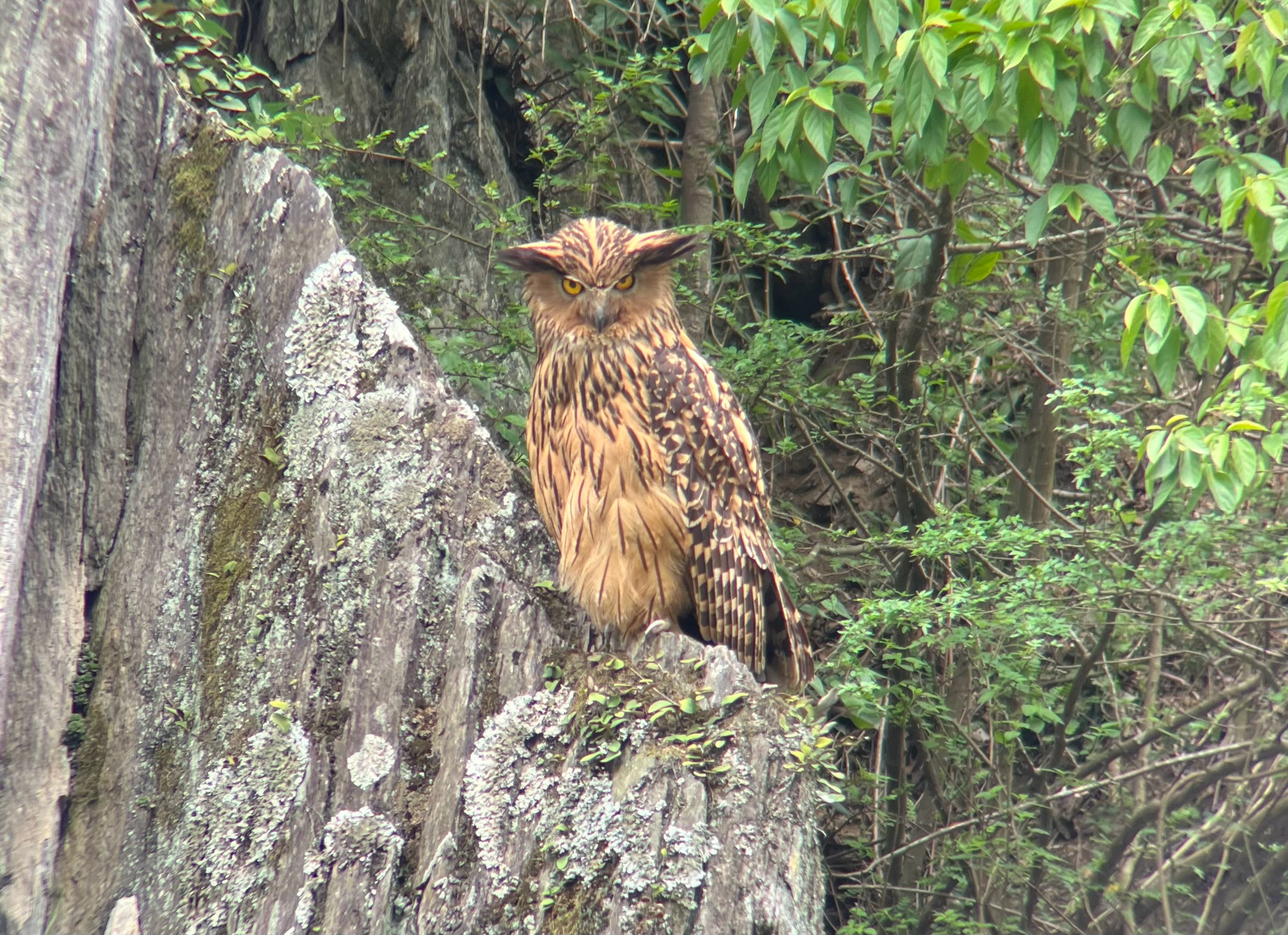
Tawny Fish Owl
Ketupa flavipes
黄腿渔鸮
Introduction
A fish owl species in the family Strigidae. Scientifically described as Ketupa flavipes by Brian Houghton Hodgson in 1836 from Nepal. Native range extends from southern Nepal through Bangladesh, Bhutan, northern India, China, Laos, Myanmar, Taiwan to Vietnam. Inhabits subtropical to temperate forests with mountain streams at elevations of 1,500 to 2,450 m, preferring remote wilderness areas with fast-flowing waters. Distinguished by adaptation for fishing: rough texture on toe pads, long legs, and reluctance to submerge body while hunting. Listed as Least Concern on the IUCN Red List due to its wide geographical distribution.
Description
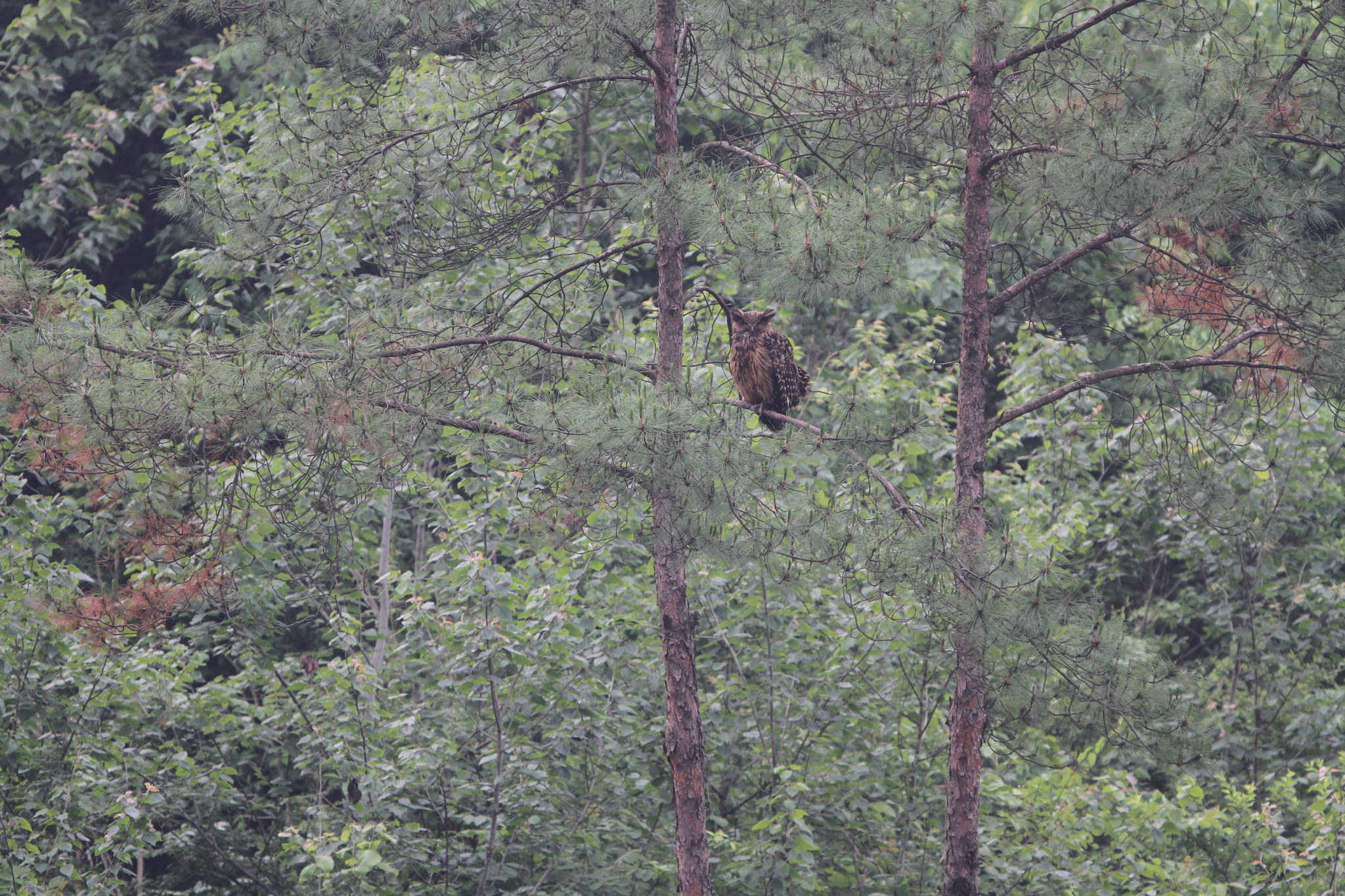
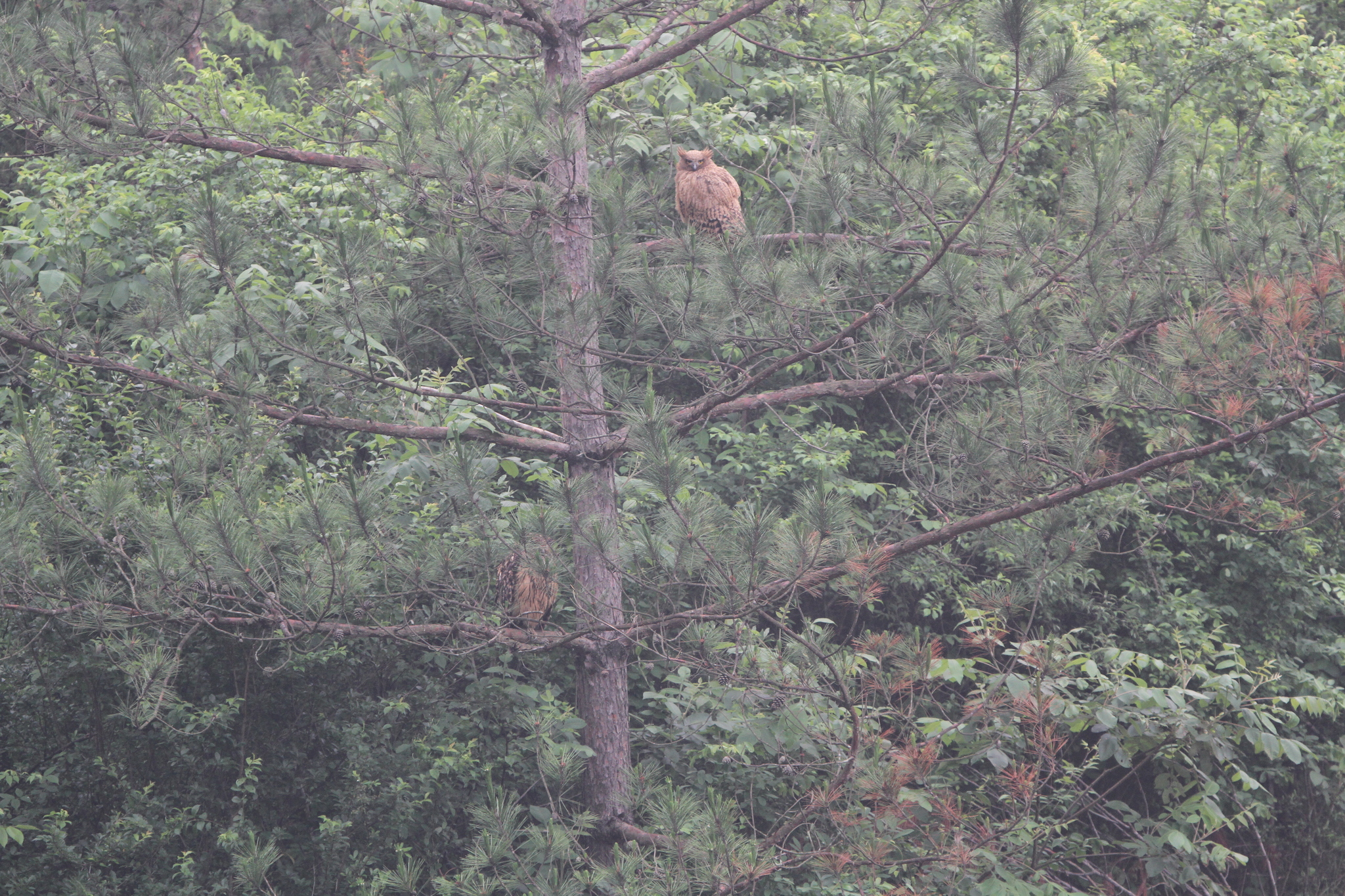
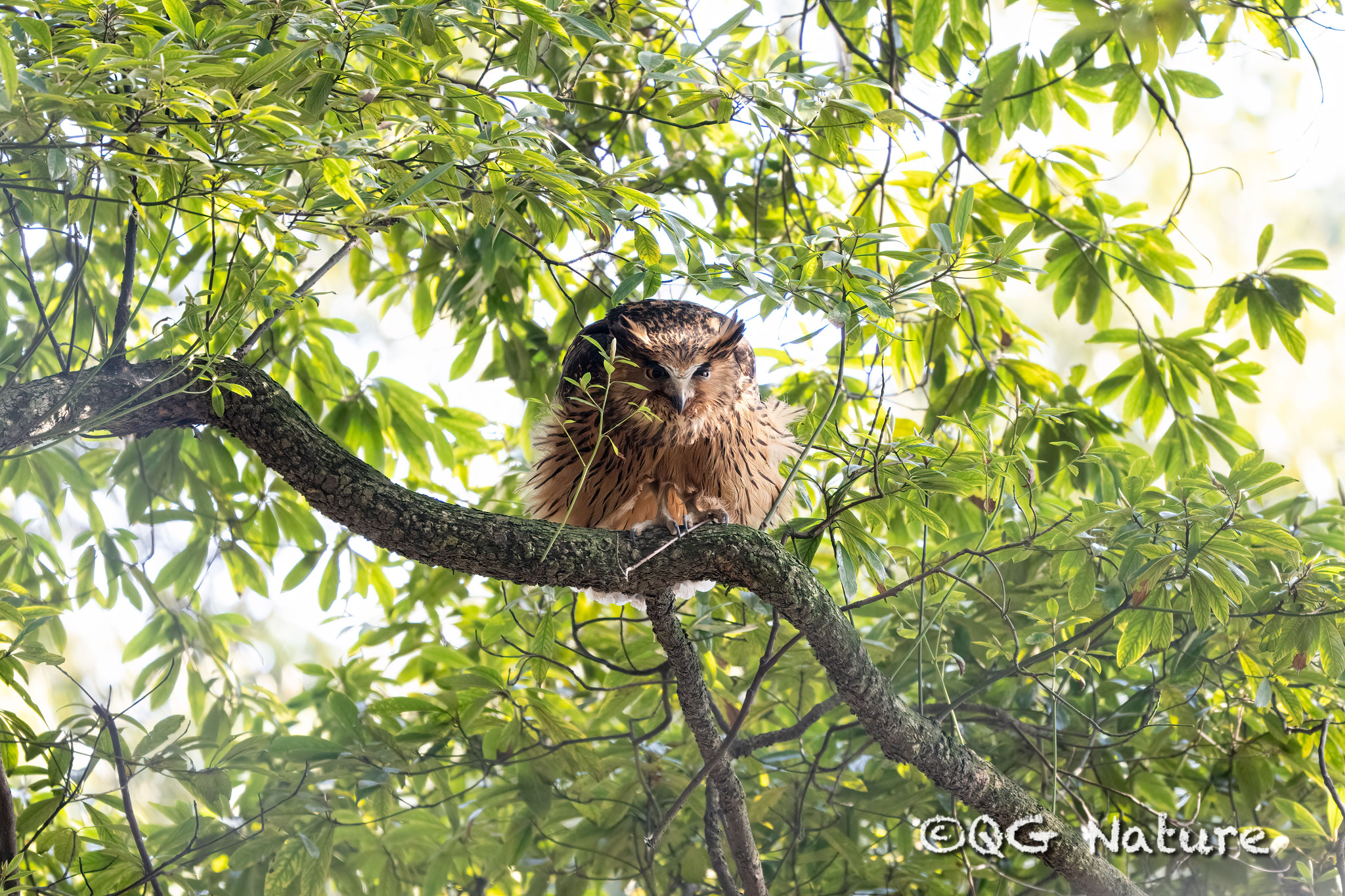
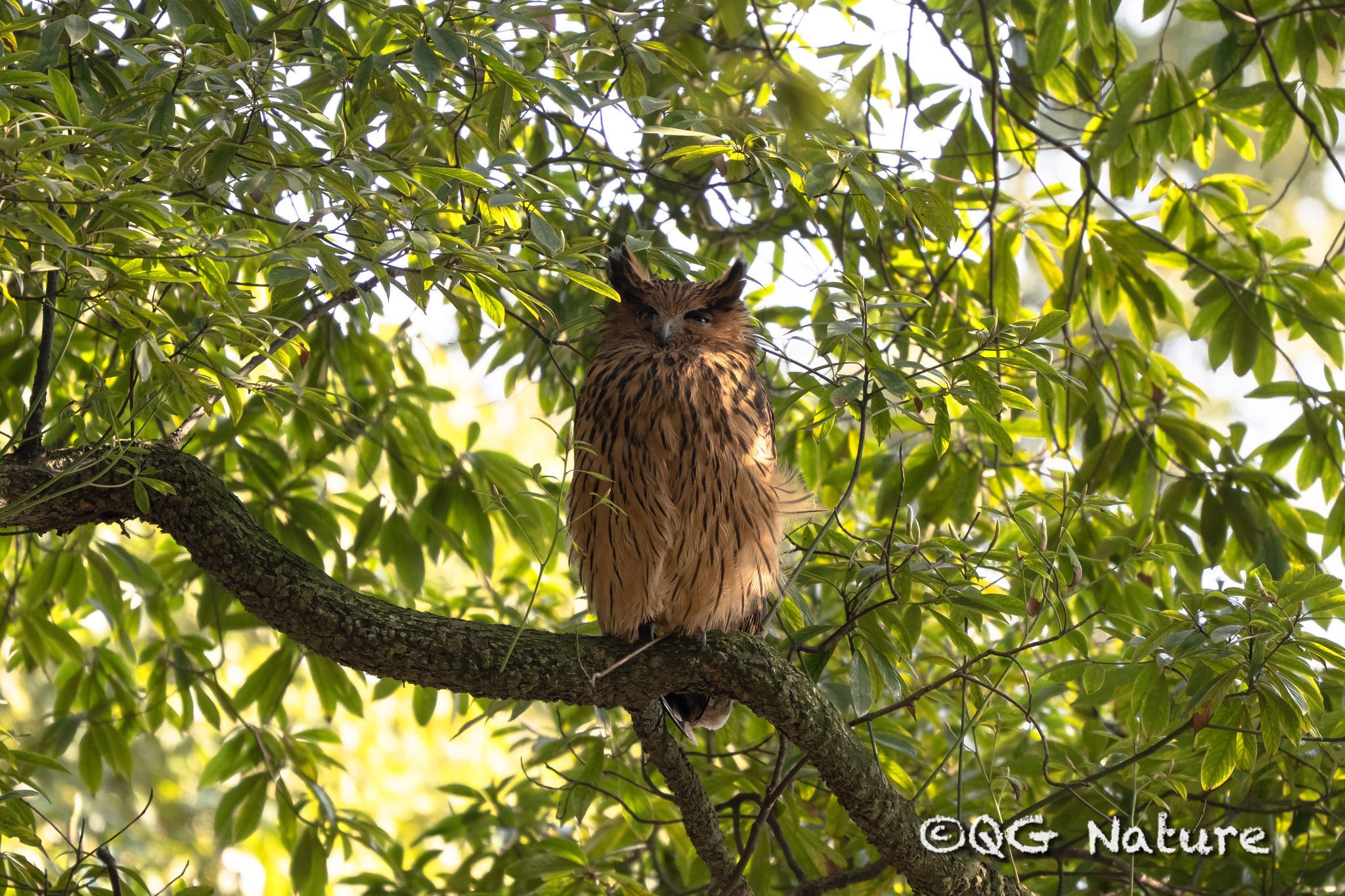
Large owl with prominent ear tufts that hang messily to the sides of the head. Yellow eyes and orangey-rufous crown and upperparts overlaid with broad blackish central markings. Dingy yellow scapulars form a contrasting band across the shoulders. Flight and tail feathers are strongly barred dark brown and buffish. Facial disc is poorly defined with off-white patches on eyebrows and forehead. Legs are feathered on two-thirds of the tarsi, with greenish-yellow unfeathered portions and greyish-horn colored talons. One of the heaviest owl species, averaging 2,415 g with a body length of 48-61 cm. Wing chord measures 410-477 mm.
Identification
Similar in size to brown fish owl but distinguished by orange-rufous coloration versus that species' solid brown plumage. Differs from buffy fish owl by larger size and orange rather than buff coloration. Yellow scapular band is distinctive, absent in similar species. Blakiston's fish owl has completely feathered legs while this species has only two-thirds feathering. Particularly chunky, heavy build with relatively large wings compared to eagle owls of similar length.
Distribution & Habitat
Occurs from southern Nepal and northern India through Bangladesh, Bhutan, China, Laos, Myanmar, Taiwan to Vietnam. Inhabits Himalayan foothills from Kashmir and Garhwal east to the mountains of Laos, Vietnam and southern China up to Zhejiang and Anhui. Found at elevations of 1,500-2,450 m in Darjeeling and Nepal. Requires forest tracts with mountain streams. Range partially overlaps with brown fish owl in Laos and Vietnam where it prefers fast-flowing waters in remote, undisturbed wilderness. No regular migration documented.
Behavior & Ecology
Vocalizations include a territorial deep whoo-hoo call and cat-like meow. Mainly nocturnal, most active during twilight. Radio-tracked owls in Taiwan moved up to 1,800 m in an hour and were most active in cold season. Hunts by swooping to water surface to capture fish without submerging body. Diet includes fish, toads, frogs, crabs, shrimps, rodents, and larger prey such as junglefowl, pheasants, and eared pheasants exceeding 2 kg. Highly solitary and territorial. Breeds November to February in India, December to February in Assam. Nests in river bank holes, cliff caves, or large tree forks, often using abandoned Pallas's fish eagle nests. Lays 1-2 eggs measuring 56-58.8 mm x 45.5-48.3 mm.
Conservation
Listed as Least Concern on the IUCN Red List due to its wide geographic distribution. Population trend is considered stable. Threats include habitat disturbance and degradation of forest streams. The species avoids disturbed habitats such as grasslands, agricultural land, and village vicinities. Requires old-growth forest tracts with clean, fast-flowing mountain streams for foraging.
Culture
No specific cultural significance or folklore documented in available sources.
Source: Wikipedia · CC BY-SA 3.0
Taxonomy
- Order
- Strigiformes
- Family
- Strigidae
- Genus
- Ketupa
- eBird Code
- tafowl1
Distribution
Himalayas to southern China, northeastern Myanmar, southern Indochina, and Taiwan
Data Sources
Species description from Wikipedia, licensed under CC BY-SA 3.0.
Bird images and sounds sourced from GBIF, contributed by citizen scientists worldwide under Creative Commons licenses.
Taxonomy data from AviList 2025.