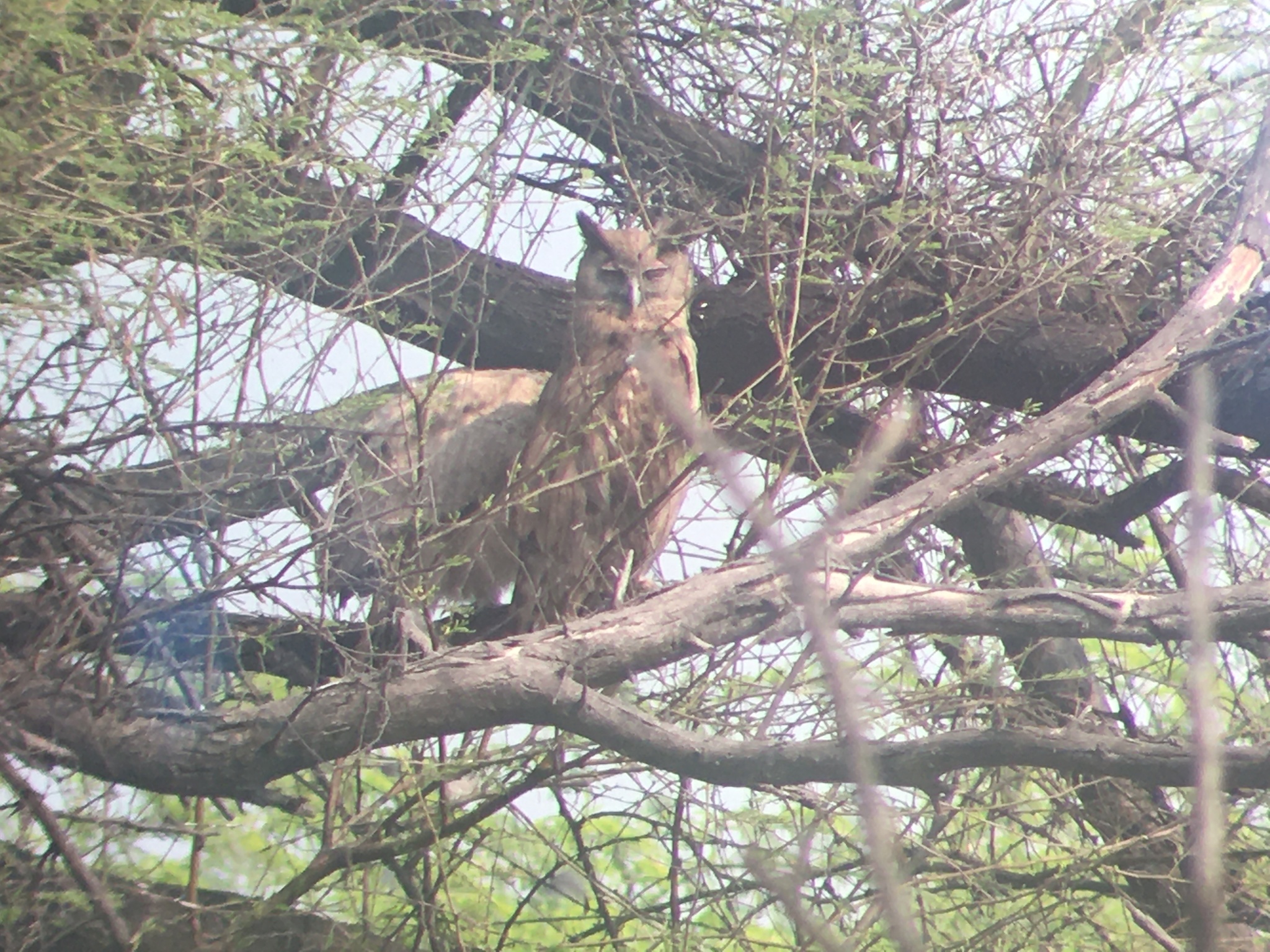
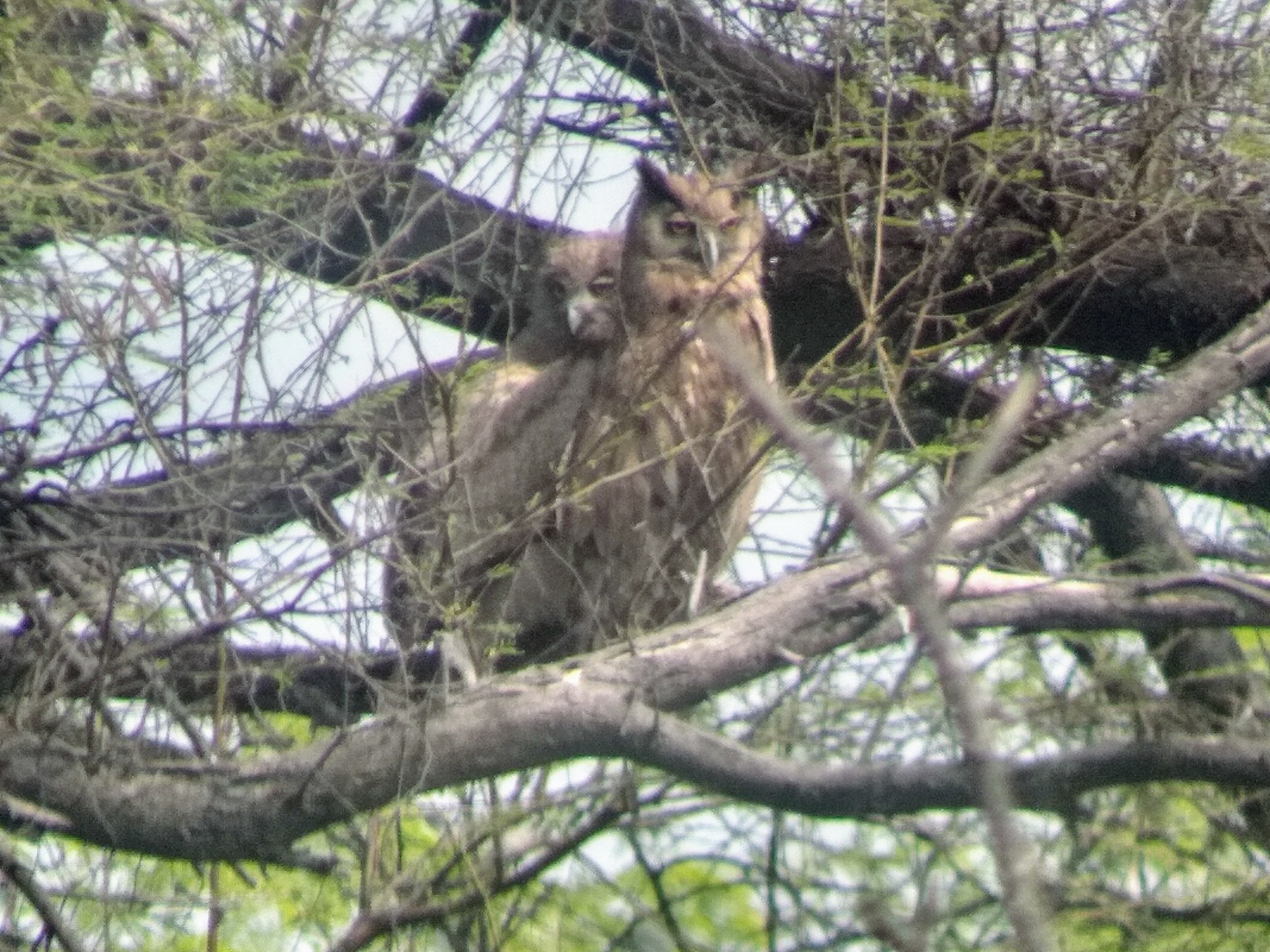
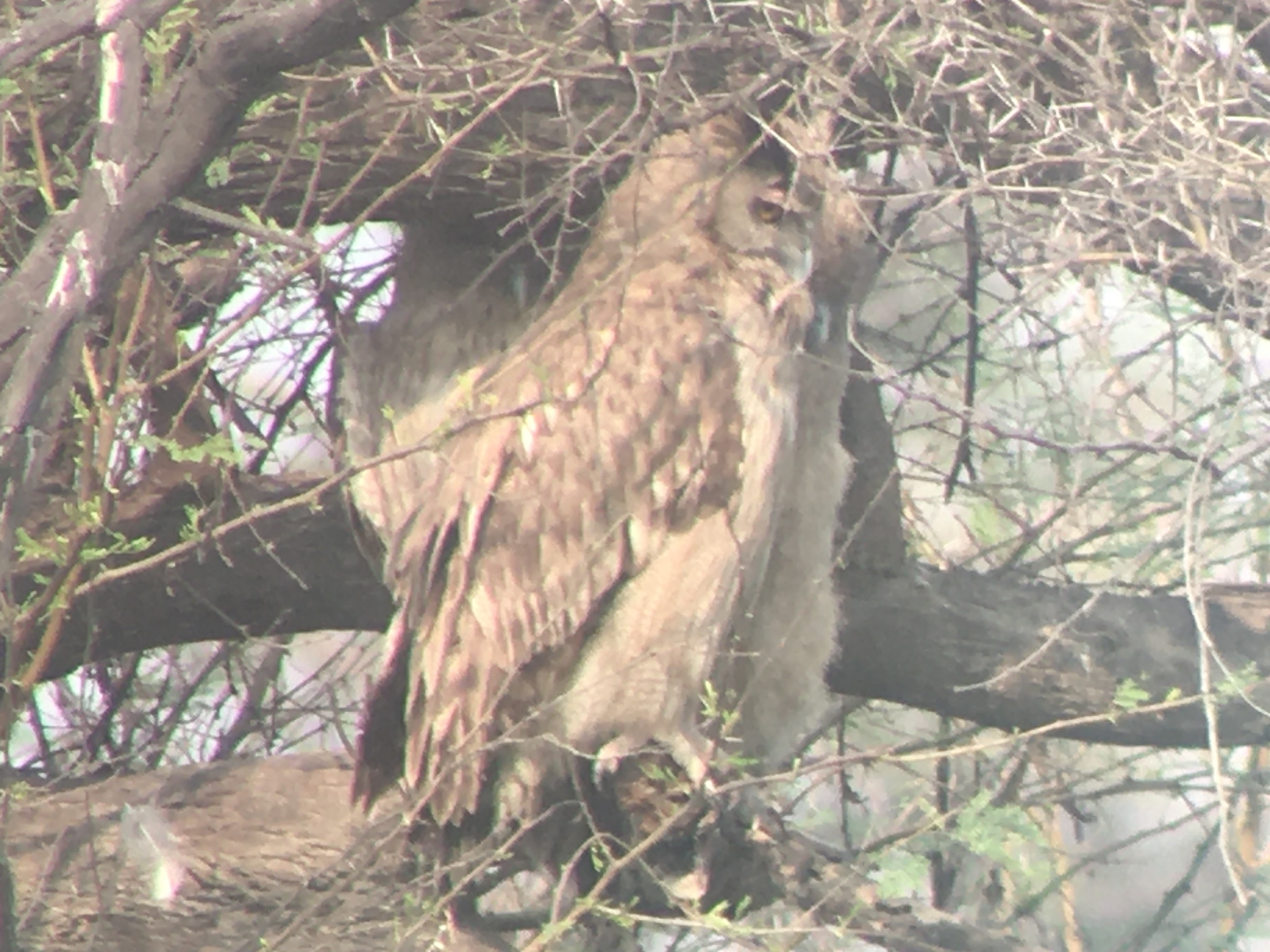
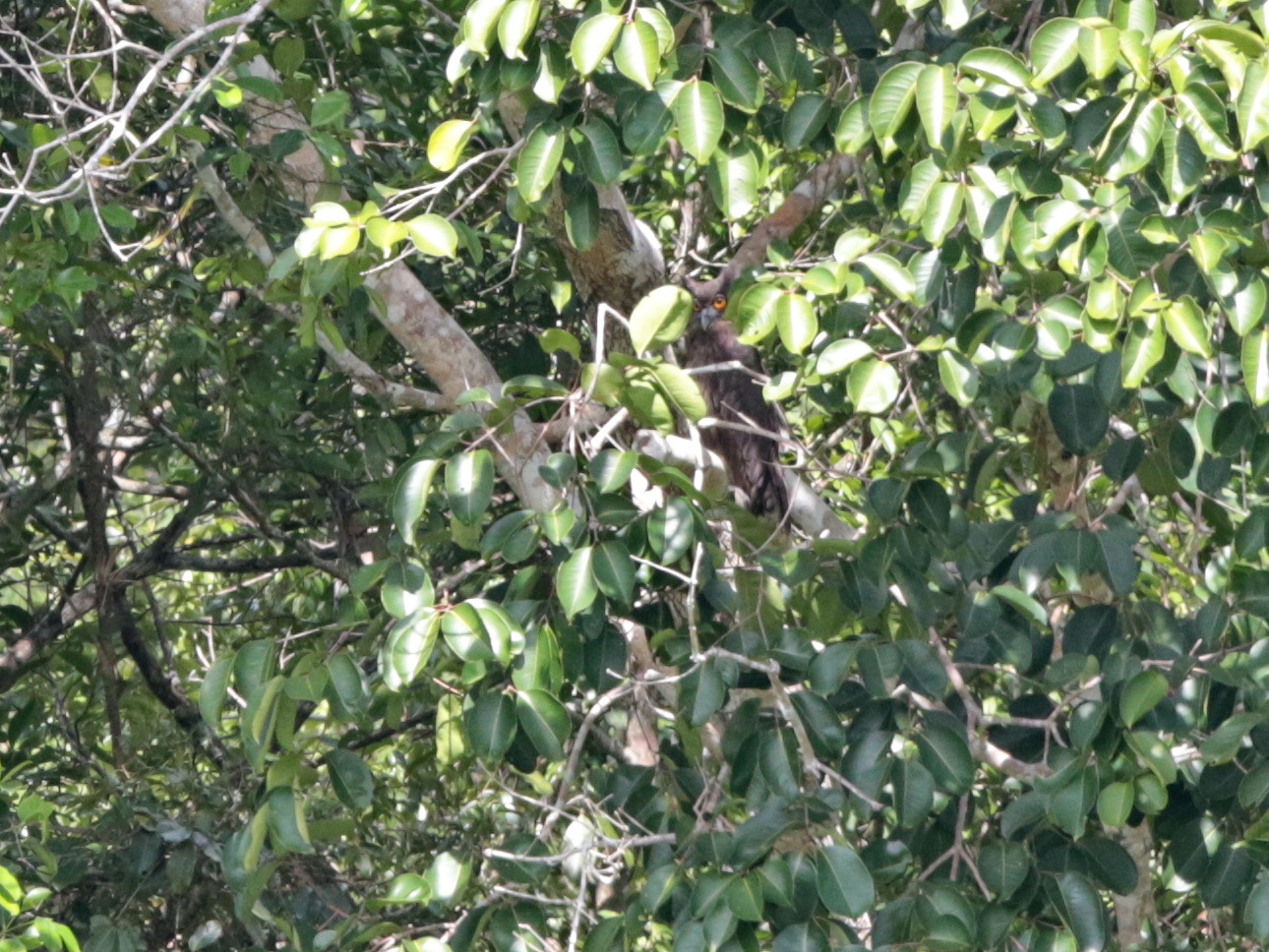
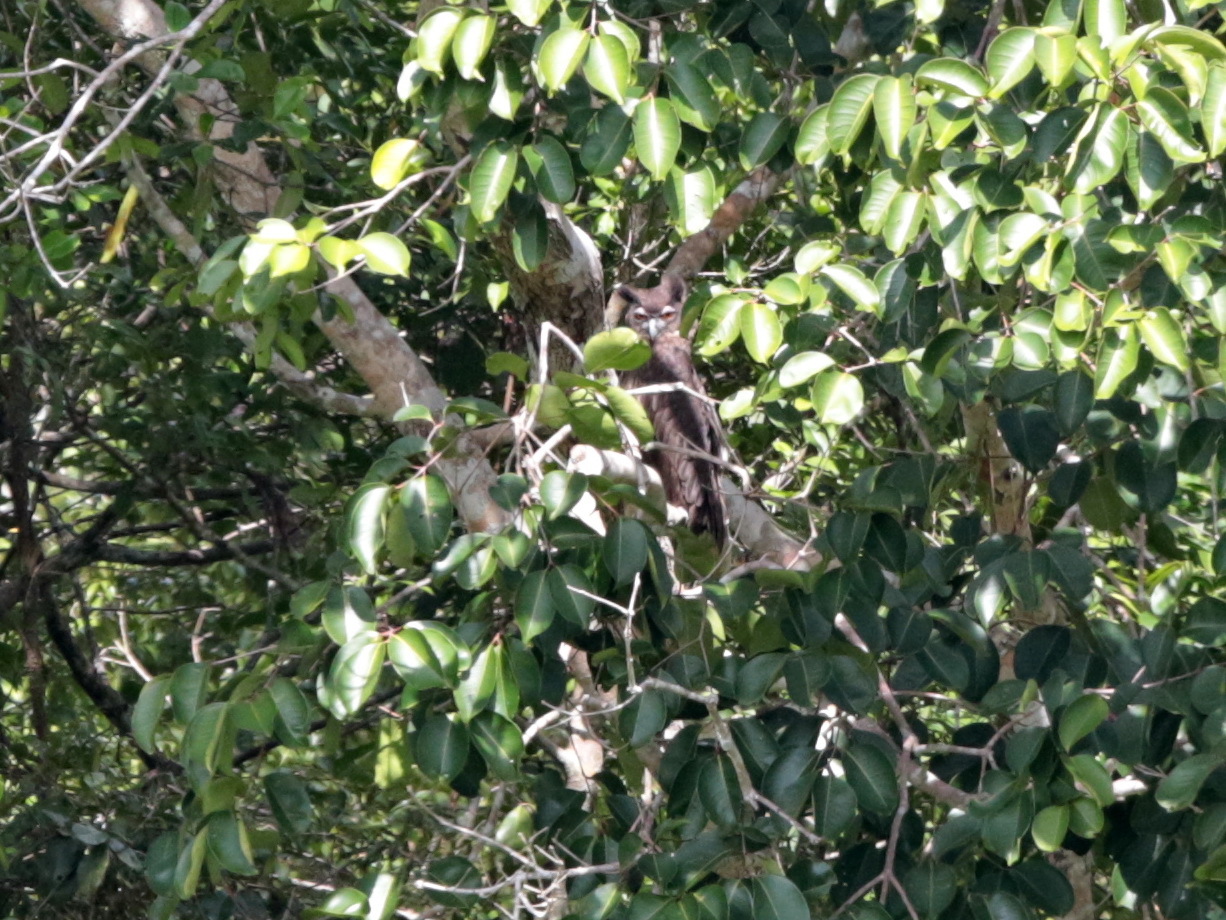
Dusky Eagle-Owl
Ketupa coromanda
乌雕鸮
Introduction
A large owl species in the family Strigidae. Widespread across South and Southeast Asia, ranging from Pakistan, India, Nepal, and Bangladesh through Myanmar, Thailand, and Malaysia into China. Inhabits forests, wooded wetlands, agricultural areas with scattered groves, and roadside avenues with old large trees. Has been recorded in oil palm plantations in Peninsular Malaysia. Listed as Least Concern on the IUCN Red List with an estimated extent of occurrence of 9,250,000 km² (3,570,000 sq mi), though volunteer databases suggest this may be an overestimate. One of the least studied owl species globally, with most information coming from anecdotal observations.
Description
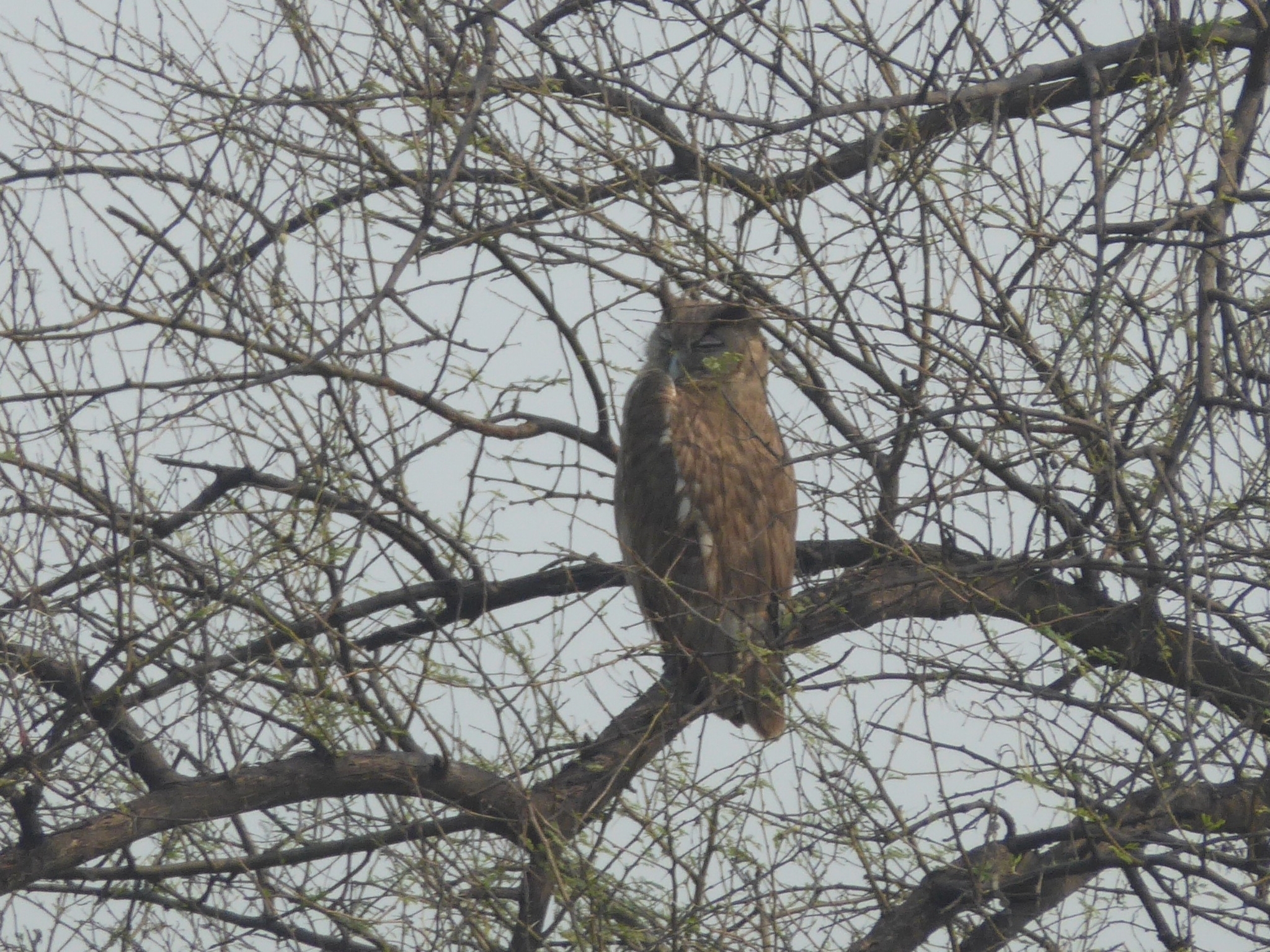
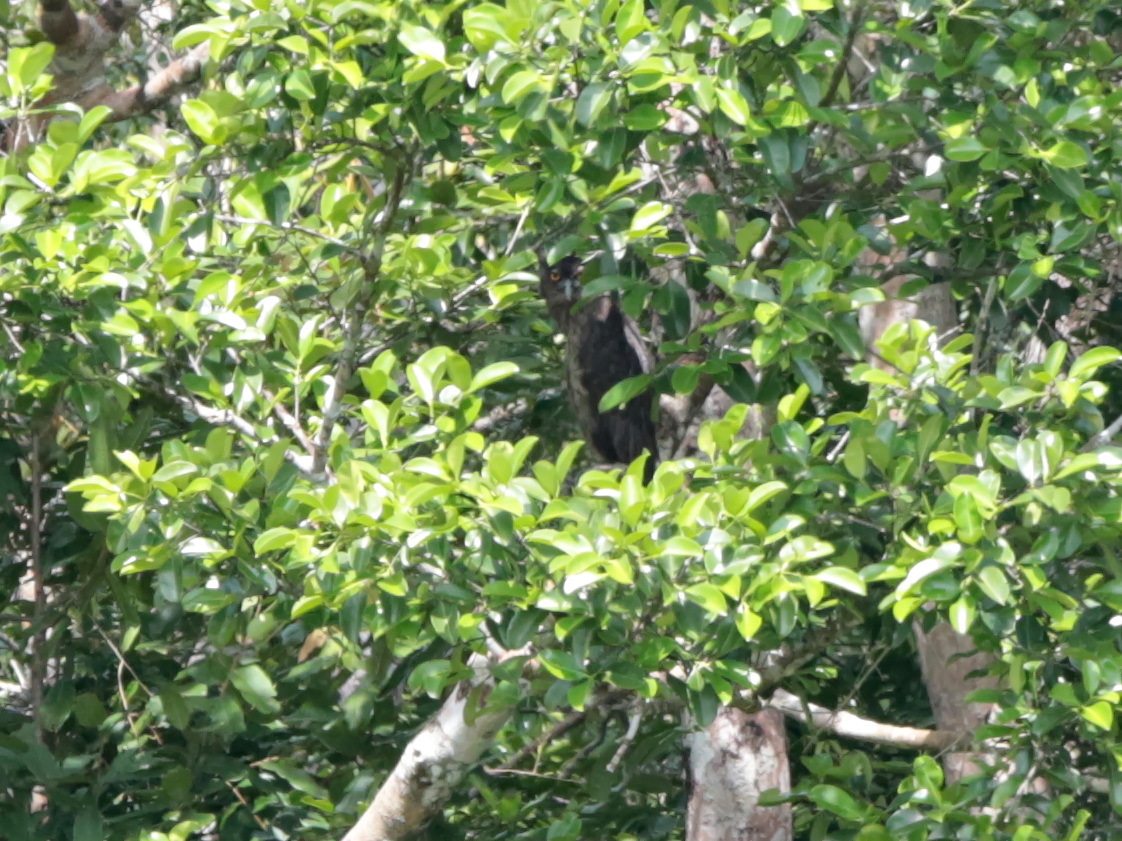
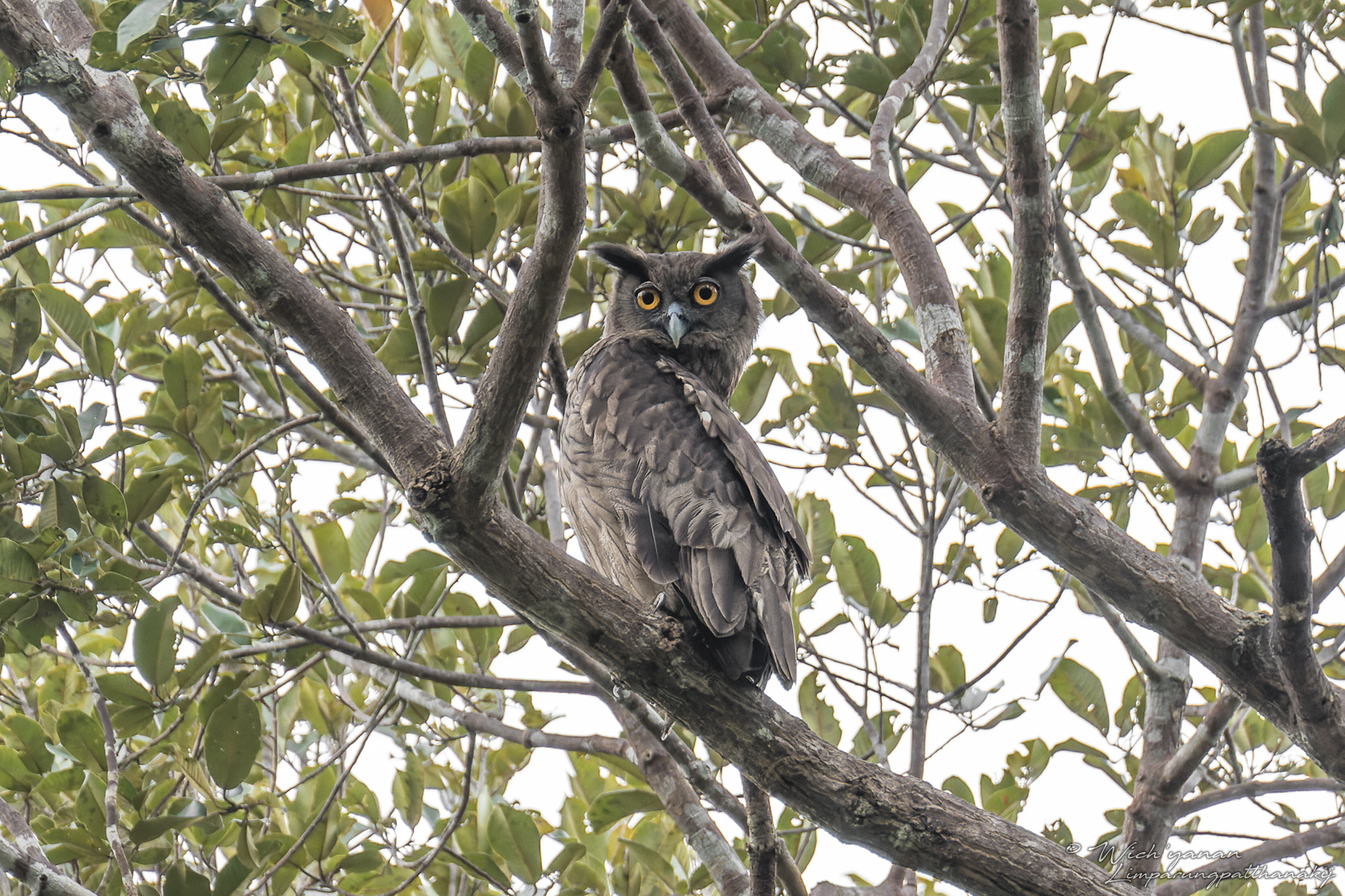
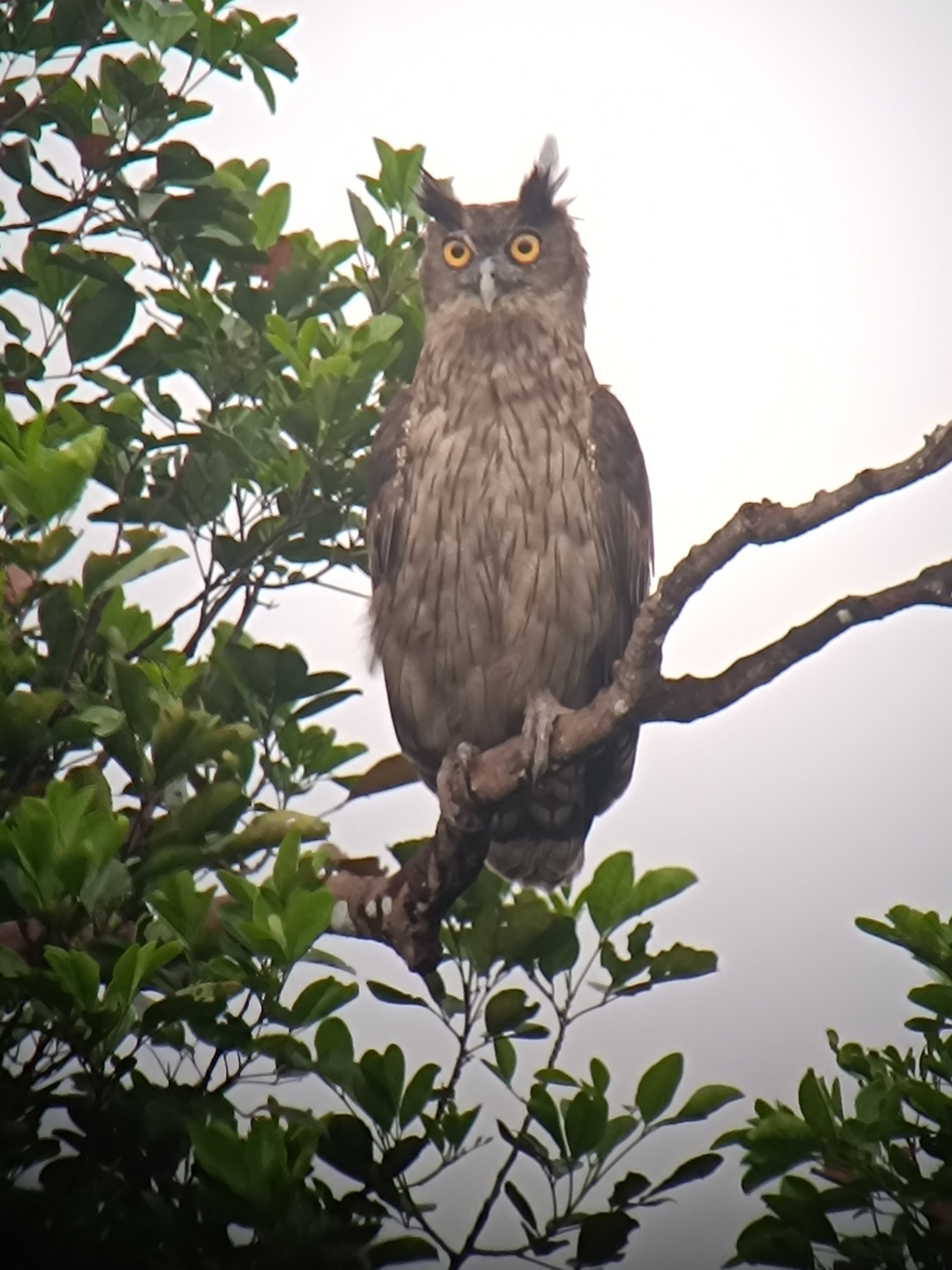
A large greyish-brown owl with prominent ear tufts. The underparts are greyish white with dark brown streaks. Wings are dark brown with whitish streaks. The subspecies K. c. klossii is notably darker than the nominate race and lacks obvious whitish markings on the wings and scapulars. Wing measurement ranges from 380–435 mm and tail length from 187–224 mm.
Identification
Large owl with prominent ear tufts distinguishes it from smaller owl species. The greyish-brown plumage with streaked underparts and streaked wings is characteristic. The darker K. c. klossii subspecies lacks the whitish wing markings seen in the nominate form.
Distribution & Habitat
Occurs from Pakistan, India, Nepal, and Bangladesh eastward through Myanmar, Thailand, and Malaysia into China. In Peninsular Malaysia, recorded in oil palm plantations during surveys in Selangor, Perak, Pahang, and Negeri Sembilan between autumn 2009 and 2010. Inhabits forests, wooded wetlands, agricultural areas with scattered groves and trees, and roadside avenues with old large trees.
Behavior & Ecology
Not deterred by daylight though largely nocturnal, emerging from roost shortly before sunset. Has been observed hunting during cloudy daytime weather. Nesting season extends from November to April, with peak breeding activity in December and January. Uses stick nests of other large birds, particularly preferentially reusing nests of woolly-necked Storks in Haryana. Also uses nests built by red-naped ibis and Indian spotted eagle. Trees used include Ficus, Mitragyna, Dalbergia, and Eucalyptus species. Shows preference for agroforestry areas amid cereal crops.
Conservation
Listed as Least Concern on the IUCN Red List. Population trends are not well documented due to the species' elusive nature and lack of systematic study. The extent of occurrence is estimated at 9,250,000 km², though this may be an overestimate according to eBird.org data.
Source: Wikipedia · CC BY-SA 3.0
Taxonomy
- Order
- Strigiformes
- Family
- Strigidae
- Genus
- Ketupa
- eBird Code
- dueowl1
Subspecies (2)
-
Ketupa coromanda coromanda
Pakistan to northern and central India, southern Nepal, and Bangladesh; disjunct population in southeastern China (Jiangxi and Zhejiang) perhaps also this subspecies
-
Ketupa coromanda klossii
western and southern Myanmar, southern Thailand, and northern peninsular Malaysia
Data Sources
CBR Notes: 由Bubo属移入Ketupa属(WGAC and Clements, 2022),其学名由Bubo coromandus修订为Ketupa coromanda
Species description from Wikipedia, licensed under CC BY-SA 3.0.
Bird images and sounds sourced from GBIF, contributed by citizen scientists worldwide under Creative Commons licenses.
Taxonomy data from AviList 2025.