Blakiston's Fish Owl
Ketupa blakistoni
毛腿雕鸮
Introduction
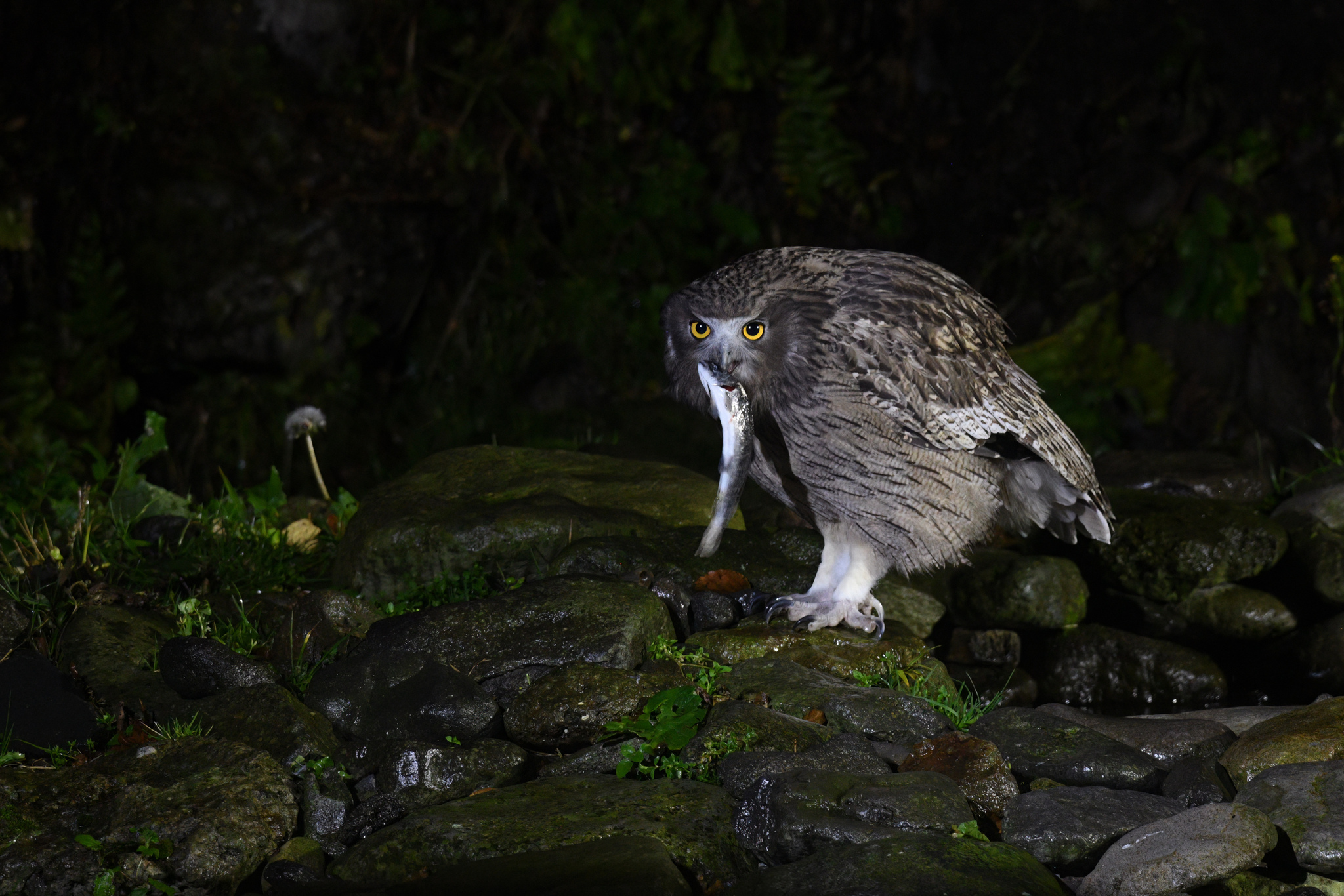
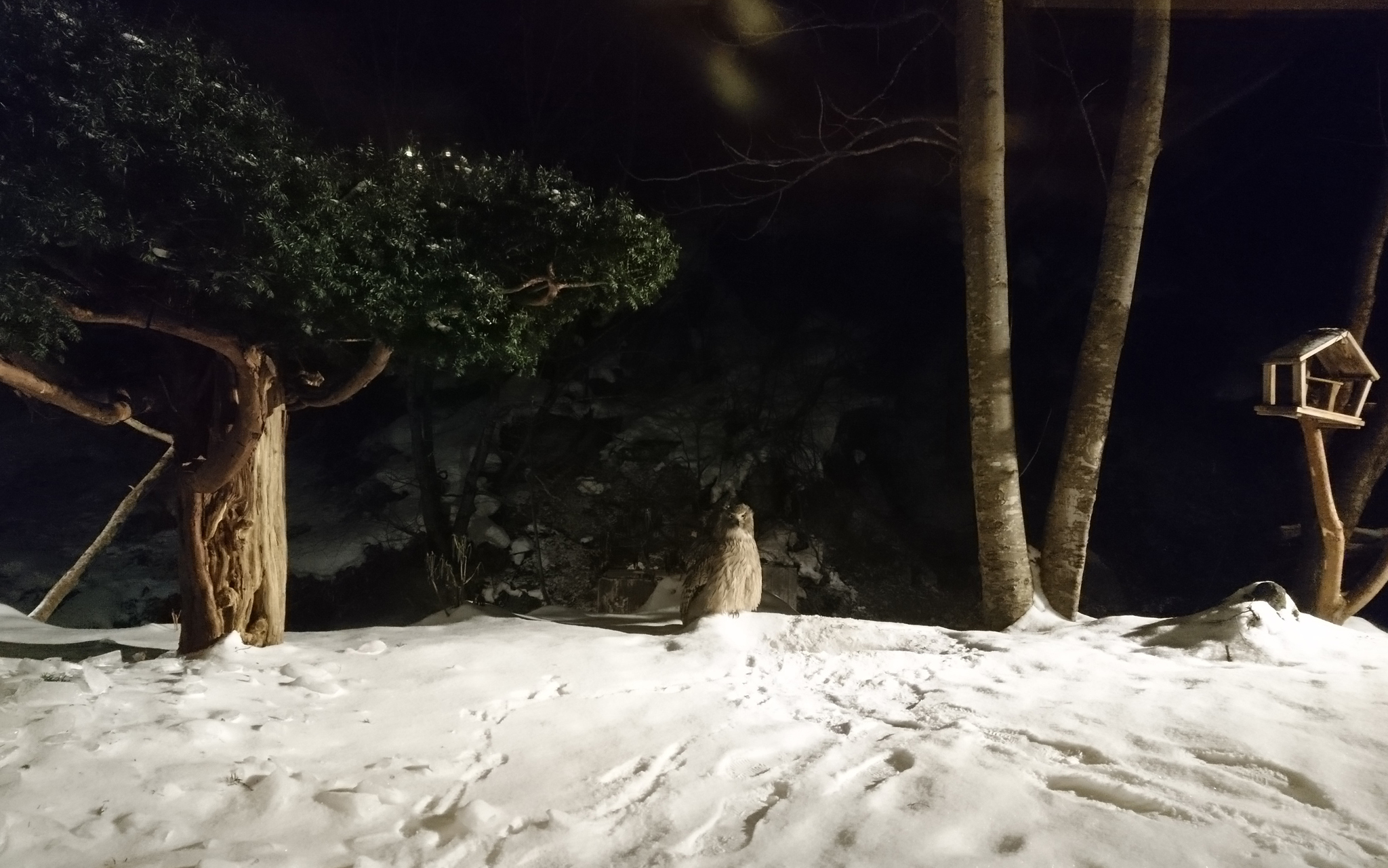
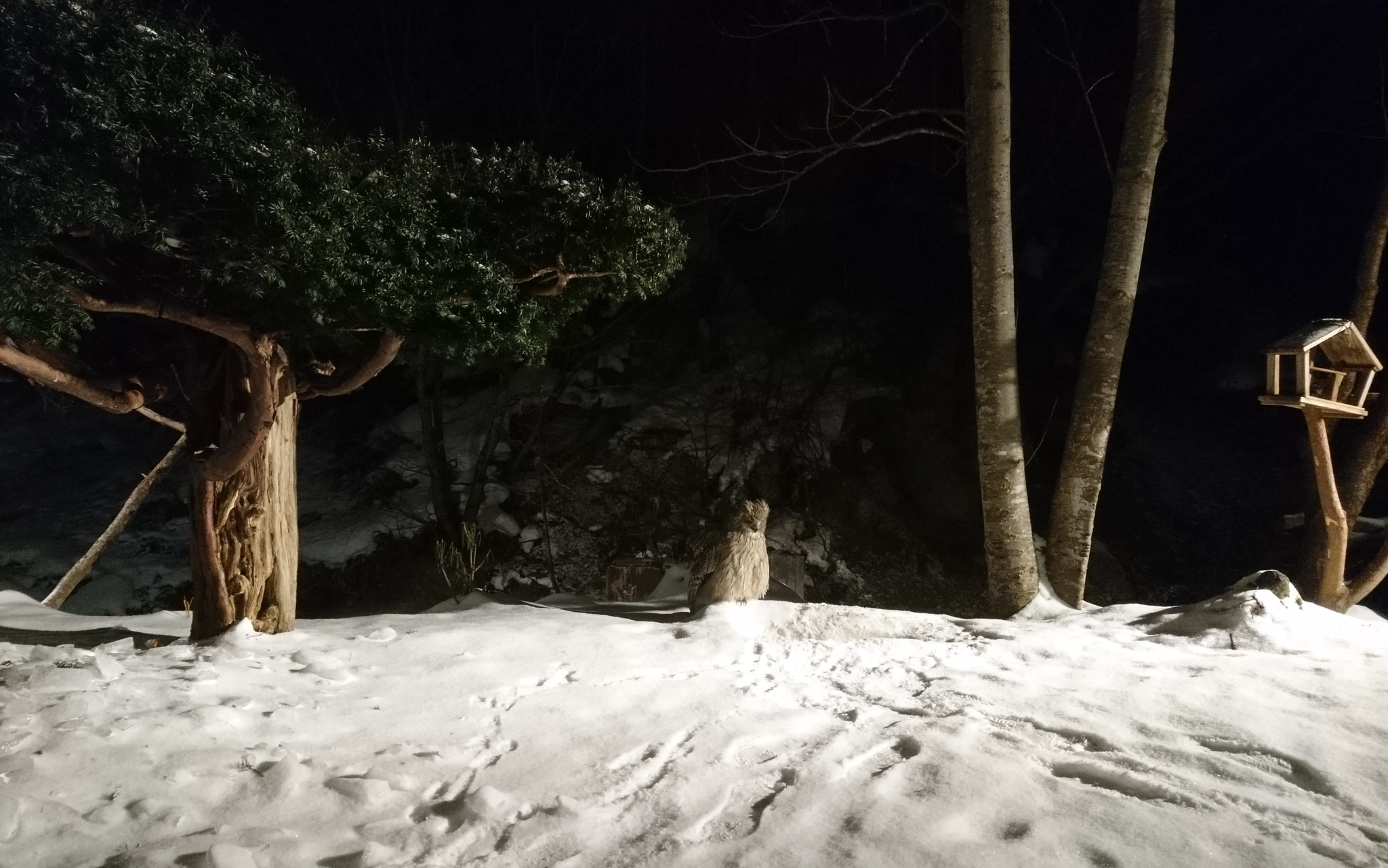
Ketupa blakistoni, the largest living species of owl, is a fish owl (subgroup of eagle-owls) in the family Strigidae. Native to China, Japan, and the Russian Far East. Inhabits dense, undisturbed old-growth riparian forest with large, old trees for nest sites near lakes, rivers, springs, and shoals that remain unfrozen in winter. Specializes in hunting aquatic prey in riparian areas. Classified as Endangered by the IUCN due to widespread loss of riverine forest and habitat fragmentation.
Description
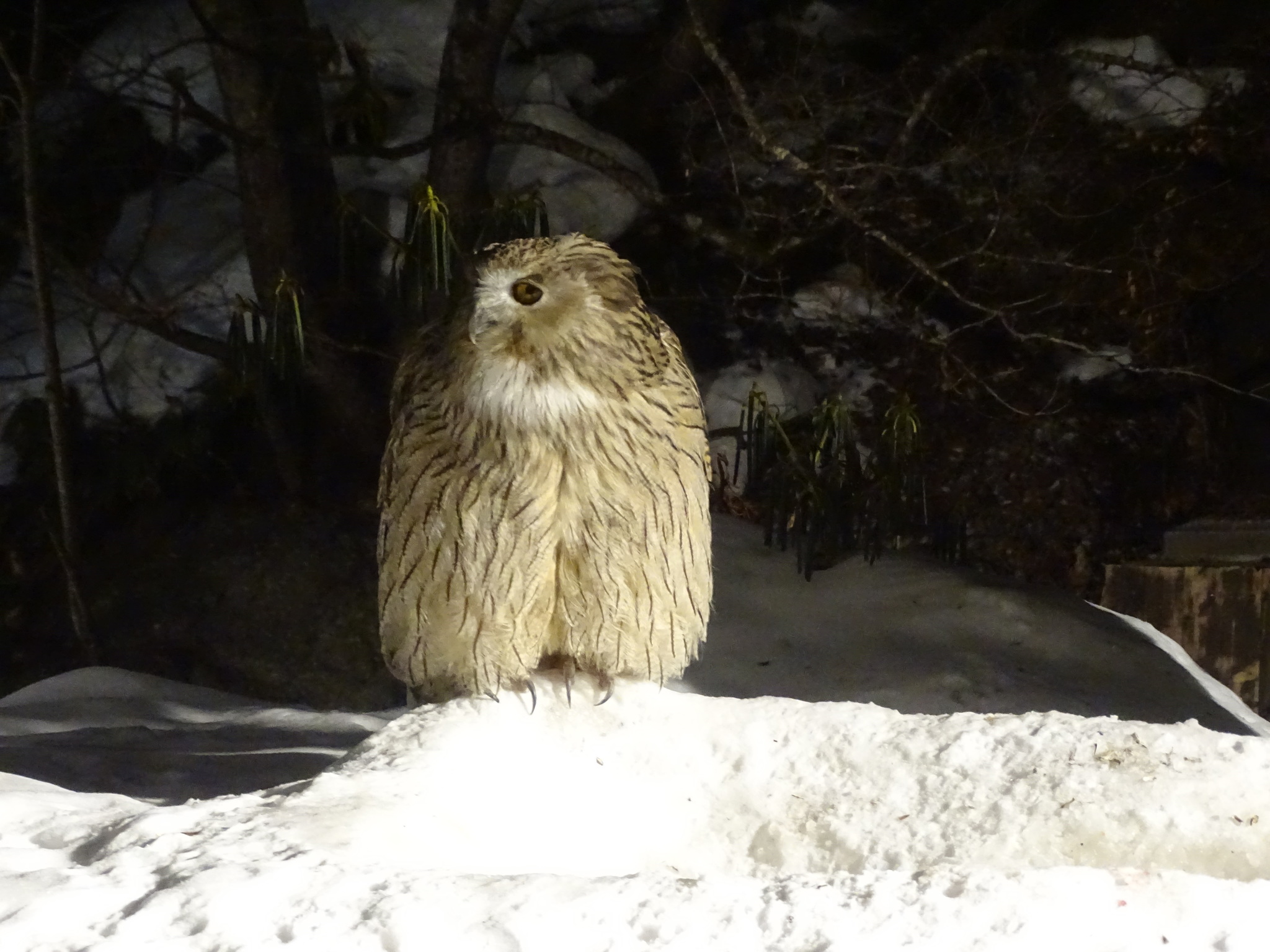
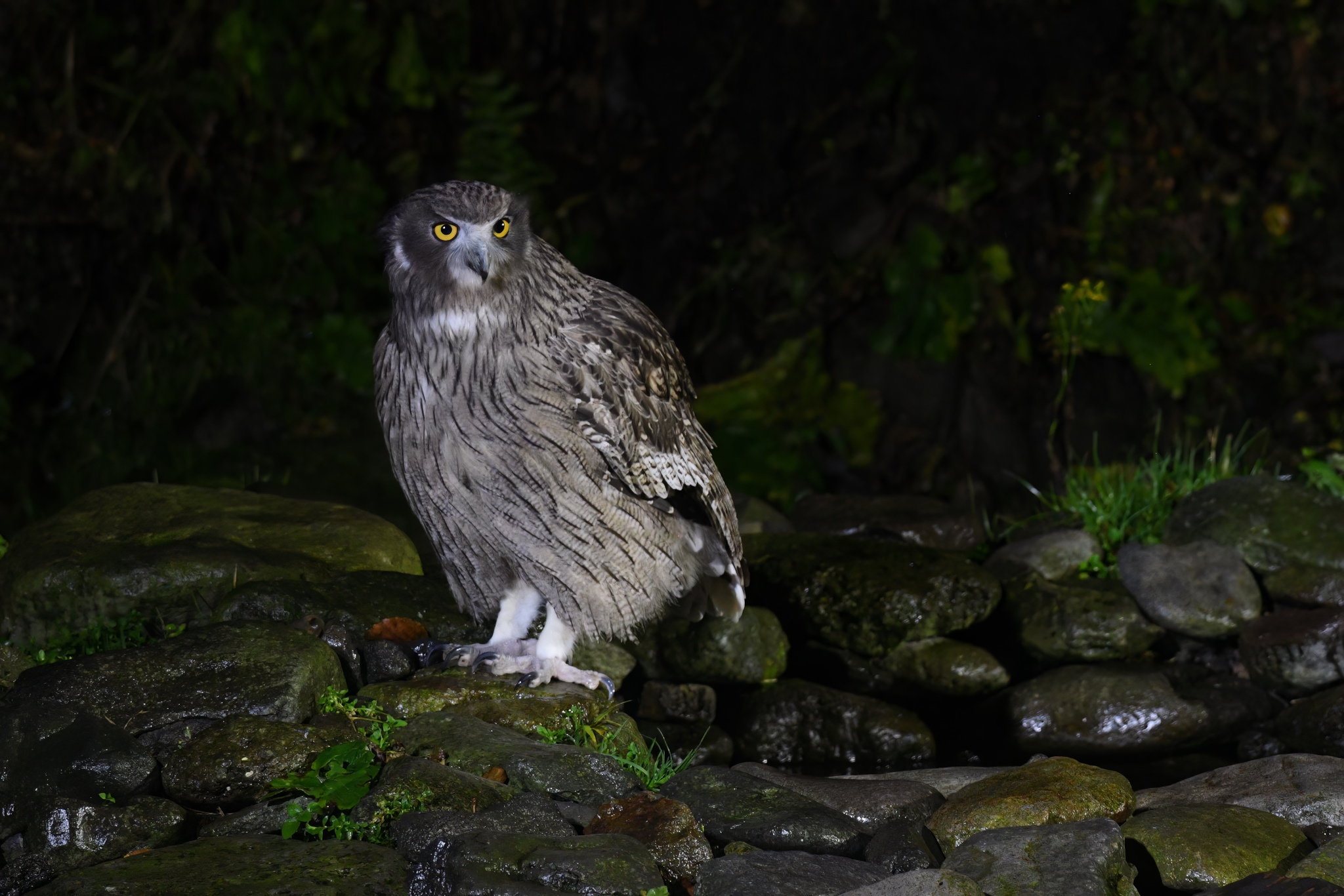
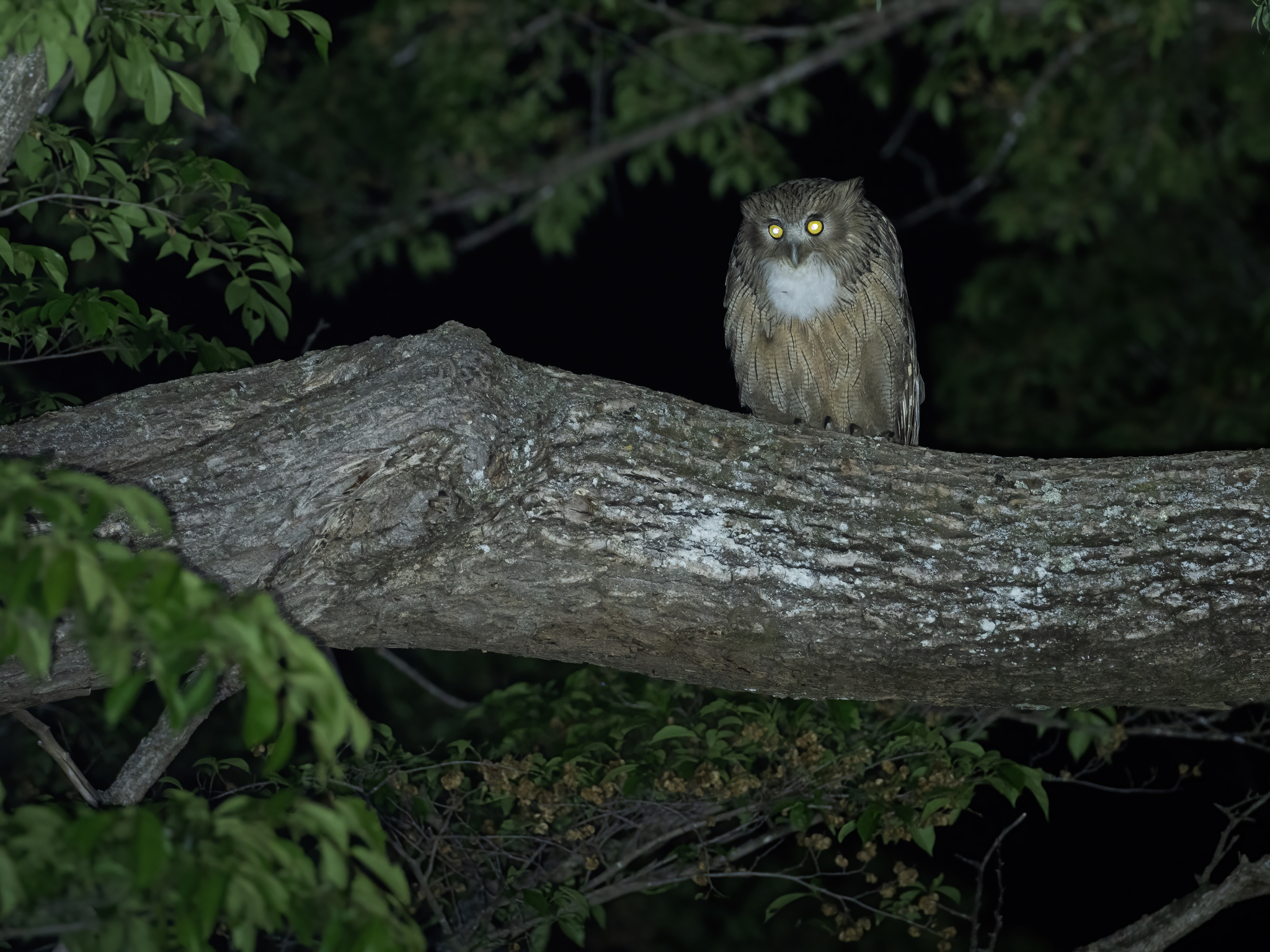
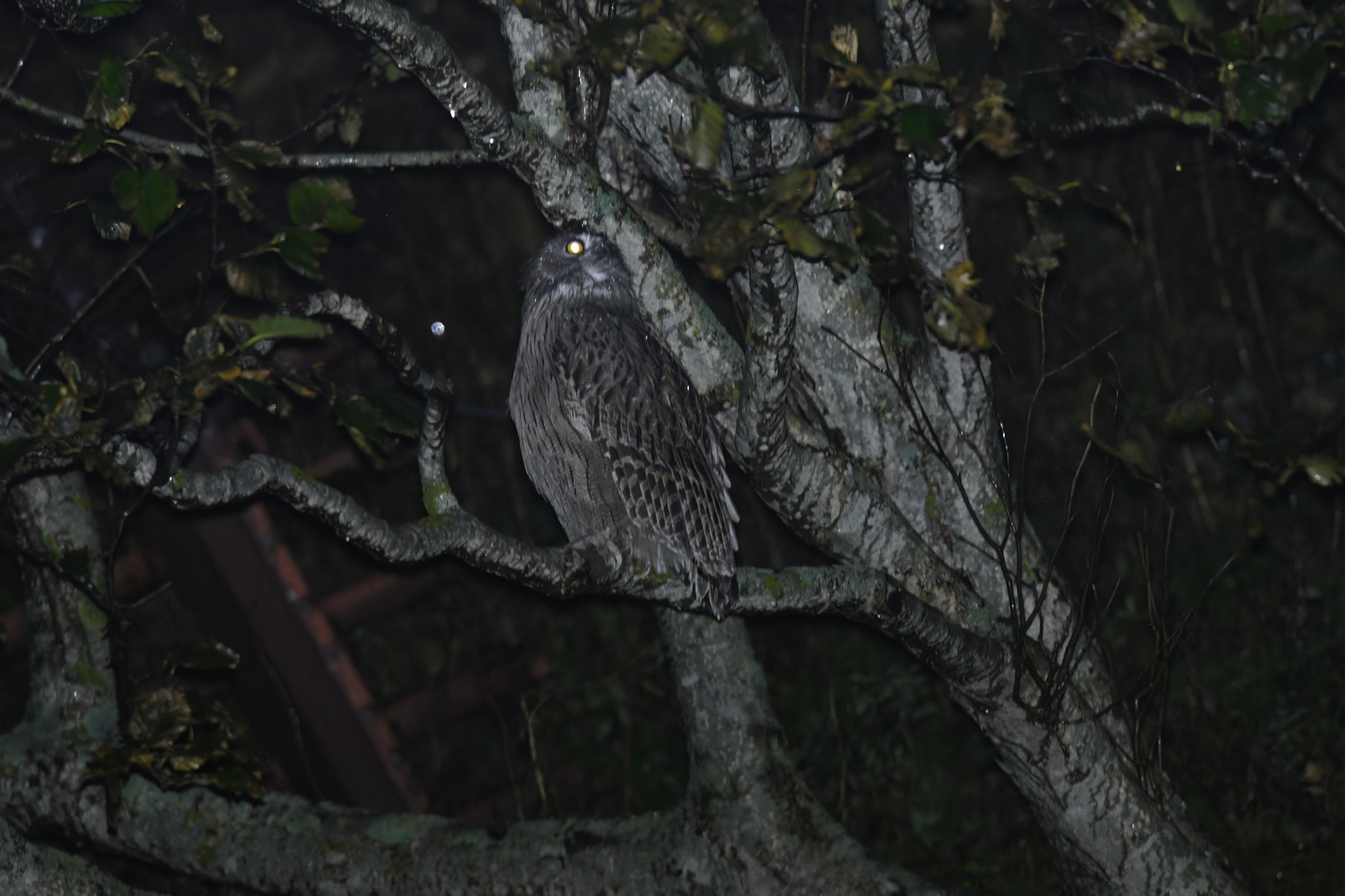
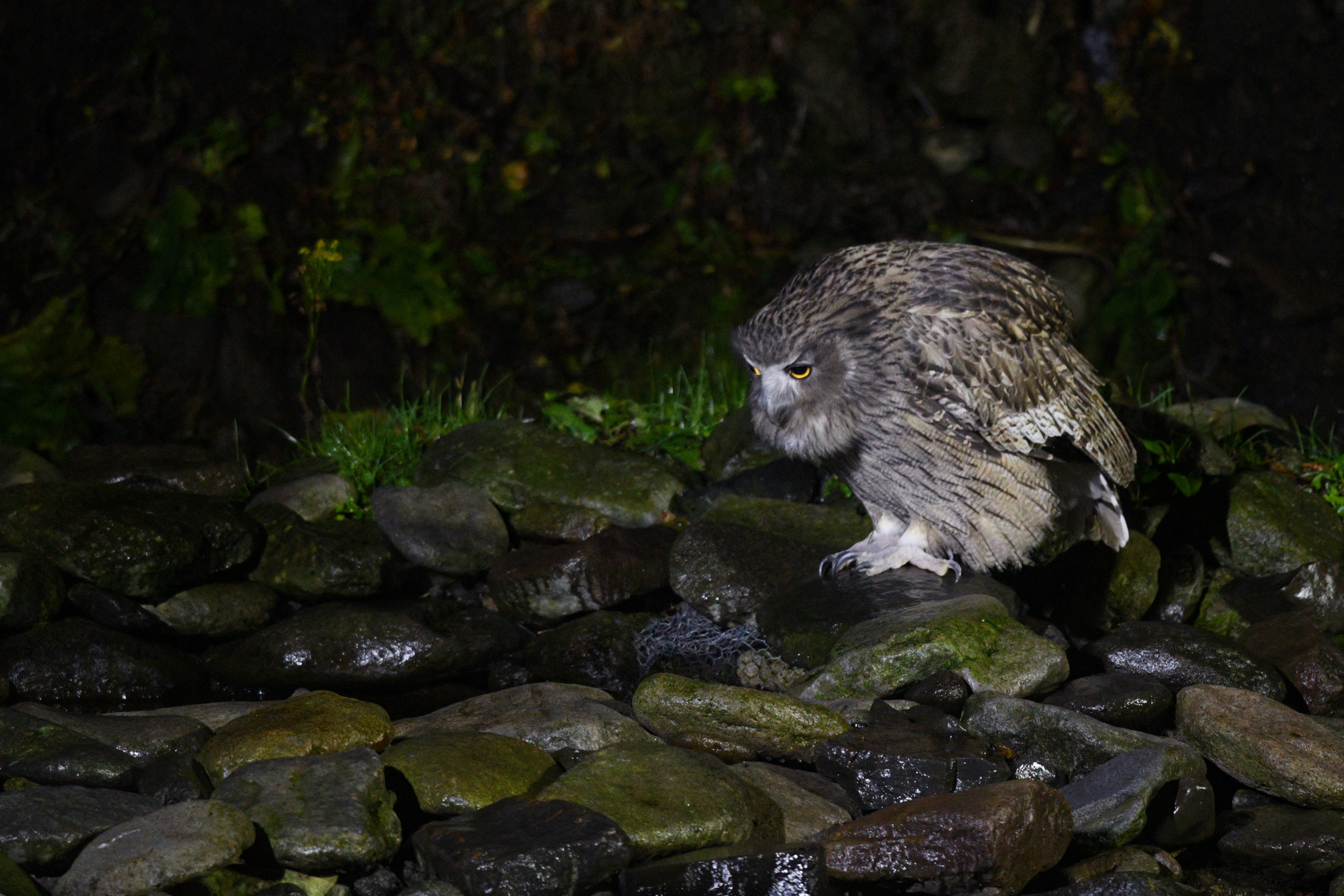
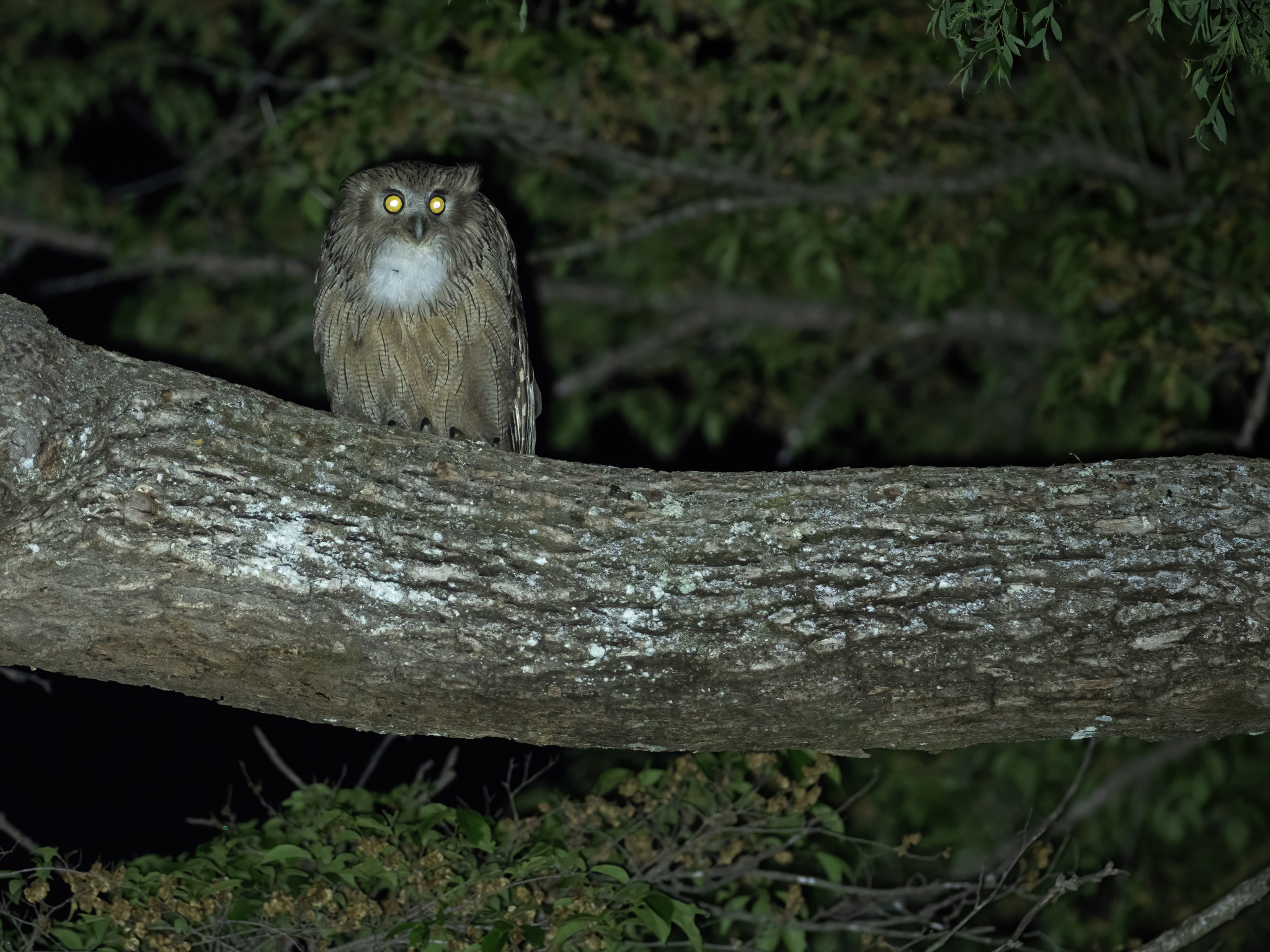
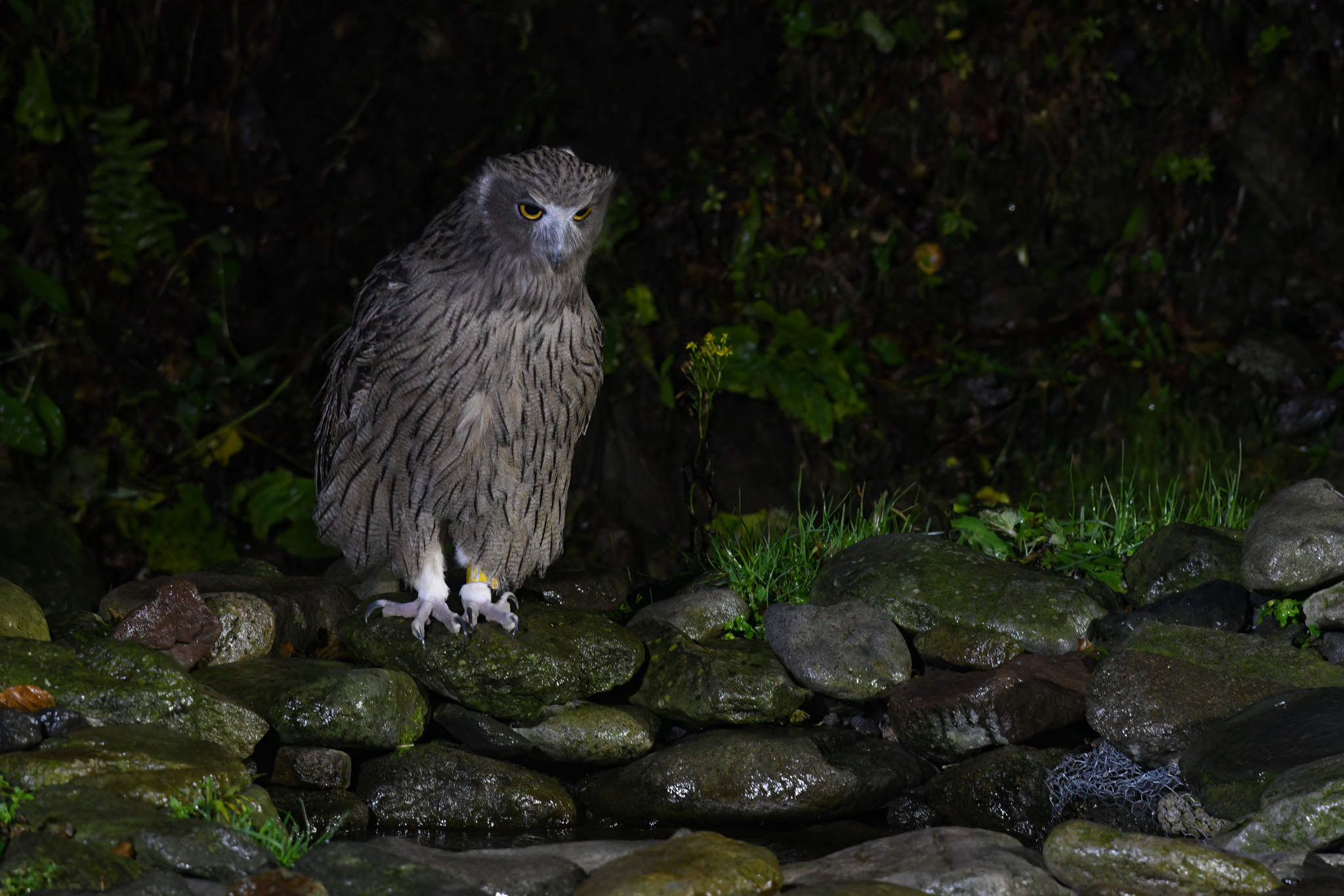
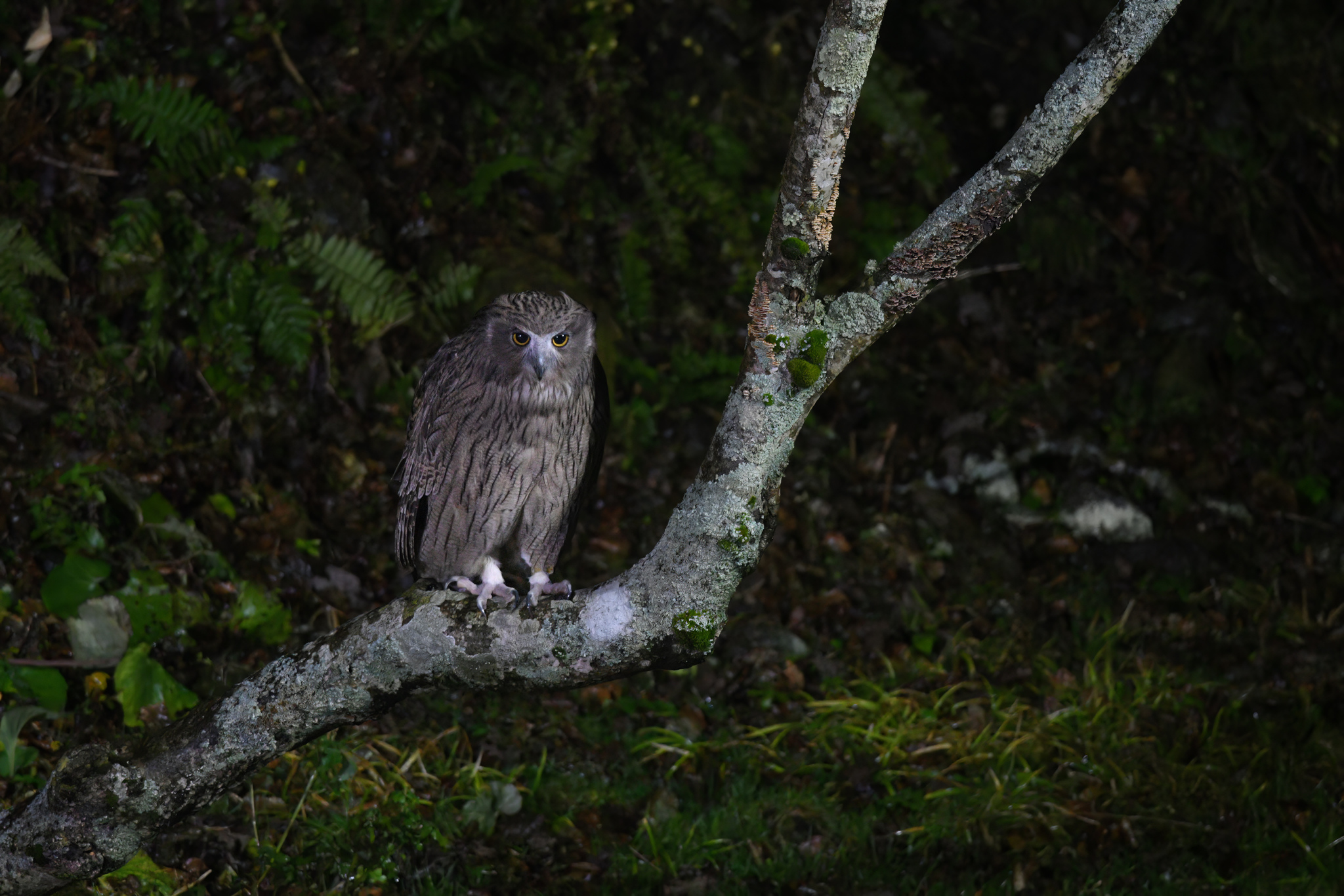
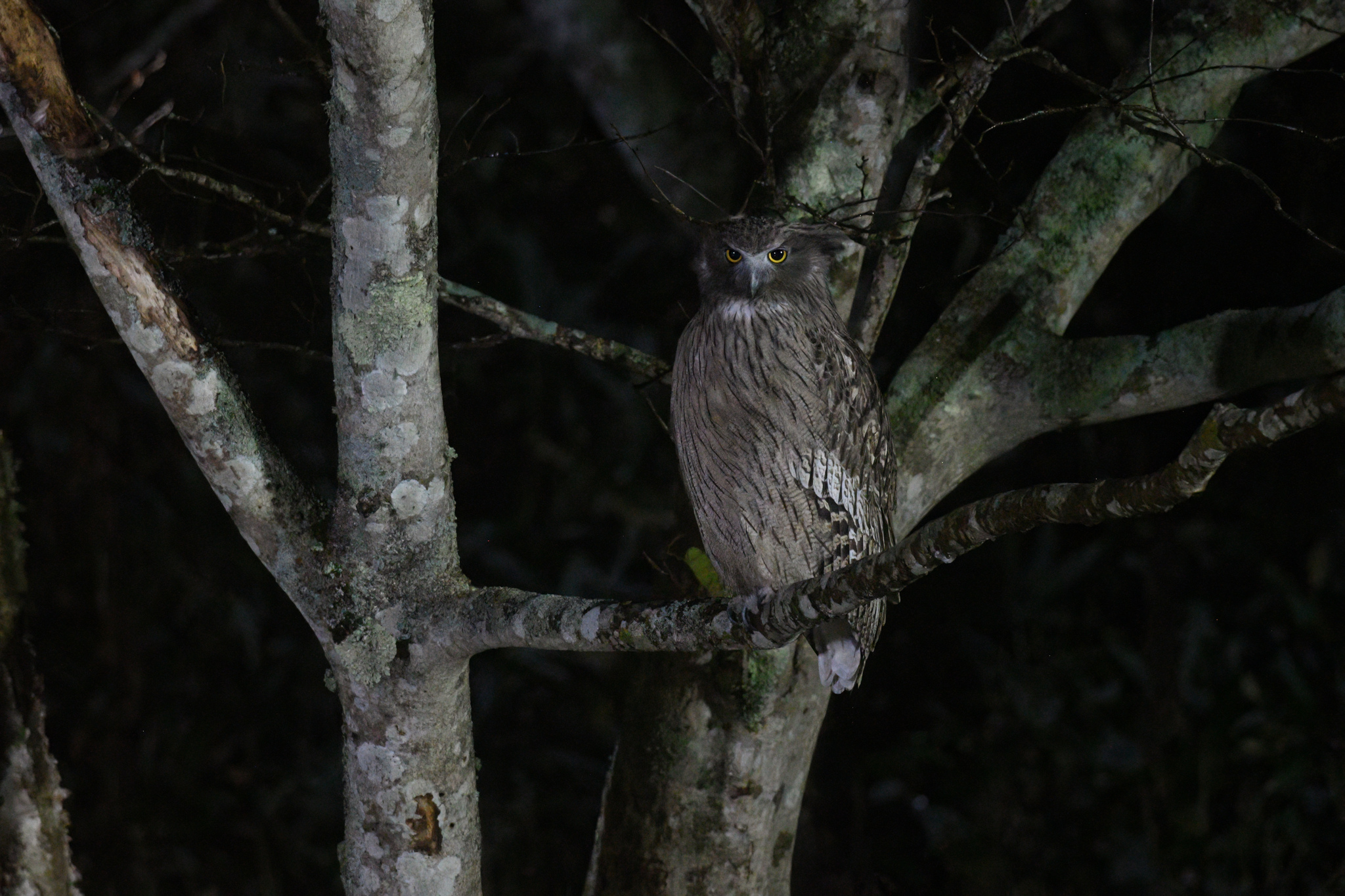
The world's largest living owl species. Males weigh 2.95–3.6 kg; females are about 25% larger at 2.95–4.6 kg. Total length 60–72 cm with wingspan 178–190 cm (possibly up to 200 cm). Plumage is monochromatically brown to tan, lacking the rich patterning of many eagle-owls. Broad, ragged ear tufts hang slightly to the side rather than standing upright. Upperparts are buff-brown heavily streaked with darker brown; underparts are paler buff-brown with less heavy streaking. Throat is white. Iris is yellow. Wing chord measures 447–560 mm, tail 243–305 mm, tarsus 73–102 mm, and culmen 55–71 mm. Superficially resembles a Eurasian eagle-owl but is more uniform in color.
Identification
Similar to the Eurasian eagle-owl but distinguished by yellow iris (vs. orange), more monochromatic brown coloration, and broad ragged ear tufts that hang sideways. Gap of approximately 800 km separates this species from the tawny fish owl and about 2,000 km from the brown fish owl, eliminating confusion with other fish owls. Subspecies differ vocally: Japanese nominate males call twice with single-note female response, while mainland subspecies perform a four-note duet described as HOO-hoo, HOBO-hoooo. Territorial call is deeper but less sonorous than the Eurasian eagle-owl's voice.
Distribution & Habitat
Occurs in China, Japan, and the Russian Far East. Inhabits dense, minimally disturbed old-growth forest near waterways including floodplains and wooded coastlines. Requires large tree cavities for nesting; found in mixed forests near the taiga zone but prefers deciduous nest trees. Requires stretches of productive rivers that remain at least partially unfrozen in winter, typically where current is fast-flowing or warm spring water upwells. Slower-moving streams are equally suitable as main river channels; only a few meters of open water are needed to survive winter.
Behavior & Ecology
Feeds primarily on aquatic prey: fish (pike, catfish, trout, salmon, sculpin, lamprey), amphibians (especially Dybowski's frog in spring), crayfish, crustaceans, and mammals. Fish caught may be two to three times the owl's own weight. Hunting methods include wading through river shallows and perching on riverbanks or logs, waiting up to four hours for prey. Primarily active at dusk and dawn, with increased daytime activity during brood-rearing. Highly territorial; breeding does not occur every year due to food fluctuations. Courtship in January–February; egg-laying begins mid-March. Clutch size 1–3 eggs (usually 2, often 1 in Russia). Incubation period approximately 35 days; young leave nest within 35–40 days. Juveniles remain dependent for several months, sometimes up to two years.
Conservation
Classified as Endangered by the IUCN. Global population estimated at 1,000–1,500 individuals (500–850 pairs). Japan population: approximately 100–150 birds (20 breeding pairs). Mainland Asia population estimated at several hundred to thousands; Primorye region holds 200–400 individuals. Threats include widespread loss of riverine forest, land development along rivers, and dam construction. In Russia, owls are killed by fur-trappers, drown in salmon nets, and are shot by hunters. In Japan, mortality from vehicle strikes and power lines occurs, along with lead poisoning from carrion. Local conservation efforts include nest-box installation, supplemental feeding, and education. Low genetic diversity and inbreeding have been documented.
Culture
Revered by the Ainu peoples of Hokkaido, Japan, as Kotan koru Kamuy (God that Protects the Village), a divine being. In Russia, the Evens people of northern Siberia and the Russian Far East consider the species a food source. Historically, the Udege peoples in Primorye hunted fish owls for their high fat content and used dried wings and tails as fans to disperse biting insects while hunting, though this practice has declined.
Source: Wikipedia · CC BY-SA 3.0
Taxonomy
- Order
- Strigiformes
- Family
- Strigidae
- Genus
- Ketupa
- eBird Code
- blfowl1
Subspecies (2)
-
Ketupa blakistoni blakistoni
Sakhalin, southern Kuril Islands, and northern Japan (Hokkaido)
-
Ketupa blakistoni doerriesi
far eastern Siberia and northeastern China
Data Sources
CBR Notes: 由Bubo属再回到Ketupa属(WGAC and Clements, 2022),中文名由毛腿渔鸮改为毛腿雕鸮
Species description from Wikipedia, licensed under CC BY-SA 3.0.
Bird images and sounds sourced from GBIF, contributed by citizen scientists worldwide under Creative Commons licenses.
Taxonomy data from AviList 2025.