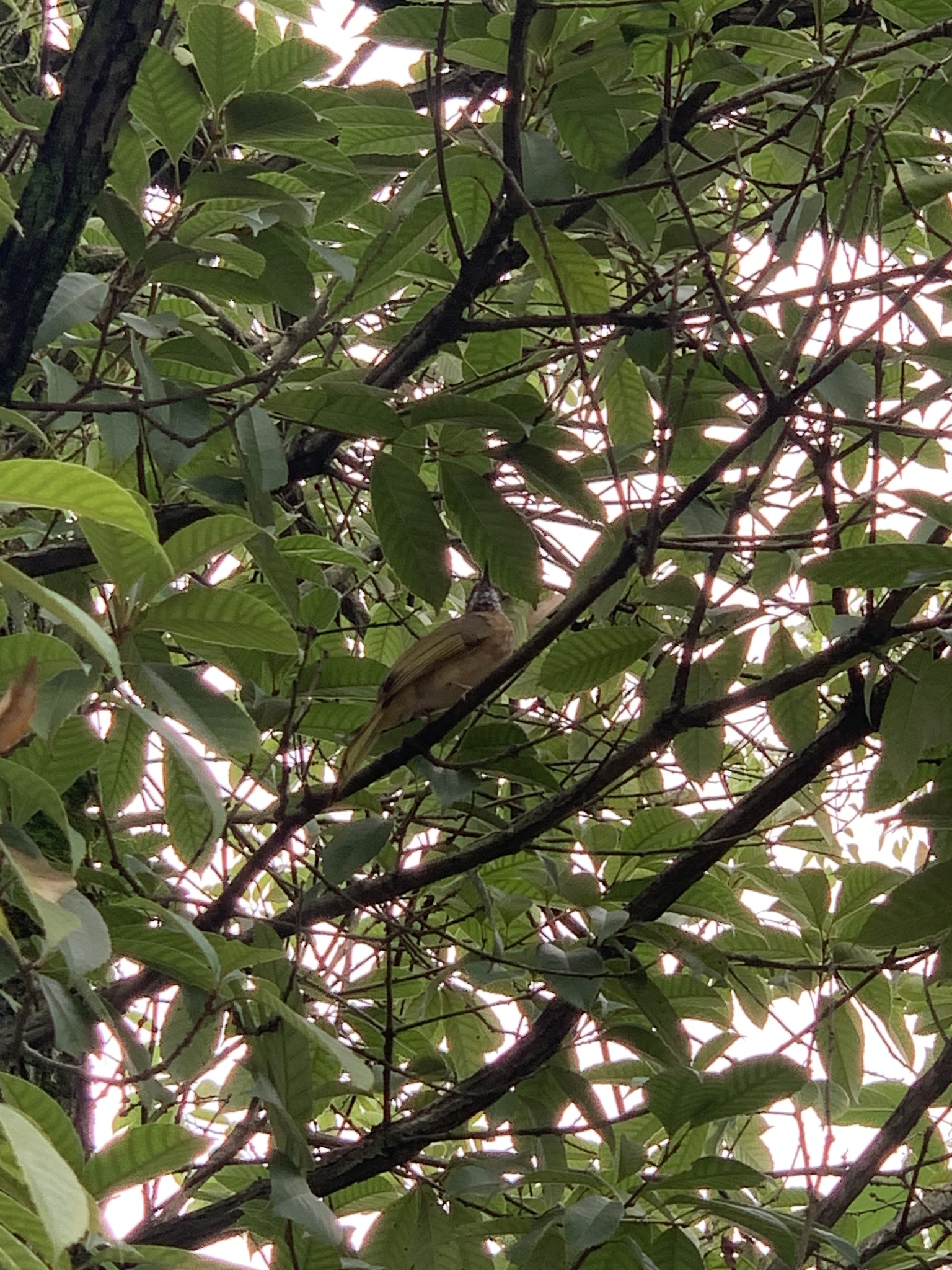
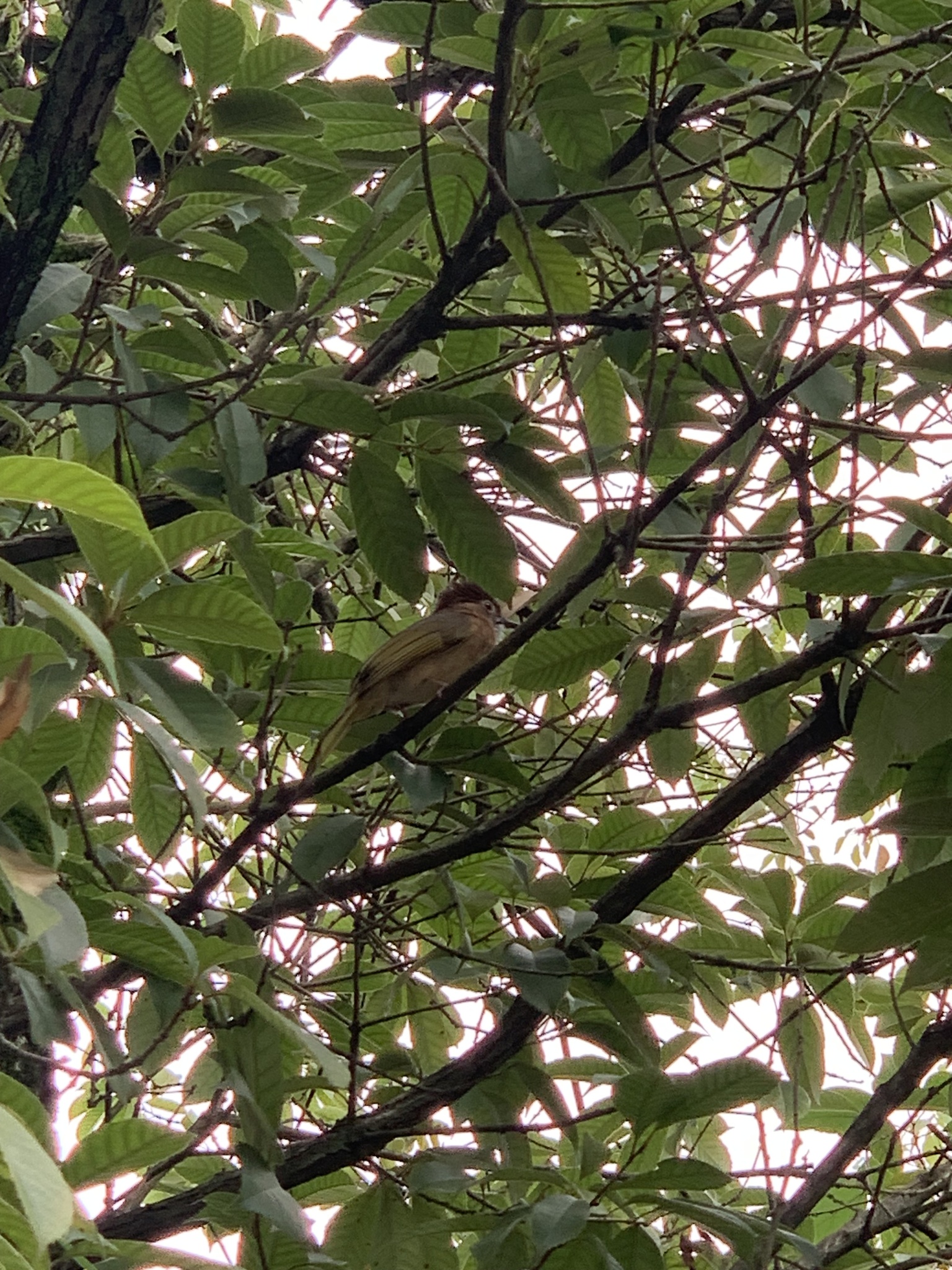
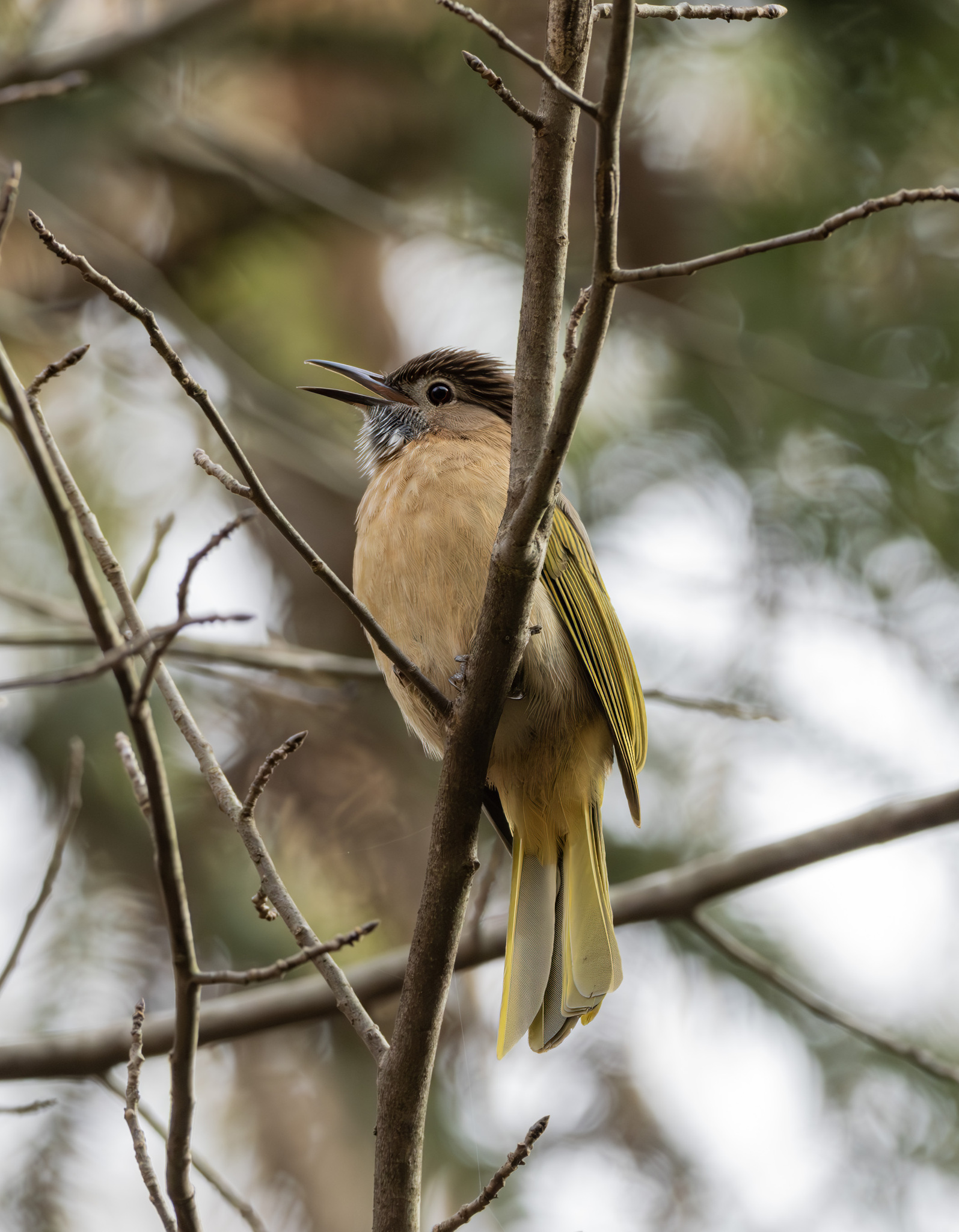
Mountain Bulbul
Ixos mcclellandii
绿翅短脚鹎
Introduction
The Stripe-throated Bulbul (Pycnonotus finlaysoni) is a bulbul in the Pycnonotidae family. It inhabits mid-elevation evergreen broadleaved forests from the Himalayan foothills through Indochina to the Malay Peninsula. This species is typically detected by its vocalizations. It has a stable population across its range and is listed as Least Concern.
Description
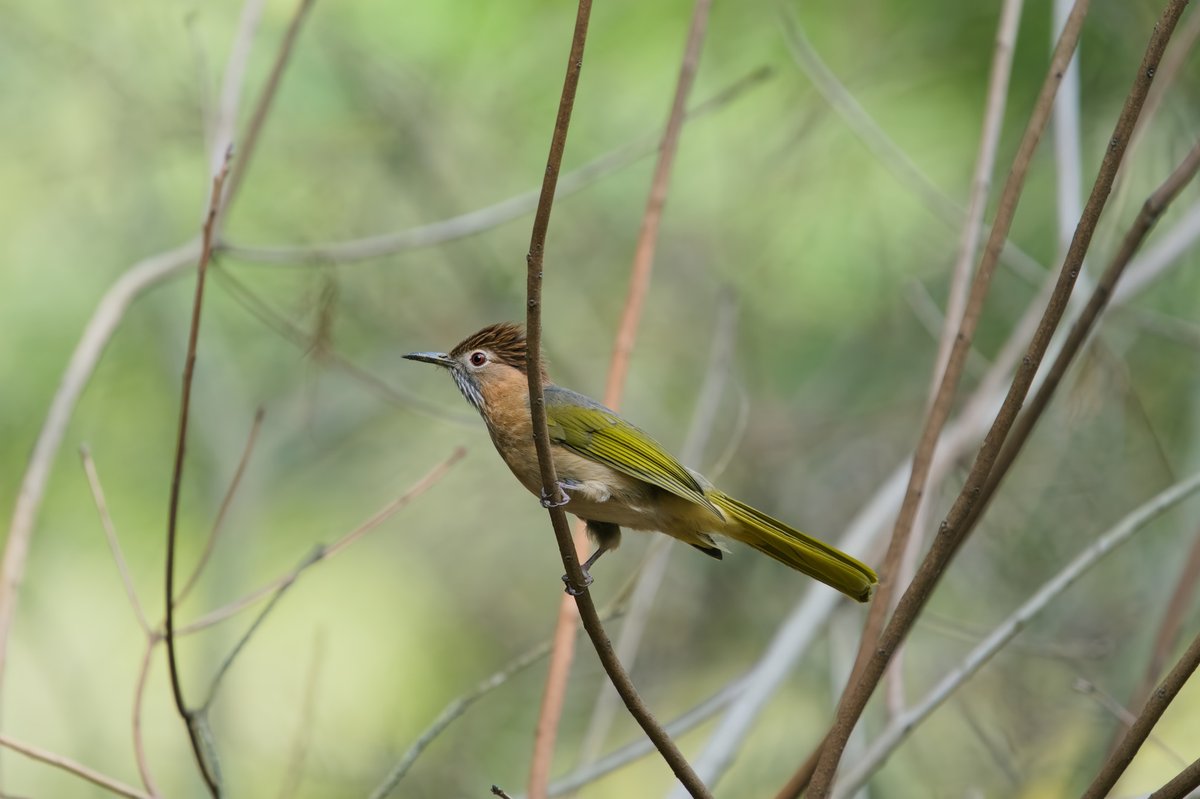
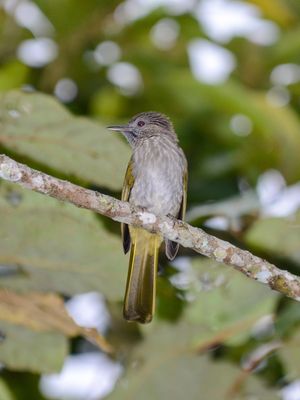
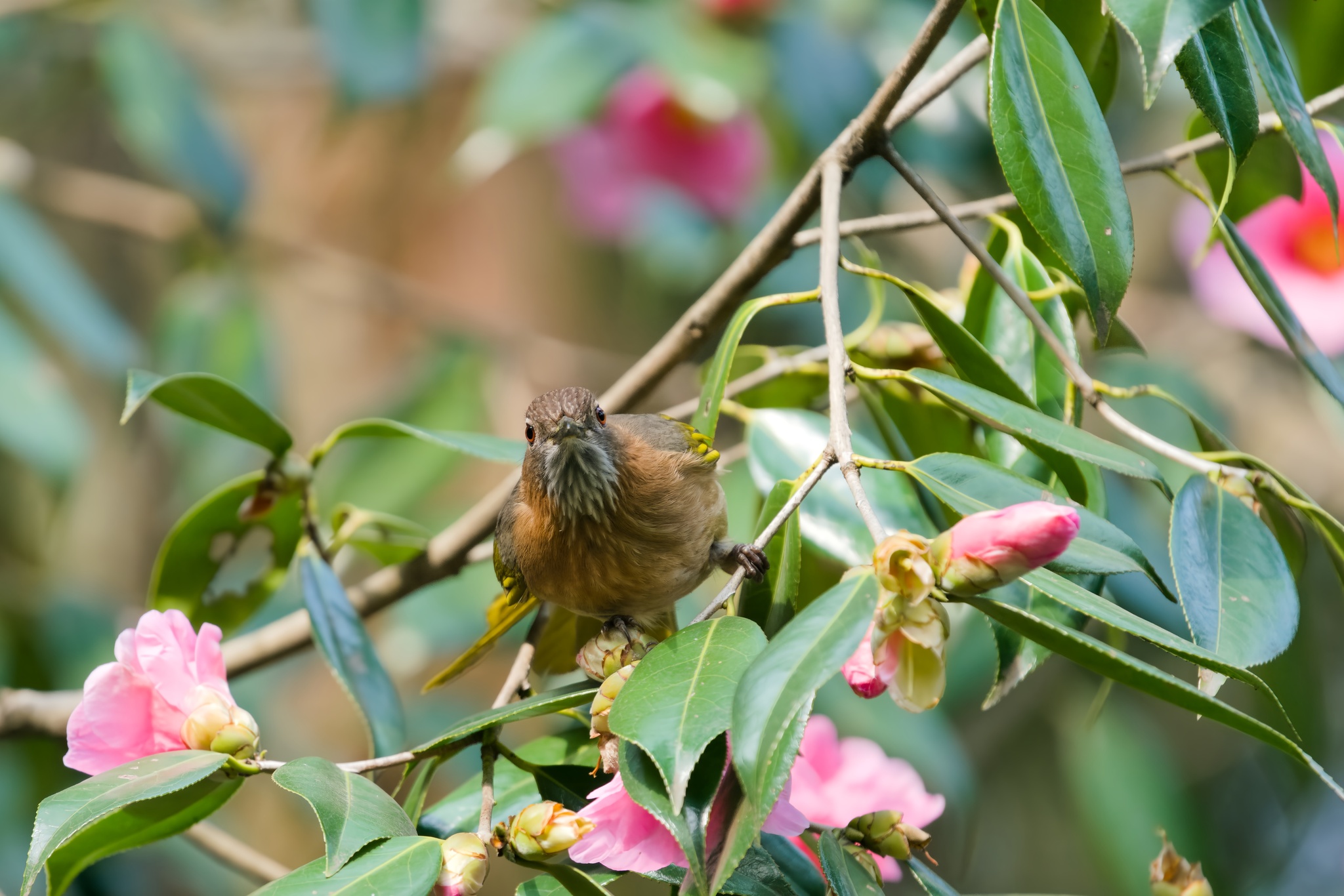
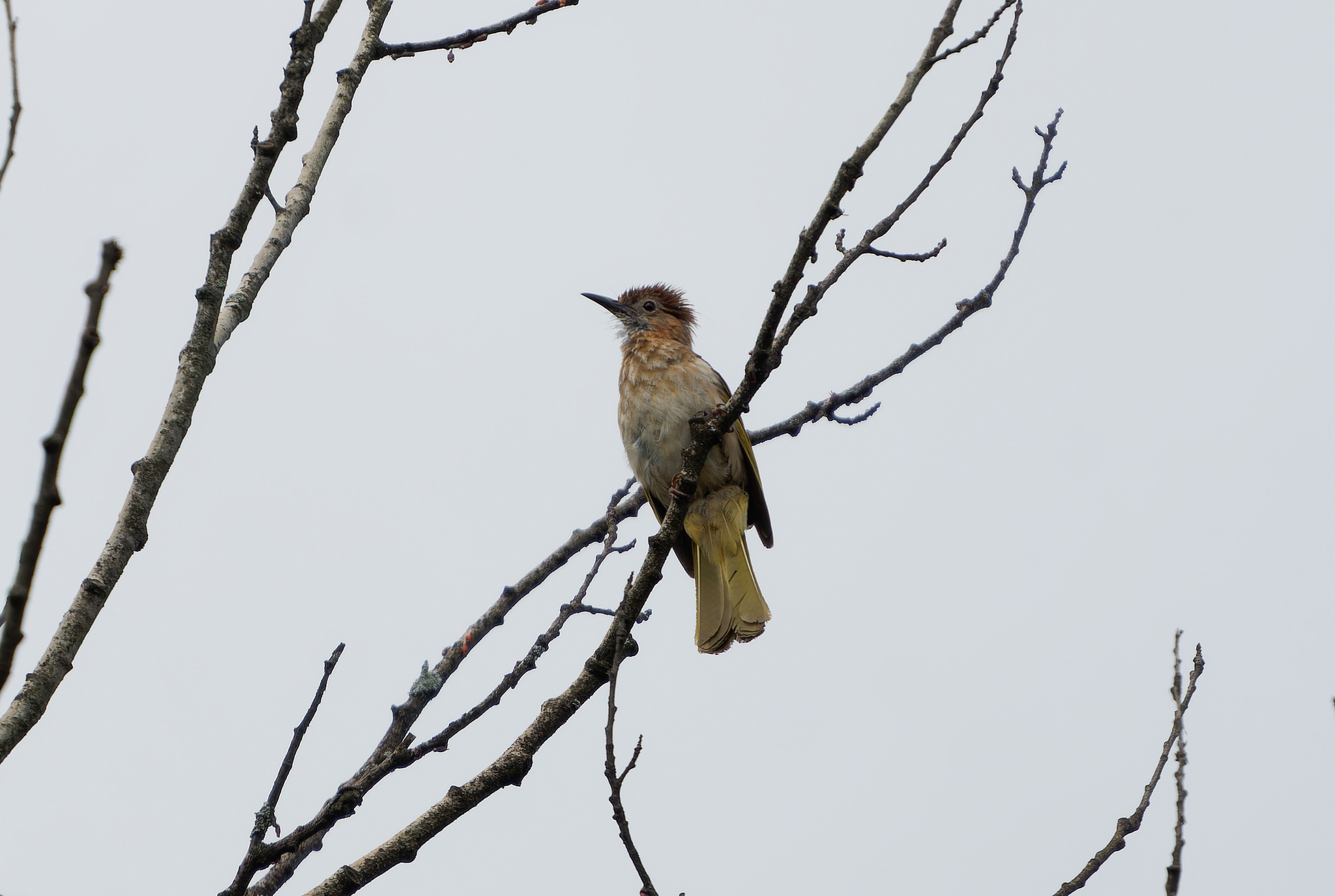
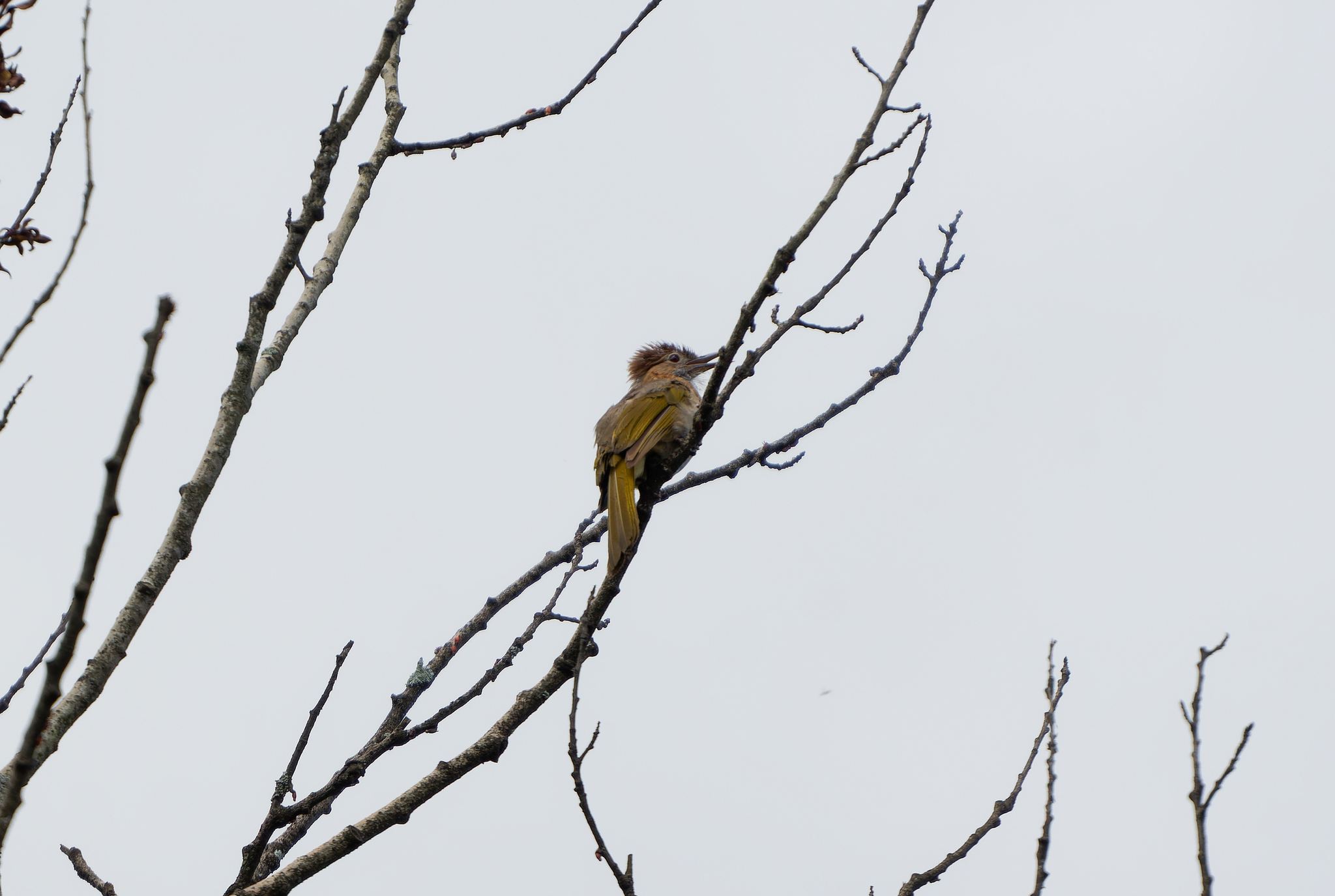
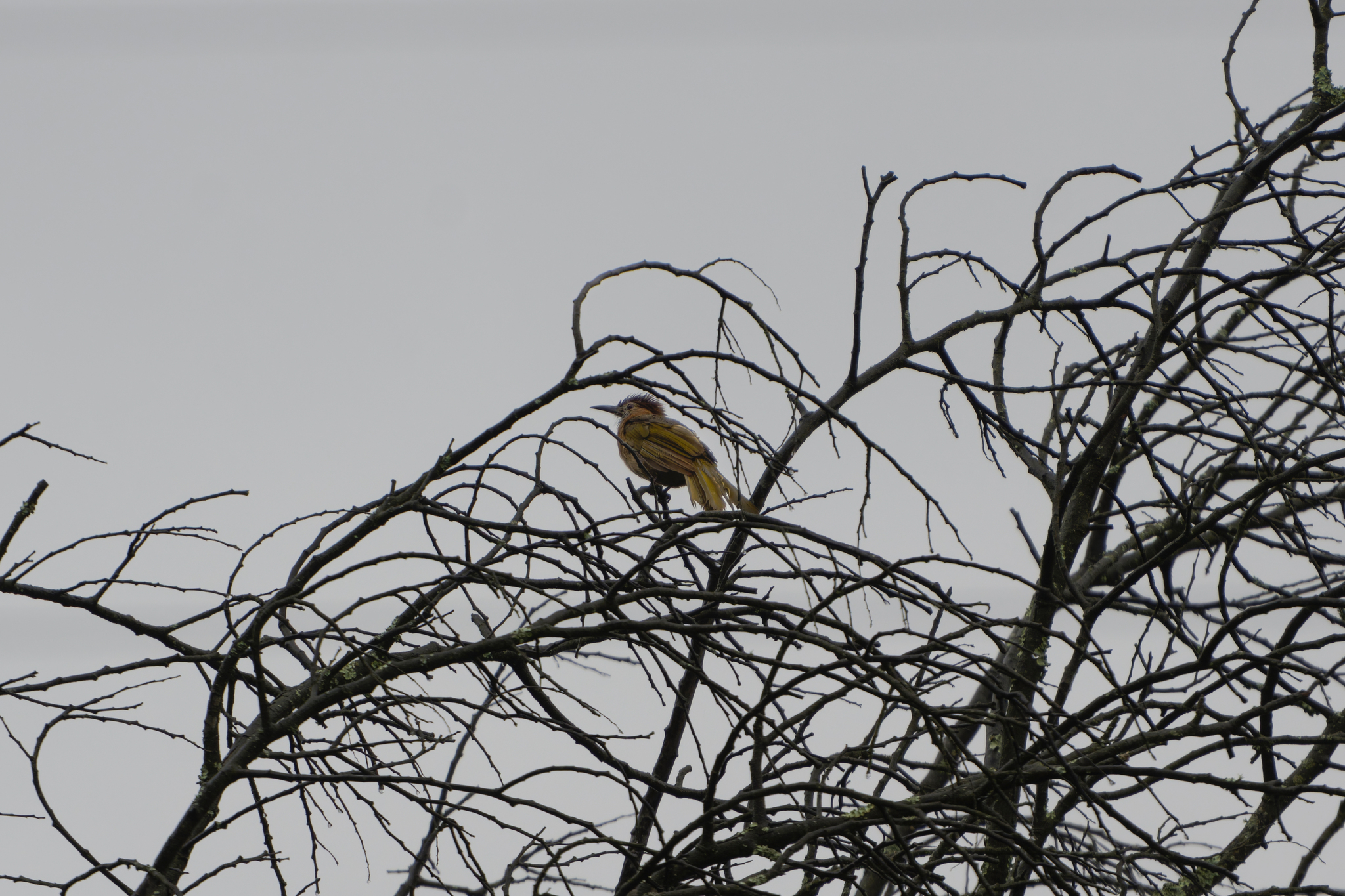
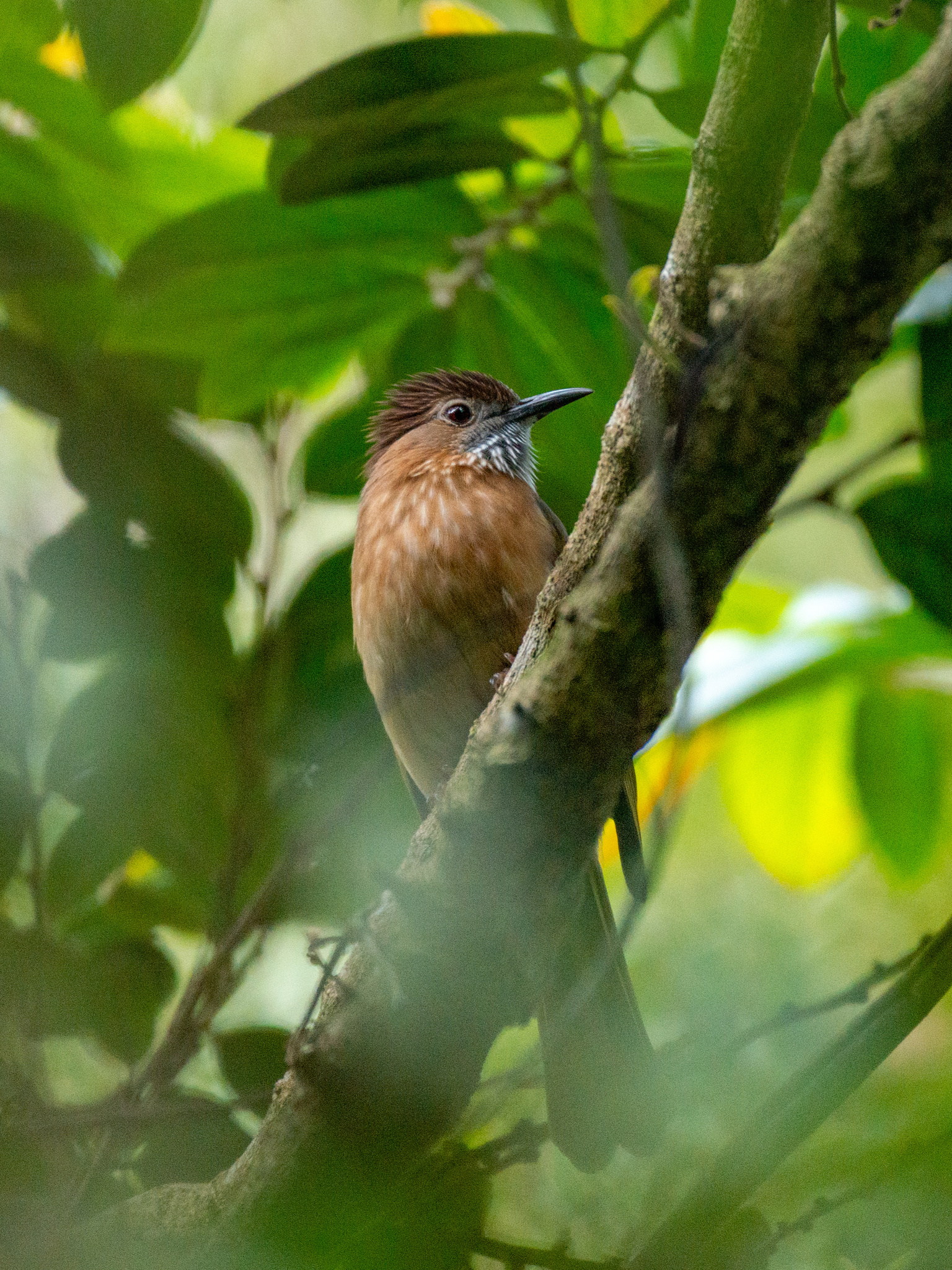
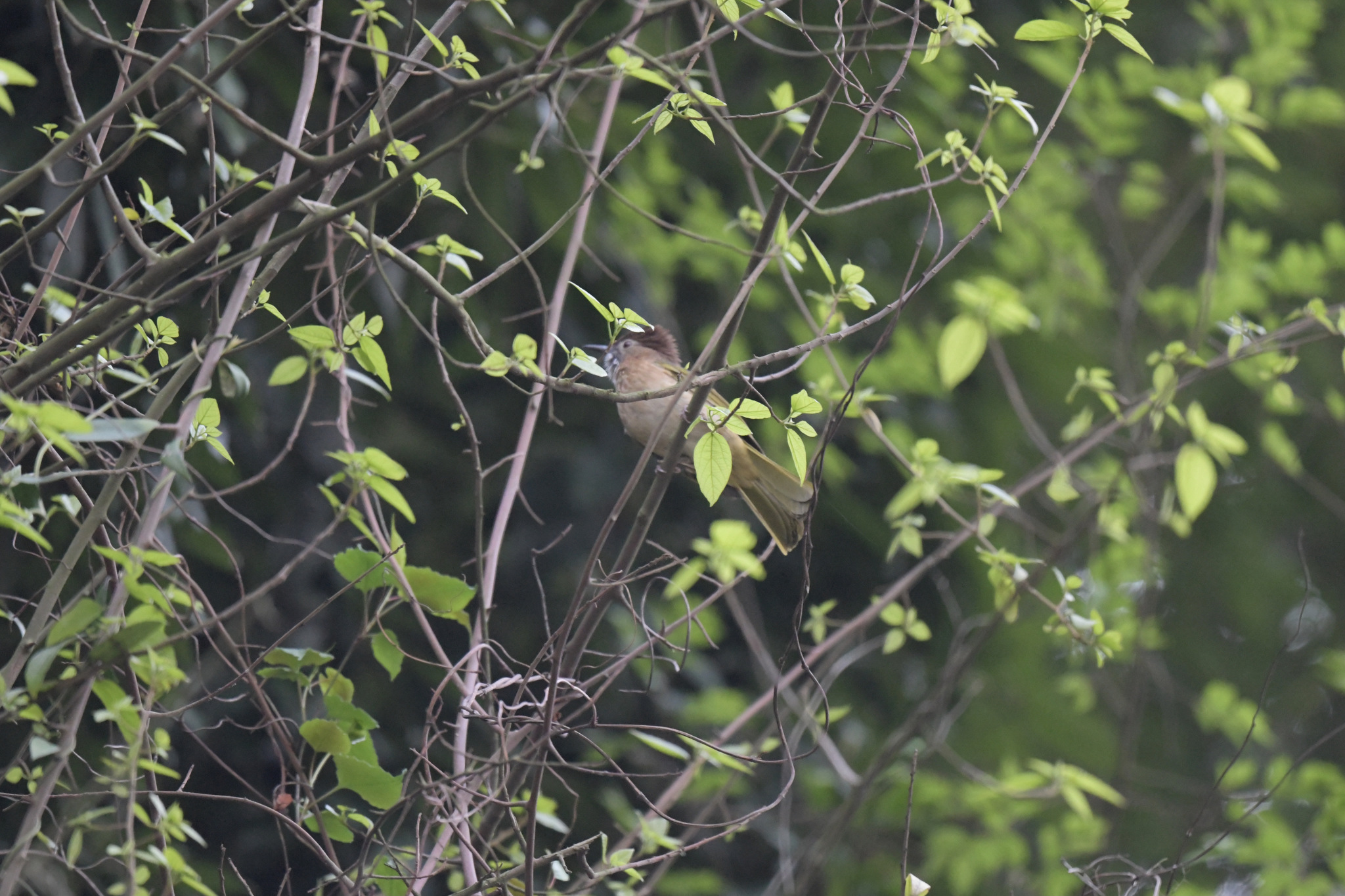
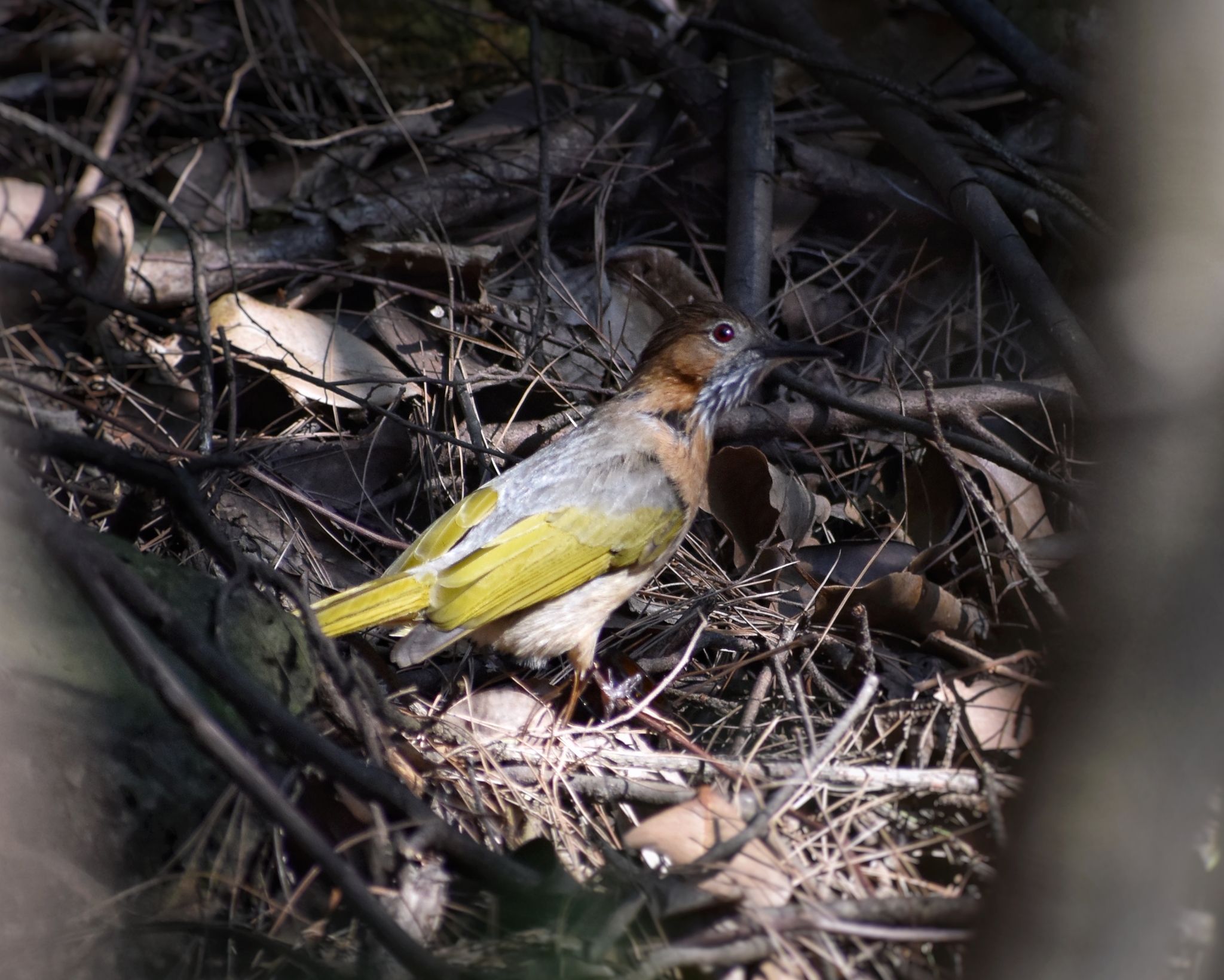
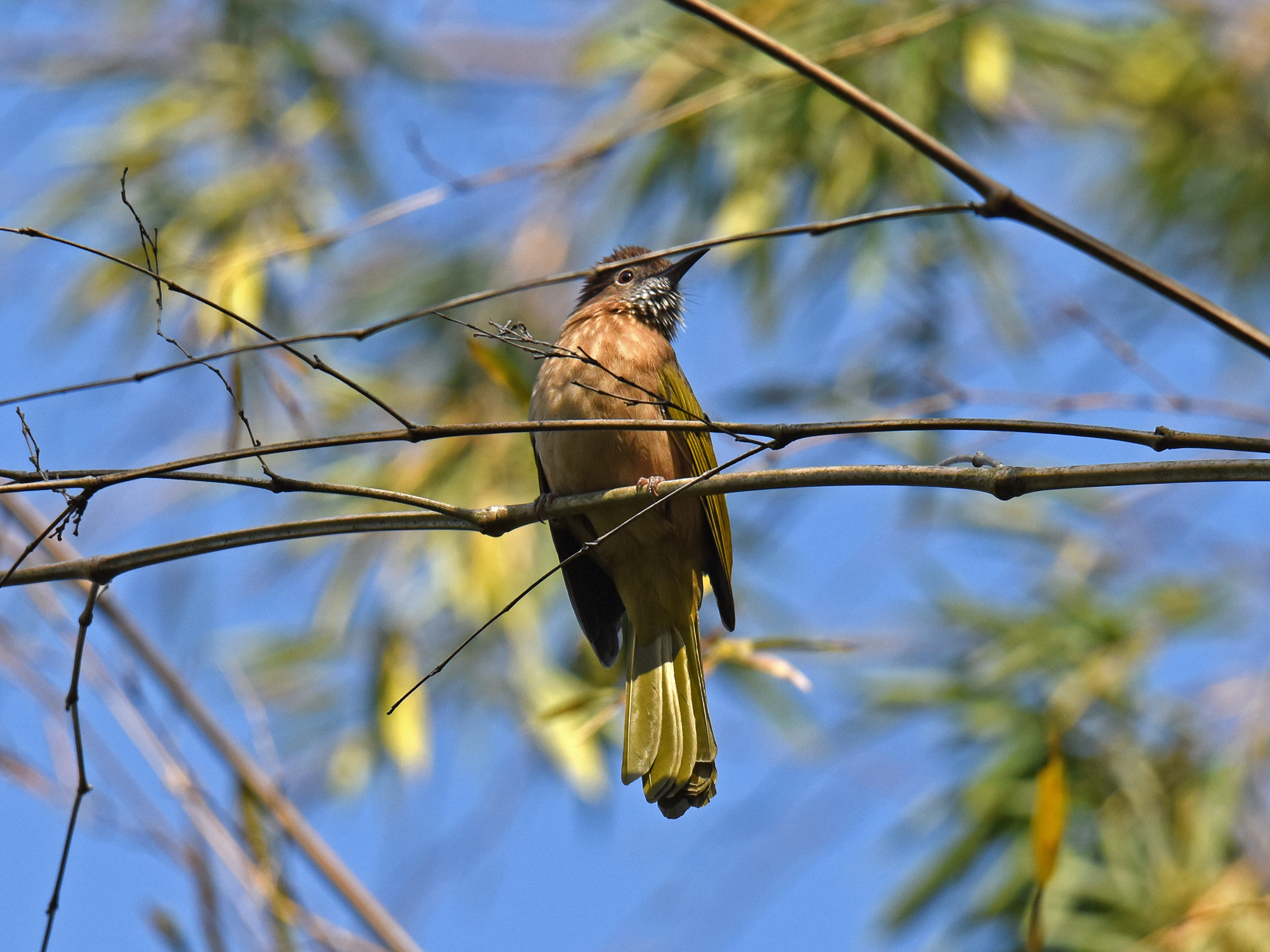
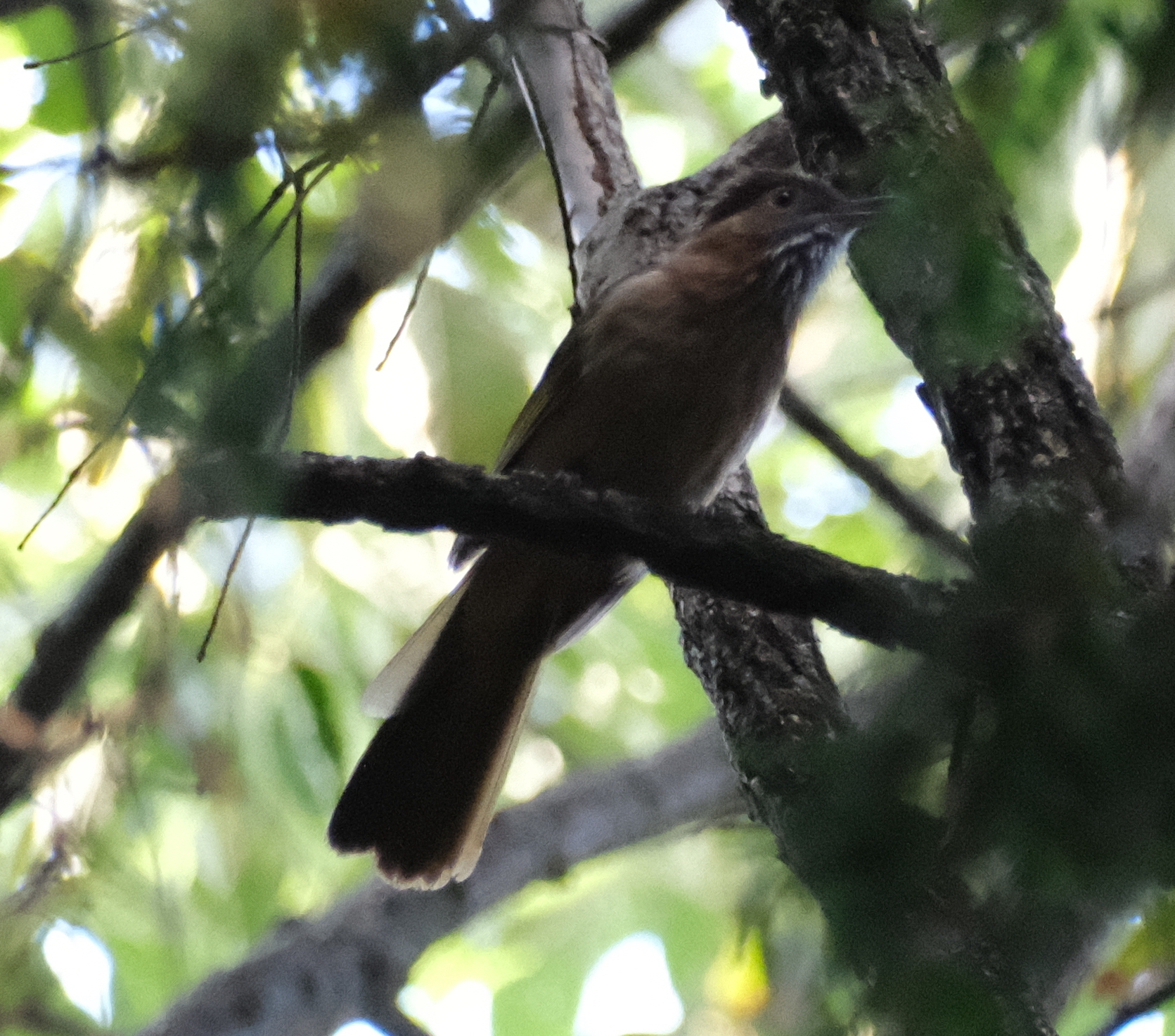
A medium-sized bulbul with overall brownish plumage and distinctive streaking on the underparts. The wings show greenish or olive tones depending on the subspecies. The rufous belly patch, particularly prominent in some subspecies, provides a useful identifying feature. The tail is relatively long and slightly rounded at the tip. Like other bulbuls, it has a modest crest and a slender, slightly curved bill adapted for a frugivorous diet.
Identification
Best distinguished from similar bulbuls by its combination of streaked underparts, rufous-washed belly, and greenish wing panels. The lack of a pronounced black face mask helps separate it from some other Hypsipetes species. Elevation range between 800m and 2590m ASL is a key habitat clue, as this species typically occurs at higher elevations than many lowland bulbuls. The subspecies show considerable variation in overall coloration and underpart streaking intensity.
Distribution & Habitat
Occurs from the eastern Himalayan region and southern China, extending through Myanmar, Thailand, Laos, Vietnam, and Cambodia to the Malay Peninsula. A forest-dependent species inhabiting broadleaved evergreen forests between 800 and 2590 meters above sea level. The elevational range shifts slightly between different parts of its range, with some populations occupying the higher end of this spectrum. No significant migratory movements are reported.
Behavior & Ecology
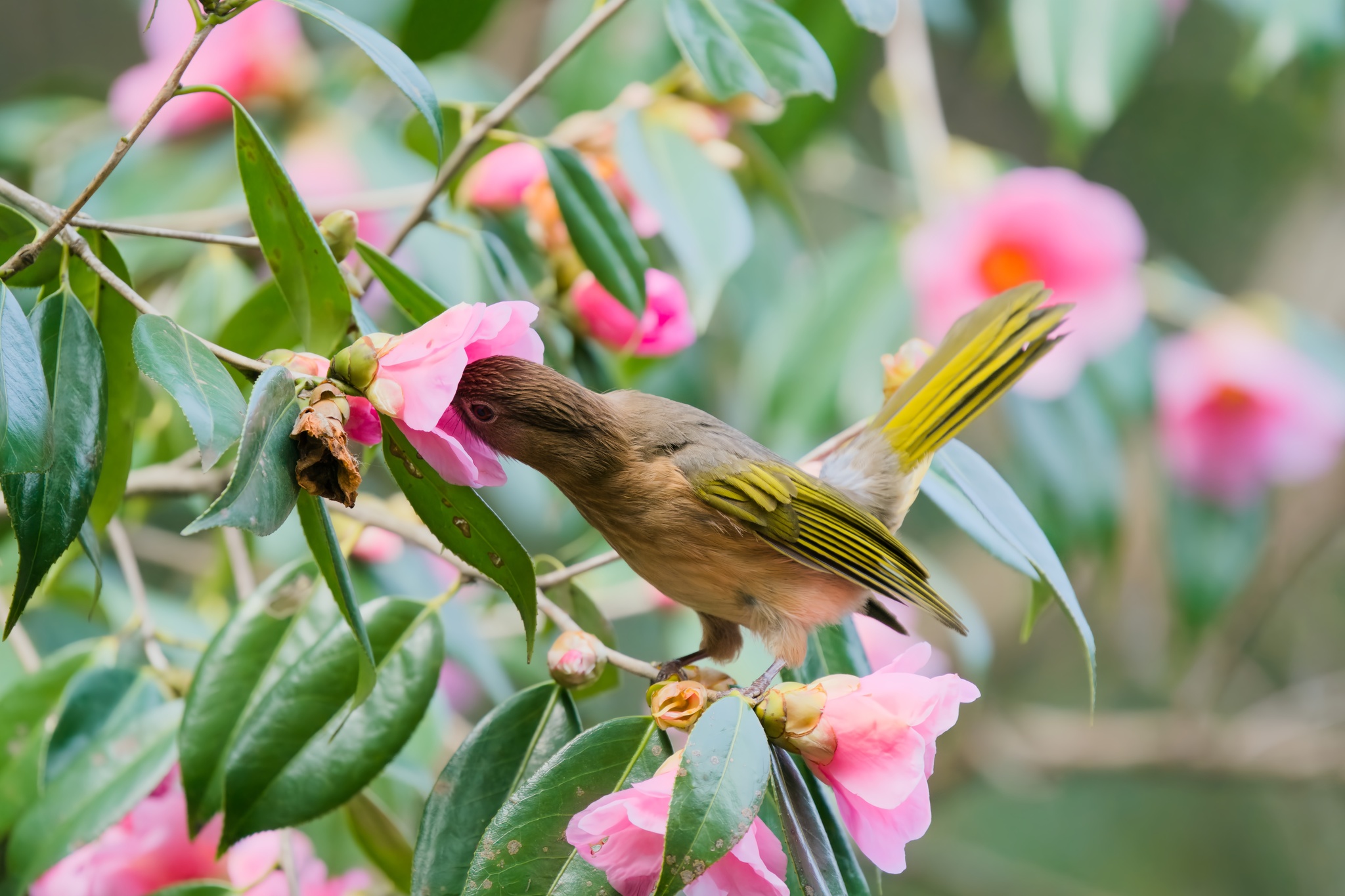
Typically observed in pairs or small flocks, sometimes joining mixed-species feeding parties in the forest canopy. Its diet consists primarily of fruits and berries, supplemented by insects. The species is known for its varied song, a series of whistled notes delivered from a perch in the mid to upper canopy. Breeding season varies across its range, with nests constructed as shallow cups in understory vegetation.
Conservation
Assessed as Least Concern by the IUCN Red List due to its extensive range and presumably large population. While not considered threatened at present, it faces potential pressures from habitat loss as deforestation for agriculture and development affects its forest habitat. Its dependence on mid-elevation evergreen forests makes it vulnerable to habitat degradation in these zones.
Source: Wikipedia · CC BY-SA 3.0
Taxonomy
- Order
- Passeriformes
- Family
- Pycnonotidae
- Genus
- Ixos
- eBird Code
- moubul2
Subspecies (9)
-
Ixos mcclellandii canescens
southeastern Thailand (Khao Kuap region)
-
Ixos mcclellandii griseiventer
southern Vietnam (Langbian Plateau)
-
Ixos mcclellandii holtii
southern China (Sichuan to Fujian and Guangdong)
-
Ixos mcclellandii loquax
northern and eastern Thailand to southern Laos (Bolaven Plateau)
-
Ixos mcclellandii mcclellandii
eastern Himalayas (western Uttar Pradesh to eastern Assam)
-
Ixos mcclellandii peracensis
central and southern Thai-Malay Peninsula
-
Ixos mcclellandii similis
northeastern Myanmar (Kachin) to southwestern China (Yunnan) and northern Indochina
-
Ixos mcclellandii tickelli
eastern Myanmar (Northern Shan State) to northwestern Thailand
-
Ixos mcclellandii ventralis
southwestern Myanmar (Chin Hills and Arakan Mountains)
Data Sources
Species description from Wikipedia, licensed under CC BY-SA 3.0.
Bird images and sounds sourced from GBIF, contributed by citizen scientists worldwide under Creative Commons licenses.
Taxonomy data from AviList 2025.