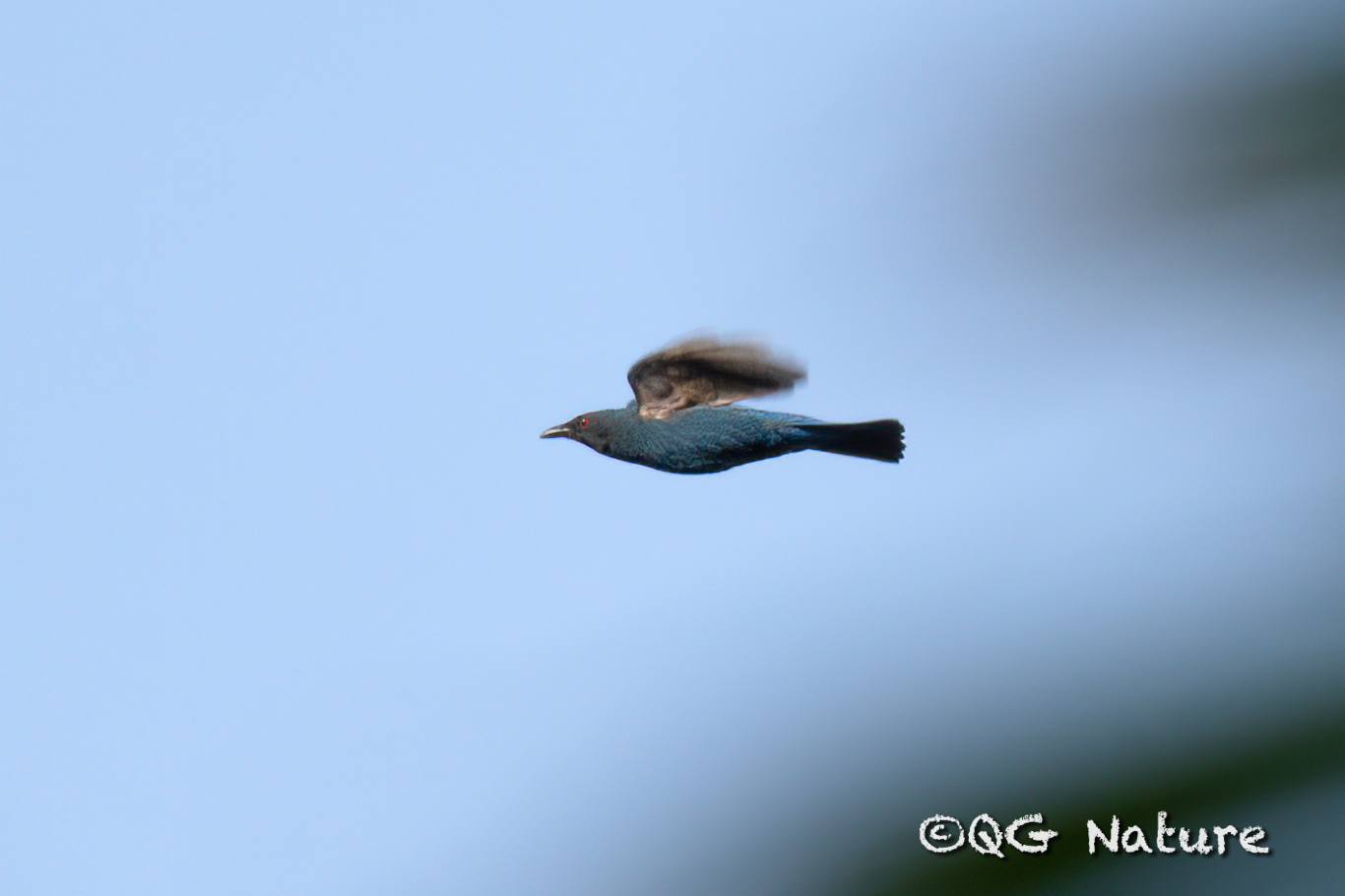
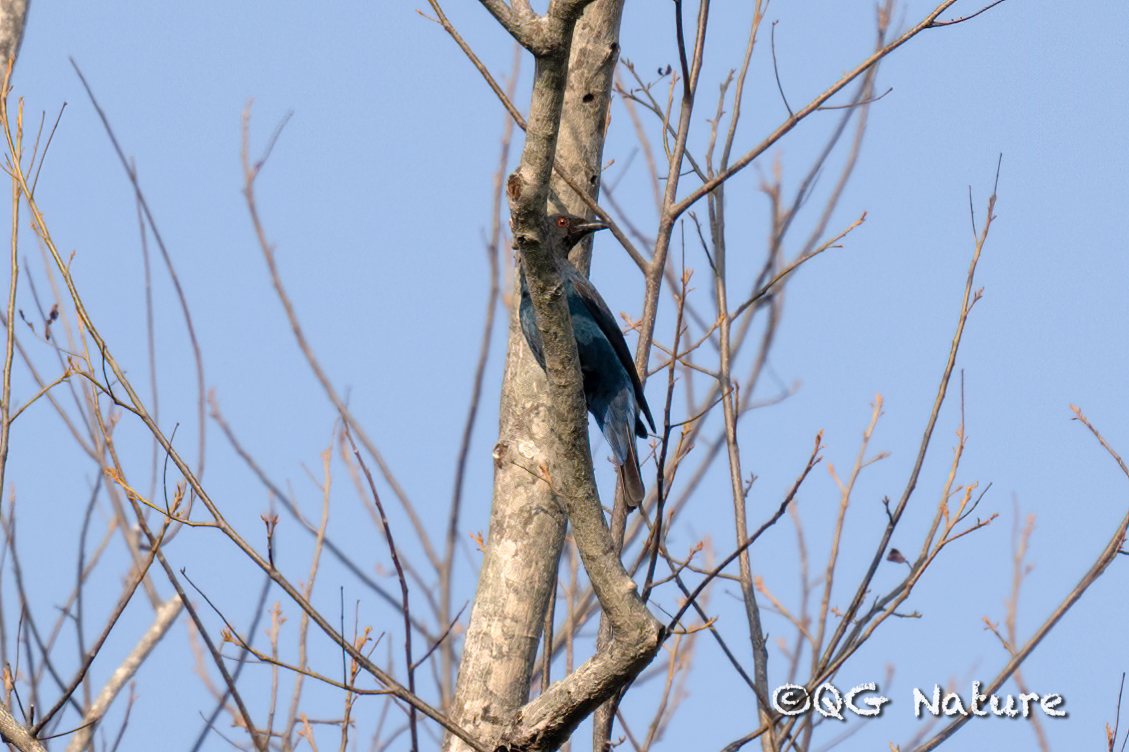
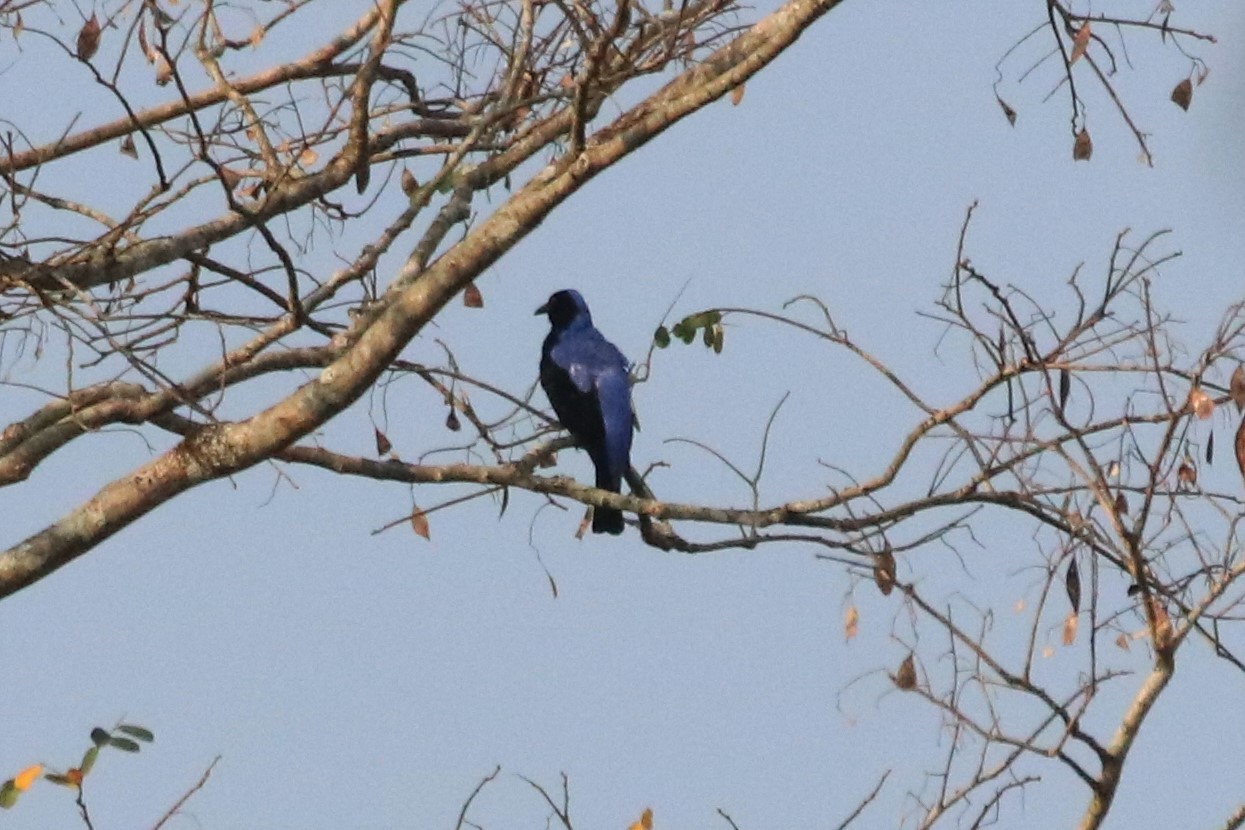
Asian Fairy-bluebird
Irena puella
和平鸟
Introduction
Medium-sized arboreal passerine bird in the family Irenidae (fairy-bluebirds). Found in forests across tropical southern Asia, Indochina, and the Greater Sundas. The only other member of the genus is the Philippine fairy-bluebird (I. cyanogastra), which replaces this species in most of the Philippines. Both species are considered sacred to the Tagalog people as tigmamanukan omens.
Description
Length 24-27 cm (9.4-10.6 in). Iris crimson; eyelids pinkish; bill, legs, and claws black; mouth flesh-colored. Marked sexual dimorphism. Male: shining ultramarine-blue upperparts with lilac reflections; lesser wing coverts and under tail coverts ultramarine-blue; sides of head and entire lower plumage deep black; greater wing coverts, quills, and tail black, with some coverts tipped blue; middle tail feathers glossed blue. Female: brownish blue upper plumage, lesser wing coverts, and lower tail coverts with brighter feather edges; middle tail feathers and outer webs similar to upper parts, remainder of tail dark brown; primaries, secondaries, greater wing coverts, primary coverts, and tertiaries dark brown with blue tinge on outer webs; sides of head and lower plumage blue. Young resemble female.
Distribution & Habitat
Range includes Sri Lanka, western coast of India (Travancore to Shivamogga, Belgaum, Sawantwadi), Sikkim and Himalayan foothills to Dibrugarh, Assam, Khasi Hills, Cachar, Manipur, Bangladesh, Burma (Arrakan, Bago, Taninthayi Division), and Andaman and Nicobar Islands. In Southeast Asia: throughout Indochina (including Peninsular Malaysia), Sumatra, Borneo, Java, and smaller nearby islands. In Indian range, confined to evergreen forests of hills and plains; elsewhere occupies various humid and deciduous forest types from lowlands to approximately 1,600 m (5,200 ft). More frequent in mature rainforests and rustic cardamom plantations under native shade trees than in coffee plantations.
Behavior & Ecology
Common in most inhabited areas, occurring in small parties or pairs. Breeding season February to April. Constructs shallow cup-shaped nest of moss or small twigs in sapling or small tree. Eggs: typically two, greenish white marked with brown, measuring approximately 1.14 cm by 0.77 cm. Feeds principally on fruit; generally found on larger forest trees.
Conservation
Not assessed in provided text.
Culture
Considered sacred to the Tagalog people as tigmamanukan omens.
Source: Wikipedia · CC BY-SA 3.0
Taxonomy
- Order
- Passeriformes
- Family
- Irenidae
- Genus
- Irena
- eBird Code
- asfblu1
Vocalizations
Subspecies (6)
-
Irena puella andamanica
Andaman Islands
-
Irena puella crinigera
Sumatra, Borneo, and adjacent islands
-
Irena puella malayensis
central and southern Thai-Malay Peninsula
-
Irena puella puella
Western Ghats from southern Maharashtra southward (southwestern India)
-
Irena puella sikkimensis
eastern Nepal eastward to Myanmar and southward to Indochina
-
Irena puella turcosa
Java
Data Sources
Species description from Wikipedia, licensed under CC BY-SA 3.0.
Bird images and sounds sourced from GBIF, contributed by citizen scientists worldwide under Creative Commons licenses.
Taxonomy data from AviList 2025.