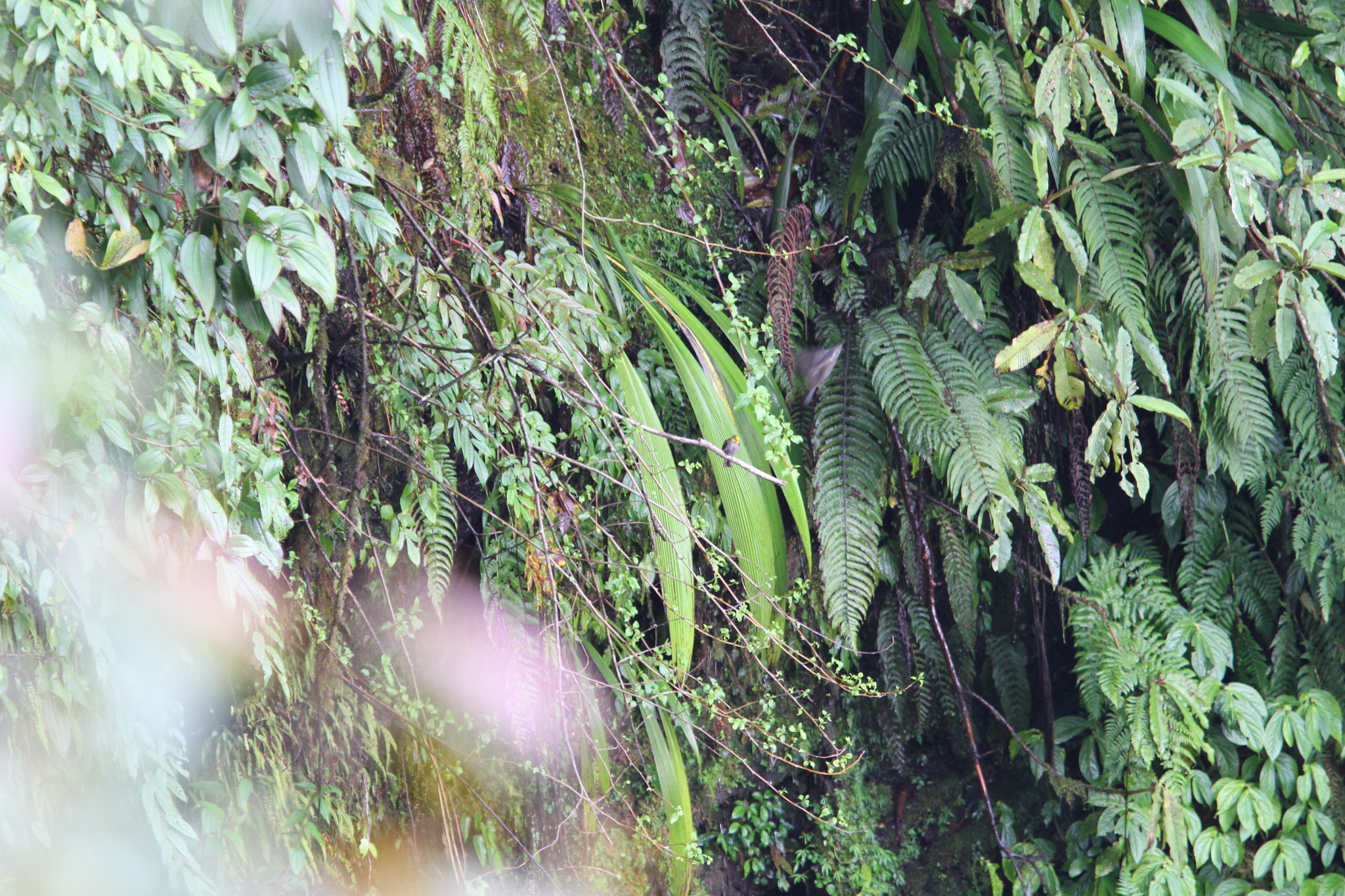
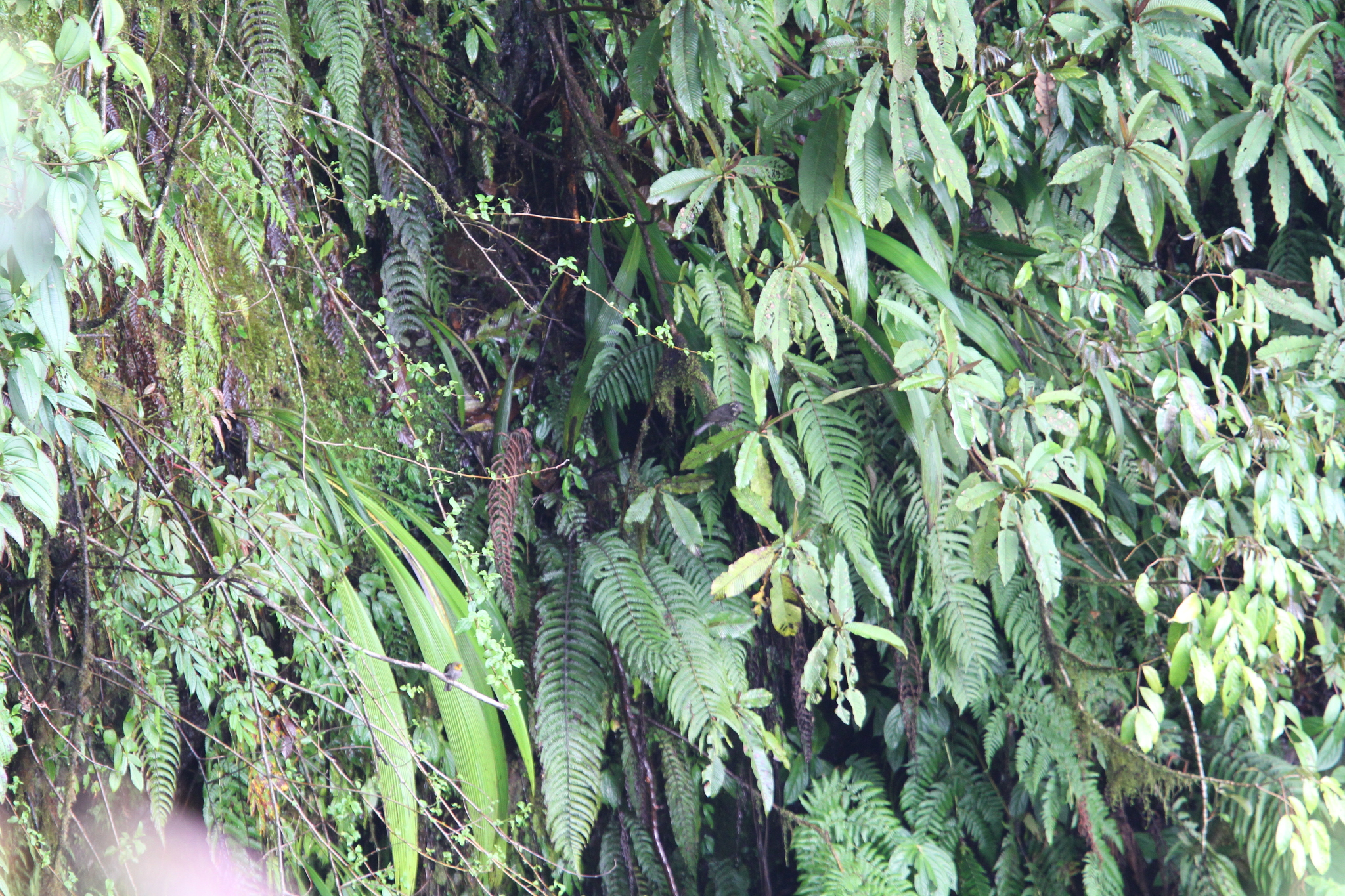
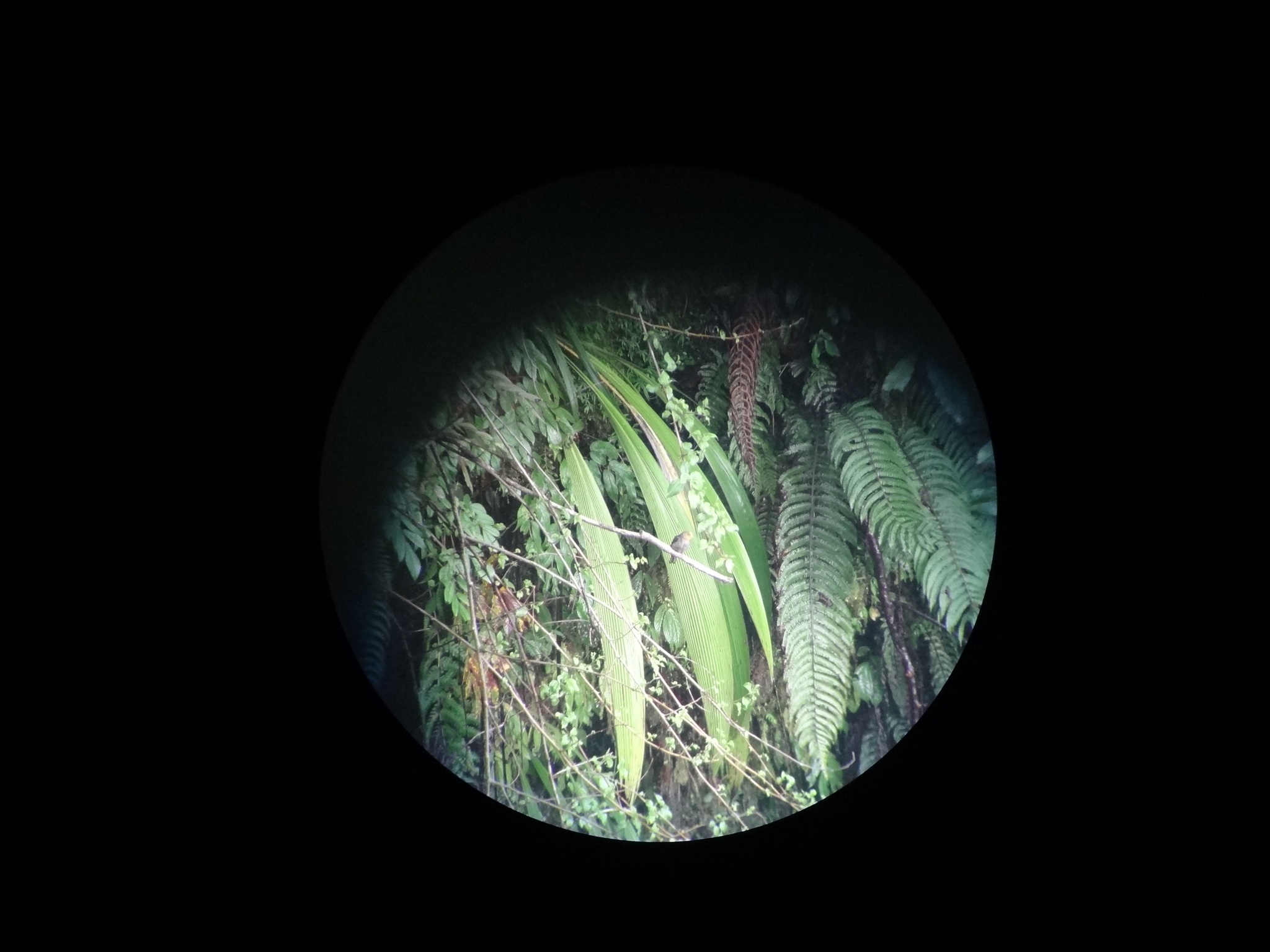
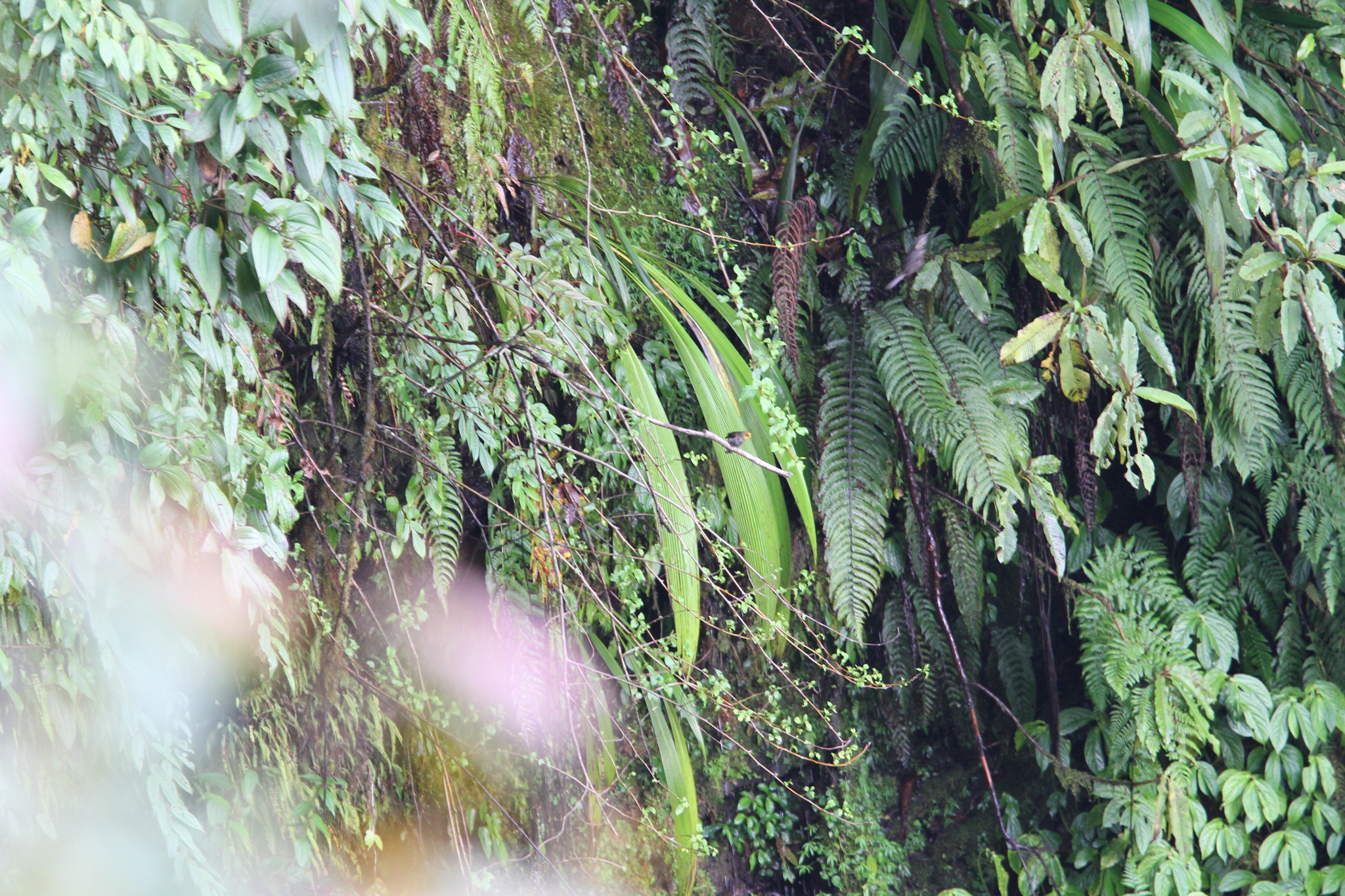
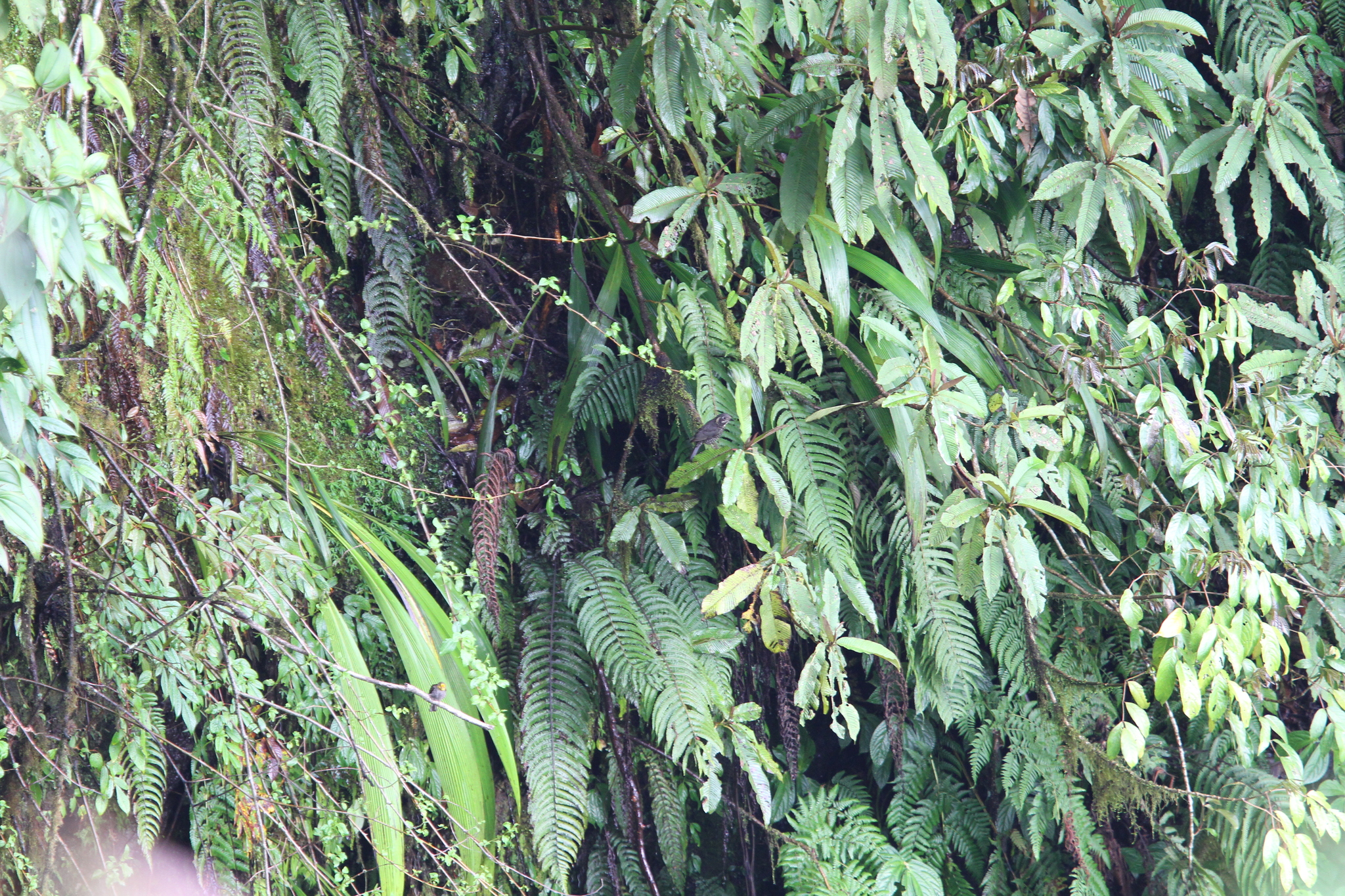
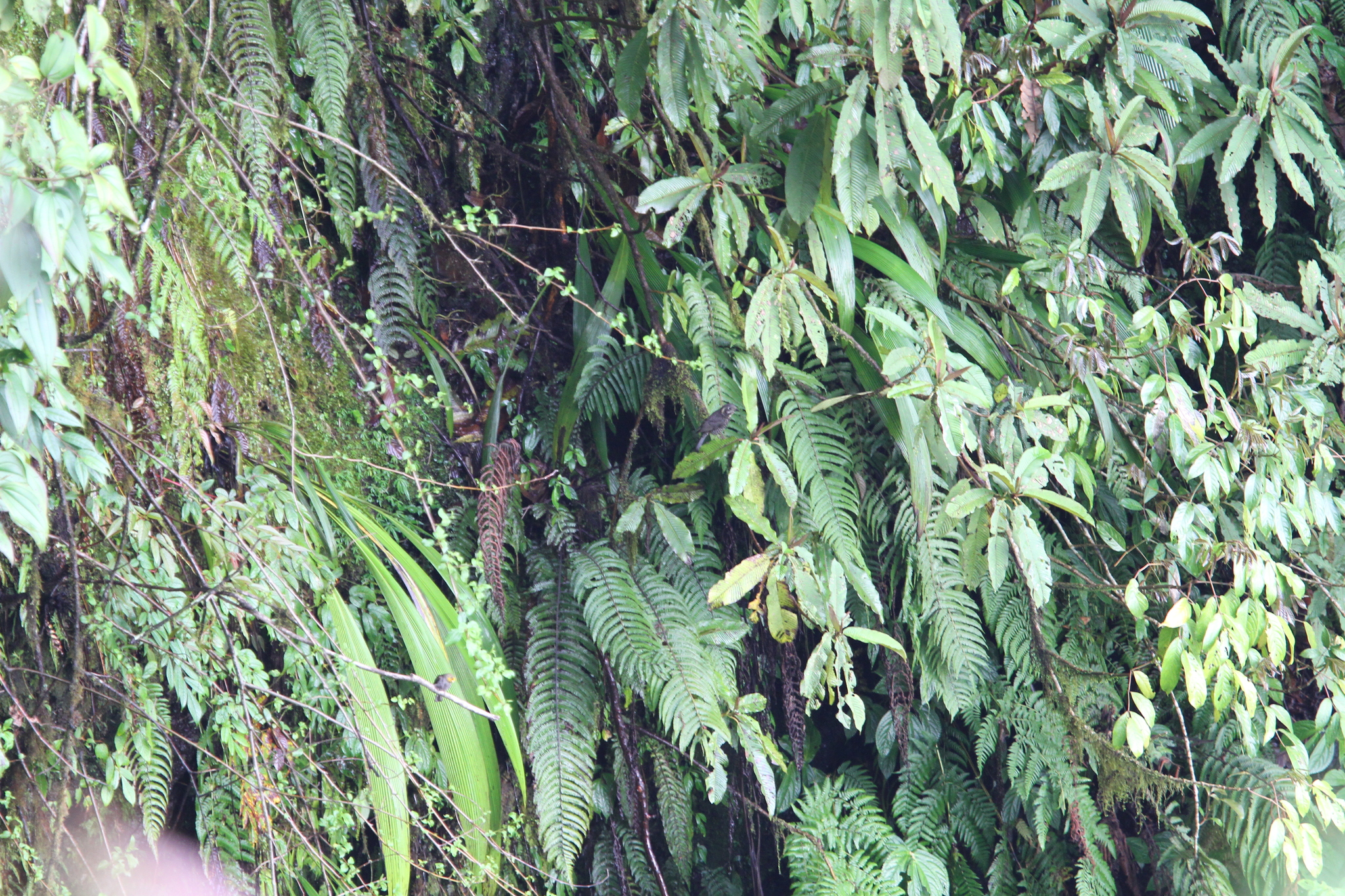
Yellow-rumped Honeyguide
Indicator xanthonotus
黄腰响蜜鴷
Introduction
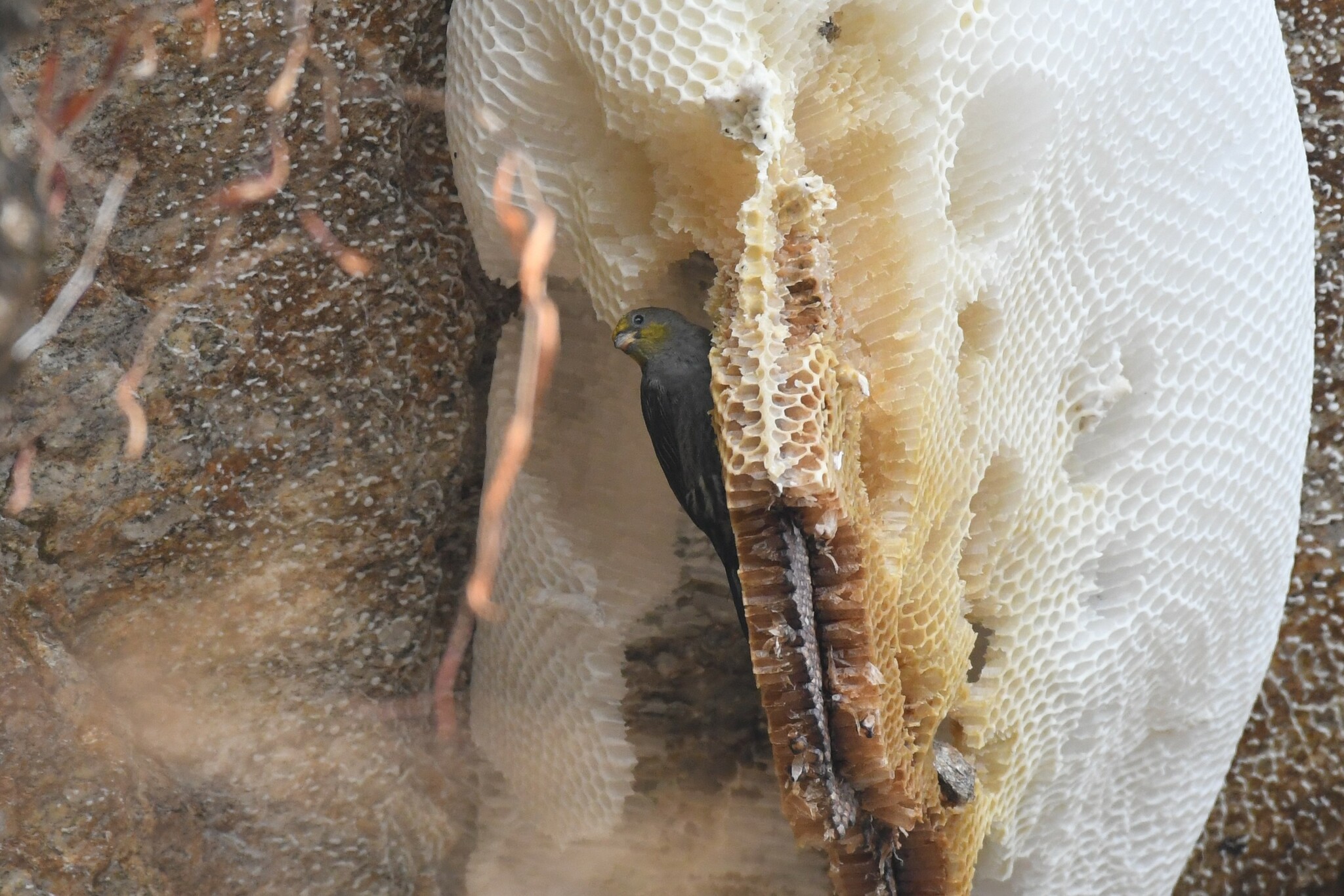
A sparrow-sized bird in the honeyguide family (Indicatoridae) found in Asia, primarily in montane forests along the Himalayas. The species is finch-like in appearance but possesses strong zygodactyl feet with two toes facing forward and two backward. It uniquely feeds on wax, particularly from Apis laboriosa honeycombs attached to cliff faces. The species is a brood parasite, laying eggs in the nests of tree-hole breeders, possibly barbets. The northern Pakistan population may have been extirpated.
Description
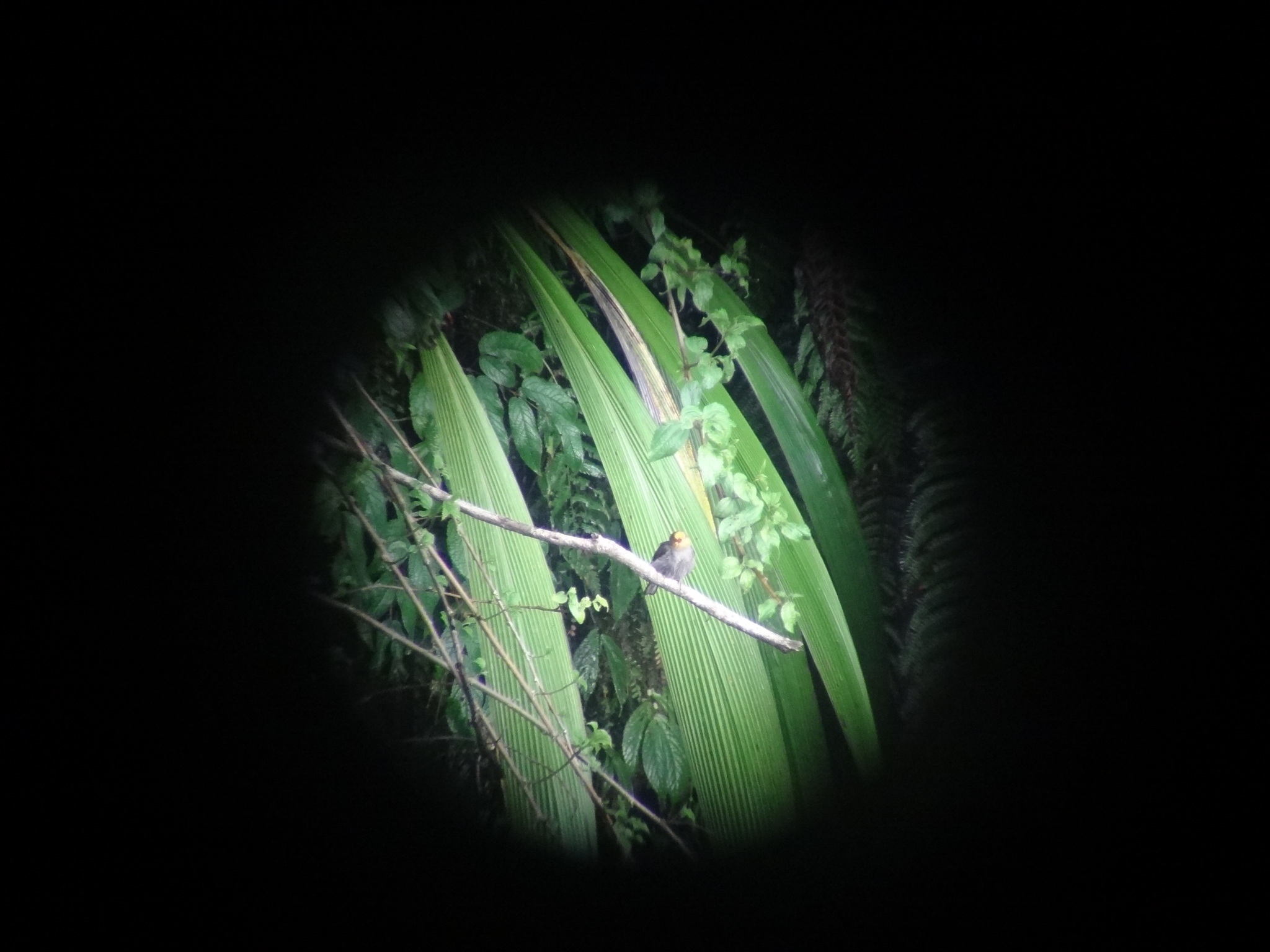
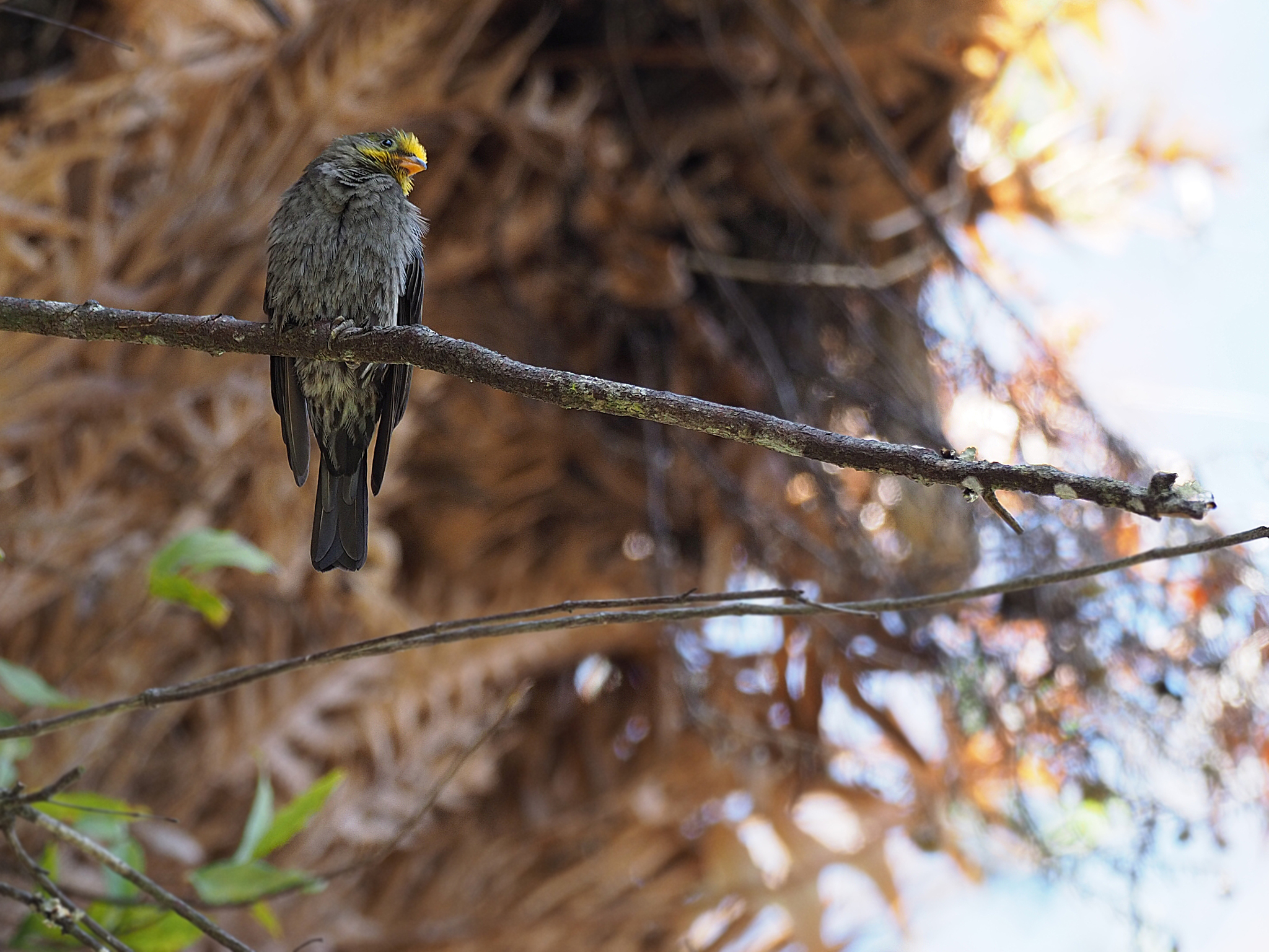
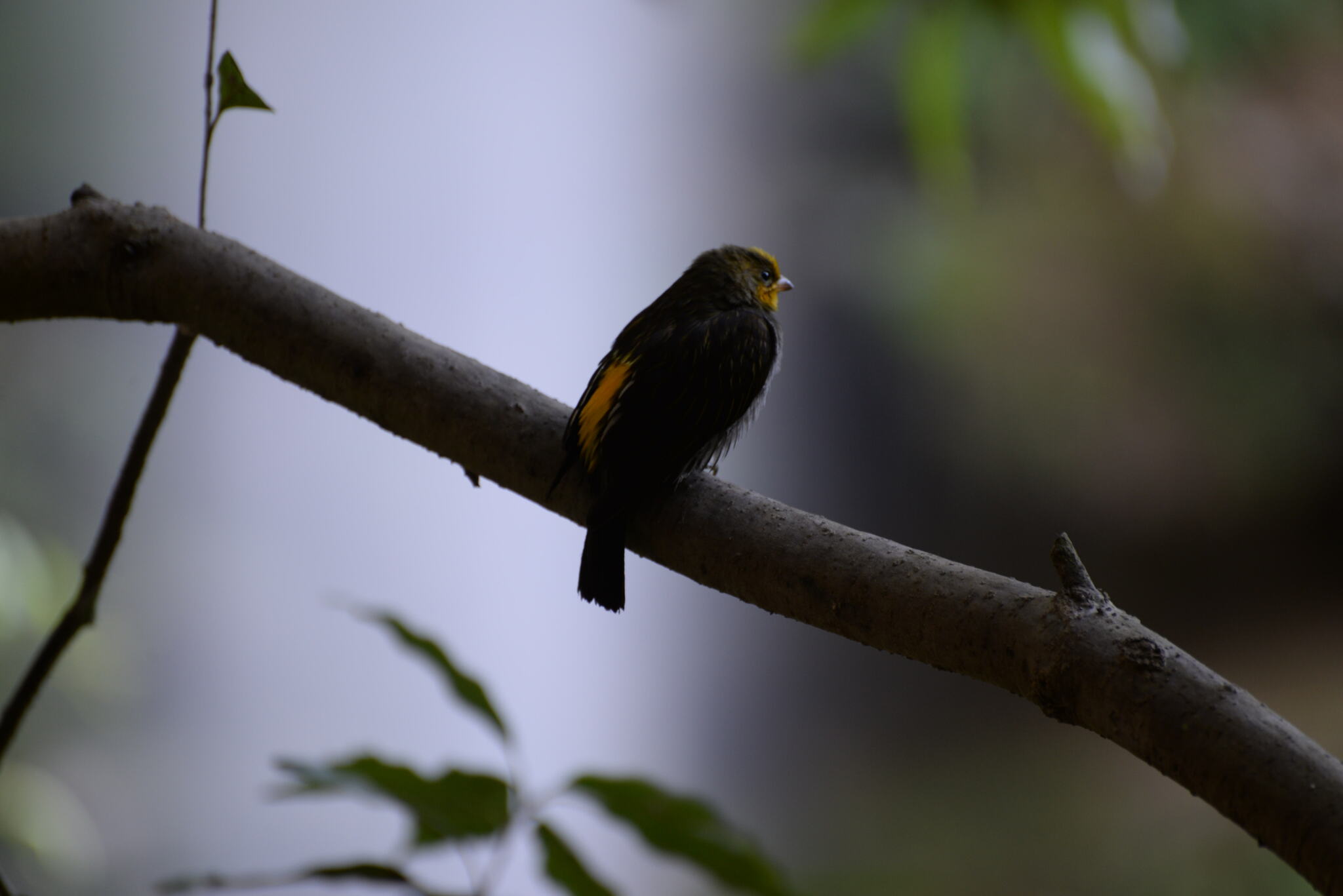
Sparrow-sized with a stout, finch-like bill. Plumage is largely dusky olive with orange on the forehead and lores. Wing feathers appear streaked. The rump is deep orange, extending into the back and grading to sulphur yellow. Chin and throat are yellowish; lower plumage is pale grey with dark streaks. The bill is yellow, darkening toward the tip. Females have less extensive yellow on the face and the rump is yellow without orange. Twelve tail feathers, nine primaries; wing is long and pointed.
Distribution & Habitat
Recorded from northern Pakistan (Hazara and Murree Hills, where the population may have been extirpated), extending through Himalayan regions of India from western Uttar Pradesh and Himachal Pradesh into Nepal, Sikkim, Arunachal Pradesh, and Bhutan. Also occurs in southeastern Tibet and northern Myanmar. Inhabits coniferous and dry-deciduous forest with rocky boulders and cliffs. Makes seasonal altitudinal movements.
Behavior & Ecology
Chipping call produced in flight and when agitated. Flight is straight and direct, sometimes in flocks of 20-30 birds. Clings to deserted honeycombs, pressing tail against the comb surface. Feeds primarily on foundation wax of Apis laboriosa that attaches combs to rocks; also feeds on active beehives with minimal disturbance to bees. Males defend exclusive 3-dimensional territories around bee nests and are polygynous, allowing only mated females and their young to forage at defended nests. Brood parasite with unknown host species; young have bill-hooks to destroy host eggs and chicks. Does not lead humans or bears to bee hives.
Conservation
Population status on the IUCN Red List is not explicitly stated in the source material. The northern Pakistan population may have been extirpated. Data is sparse, with no specimens or information obtained from the Hazara region since the subspecies radcliffi was described by Allan Octavian Hume.
Culture
No cultural significance or folklore documented.
Source: Wikipedia · CC BY-SA 3.0
Taxonomy
- Order
- Piciformes
- Family
- Indicatoridae
- Genus
- Indicator
- eBird Code
- yerhon1
Subspecies (2)
-
Indicator xanthonotus radcliffii
Nepal to northeastern India, southeastern Tibet, and northern Myanmar
-
Indicator xanthonotus xanthonotus
northeastern Pakistan and Himalayas of northwestern India to far western Nepal
Data Sources
CBR Notes: IUCN红色名录等级由NT降为LC
Species description from Wikipedia, licensed under CC BY-SA 3.0.
Bird images and sounds sourced from GBIF, contributed by citizen scientists worldwide under Creative Commons licenses.
Taxonomy data from AviList 2025.