White-bellied Sea Eagle
Icthyophaga leucogaster
白腹海雕
Introduction
Large diurnal bird of prey in family Accipitridae, genus Icthyophaga. Closely related to Sanford's sea eagle of the Solomon Islands, and the two are considered a superspecies. Resident from India and Sri Lanka through Southeast Asia to Australia on coasts and major waterways. Breeding and hunting occurs near water; fish form approximately half of diet. Opportunistic predator that consumes carrion and a wide variety of animals. Rated as Least Concern globally, though has declined in parts of southeast Asia such as Thailand and southeastern Australia. Classified as Threatened in Victoria and Vulnerable in South Australia and Tasmania. Main threats include human disturbance near nests affecting breeding success and removal of suitable nesting trees.
Description
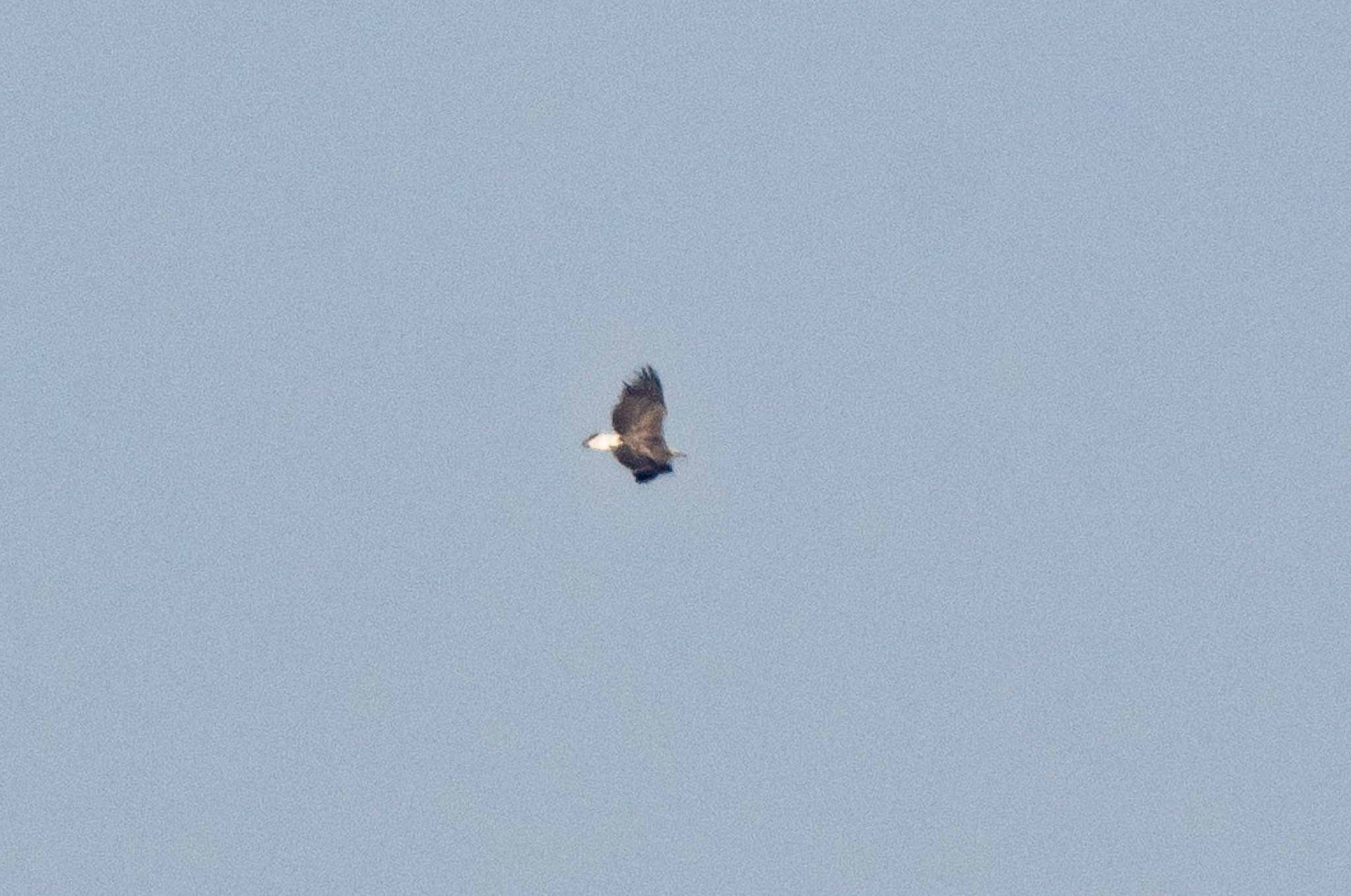
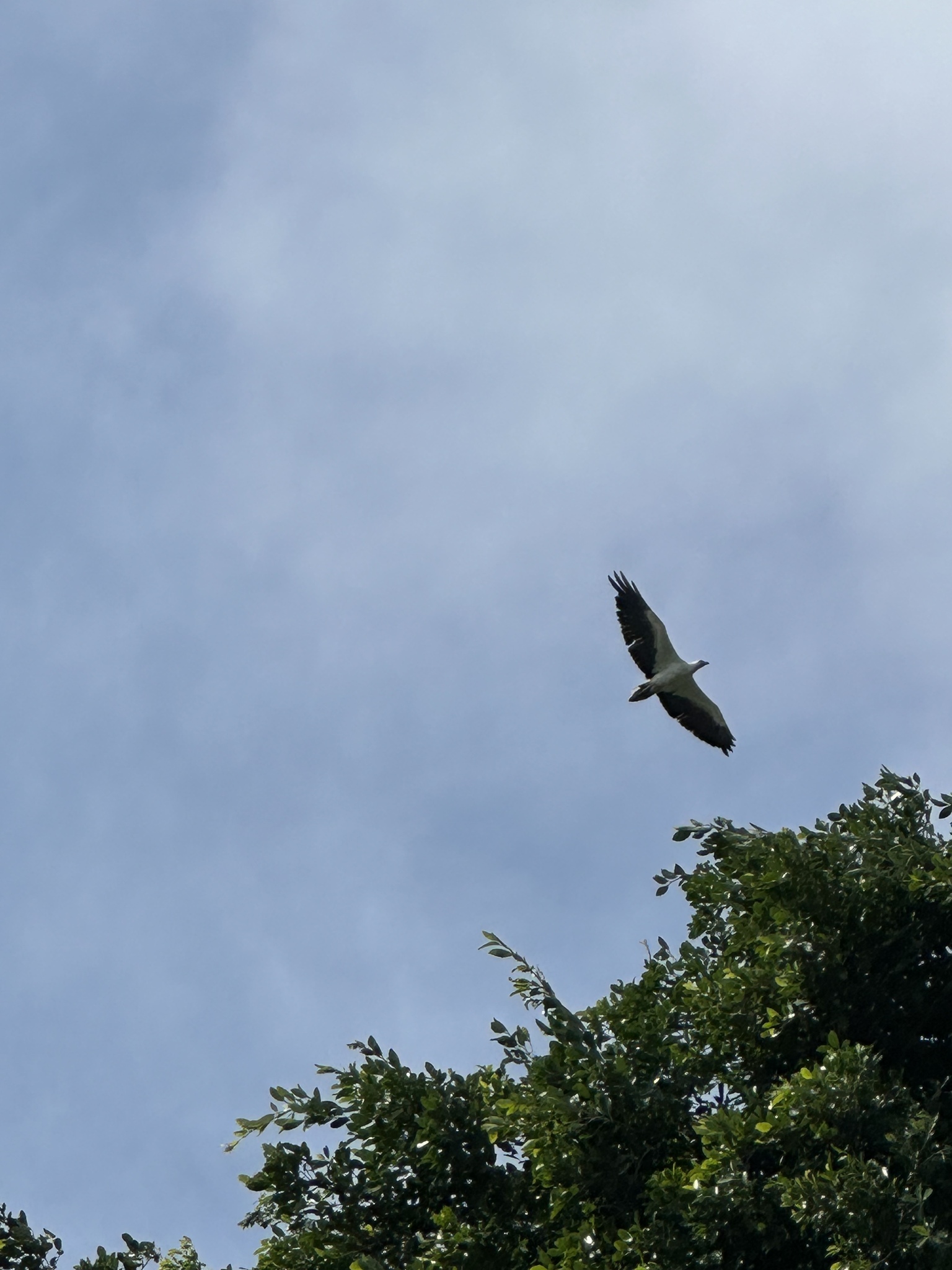
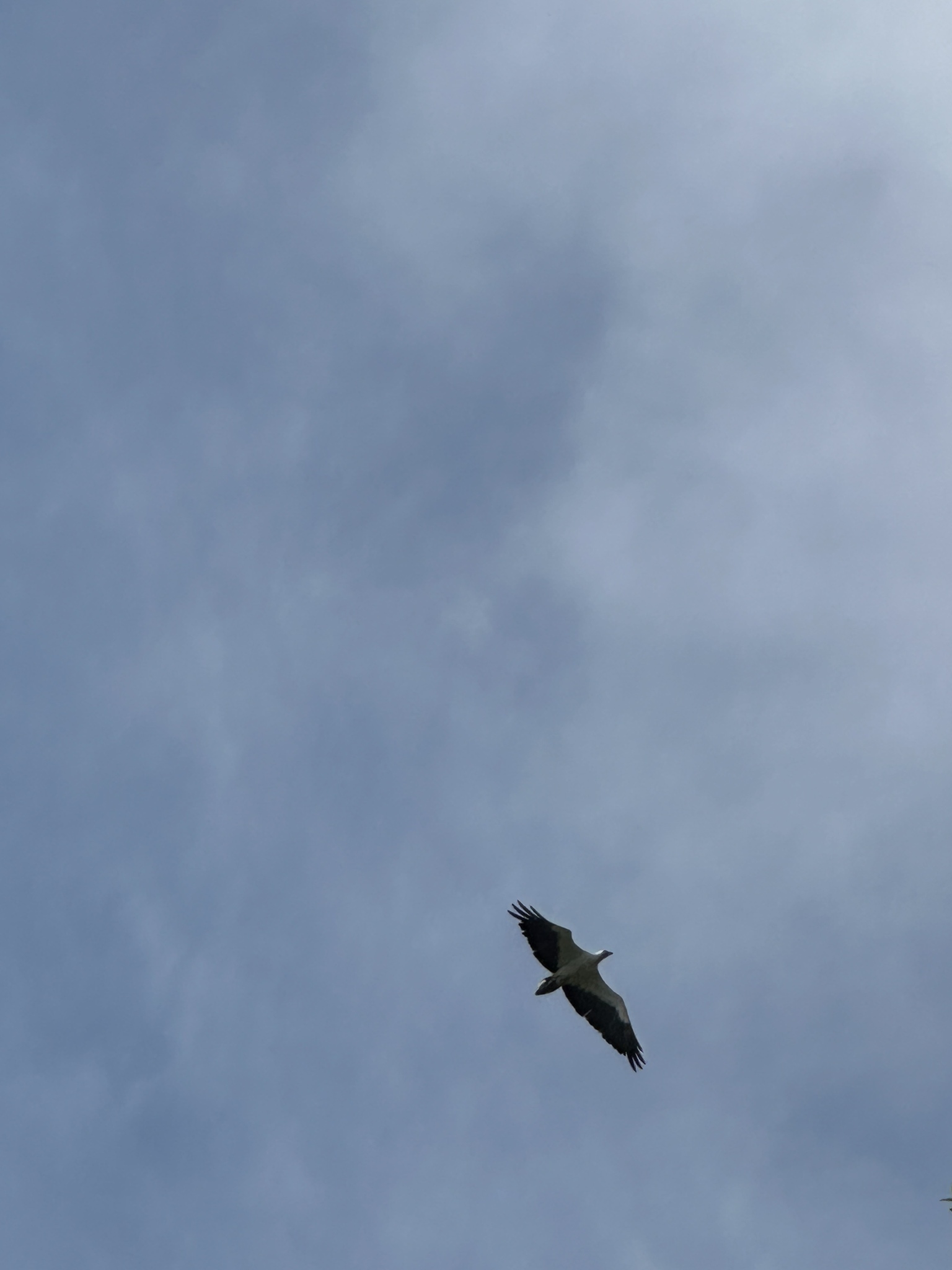
Adult has white head, breast, under-wing coverts and tail with grey upper parts. Black under-wing flight feathers contrast sharply with white coverts. Tail is short and wedge-shaped. Large hooked bill is leaden blue-grey with darker tip; irides are dark brown. Legs and feet are yellow or grey with long black talons; unlike Aquila eagles, legs are unfeathered. Males measure 66-80 cm in length and weigh 1.8-3 kg. Females are larger at 80-90 cm and 2.5-4.5 kg. Wingspan ranges from 1.78-2.2 m. Immature plumage is brown, gradually replaced by white until age five or six years. Lifespan approximately 30 years.
Identification
Adults are unmistakable and unlikely to be confused with any other bird. Immature birds resemble wedge-tailed eagles but differ in having lighter plumage, shorter tail, and unfeathered legs. Black-breasted buzzard is much smaller with distinctive white wing patches and more undulating flight. Egyptian vulture in India has white plumage but is smaller with whiter back and wings. The white tail is diagnostic in flight, distinguishing this species from other large eagles. Wedge-shaped tail serves as a reliable field mark.
Distribution & Habitat
Range extends from Mumbai in India (sometimes north to Gujarat) through Bangladesh, Sri Lanka, and all coastal Southeast Asia including Burma, Thailand, Malaysia, Indonesia, Indochina, Philippines, and southern China (Hong Kong, Hainan, Fuzhou). Extends through New Guinea, Bismarck Archipelago, and Australia. In northern Solomons restricted to Nissan Island. Australian range includes Victoria (particularly Corner Inlet and Gippsland Lakes), South Australia (north coast of Kangaroo Island), Bass Strait islands, and Tasmania. One unconfirmed record from Lord Howe Island and several from New Zealand. Occurs well inland, with records from Panna Tiger Reserve in central India approximately 1,000 km from the sea. Sedentary and territorial but capable of long-distance movements; populations in inland Australia move as water bodies appear and dry.
Behavior & Ecology
Generally territorial; some birds form permanent pairs while others are nomadic. Monogamous with pairs remaining together until death of one mate. Lifelong pair bonds result in some nest sites being continuously occupied for over 50 years. Immature birds disperse widely, with records of juveniles traveling 3,000 km from birthplace. Breeding season varies by location: dry season in Papua New Guinea, June to August in Australia. Nests are large bowl-shaped structures of sticks, typically built in tall trees or man-made pylons overlooking water. Clutch usually two eggs, incubated six weeks; rarely are both young reared successfully. Diet is opportunistic: fish (catfish, barramundi, needlefish, wrasses) comprise about half, also takes waterfowl, seabirds, reptiles including turtles, and occasionally mammals. Captures prey by flying low over water or diving from perches. Vocalization is a loud goose-like honking; pairs often call in unison during breeding season. Male's call is higher-pitched and more rapid than female's.
Conservation
IUCN Red List status: Least Concern. Global population estimated at 10,000 to 100,000 individuals, though numbers appear to be declining. Has become rare in Thailand and parts of southeast Asia. Hong Kong population increased from 39 to 57 birds between 2002 and 2009. In Australia, listed under federal Environment Protection and Biodiversity Conservation Act 1999 as marine and migratory species. Threatened in Victoria with possibly fewer than 100 breeding pairs. Fewer than 1,000 adult birds in Tasmania, where listed as Vulnerable under state legislation. Threats include habitat destruction in coastal areas, human disturbance near nests, loss of nesting trees, shooting, poisoning, collision with power lines and wind turbines, and environmental pollution. DDT use historically caused eggshell thinning; average reduction of 6% recorded between 1947-1993. Creation of reservoirs and dams inland may have benefited some populations.
Culture
Important to indigenous communities across Australia. Guardian animal of the Wreck Bay Aboriginal community and official emblem of Booderee National Park in Jervis Bay Territory. Totem of Colebee, leader of the Cadigal people of Sydney. Mak Mak people of northern Territory consider it their totem and associate with good country. Dreaming site at Umbrawarra Gorge Nature Park, known as Kuna-ngarrk-ngarrk. On Nissan Island, locals call it Manulab and forbid killing it; its night calls are said to foretell danger. Featured on Singapore's $10,000 note introduced in 1980. Emblem of the Malaysian state of Selangor and the Manly-Warringah Sea Eagles rugby league club. In Thailand, known as Nok ok and referenced in Jataka tales; a tambon in Nakhon Ratchasima province is named after it. The species' calls on the Maharashtra coast are said to indicate presence of fish. Local Malay folklore tells of it warning shellfish of turning tides.
Source: Wikipedia · CC BY-SA 3.0
Taxonomy
- Order
- Accipitriformes
- Family
- Accipitridae
- Genus
- Icthyophaga
- eBird Code
- wbseag1
Distribution
coasts and islands of southern Asia to Philippines and Australia (also inland in eastern Australia and Tasmania)
Vocalizations
Data Sources
CBR Notes: 由Haliaeetus属移入重新恢复的Icthyophaga属(Mindell et al. 2018)
Species description from Wikipedia, licensed under CC BY-SA 3.0.
Bird images and sounds sourced from GBIF, contributed by citizen scientists worldwide under Creative Commons licenses.
Taxonomy data from AviList 2025.