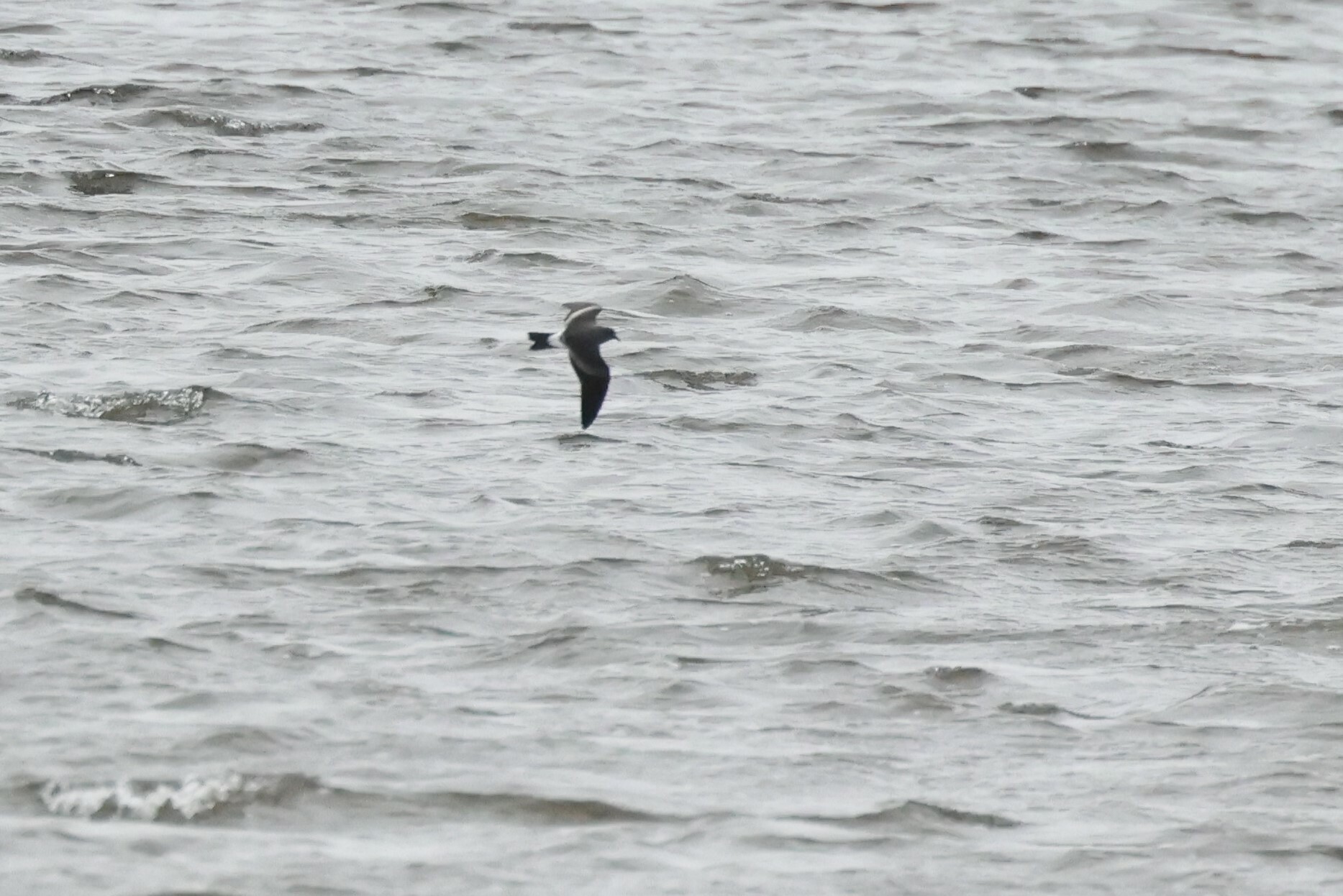
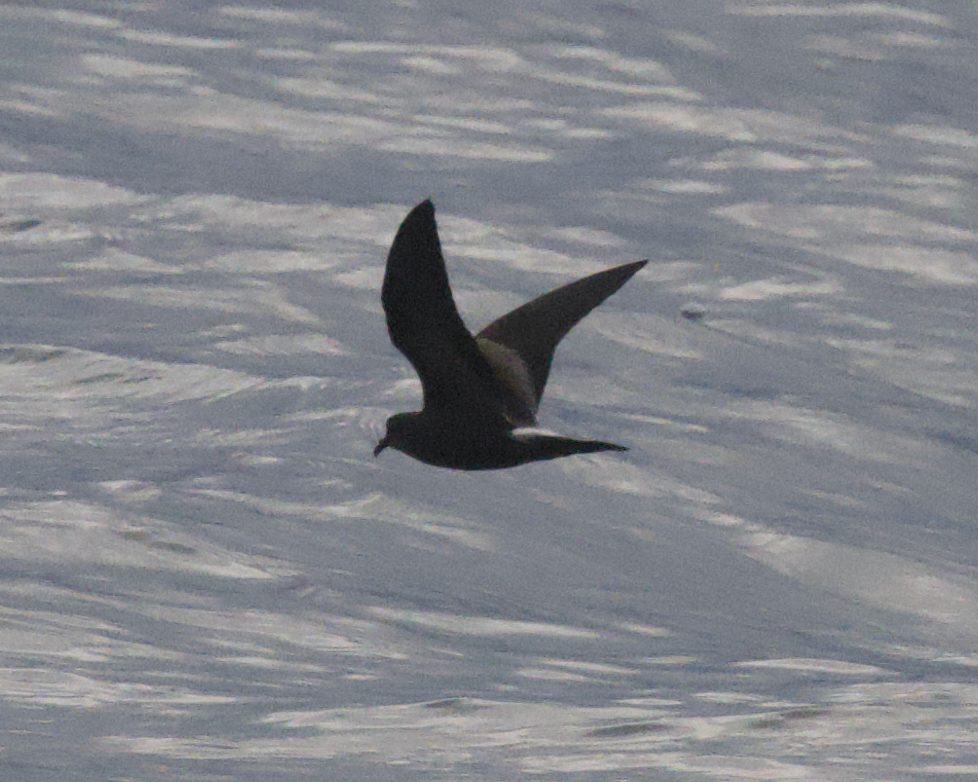
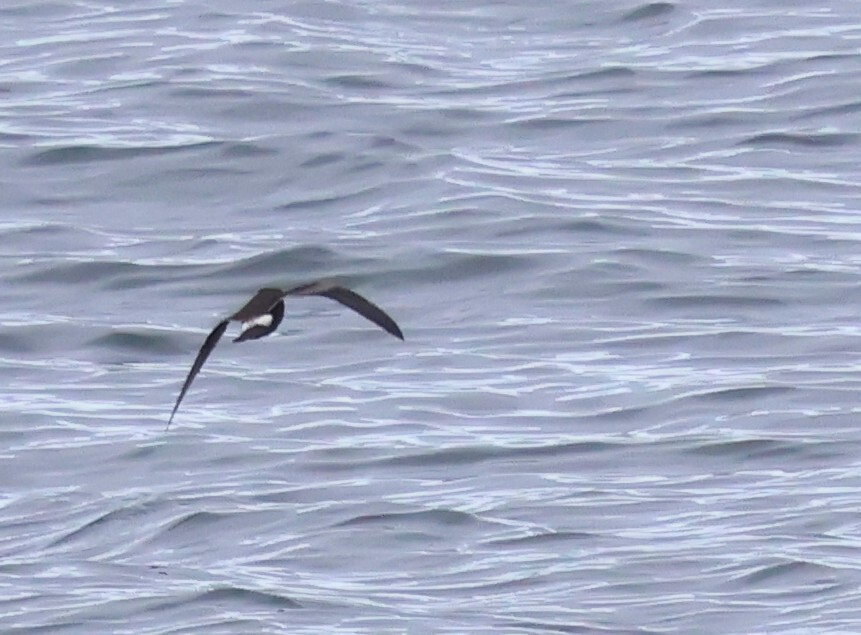
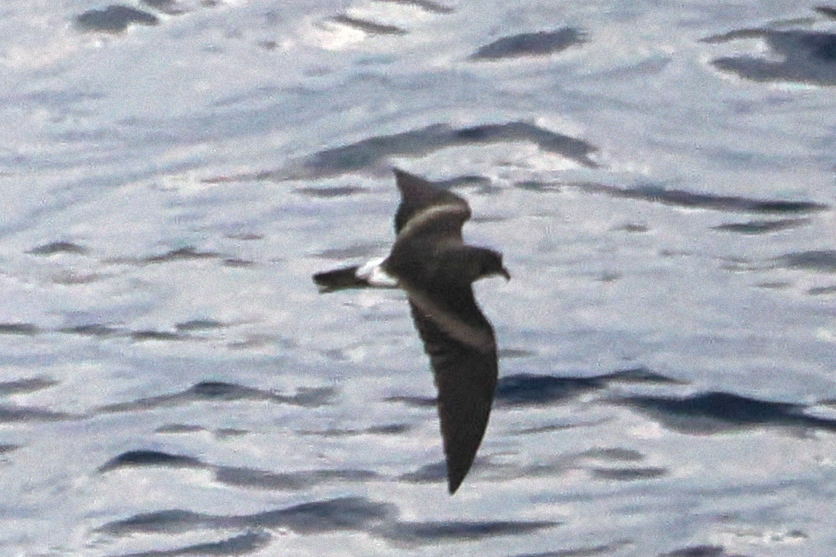
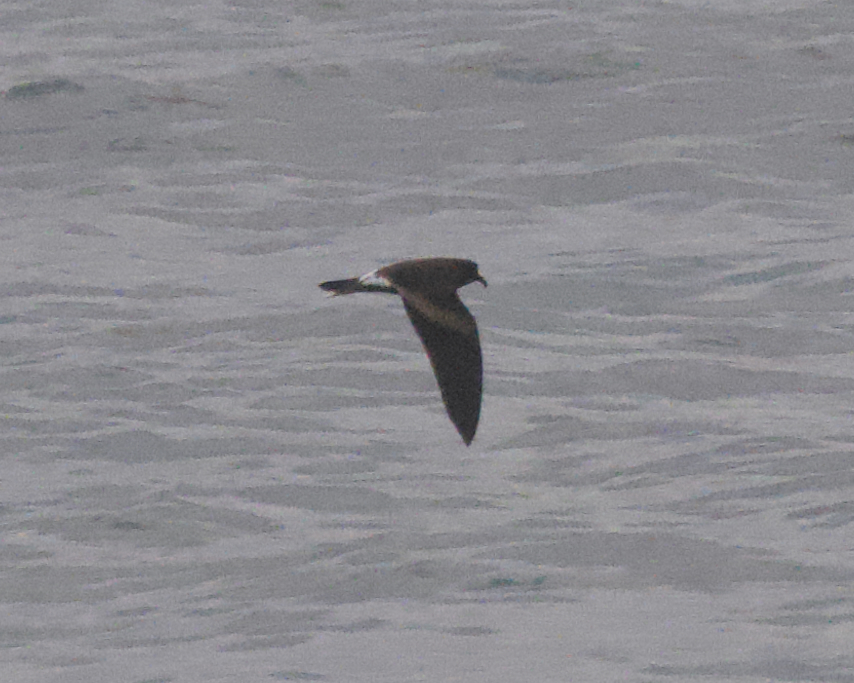
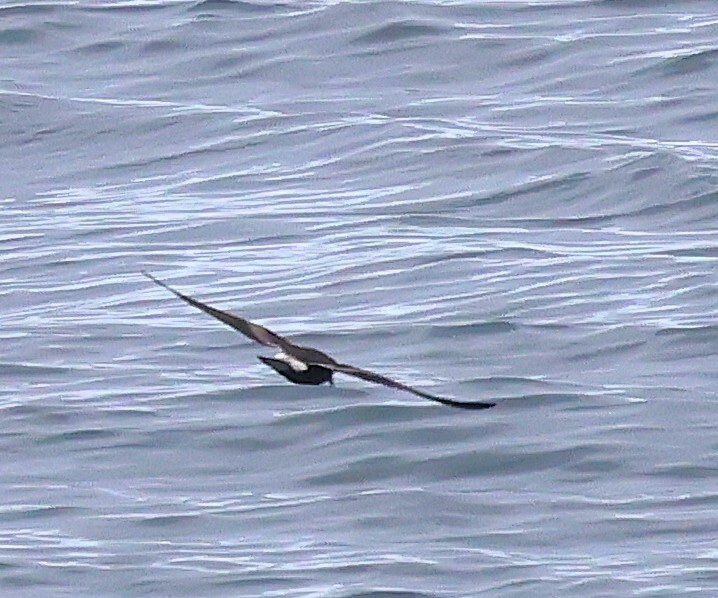
Leach's Storm Petrel
Hydrobates leucorhous
白腰叉尾海燕
Introduction
A small seabird of the tubenose order. Breeds on inaccessible islands in the colder northern areas of the North Atlantic and North Pacific Oceans, with very small numbers also breeding in the South Atlantic off the coast of South Africa. Nests in colonies close to the sea in rock crevices, shallow burrows, or logs, laying a single white egg with a faint ring of purple spots at the large end. Strictly nocturnal at breeding sites to avoid predation by gulls and skuas, and avoids land on clear, moonlit nights. The largest colony, on Baccalieu Island off eastern Canada, contained approximately 1.95 million pairs as of 2013.
Description
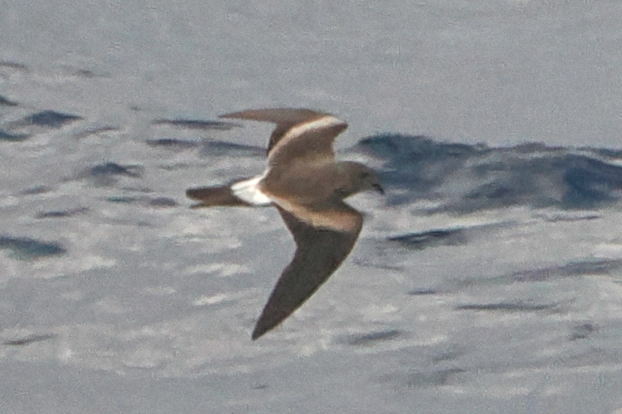
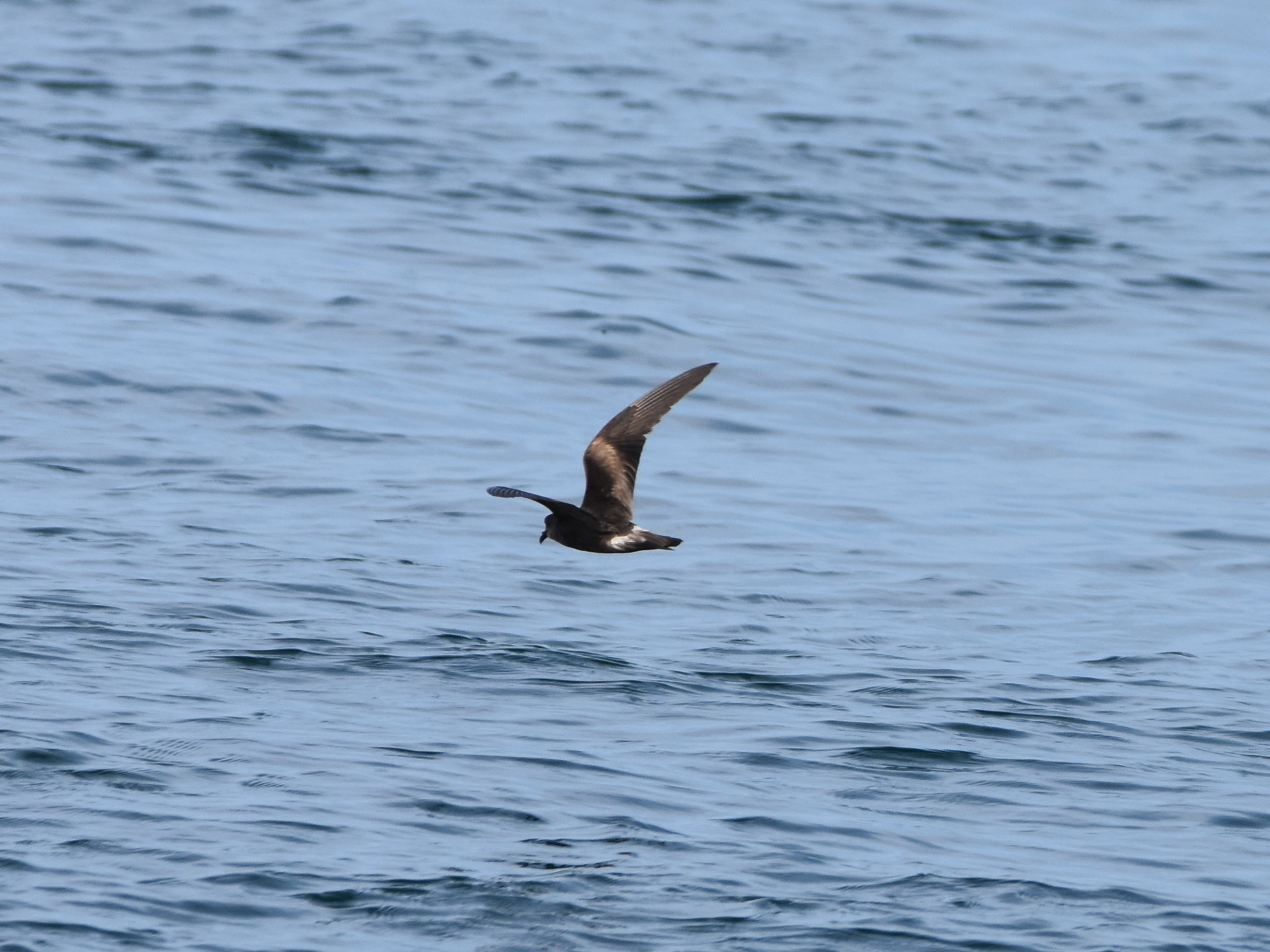
A small bird measuring 18-21 cm in length with a 43-48 cm wingspan. Plumage is entirely black except for a paler grey-brown bar on the secondary wing coverts, a slightly paler face, and typically a white rump with a dark line dividing it down the middle. Dark-rumped individuals occur on the west coast of North America; these are rare north of southern California but represent 90-100% of breeding birds at the United States-Mexico border.
Identification
In the Atlantic, distinguished from European storm petrel and Wilson's storm petrel by its larger size, forked tail, different rump pattern, and flight behaviour. Separating it from band-rumped storm petrels is more difficult; identification relies on characteristics such as the extent of white on the rump and flight pattern. Pacific identification is more challenging, as the dark-rumped form can be confused with at least three other all-dark storm petrel species, requiring close attention to wingbeats and overall coloration. Flight is fluttered, and the bird patters on the water while feeding.
Distribution & Habitat
Strictly pelagic outside the breeding season, making it difficult to observe from land except during storms. Breeds on remote island sites and does not follow ships. In Europe, the best chance of observation is in autumn in Liverpool Bay between north Wales and northwest England, where strong north-westerly gales can funnel migrating birds. First photographed at the nest in 1958 on Eilean Mor in the Flannan Isles off Scotland.
Behavior & Ecology
Feeds primarily on plankton including euphausiids, copepods, and amphipods parasitic on jellyfish gonadal pouches, as well as lantern fish (myctophids) that surface at night over continental slopes. Individuals have been observed feeding up to 1000 km from their breeding colony. Lays a single white egg and stores energy-rich lipids in a sac anterior to the stomach for incubation, chick feeding, and defense. Parents feed chicks different prey than they consume themselves and accidentally feed them plastic debris. Chicks reach nearly double their fledging weight before leaving the burrow in late September. Lifespan averages 13 years, with a maximum recorded at over 38 years. Migration routes follow the North Equatorial Current or Benguela Current.
Conservation
Fall storms can cause young fledglings to strand on the mainland. Plastic debris consumption poses a threat to chick development. No specific IUCN status or population trend assessment is provided.
Culture
No cultural significance or folklore information is provided.
Source: Wikipedia · CC BY-SA 3.0
Taxonomy
- Order
- Procellariiformes
- Family
- Hydrobatidae
- Genus
- Hydrobates
- eBird Code
- lcspet
Subspecies (2)
-
Hydrobates leucorhous chapmani
breeds Coronado and San Benito islands (northwestern Mexico); ranges to southern California and Pacific coastal waters of northern South America
-
Hydrobates leucorhous leucorhous
breeds northeastern Atlantic from islets south of Iceland, Faroes, off Norway, and off Ireland and Scotland, in northwestern Pacific from Kuril Islands southward to Hokkaido (northern Japan), eastward to Aleutian Islands, and patchily southward to central California, and islands of northwestern Atlantic coast from Labrador (southeastern Canada) to Cape Cod area (Massachusetts, northeastern USA); ranges to tropical Pacific Ocean mainly north of Tropic of Capricorn, and tropical Atlantic
Data Sources
CBR Notes: 学名由Hydrobates leucorhoa改为Hydrobates leucorhous
Species description from Wikipedia, licensed under CC BY-SA 3.0.
Bird images and sounds sourced from GBIF, contributed by citizen scientists worldwide under Creative Commons licenses.
Taxonomy data from AviList 2025.