Harlequin Duck
Histrionicus histrionicus
丑鸭
Introduction
A small sea duck (Anatidae) found across cold northern waters of North America, Greenland, Iceland, and eastern Russia. Breeding habitat consists of cold fast-moving streams with pounding surf and white water, while wintering occurs along rocky coastlines. Two distinctive traits: males display extraordinarily colorful and complex plumage during breeding season, and the species has exceptionally dense, buoyant feathers that provide insulation and cause them to bounce like corks after diving. The eastern North American population is declining and considered endangered due to hydroelectric habitat loss and coastal oil spills.
Description
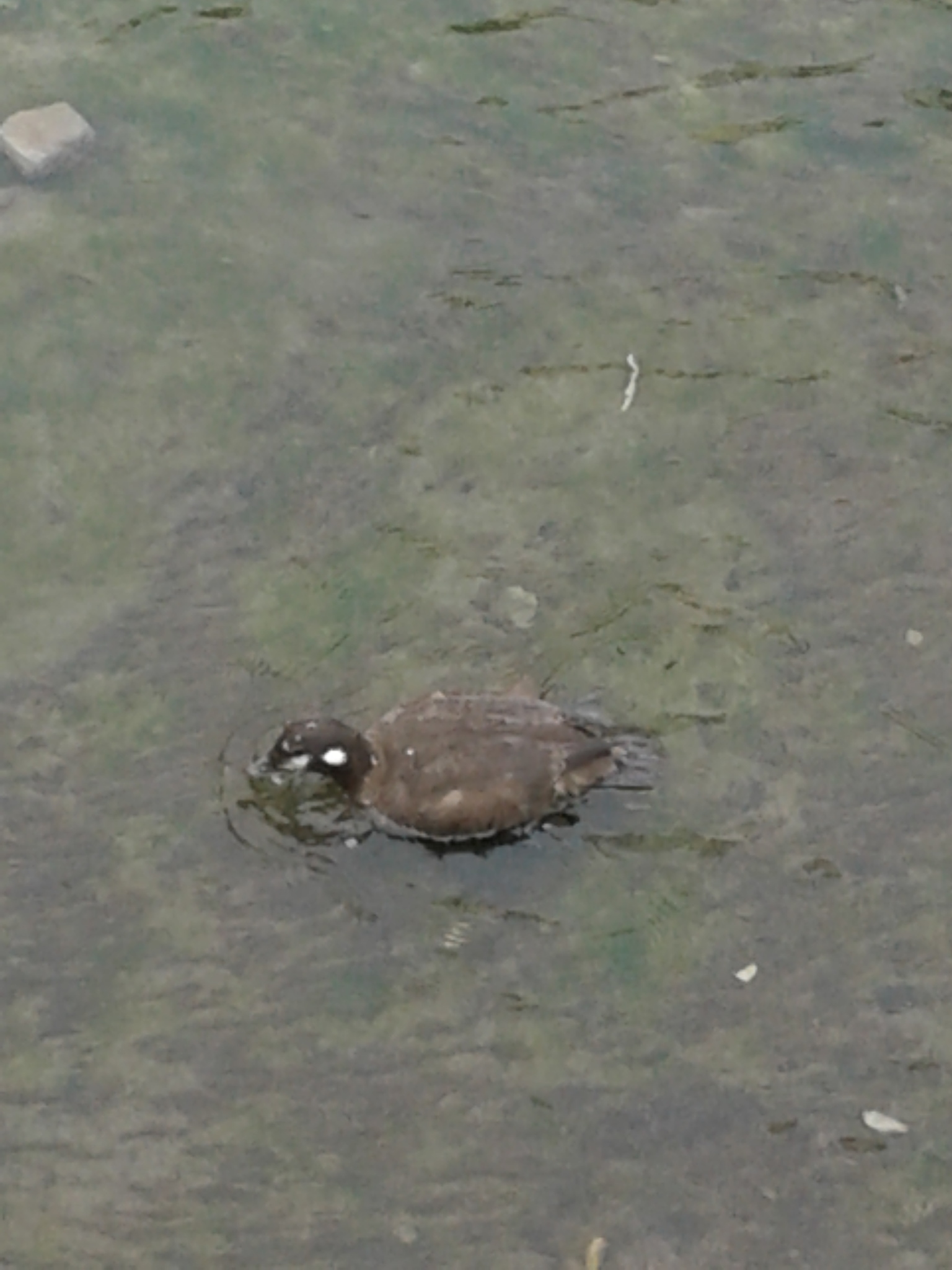
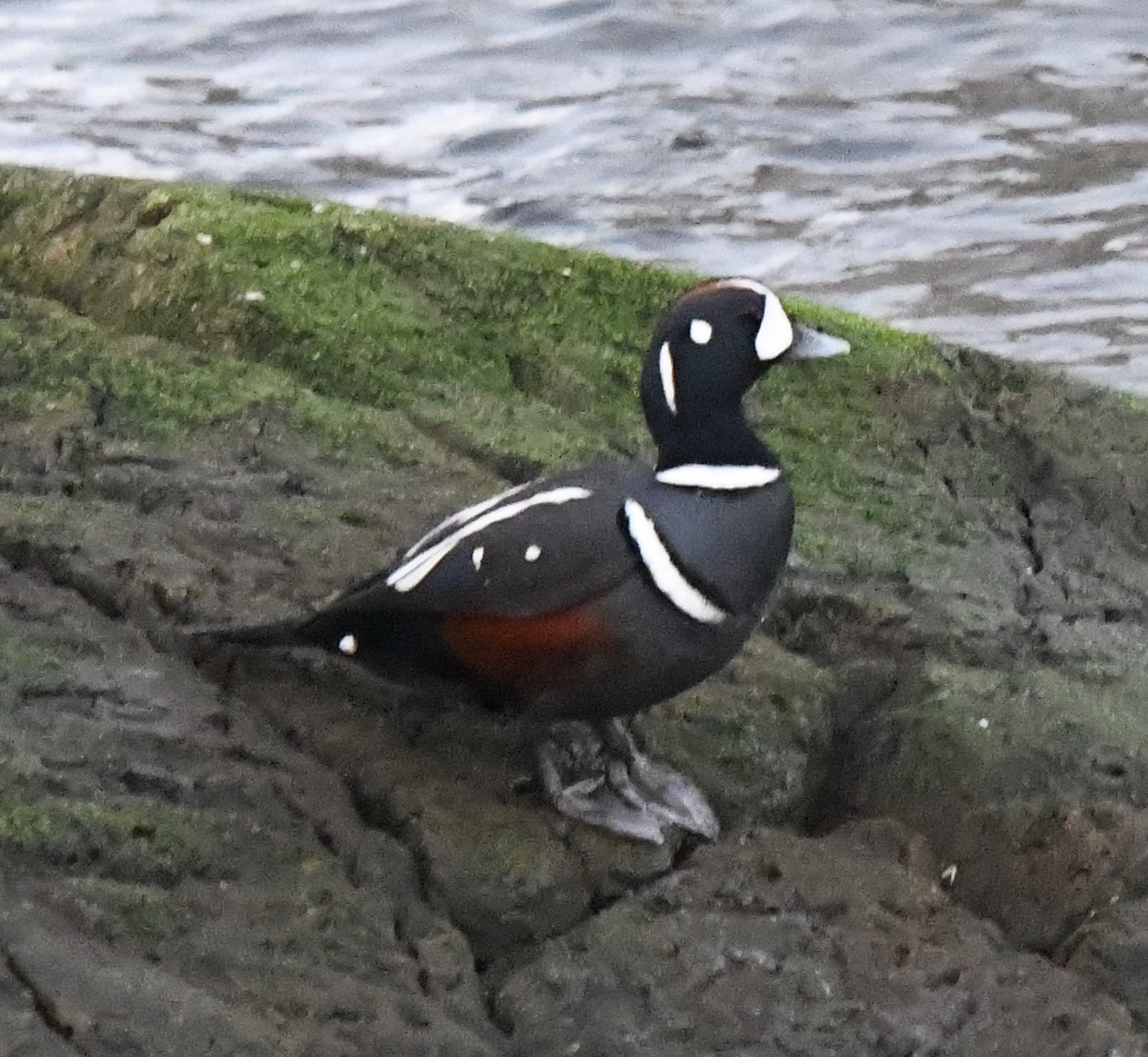
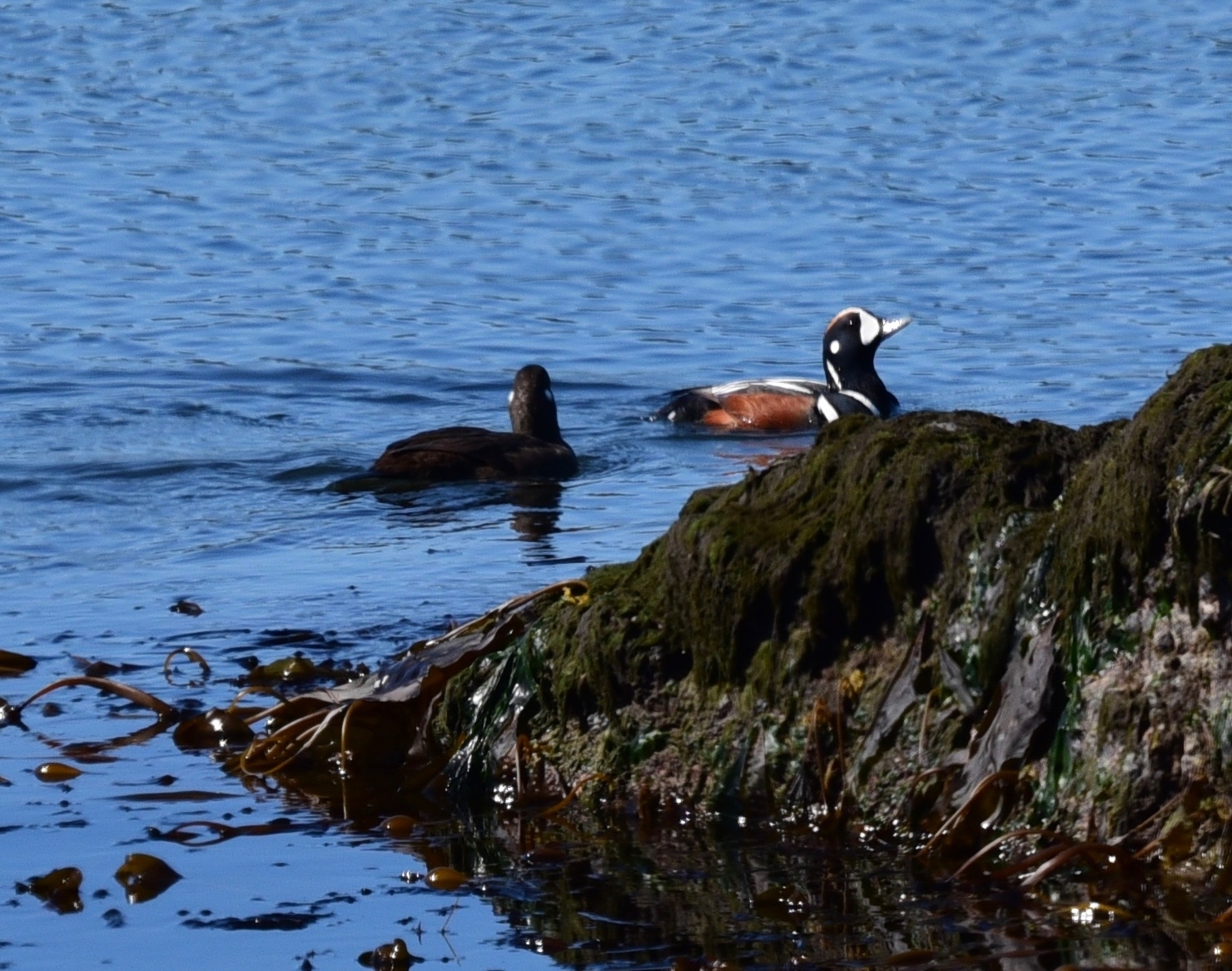
A compact sea duck with a rounded body and long, pointed black tail. Adult breeding males have a striking appearance: dark slate blue head and neck with a large white crescent marking in front of the eye extending to the crest, a small round white dot behind the eye, and a larger oval white spot down the neck side. A black crown stripe runs over the head with chestnut patches on either side. A black-bordered white collar separates the head from the breast. The body is lighter slate blue with chestnut sides, divided vertically by a black-bordered white bar. The speculum is metallic blue, and inner secondary feathers are white, visible as markings over the back when folded. The bill is blue-grey and eyes are reddish. Adult females are brownish-grey with three distinctive white head patches: a round spot behind the eye, a larger patch from the eye to the bill, and a small spot above the eye.
Identification
Males are unmistakable with their dark blue and chestnut plumage and bold white head markings. The combination of the crescent in front of the eye and the two white neck spots is diagnostic. Females are more subdued but identifiable by their brownish-grey coloration and the three distinctive white patches on the head. The bird's small size, preference for fast-moving water, and habit of bouncing on the water surface after dives are helpful field clues.
Distribution & Habitat
Breeds in cold, fast-flowing streams across northwestern and northeastern North America, Greenland, Iceland, and eastern Russia. Nests are well-concealed on the ground near streams. Winters along rocky shorelines of both Atlantic and Pacific coasts. A short-distance migrant, though very rare vagrants occur in western Europe. The species is strongly associated with white water and pounding surf throughout its range.
Behavior & Ecology
Forages by swimming underwater and diving, also dabbling at the surface. Diet consists of molluscs, crustaceans, and insects. Monogamous during winter mating season, forming multi-year pair bonds. Males rarely participate in paternal care. Females typically breed successfully by their second year, while males rarely form persistent bonds before their fourth winter. Both sexes exercise mate choice preference and defend pair bonds, though divorce to pursue better options occurs occasionally. Young begin courtship in their first winter.
Conservation
Eastern North American population is declining and listed as endangered. Primary threats include habitat loss from hydroelectric development projects on breeding streams and mortality from oil spills in coastal wintering areas. The species' dependence on specific fast-flowing stream habitats makes it particularly vulnerable to water management decisions.
Culture
Known by numerous folk names including painted duck, totem pole duck, rock duck, glacier duck, mountain duck, white-eyed diver, squeaker, lords and ladies, and blue streak. The common name derives from the Harlequin character in Commedia dell'arte, referencing the male's theatrical, colorful plumage. The species name histrionicus comes from the Latin word for actor.
Source: Wikipedia · CC BY-SA 3.0
Taxonomy
- Order
- Anseriformes
- Family
- Anatidae
- Genus
- Histrionicus
- eBird Code
- harduc
Distribution
breeds eastern Siberia and northern Japan, Alaska southward to Oregon and Wyoming, eastern Canada (southeastern Baffin Island southward to the Gulf of St. Lawrence), Greenland and Iceland; winters coastally from Siberia to Japan and Korea, from Alaska to central California, to the northeastern USA, southern Greenland, and Iceland
Data Sources
Species description from Wikipedia, licensed under CC BY-SA 3.0.
Bird images and sounds sourced from GBIF, contributed by citizen scientists worldwide under Creative Commons licenses.
Taxonomy data from AviList 2025.