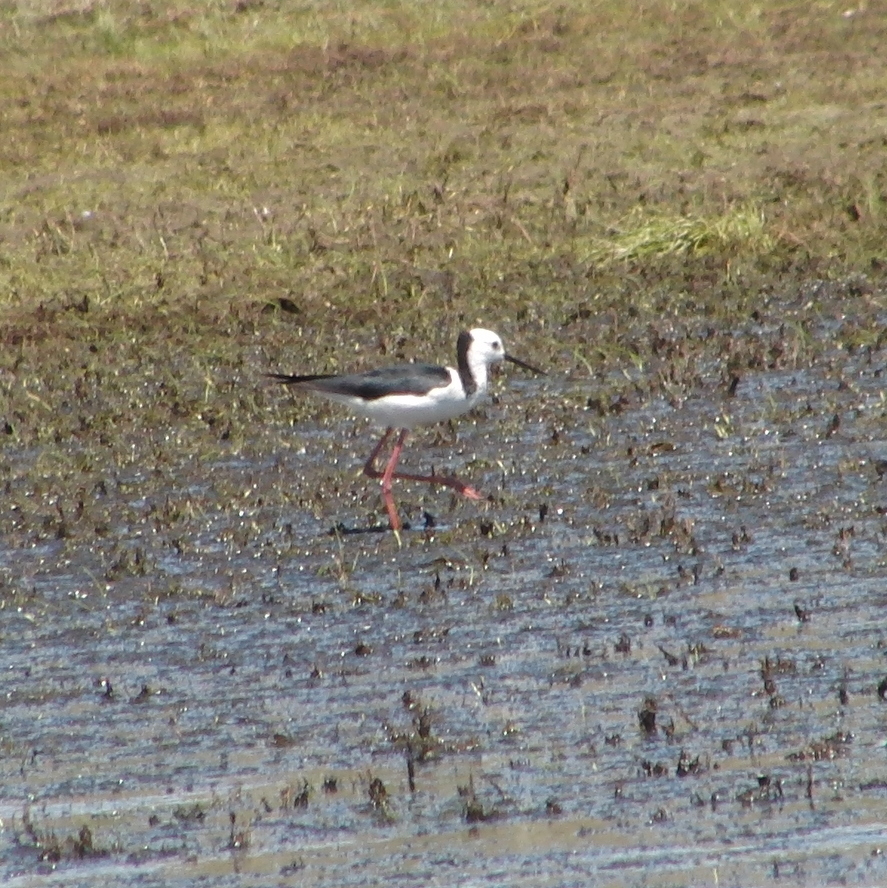
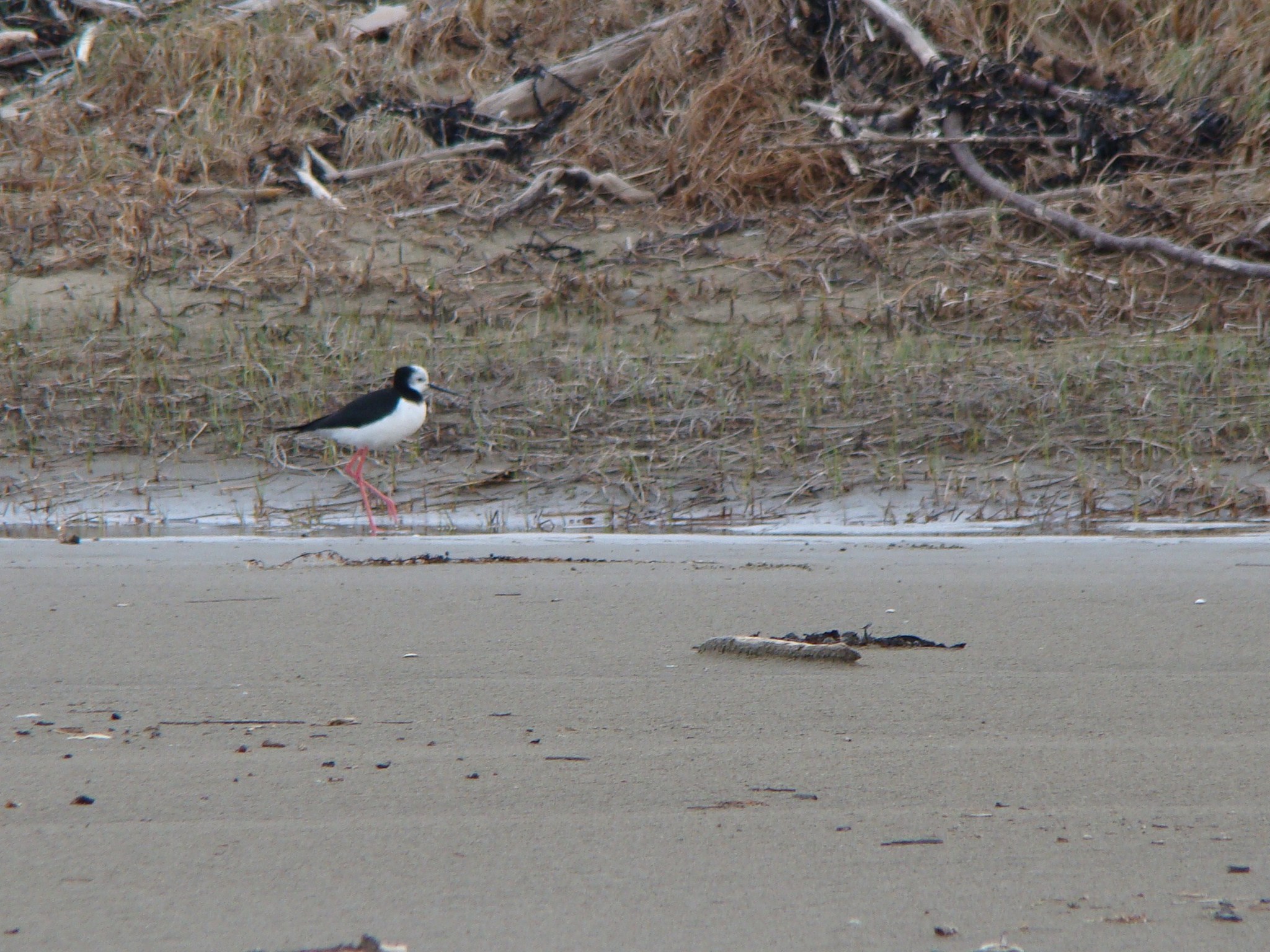
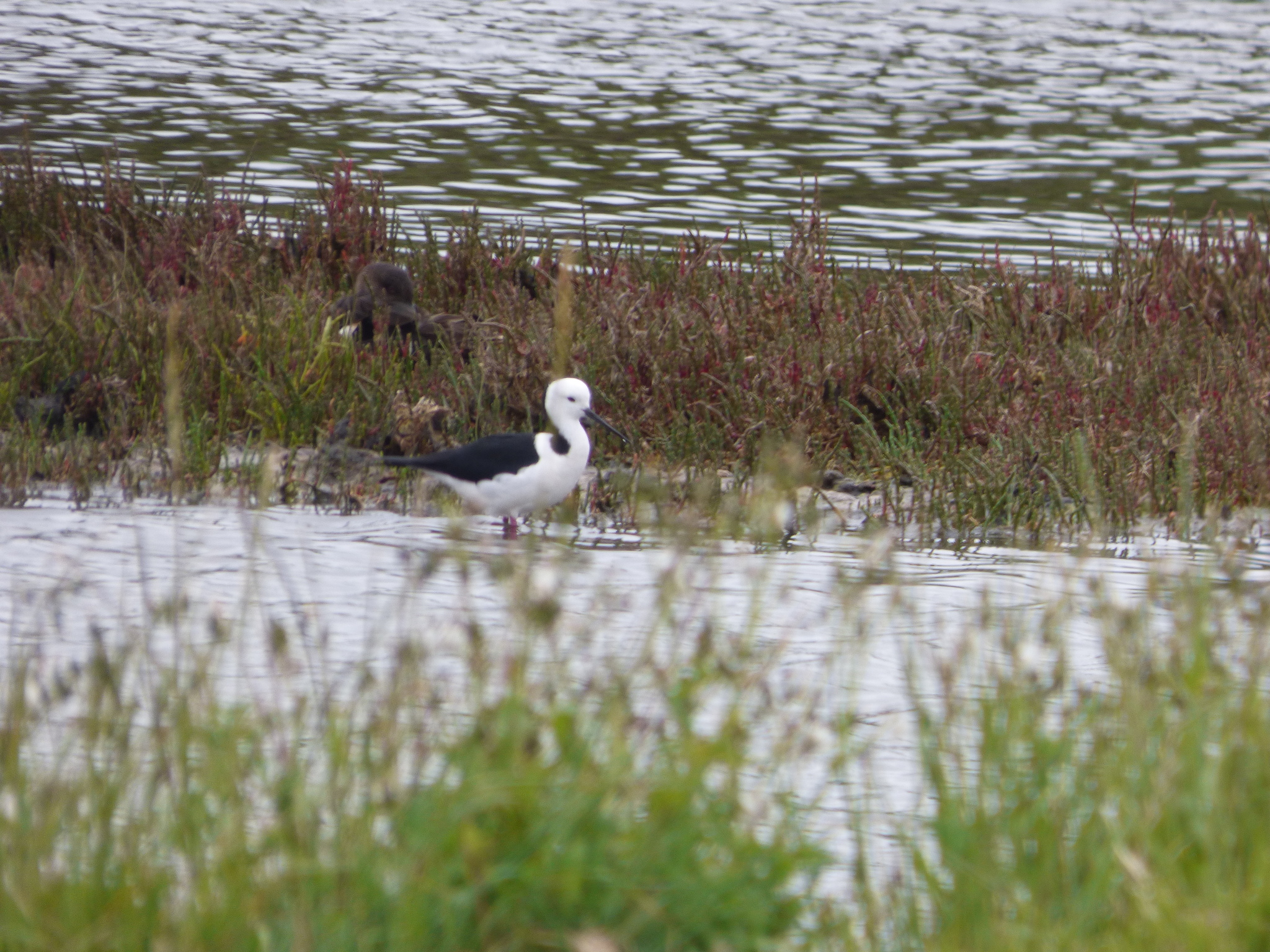
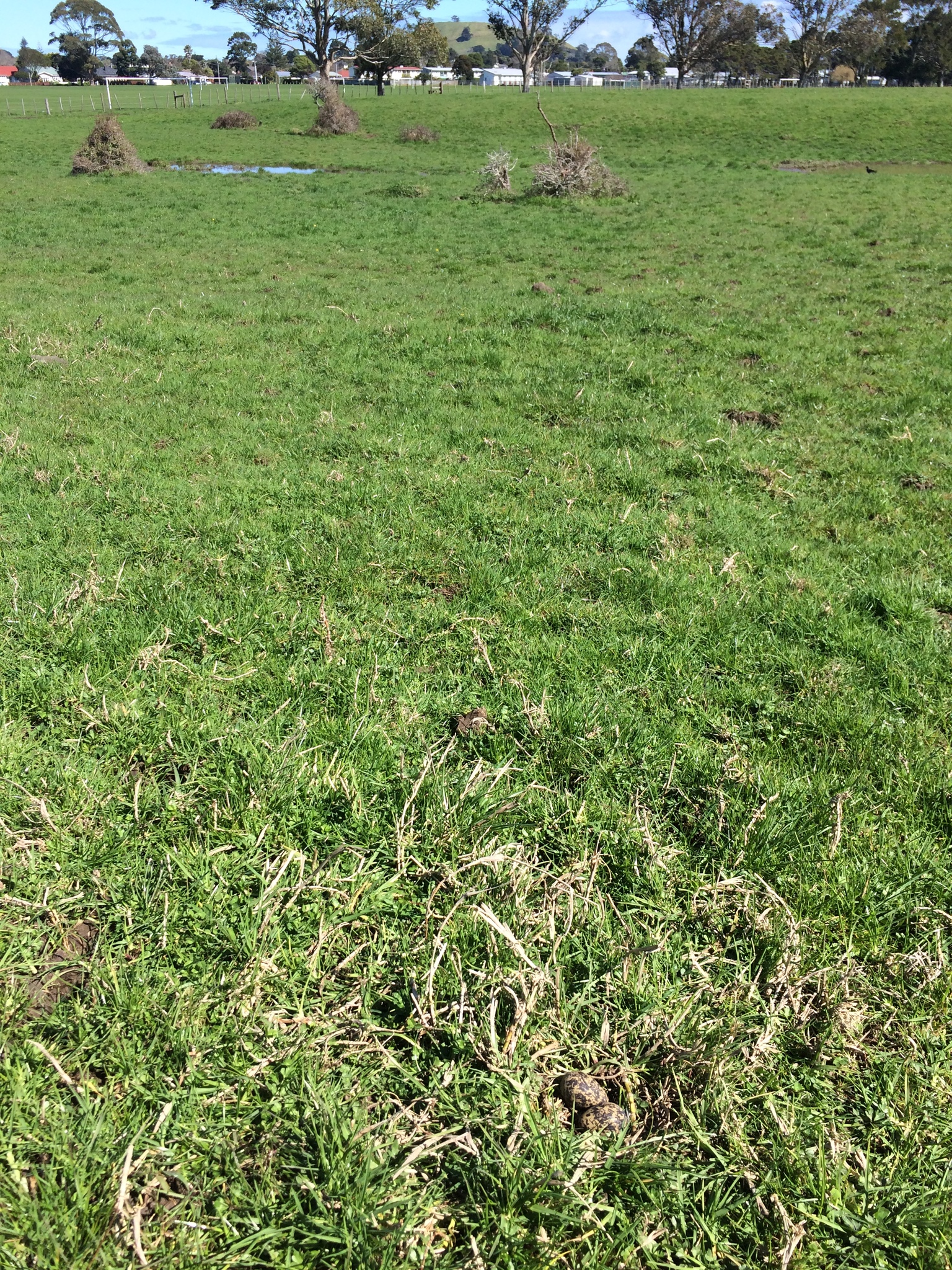
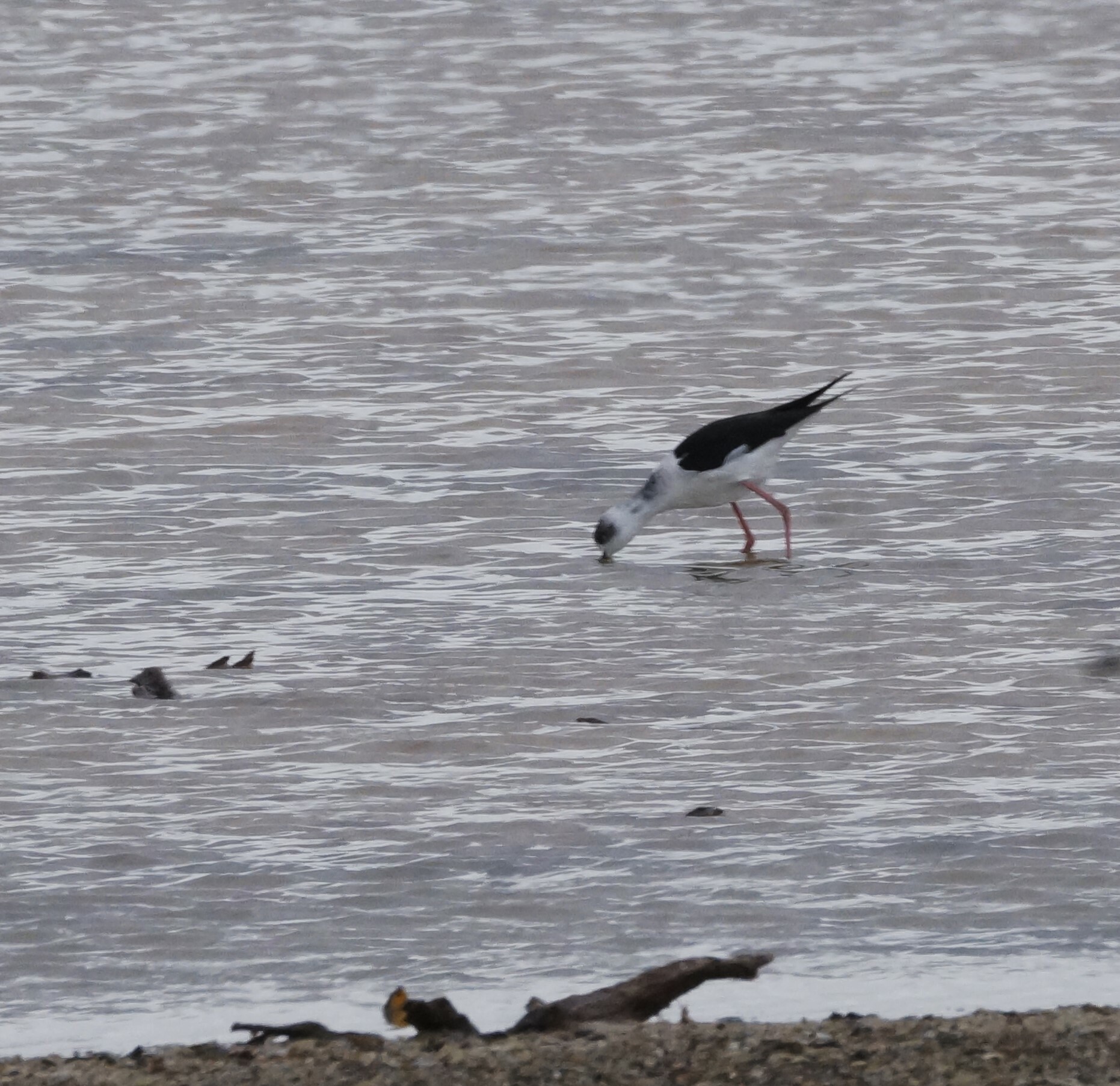
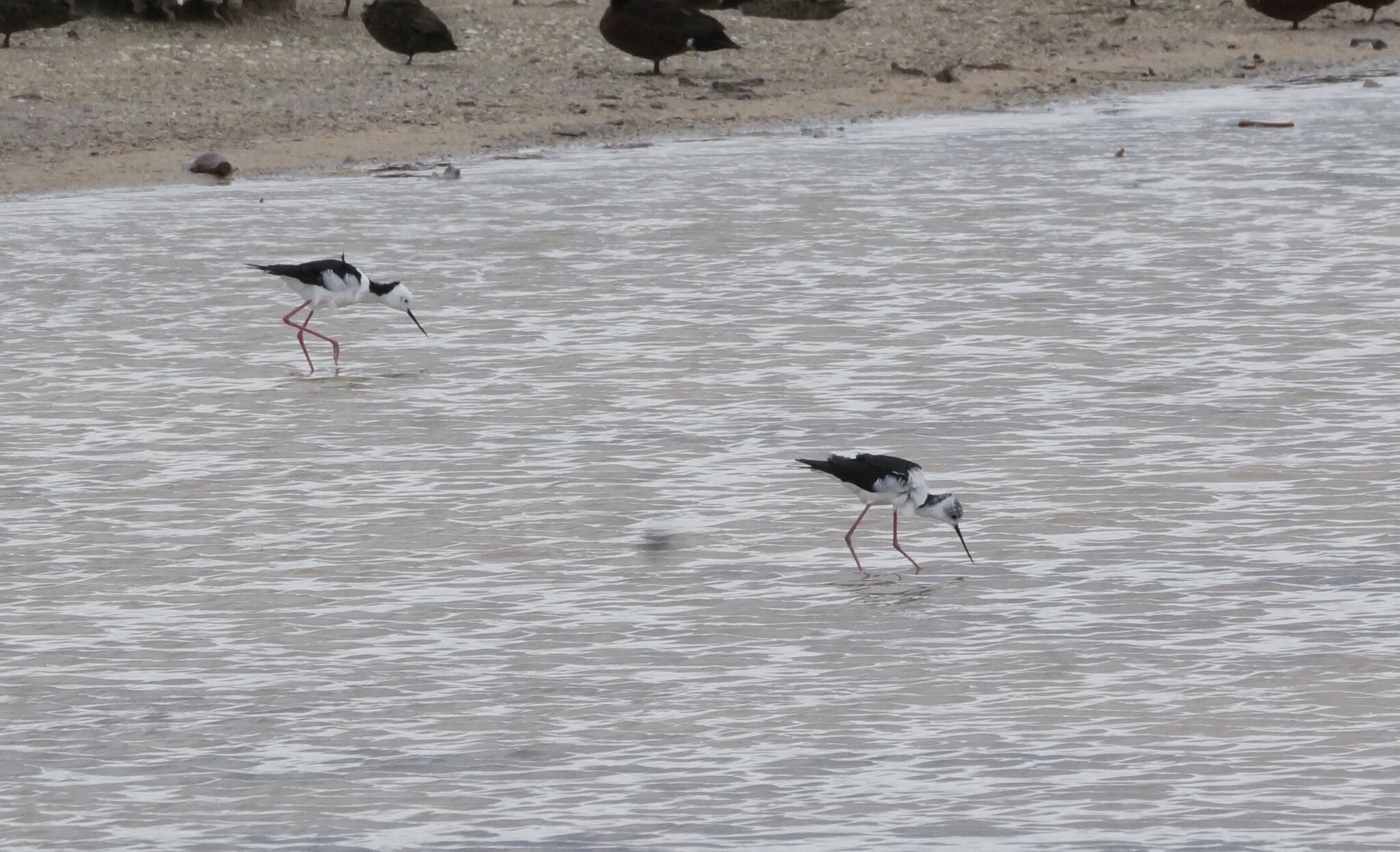

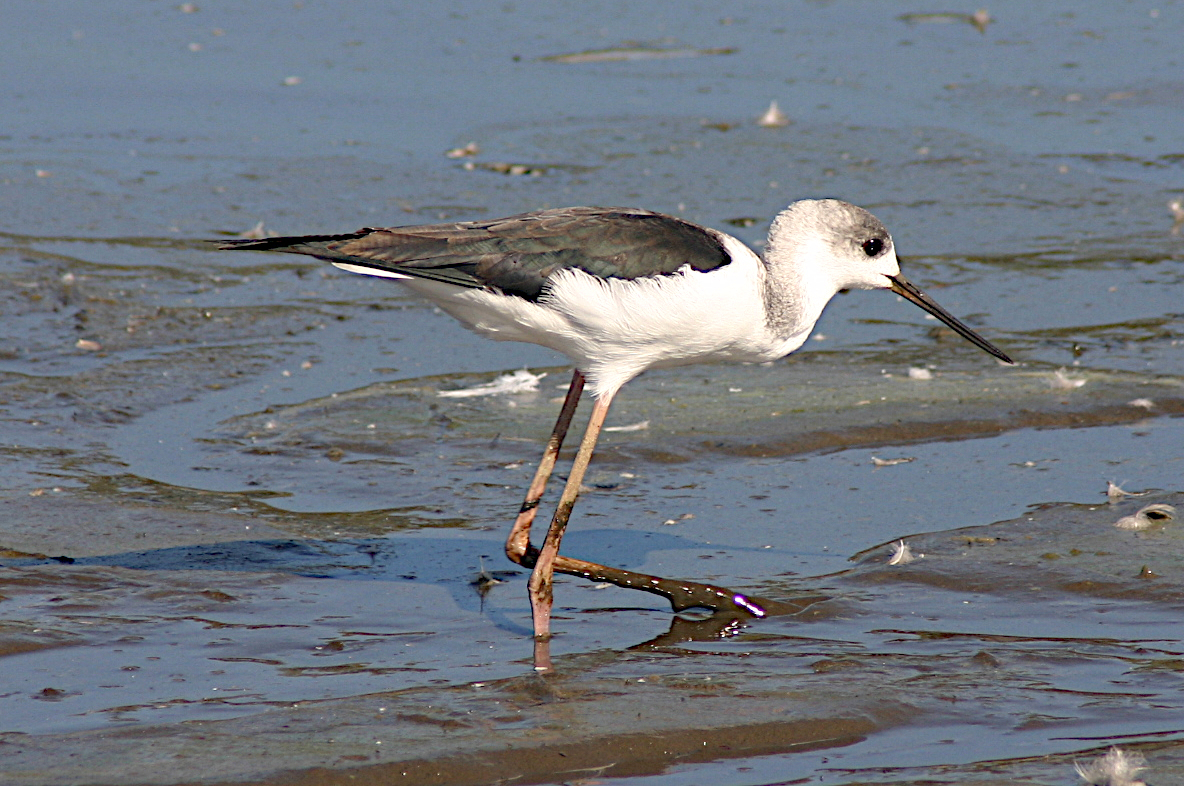
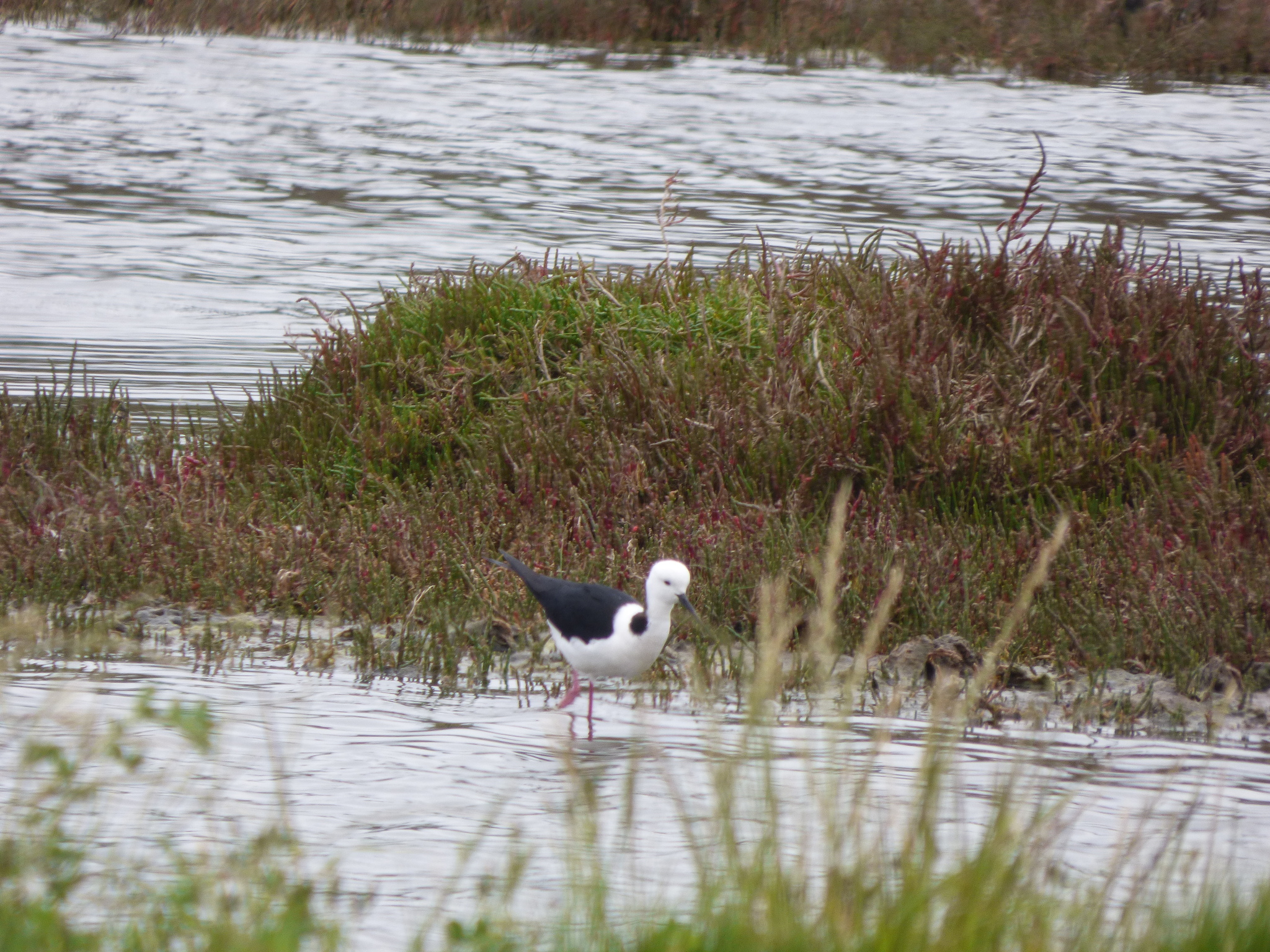
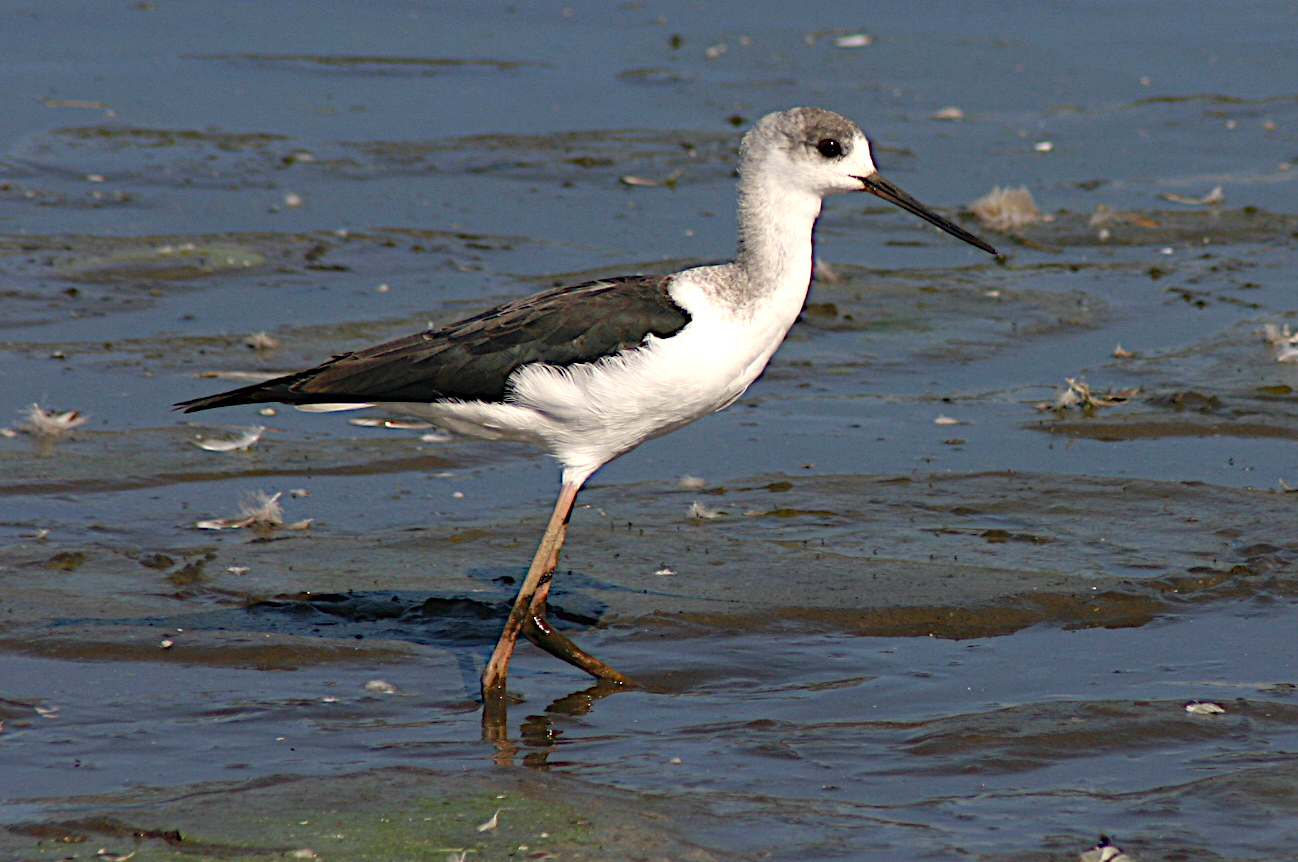
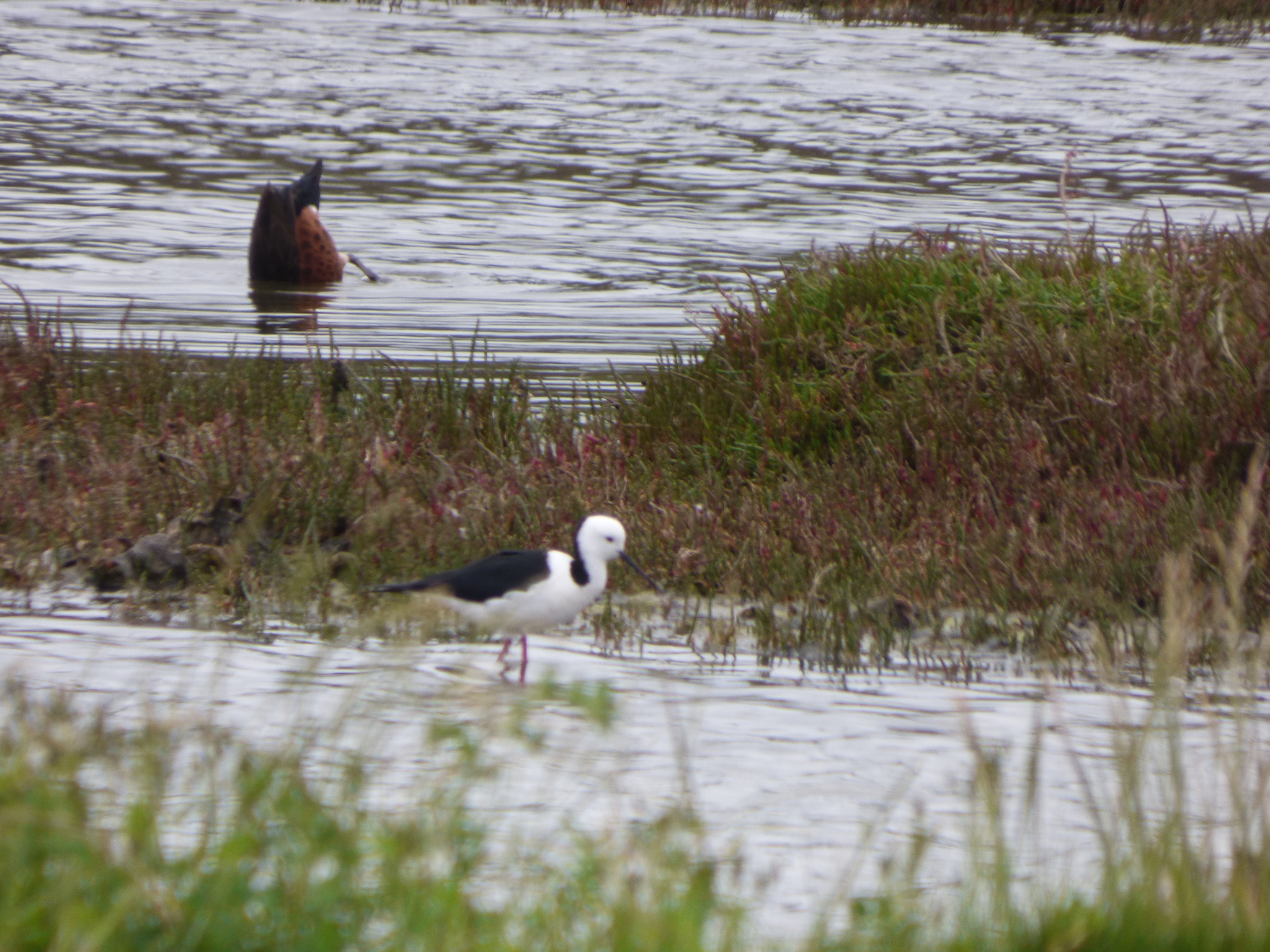
Pied Stilt
Himantopus leucocephalus
澳洲长脚鹬
Introduction
A wader in the avocet and stilt family Recurvirostridae, genus Himantopus. Monotypic species with no recognized subspecies. Widespread across Europe, Asia, and Africa, from the Palearctic to South Asia and the Afrotropical region. Inhabits marshes, shallow lakes, and ponds. Some populations are migratory, moving to coastal areas in winter; warmer-region populations are generally resident. Notable for extremely long pink legs and variable head and neck patterning that differs between sexes and seasons. The taxonomic treatment remains contentious, with some authorities considering this one of four distinct species while others treat it as part of a single species with multiple subspecies.
Description
Medium-sized wader, 33-36 cm in length with a wingspan of 67-83 cm. Distinguished by very long, slender pink legs and a long, thin black bill. plumage is black above and white below, with a white head and neck that can show varying amounts of black depending on sex and season. Males typically display a black back with a greenish gloss; females have a brownish-hued back contrasting with black flight feathers. In populations with normally white-capped heads, females retain less black on the head year-round, while males develop more extensive black markings, particularly in summer, though both sexes typically grow all-white head feathers in winter. Immature birds are grey with sandy-toned wings and light feather fringes appearing as a whitish line in flight.
Identification
The black-winged stilt is part of a complex of very similar stilts. In the Americas, the black-necked and white-backed stilts are closely related but geographically separated. The pied stilt of Australia and New Zealand has a more extensive black cap. Sexing is accomplished by back coloration: males show greenish-glossed black upperparts, while females have brownish-black plumage on the back. The combination of black upperparts, white underparts, and pink legs distinguishes this species from other waders.
Distribution & Habitat
Breeds across much of Europe, Asia, and Africa. The nominate subspecies H.h. himantopus occurs from the Palearctic through South Asia, while H.h. meridionalis occupies the Afrotropical region. Migratory populations move to coastal areas in winter; resident populations persist in warmer regions. Regular vagrancy occurs north of the breeding range, with spring overshoots reaching northern European countries. Breeding expansion into Britain began with successful pairs in 1987, followed by breeding records in southern England in 2014 (13 young fledged) and northern England in 2022 (four chicks fledged).
Behavior & Ecology
Breeds in marshes, shallow lakes, and pond habitats. Forms pairs during breeding season. Some populations are migratory, undertaking seasonal movements to coastal wintering grounds; other populations remain resident year-round. Shows adaptability in colonizing new areas at the northern edges of its range. No specific diet or vocalization information provided in source material.
Conservation
No specific IUCN assessment or population trend data provided in source material. The 2022 successful breeding in northern England represents the most northerly breeding success recorded for the species, suggesting potential range expansion or changing distribution patterns. No conservation status assessment or threat information available from provided text.
Culture
No cultural significance, folklore, or mythological references provided in source material.
Source: Wikipedia · CC BY-SA 3.0
Taxonomy
- Order
- Charadriiformes
- Family
- Recurvirostridae
- Genus
- Himantopus
- eBird Code
- piesti1
Distribution
Philippines, Indonesian Archipelago, New Guinea region, Australia (including Tasmania), North, South, Stewart, and Chatham islands (New Zealand), and New Britain
Vocalizations
Data Sources
CBR Notes: 2022年4月9日,台湾屏东,刘川
Species description from Wikipedia, licensed under CC BY-SA 3.0.
Bird images and sounds sourced from GBIF, contributed by citizen scientists worldwide under Creative Commons licenses.
Taxonomy data from AviList 2025.