Crested Treeswift
Hemiprocne coronata
凤头雨燕
Introduction
A large tree swift species with a scientific name Hemiprocne coronata. Native to the Indian subcontinent and Southeast Asia, ranging across India, Sri Lanka, Bhutan, Bangladesh, Nepal, Myanmar, Thailand, Vietnam, Cambodia, Laos, and China. Inhabits open woodland, deciduous forests, and open areas near trees including parks and gardens, typically below 1000 meters elevation. Characterized by a prominent crest, long swept-back wings, and a deeply forked tail. Distinguished from the similar gray-rumped treeswift (Hemiprocne longipennis) by plumage and structural differences, and the two species do not interbreed where their ranges overlap. Classified as Least Concern by the IUCN due to its very large range and apparently stable population.
Description
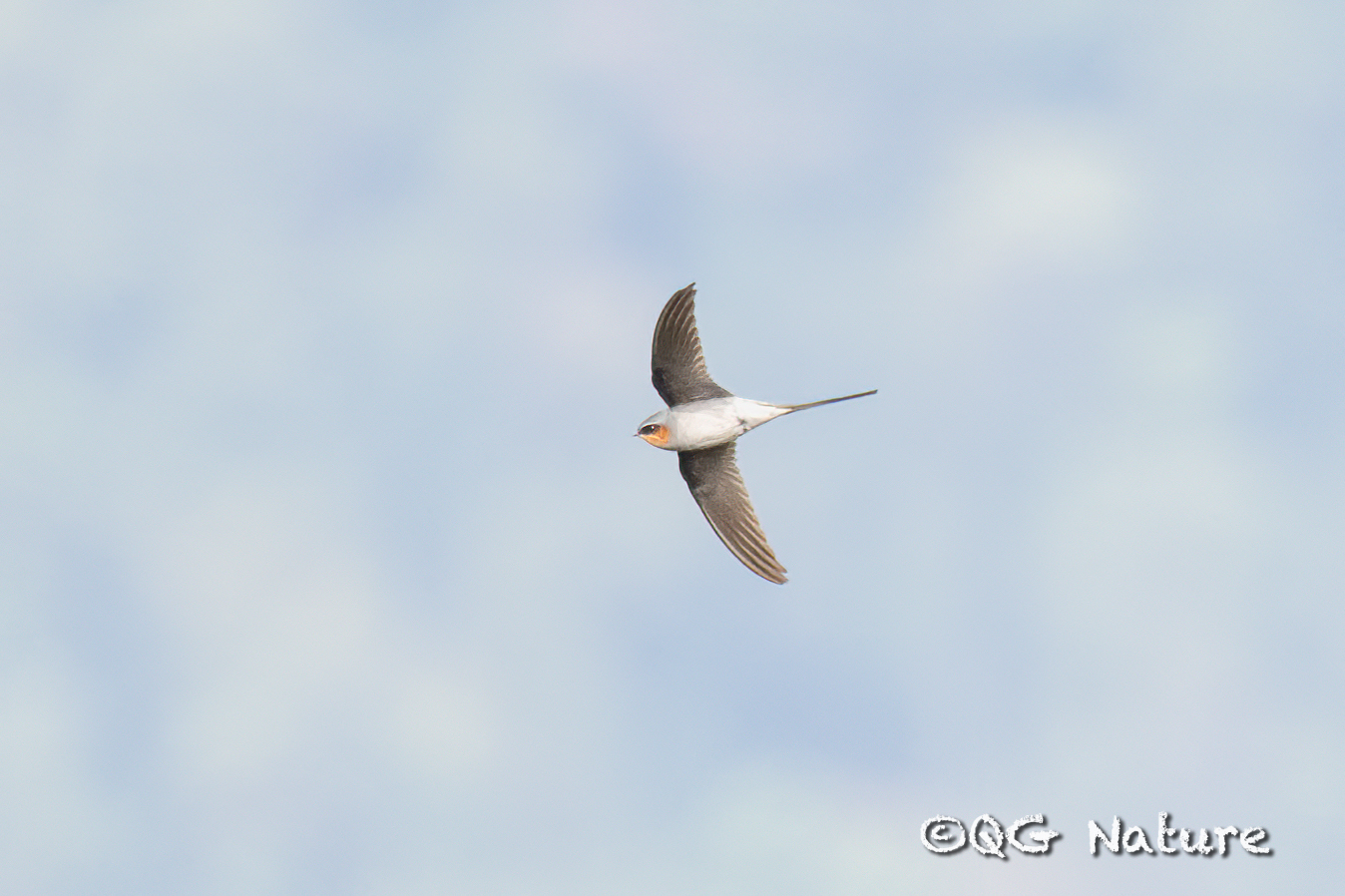
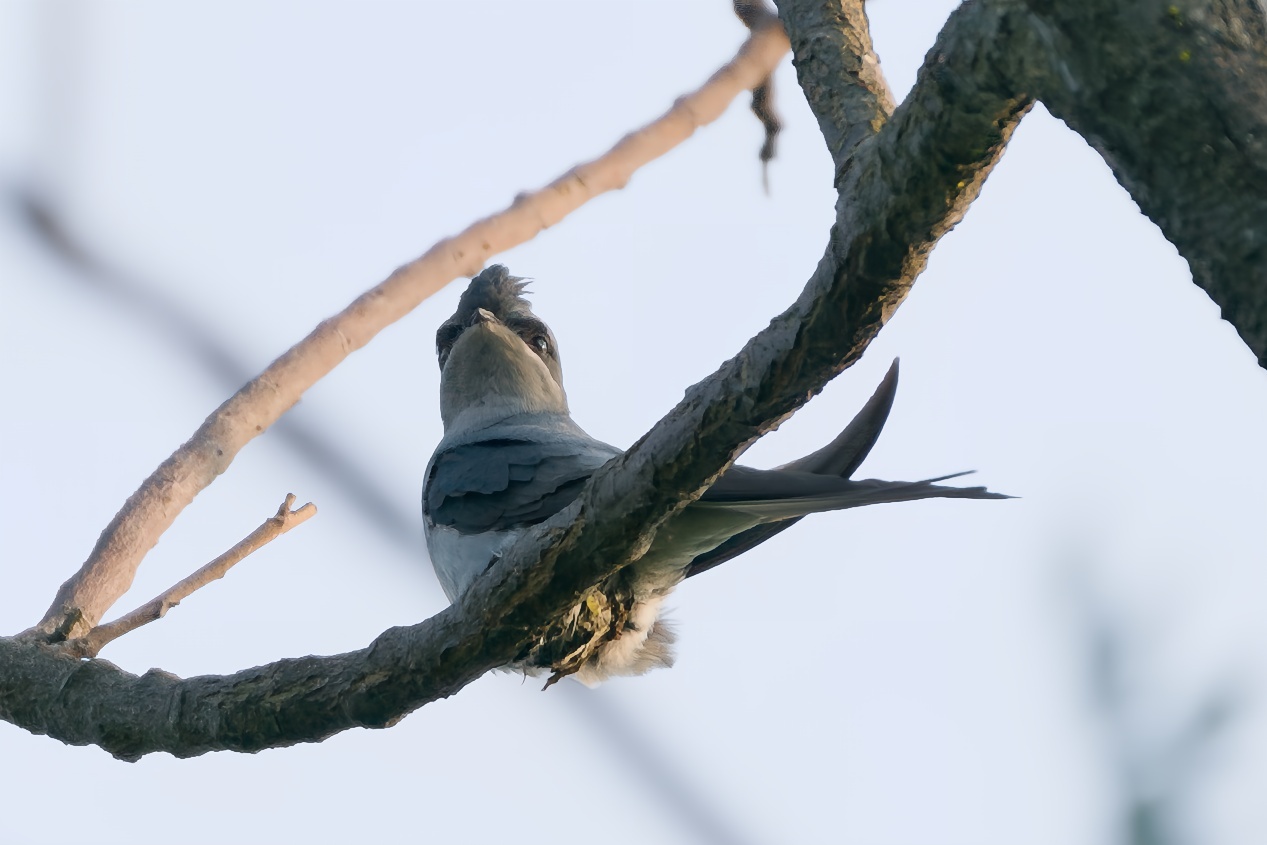
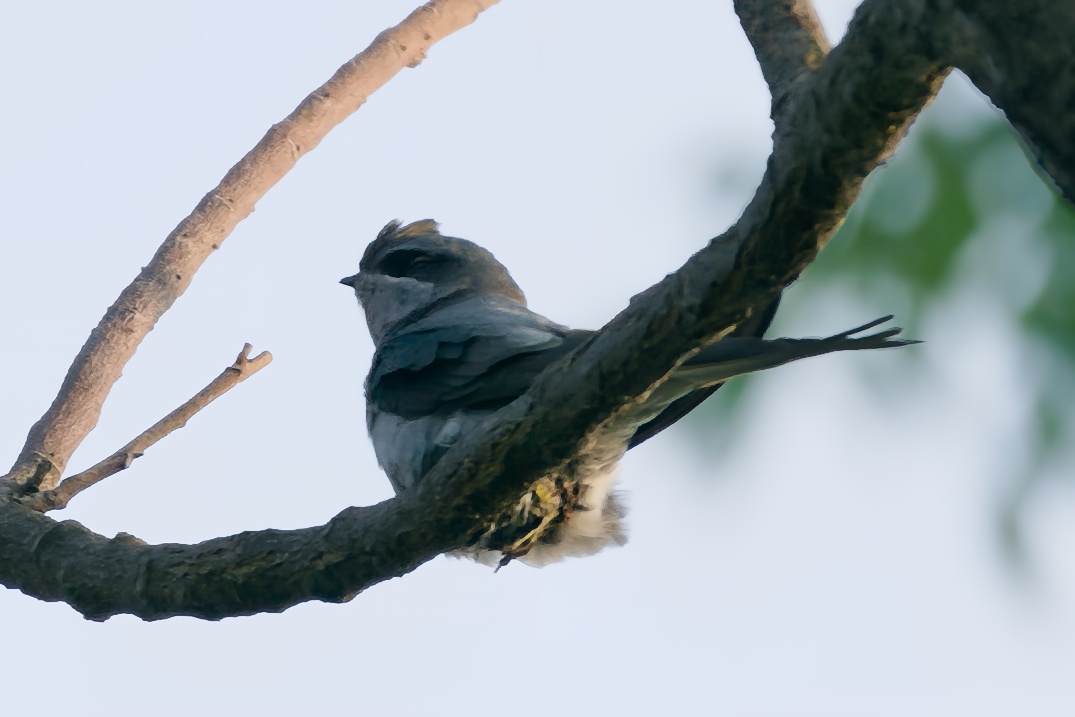
A large slender bird measuring 23 cm (9 inches) in length. The upperparts are dove grey with long, swept-back wings that are darker grey above. The underparts are white. This species possesses a distinctive crest and a long, deeply forked tail. Adult males display orange cheeks and ear coverts, with a narrow white streak beneath the eye and a trace of a white supercilium. Females have a thin white stripe below the eye, running beneath the grey cheek and ear coverts. Juveniles have dark grey head and wings with white-edged feathers and streakier plumage overall. When perched, they appear very upright.
Identification
Large size at 23 cm with long, bowed wings and a deeply forked tail that appears narrow and pointed in flight. The prominent crest is a key field mark. Sexes differ in face pattern: males have orange cheek and ear coverts with white under-eye markings, while females show a thin white stripe below a grey cheek. Differs from the gray-rumped treeswift by plumage coloration and structural features. Found in small groups flying in wide circles over open forest.
Distribution & Habitat
Common resident breeder across the Indian subcontinent and Southeast Asia. Found throughout India, Sri Lanka, Bhutan, Bangladesh, Nepal, Myanmar, Thailand, Vietnam, Cambodia, Laos, and China. Inhabits open woodland, deciduous forests, and open areas near trees including parks and gardens. Most populations occur in lowlands below 1000 meters elevation. Resident throughout its range with no significant migratory movements described.
Behavior & Ecology
Feeds by capturing insects on the wing, including honey bees. Builds a tiny, thin-walled, shallow nest constructed from bark pieces and feathers, glued with saliva to the side of exposed tree branches. Lays a single blue-grey egg incubated by both sexes. The breeding season occurs during summer from March to July. Nestlings are cryptically patterned in grey and freeze when threatened, resembling a knot on a tree branch. The call is a harsh kee-kyew or three-note kip-kee-kep with emphasis on the middle note. Sometimes roosts communally. Found in small groups that fly in wide circles in open forest and occasionally perch atop tall, leafless trees.
Conservation
Listed as Least Concern by the IUCN. The species has a very large range and the population size appears stable. It is considered relatively common throughout its distribution. No significant threats have been identified, and no immediate conservation concerns exist for this species.
Culture
No cultural significance or folklore information available.
Source: Wikipedia · CC BY-SA 3.0
Taxonomy
- Order
- Apodiformes
- Family
- Hemiprocnidae
- Genus
- Hemiprocne
- eBird Code
- cretre1
Distribution
India to southwestern China, Myanmar, and Indochina
Data Sources
CBR Notes: 中文名由凤头树燕改为凤头雨燕
Species description from Wikipedia, licensed under CC BY-SA 3.0.
Bird images and sounds sourced from GBIF, contributed by citizen scientists worldwide under Creative Commons licenses.
Taxonomy data from AviList 2025.