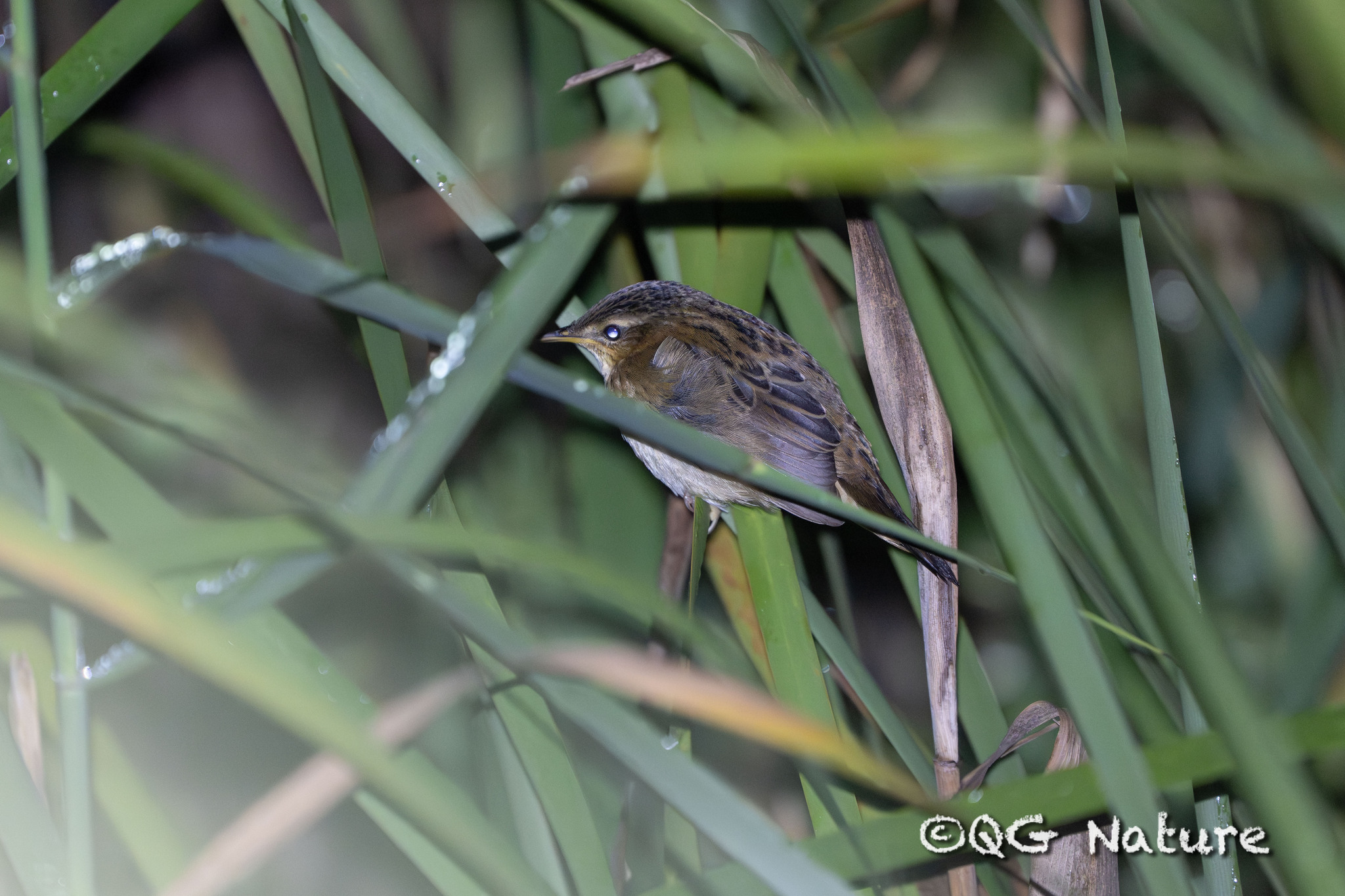
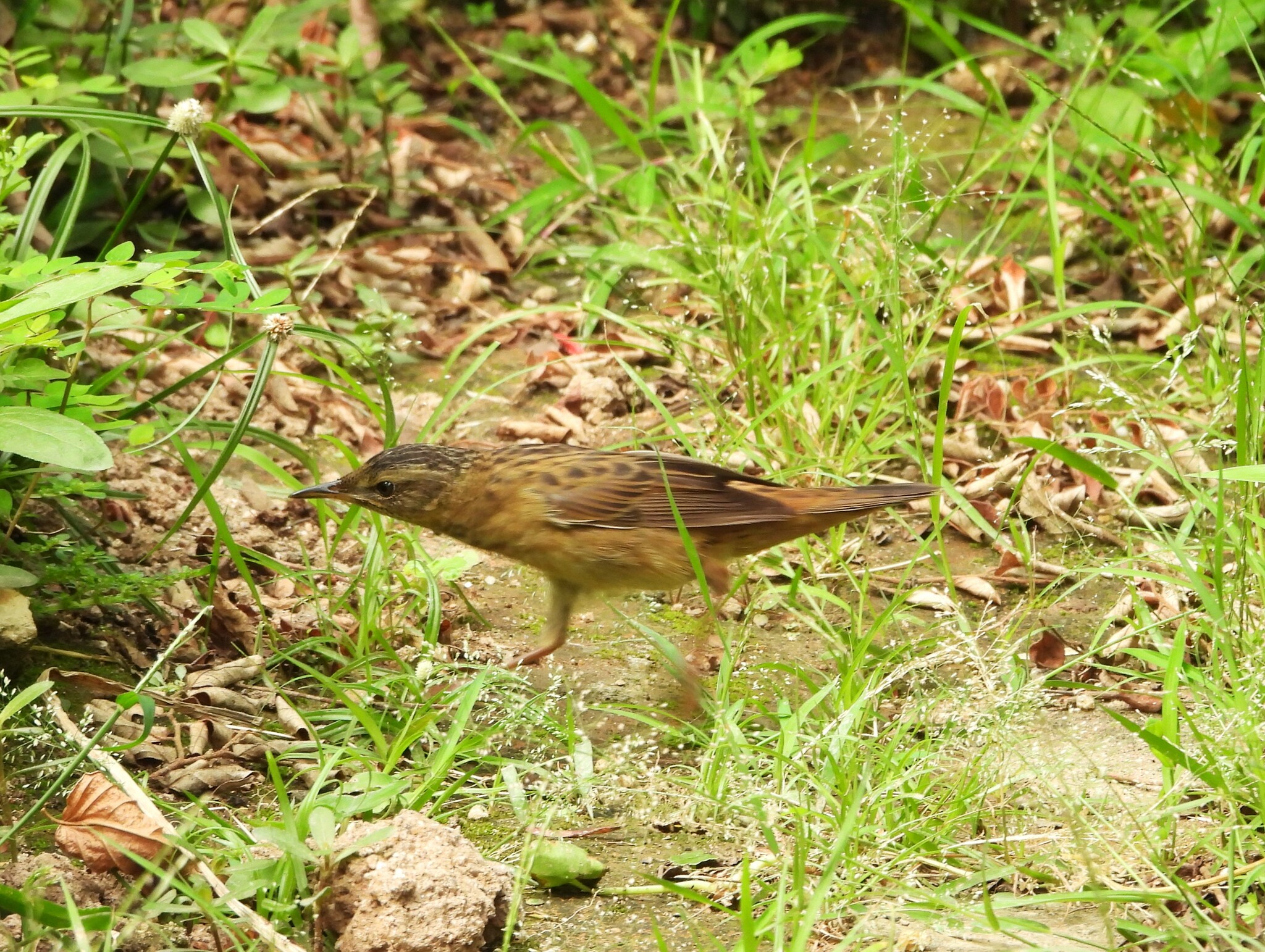
Pallas's Grasshopper Warbler
Helopsaltes certhiola
小蝗莺
Introduction
Helopsaltes certhiola is an Old World warbler in the genus Helopsaltes. It breeds in the eastern Palearctic from the Altai Mountains, Mongolia, and Transbaikalia to northeastern China, the Korean Peninsula, and islands in the Sea of Okhotsk (Sakhalin and Kuril Islands). It is migratory, wintering from India eastward to Indonesia. It is a rare migrant in Sri Lanka and a very rare vagrant to western Europe. It inhabits tall grass with thicker vegetation, usually close to water in bogs or wet meadows. The species is highly skulking and difficult to observe except when singing.
Description
A medium-sized warbler. The adult has a streaked brown back, whitish grey underparts that are unstreaked except on the undertail. The sexes are identical. Young birds are yellower below. Like most warblers, it is insectivorous.
Identification
Very similar to the common grasshopper warbler but slightly larger, with white tips to the tail and tertial feathers, and a warmer brown rump. These white tips inspired the colloquial name 'PG Tips'. It is a skulking species that creeps through grass and low foliage, making it very difficult to observe except when singing.
Distribution & Habitat
Breeds across the eastern Palearctic, including the Altai Mountains, Mongolia, Transbaikalia, northeastern China, the Korean Peninsula, and Sea of Okhotsk islands (Sakhalin and Kuril Islands). Winters from India eastward through Southeast Asia to Indonesia. Rare migrant in Sri Lanka and very rare vagrant to western Europe, particularly regular on Fair Isle in the Shetland Islands. Inhabits tall grass with some thicker vegetation, usually close to water in bogs or wet meadows.
Behavior & Ecology
Insectivorous, feeding on small insects. Breeding occurs in tall grass near water, with 4 to 7 eggs laid in a ground nest in grass. The species is highly skulking, creeping through grass and low foliage. Its song is an inventive, melodious Acrocephalus-like melody, distinct from the mechanical insect-like reeling of the common grasshopper warbler.
Culture
The species bears the name of German zoologist Peter Simon Pallas. The specific epithet 'certhiola' is a diminutive derived from the genus Certhia, referring to treecreepers. It has the colloquial name 'PG Tips' due to the distinctive white tips on its tail and tertial feathers.
Source: Wikipedia · CC BY-SA 3.0
Taxonomy
- Order
- Passeriformes
- Family
- Locustellidae
- Genus
- Helopsaltes
- eBird Code
- pagwar1
Vocalizations
Subspecies (5)
-
Helopsaltes certhiola centralasiae
breeds southeastern Siberia to northeastern China; winters to Andaman and Nicobar islands
-
Helopsaltes certhiola certhiola
breeds southeastern Siberia (Transbaikalia) and eastern Mongolia eastward through north-central China; winters to southeastern Asia
-
Helopsaltes certhiola minor
breeds southeastern Siberia (Amurland) and northeastern China; winters to southeastern Asia
-
Helopsaltes certhiola rubescens
breeds northern Siberia to Sea of Okhotsk and Kamchatka; winters to southern India
-
Helopsaltes certhiola sparsimstriatus
southern Siberia to northern Altai Mountains, Sayan Mountains, and Transbaikalia; winters probably to southern Asia
Data Sources
Species description from Wikipedia, licensed under CC BY-SA 3.0.
Bird images and sounds sourced from GBIF, contributed by citizen scientists worldwide under Creative Commons licenses.
Taxonomy data from AviList 2025.