Orange-breasted Trogon
Harpactes oreskios
橙胸咬鹃
Introduction
Species in the family Trogonidae, order Trogoniformes, genus Harpactes. Inhabits the lower canopy of lowlands and forests across southern China, southeast Asia, Borneo, Sumatra, and Java. A colorful, sedentary species that is insectivorous and hunts from a perch. Adults breed between January and May, excavating nests into dead tree stumps with both parents cooperating to raise chicks. Classified as Least Concern by the IUCN, though population sizes are decreasing throughout its range.
Description
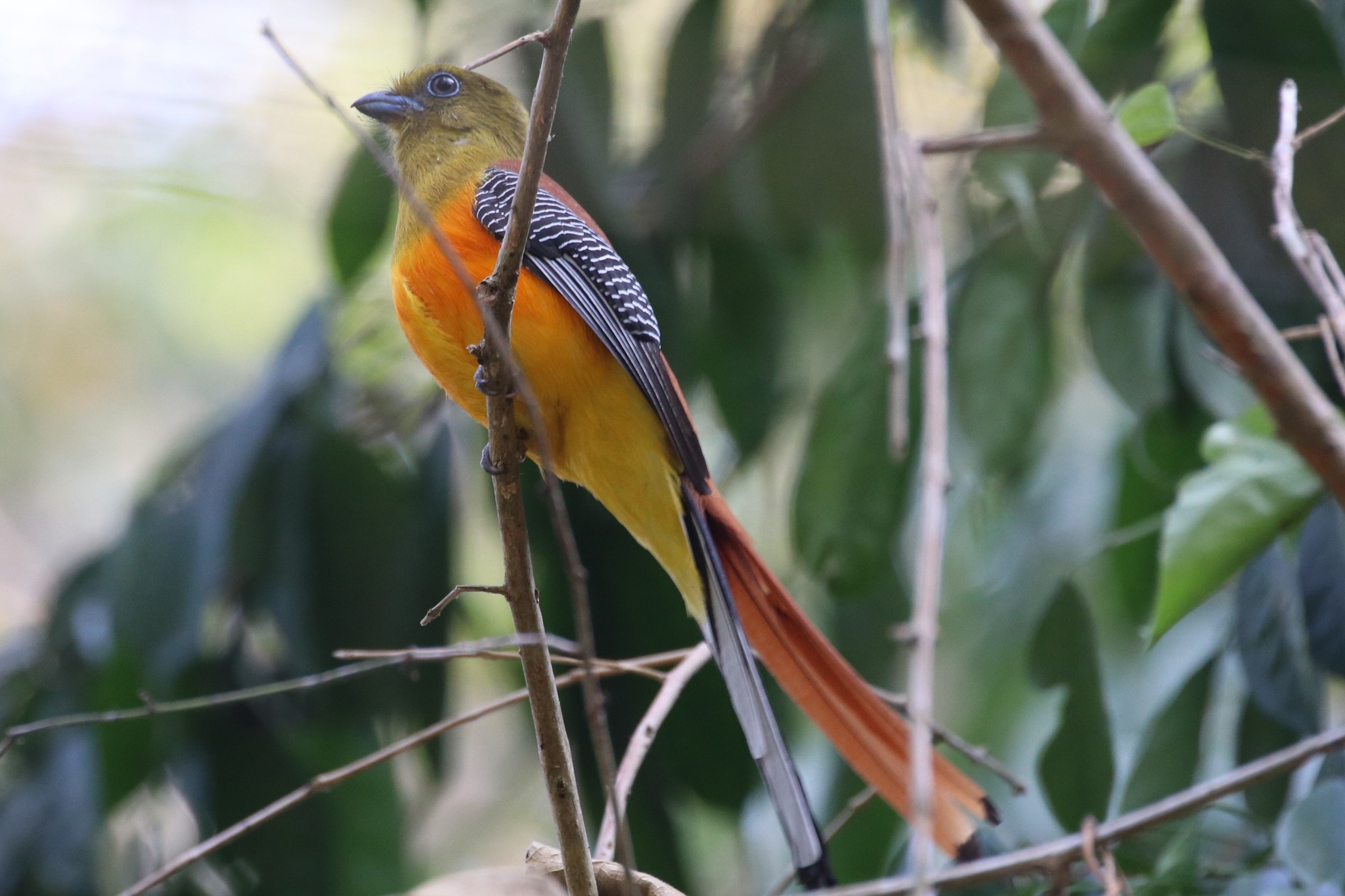
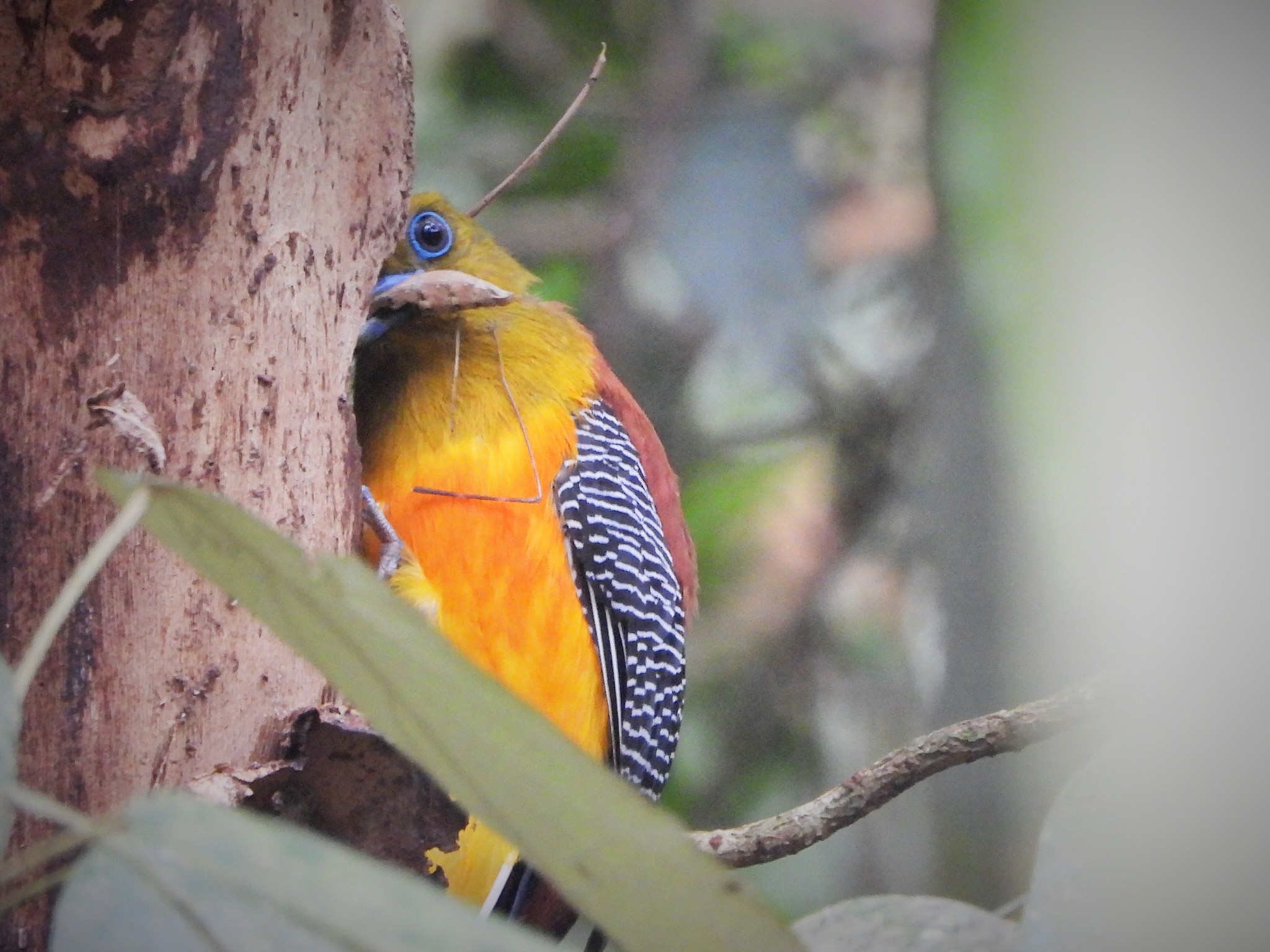
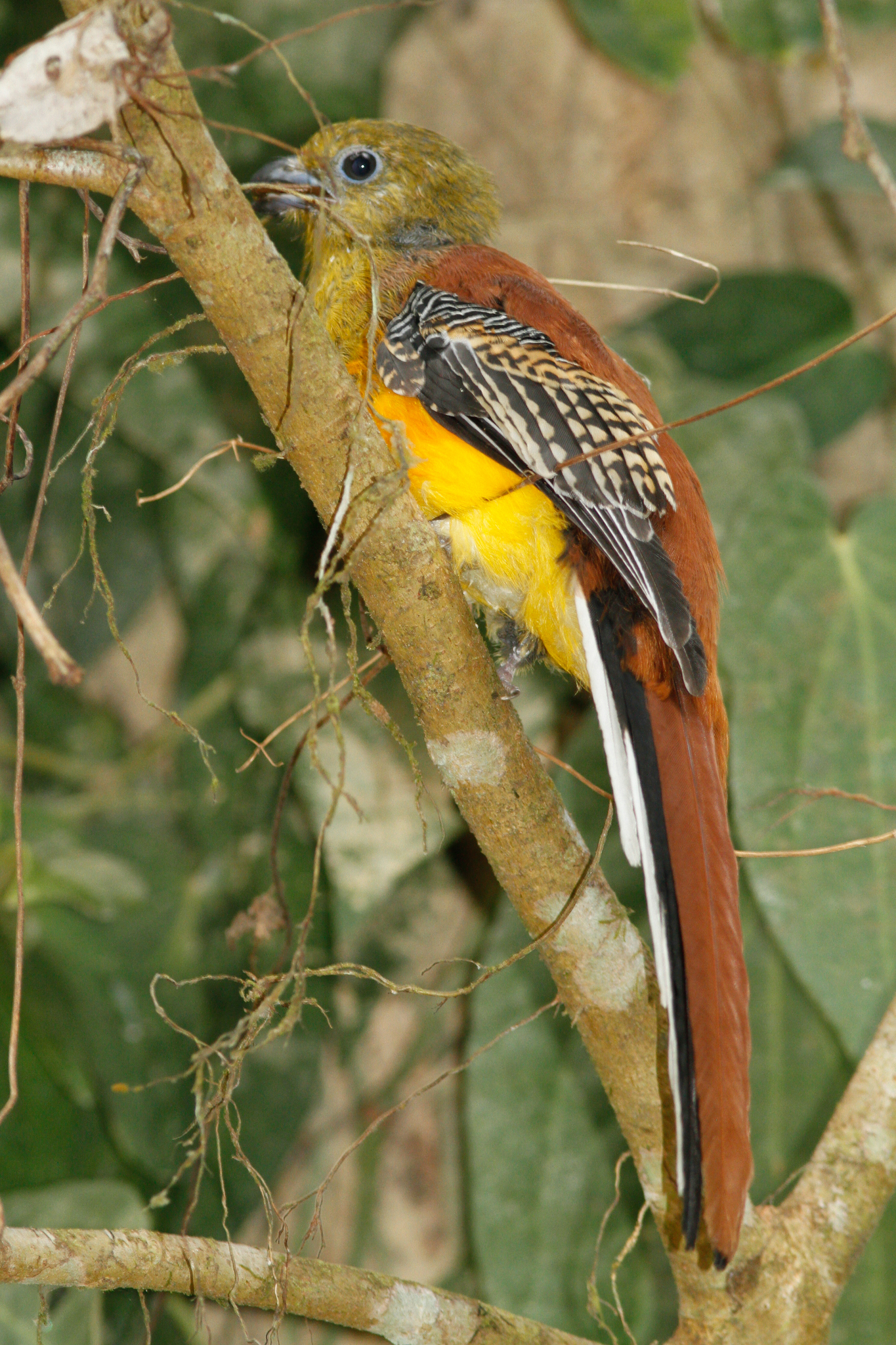
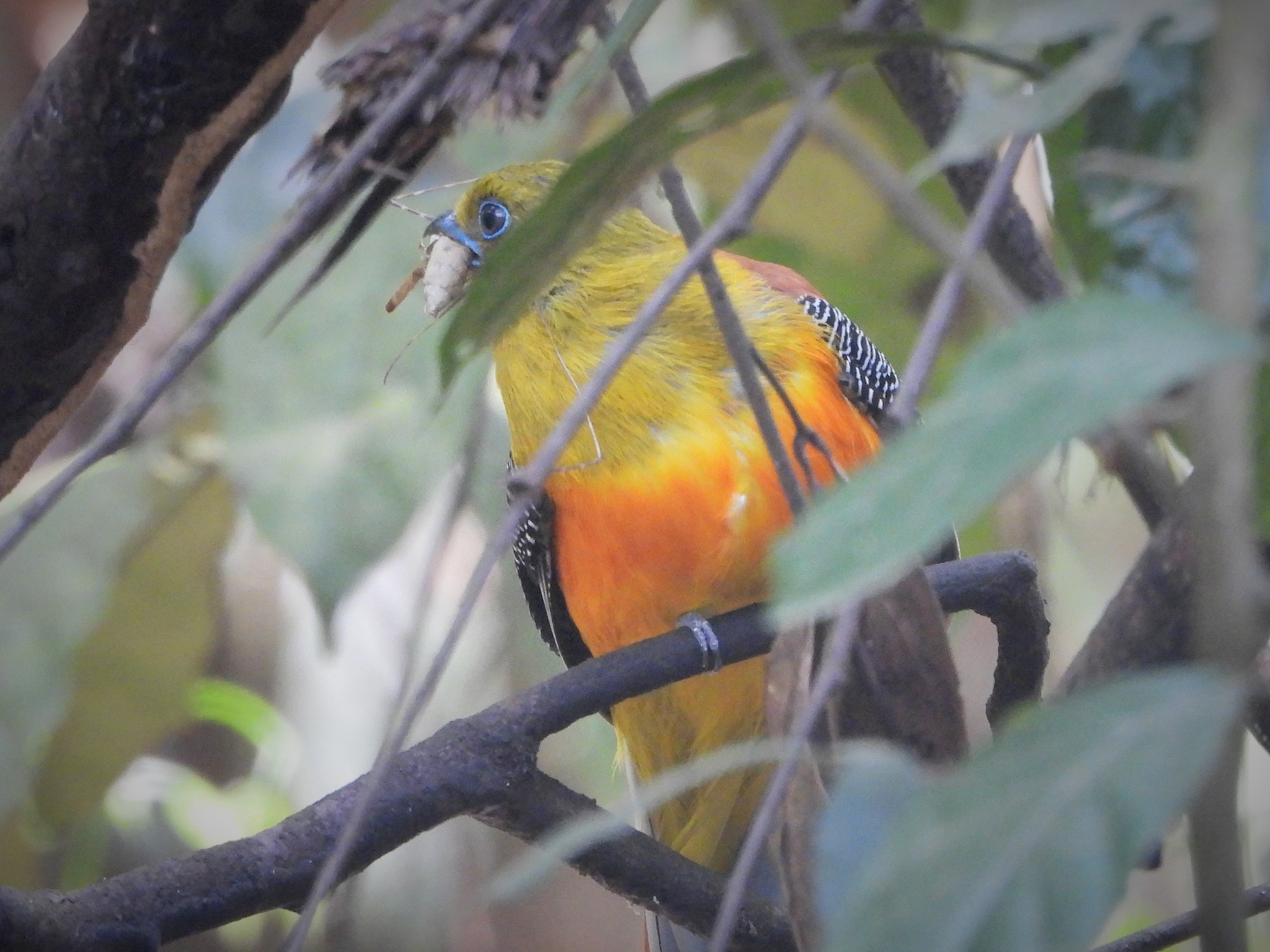
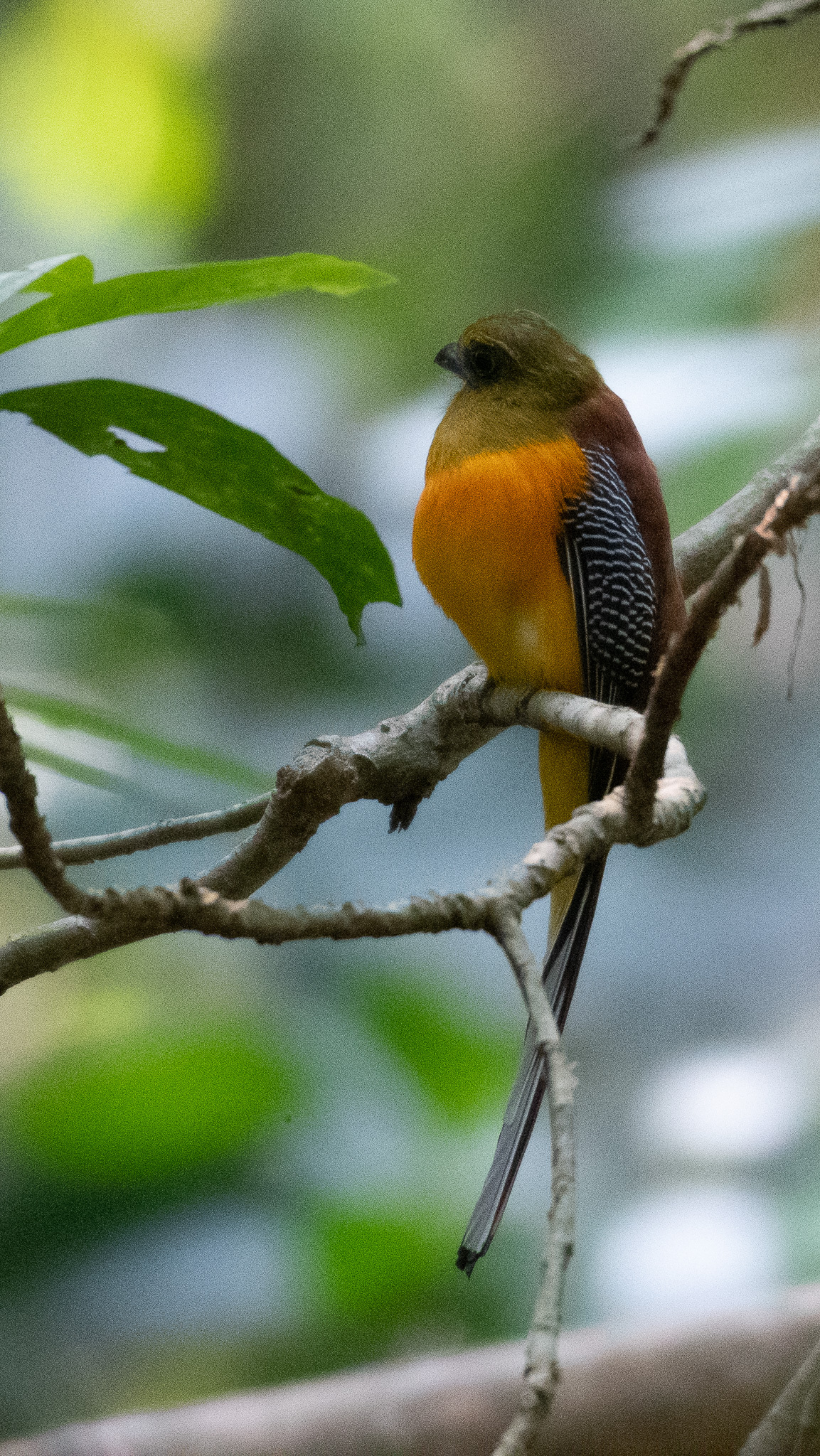
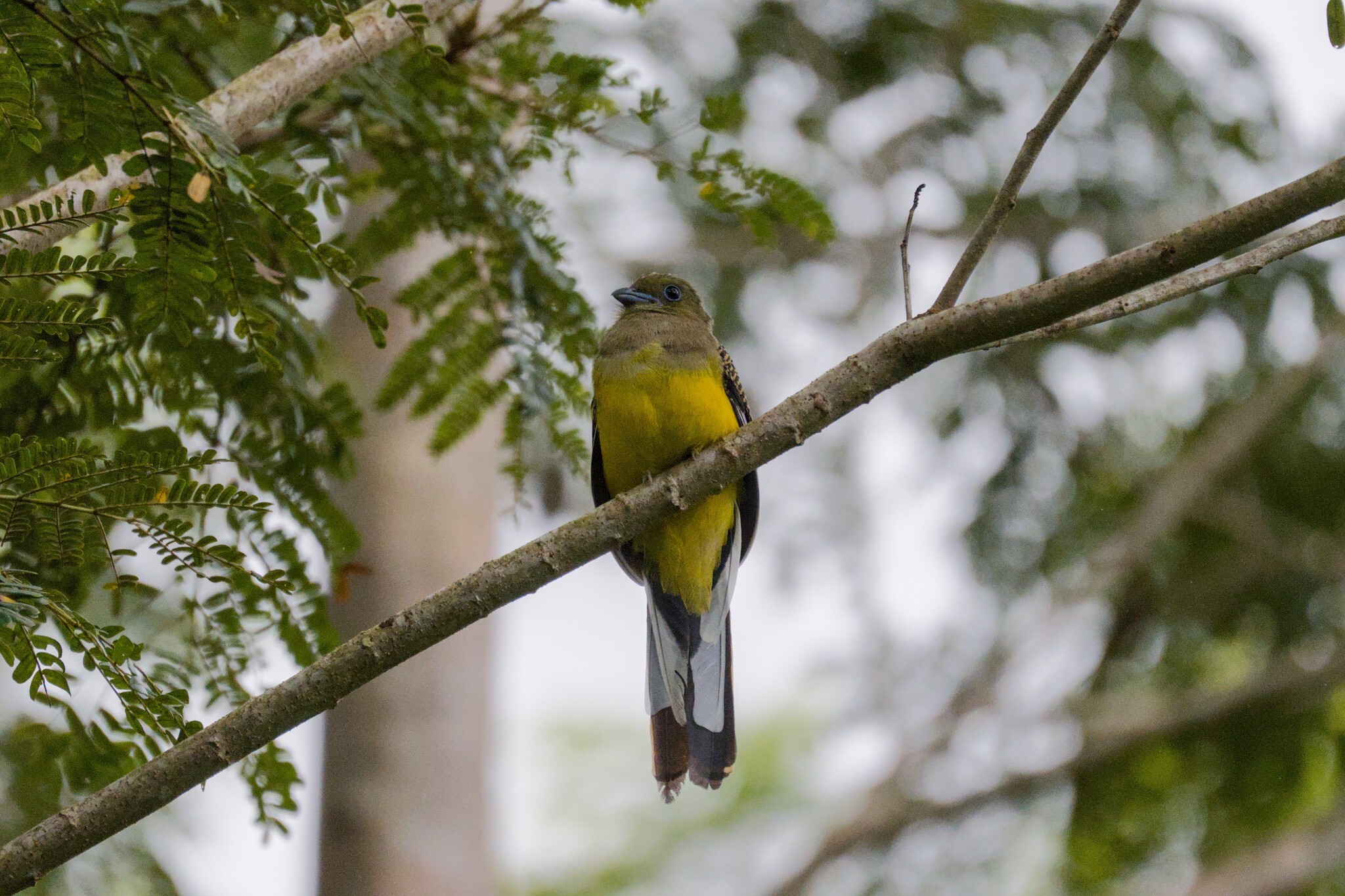
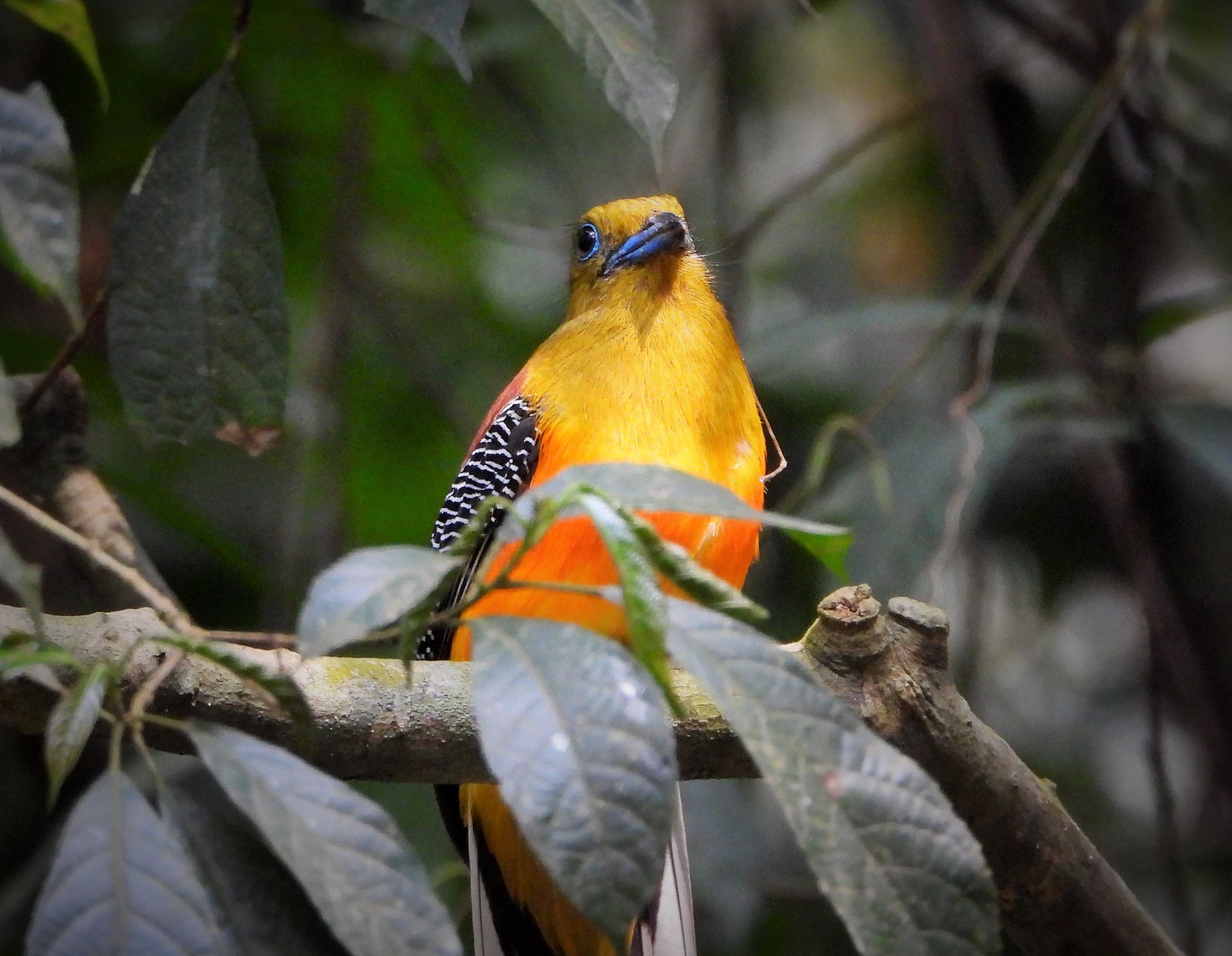
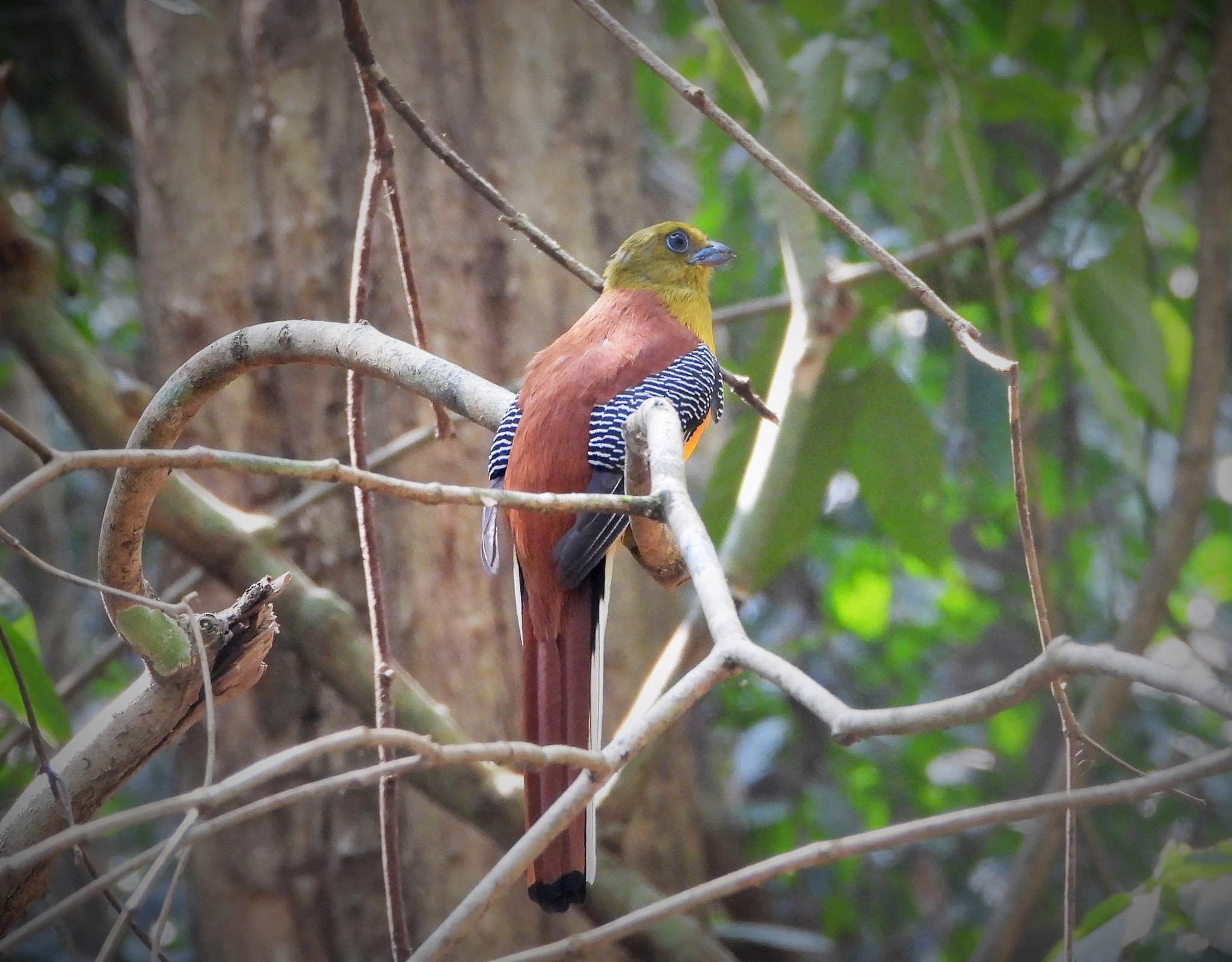
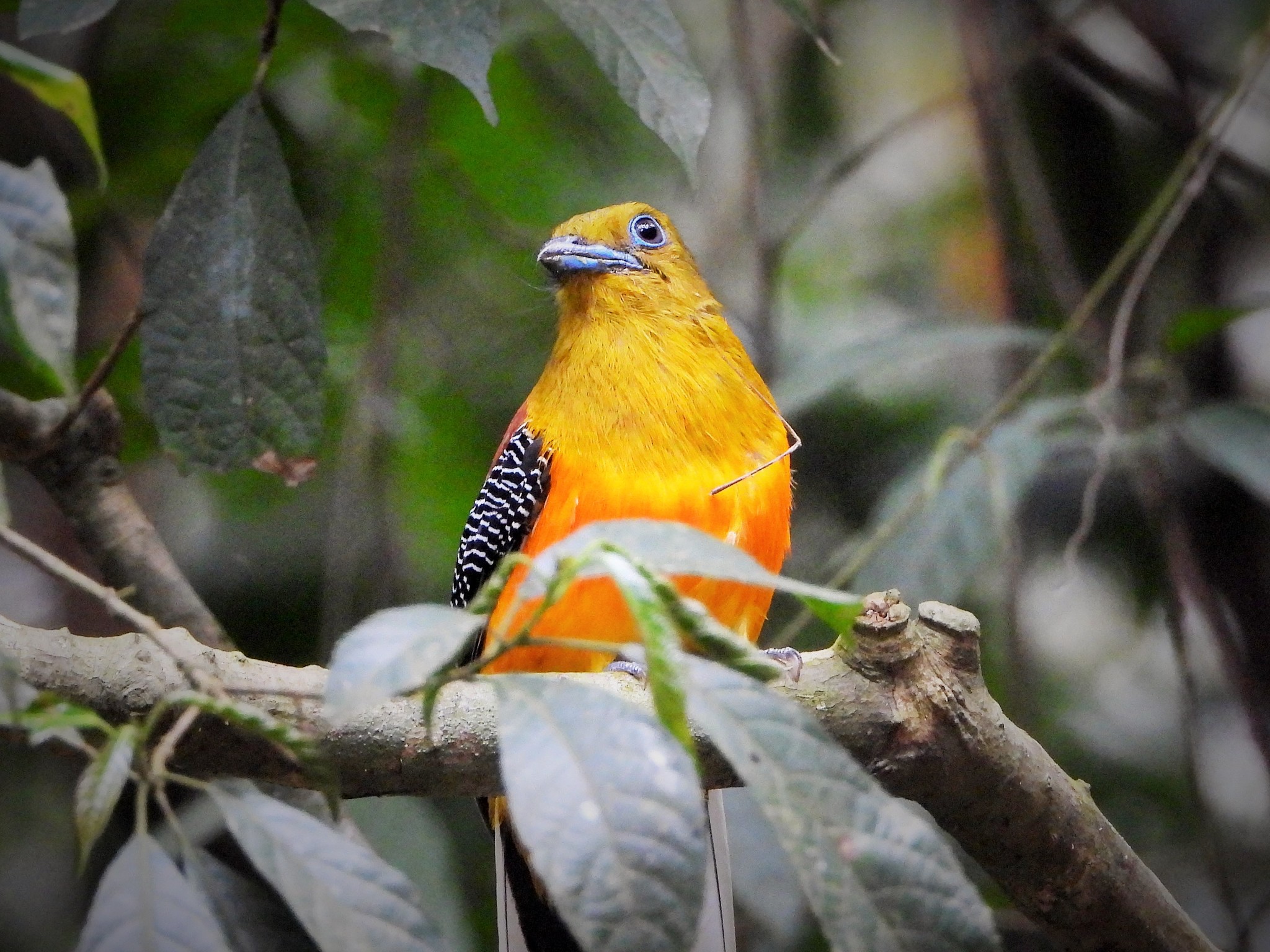
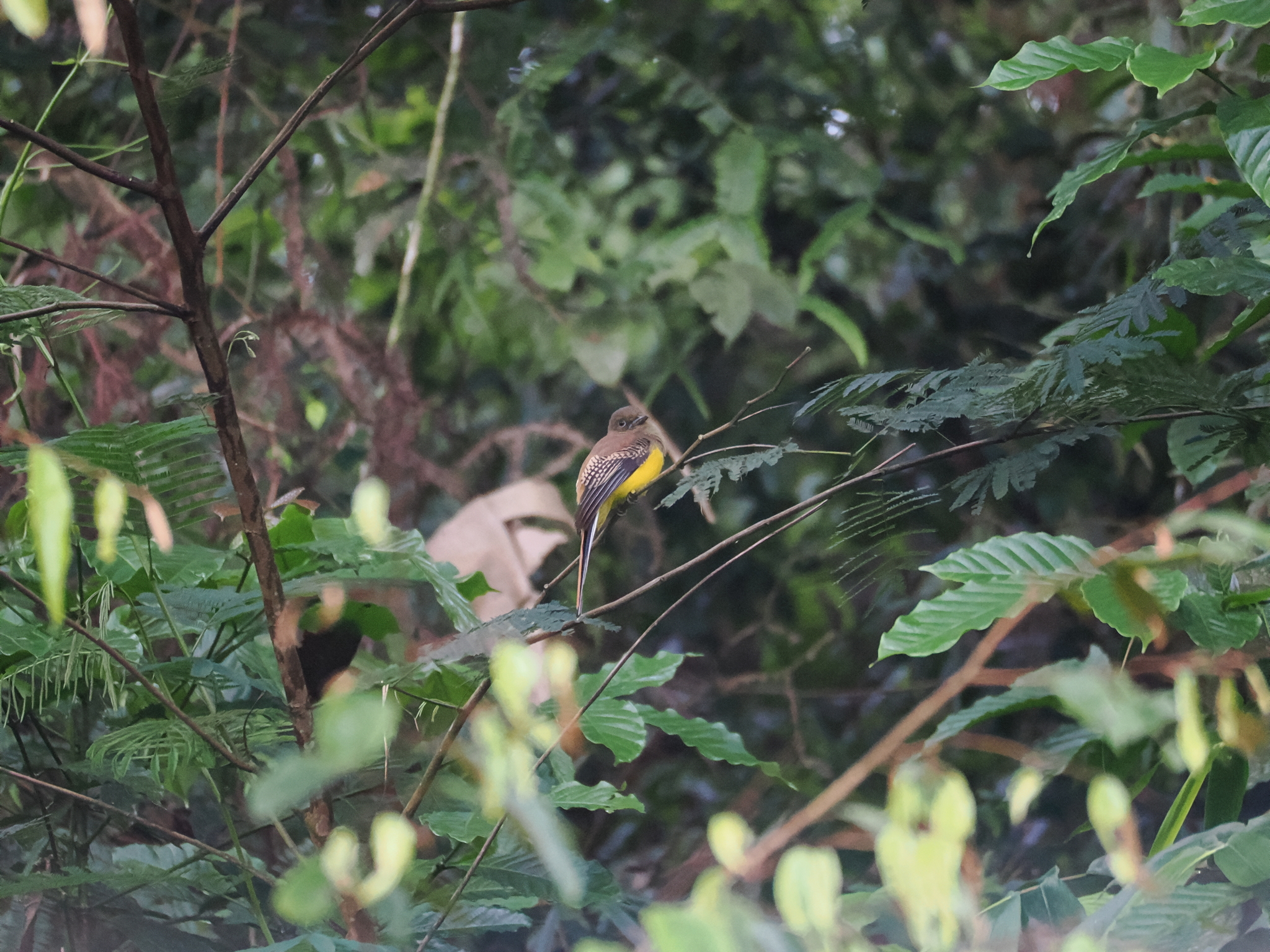
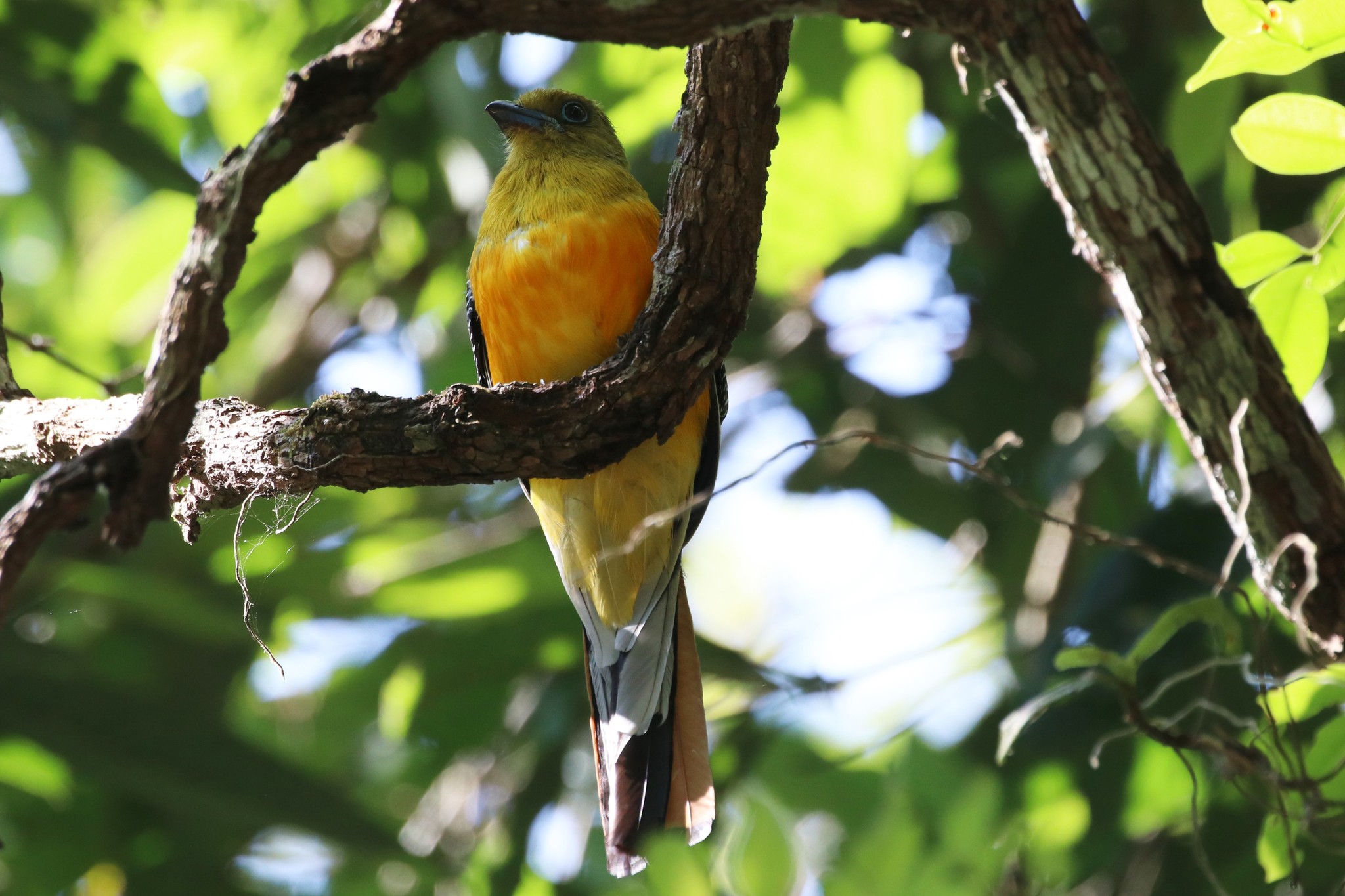
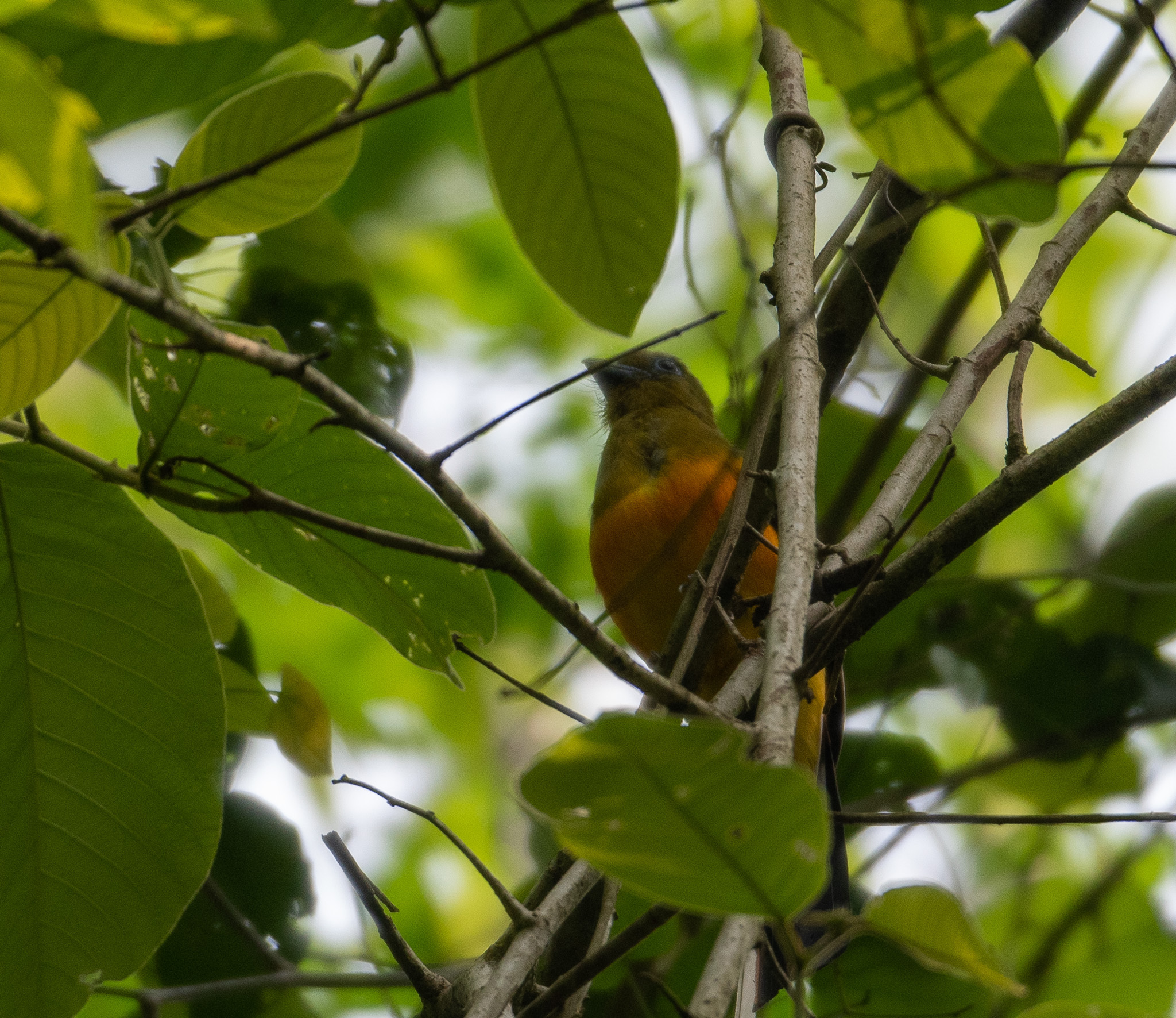
A medium-sized trogon measuring 25-31 cm in length and weighing 49-57 g. Males display a dull olive-yellow head and rufous-chestnut coloring on the upperparts extending to the upper tail. The underparts are black and white with primaries featuring white vertical bars and barred wing coverts. The lower breast is yellow-orange, lightening toward the vent, with a blue eye ring. Females have grey-brown head and upperparts with a grey breast and yellow coloring at the belly and vent. Both sexes possess grey feet with two toes pointing backward, a characteristic trait of trogons. Subspecies show slight variations in size, breast coloration, bill size, crown darkness, and tail length.
Distribution & Habitat
Five subspecies occupy different ranges across southern China, Laos, Thailand, peninsular Malaysia, Borneo, Sumatra, Java, and Nias. H. o. stellae ranges from southern China and Myanmar to Indochina; H. o. uniformis occurs from southern Thailand and peninsular Malaysia to Sumatra; H. o. nias inhabits Nias; H. o. dulitensis is found in Borneo; and H. o. oreskios occurs in Java. The species is non-migratory, occupying subtropical and tropical moist lowland forests, montane forests, evergreen forests, swampy forests, open dry forests, bamboo forests, and forest edge habitats. Elevation limits vary by region, from 300-1500 m.
Behavior & Ecology
Insectivorous species that forages using the 'sally-stall' technique, pursuing prey from a perch and momentarily stalling before capture. Foraging height ranges from 4.3-13.7 m, most commonly around 9.5 m. Diet consists of arthropods including stick insects, grasshoppers, and lepidopteran larvae. Breeding occurs between January and May, lasting 2-3 months. Both parents excavate nest cavities in rotten stumps or dead tree limbs, working in rotation. The female lays 2-3 eggs, with incubation shared and lasting 17-18 days. The nestling period is 12-14 days, with males playing a dominant role in provisioning. Song typically begins with 1-3 notes of 'to (to to)' followed by 3-4 even-pitched 'tau-tau-tau'.
Conservation
Classified as Least Concern by the IUCN, though population sizes are decreasing throughout the species' range. The species occurs primarily in protected areas across its distribution. Current research into the causes of population decline is lacking.
Source: Wikipedia · CC BY-SA 3.0
Taxonomy
- Order
- Trogoniformes
- Family
- Trogonidae
- Genus
- Harpactes
- eBird Code
- orbtro2
Subspecies (5)
-
Harpactes oreskios dulitensis
mountains of northwestern Borneo
-
Harpactes oreskios nias
Nias Island (off northwestern Sumatra)
-
Harpactes oreskios oreskios
Java
-
Harpactes oreskios stellae
lowlands of southwestern China (southwestern Yunnan), southern Myanmar, and Indochina
-
Harpactes oreskios uniformis
southern Thailand, Malay Peninsula, and Sumatra
Data Sources
Species description from Wikipedia, licensed under CC BY-SA 3.0.
Bird images and sounds sourced from GBIF, contributed by citizen scientists worldwide under Creative Commons licenses.
Taxonomy data from AviList 2025.