Steller's Sea Eagle
Haliaeetus pelagicus
虎头海雕
Introduction
Diurnal bird of prey in family Accipitridae. Endemic to coastal northeastern Asia, occurring in Russia, Korea, Japan, and China. Largest member of genus Haliaeetus and among heaviest raptors worldwide. Distinctive for having 14 rectrices (not 12) and yellow beak even in juveniles. Populations concentrated on Kamchatka Peninsula, with approximately 4,000 eagles in that region. Classified as vulnerable on IUCN Red List due to threats from habitat alteration, pollution, and overfishing.
Description
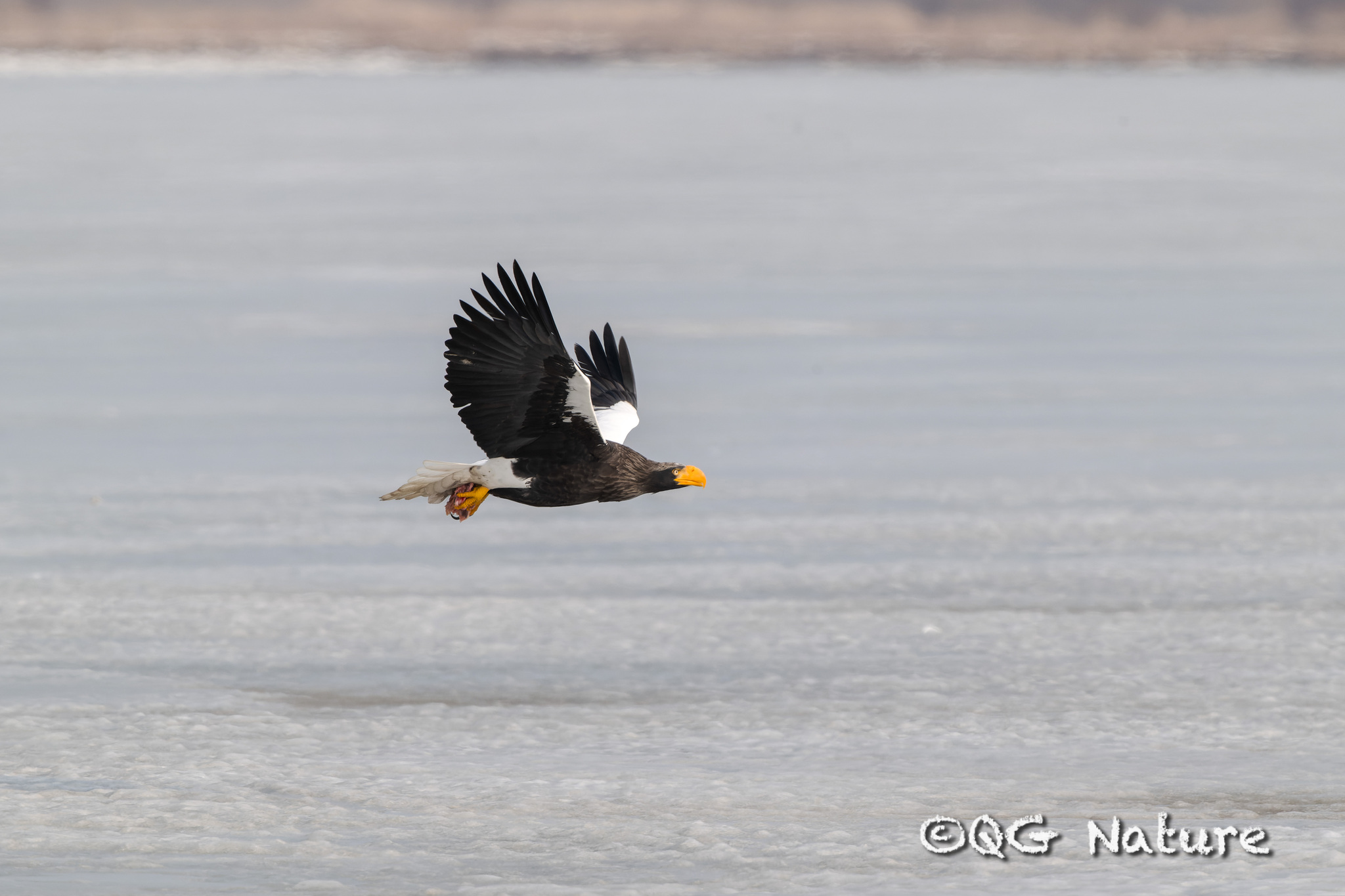
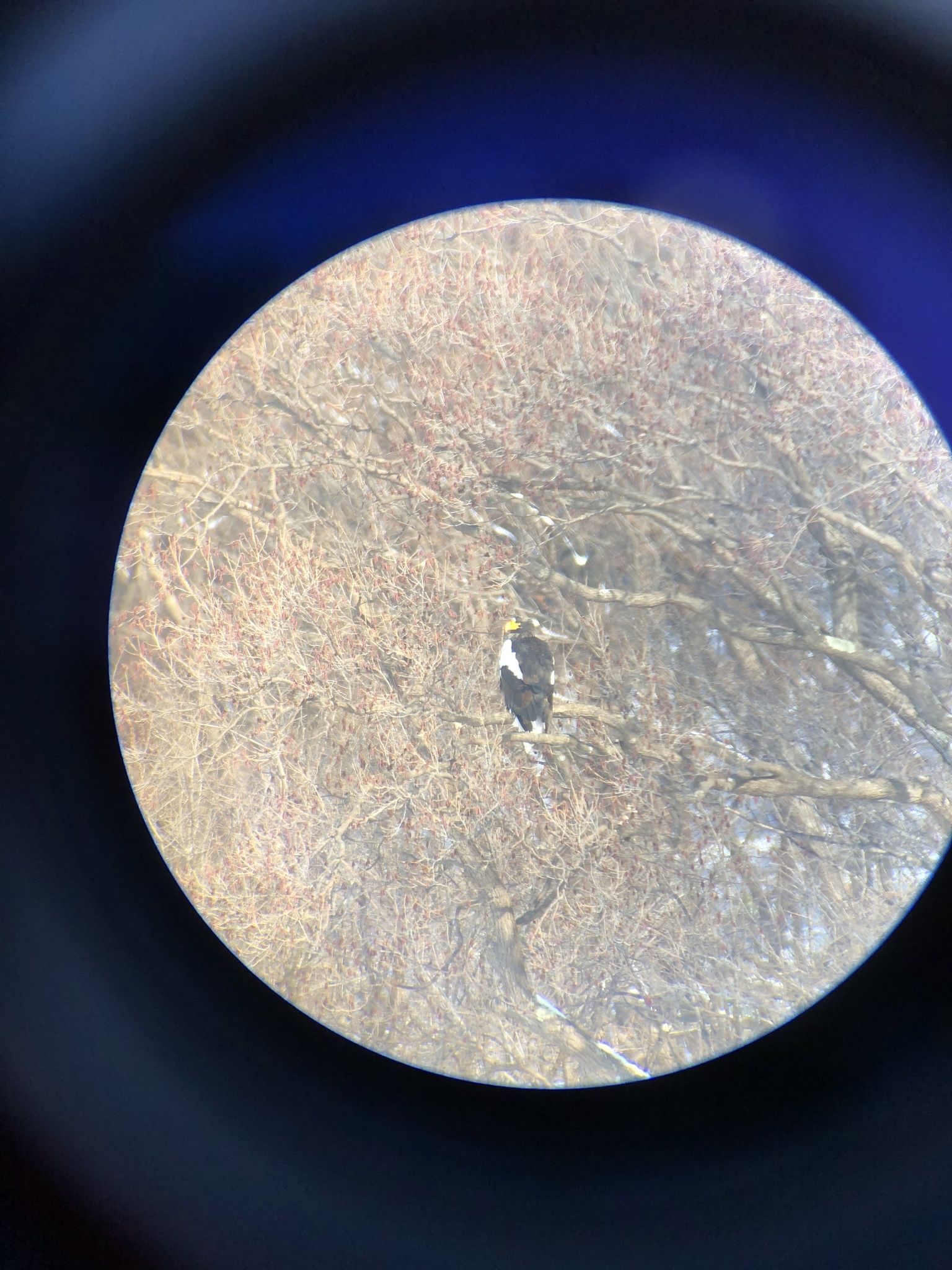
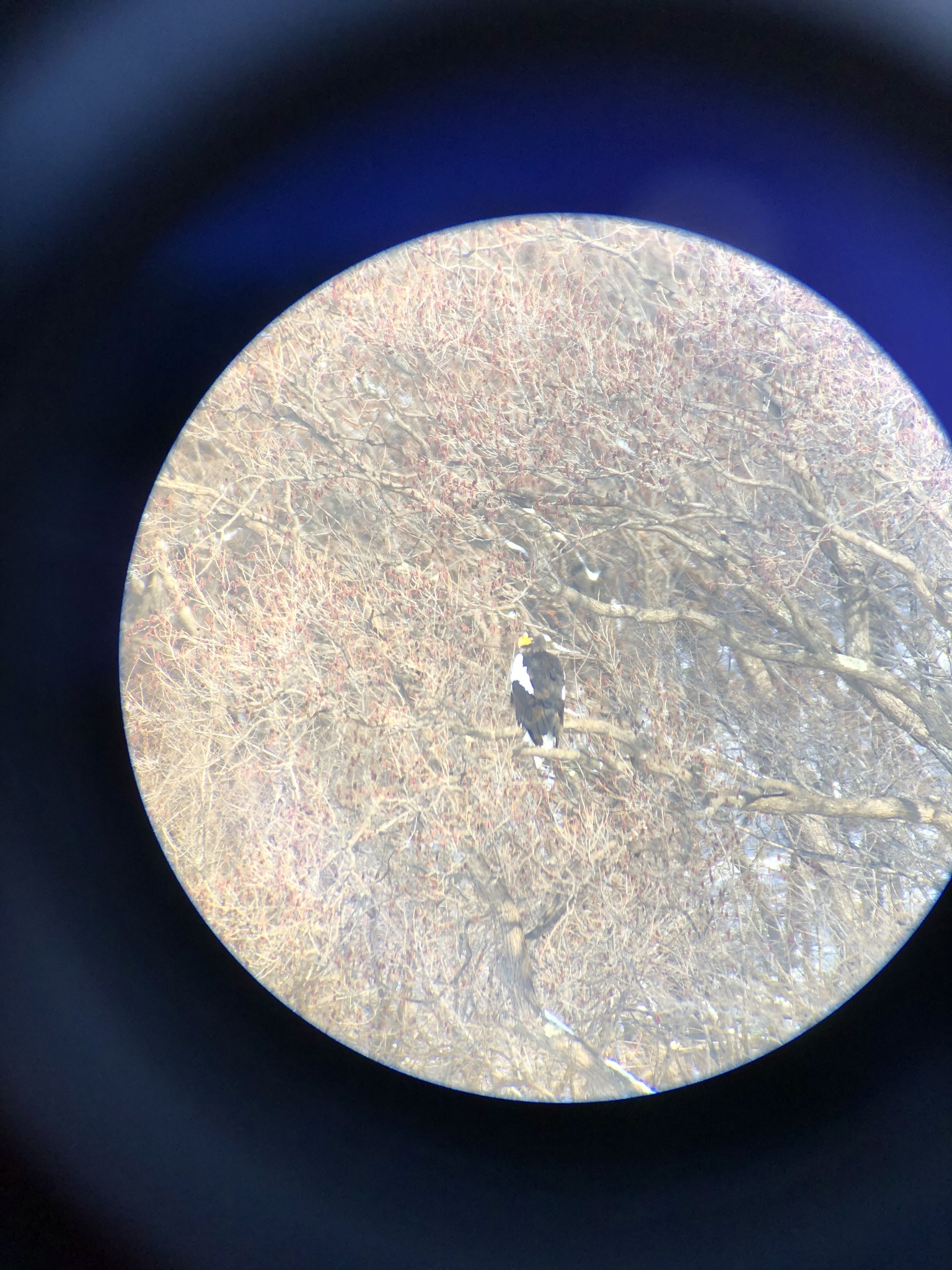
Dark brown to black plumage with strong white contrast on lesser and median upper-wing coverts, under-wing coverts, thighs, under-tail coverts, and tail. Adults have yellow eyes, beak, and feet. Diamond-shaped white tail is relatively longer than in white-tailed eagles. Females weigh 6.2–9.5 kg, males 4.9–6.8 kg. Length 85–105 cm; wingspan 1.95–2.50 m. Rare dark morph lacks white plumage except for tail. Juvenile plumage is uniform dark soot-brown with white tail base and mottling. Definitive plumage reached in fourth to fifth year.
Identification
Largest in genus Haliaeetus; unmistakable when seen well. Distinguished from white-tailed eagle by much more massive bill, darker and more uniform body plumage, and diamond-shaped tail versus square-shaped wings. First-year and intermediate plumages are difficult to distinguish from white-tailed eagles but can be identified by bulkier form, larger bill, and darker plumage at reasonable range. Dark morph differs from typical morph only after gaining adult plumage.
Distribution & Habitat
Breeds on Kamchatka Peninsula, coastal Sea of Okhotsk, lower Amur River, northern Sakhalin, and Shantar Islands, Russia. Migrates south to Korea, Japan, and China for winter. Most winter in southern Kuril Islands and Hokkaido. Nests built on rocky outcroppings or large trees in coastal areas and river floodplains with mature birch, larch, alder, willow, and poplar. Some coastal eagles are resident. Migration timing depends on ice conditions and food availability.
Behavior & Ecology
Diet is approximately 80% fish, particularly salmon and trout; also takes water birds, gulls, mammals, and carrion. Hunts from perch 5–30 m above water or on wing 6–7 m high. Breeds February–March; builds bulky nests up to 2.5 m diameter on trees or cliffs 15–20 m high. Lays 1–3 eggs April–May; incubation 39–45 days. Usually one chick survives to fledging. Vocalization is a deep barking cry ra-ra-ra-raurau. Gregarious at food concentrations; kleptoparasitism common.
Conservation
IUCN status: Vulnerable. Global population estimated at 5,000 individuals and decreasing. Threats include habitat alteration, industrial pollution, overfishing, lead poisoning from ingesting shot in deer carcasses, persecution by trappers, and climate change causing flooding that disrupts nesting. Protected as national treasure in Japan and occurs mainly in protected areas in Russia. Kamchatka holds approximately 320 monitored pairs plus 89 unmonitored nesting areas; total breeding pairs estimated at 3,200.
Culture
Known by various names across its range: morskoi orel and beloplechii orlan in Russian, Ō-washi in Japanese, and chamsuri in Korean. In Mandarin, called hǔtóu hǎidiāo meaning 'tiger-headed sea eagle.' Named after German naturalist Georg Wilhelm Steller. No significant folklore content identified in source material.
Source: Wikipedia · CC BY-SA 3.0
Taxonomy
- Order
- Accipitriformes
- Family
- Accipitridae
- Genus
- Haliaeetus
- eBird Code
- stseag
Distribution
breeds coastal eastern Siberia; winters to China, Korea, and Japan including Ryukyu Islands (southern Japan)
Data Sources
Species description from Wikipedia, licensed under CC BY-SA 3.0.
Bird images and sounds sourced from GBIF, contributed by citizen scientists worldwide under Creative Commons licenses.
Taxonomy data from AviList 2025.