

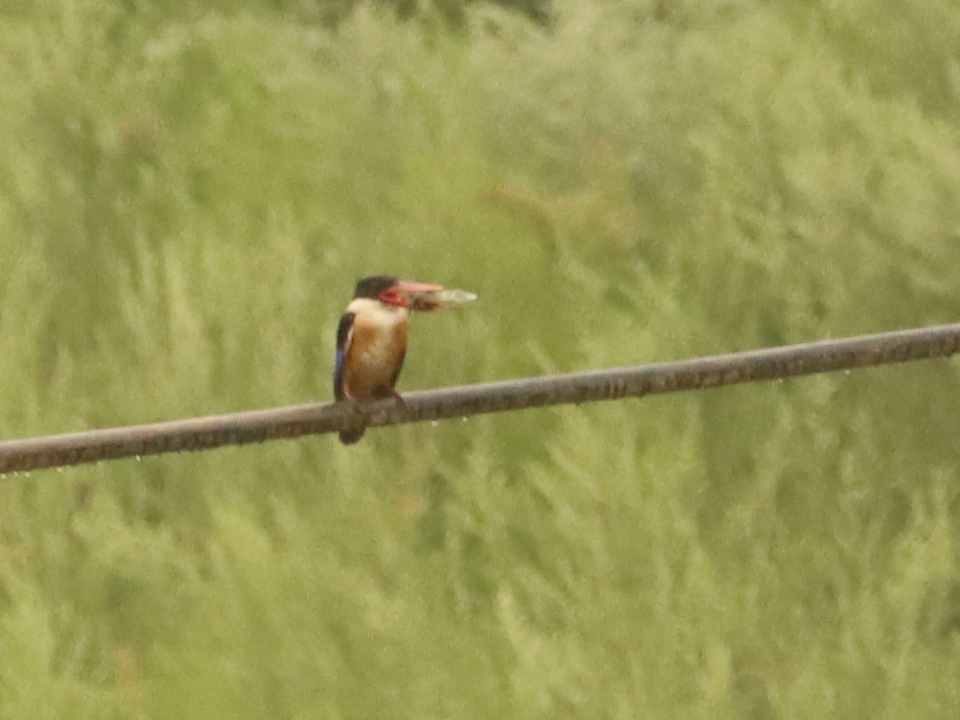
Black-capped Kingfisher
Halcyon pileata
蓝翡翠
Introduction
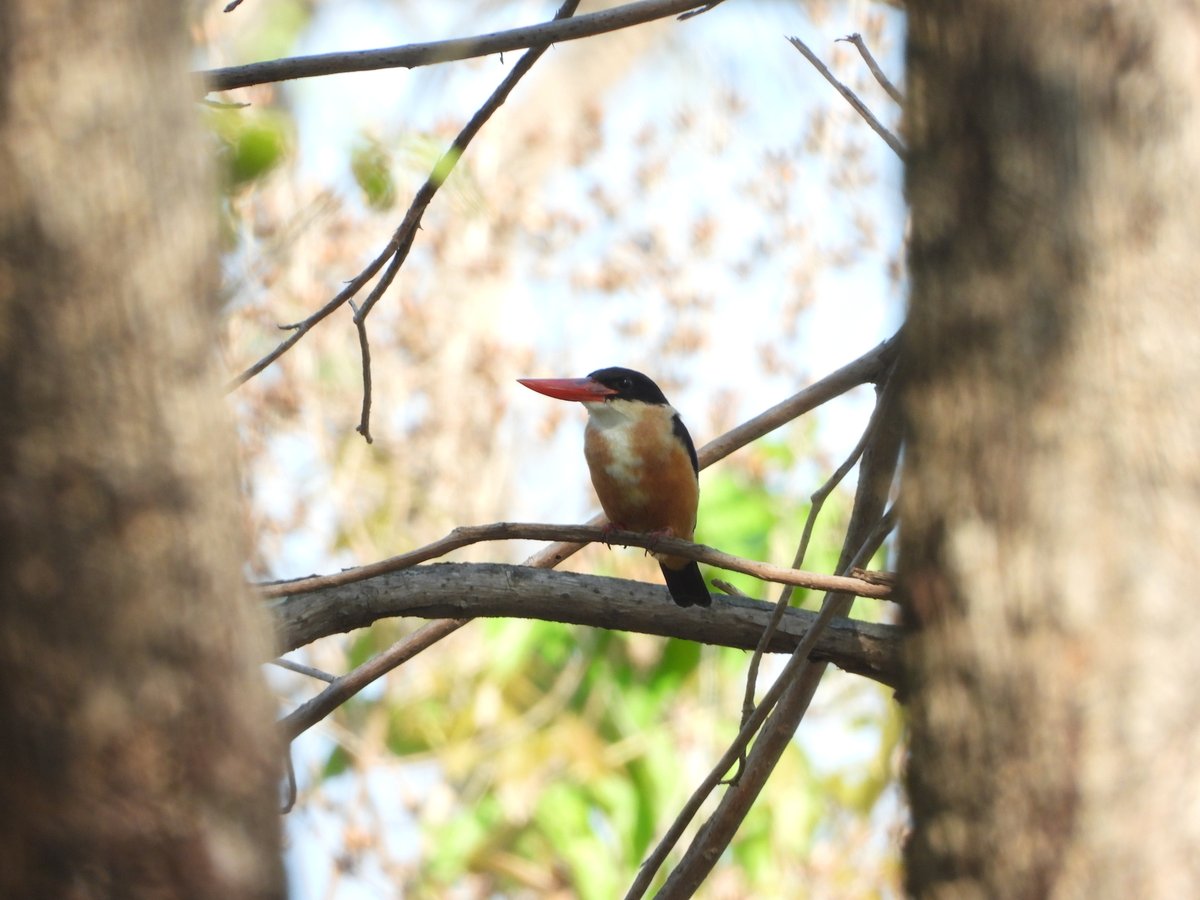
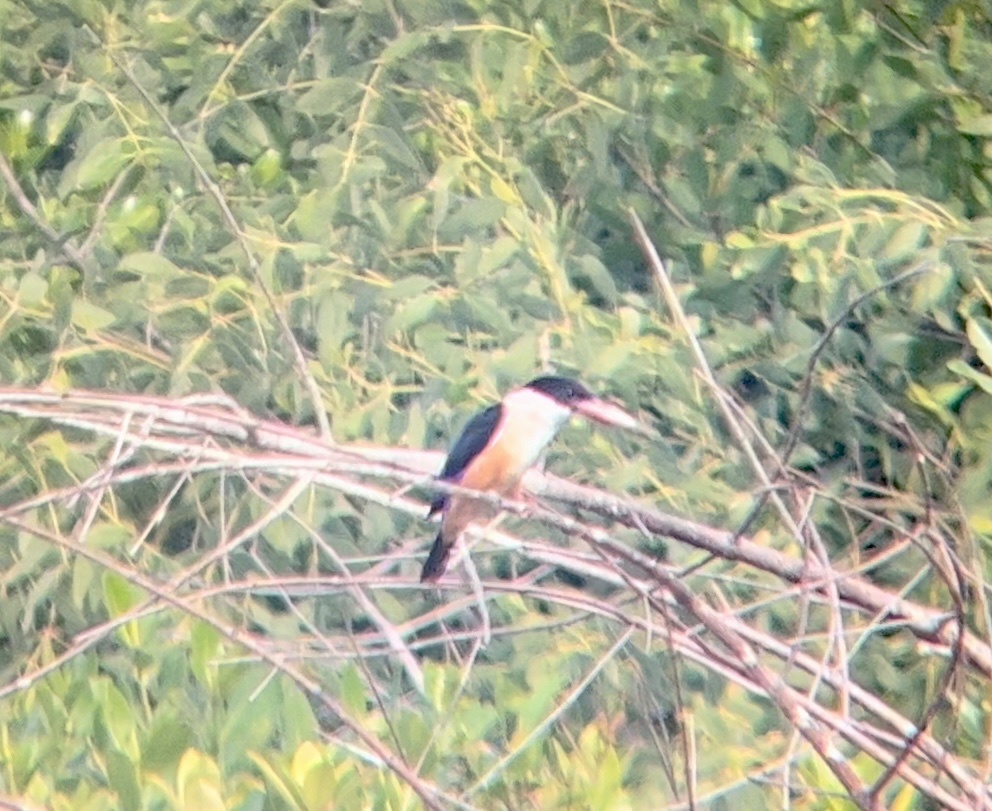
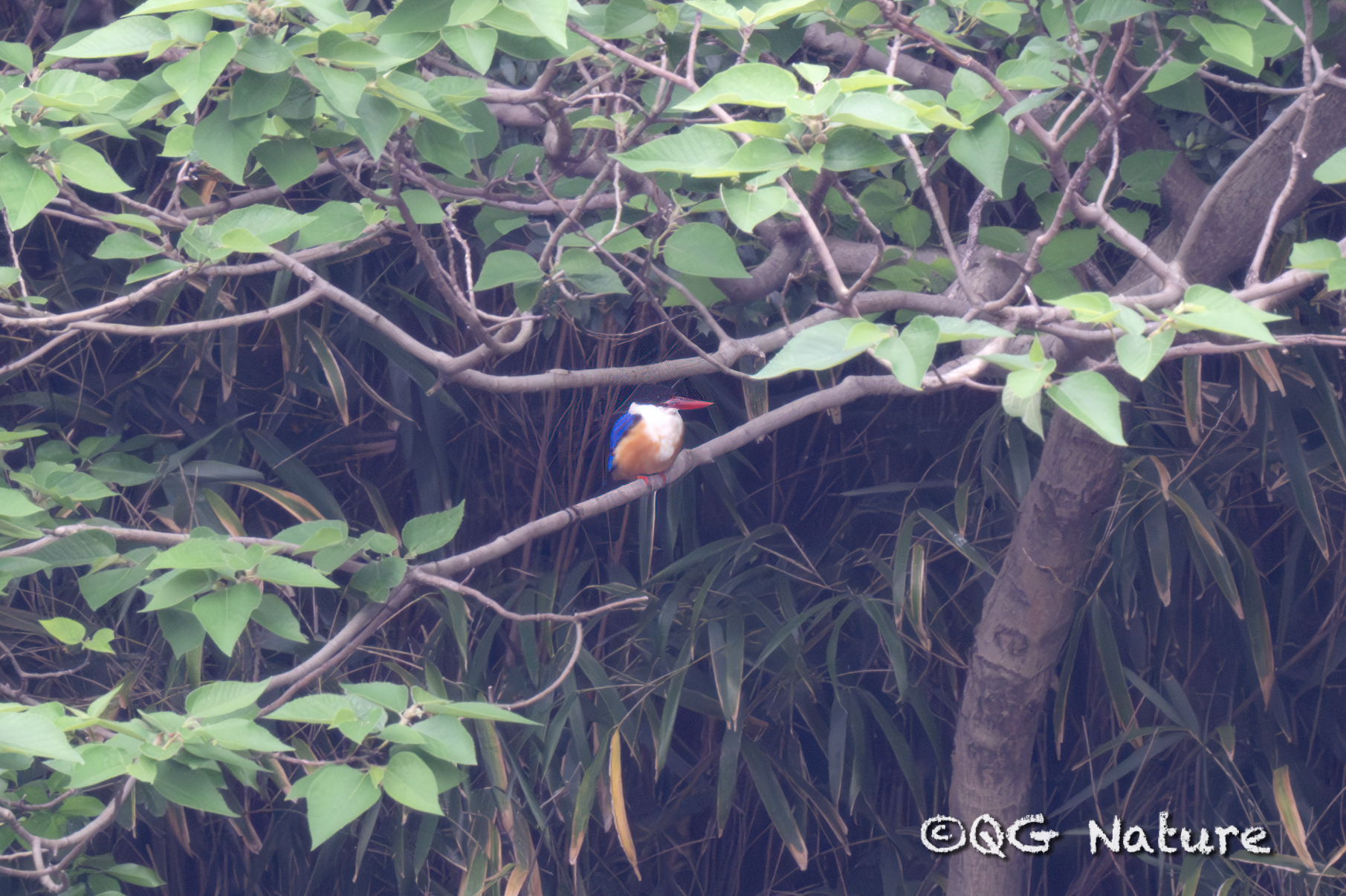
This tree kingfisher is the most northerly member of its group, ranging across tropical Asia from the Indian subcontinent to Korea and Southeast Asia. It inhabits coastal mangrove forests and estuaries, occasionally occurring far inland along rivers and streams. Northern populations are migratory, departing breeding grounds in China and Korea to spend winters in southern locations including Sri Lanka, Thailand, Borneo and Java. The species has a black cap, white throat, purple-blue wings and back, and a coral-red bill. It typically perches on exposed branches before diving for prey. Its flight is rapid and direct, with white wing patches visible in flight.
Description
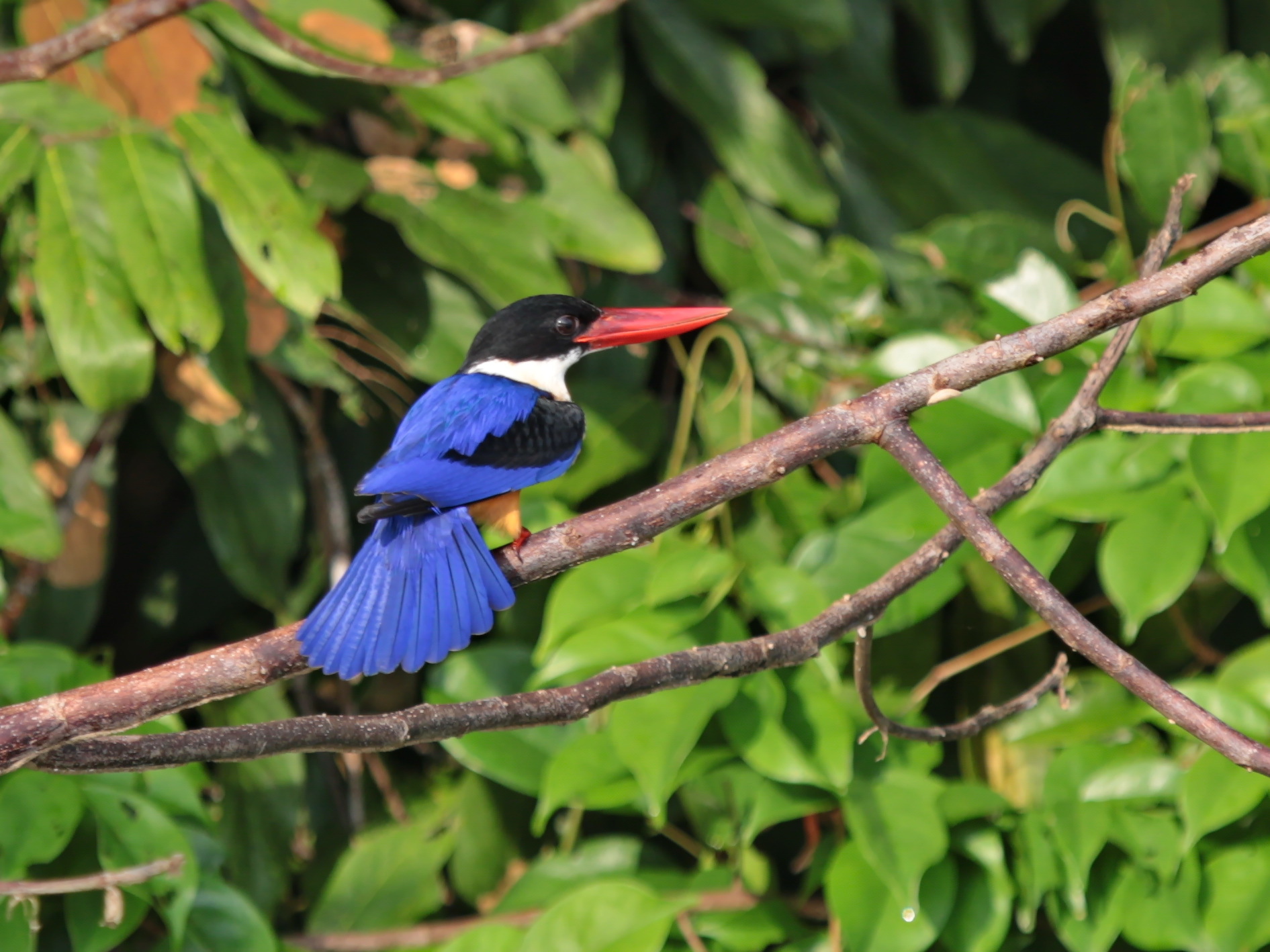
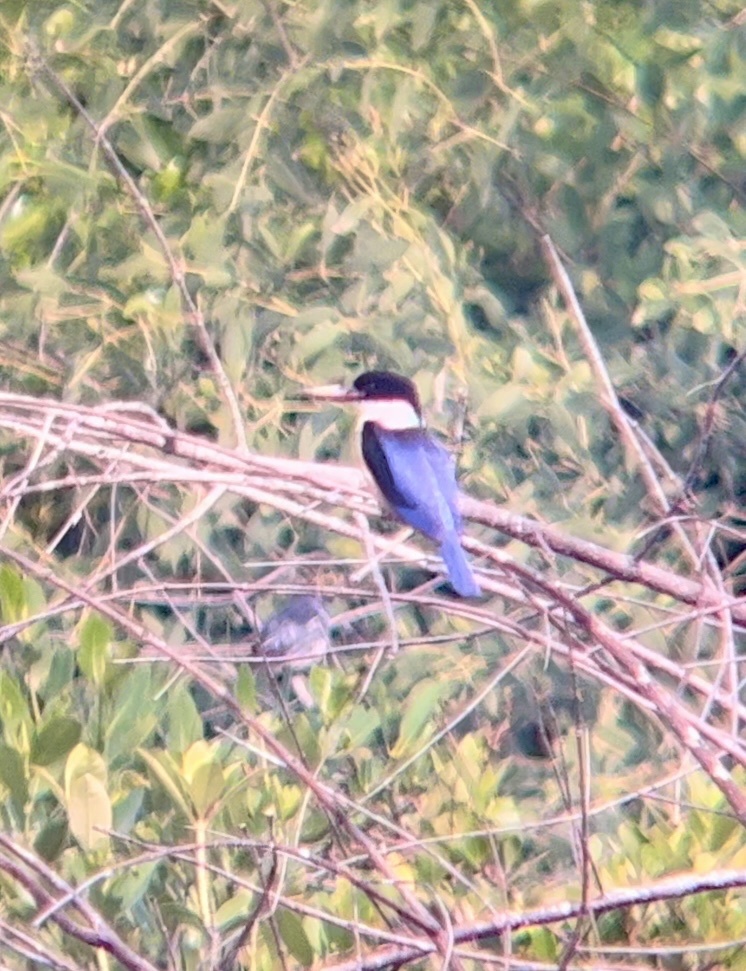
A medium-sized kingfisher measuring approximately 28 centimeters in length, this species presents a striking silhouette. The upperparts are predominantly purple-blue, extending across the wings and back, while the head and shoulders are cloaked in deep black. A distinctive white collar and throat create a sharp demarcation from the black cap. The underparts display warm rufous tones. Both the substantial bill and the legs are bright red, creating a memorable combination. In flight, large white patches or 'mirrors' become visible at the base of the primary feathers, contrasting with the blue and black wings. Adults of both sexes appear similar, though juveniles are duller overall and may show fine streaking on the throat area.
Identification
The combination of black head, white throat, purple-blue wings and coral-red bill makes this species nearly unmistakable within its range. The extensive white wing patches, visible in flight, help distinguish it from similar kingfisher species. The cackling call, described as a rapid ki-ki-ki-ki-ki, is often heard before the bird is seen, as it typically perches in exposed positions. Unlike some kingfishers that remain hidden, this species often betrays its presence through its loud, distinctive vocalizations.
Distribution & Habitat
This species inhabits coastal regions throughout South and Southeast Asia, with a distribution stretching from India and Sri Lanka eastward through Bangladesh, Thailand, Burma, the Malay Peninsula, and the Indonesian archipelago to Sulawesi. Northern populations extend to southern China, including Hainan Island, Kansu and Shansi provinces, Korea, and the Ryukyu Islands. Island populations occur in the Andaman and Nicobar Islands, the Philippines (particularly Palawan, Balabac, Basilan and Tawi Tawi), Borneo and Sumatra. Migratory movements take northern breeders south to winter in Sri Lanka, Thailand, Borneo and Java. Vagrants have been recorded as far west as Pakistan, and irregular rainfall-related movements can carry individuals far inland beyond typical coastal habitats.
Behavior & Ecology
Primarily a fish-eater, this species employs the typical kingfisher strategy of perch-and-dive, watching from an exposed perch before plunging into water to seize prey. Large insects also feature prominently in its diet. Breeding occurs during summer months, with pairs excavating nest tunnels in earthen banks. A typical clutch consists of 4-5 round, white eggs. The species is generally solitary outside the breeding season, though pairs maintain territories during breeding. Its rapid, direct flight features short rounded wings that produce a characteristic whirring sound. The loud, cackling call is often given in flight or when disturbed.
Conservation
While specific population figures are not detailed in available sources, the species appears to maintain stable populations across its extensive range. It is not currently considered globally threatened. The primary conservation concern historically centered on habitat loss, as coastal development and mangrove clearance reduce available habitat. Its somewhat specialized coastal and mangrove habitat requirements make local populations vulnerable to human encroachment on these ecosystems.
Culture
Like many kingfisher species worldwide, this bird suffered significant persecution for its beautiful plumage during the height of the millinery trade. The vibrant blue feathers were highly prized for decorating hats and other fashion accessories. In China, feathers were traditionally used in the manufacture of decorative fans. Hong Kong practitioners collected and manipulated feathers, cutting and gluing them onto ornamental items worn by women. This exploitation, combined with habitat loss, likely impacted local populations historically, though the scale of harvesting compared to other kingfisher species remains unclear.
Source: Wikipedia · CC BY-SA 3.0
Taxonomy
- Order
- Coraciiformes
- Family
- Alcedinidae
- Genus
- Halcyon
- eBird Code
- blckin1
Distribution
Manchuria, Korea, and China to southern India, Malaya, and Sulu Archipelago
Data Sources
CBR Notes: IUCN红色名录等级由LC升为VU
Species description from Wikipedia, licensed under CC BY-SA 3.0.
Bird images and sounds sourced from GBIF, contributed by citizen scientists worldwide under Creative Commons licenses.
Taxonomy data from AviList 2025.