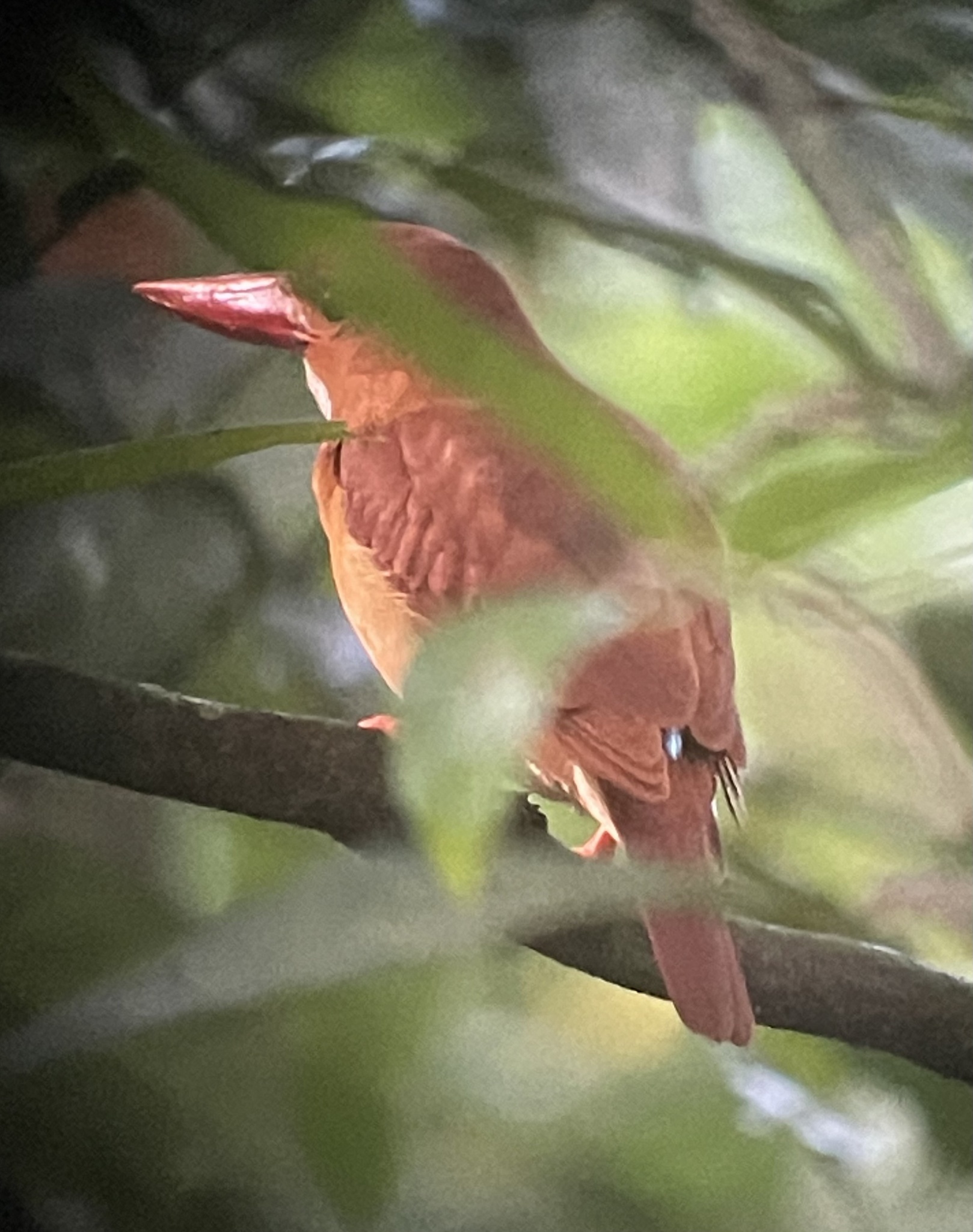
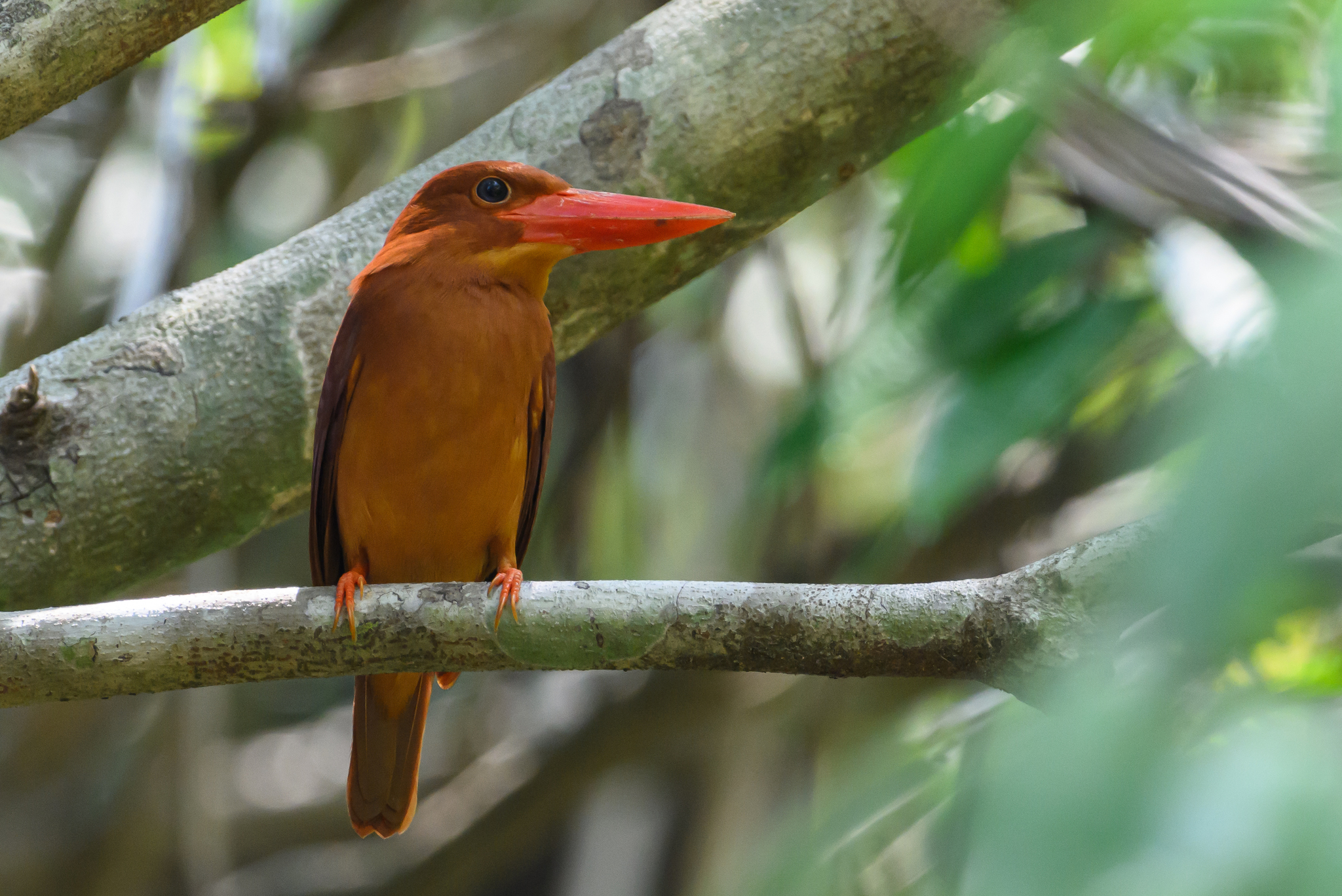
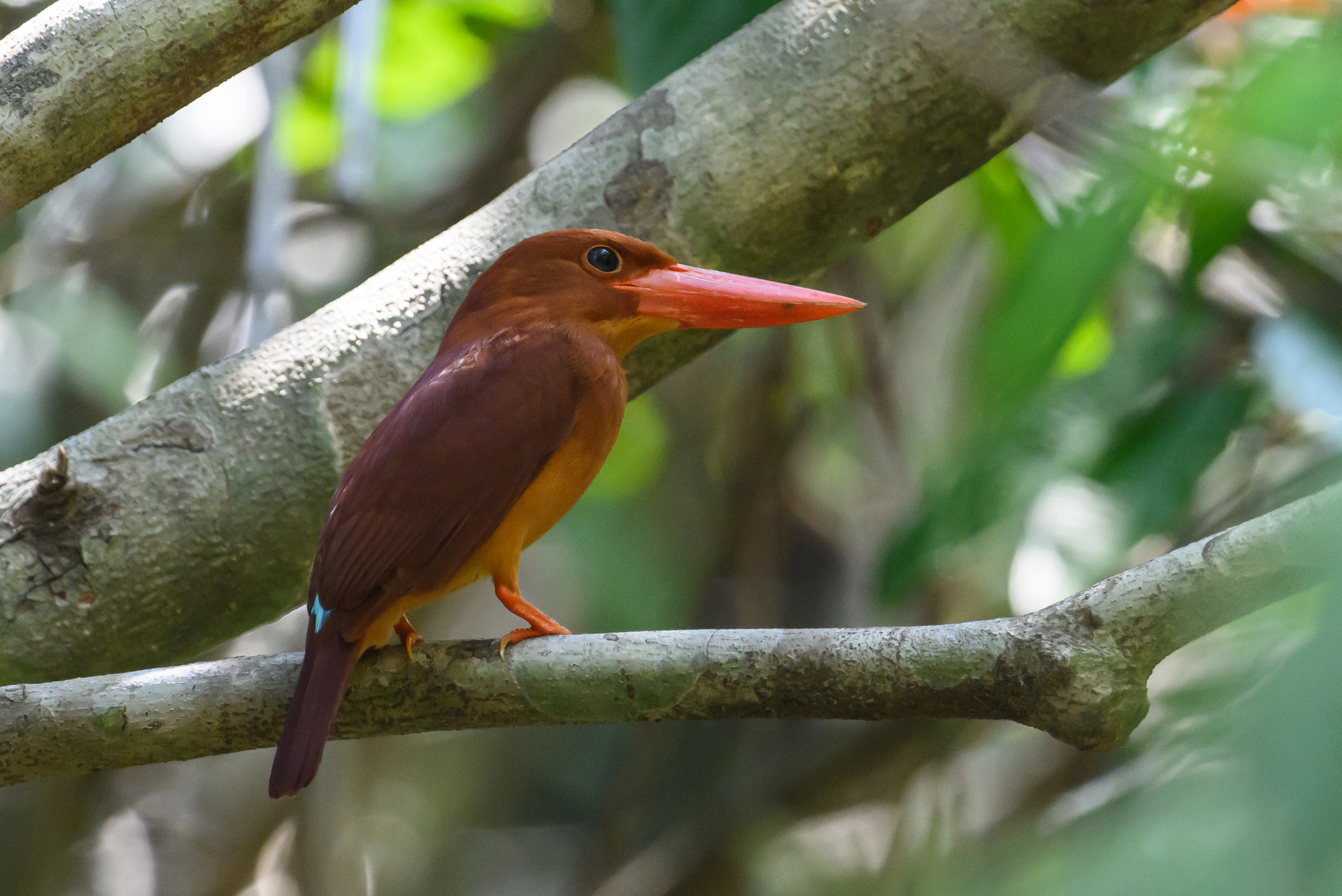
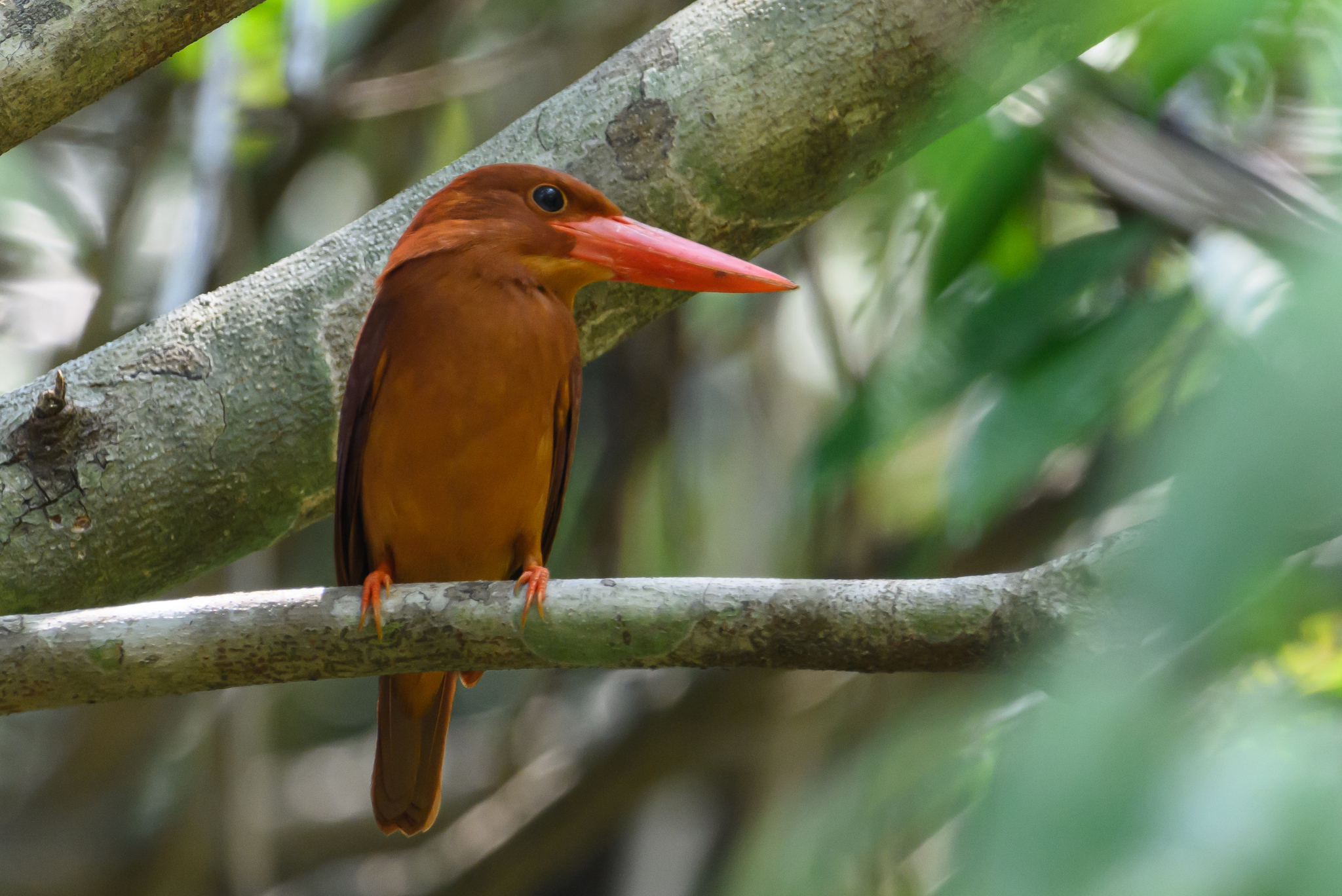
Ruddy Kingfisher
Halcyon coromanda
赤翡翠
Introduction
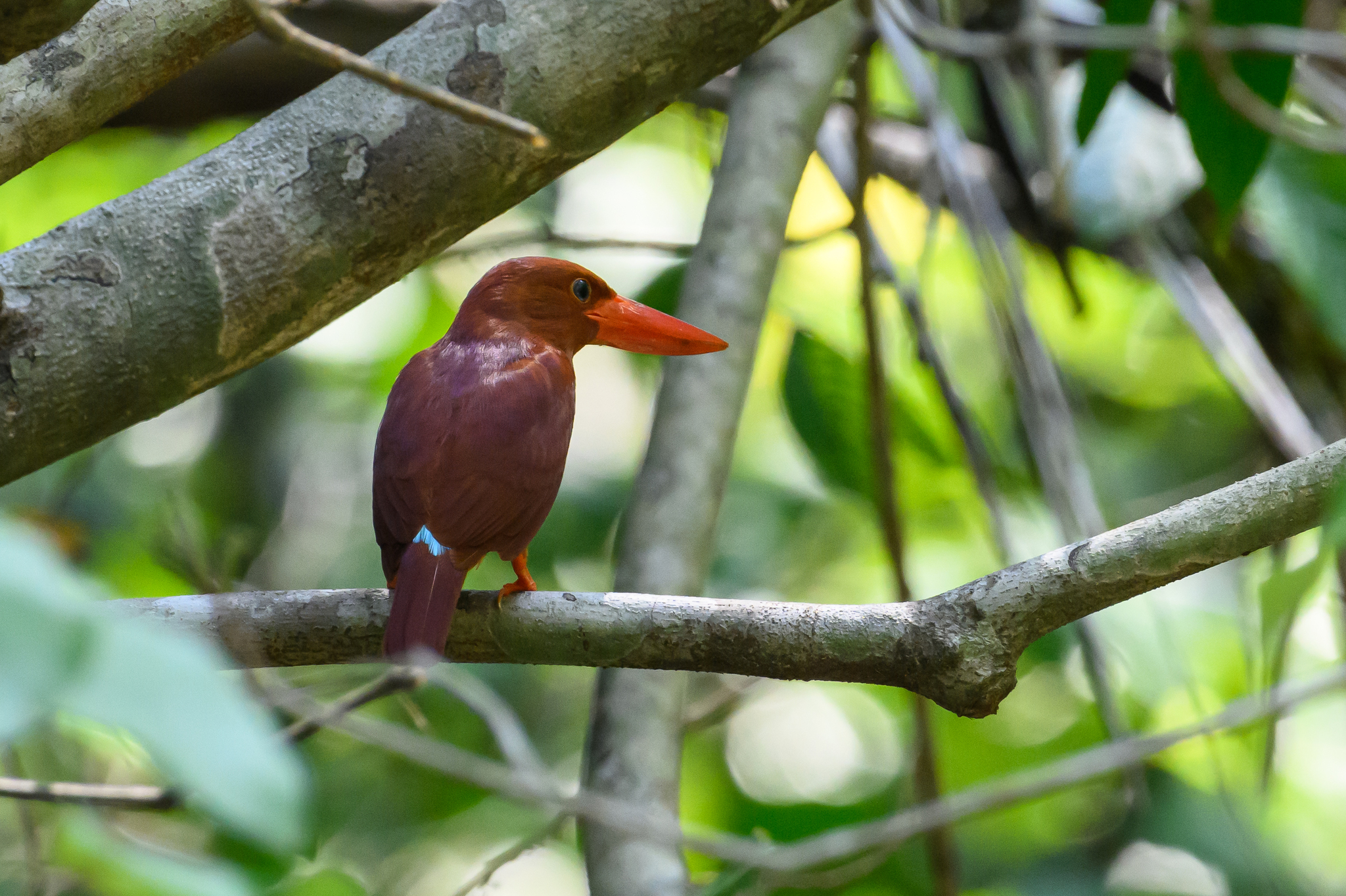
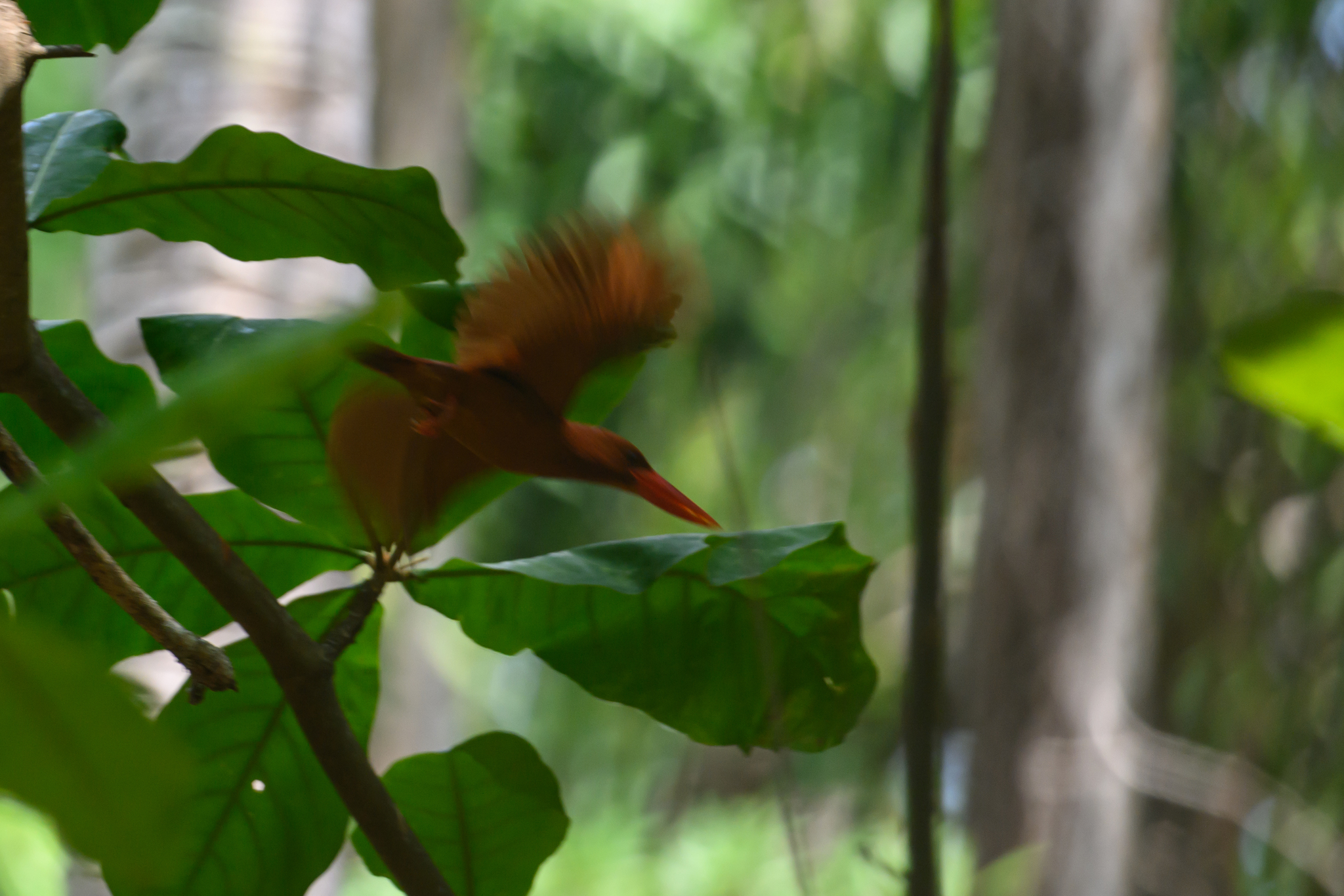
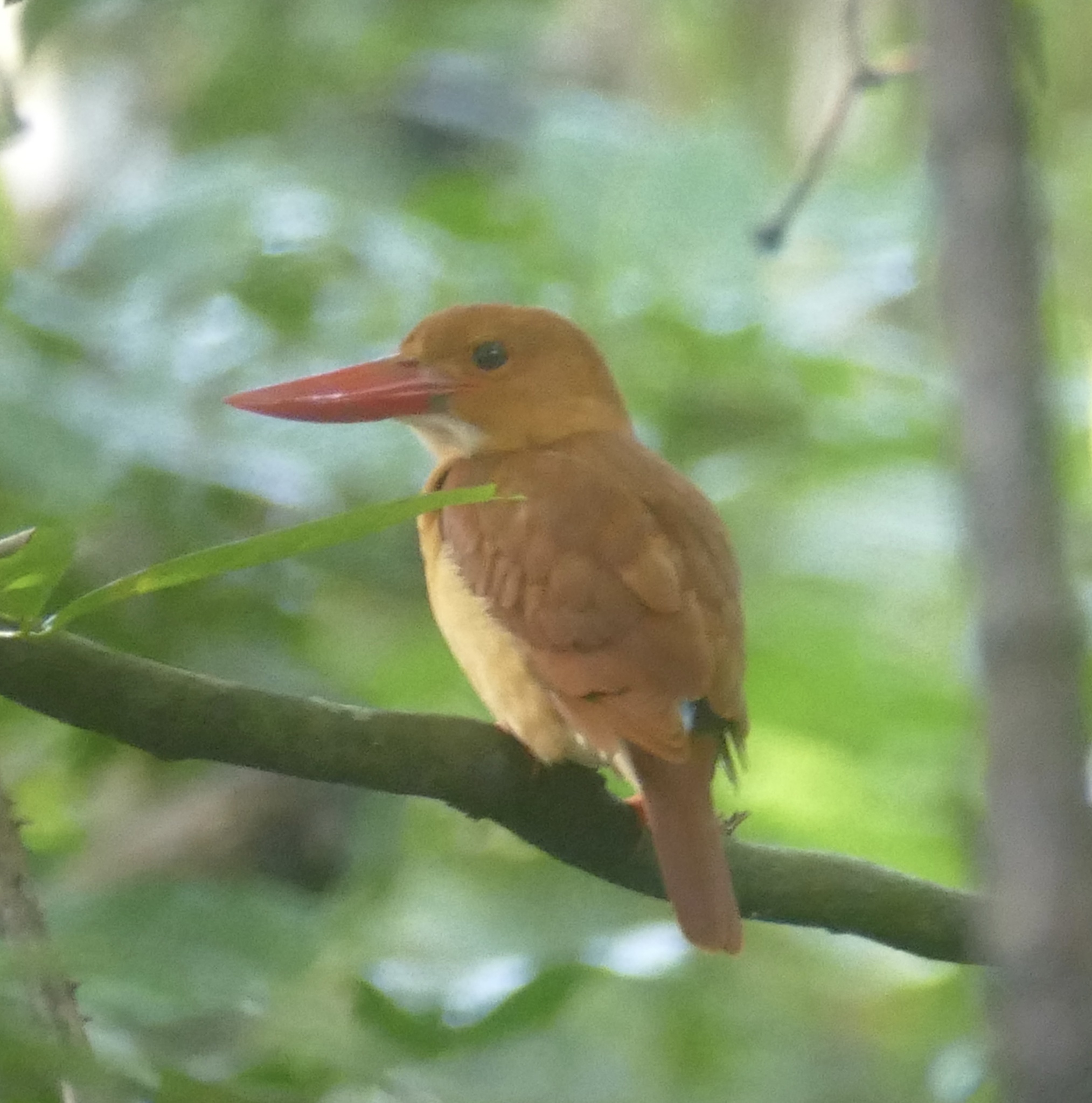
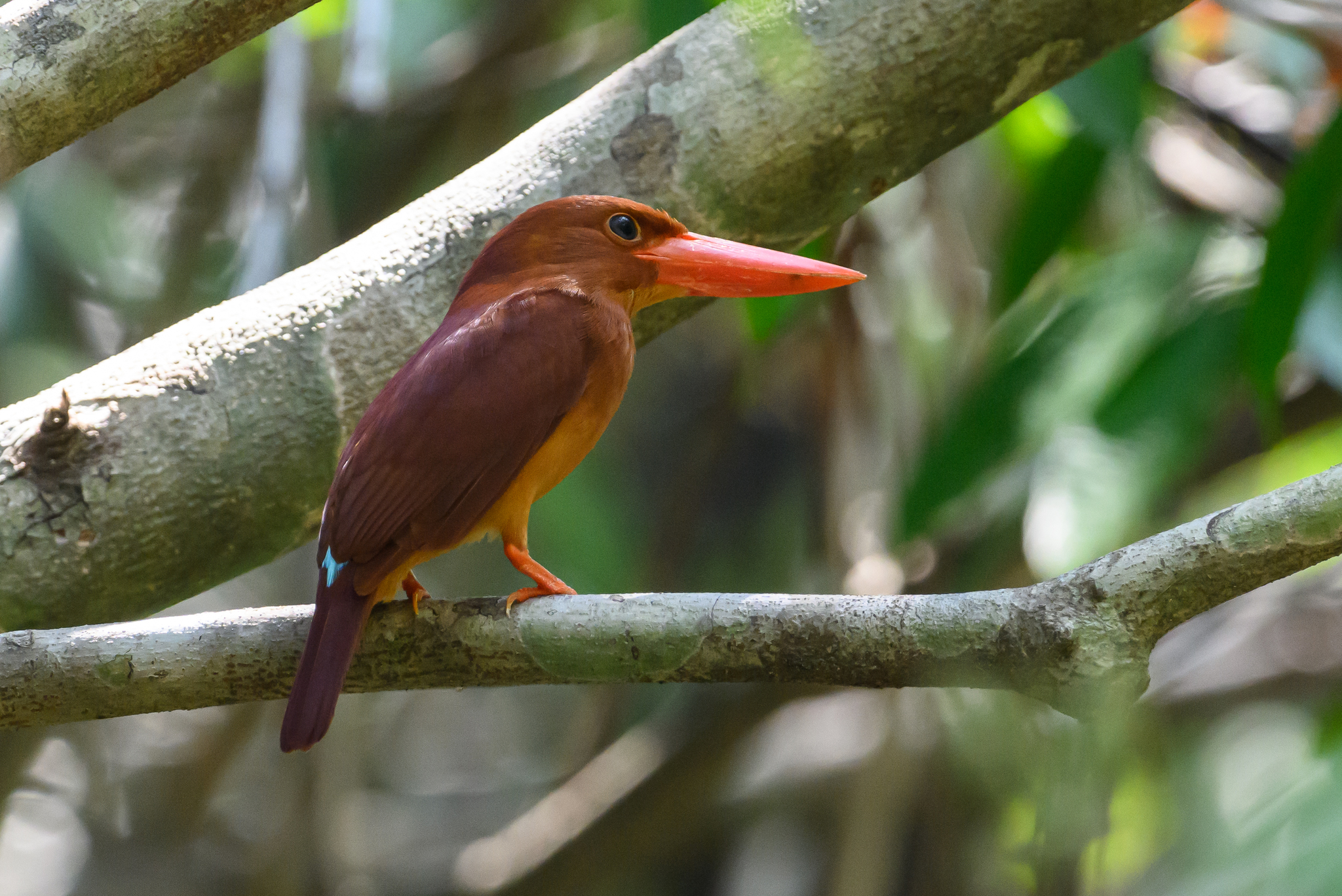
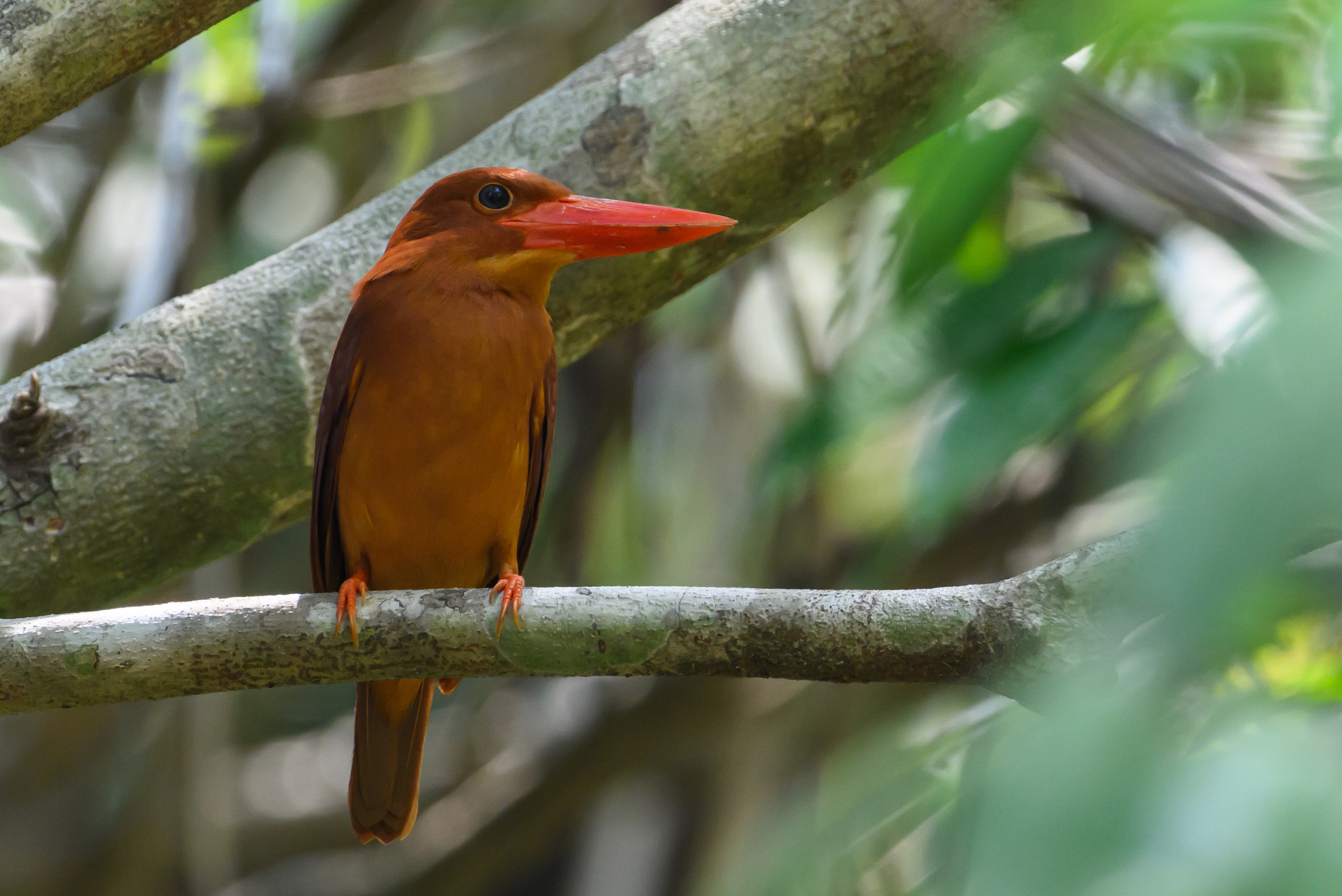
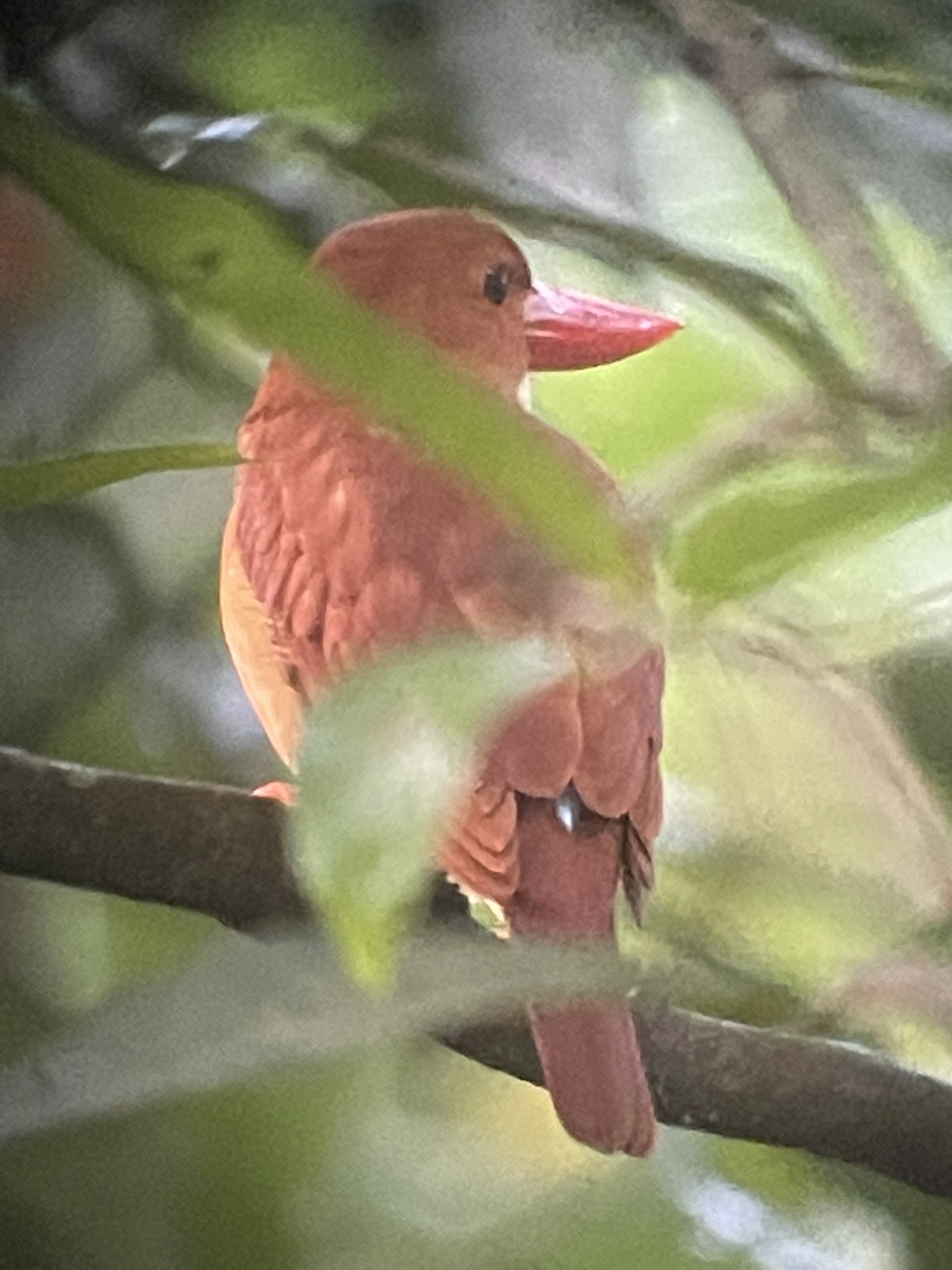
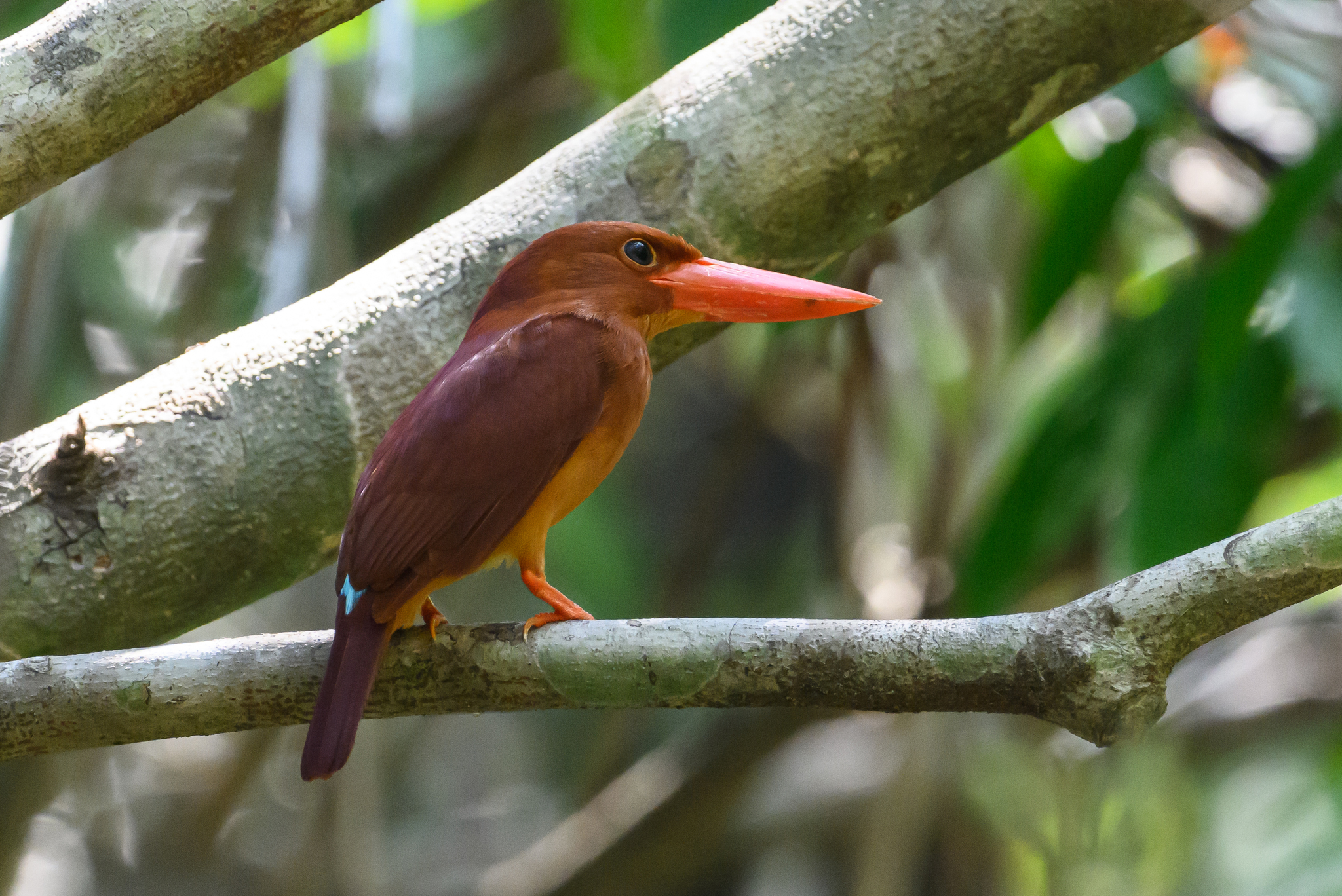
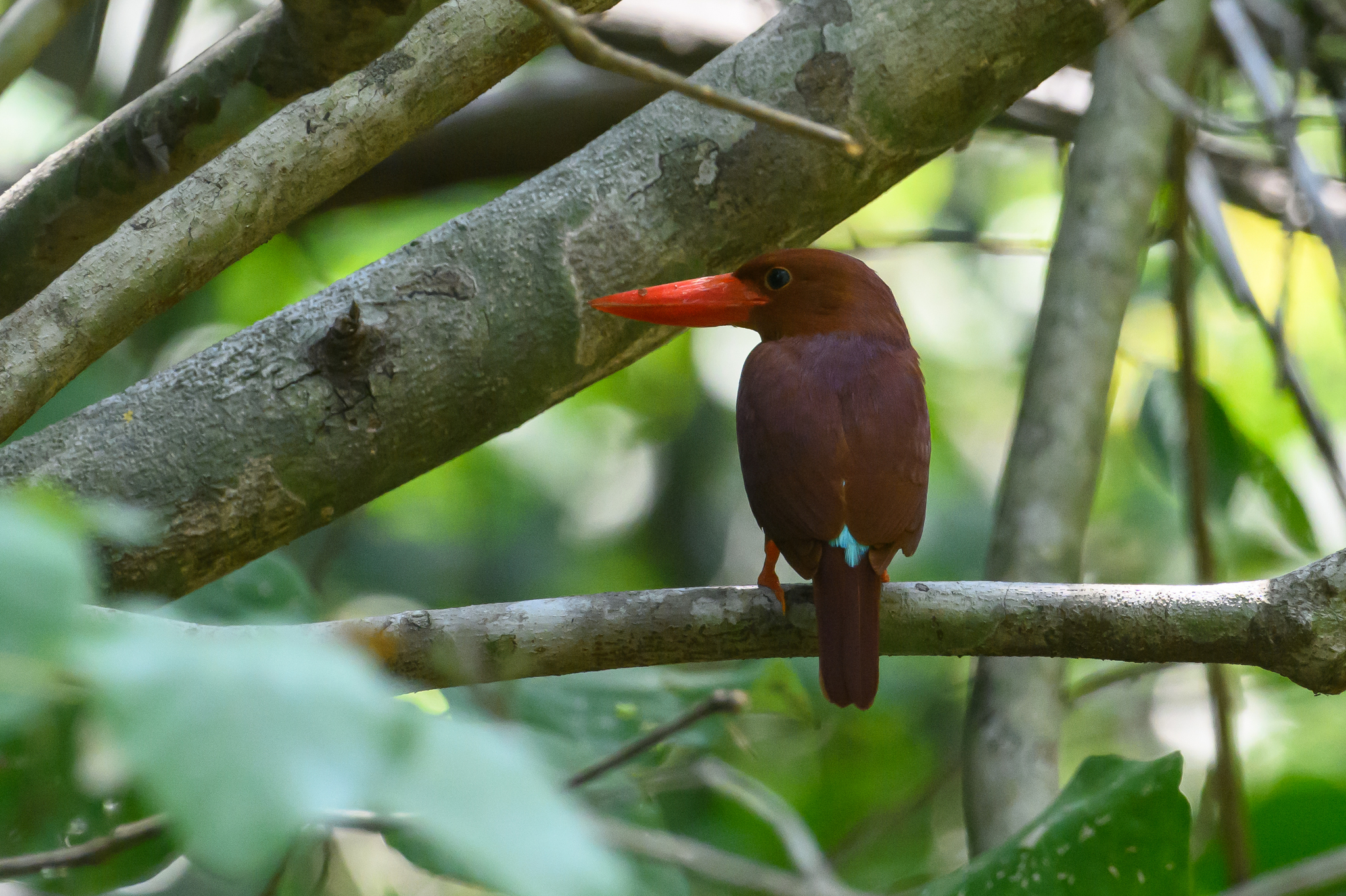
The ruddy kingfisher is a medium-sized tree kingfisher found in east and southeast Asia. It inhabits the dense canopy of tropical and subtropical woodlands, particularly primary rainforest environments. The species has rust-red plumage with a large bright red bill and red legs. It is typically solitary or seen in pairs, moving quietly through the forest understory and perching on low branches before launching into flight. The call is high and descending. In the northern part of its range, particularly Japan, it is less common, while it occurs more regularly in the southern parts of its distribution.
Description
This species reaches approximately 25 centimeters in length, making it a moderately sized kingfisher. Its most striking feature is the exceptionally large, bright red bill, which dominates the head and contrasts dramatically with the rust-red plumage of the body. The legs and feet share the same vivid red coloration. The body plumage is primarily rust-red, deepening to a purple hue at the tail feathers. There is minimal sexual dimorphism, though some ornithological sources note that males may display slightly brighter overall plumage compared to females. The compact build and colorful appearance make this species distinctive when seen well, though its tendency to remain hidden in dense vegetation often limits extended observations.
Distribution & Habitat
The ruddy kingfisher occupies a vast range across east and southeast Asia, extending from South Korea and Japan in the northern extent, southward through the Philippines to the Sunda Islands, and westward to China and India. The species is migratory, with populations in the northern parts of the range undertaking seasonal movements south to areas such as Borneo for the winter months. In the southern portions of its range, this kingfisher is considered locally common, but in Japan it remains rare and is highly sought after by birdwatchers. The species inhabits forested environments from temperate to tropical zones, with a particular preference for thick jungles and mature rainforests.
Behavior & Ecology
Like other kingfishers, this species feeds on a variety of prey including fish, crustaceans, and large insects. However, its diet shows flexibility in response to habitat; in areas with limited running water, the species readily adapts to consume frogs and other amphibians. The bird is typically encountered singly or in pairs rather than in flocks. Its vocalization, a high-pitched descending call, is often the first indication of its presence and is more frequently heard than the bird is seen. This call carries well through the forest canopy and serves as an effective means of detecting this elusive species in its preferred densely vegetated habitat.
Source: Wikipedia · CC BY-SA 3.0
Taxonomy
- Order
- Coraciiformes
- Family
- Alcedinidae
- Genus
- Halcyon
- eBird Code
- rudkin1
Vocalizations
Subspecies (10)
-
Halcyon coromanda bangsi
breeds Ryukyu Islands (southern Japan); winters Philippines and Talaud Islands (off Sulawesi)
-
Halcyon coromanda claudiae
Sulu Archipelago (Tawitawi, Bulubuk, and Sanga Sanga)
-
Halcyon coromanda coromanda
eastern Himalayas to northern Myanmar and southwestern China; winters to Sumatra
-
Halcyon coromanda linae
Palawan (southwestern Philippines)
-
Halcyon coromanda major
Japan to Korea and northeastern China; winters to Taiwan, Philippines, and Borneo
-
Halcyon coromanda minor
Riau Archipelago, Mentawai Archipelago, southern Malay Peninsula, and Greater Sundas
-
Halcyon coromanda mizorhina
Andaman Islands; questionable Nicobar Island specimen
-
Halcyon coromanda pelingensis
Peleng, in Banggai Islands (off eastern Sulawesi)
-
Halcyon coromanda rufa
southern Sulawesi, Sangihe, Muna, and Buton islands
-
Halcyon coromanda sulana
Sula Islands (east of Sulawesi)
Data Sources
Species description from Wikipedia, licensed under CC BY-SA 3.0.
Bird images and sounds sourced from GBIF, contributed by citizen scientists worldwide under Creative Commons licenses.
Taxonomy data from AviList 2025.