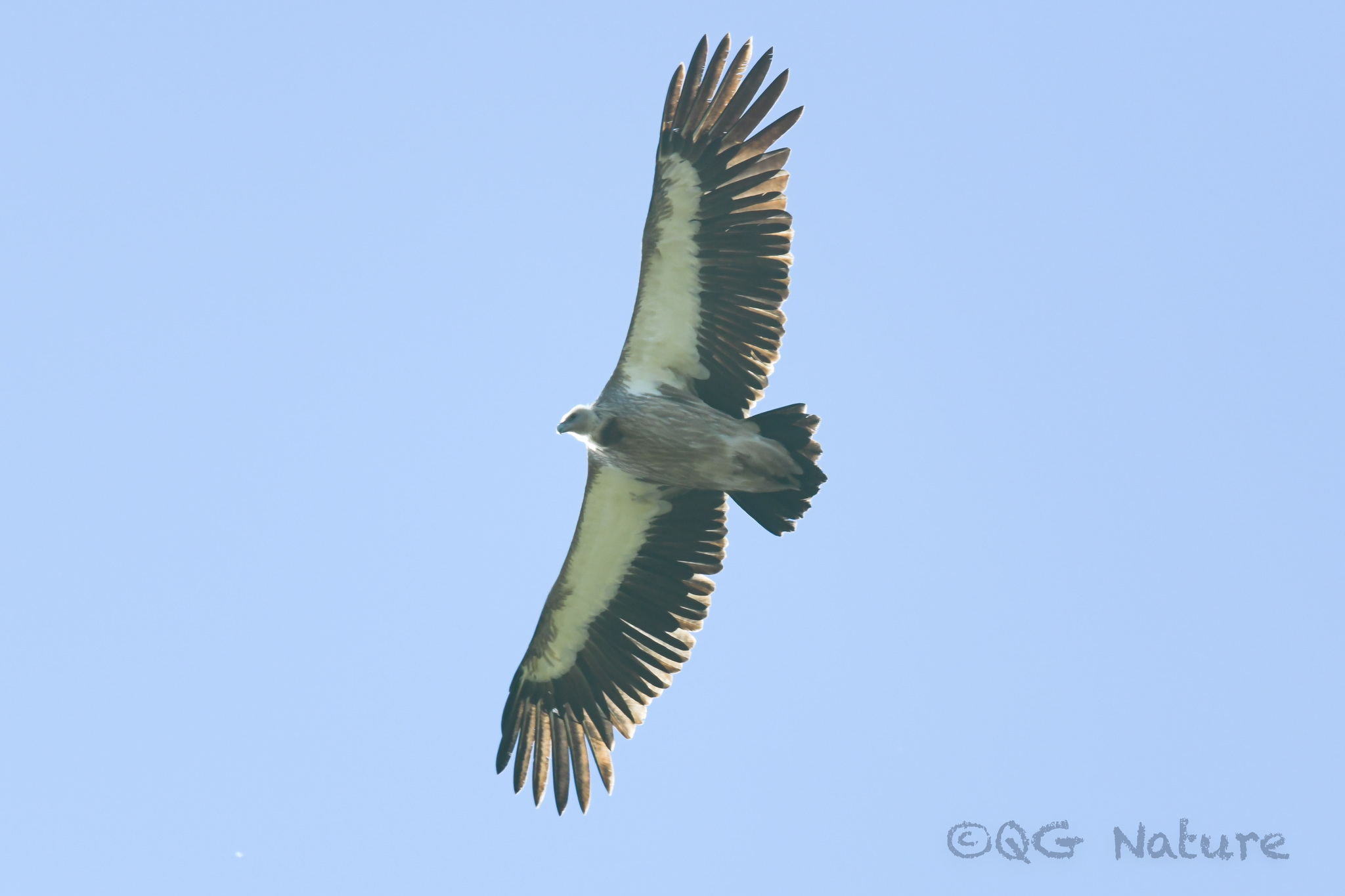
Himalayan Vulture
Gyps himalayensis
高山兀鹫
Introduction
Old World vulture native to the Himalayas and Tibetan Plateau. Second-largest Old World vulture species after the cinereous vulture, and among the world's largest true raptors. Inhabits high-altitude regions from 1,200–5,500 m elevation. Feeds exclusively on carrion, with 64% of diet on Tibetan Plateau derived from deceased domestic yak. Known to strip large carcasses in 30 minutes. Classified as Near Threatened on the IUCN Red List.
Description
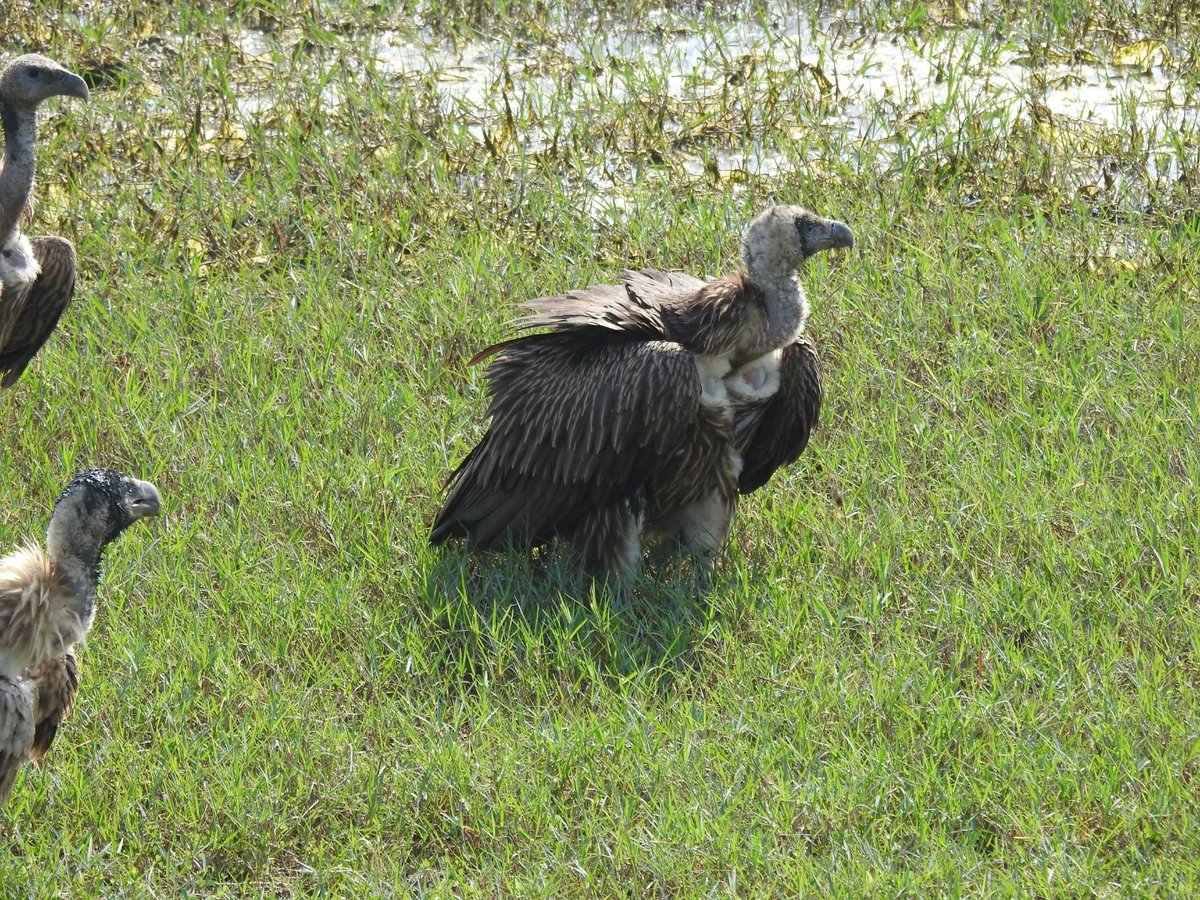
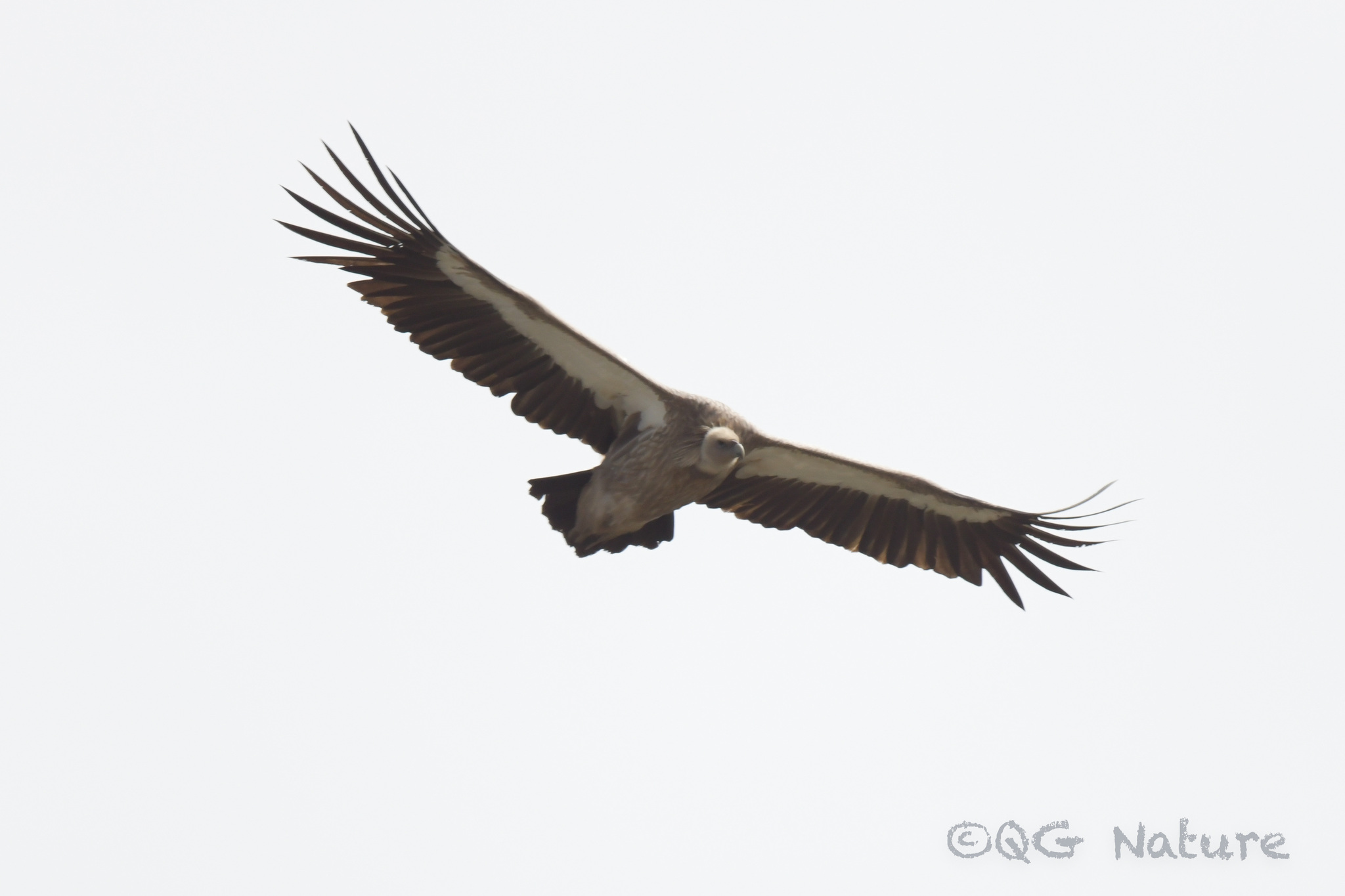
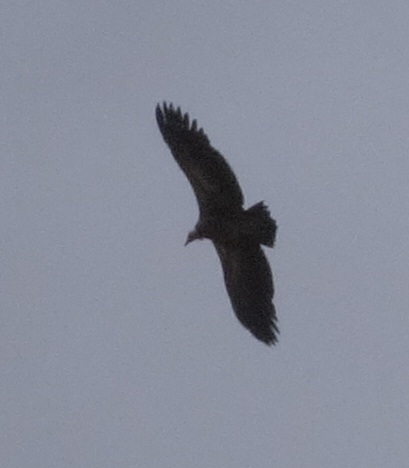
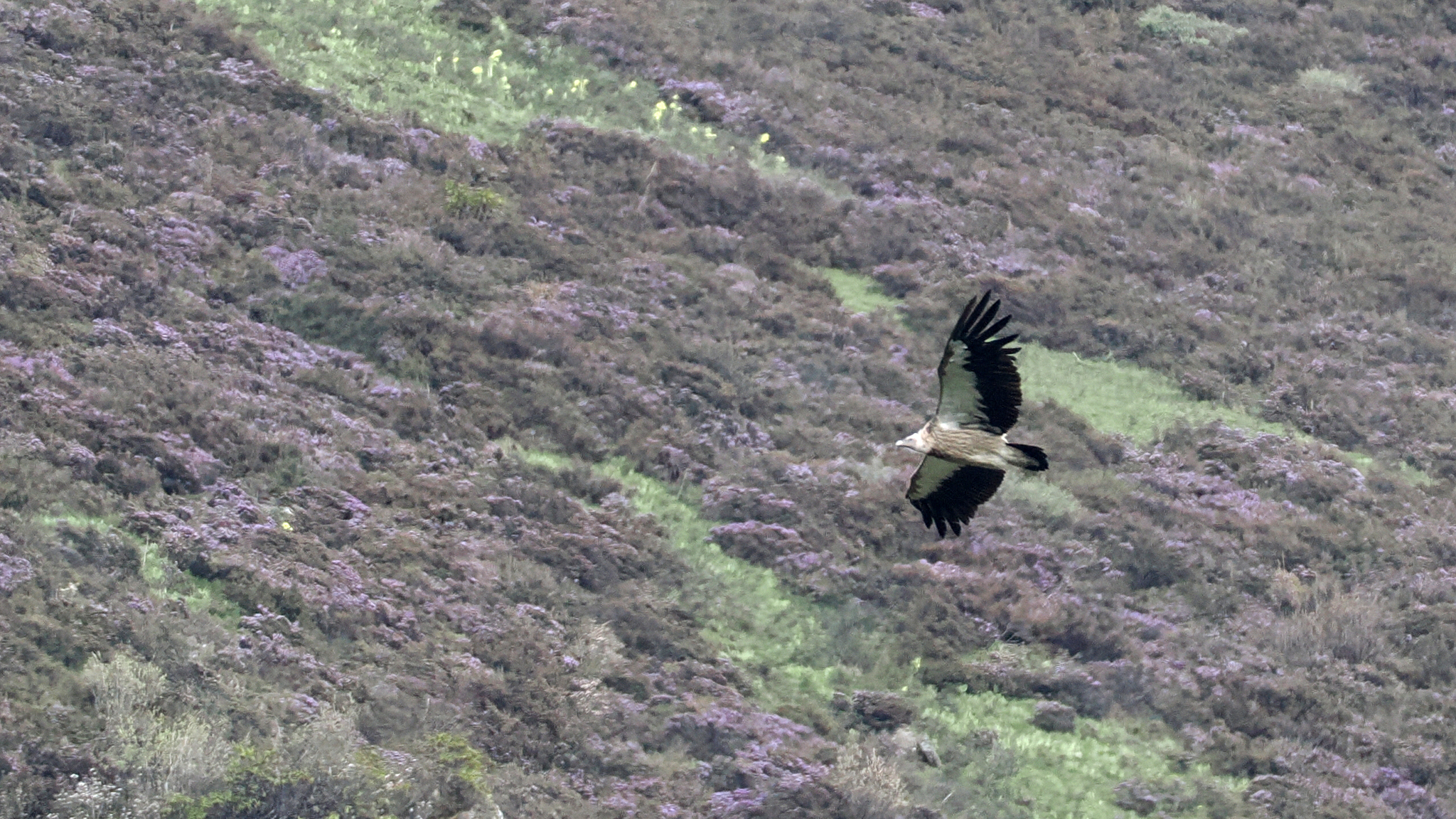
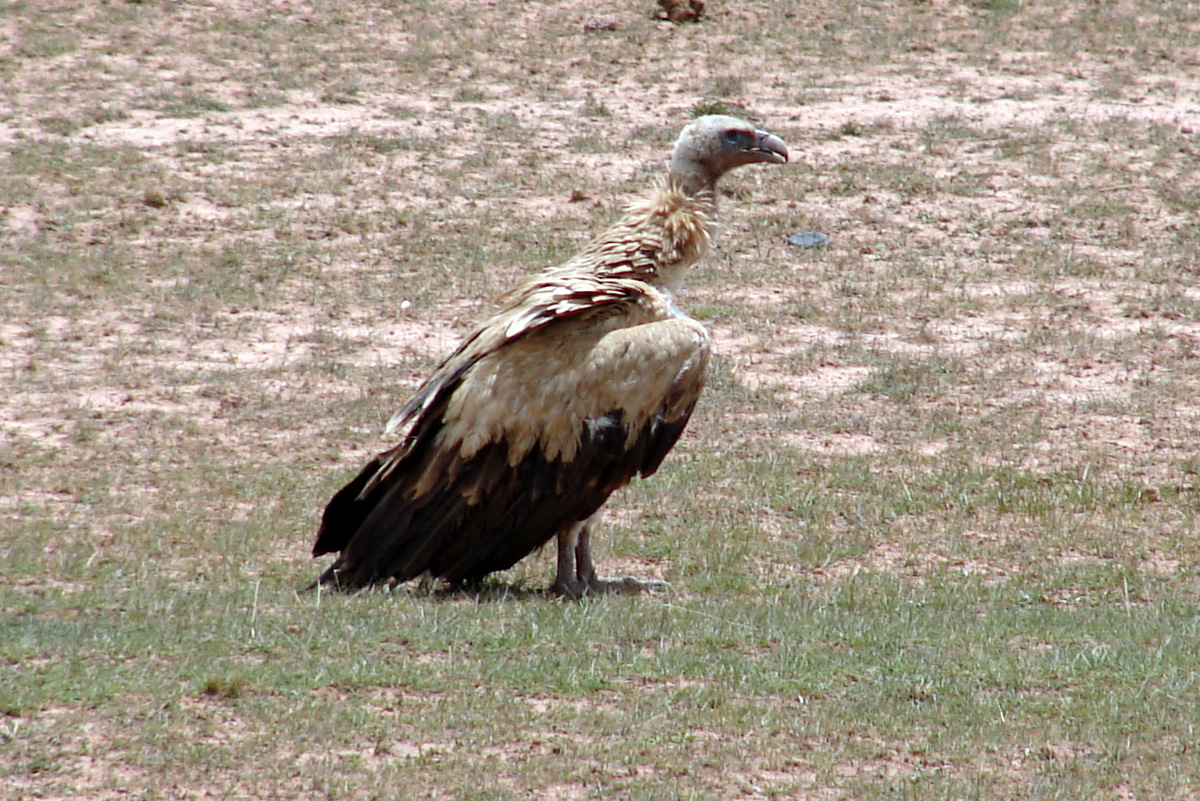
Large vulture with dark brown greater covert feathers, tail, and wing quills contrasting with pale buff upperside and pale-tipped inner secondaries. Legs covered with buffy feathers ranging from greenish grey to pale brown. Underparts and under-wing coverts are pale brown or buff, nearly white in some individuals. Adults have yellowish head down and a long pale brown ruff with white streaks. Facial skin is pale blue with a yellowish bill. Wingspan ranges from 2.56 to 3.1 m (8 ft 5 in to 10 ft 2 in). Weight varies from 6–12.5 kg, averaging approximately 9 kg. Largest species within the Gyps genus.
Identification
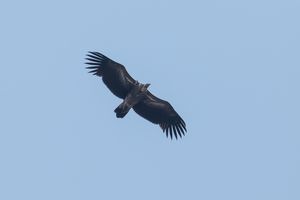
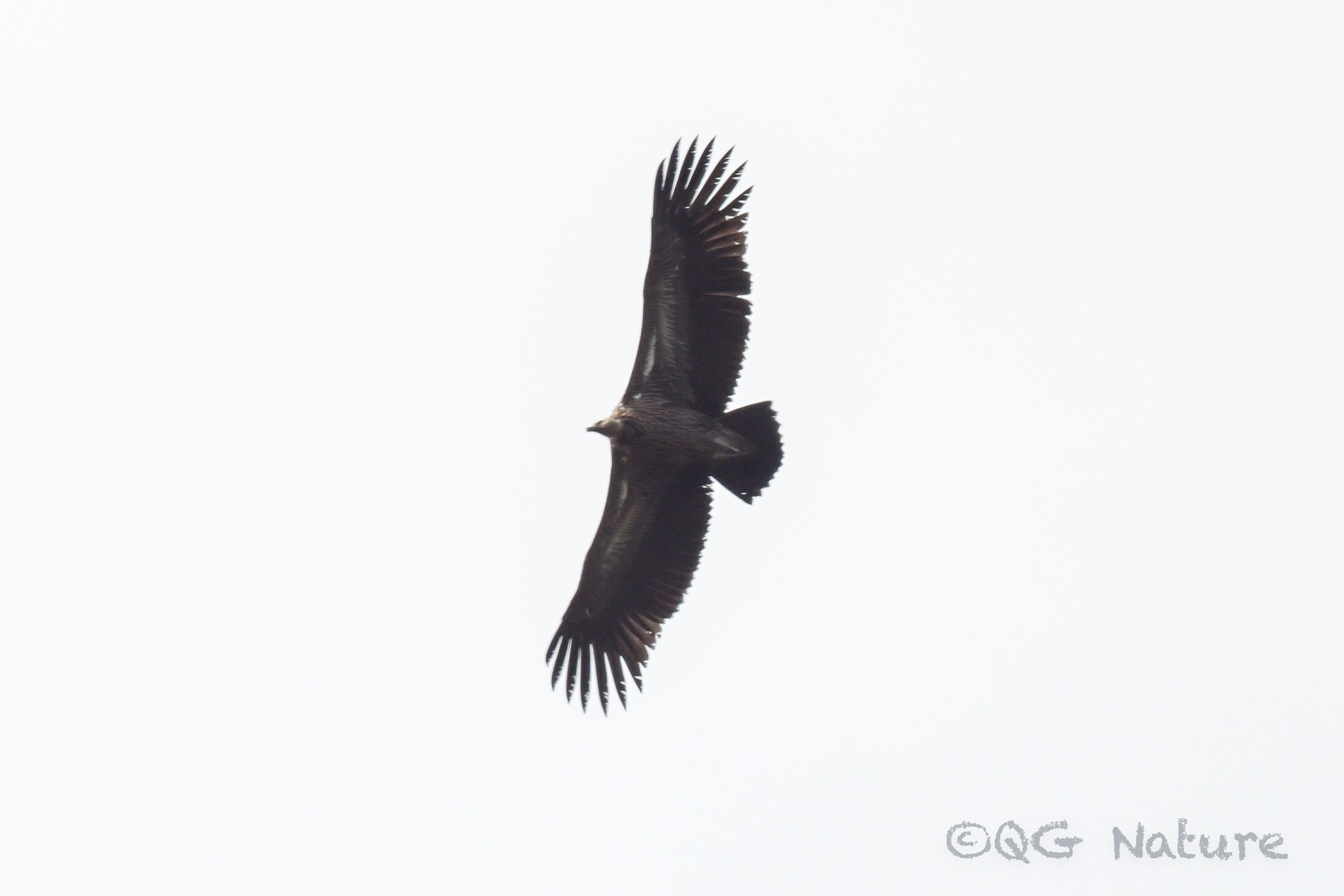
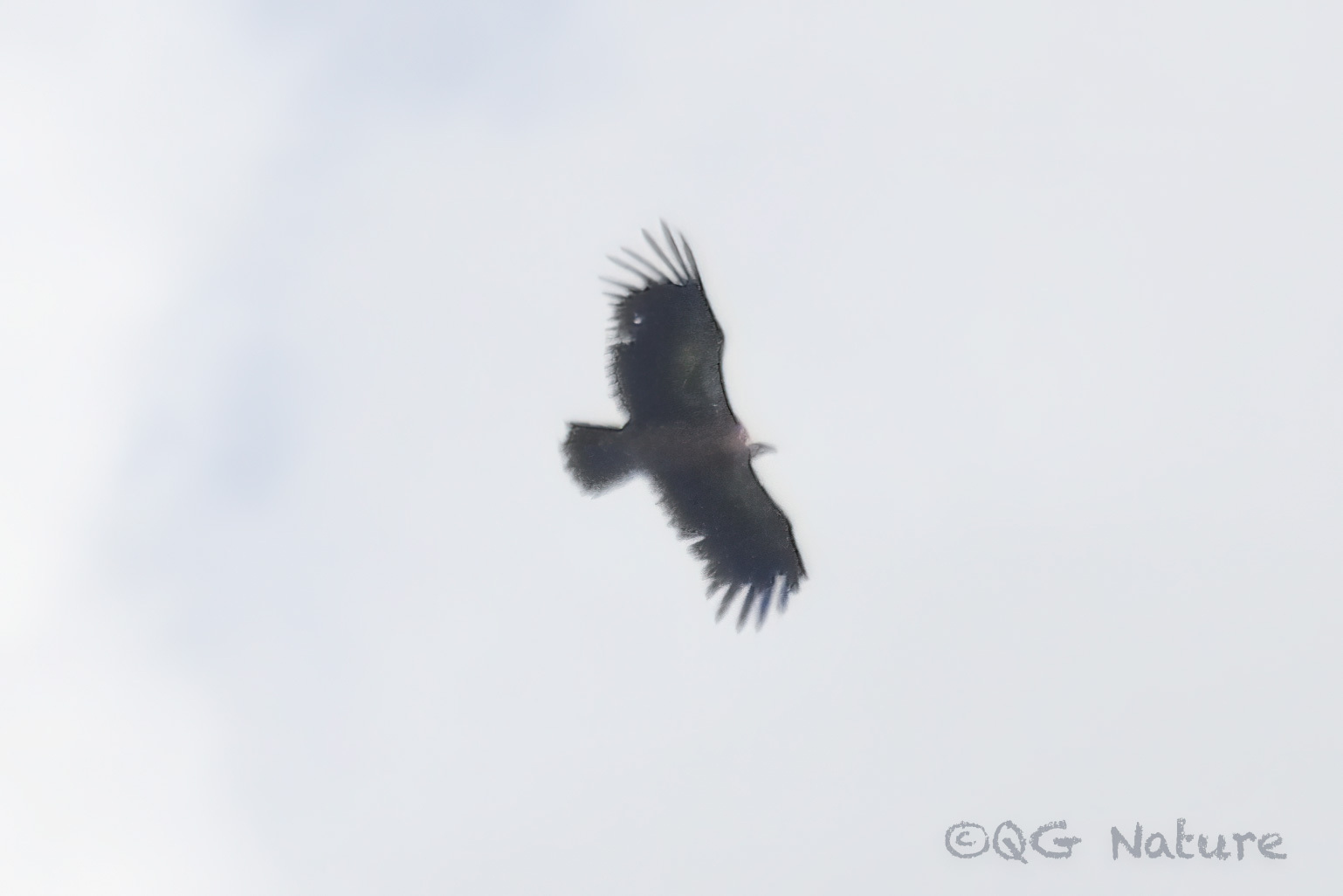
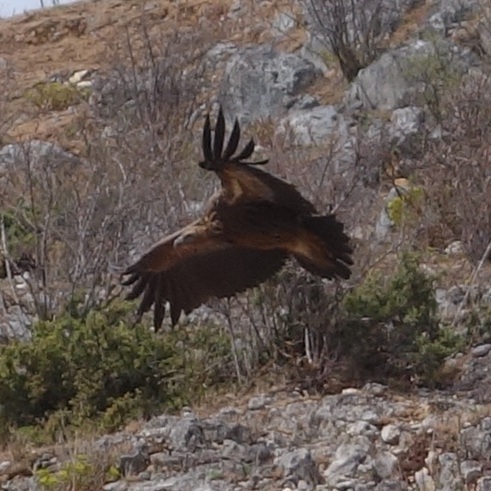
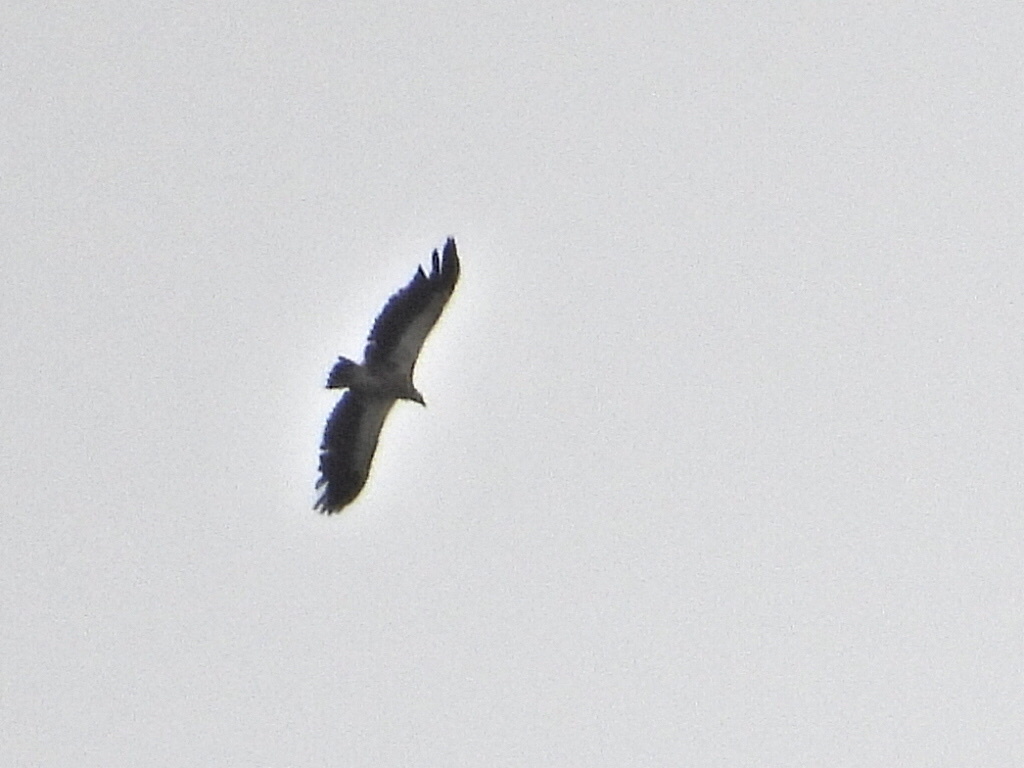
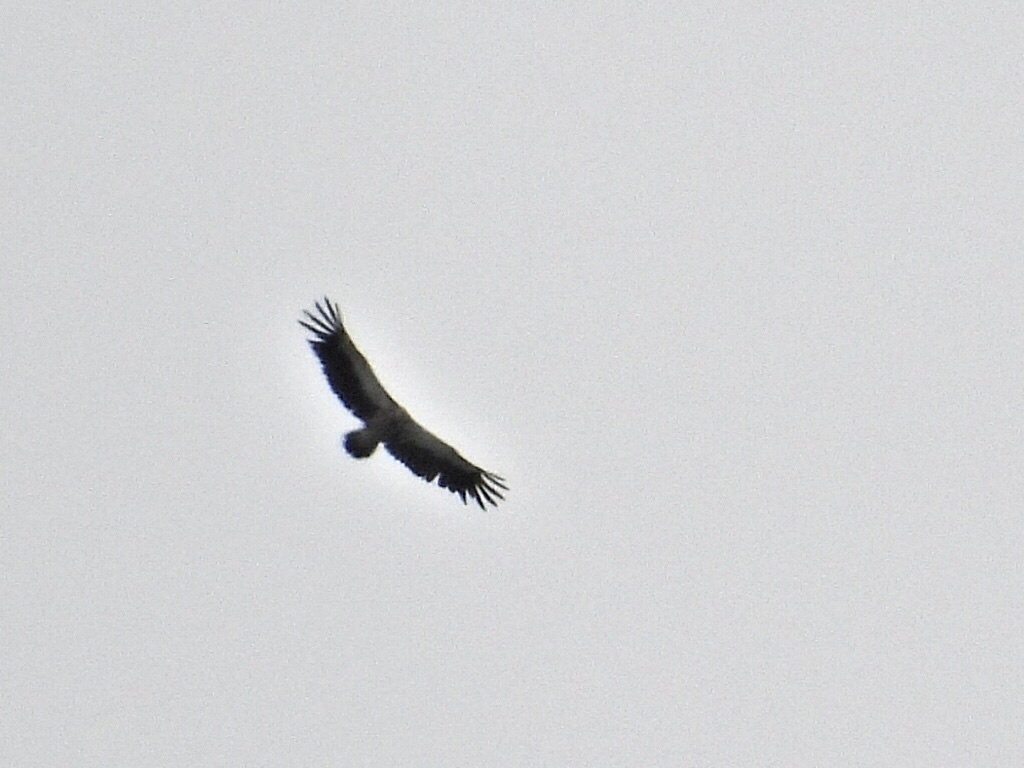
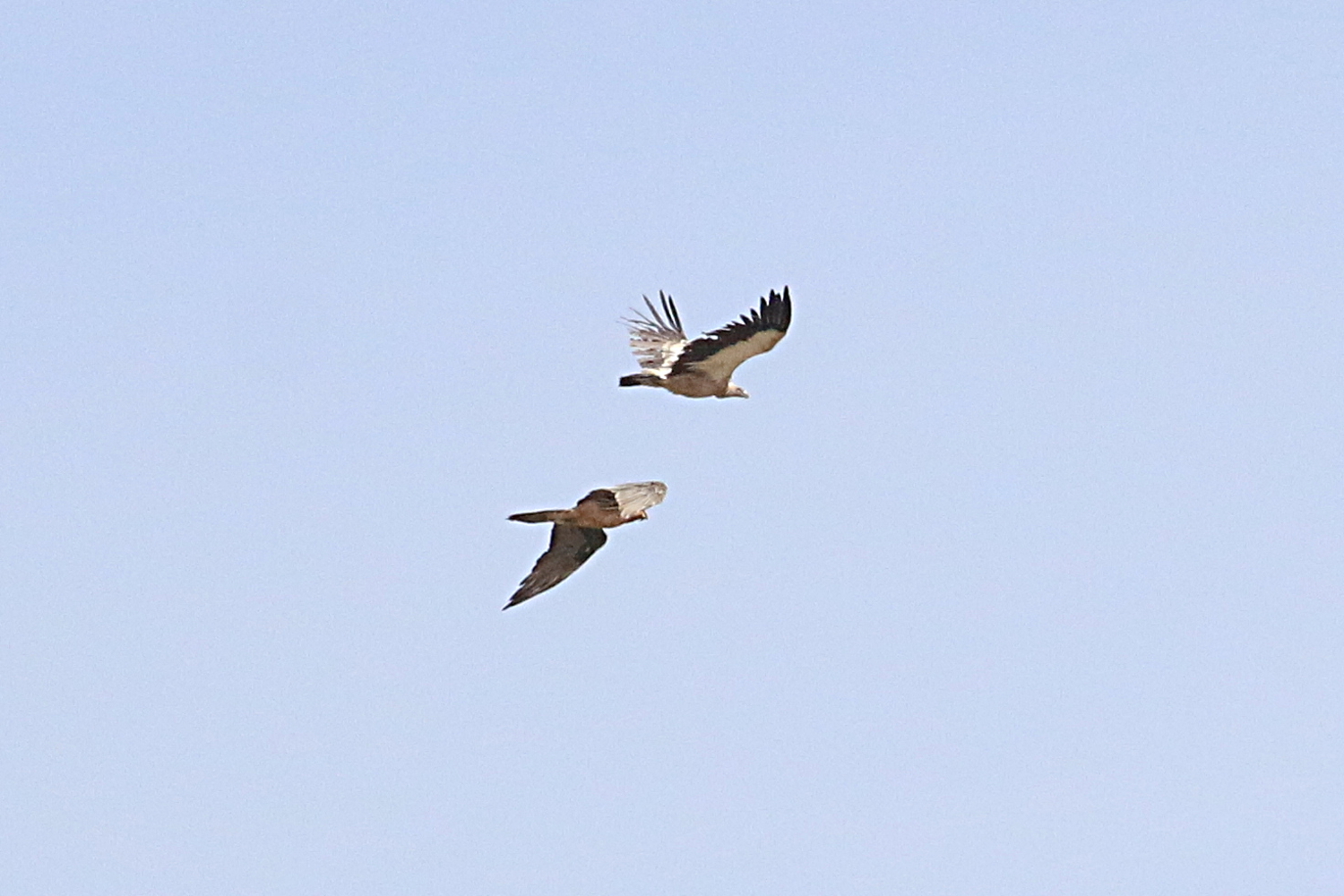
Dark wing and tail feathers contrast sharply with pale coverts and body, the best distinguishing feature from the similar but slightly smaller griffon vulture. Pale blue facial skin is lighter than the dark blue seen in Gyps fulvus. Stouter, more robust bill than the Indian vulture. Longer fingers splayed in flight with a distinctive pale patagial stripe on the underwing. Similar in size to the cinereous vulture, which typically has a shorter overall length.
Distribution & Habitat
Inhabits higher regions of the Himalayas and Tibetan Plateau at elevations of 1,200–5,500 m (3,900–18,000 ft). Range extends from Kazakhstan, Uzbekistan, Kyrgyzstan, Tajikistan, Afghanistan, and Iran through Pakistan, India, Nepal, Bhutan to western China and Mongolia. Juveniles disperse further south, with vagrants recorded in Thailand, Burma, Singapore, and Cambodia. Typically does not range below 1,215 m elevation.
Behavior & Ecology
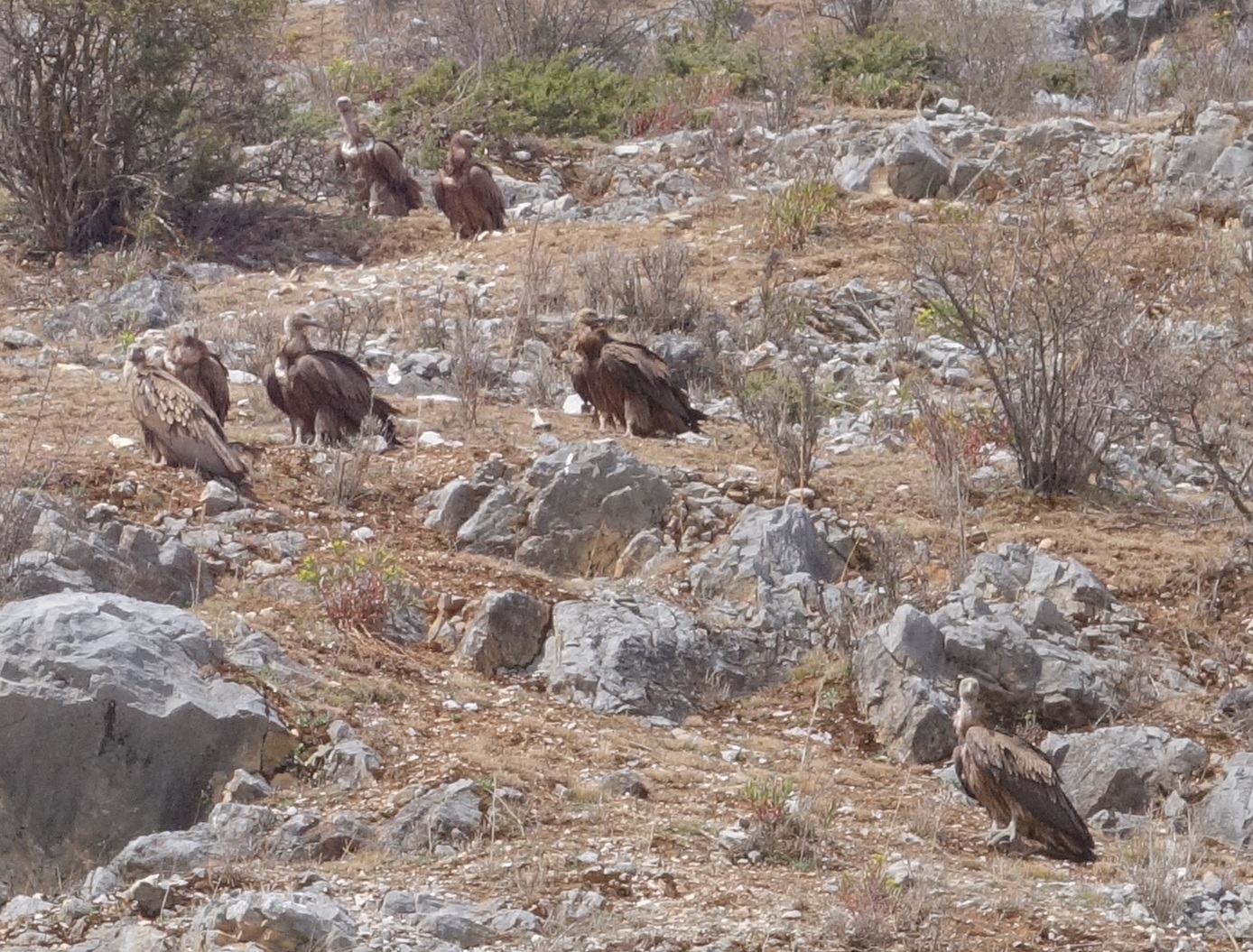
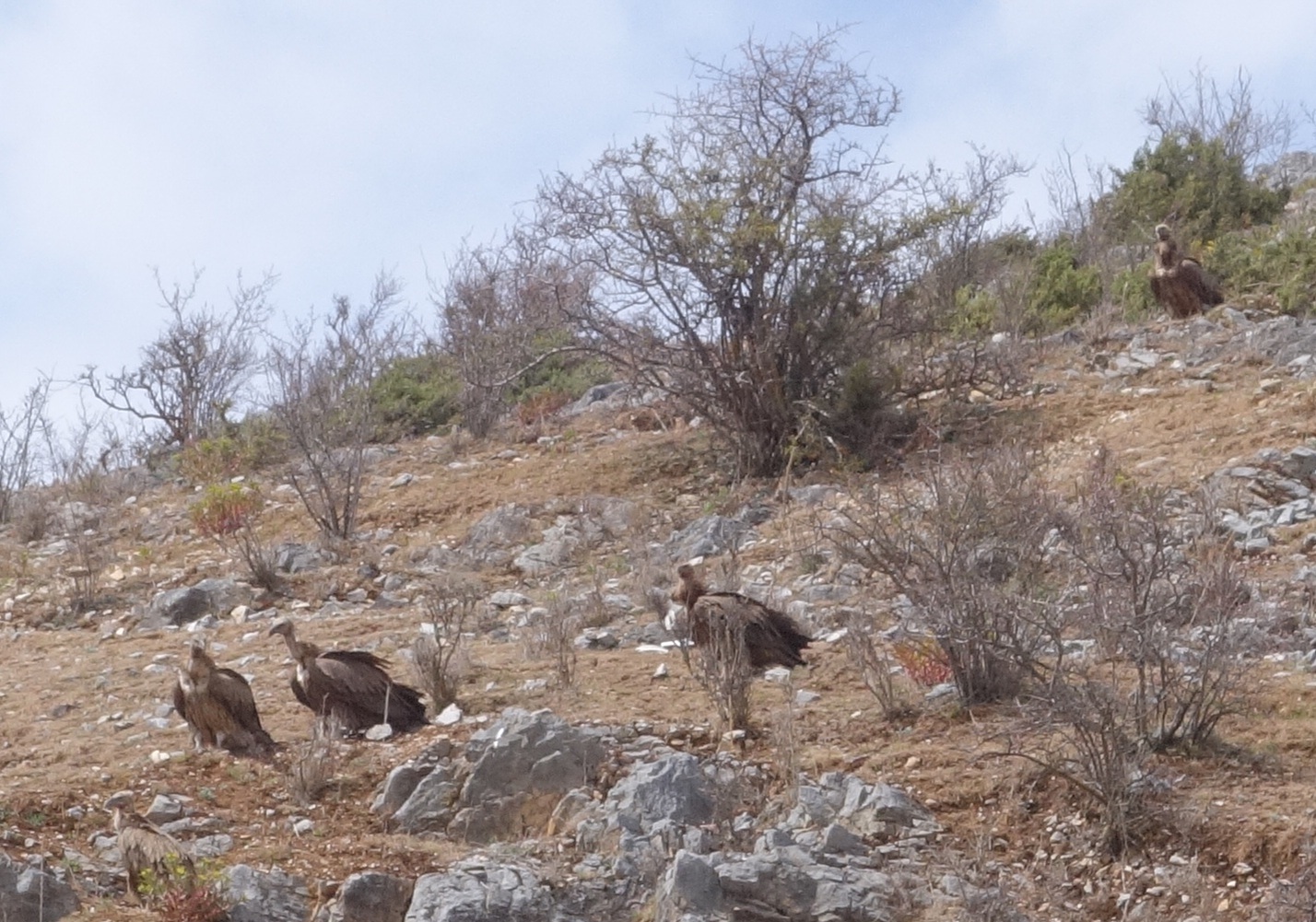
Feeds exclusively on carrion, largely disregarding offal and eating only fleshy tissue. On Tibetan Plateau, 64% of diet comes from domestic yak carcasses. Can strip a large carcass in 30 minutes and a yak carcass in about 120 minutes. Social birds found in large flocks; dominates smaller scavengers at carcasses but is subservient to gray wolves, snow leultures. Breeding begins in January. Nests are stick platforms on inaccessible cliff ledges at 1,215–4,245 m elevation. Typical colony size is 5–7 pairs. Single white egg with red splotches, measuring 87–103.6 mm by 65–74 mm. Incubation period approximately 54–58 days. Young remain with parents for 6–7 months. Vocalizations include rattling, grunting, hissing, and cackling when feeding or defending food.
Conservation
Listed as Near Threatened on the IUCN Red List. Susceptible to diclofenac toxicity from residues in domestic animal carcasses, which has caused rapid declines in other Gyps vulture species across Asia. While populations have not shown signs of rapid decline, reductions in nesting birds have been noted in parts of Nepal. Vehicle traffic, human interference, and attacks from herding dogs cause disturbance at feeding sites.
Culture
Historically fed on human corpses left out on Celestial burial grounds in mountain regions.
Source: Wikipedia · CC BY-SA 3.0
Taxonomy
- Order
- Accipitriformes
- Family
- Accipitridae
- Genus
- Gyps
- eBird Code
- himgri1
Distribution
Himalayas from northwestern India to Tibet and west-central China
Data Sources
Species description from Wikipedia, licensed under CC BY-SA 3.0.
Bird images and sounds sourced from GBIF, contributed by citizen scientists worldwide under Creative Commons licenses.
Taxonomy data from AviList 2025.