
Atlantic White Tern
Gygis alba
白燕鸥
Description
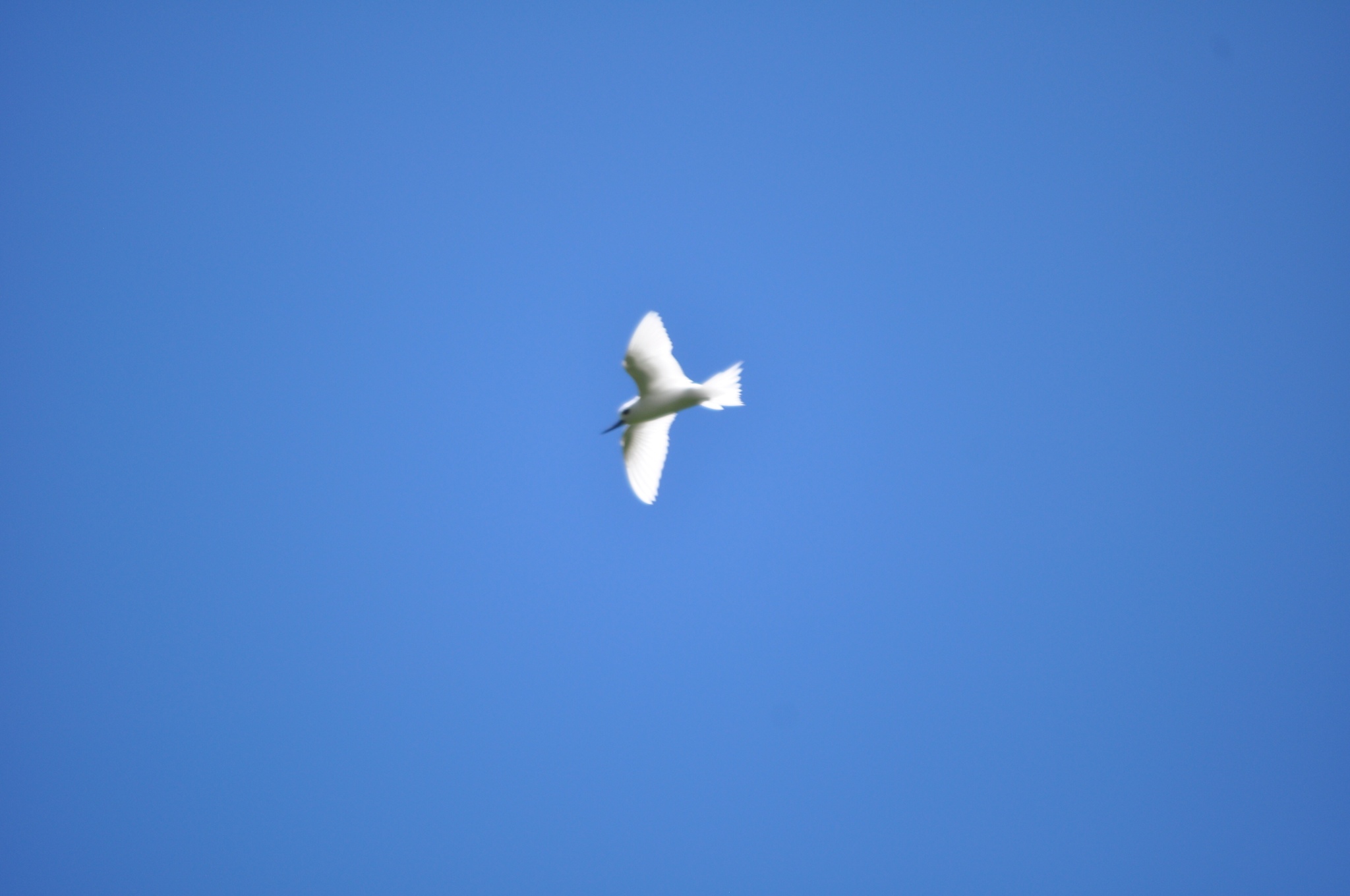
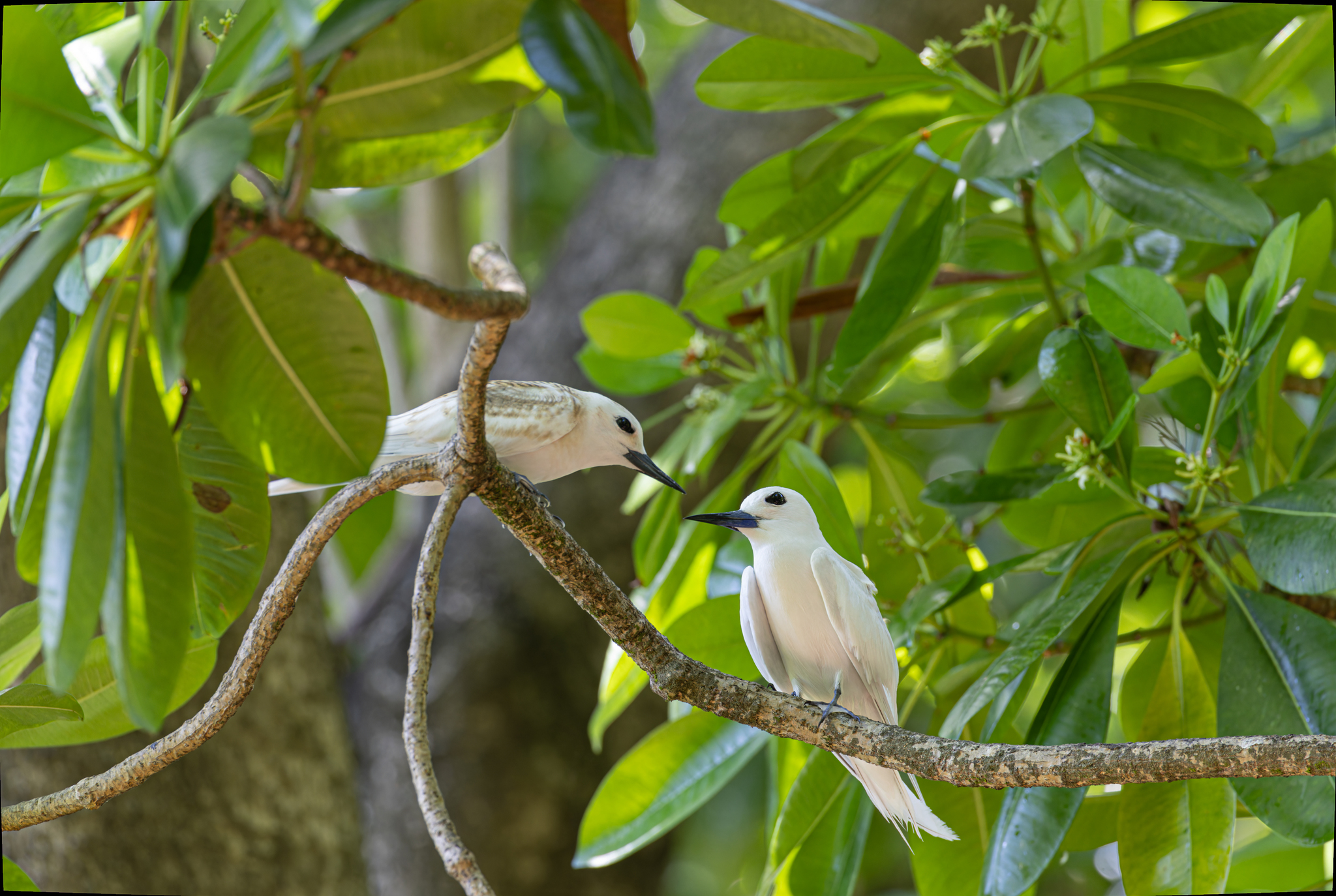
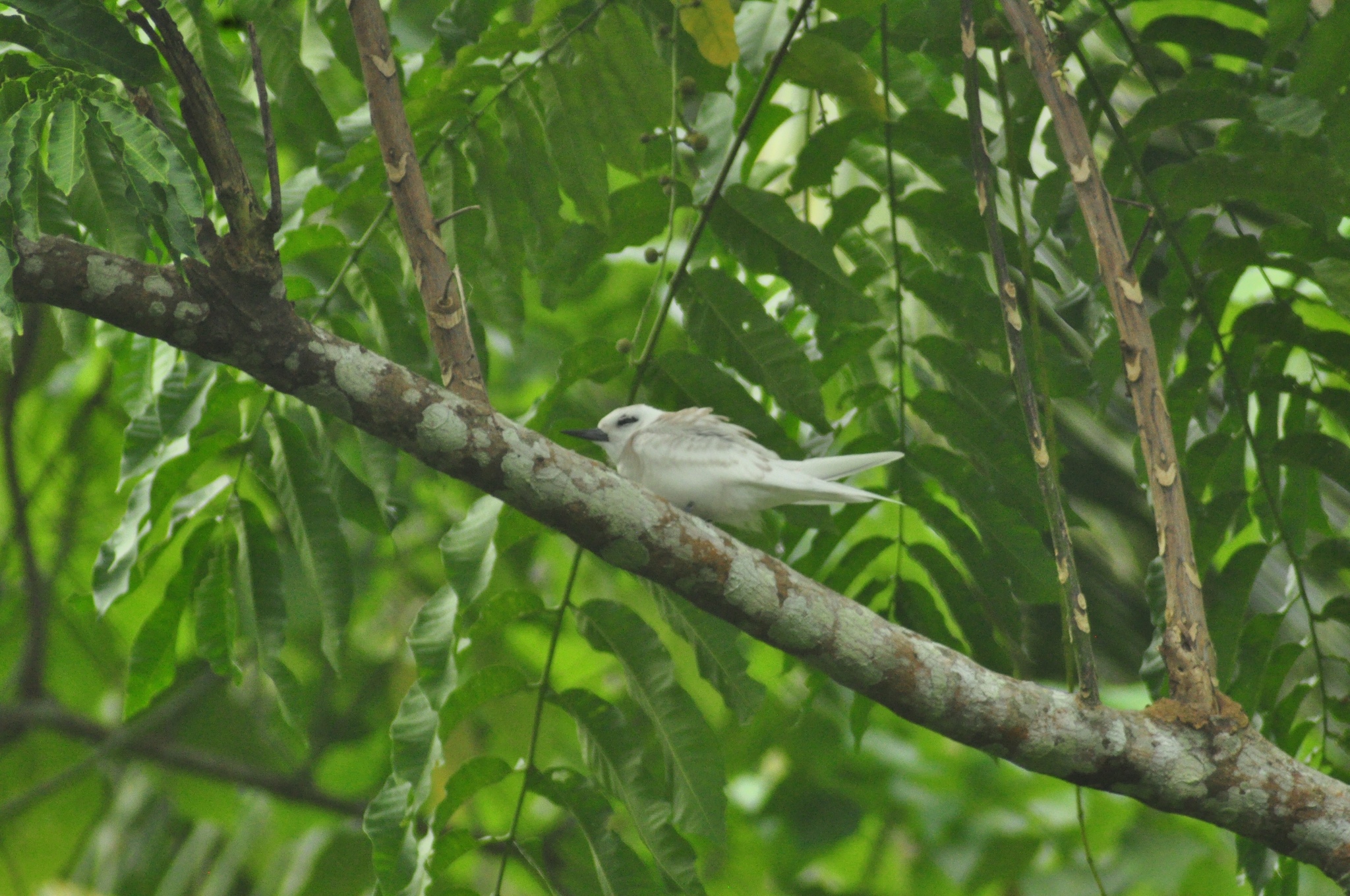
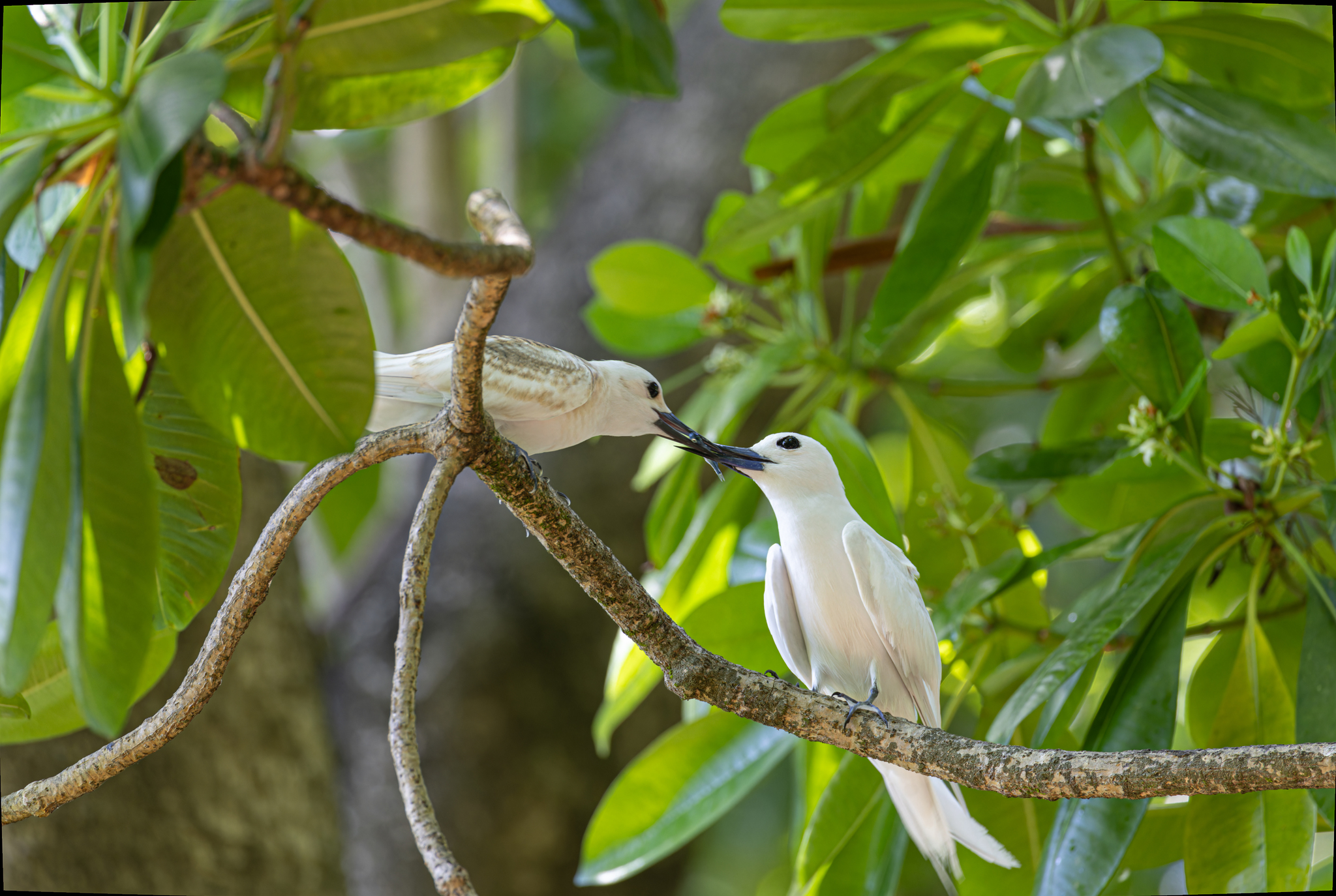
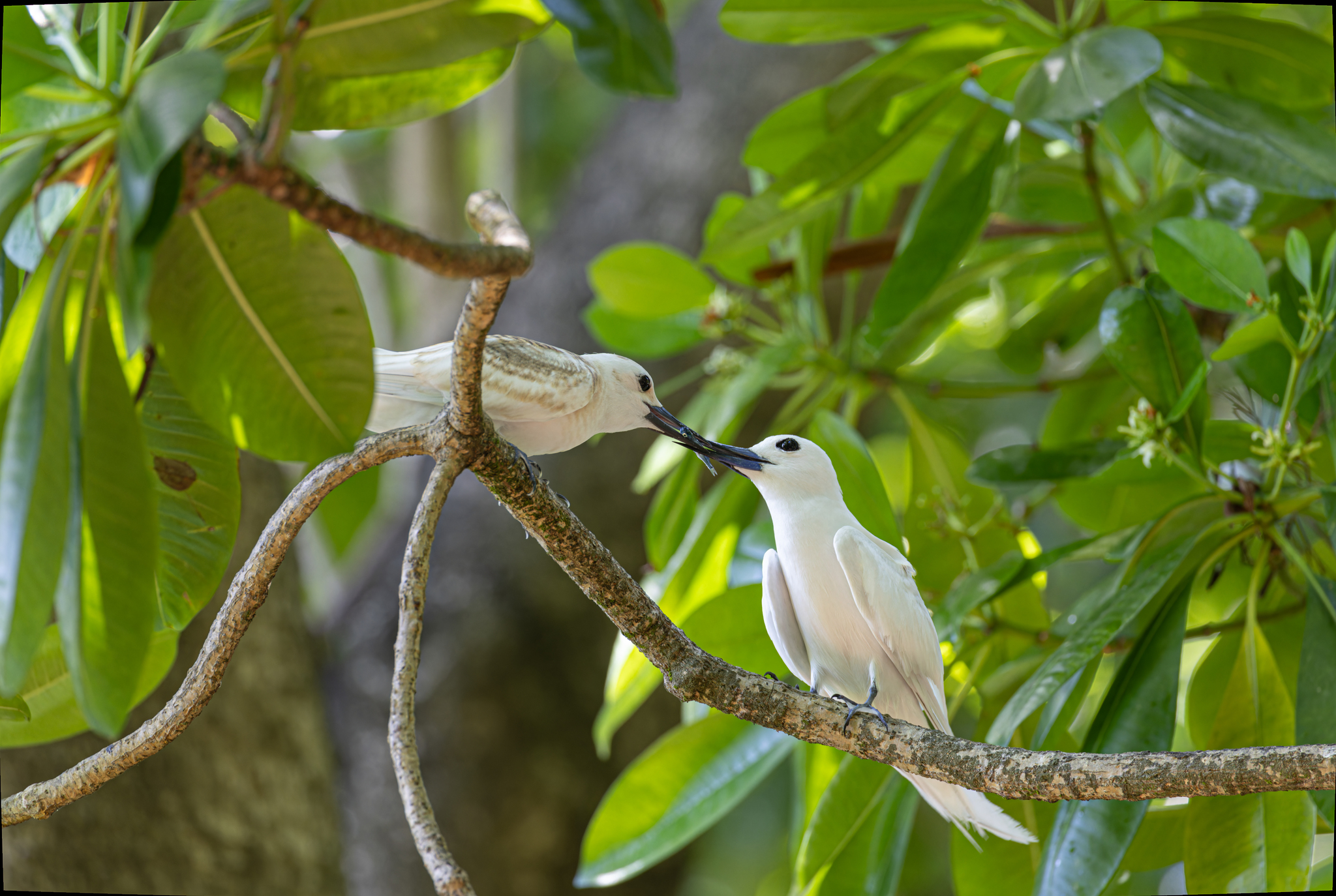
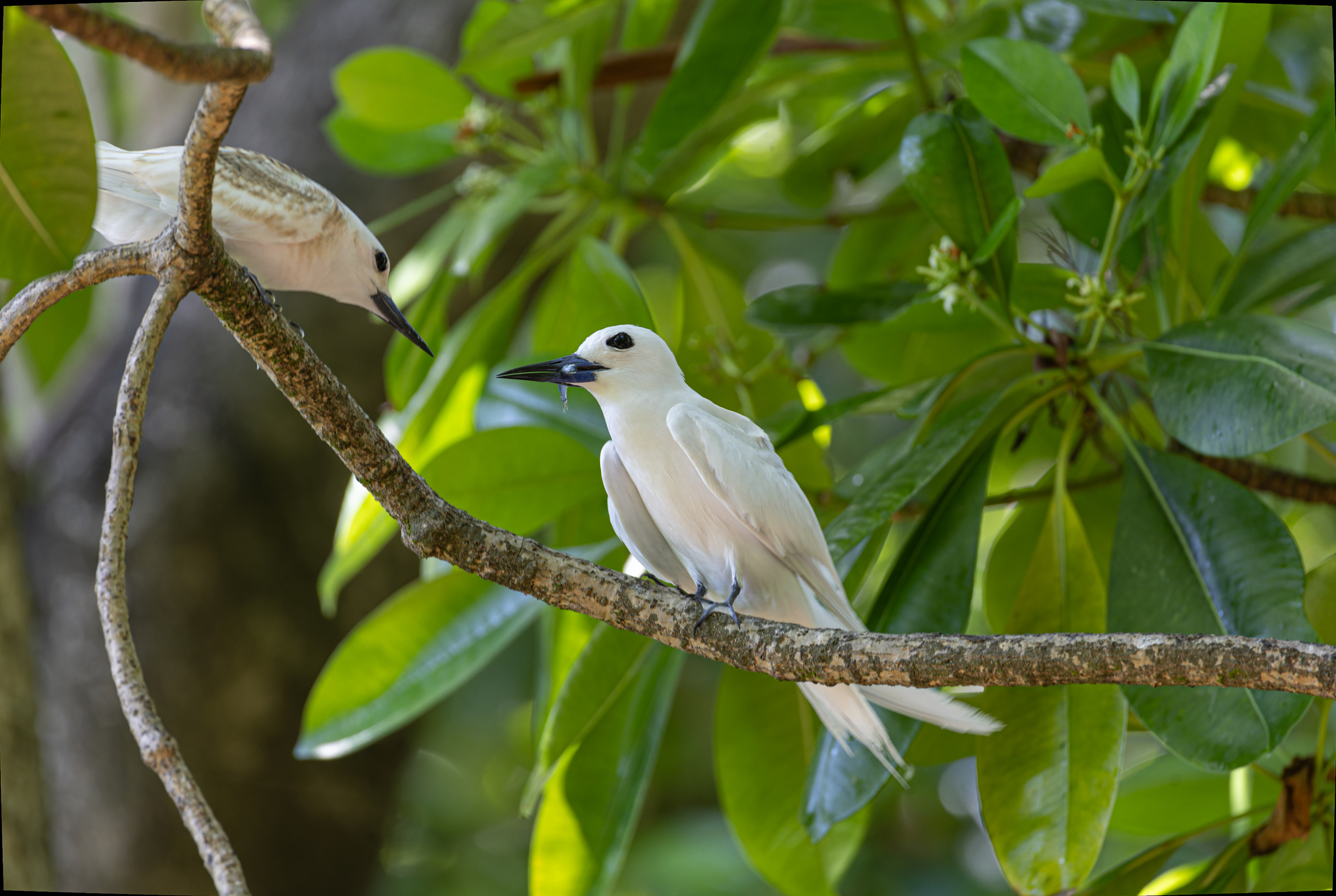
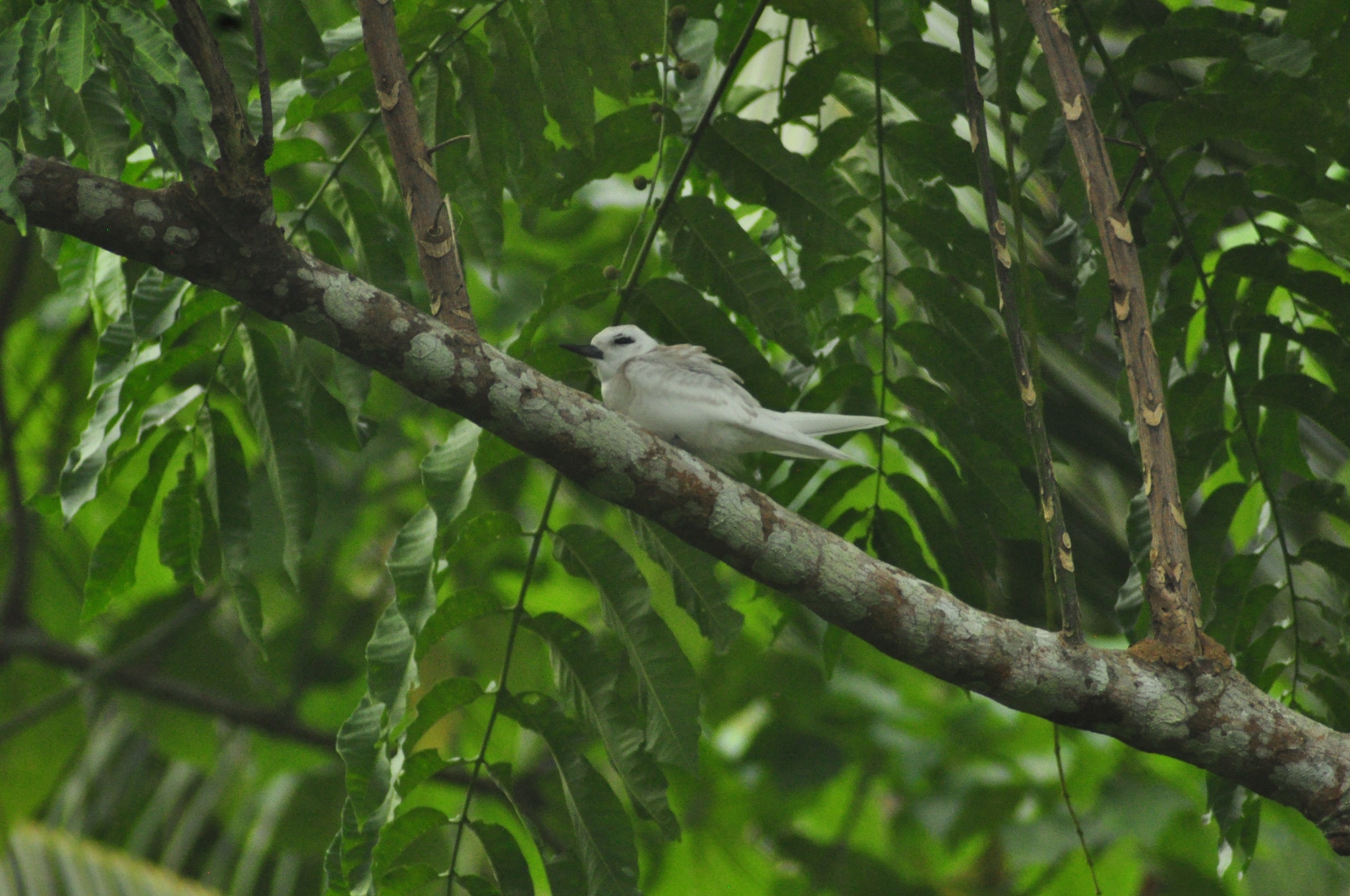
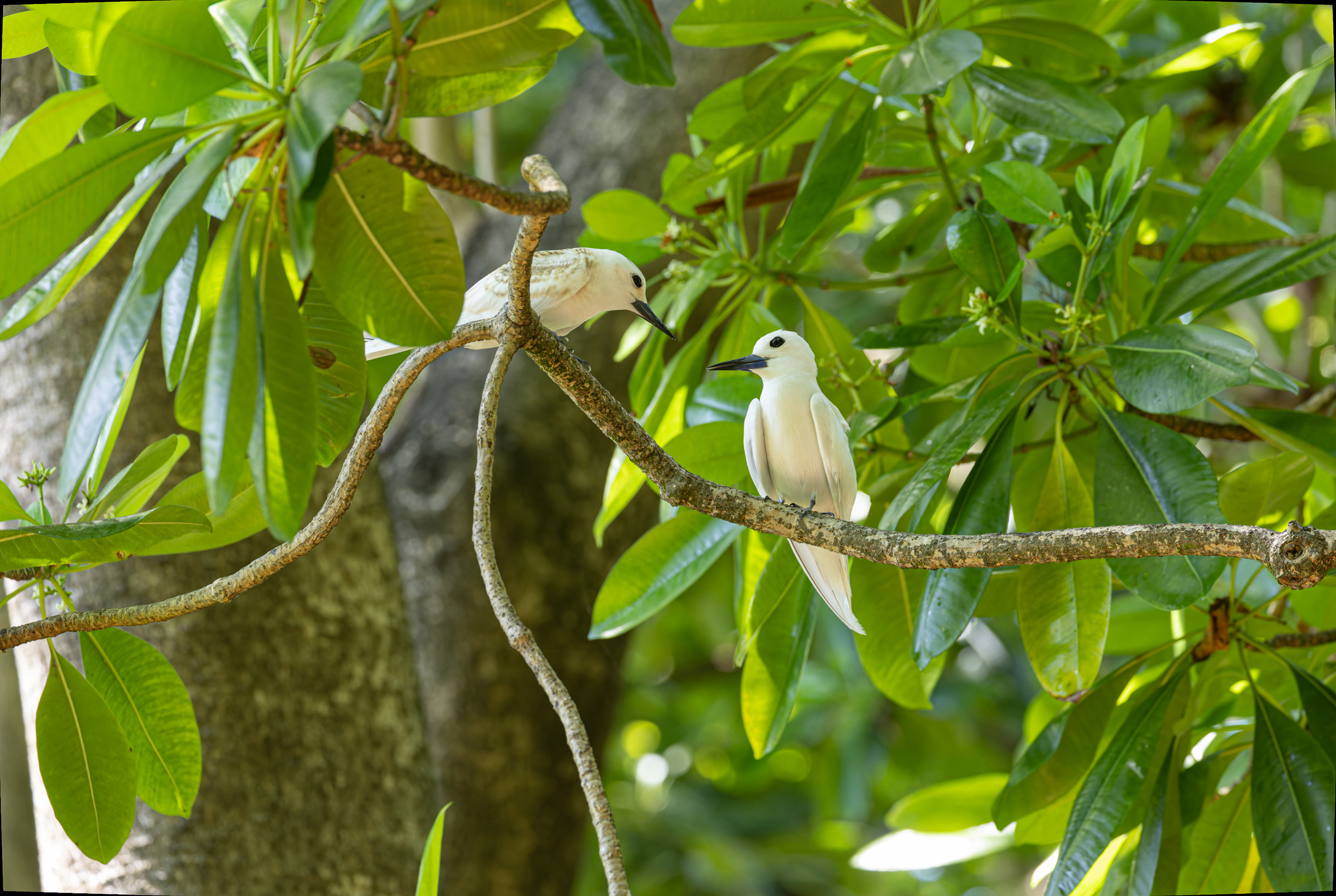
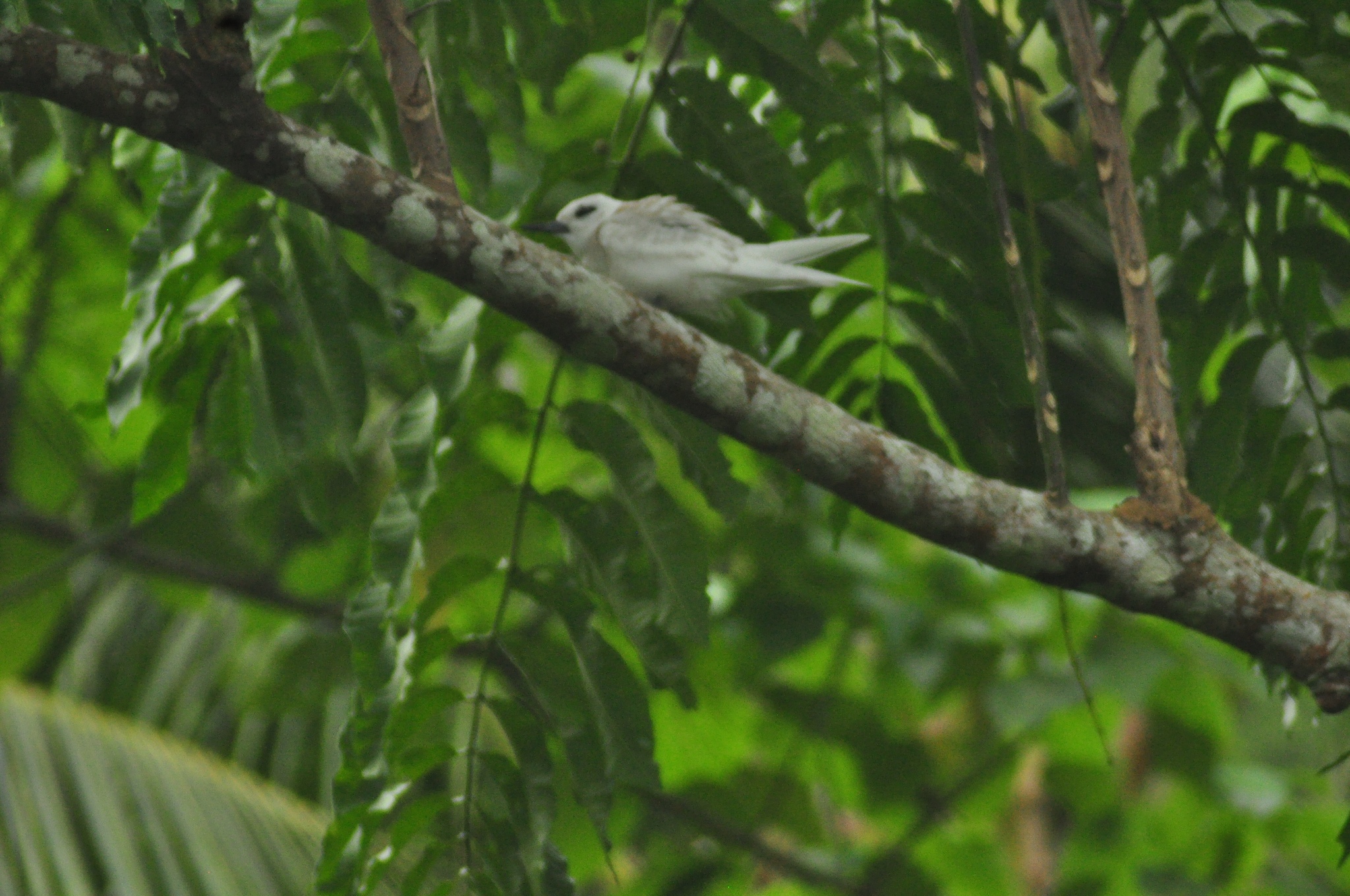
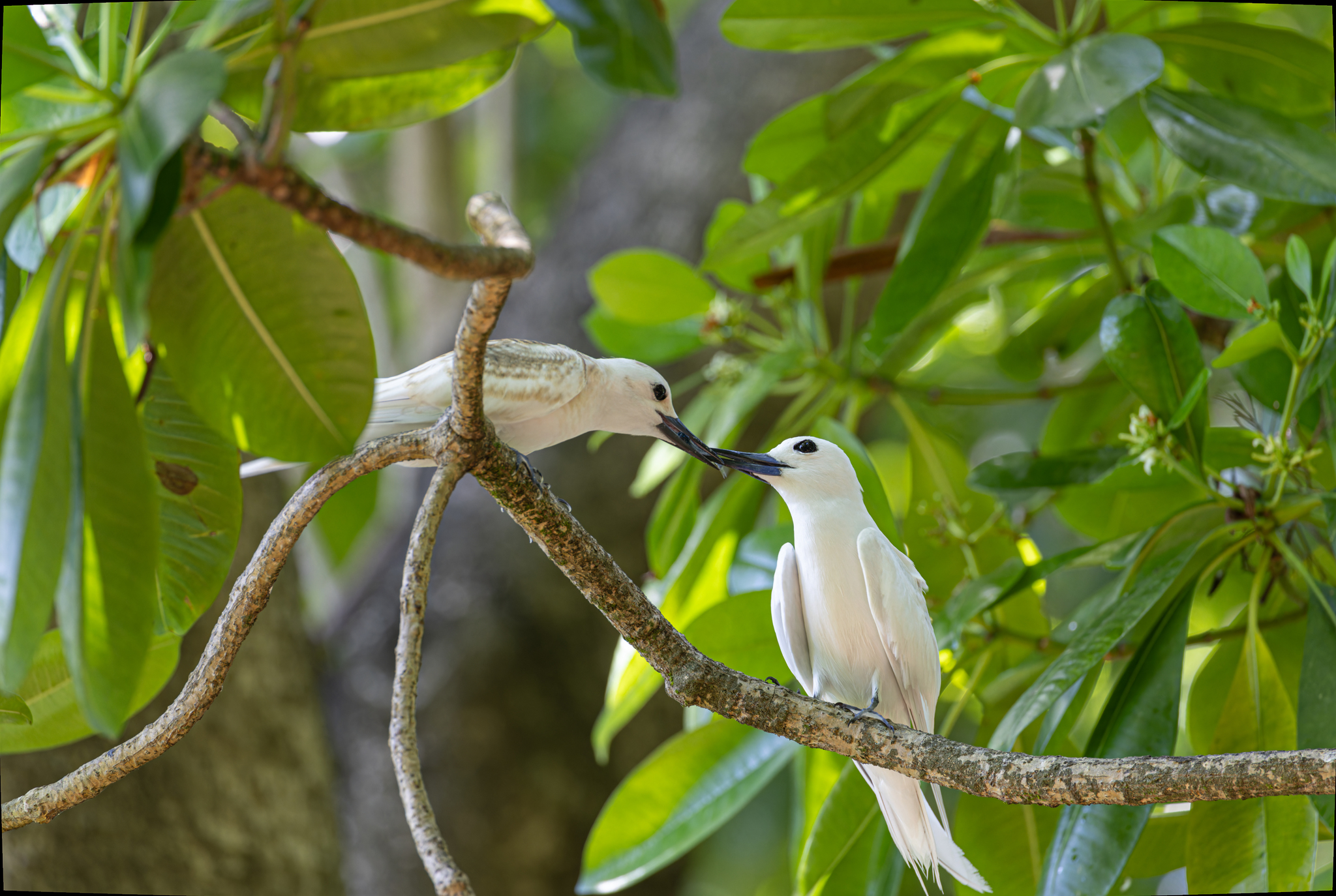
A small seabird measuring 23–30 cm in length with a wingspan of 76–87 cm. It has pure white plumage throughout, except for a dark streak along the shafts of the outer primary feathers in the subspecies G. a. candida. The species is distinguished by a black eye accentuated by a narrow ring of black feathers and a long black to bluish-black bill. The tail is shallowly forked with the longest feathers being the second-from outermost, a characteristic shared with noddies rather than typical terns. The legs are dark grey, though they may be paler in certain subspecies. Juveniles are white mottled with grey or greyish-brown.
Identification
The pure white plumage combined with the distinctive black eye patch and long black bill distinguishes this species from similar terns. Unlike most terns, it lacks a black cap in breeding plumage. The forked tail with the unusual feather arrangement (longest being second-from outermost) helps differentiate it from other white tern species. It can be distinguished from the related noddies by its smaller size and absence of a pale gray plumage phase.
Distribution & Habitat
Found throughout many islands in the Atlantic Ocean as a pelagic and epipelagic species. It inhabits coastal areas and moves into wooded areas during the breeding season. Nests on coral islands, typically on trees with small branches but also utilizing rocky ledges and man-made structures.
Behavior & Ecology
Notable for an unusual breeding behavior among terns: it lays a single egg on bare thin branches in a small fork or depression without constructing a nest. This is thought to reduce nest parasites that can cause colony abandonment, though eggs and chicks are vulnerable to dislodgement by heavy winds. The species quickly relays if the egg is lost. Newly hatched chicks have well-developed feet for clinging to precarious nesting sites. It feeds on small fish caught through plunge diving. Long-lived, with individuals recorded surviving up to 42 years.
Conservation
Globally listed as Least Concern by the IUCN Red List with a large range and several large colonies. However, in New Zealand it is classified as Nationally Critical. Populations were decimated by introduced feral cats and rats on Raoul Island, the species' only breeding site in the country. As of 2016, the New Zealand population was reported to be increasing following predator eradication efforts in 2002.
Culture
Known as manu-o-Kū in Honolulu, Hawai'i, where it was designated the official city bird on April 2, 2007.
Source: Wikipedia · CC BY-SA 3.0
Taxonomy
- Order
- Charadriiformes
- Family
- Laridae
- Genus
- Gygis
- eBird Code
- whiter3
Distribution
Fernando de Noronha, Trindade, Martin Vas Rocks, Ascension, and St. Helena islands (tropical South Atlantic Ocean)
Vocalizations
Data Sources
Species description from Wikipedia, licensed under CC BY-SA 3.0.
Bird images and sounds sourced from GBIF, contributed by citizen scientists worldwide under Creative Commons licenses.
Taxonomy data from AviList 2025.