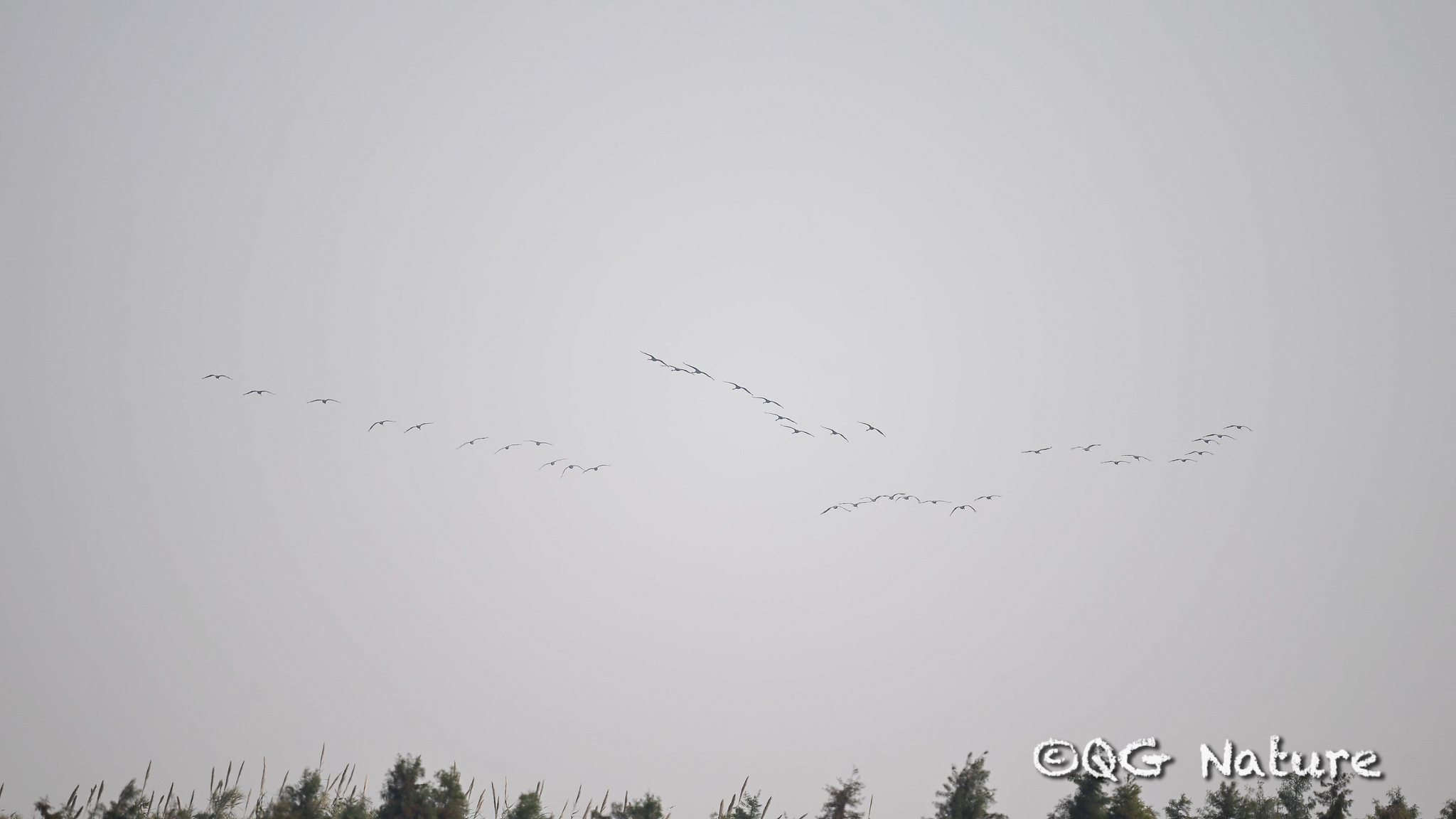
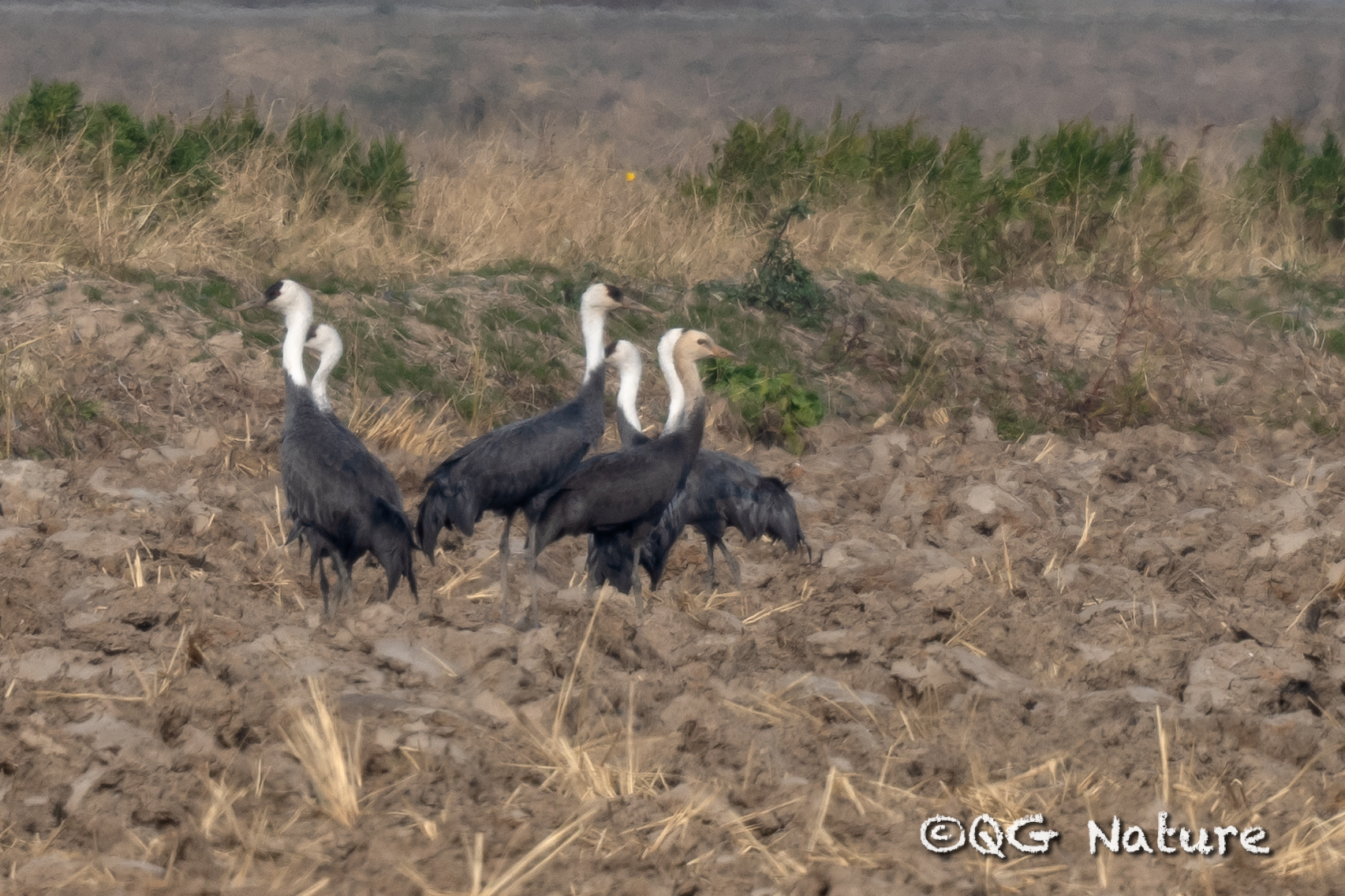
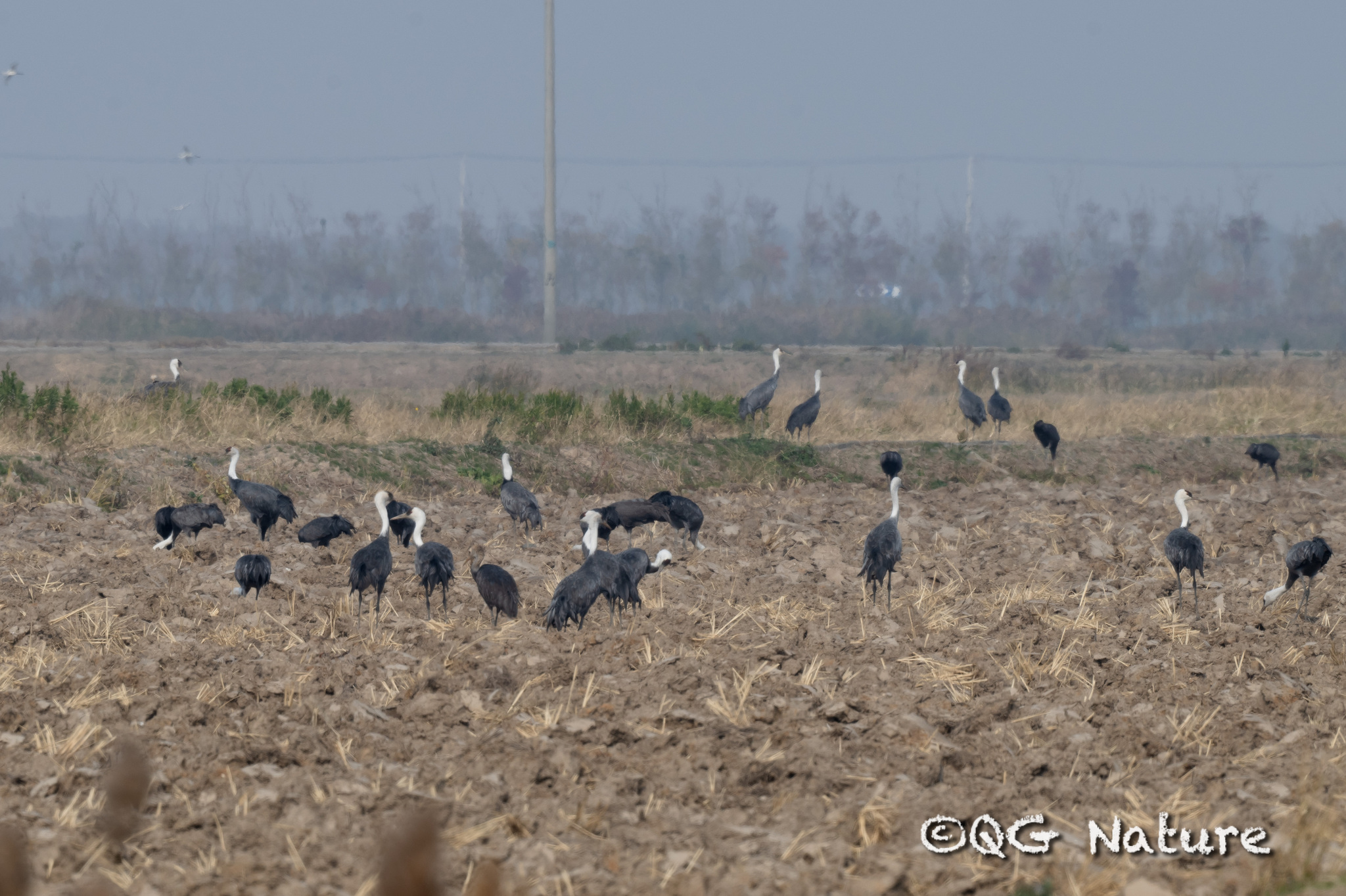
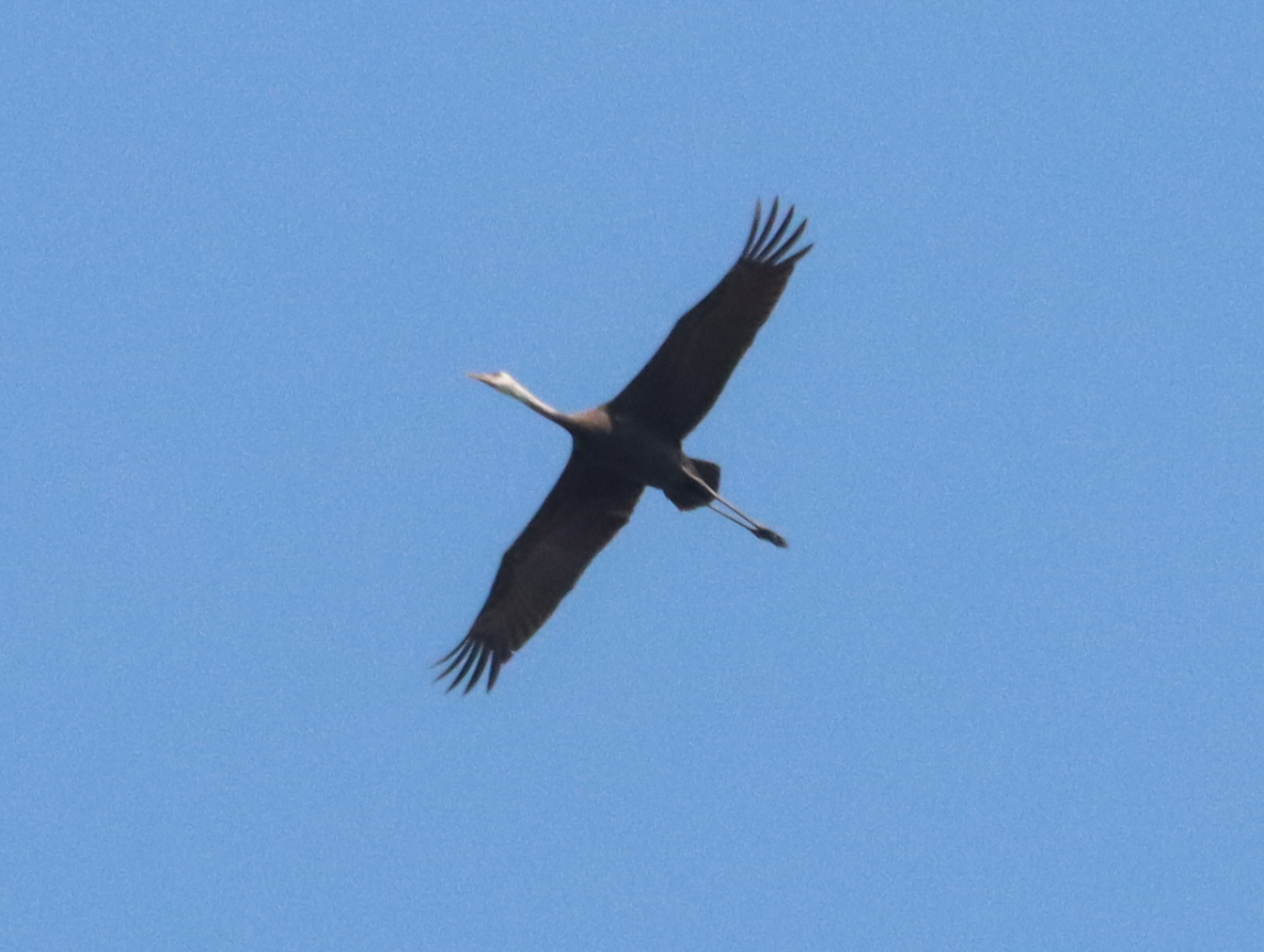

Hooded Crane
Grus monacha
白头鹤
Introduction
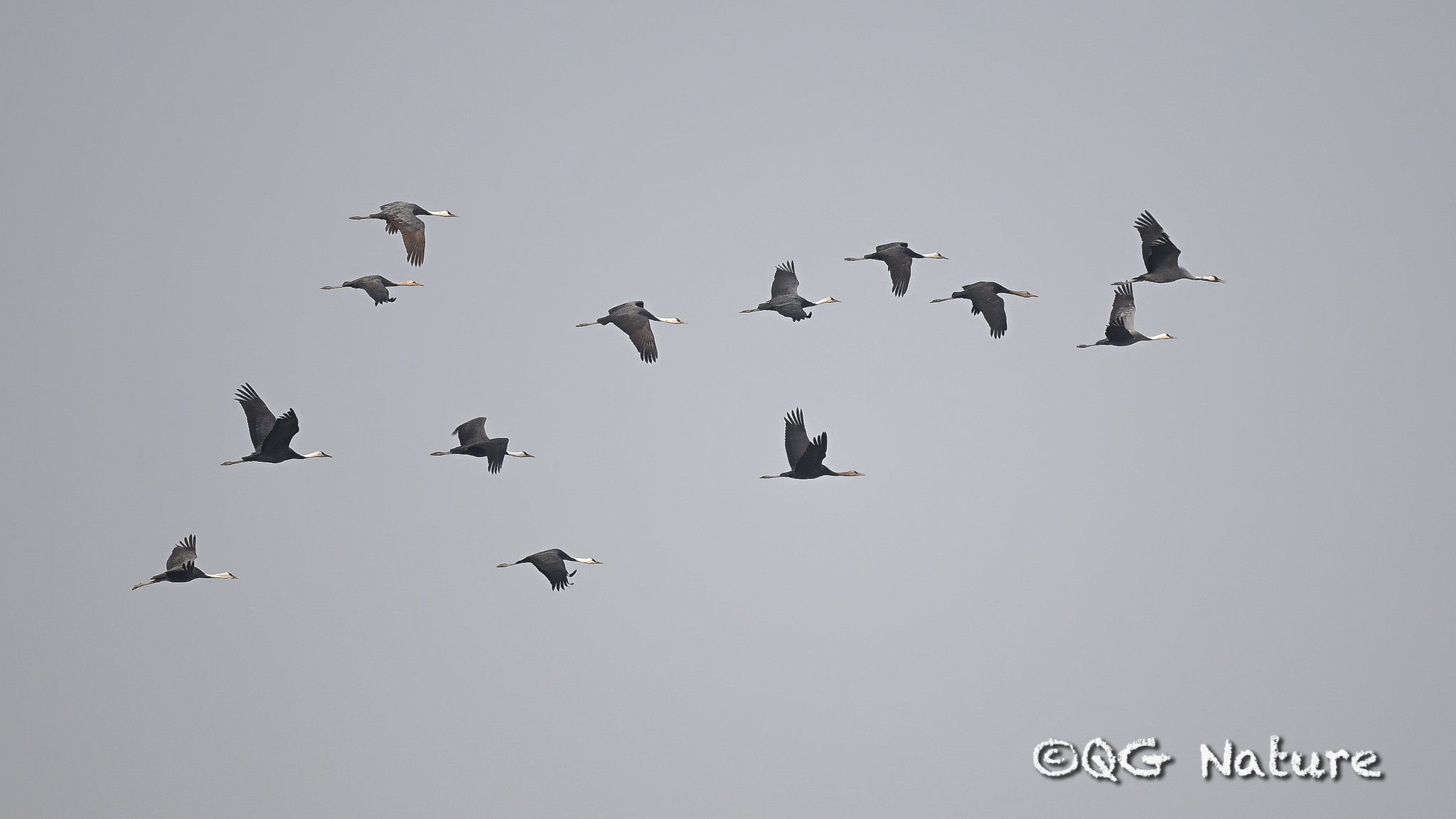
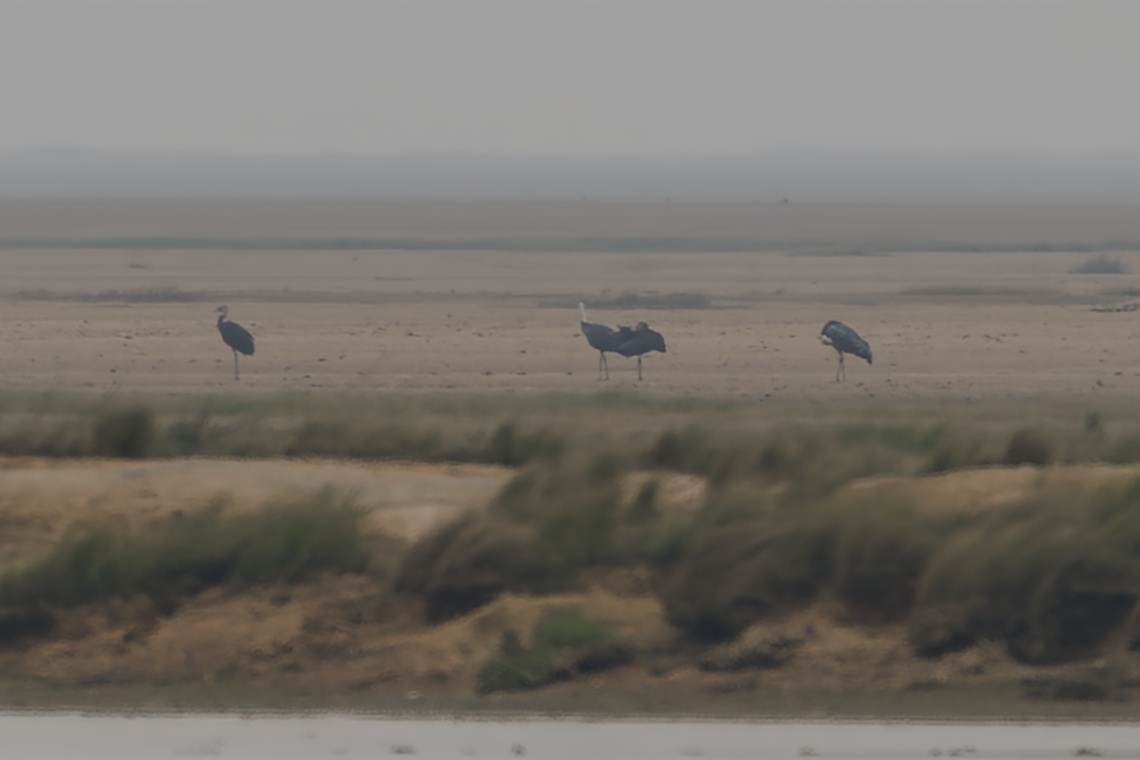
The Hooded Crane (Grus monacha) is a small crane species breeding in taiga wetland habitats of eastern Russia and northeastern China. It winters primarily in East Asia, with over 80% of the global population converging at a single site in Izumo, Japan from November to March. Wintering birds gather in hundreds at marshy wetlands where they exhibit characteristic dancing displays and bugling calls. Vagrants occasionally appear outside the normal range, with rare North American records documented. The highly concentrated wintering distribution at a single site presents significant conservation concerns.
Description
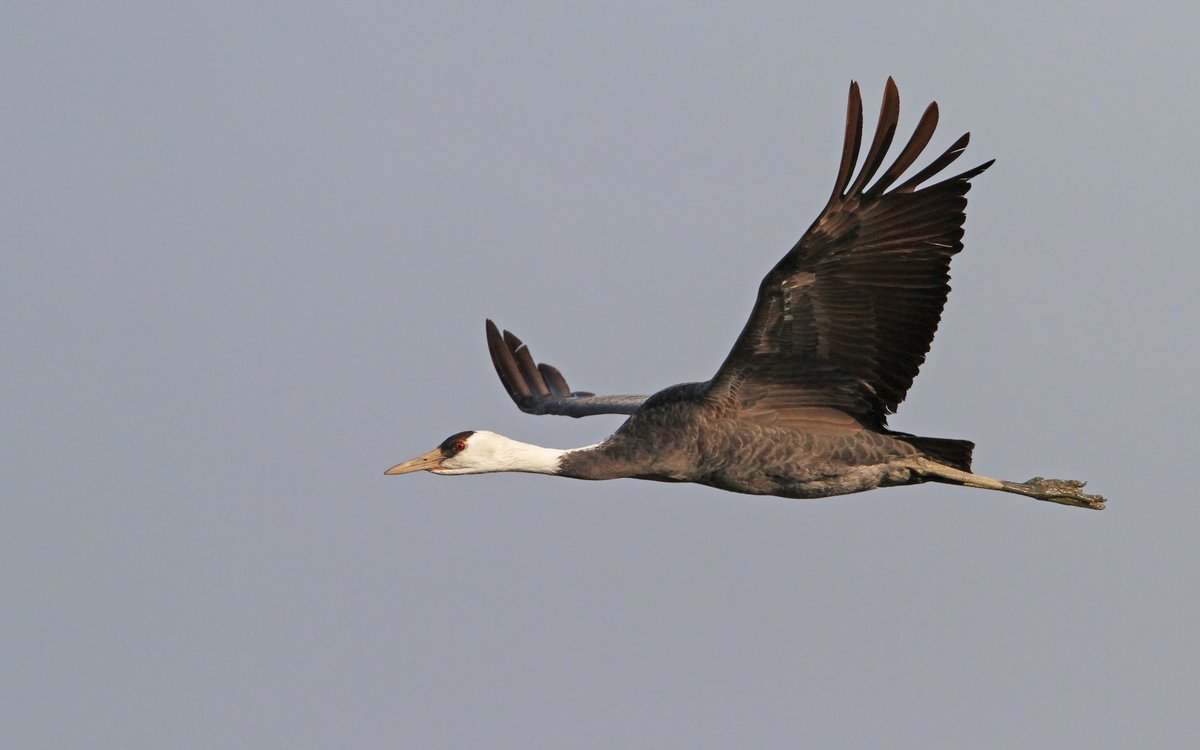
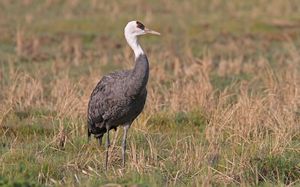
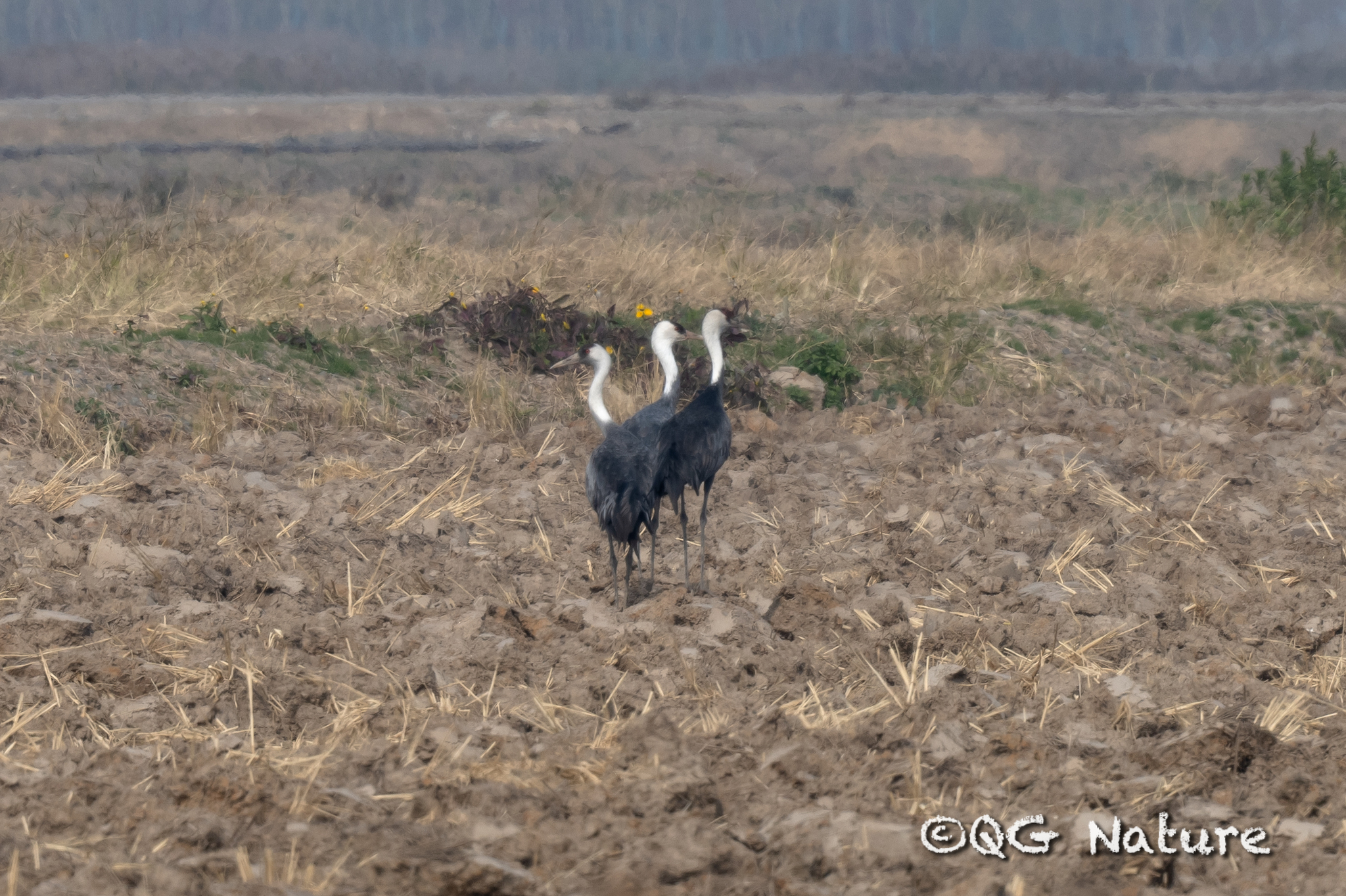
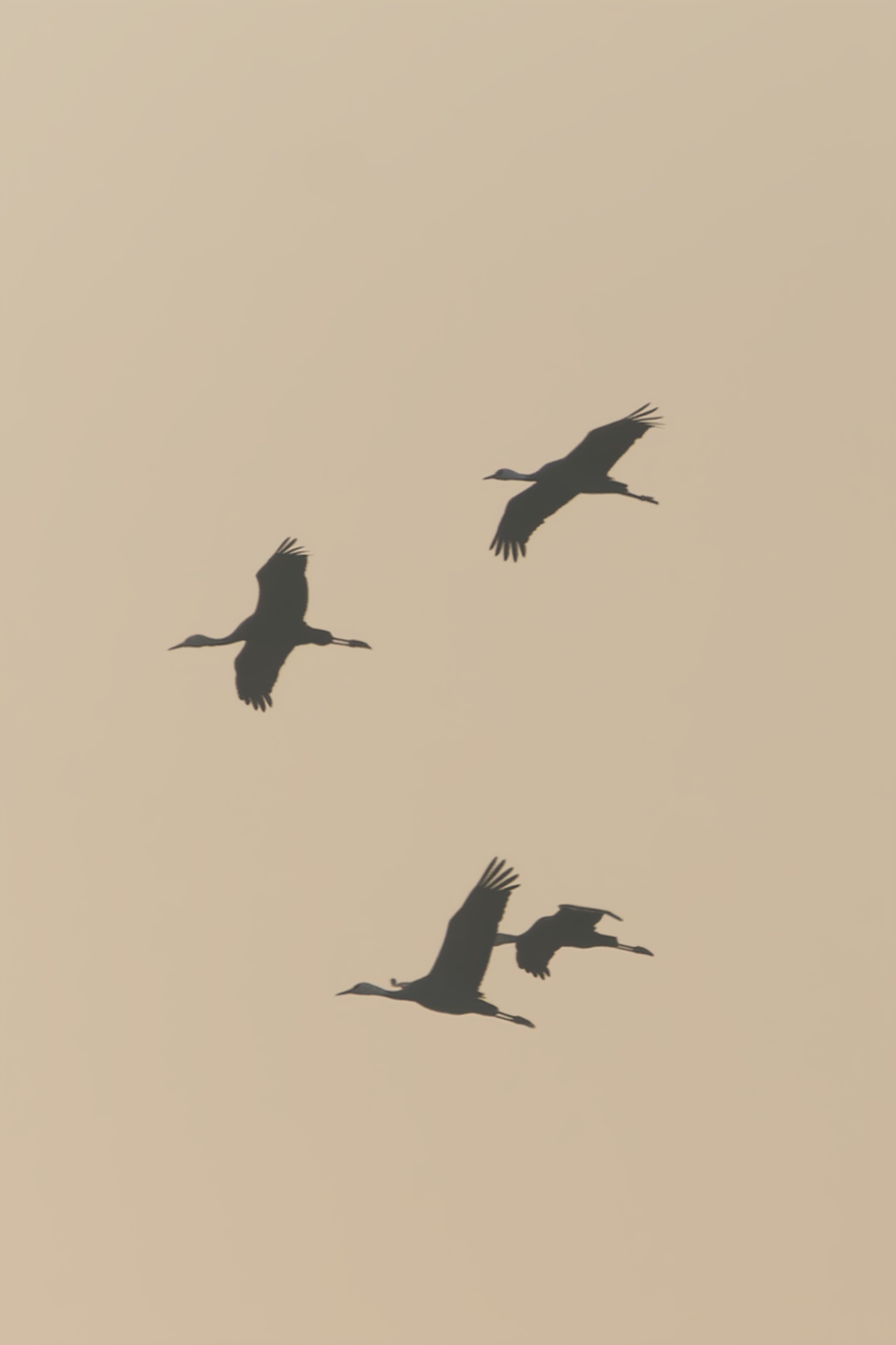
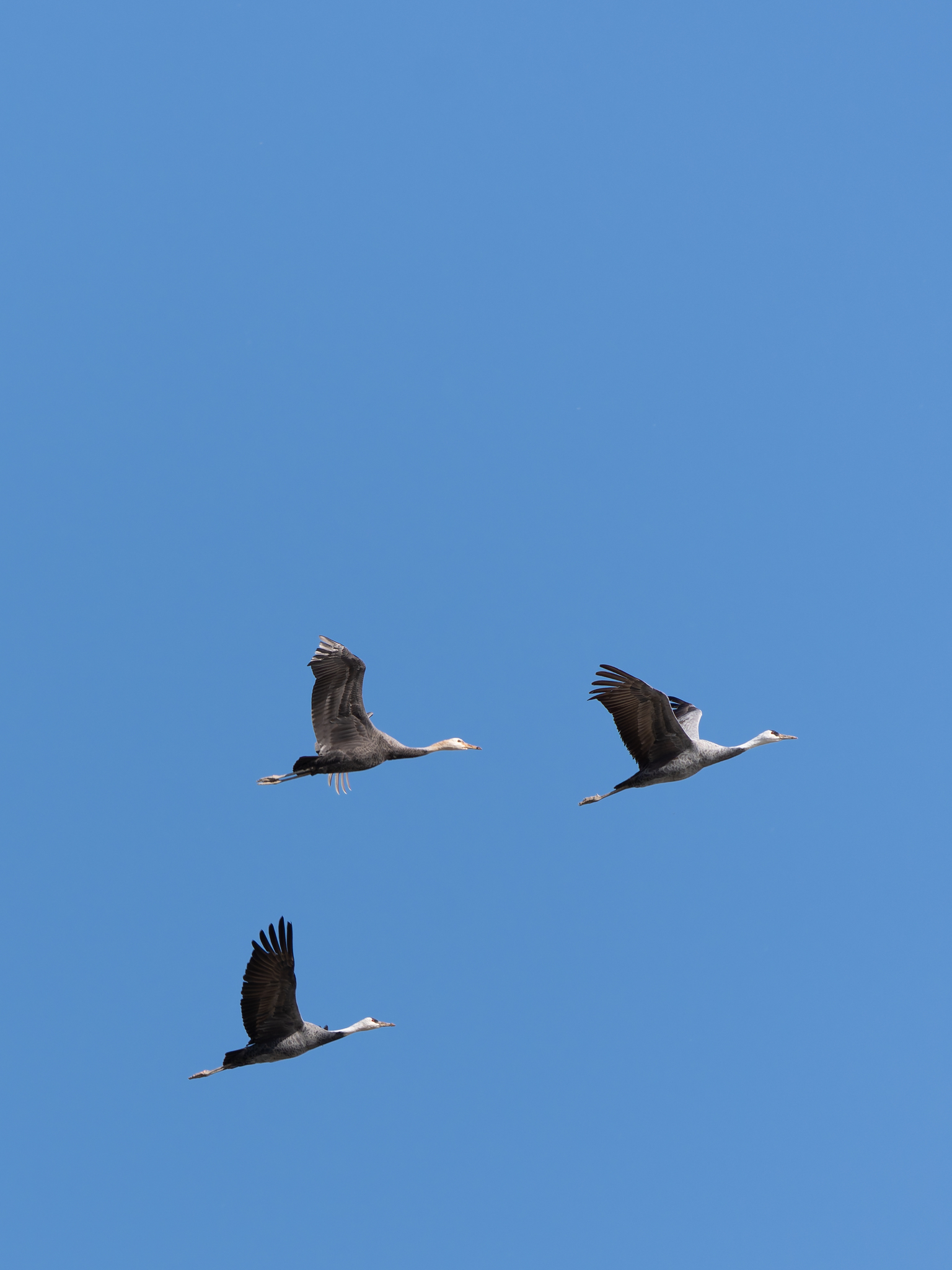
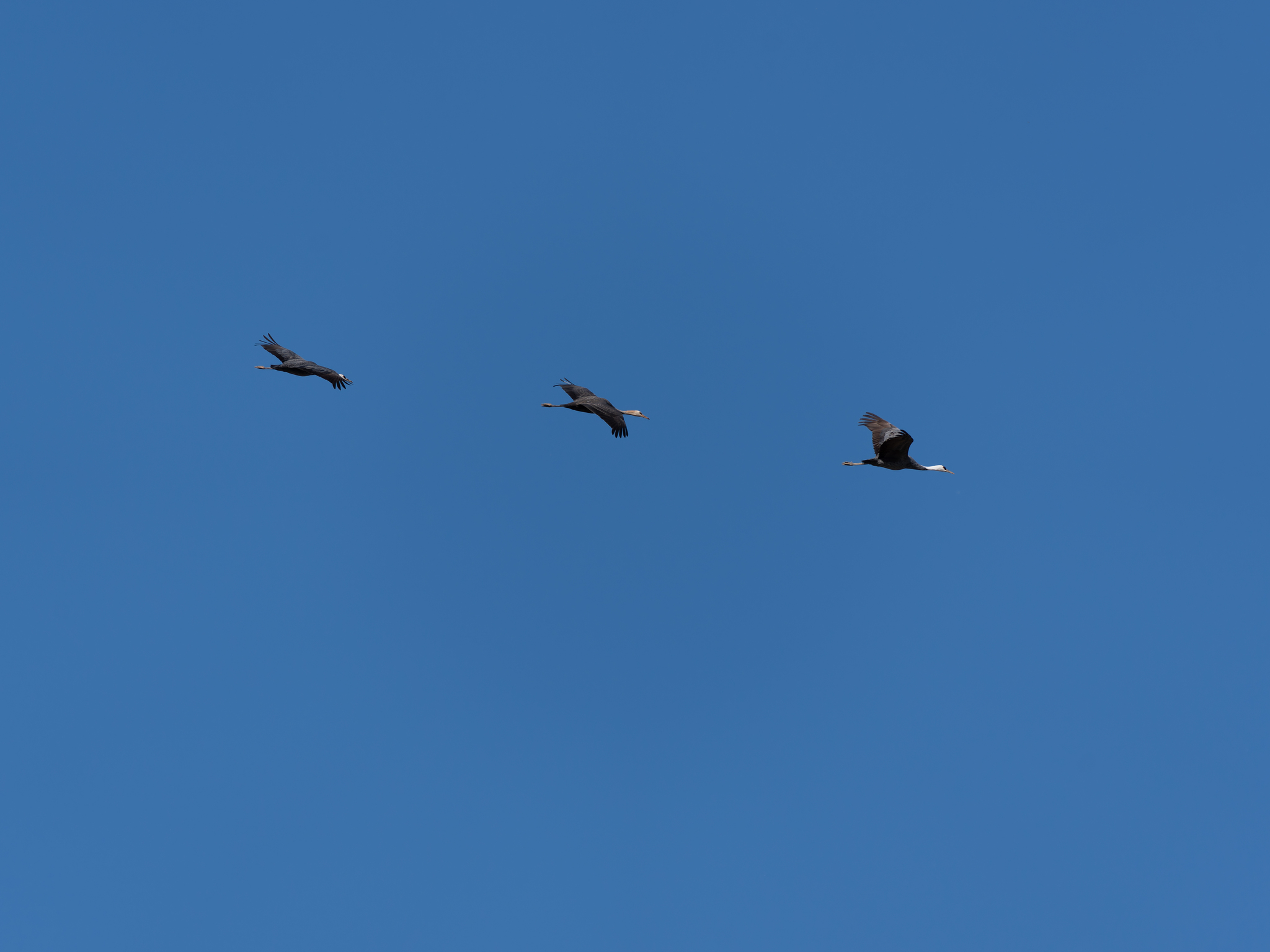
This crane displays a distinctive color pattern with a gray body and wings contrasting sharply with a pure white head and neck. A prominent patch of bare red skin above the eye provides an identifying mark. The white extends down the neck while the body remains dark gray, with paler gray secondary feathers and white primary feathers visible in flight. It ranks among the smaller crane species but maintains substantial size, reaching approximately 1 meter in length with a robust body weighing around 3.7 kilograms. The wingspan extends to about 1.87 meters, giving powerful flight silhouette when migrating.
Identification
The combination of white head and neck against a dark gray body distinguishes this species from other cranes in its range. The red bare skin patch above the eye is diagnostic and visible at considerable distance. It appears notably smaller than common crane and sandhill crane species it may associate with during migration. The white neck pattern differs from the all-dark neck of the similar-sized common crane. In flight, the dark body and contrasting white head remain distinctive, with wings showing gray coverts and white primaries.
Distribution & Habitat
Breeding occurs across south-central and south-eastern Siberia, with suspected breeding in Mongolia. The vast majority of the world population winters in East Asia, with over 80% gathering at traditional sites in Izumi, southern Japan. Additional wintering populations occur in South Korea and China, including Chongming Dongtan near Shanghai where approximately 100 individuals winter annually. Dongtan Nature Reserve serves as the largest natural wintering site globally. A small group of seven was first recorded in Siargao, Philippines in March 2020, suggesting expansion of the wintering range. Rare vagrants have appeared in North America, with individuals recorded in Tennessee and Indiana.
Conservation
The global population is estimated at 11,600 individuals, earning a Vulnerable assessment on the IUCN Red List of Threatened Species. Primary threats stem from wetland loss and degradation across wintering grounds in China and South Korea, where reclamation for development and dam construction destroy critical habitat. Conservation efforts began in 2008, bringing together local universities, non-governmental organizations, and communities to establish safer wintering locations. The species receives international protection through listing on both CITES Appendix I and Appendix II. A dedicated international organization works to coordinate protection efforts and raise awareness about threats facing this vulnerable species.
Source: Wikipedia · CC BY-SA 3.0
Taxonomy
- Order
- Gruiformes
- Family
- Gruidae
- Genus
- Grus
- eBird Code
- hoocra1
Distribution
breeds Siberia and northwestern Manchuria; winters to eastern China, Korea, and Japan
Data Sources
Species description from Wikipedia, licensed under CC BY-SA 3.0.
Bird images and sounds sourced from GBIF, contributed by citizen scientists worldwide under Creative Commons licenses.
Taxonomy data from AviList 2025.