

Japanese Night Heron
Gorsachius goisagi
栗头鳽
Introduction
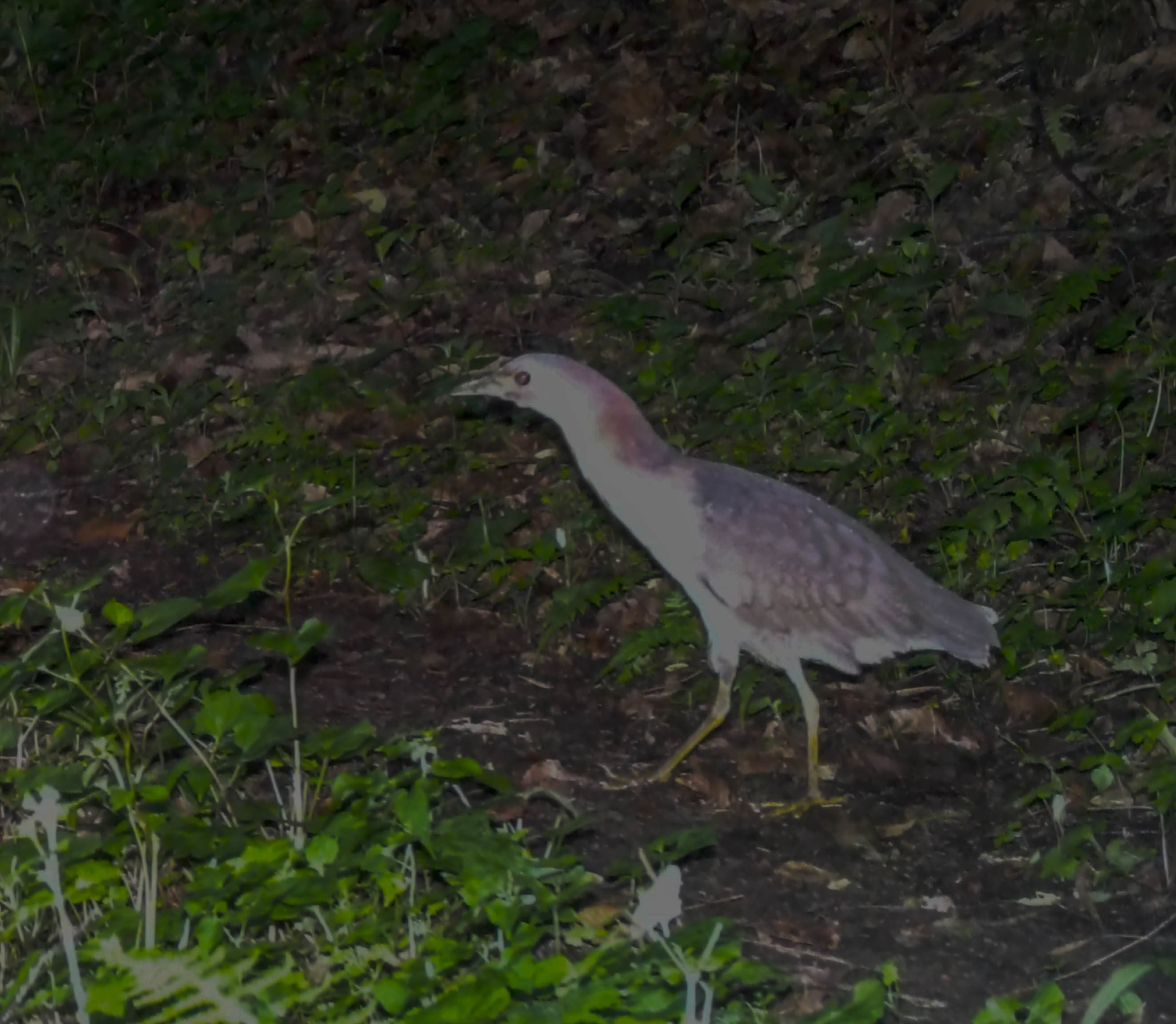
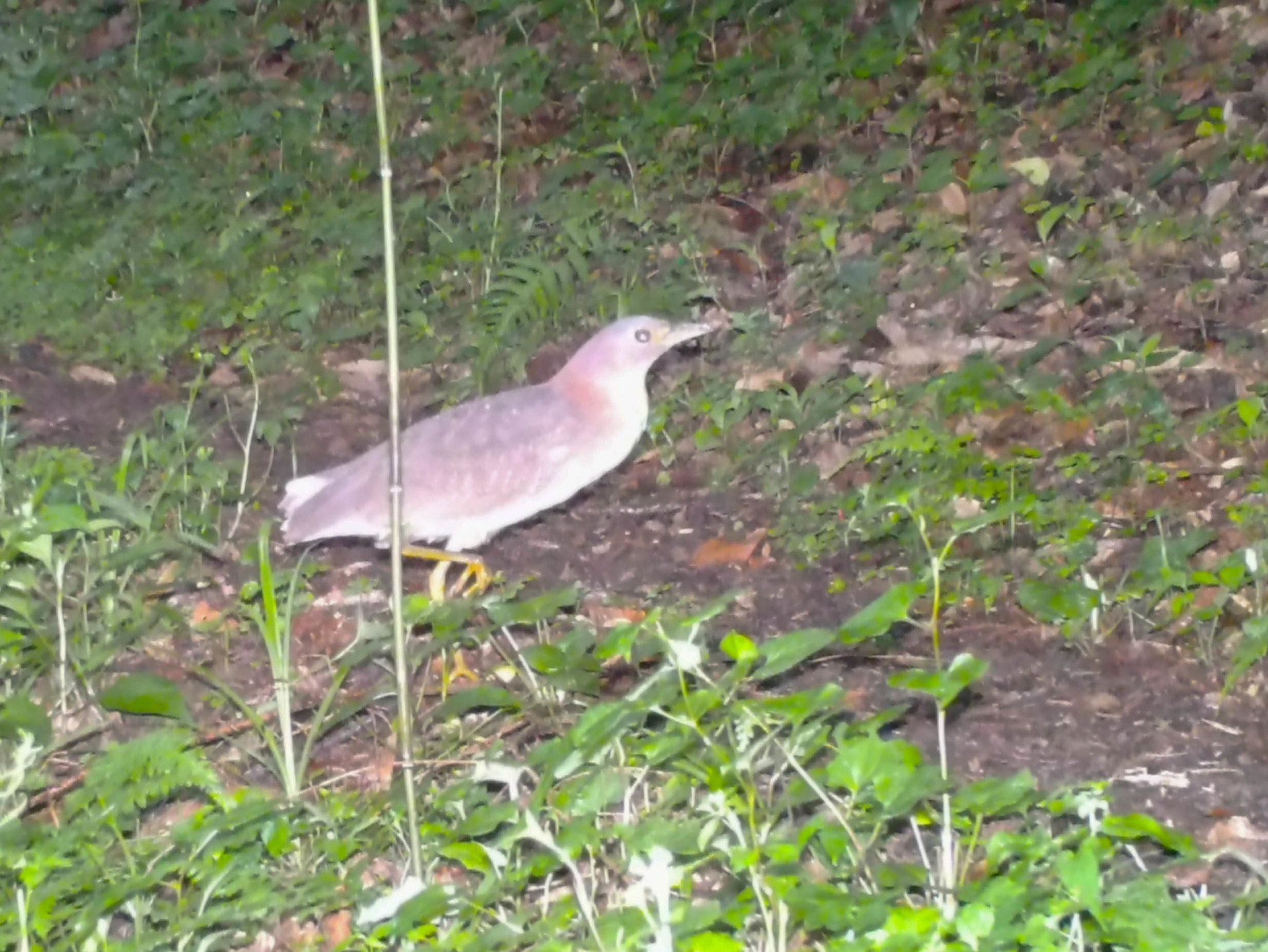
A medium-sized heron species restricted to East Asia. It inhabits dense forest floor environments and mature woodland ecosystems, distinguishing it from most heron species that occupy open wetlands. The species exhibits crepuscular feeding behavior, being most active at dusk when it forages in the forest understory. Its reliance on mature forest ecosystems makes it an indicator species for healthy woodland environments.
Description
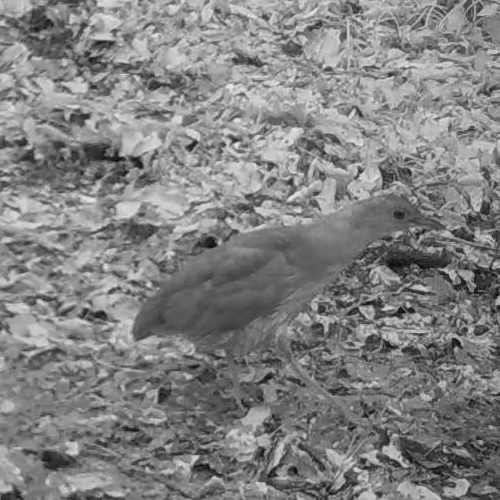
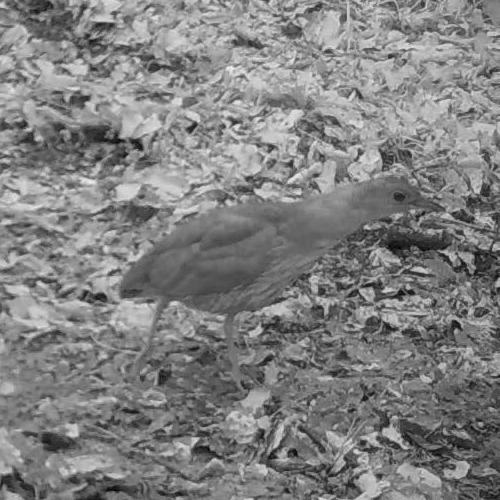
A compact, medium-sized heron with a wingspan of 43 to 47 centimeters. Adults display a distinctive russet-colored head and neck, with dark brown wing feathers. The bill is notably broad and sturdy, and the lores (skin around the eyes) are a bright yellow. Juveniles differ significantly, having blackish head feathering rather than russet, with lighter-colored wings compared to adults. Both age classes share the characteristic wide beak and yellow facial skin. The most diagnostic field mark is the series of dense, irregular black lines running through the wing covert feathers, a feature unique to this species among the night herons in its range.
Identification
This species is most reliably distinguished from the similar black-crowned night heron (with which it often associates during migration) by its smaller size and the distinctive russet coloring on the head and neck of adults. The black-crowned night heron lacks the russet coloration entirely and shows the black crown and back from which it derives its name. The dense forest habitat preference also sets this species apart, as black-crowned night herons typically occupy more open wetland environments. The juvenile plumage, with its blackish head and lighter wings, can be confused with juvenile black-crowned night herons, but the forest habitat and the black streaking on the wing coverts are key distinguishing features.
Distribution & Habitat
This species breeds exclusively in Japan, with the core population concentrated on the main islands. During the non-breeding season, it migrates to the Philippines and Indonesia, with occasional records from Korea, southern China, Taiwan, and the Russian Far East. The habitat consists of dense, mature coniferous and broad-leaved forests on hills and low mountains near water sources such as rivers and streams. Breeding occurs from 50 to 240 meters elevation, though individuals have been recorded above 1,000 meters where suitable habitat persists. Wintering birds utilize dark, deeply shaded forests near water, occasionally reaching 2,400 meters elevation in the Philippines. Spring arrival in breeding areas occurs between March and June, with departure for wintering grounds from September through November.
Behavior & Ecology
A solitary or small-group forager that becomes active at dusk, rarely appearing in open areas. The diet consists primarily of soil invertebrates including earthworms and snails, which it extracts from the forest floor using its thick beak. It demonstrates a preference for mature snails, likely to avoid the fragile shells of juveniles. Additionally, it hunts crustaceans and small fish in shallow waters along swamp margins and rice paddy edges. Breeding occurs in Japan from May to July, with a single confirmed record from Taiwan. Nests are constructed 20 meters high in tall trees such as cedar, cypress, and oak, positioned alone on horizontal branches and constructed from sticks and leaves. Clutches contain 3-5 eggs, with asynchronous hatching due to incubation beginning at laying. Parents depart for extended foraging periods after the third day post-hatching, returning increasingly frequently until fledging at 35-37 days.
Conservation
Classified as globally threatened due to an estimated population of fewer than 1,000 mature individuals and ongoing decline. The primary threat is deforestation of lowland forests for agricultural conversion and timber extraction, which has eliminated much of the breeding and foraging habitat. Nest predation by increasing crow populations poses additional pressure. Siberian weasels, introduced to Hokkaido in 1901, compete for food resources and prey on eggs and young. Legal protection exists under Japanese and Hong Kong law. Conservation priorities include habitat protection, public awareness campaigns, expanded surveys of breeding and wintering populations, and control of invasive species. The extremely restricted breeding range compounds the species' vulnerability to localized disturbances.
Source: Wikipedia · CC BY-SA 3.0
Taxonomy
- Order
- Pelecaniformes
- Family
- Ardeidae
- Genus
- Gorsachius
- eBird Code
- janher1
Distribution
breeds Jeju (off southern Korean Peninsula), Honshu to Kyushu (central to southern Japan), and Taiwan; non-breeders range Ryukyu Islands (southern Japan) to Philippines
Data Sources
Species description from Wikipedia, licensed under CC BY-SA 3.0.
Bird images and sounds sourced from GBIF, contributed by citizen scientists worldwide under Creative Commons licenses.
Taxonomy data from AviList 2025.