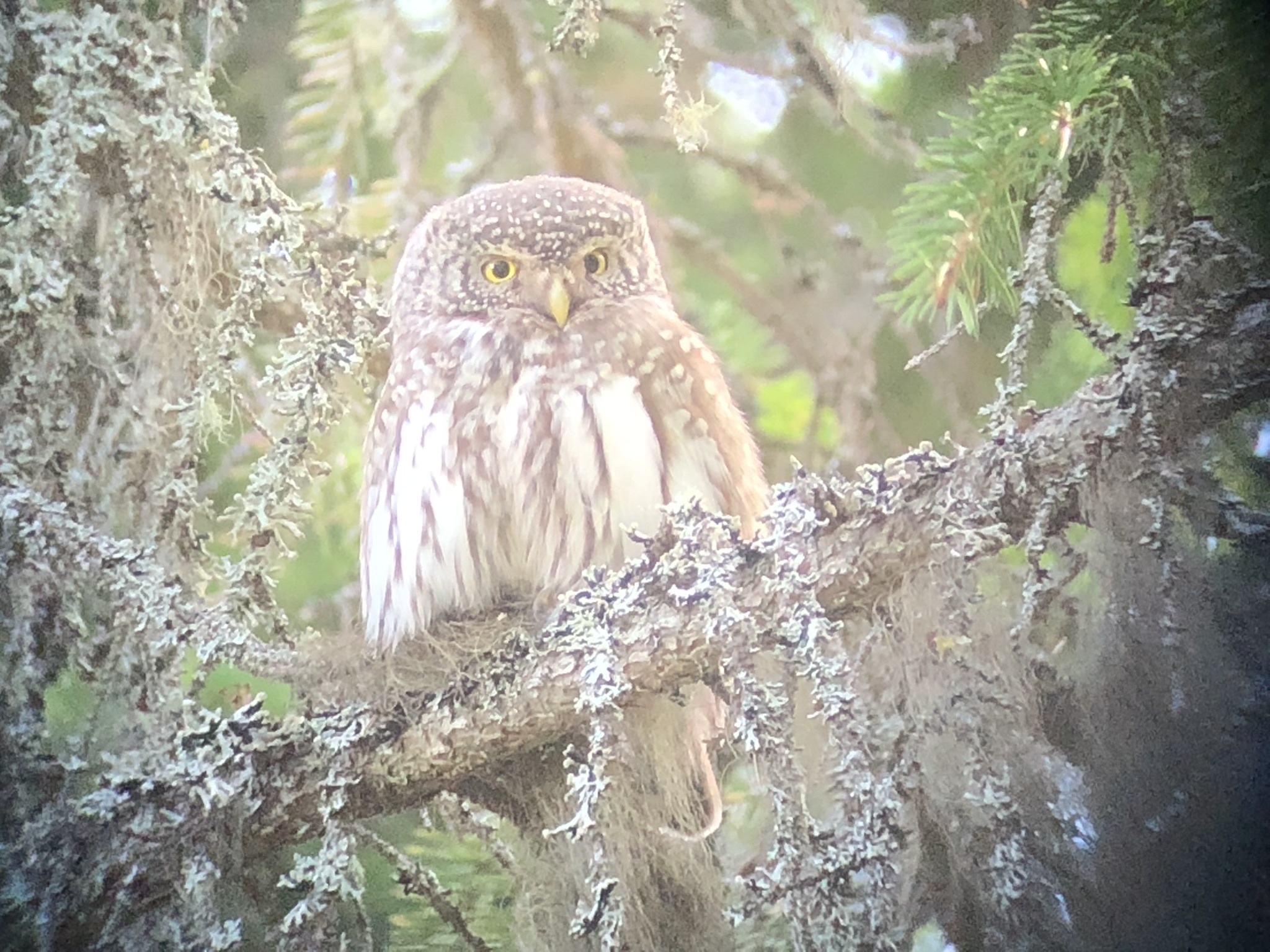
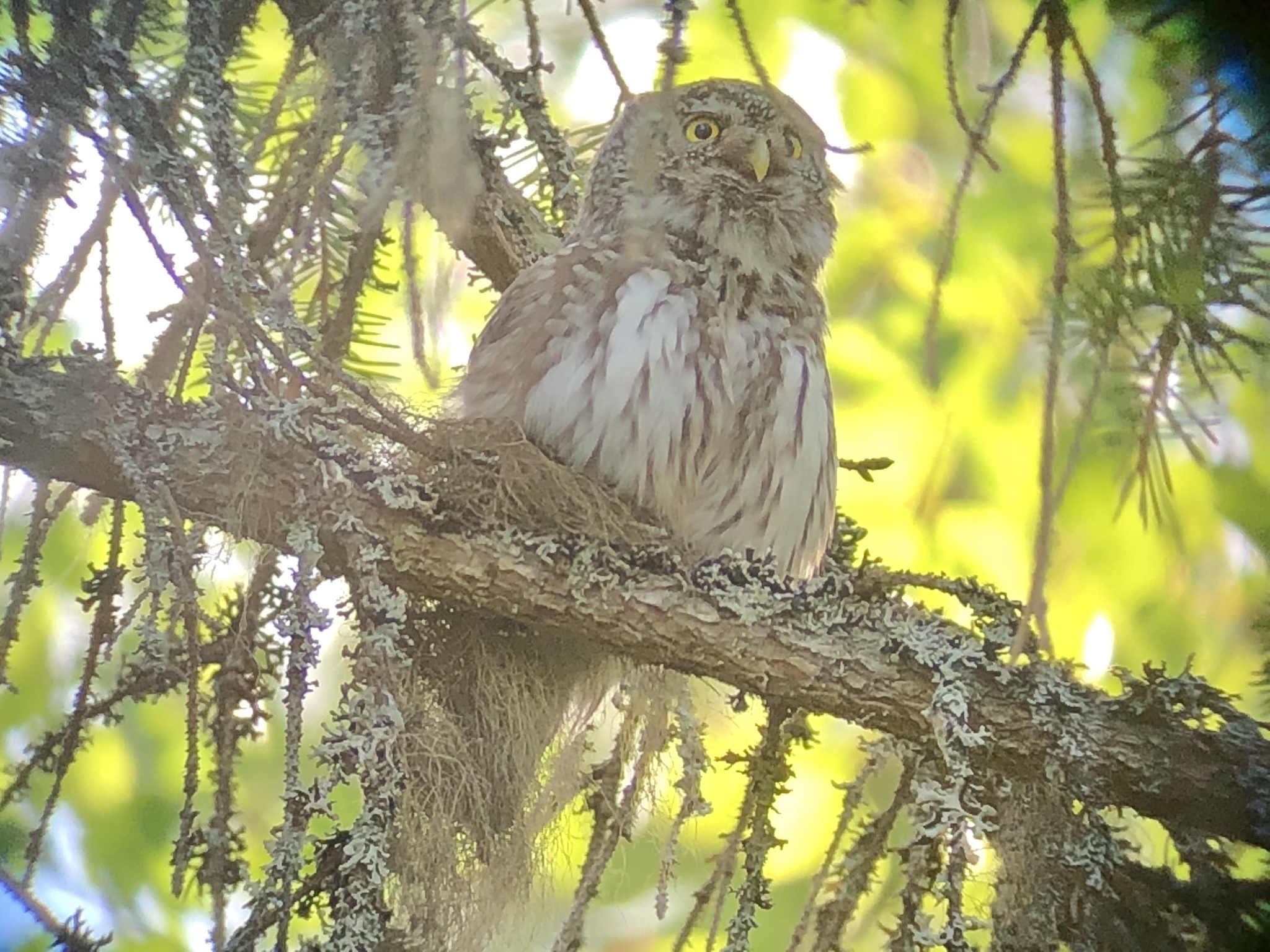
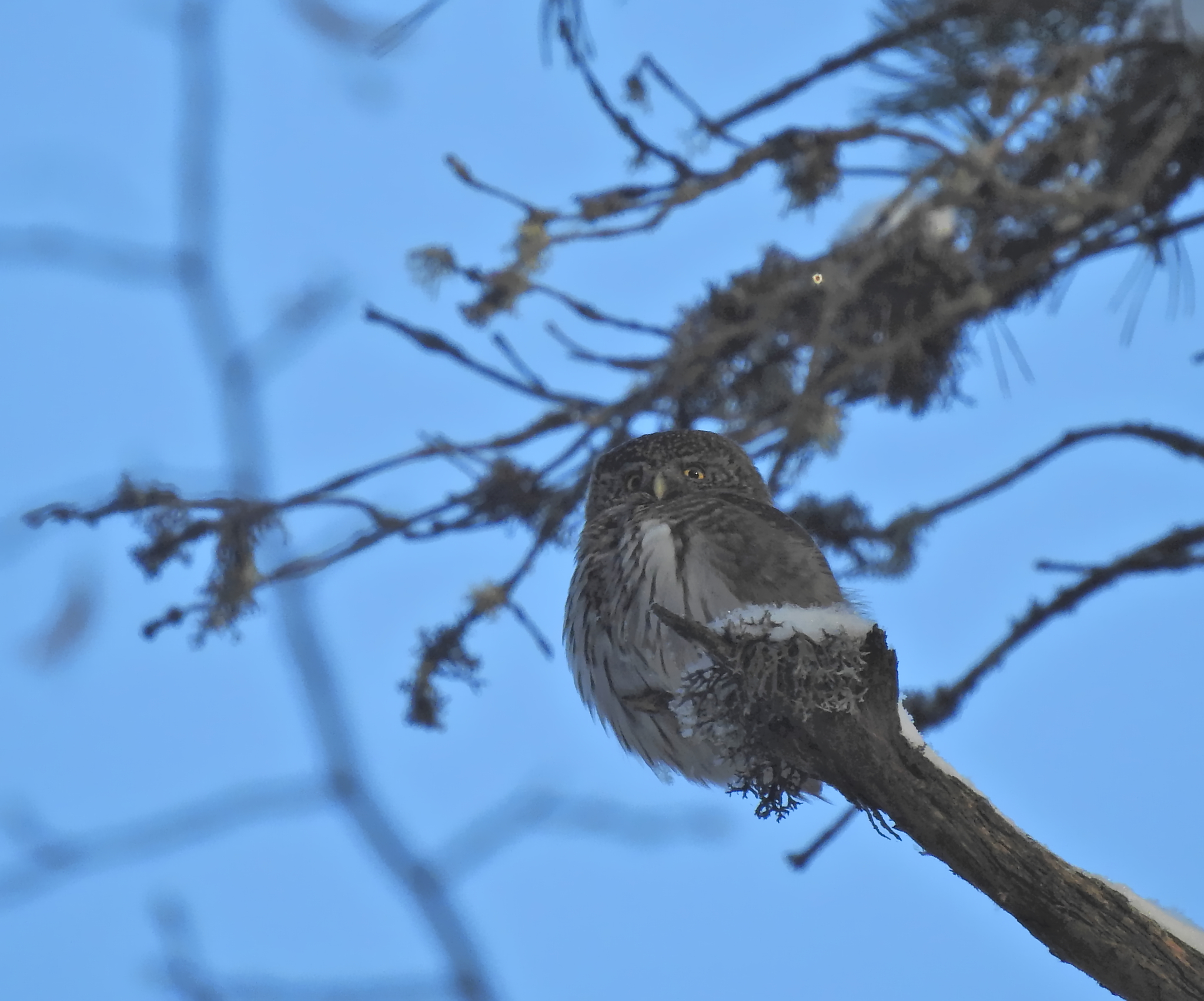
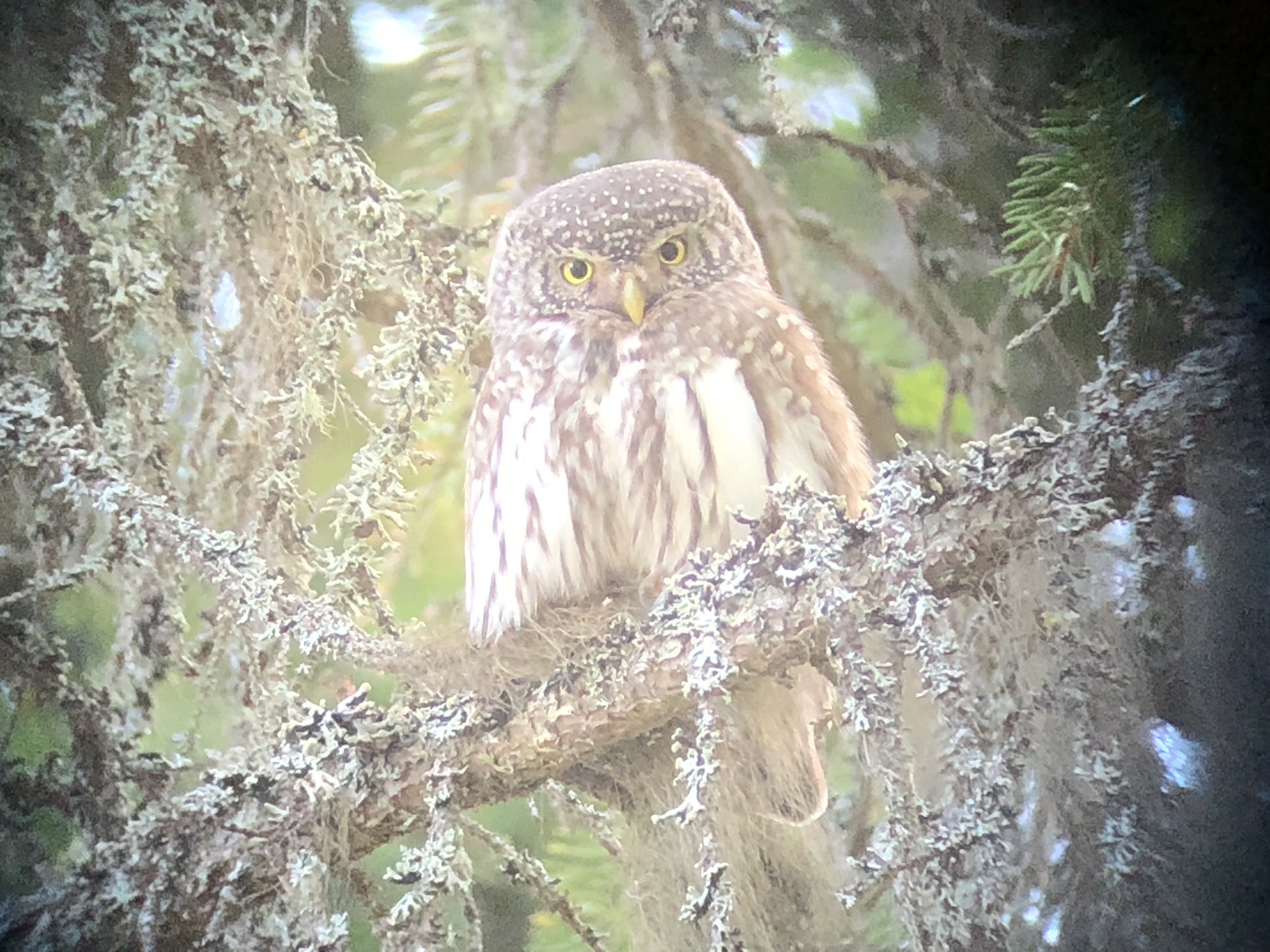
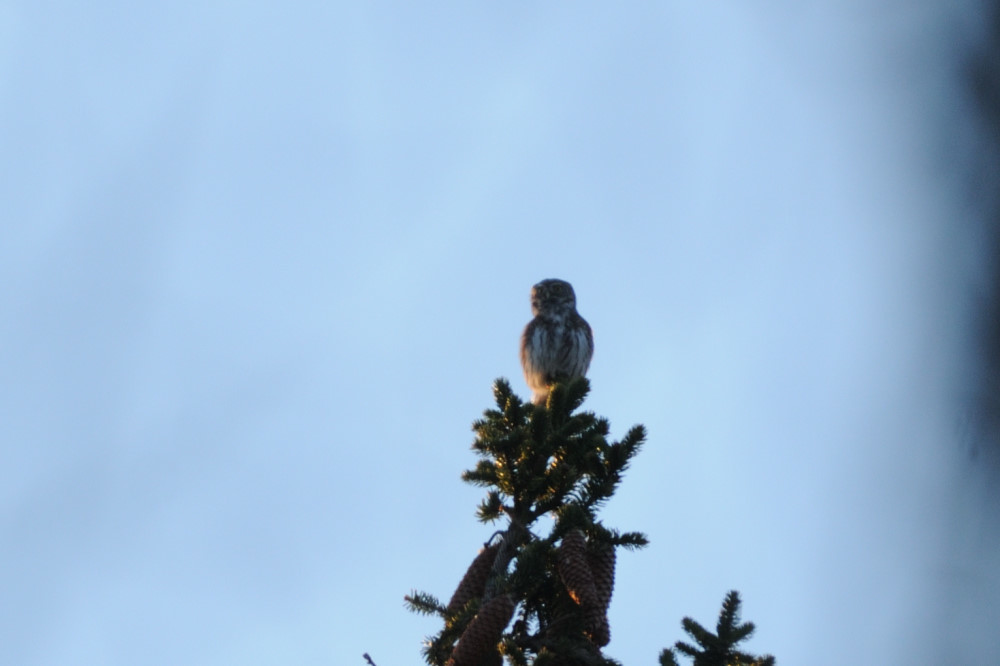
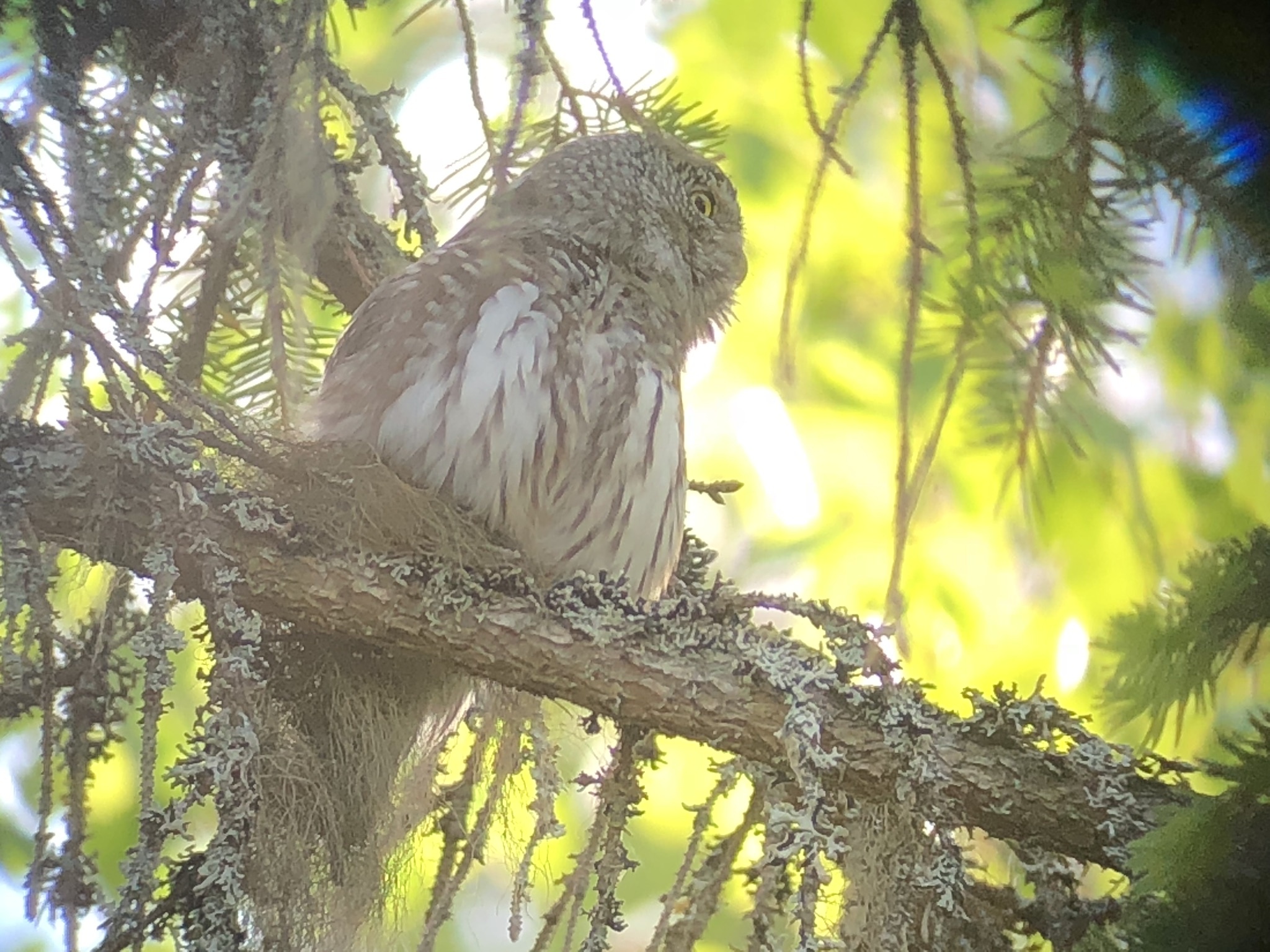
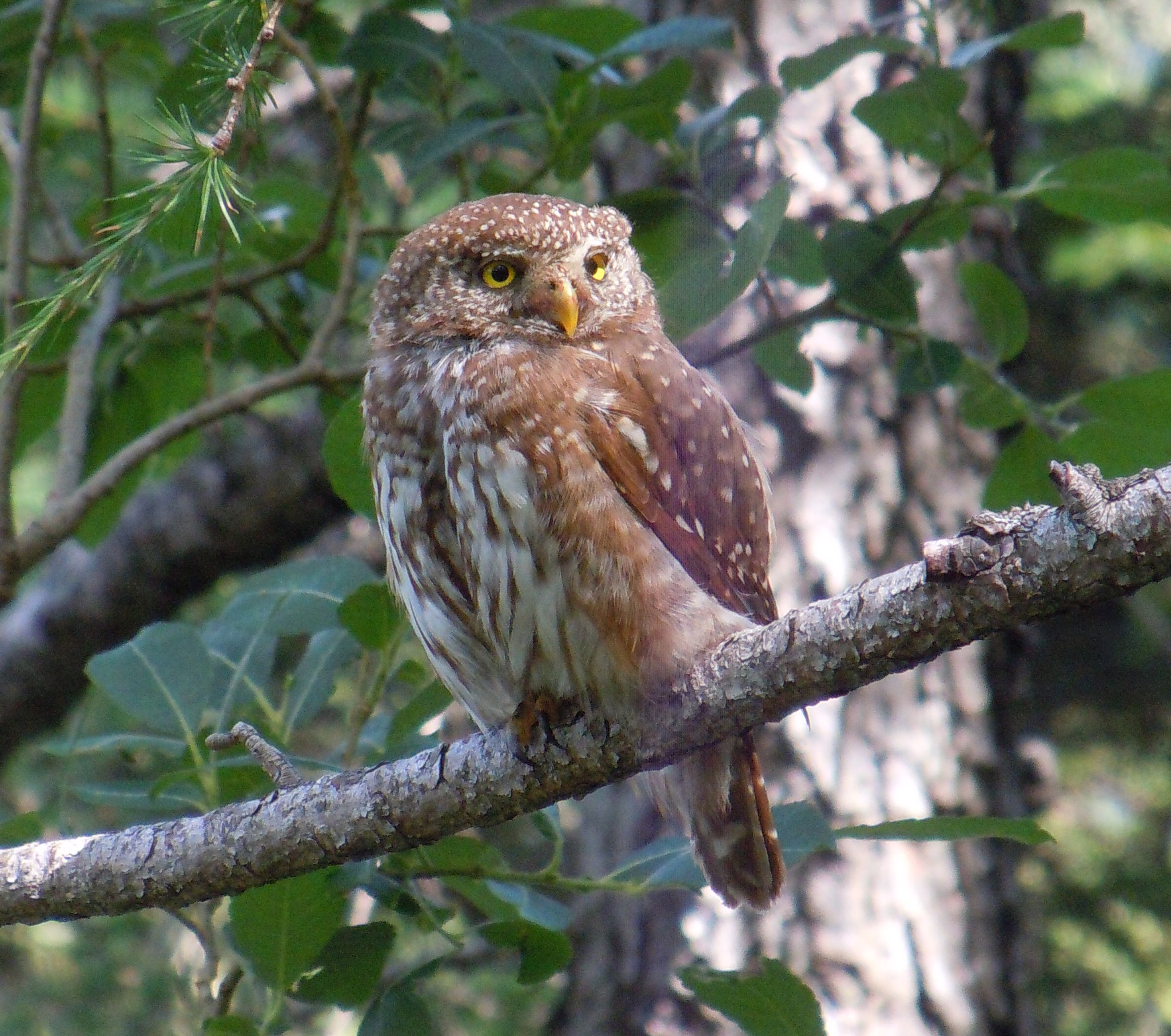
Eurasian Pygmy Owl
Glaucidium passerinum
花头鸺鹠
Introduction
The smallest owl in Europe, this species belongs to the family Strigidae. It inhabits the boreal forests of Northern and Central Europe east to Siberia. It is a sedentary species, though adults may move south during harsh winters, and juveniles disperse in autumn or winter. A crepuscular owl active near sunrise and sunset, it stores large quantities of prey in autumn for winter consumption. Two subspecies are recognised: G. p. passerinum in central and northern Europe to southwest Siberia, and G. p. orientale in central east Siberia, Mongolia, and northeast China.
Description
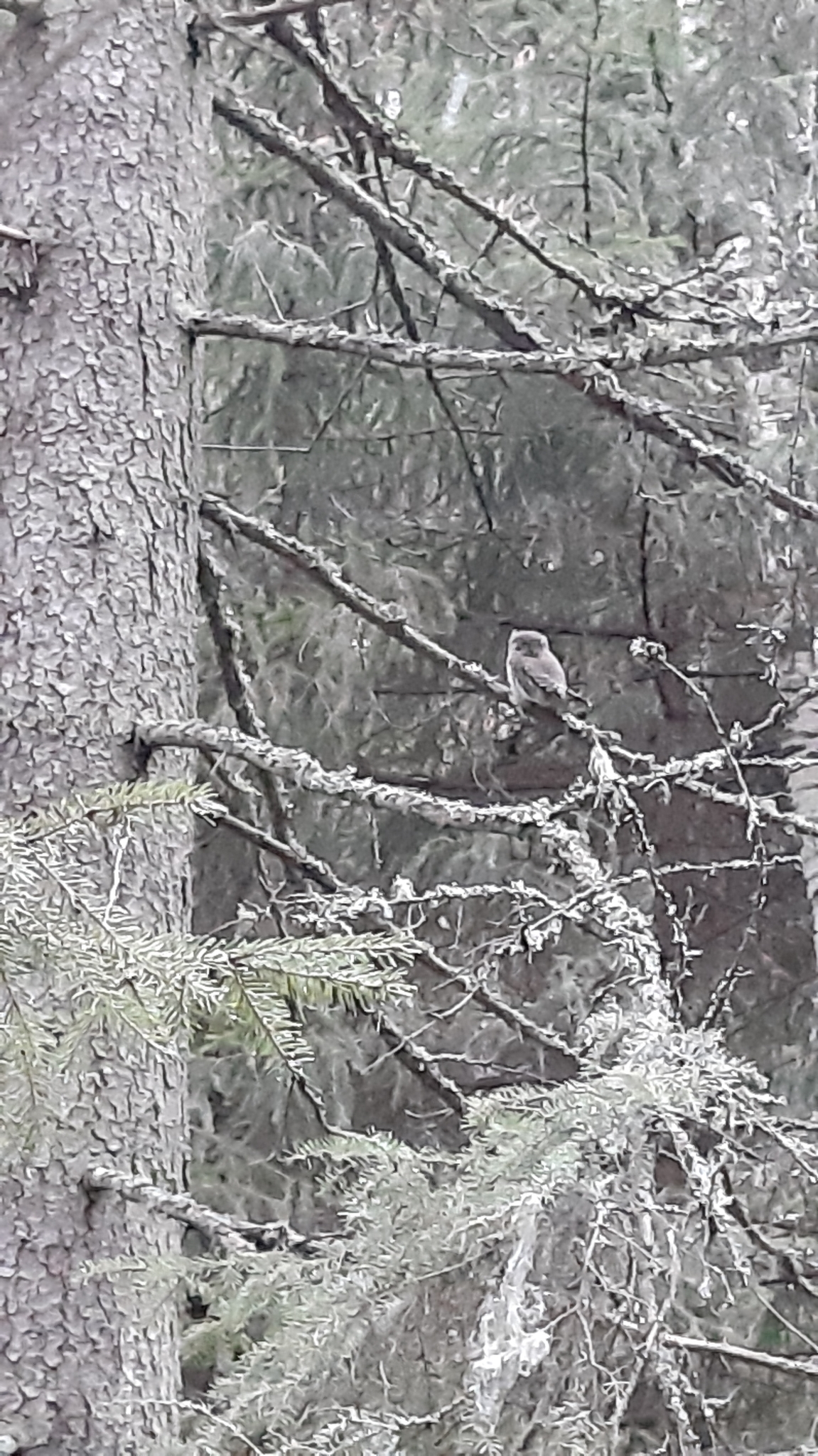
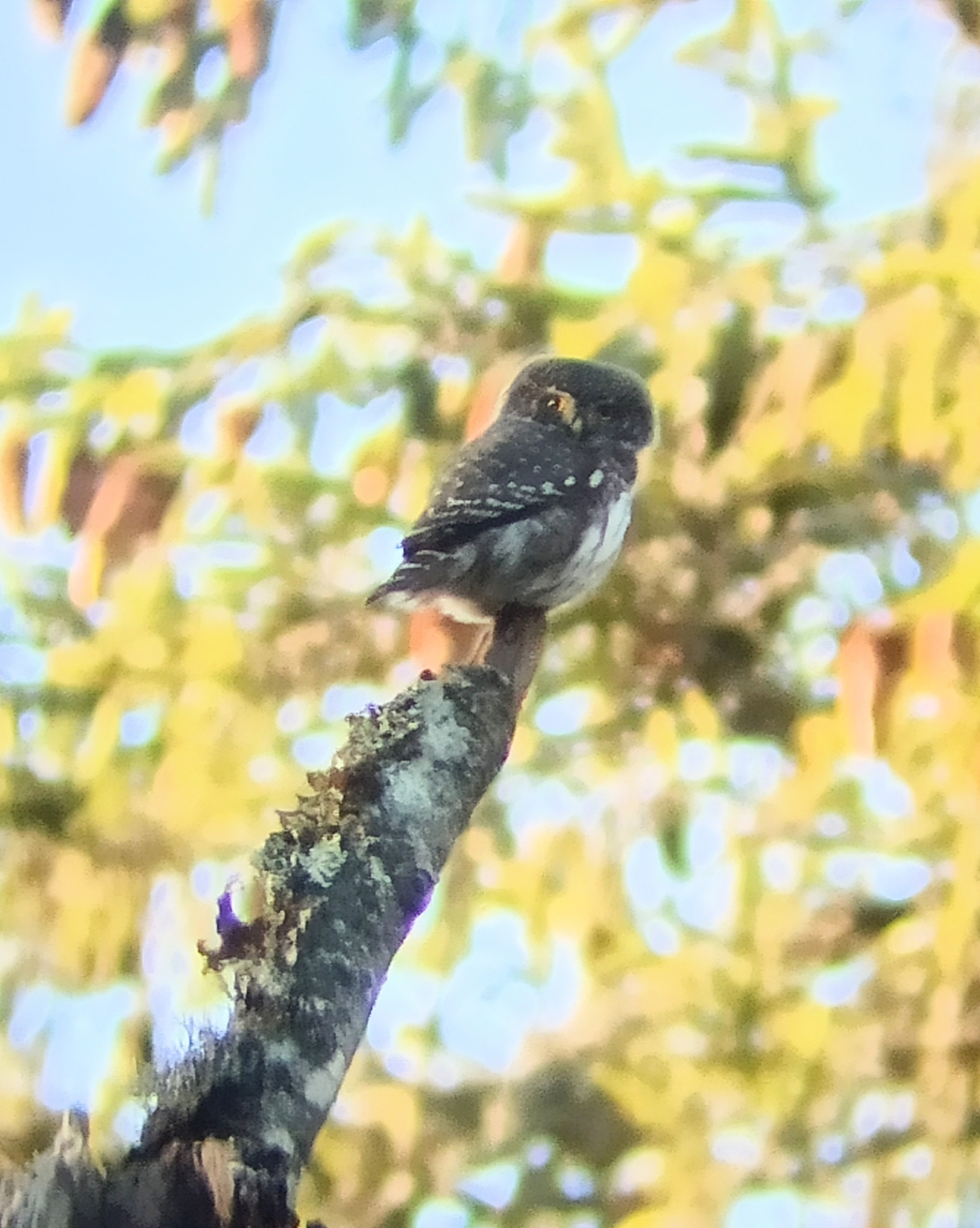
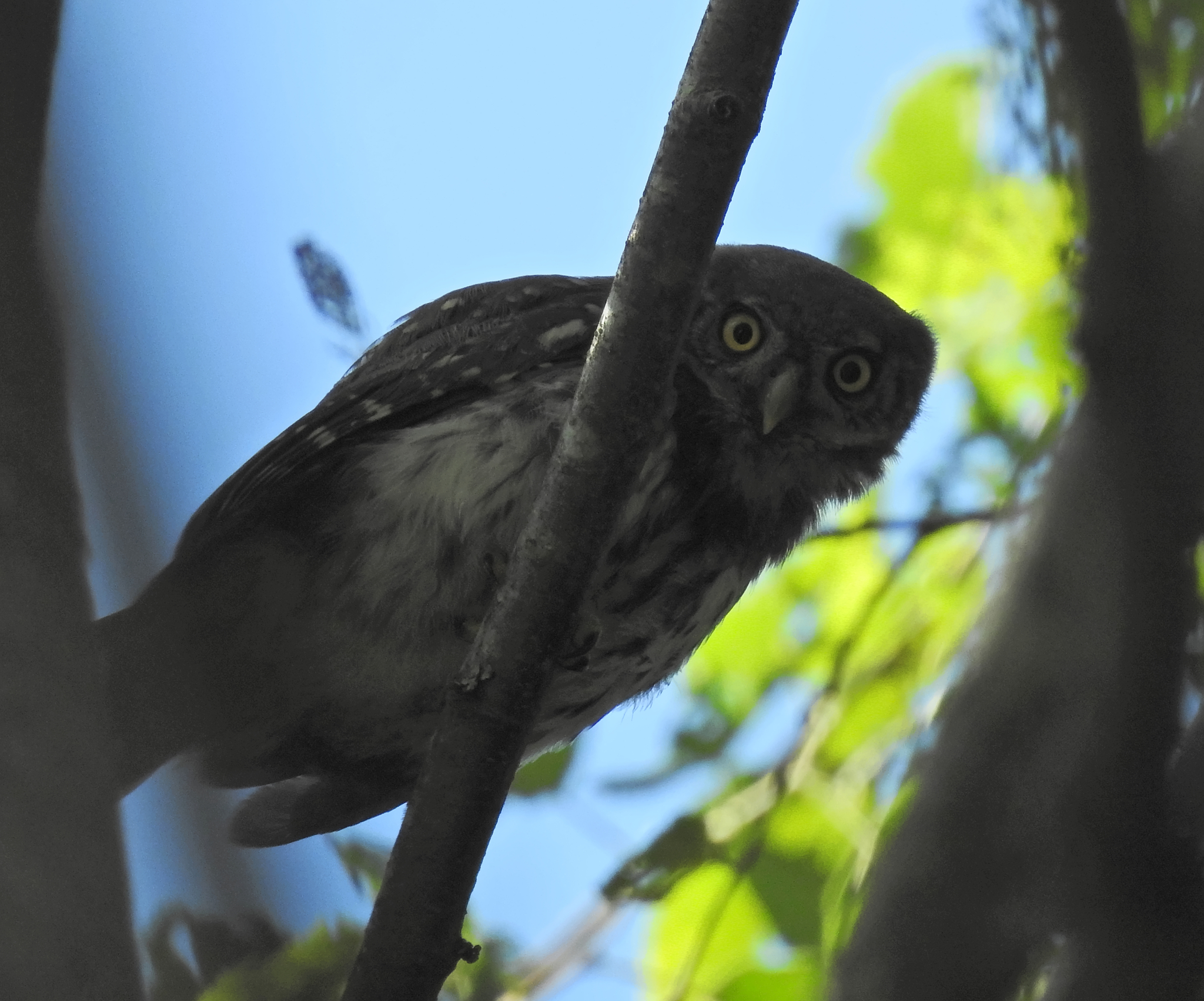
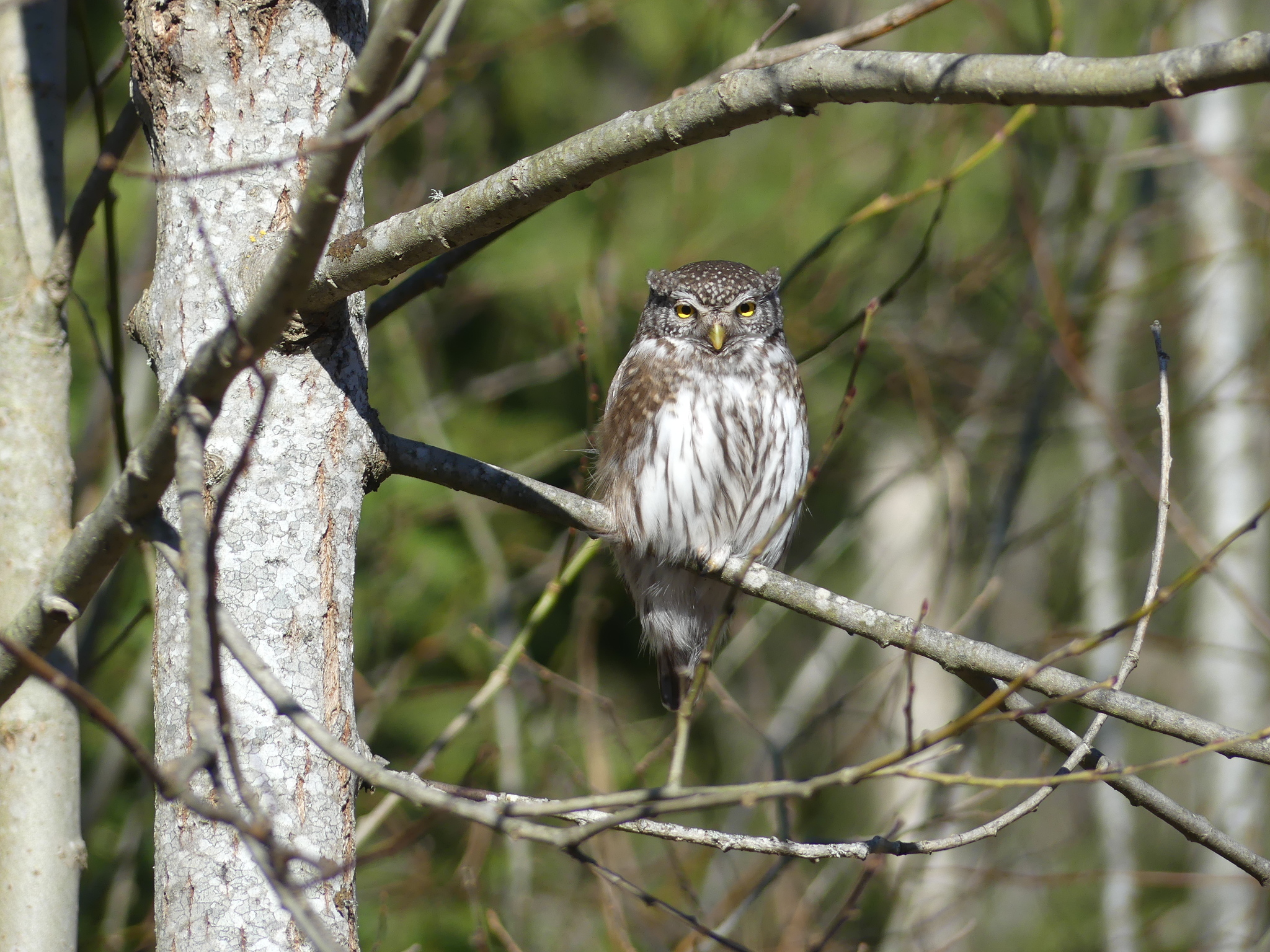
This small owl measures 15.2-17 cm in males and 17.4-19 cm in females, weighing 50-65 g and 67-77 g respectively. The plumage is reddish to greyish-brown with spots on the back. The tail is darker with five narrow whitish bars. It has a small, short head with white to grey eyebrows and yellow eyes, lacking the ear tufts typical of many owls. A distinctive white half-collar marks the back of the neck. The underparts are white with brown speckles. The greyish-yellow beak is hook-shaped, and the species has evolved disproportionately large feet with brownish-yellow legs and black talons for carrying vertebrate prey.
Identification
This species is distinguished by its small size and lack of ear tufts. The white half-collar on the back of the neck is a key field mark. The call is notably higher pitched than typical owl hoots: males give a monotonous chain of clear, fluted notes spaced about two seconds, while females have a similar but higher-pitched call. Both sexes produce a five to seven note rising call before and after the breeding season. The dark tail with whitish bars helps distinguish it from similar species.
Distribution & Habitat
The species occurs across the boreal coniferous forest zone from Northern and Central Europe through Siberia to Mongolia and northeast China. It inhabits coniferous taiga forests and higher mountainous regions with coniferous and mixed forests, typically in cooler areas with higher rainfall. It prefers edges of clearings near moist or swampy land with water sources nearby. It nests in old woodpecker holes, particularly those of the great spotted woodpecker. While primarily sedentary, adults may move south during severe winters, and juveniles disperse in autumn or winter.
Behavior & Ecology
A crepuscular species active during daylight hours near sunrise and sunset. Diet consists primarily of small mammals including voles, lemmings, bats, and mice, as well as small birds such as thrushes, crossbills, chaffinches, and leaf-warblers; it can catch birds in flight. Other prey includes lizards, fish, and insects. Pairs form in autumn through early spring; the species is serially monogamous, with bonded pairs lasting one or more seasons. Courtship involves the male leading the female through his territory and feeding her. The female lays 4-7 eggs in April, incubated for four weeks starting when the third egg is laid. Fledging occurs at 30-34 days. A notable behavior is food hoarding, with large stores of prey collected in autumn for winter consumption.
Conservation
Not assessed in the provided text.
Culture
Not assessed in the provided text.
Source: Wikipedia · CC BY-SA 3.0
Taxonomy
- Order
- Strigiformes
- Family
- Strigidae
- Genus
- Glaucidium
- eBird Code
- eupowl1
Subspecies (2)
-
Glaucidium passerinum orientale
central and eastern Siberia to Manchuria
-
Glaucidium passerinum passerinum
Scandinavia, mountains of Europe to Siberia, Sakhalin, and northeastern China
Data Sources
Species description from Wikipedia, licensed under CC BY-SA 3.0.
Bird images and sounds sourced from GBIF, contributed by citizen scientists worldwide under Creative Commons licenses.
Taxonomy data from AviList 2025.