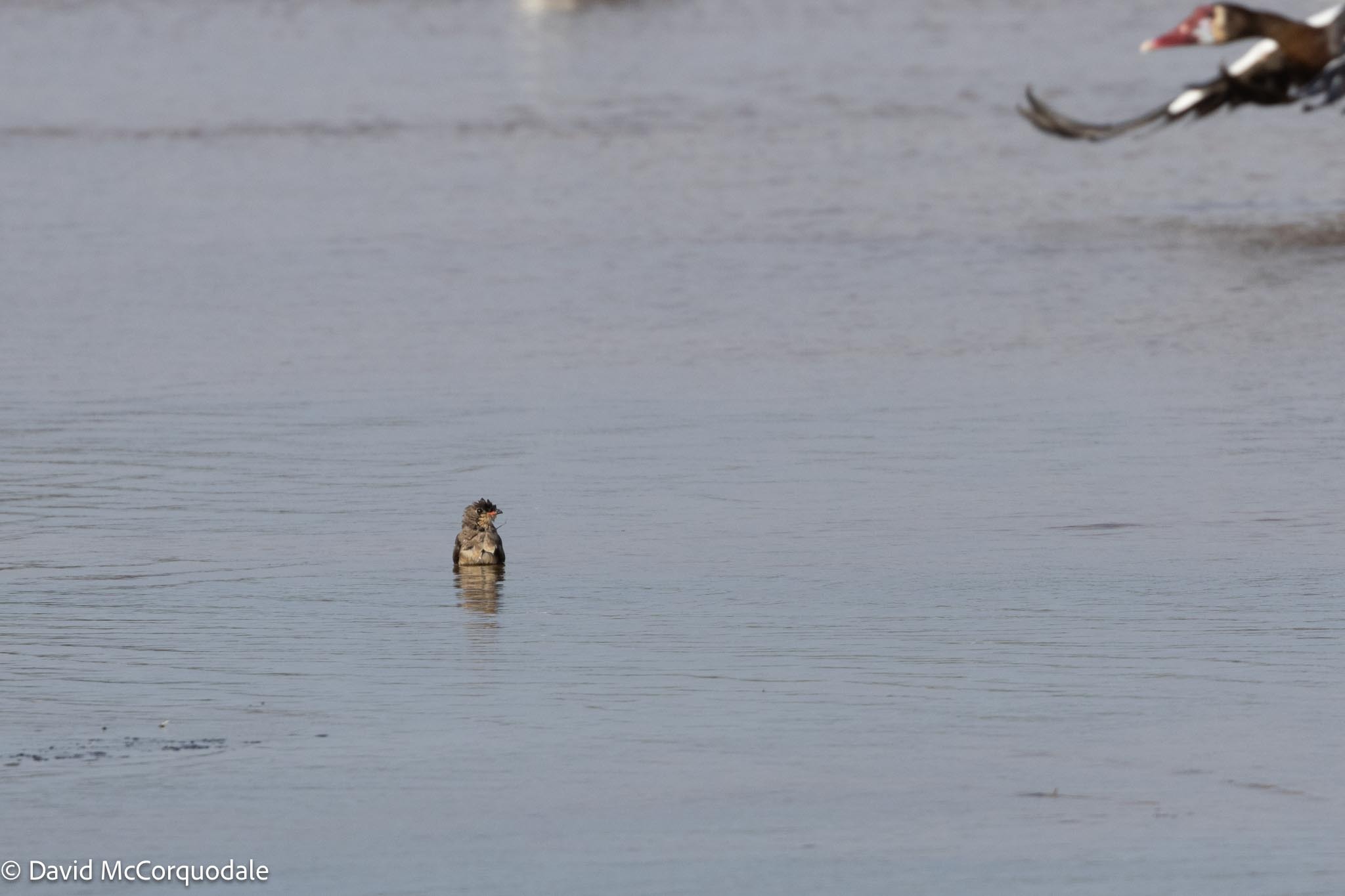
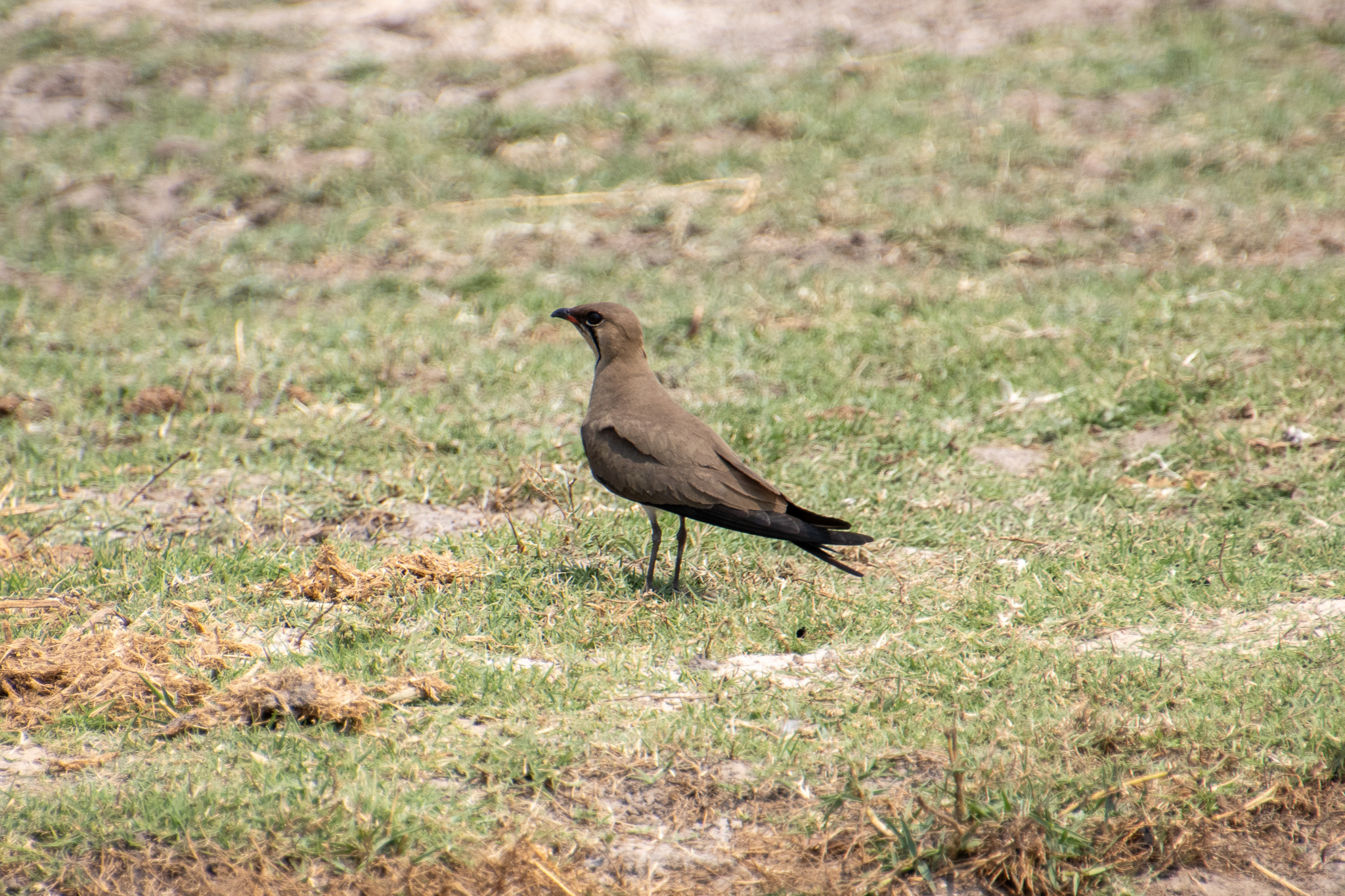
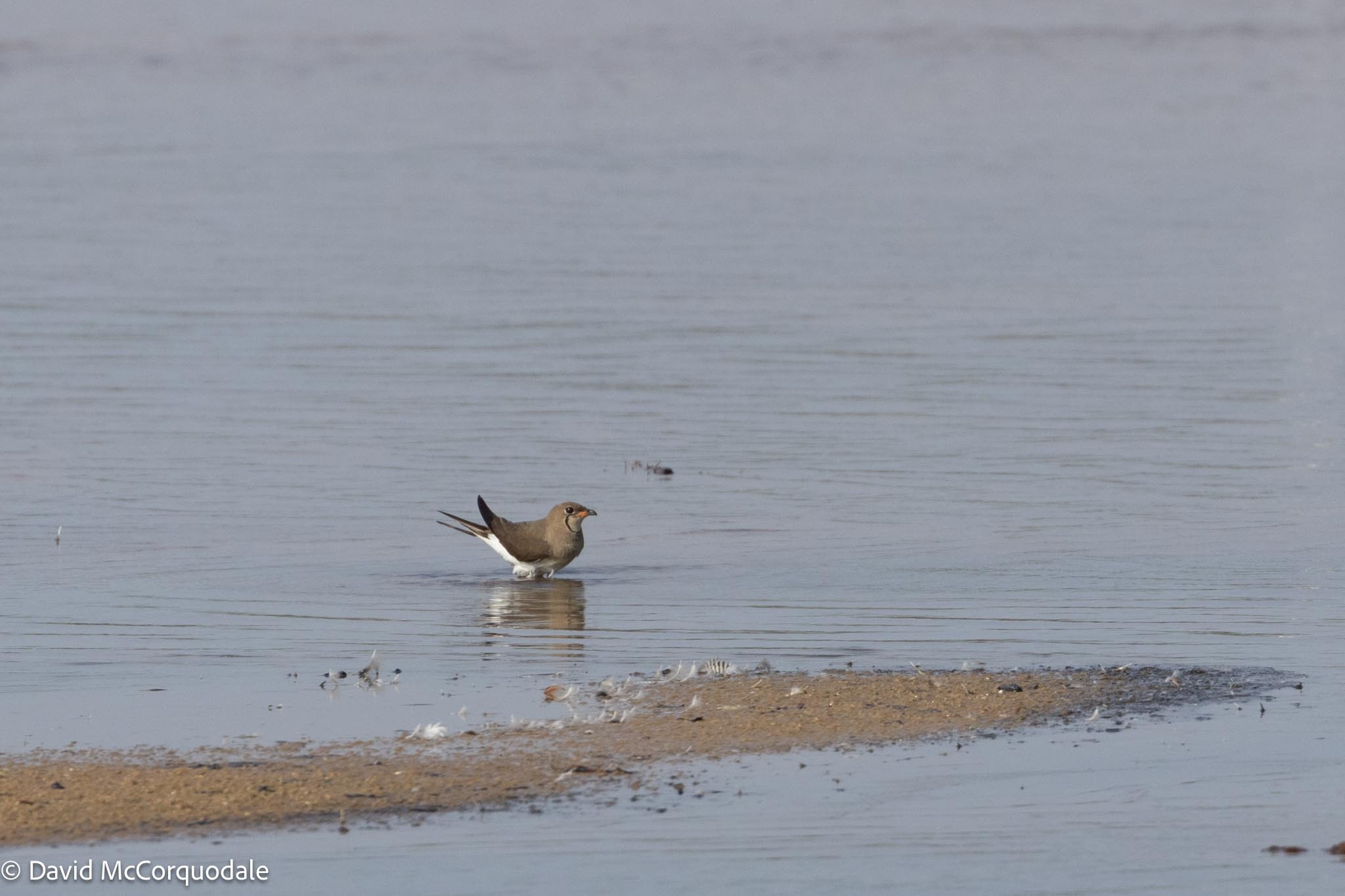
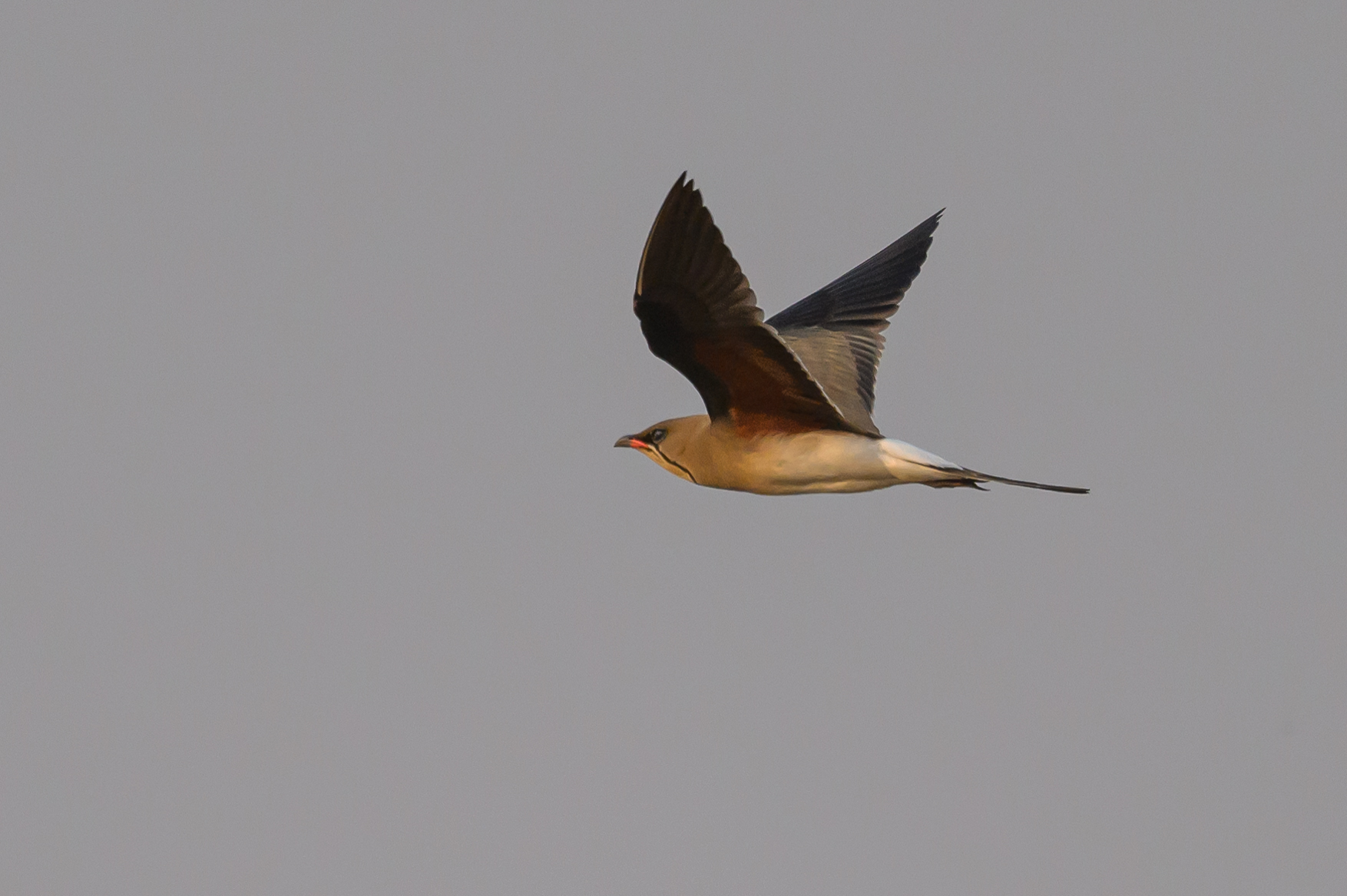
Collared Pratincole
Glareola pratincola
领燕鸻
Introduction
A wader in the pratincole family, Glareolidae. Native to the warmer parts of Europe, southwest Asia, and Africa. Unusual among waders in that it typically hunts insect prey on the wing like swallows, though it can also feed on the ground. Migratory, wintering in tropical Africa. The species is rare north of its breeding range and has been recorded as a vagrant in Brazil and Barbados. Conservation status: subject to the Agreement on the Conservation of African-Eurasian Migratory Waterbirds (AEWA).
Description
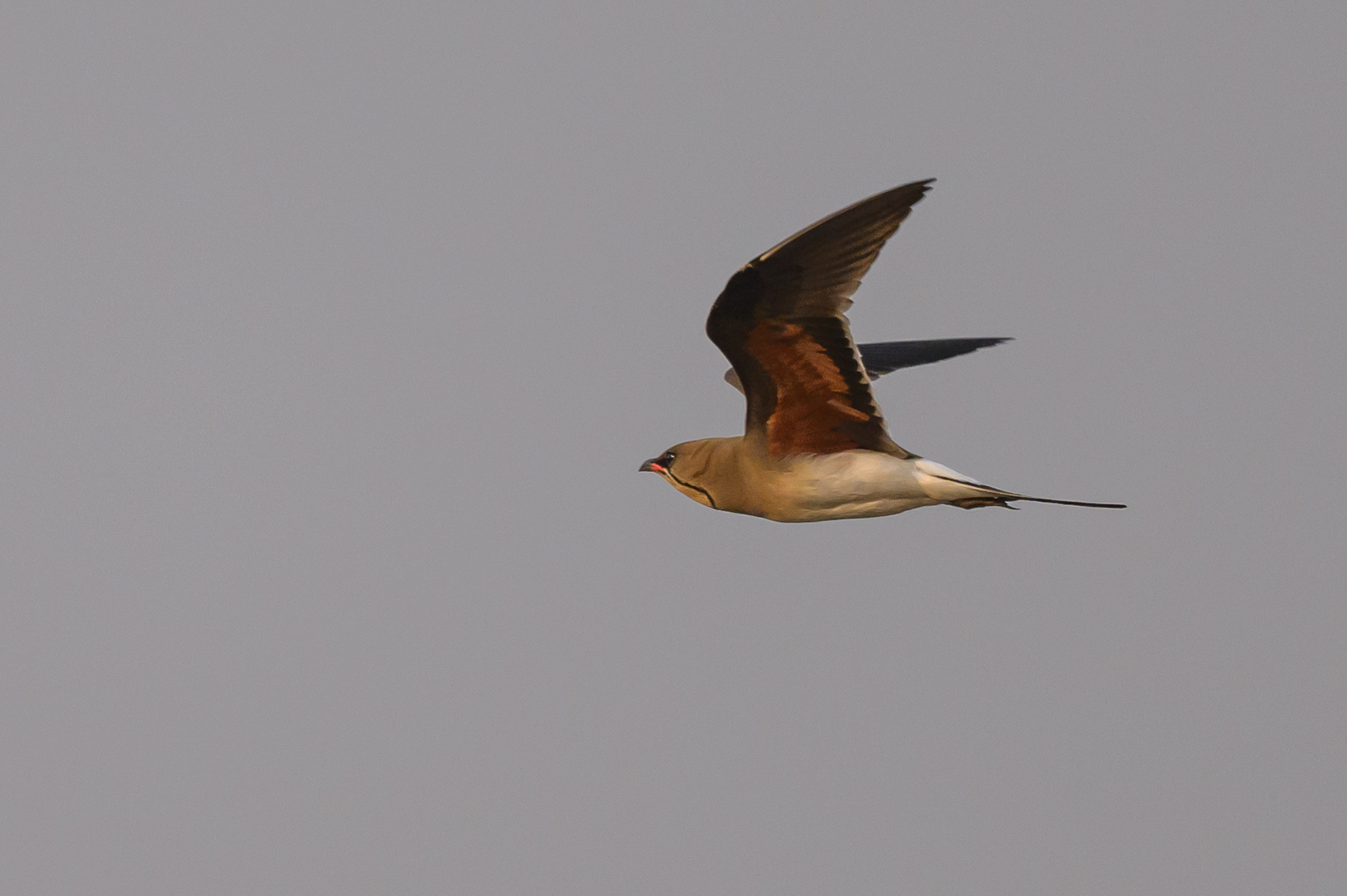
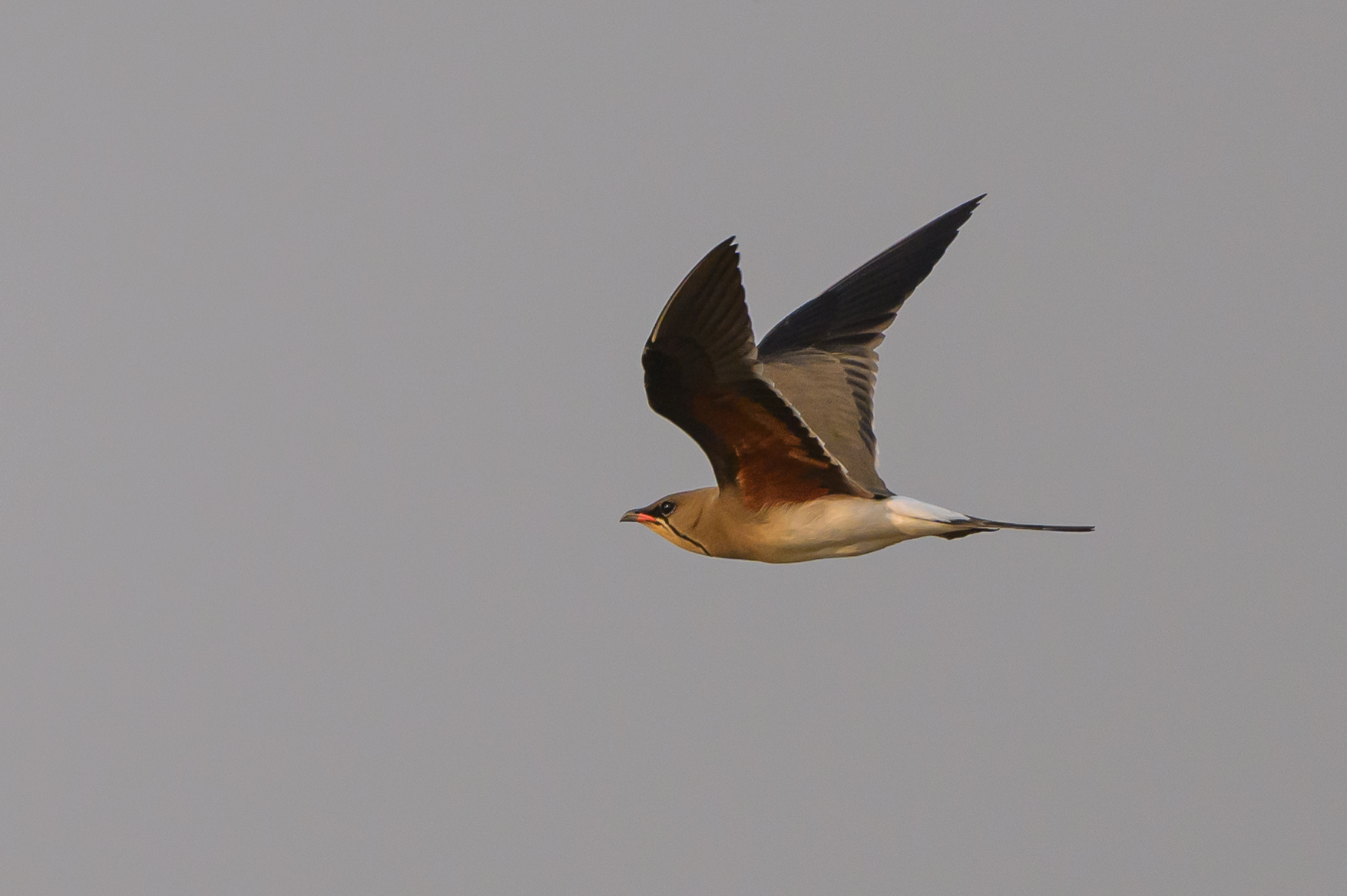
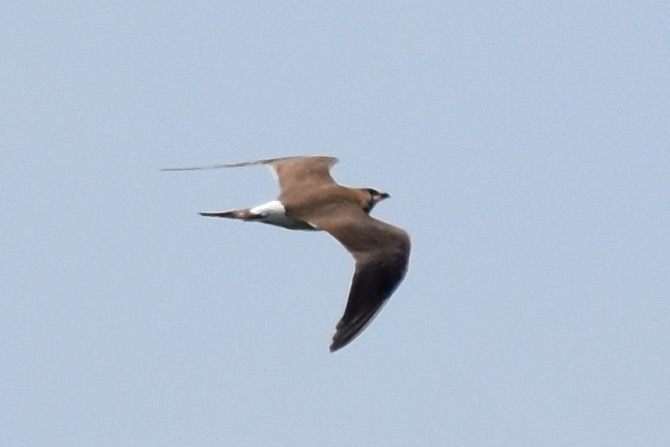
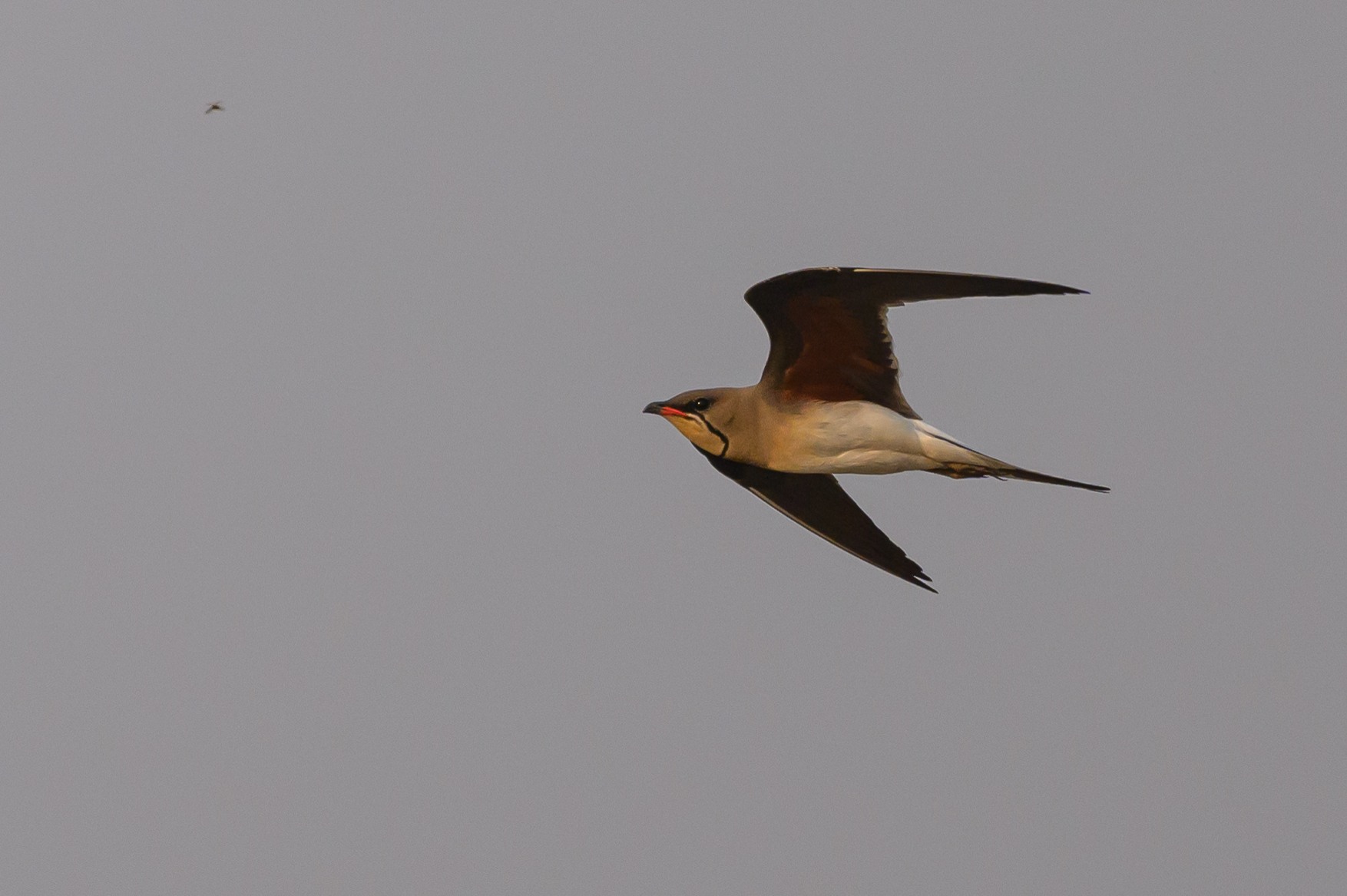
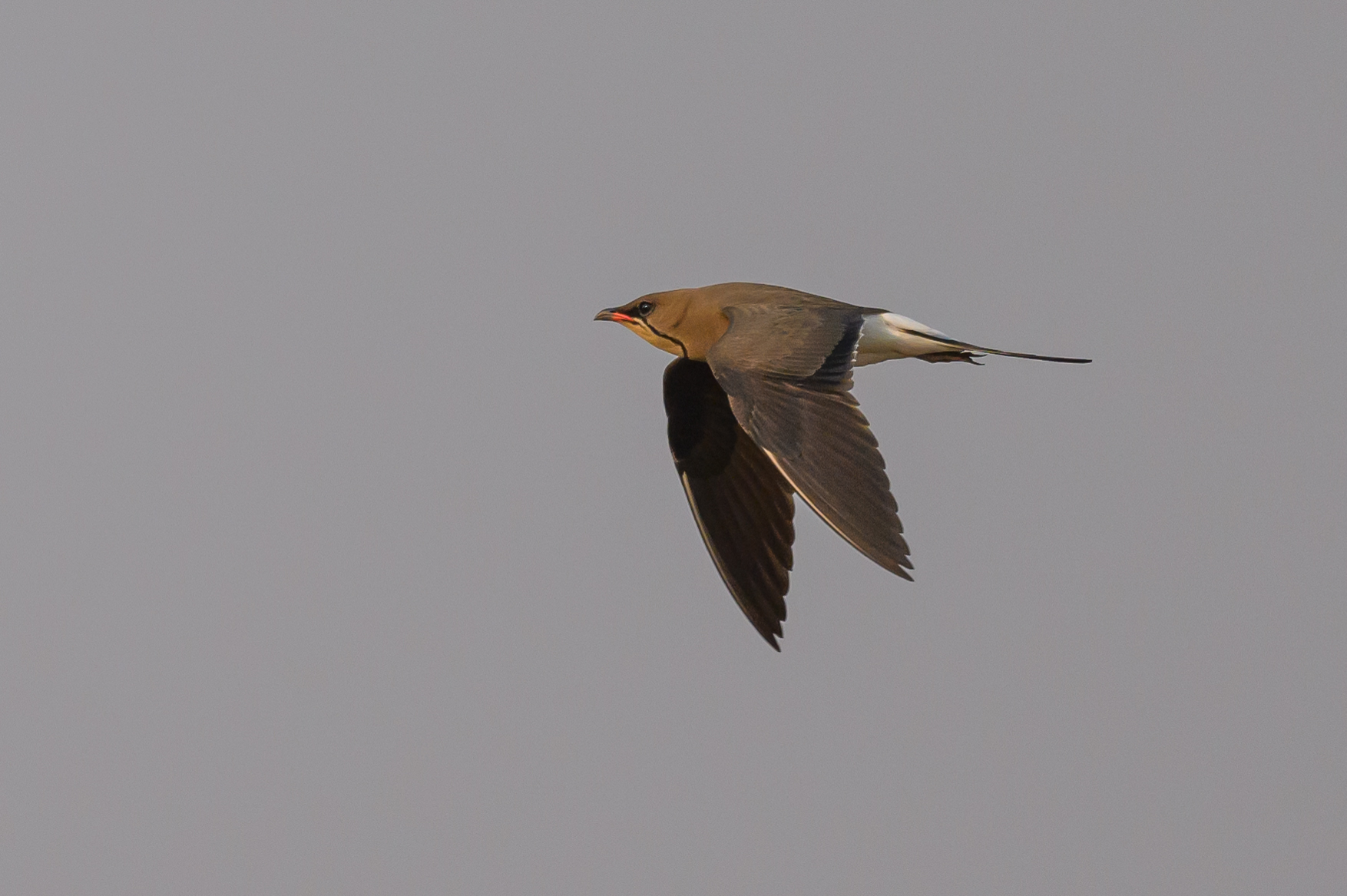
This species measures 24–28 cm in length with a 60–70 cm wingspan. It has short legs, long pointed wings, a long forked tail, and a short bill adapted to aerial feeding. The back and head are brown, while the wings are brown with darker flight feathers. The belly is white. The underwings are chestnut but appear dark from below.
Identification
Very good views are needed to distinguish this species from similar pratincoles, particularly the black-winged pratincole and oriental pratincole, which may occur within its range. The oriental pratincole also has chestnut underwings but can be distinguished by its shorter tail.
Distribution & Habitat
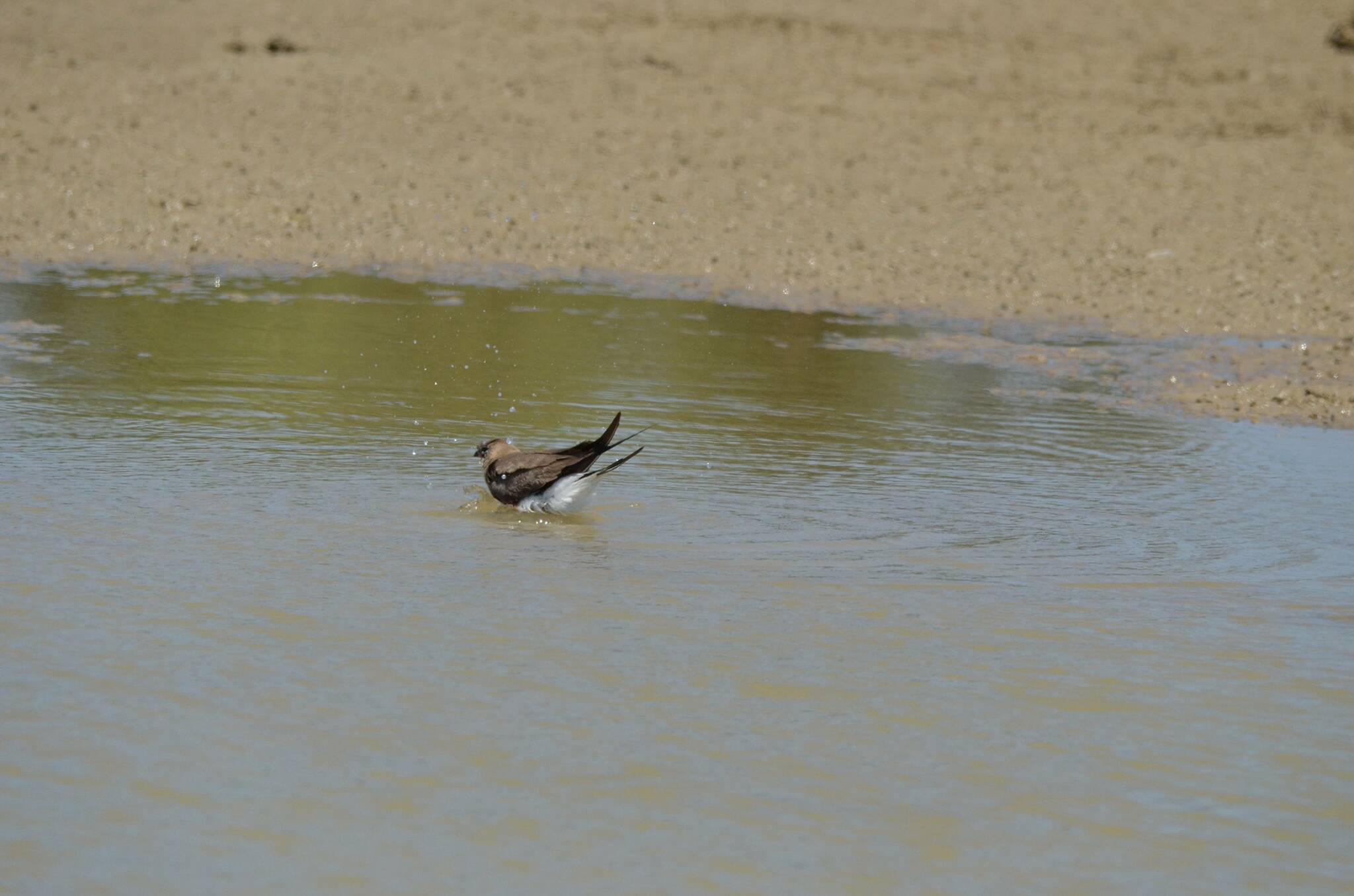
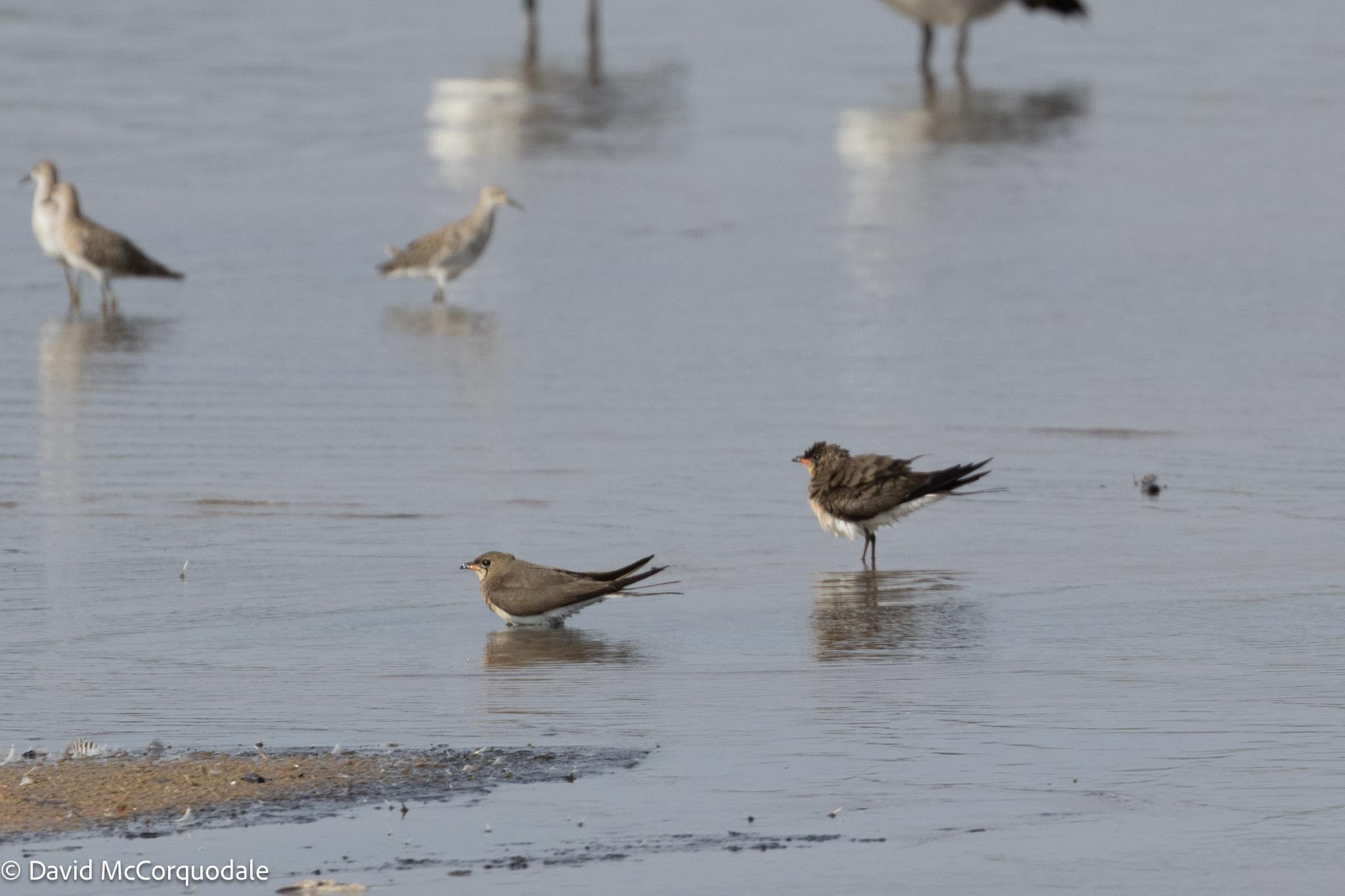
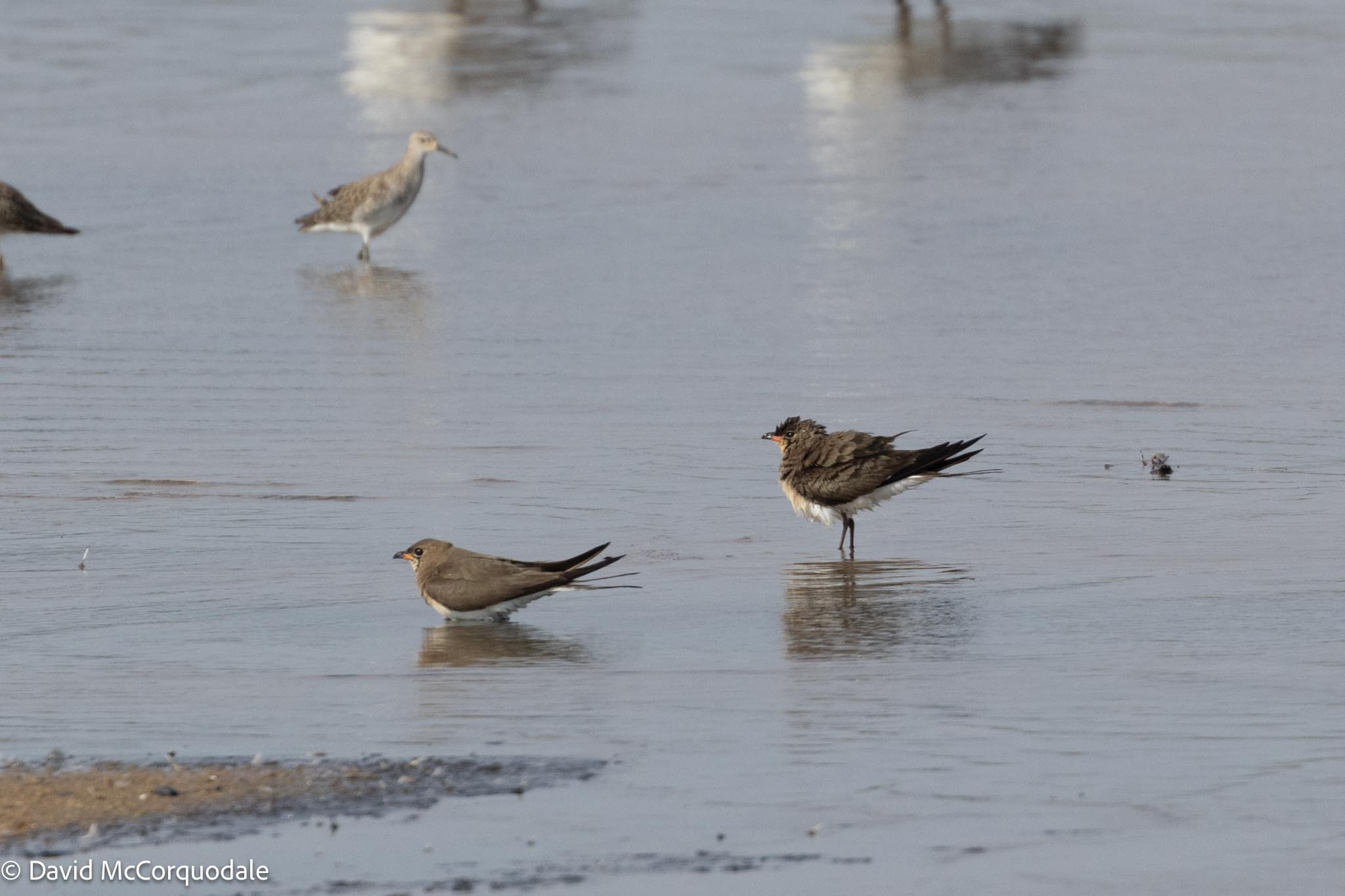
A bird of open country, often seen near water in the evening hawking for insects. Found in the warmer parts of Europe, southwest Asia, and Africa. Migratory, wintering in tropical Africa. Rare north of the breeding range. Recorded as a vagrant in Brazil and Barbados.
Behavior & Ecology
Feeds on insects, typically hunting them on the wing like swallows, though it can also feed on the ground. Breeding is colonial, with nests being shallow scrapes on open ground often near water. The clutch consists of 2–4 eggs with a cream background marked with black or dark brown blotches, spots, or streaks. Eggs average 32 mm × 24 mm and weigh 10 g. Incubation lasts 17–19 days by both parents, with synchronous hatching. Young are precocial and leave the nest after 2–3 days; both parents feed them with regurgitated food for the first week. Young fledge at 25–30 days of age.
Conservation
One of the species to which the Agreement on the Conservation of African-Eurasian Migratory Waterbirds (AEWA) applies.
Culture
Also known as the common pratincole or red-winged pratincole.
Source: Wikipedia · CC BY-SA 3.0
Taxonomy
- Order
- Charadriiformes
- Family
- Glareolidae
- Genus
- Glareola
- eBird Code
- colpra
Subspecies (2)
-
Glareola pratincola fuelleborni
open ground near water in sub-Saharan Africa from Senegal to southern Somalia southward to eastern South Africa
-
Glareola pratincola pratincola
breeds steppe near water from southern Europe and northern Africa eastward through Türkiye and Egypt to northwestern China and southward to Pakistan and far northwestern India; winters sub-Saharan Africa north of 5°N
Data Sources
Species description from Wikipedia, licensed under CC BY-SA 3.0.
Bird images and sounds sourced from GBIF, contributed by citizen scientists worldwide under Creative Commons licenses.
Taxonomy data from AviList 2025.